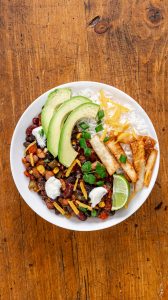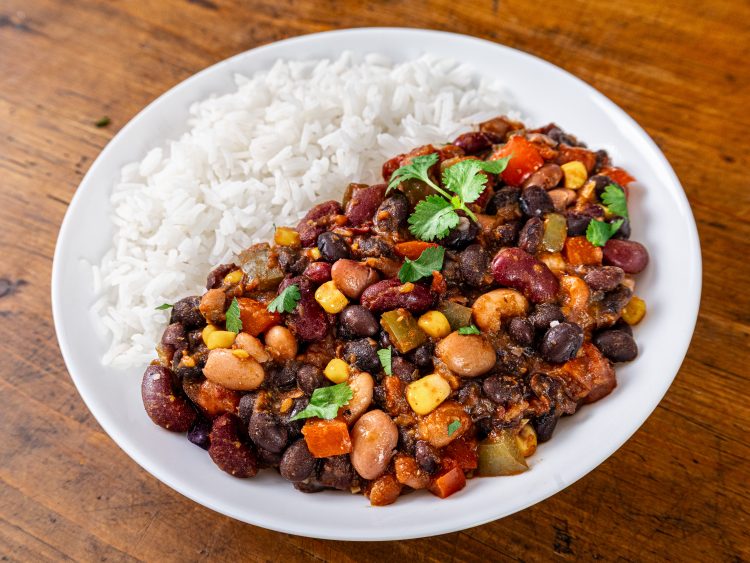
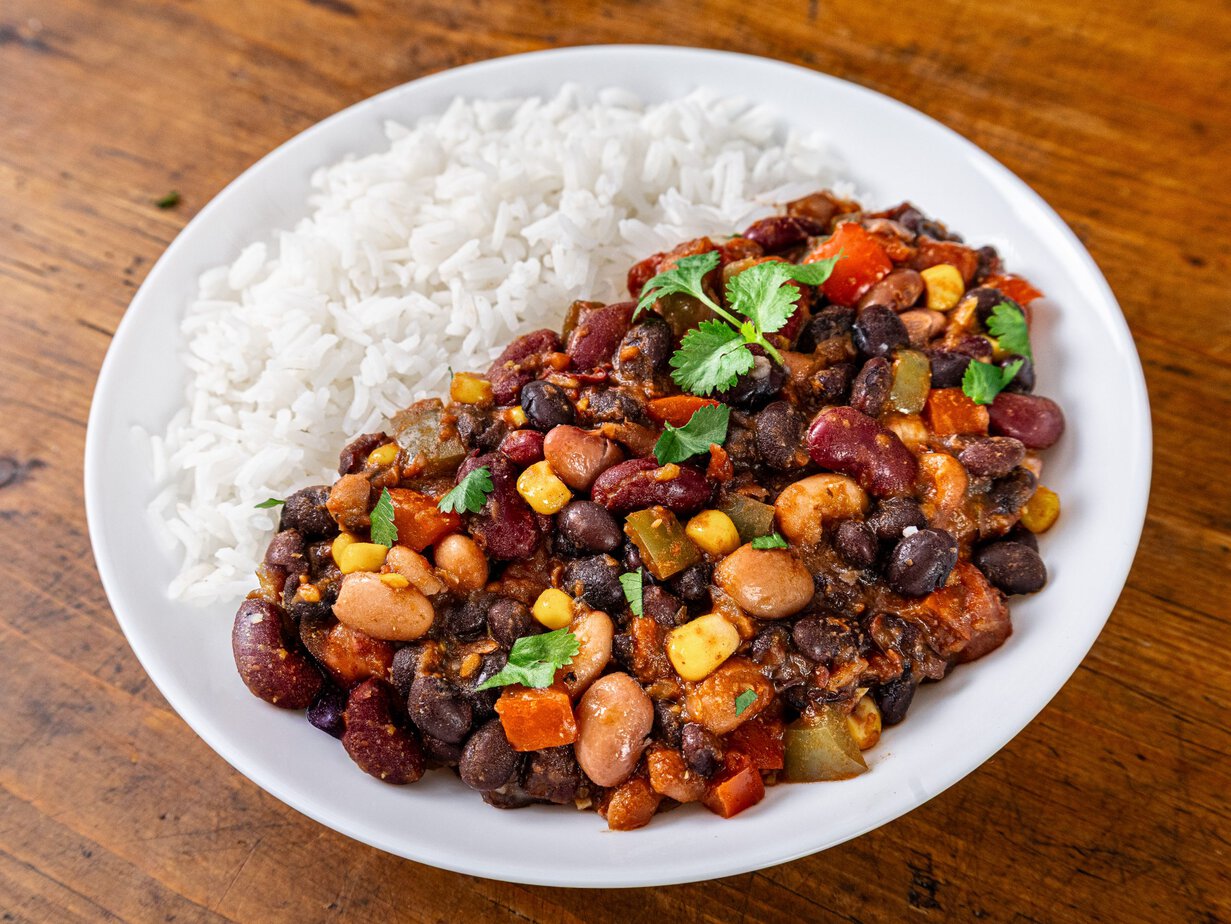
A vegetarian three-bean chili with corn and bell peppers, cooked in a single pot and served over white rice.
On a weeknight, when darkness falls early, a pot of simmering chili is all it takes to warm up the whole kitchen.
The cumin and smoked paprika perfume the air, the thick tomato sauce coats the spoon, and the black, pinto, and kidney beans hold their shape among the kernels of corn.
It’s ladled over white rice, with a spoonful of well-chilled sour cream and a few cilantro leaves. Nobody misses the meat, and everyone goes back for seconds before finishing their bowl.
What Is Chili Sin Carne?
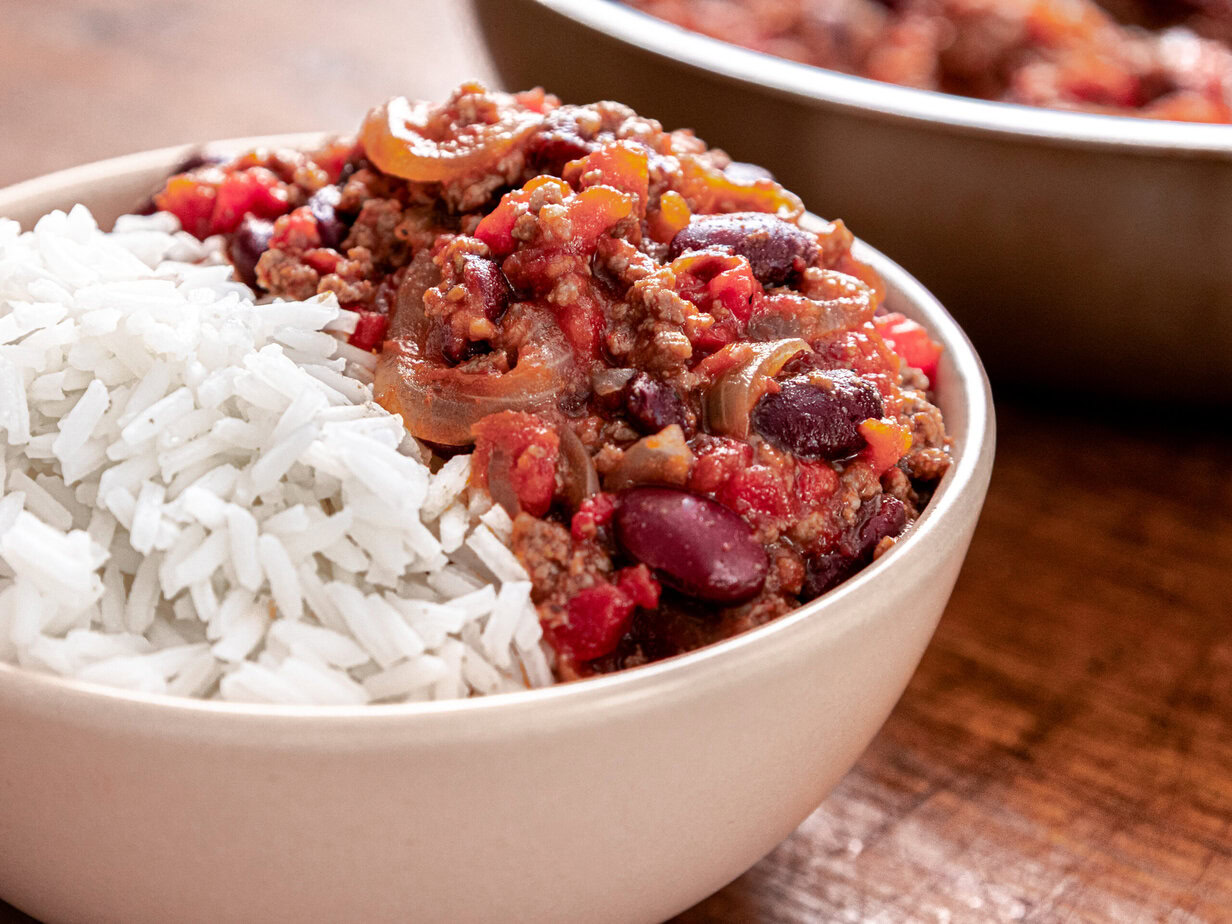
Chili sin carne means “chili without meat” in Spanish. It’s the vegetarian version of Tex-Mex chili: beans, bell peppers, tomato, and mild spices, cooked together in a single pot.
This recipe also does without meat substitutes such as soy crumbles, lentils, tofu, or tempeh. Three kinds of canned beans, sweet corn, a red bell pepper, and a poblano pepper or a green bell pepper do all the work.
Chili powder needs a word of explanation. In the United States, “chili powder” is a mild blend of ground chiles, cumin, oregano, and garlic. In Europe, a jar labeled “chili” often contains pure ground hot chili, and 3 tablespoons would be far too spicy: use a Tex-Mex blend or a chili con carne seasoning mix.
From Texas Chili to European Weeknight Dish
Chili con carne comes from the border regions between Texas and Mexico. As early as the 1850s, San Antonio’s “Chili Queens” were selling cheap, spicy meat stews in the public squares.
In the strictest Texas chili, meat and chiles make up the whole dish, with no beans or tomatoes. For fans of Mexican-style braised beef, there’s also Mexican shredded beef.

Chili sin carne took off in the United States in the 1960s and 1970s, along with the vegetarian movements. Cooks replaced the beef with what Texas purists refused to include: beans and tomatoes.
In Germany, France, and the Nordic countries, it has become a weeknight dish, made with canned goods and most often served on a bed of white rice.
The Main Ingredients in Chili Sin Carne
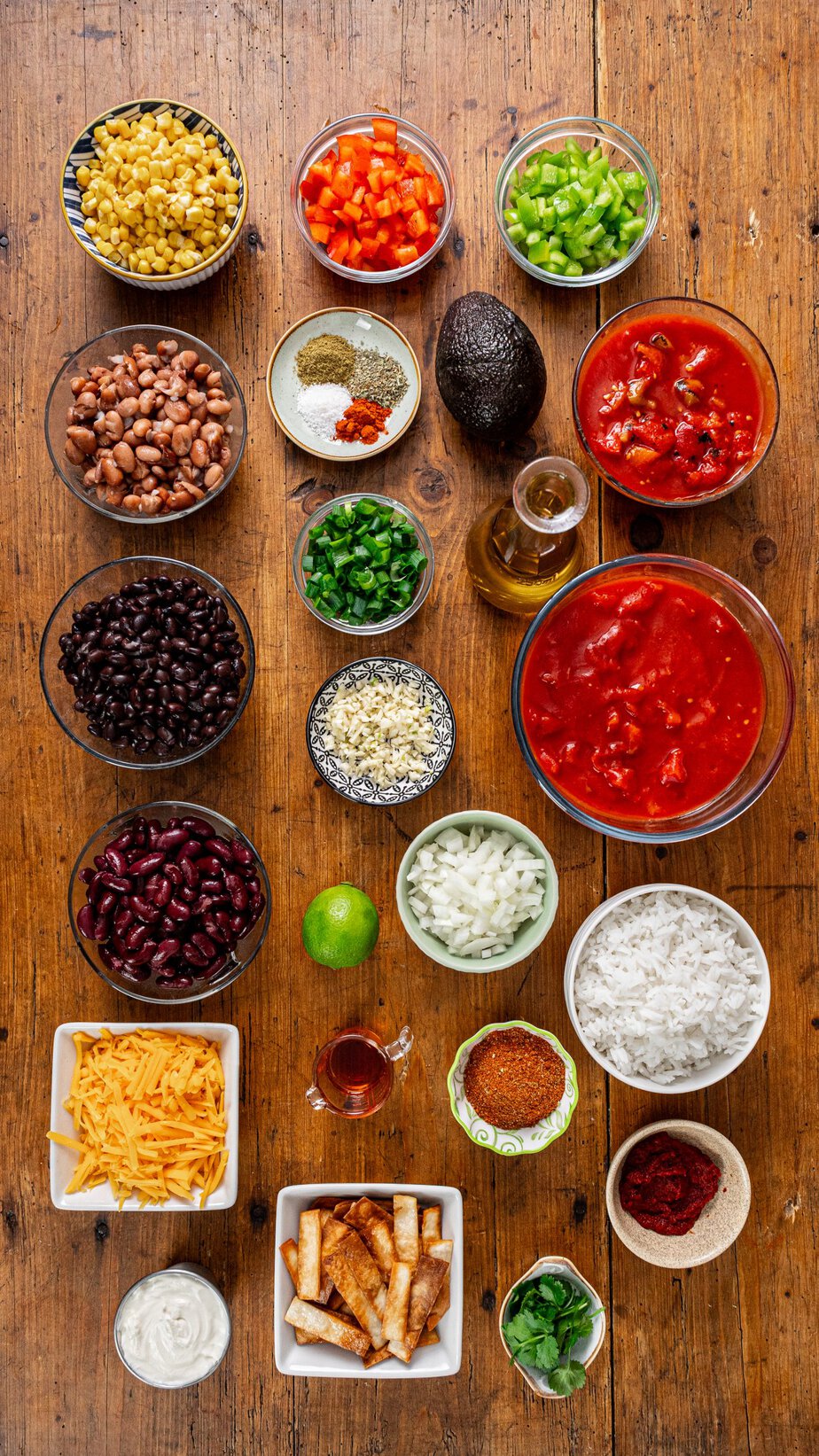
The black, pinto, and kidney beans come from cans, drained and rinsed: they’re already cooked and hold their shape during the short simmer. If you can’t find pinto beans, an extra can of black or kidney beans will do. The sweet corn adds pops of sweetness, the onion and red bell pepper form the base, and the poblano pepper brings a green, slightly smoky note. Since it’s rare in Europe, you can replace it with a green bell pepper.
The spices stay mild: chili powder, dried oregano, cumin, smoked paprika, and salt. The sauce brings together a can of fire-roasted diced tomatoes, a little sweeter and smokier than plain ones, 800 g of diced tomatoes, a little water, and tomato paste. A spoonful of maple syrup, added at the end, rounds out the acidity of the tomatoes.
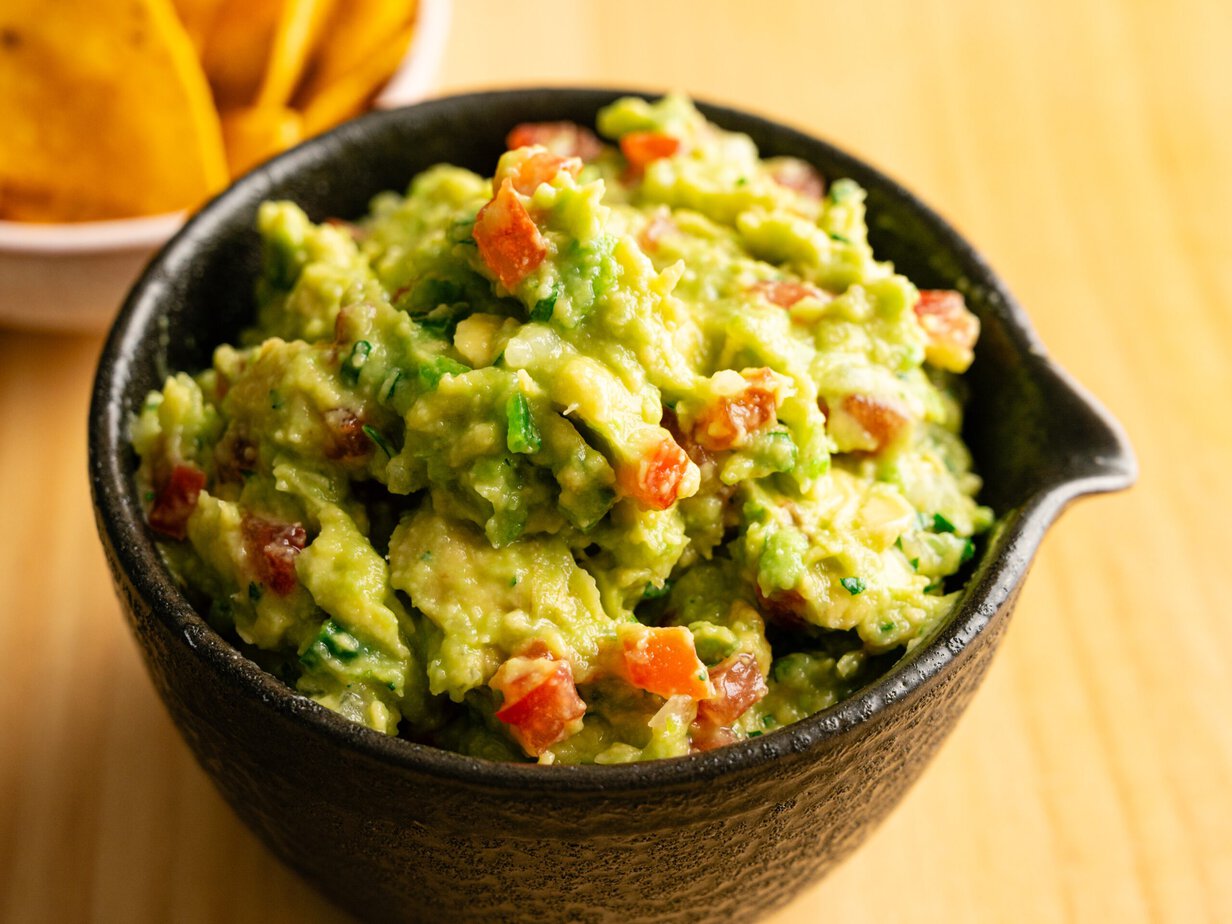
At the table, everyone tops their own bowl: sour cream, shredded cheddar, green onions, cilantro, avocado, lime wedges, and tortilla strips. The lime gets squeezed at the last moment, right into the bowl.
Technique Tips for a Good Chili Sin Carne
Sauté the onion and peppers until they start to soften before adding the garlic. The spices cook for just one minute, stirring constantly: they burn quickly.
The simmer is short: 10 minutes covered, then 10 minutes uncovered to reduce the sauce. To thicken it without starch, blend about a quarter of the chili right in the pot with an immersion blender, or purée 250 ml of it in a blender, then return it to the pot.
If you’re using dried beans, soak them for 8 to 12 hours, then boil them hard in fresh water for at least 10 minutes before cooking them: this is essential for kidney beans. The chili is even better the next day. It keeps for 4 to 5 days in the fridge and can be frozen for up to 3 months.
Ingredients
Vegetables
- 1 tablespoon olive oil
- 1 onion medium yellow or white, chopped
- 1 poblano pepper, or 1 green bell pepper, diced
- 1 red bell pepper, diced
- 3 cloves garlic, minced
- Vegetable broth optional, for deglazing
Spices
- 3 tablespoons chili powder (mild American-style spice blend, see notes)
- 1 teaspoon oregano dried
- 1 teaspoon cumin ground
- 0.5 teaspoon salt
- 0.5 teaspoon paprika smoked
Beans and Tomatoes
- 1 (400 g) can black beans, drained and rinsed
- 1 (400 g) can pinto beans, drained and rinsed
- 1 (400 g) can red kidney beans drained and rinsed
- 1 (400 g) can sweet corn, drained
- 1 (400 g) can fire-roasted diced tomatoes, or plain diced tomatoes
- 800 g canned diced tomatoes
- 180 ml water
- 2 tablespoons tomato paste
- 1 tablespoon maple syrup
For Serving
- Rice cooked white
- Sour cream
- Cheddar shredded
- Green onions, sliced
- Cilantro fresh, chopped
- Avocado, sliced
- Lime, cut into wedges
- Tortilla strips, or tortilla chips
Instructions
Vegetables
- In a large pot, heat the olive oil over medium heat for about 1 minute.1 tablespoon olive oil
- Add the onion, poblano pepper, and red bell pepper.1 onion, 1 poblano pepper,, 1 red bell pepper,
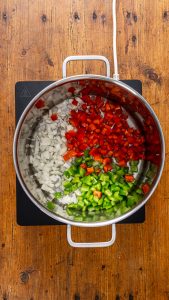
- Sauté for 4 to 5 minutes, until the vegetables start to soften.
- Add the garlic.3 cloves garlic,
- Cook for a few more minutes.
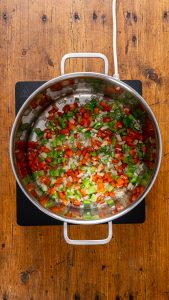
- If the bottom of the pot gets dry, deglaze with a few tablespoons of water or vegetable broth.180 ml water
Spices
- Add the chili powder, oregano, cumin, salt, and smoked paprika.3 tablespoons chili powder, 1 teaspoon oregano, 1 teaspoon cumin, 0.5 teaspoon salt, 0.5 teaspoon paprika
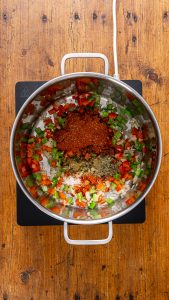
- Stir well into the vegetables.
- Cook for 1 minute, stirring constantly, until the spices are fragrant: they burn quickly.
Simmering
- Add the black beans, pinto beans, kidney beans, and corn.1 (400 g) can black beans,, 1 (400 g) can pinto beans,, 1 (400 g) can red kidney beans, 1 (400 g) can sweet corn,
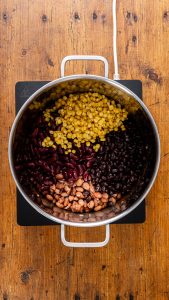
- Add both kinds of tomatoes, the water, and the tomato paste.1 (400 g) can fire-roasted diced tomatoes,, 800 g canned diced tomatoes, 2 tablespoons tomato paste
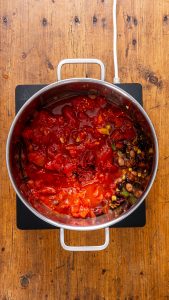
- Stir.
- Bring to a simmer.
- Cover and cook for 10 minutes.
- Remove the lid.
- Cook uncovered for another 10 minutes, stirring occasionally, until the chili reaches the thickness you want.

- Add the maple syrup and stir.1 tablespoon maple syrup
- Taste and adjust the salt if needed.
Thickening (Optional, Recommended)
- Using an immersion blender, blend about a quarter of the chili right in the pot.

- If you don’t have an immersion blender, scoop out about 750 ml of chili, working in two batches if your blender is small.
- Pulse it a few times in the blender.
- Return it to the pot and stir.
Serving
- Serve the chili hot, over rice or with the rice on the side.Rice
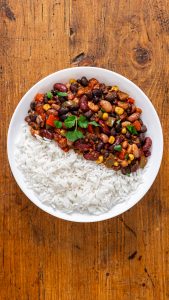
- Top with your choice of sour cream, cheddar, green onions, cilantro, avocado, a squeeze of lime, and tortilla strips.Sour cream, Cheddar, Green onions,, Cilantro, Avocado,, Lime,, Tortilla strips,