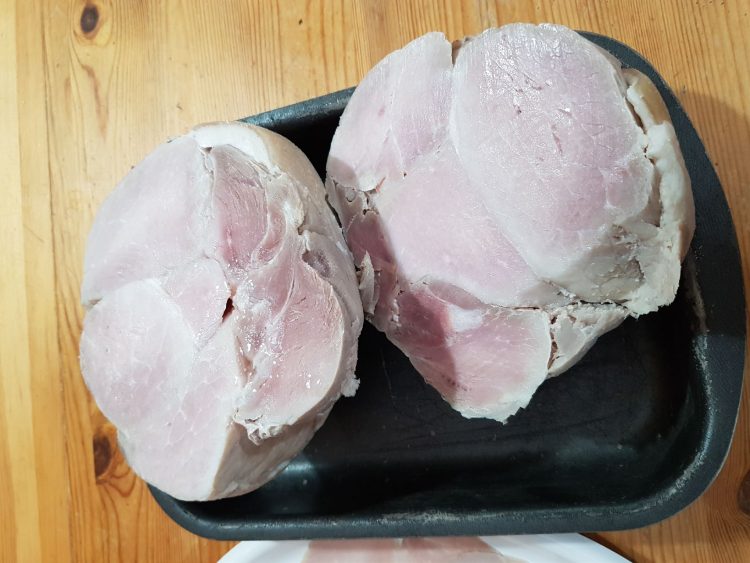
A fresh ham steak brined for three days, then gently cooked in a vegetable broth
A thick slice of homemade jambon blanc, tender and fragrant with thyme and bay leaf, tucked into a buttered baguette: it’s hard to think of anything simpler, or more satisfying. Jambon blanc, also called cooked ham, is a pillar of French charcuterie, prized for its delicate flavor. Making it at home mostly takes time, and a ham sock.
What Is Jambon Blanc?
It’s a brined pork leg, cooked slowly in broth until tender. Here, you start with a fresh ham steak, a thick slice from the leg, packed tightly into a sock to give it its round shape. Pork shoulder is prepared the same way, but the result is then called cooked shoulder.
It goes into everything: jambon-beurre, croque-monsieur, quiches, gratins, pasta with ham and cheese, or composed salads. With pre-dinner drinks, it gets rolled around asparagus or slices of melon.
A Matter of Brine and Patience
Like Alsatian cervelas, jambon blanc has been part of French cooking for centuries. It is traditionally made by brining a pork leg, then cooking it slowly: the meat keeps better and takes on a mild flavor.
Over time, the technique has been refined, and both the brine and the broth have been enriched with herbs and spices.
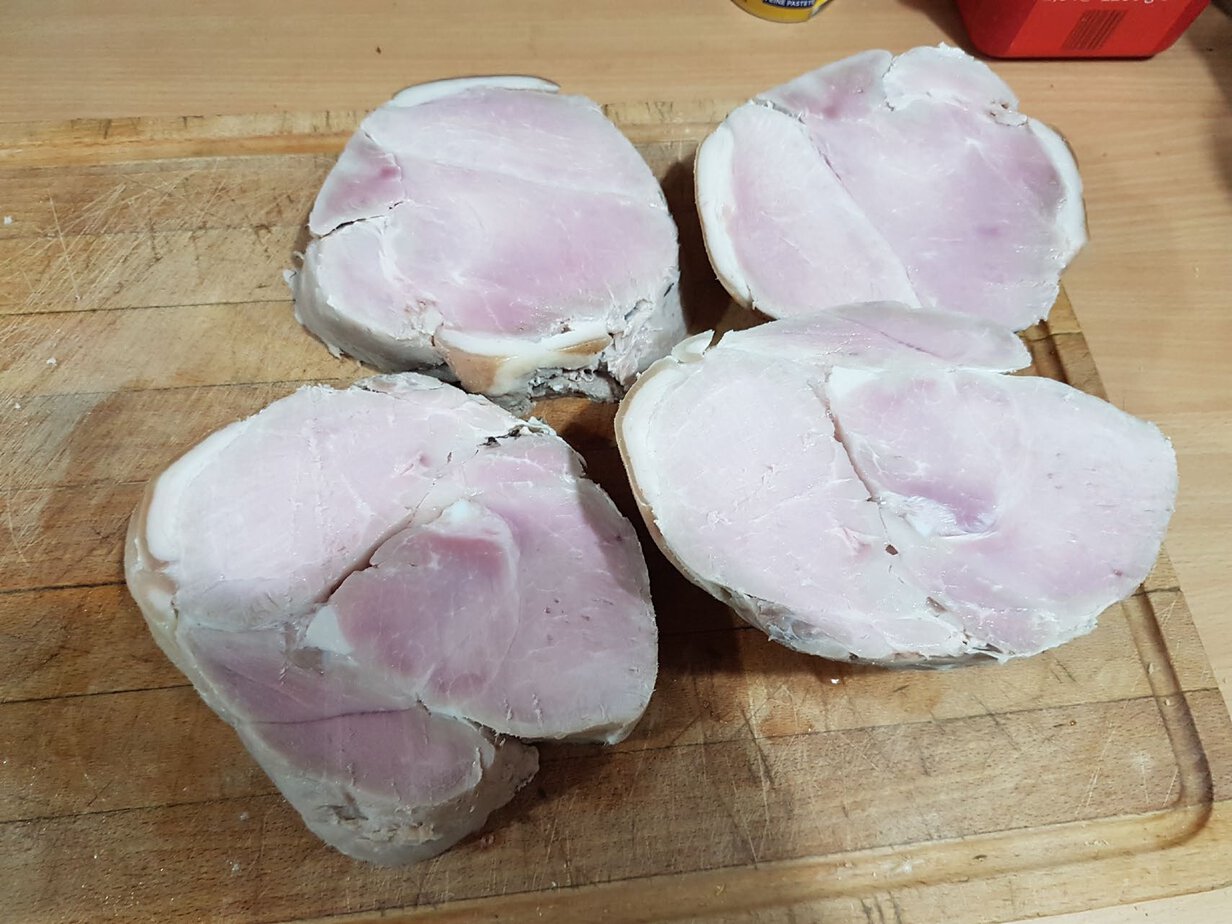
The Main Ingredients in Jambon Blanc
Start with a good-quality cut of pork: a leg or, as in this recipe, a fresh ham steak.
The brine adds flavor and preserves the meat. It is made with coarse salt and sugar in the right proportions, scented with thyme, bay leaf and clove. The cooking broth, made with carrots, turnips, leeks and onions, gives the ham its final layer of flavor.
Technical Tips for Good Jambon Blanc
Leave the meat in the brine, in the refrigerator, for at least three days so it fully absorbs the flavors.
The cooking must stay gentle and slow. Keep the broth at 80 °C and monitor the internal temperature of the meat, which must not exceed 66 °C.
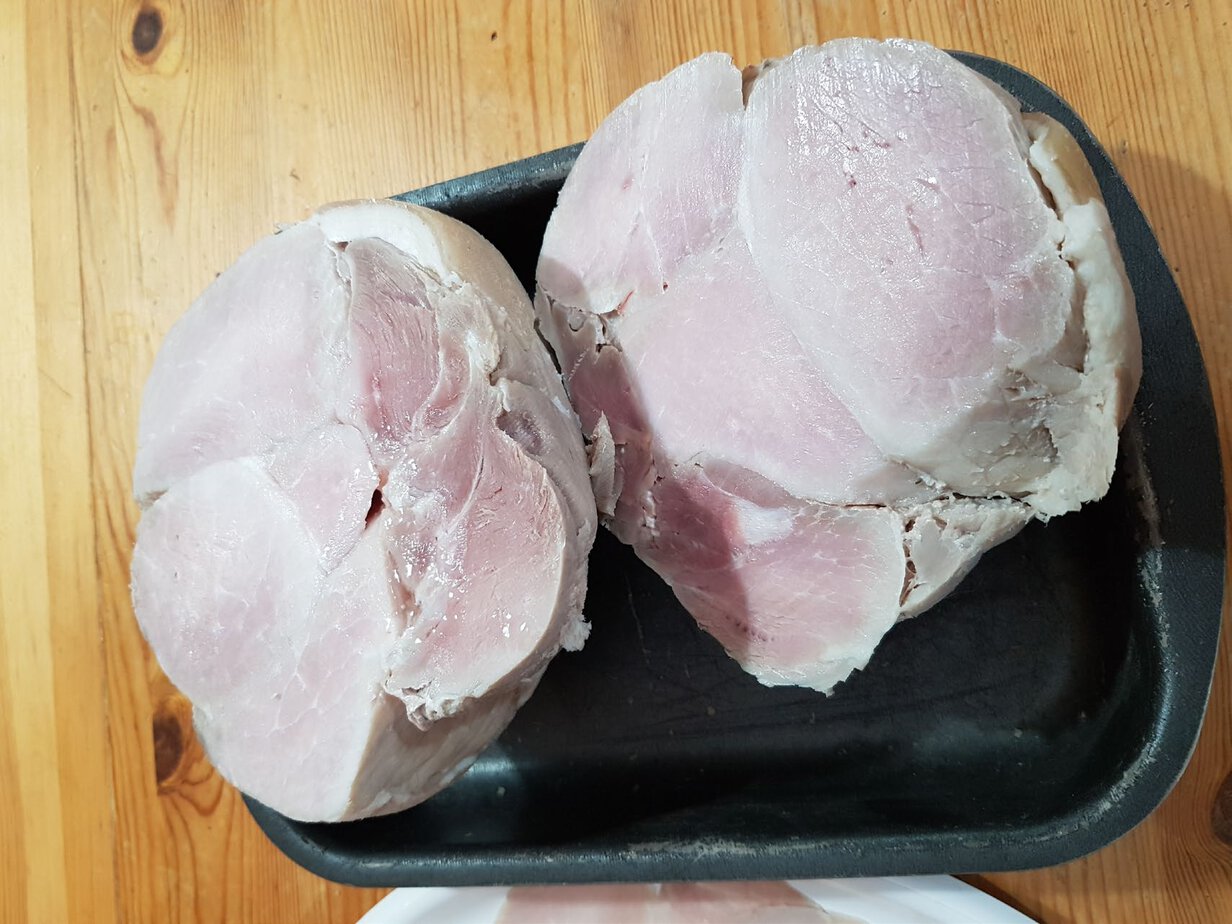
After cooking, let the ham cool on a wire rack, then refrigerate it for a day before eating it. The flavors develop and the texture sets.
A recipe posted by Rémy Bach
Equipment
- Ham netting
- Wire rack
- Large container
- Temperature probe
- Thermometer
Ingredients
- 3 kg fresh ham steaks
For the brine:
- 1.8 kg coarse salt
- 200 g sugar
- 10 L water
- Thyme
- Bay leaves
- Cloves
- Chili peppers
- Onions
- Shallots
For cooking:
- Water
- Carrots
- Turnips
- Onions
- Leeks
- Thyme
- Bay leaves
Instructions
- Make the brine by bringing 1.8 kg salt, 200 g sugar, chili peppers, onions, shallots, bay leaves, thyme, cloves and 10 L water to a boil
- Let the brine cool
- Plunge the meat into the cooled brine and make sure it is completely submerged
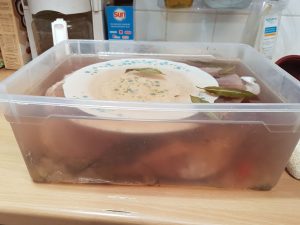
- Leave to rest in the refrigerator at 4°C for 3 days
- Desalt the meat by soaking it in a water bath for a day, changing the water several times
- Open a ham net and hold it open with a stainless steel mixing bowl
- Place the rind from the ham steaks in the net (optional)
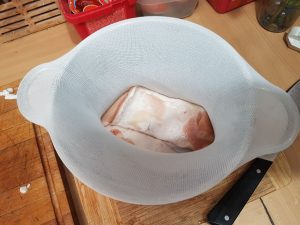
- Cut up the remaining meat
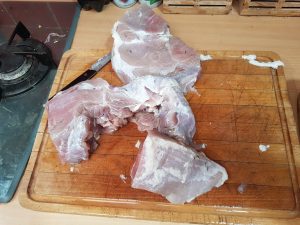
- Add the cut meat to form a round shape
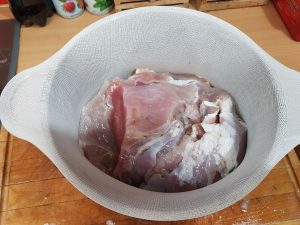
- Close the net and pack the meat down, squeezing it as tightly as possible. Ask someone to help tie it while you compress the meat to get a perfect ball
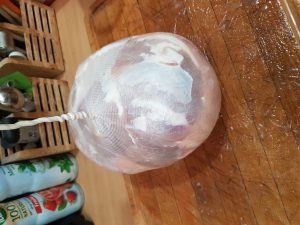
- Make a broth with carrots, leeks, turnips, onions, shallots, thyme and bay leaves
- Cook the meat in the broth at 80°C, making sure the internal temperature of the meat does not exceed 66°C. Cook for about 2 hours 45 minutes for a 3 kg ham
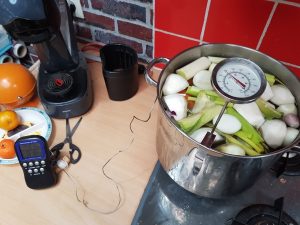
- Let the ham cool on a wire rack

- Refrigerate the ham for a day
- Remove the netting and enjoy
- Slice and vacuum-seal for freezing if desired