You can land in Kuala Lumpur, drop your bags, then, in under ten minutes, find yourself beneath a neon-lit awning. The smell of fried shallots and fried garlic hangs in the air, a sambal waits on the table, and you are served like a regular. You grasp it at once : Malaysian cuisine is not so much a<\/em> dish as a way of building flavor, in layers.
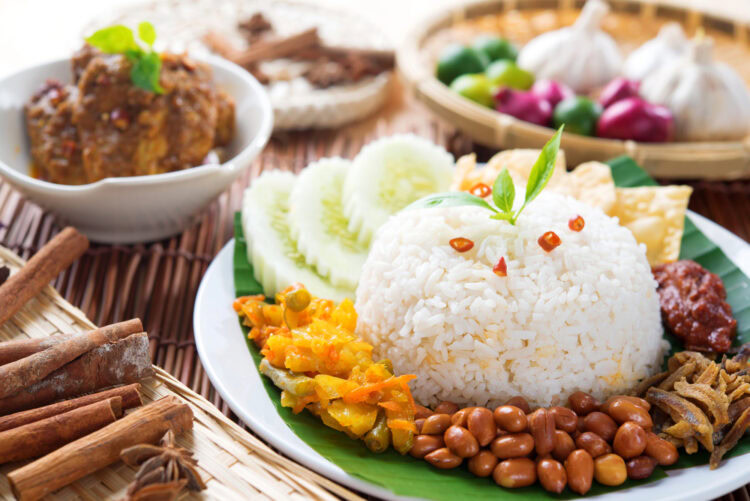
Yes, nasi lemak is often presented as the national dish. But Malaysian cuisine doesn’t easily reduce to a single “signature dish.” It reads instead through a succession of contrasts: a coconut-scented rice; a streak of sambal, biting at first then rounder; an acidity that brings the whole into focus; the smoke of charcoal marking the rice noodles or the skewers.
For curious eaters (travelers, home cooks, or anyone wanting to move past the “spicy and rich” shorthand), think of it as a culinary crossroads, unified by shared ingredients and shared gestures. There is no single “most authentic” version: in Malaysia, context matters as much as the recipe.
The multicultural mosaic of Malaysian cuisine
Ports, peoples, and the long history of culinary crossover
Malaysian culinary logic was forged in motion: ships docking, goods circulating, families settling in, cooks adapting. Historically, Malay cuisine took shape in the 15th century in the Sultanate of Malacca, where openness to Arab, Persian, Chinese, and Indian influences left a lasting mark on the table. Techniques arrived with migrations. More broadly, recurring ingredients, such as pandan, belacan, santan, and tamarind, unify many of the country’s cuisines. Over time, the dishes stopped seeming “imported” and became fully local.
The Malay culinary traditions anchor the table with rice-centered meals, a culture of sambal, coconut-milk sauces, and very herbaceous rempah. They also include the slow cooking of celebrations, where meat and spices simmer to a characteristic depth, as in rendang. The Chinese-Malaysian cooks brought Asian noodles, mastery of the wok, and the specialization of food stalls, along the way bringing a genuine culture of dim sum and classics such as Hainanese chicken.
The Indian and mamak influences built another everyday institution: meals on banana leaves, curries, roti canai (a cousin of the chapati), teh tarik, and menus that move between cuisines, mirroring a mobile clientele.
The Peranakan (Baba-Nyonya) cuisine weaves Chinese ingredients through Malay spice techniques : elaborate pastes, pickled vegetables, and, in some Nyonya kitchens, the use of pork with local spices and herbs. The legacy of a community whose pantry and history refuse to be confined to a single category.
Finally, there are the indigenous traditions, distinct, rooted in place, and often overlooked. On the peninsula, among certain Orang Asli communities (notably the Semai and Temuan), bamboo cooking is still practiced : you’ll find, for example, rice or chicken cooked in bamboo, infused with a sweet, woody fragrance. In Sarawak, bamboo cooking takes another form, called : pansoh/pansuh (as in manok pansoh), associated with indigenous groups such as the Iban. The bamboo, sealed with aromatics, serves both as a vessel and as an aromatic medium, with a faintly lemony steam. Here, local resources (leaves, bamboo, aromatics) are not decoration : they structure the techniques.
Traces in cookbooks : a shared archive
Historical records underline how long these dishes have been recognized as distinctly local. Colonial-era cookbooks, such as Mem’s Own Cookery Book (1929), included recipes for rendang and satay for an English-speaking readership. In 1935, the YWCA’s International Cookery Book of Malaya analyzed more than 90 local ingredients (from “blachan” (belacan) to bird’s nest) and noted their nutritional values. That’s a sign of a country that already knew its pantry with precision.
After the war, a 1958 cookbook in Jawi, Medan Selera, by Haji Ahmad bin Yaakub Al-Johori, compiled 63 recipes covering, among others, Malay, Chinese, Indian, Arab, Javanese, and European cuisines, in Malay. That detail matters : Malaysian cuisine has long been a shared archive, rather than a single lineage.
The main ingredients of Malaysian cuisine
In Malaysian cuisine, everyday ingredients behave like tools : some give body, others bring brightness, others build depth, others add fragrance. A pattern recurs often : many dishes begin with an aromatic base, then seek a precise balance ; the heat is brought forward, then softened, then readjusted by acidity and herbs. Once you’ve identified that balance, it becomes hard to stop noticing it. To get equipped without fumbling, the map of Asian grocery stores can make things easier.
- Coconut milk (santan): gives curries and stews a round, creamy texture. It softens the heat while carrying the spice fragrances through the dish. By way of comparison, you’ll find a similar logic in coconut-milk preparations such as tom kha gai or a panang curry. Buying tip: if you can, choose a thicker santan for richness, then dilute it yourself to adjust the texture.
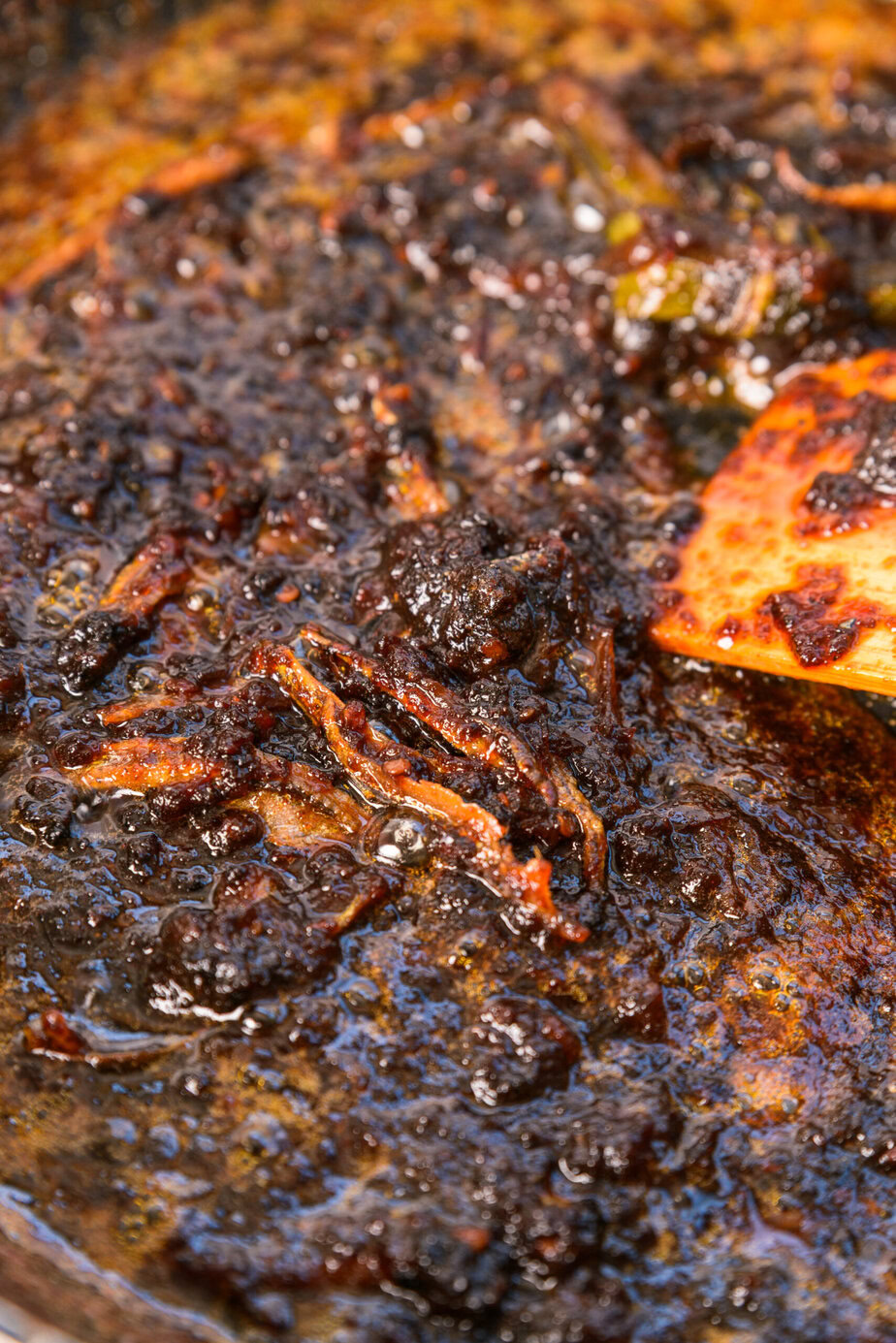
- Belacan (fermented shrimp paste): brings a deep umami, the bass note in sambal and many stir-fries. It is often toasted beforehand to reveal its aroma. You recognize it by a pronounced smell, without harshness.
- Chilies (fresh/dried): bring heat and fruitiness. They also shape the dish’s profile, forming the backbone of the sambal. If you cook often, keeping some chili powder on hand can save time.
- Shallots + garlic: the sweet-savory base of many rempah. Once fried, they turn raw heat into depth.
- Ginger + galangal: ginger warms, while galangal brings a resinous, lemony note, common in many curries, including some profiles close to Thai green curry.
- Lemongrass: perfumes and lightens rich sauces, keeping coconut dishes from feeling heavy.
- Turmeric (fresh/powdered) + turmeric leaf: earthy fragrance and golden color. A classic with fish, seafood, and fried foods.
- Pandan leaf: a sweet fragrance, between vanilla and almond. It is used in rice and desserts, and is an instantly recognizable smell.
- Tamarind (asam jawa) and lime: an acidity that tightens broths and balances the richness of coconut (think of asam/assam laksa and asam pedas).
- Fermented elements (tempoyak, budu, tuhau, pickled vegetables): bring character and complexity, and often signal a regional identity. Fermented condiments play a central role here.
Techniques & flavor logic: what makes a dish taste “Malaysian”
Rempah, tumis and the cooking sign (pecah minyak)
Across all communities, the “Malaysian” flavor often begins the same way: with a rempah, pounded aromatics that act as the engine of the dish. The crucial step is the tumis, a slow cooking that turns raw, watery greenness into sweetness and depth.
Cooks watch for the pecah minyak, the sign that the spice paste is cooked: the oil separates, the paste darkens, and the aroma grows more present. This step is generally considered essential. When you don’t have a rempah ready, a yellow curry paste can serve in a pinch, without replacing the result, but keeping the idea of a worked aromatic base.
Traditional tools like the lesung batu (stone mortar) matter here, not out of nostalgia, but because texture changes the way flavor arrives on the palate. A blender tends to smooth things very finely, whereas a stone mortar leaves a slightly grainy paste, which holds oil better and releases aromas differently. It’s also one of the reasons a sambal can seem more expressive from one kitchen to another.
Charcoal, leaves, and bamboo : technique as identity
Heat sources, too, carry meaning. Charcoal grilling comes up again and again : satay, ikan bakar and the stories around char koay teow, because smoke and caramelization embody the spirit of street food. Wrapping in leaves (banana, pandan, attap) infuses aromas and keeps things moist, whether it’s a spicy fish custard grilled in a parcel or a rice steamed to a sweet fragrance.
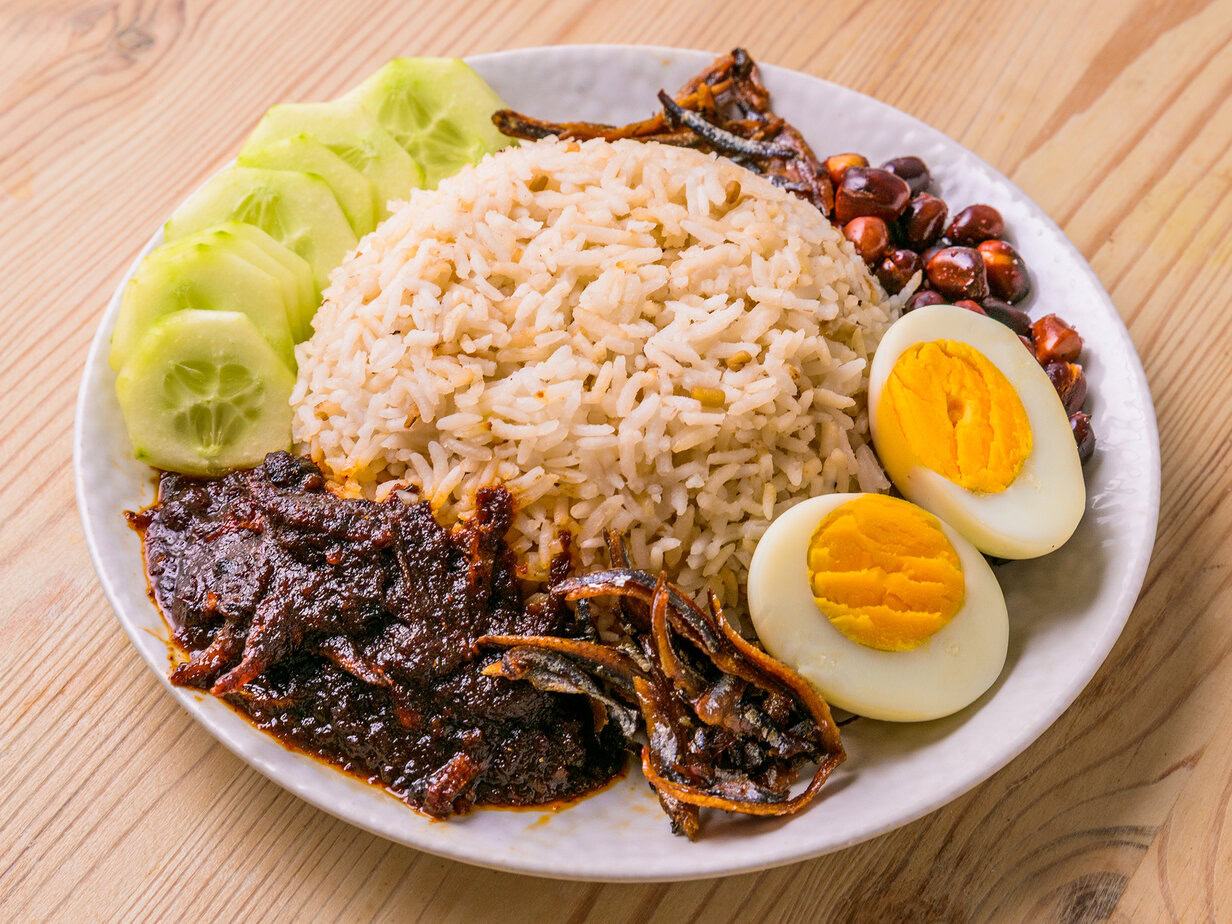
And in indigenous kitchens, bamboo is no passing trend : it’s a tradition. In Sarawak, the pansoh/pansuh cooking method turns bamboo into an airtight vessel, scenting the meat with lemongrass and a light sweetness from the tube itself. This points back to an overall logic that underpins many dishes : balance. Rich, spicy, sour, salty, and fresh can all meet on a single plate. The nasi lemak, for instance, is not just coconut rice : it’s the coconut against the fire of the sambal, the crunch of the cucumber against the salt of the anchovies, the sweet against the smoky.
Regional signatures & iconic dishes
If you want to eat in Malaysia like a local, don’t start with a checklist : start with a street. Walk where the stalls cluster, listen for the hiss of the wok and the sharp tap of the cleaver, then follow the smells that make you change direction.
On the peninsula, start with the essentials :
The nasi lemak is assembled from essential elements (coconut-scented rice, sambal, ideally with the depth of belacan, anchovies, peanuts, cucumber, egg), then varies endlessly depending on the stall, the neighborhood, and your appetite.
The satay (skewers) illustrates the role of charcoal and controlled cooking: skewers basted and turned until the edges char, served with a sauce far more complex than a mere “peanut sauce,” often based on satay paste (and sometimes adapted into satay beef).
The rendang, for its part, appears on celebration tables as a long-simmered dish: the coconut milk reduces until the spices cling and the oil rises.
The street vendors’ classics map out Chinese-Malaysian know-how and a strong local marker. The char koay teow (also romanized char kway/char kuey teow) is a benchmark dish because it lays the technique bare: rhythm, heat, the fragrance of a well-seasoned wok. In Penang, a renowned stall (Siam Road Char Koay Teow) still stir-fries each plate individually over a charcoal flame; the spot was ranked in the world’s Top 50 street food in 2017.
The laksa, meanwhile, is often understood as two logics: the curry laksa leans on the richness of coconut and spices (with profiles that may recall, by way of comparison, the Thai red curry), while the asam/assam laksa is built around the acidity of tamarind and a fish depth, woken up by herbs and often a touch of shrimp paste.
Mamak cuisine holds a particular social place : restaurants often open late, where people eat on the go as well as in groups, with cross-cutting menus. There you’ll find the roti canai slapped, stretched, folded into flaky layers ; the mee goreng or the maggi goreng with their sweet-savory heat, as well as the nasi goreng with kecap manis ; or the murtabak, stuffed then seared on a griddle until the edges crisp. The idea isn’t an abstract “mix” : the menu reflects a daily practice, across communities and often at the same table.
Also look out for Peranakan and Eurasian markers when you’re in the mood for a complexity built through labor. The nyonya laksa concentrates rempah and coconut milk in a broth that is both precise and generous. The ayam buah keluak brings an earthy, nutty depth, thanks to the keluak nut, to be handled with care. The acar and the kuih play on the tangy and the sweet : vegetables in vinegar lifted with spices, cakes scented with pandan and coconut (such as coconut pearls). In Malacca, the Portuguese-Eurasian devil’s curry (curry debal) carries colonial history in a pot : the acidity of vinegar meets the local fire.
Finally, East Malaysia (Sabah and Sarawak) stands apart through its ingredients, its influences, and its methods. The Sarawak laksa asserts a clear identity with its spice blend and its serving codes: lime and coriander are a finishing signature (and many also add sambal). Indigenous techniques come to the fore: the manok pansoh/pansuh (chicken in bamboo) scented with lemongrass and bamboo; jungle vegetables such as midin fern, crisp-tender when stir-fried very quickly; fermented condiments with assertive character.
In Sabah, freshness rules the day: the hinava, fish “cooked” with citrus alongside chili and aromatics, is very fresh and bracing, and local flavors such as bambangan (wild mango) and tuhau (a powerful condiment made from wild ginger) are hard to replace.
- If you like acidity: asam/assam laksa, asam pedas, hinava.
- If you like richness: nasi lemak, curry laksa, rendang.
- If you like smoke: satay, ikan bakar, char koay teow over charcoal.
Authenticity as a living practice: how Malaysians debate, adapt, and still recognize “the real thing”
Malaysians debate food the way others debate sports : loudly, precisely, and with a sense of the rules. These exchanges reveal what’s judged fundamental. The clearest example is the rendang : long simmered, it is not meant to be “crispy.” A line widely defended worldwide after a judge’s comment on MasterChef UK in 2018 sparked the so-called “crispy rendang” controversy.
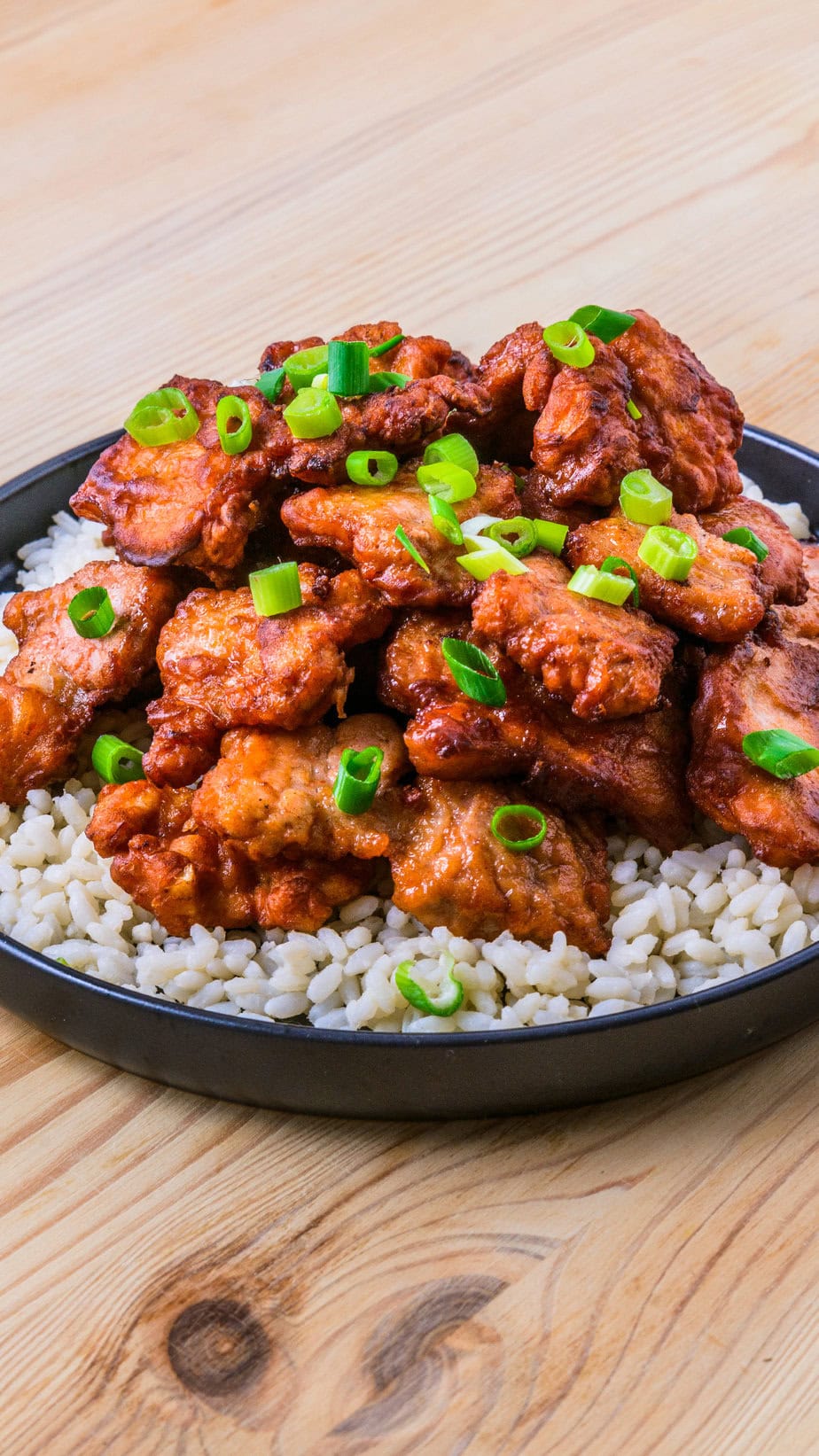
But adaptation is also part of the national repertoire. The realities of halal shape what is cooked and who can eat, and these adjustments can be very concrete. A well-known example : bak kut teh, traditionally pork-based, also exists in halal chicken or beef versions, sometimes marketed under the name “chai kut teh” (a commercial label). And, conversely, in non-halal communities, you’ll also come across dishes like Malaysian fried pork. You’ll find comparable substitutions in other street-vendor favorites : the touchstones remain technique, seasoning, and textures.
If you want to learn with respect, ask a better question than “Is it authentic?”. Try instead : “Which region or community does this style come from?” Then taste with curiosity, instead of ranking one version as the only “real” one. Because in Malaysia, a common reflex sums up this approach well : jalan-jalan cari makan : to wander about, follow your appetite, and let the country explain itself, one plate at a time.