


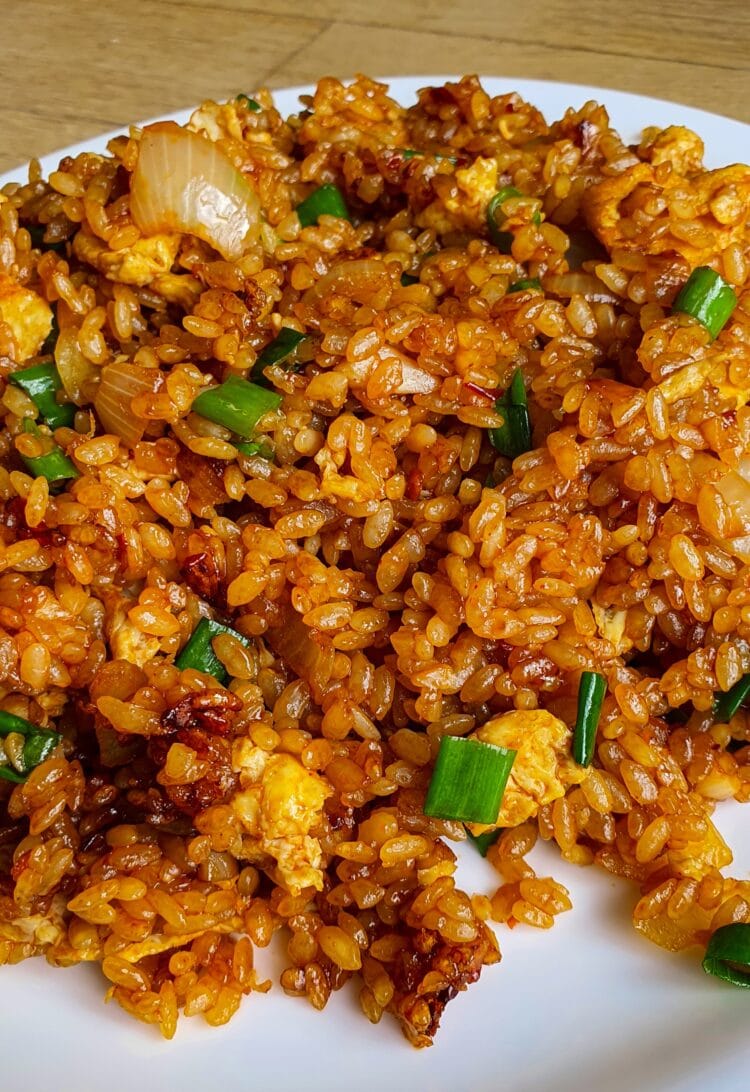
Nasi Goreng is roughly the Indonesian version of fried rice.
In addition to kecap manis, the ubiquitous sweet soy sauce of the country, terasi (Indonesian shrimp paste) is what distinguishes nasi goreng from other fried rice variants you’ll see in other countries.
Terasi is an umami bomb that permeates both your kitchen and your senses. If you can’t find it easily, don’t hesitate to replace it with another Southeast Asian shrimp paste, or omit it. As usual, it will still be delicious, but you’ll miss a nice nuance of flavor. A good substitute can be sambal oelek. You can also add it to your beef rendang.
The Main Ingredients of Nasi Goreng
Terasi is an Indonesian shrimp paste that can be found in well-stocked Asian supermarkets. If you can’t find terasi, you can substitute it with belacan (Malaysian or Singaporean shrimp paste) or Thai shrimp paste, or simply omit it altogether.
Sambal oelek is an Indonesian chili paste, traditionally prepared with nothing more than red chilies and salt. You can find it in Asian markets or in the “international” aisle of some supermarkets.
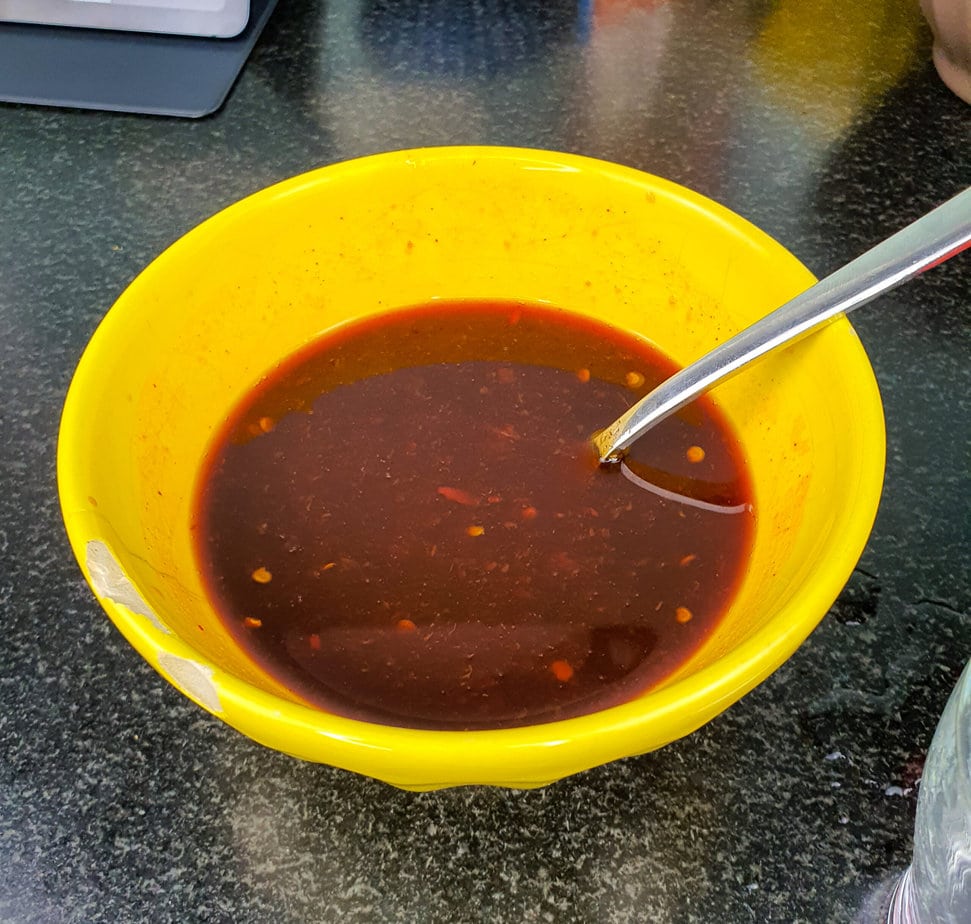
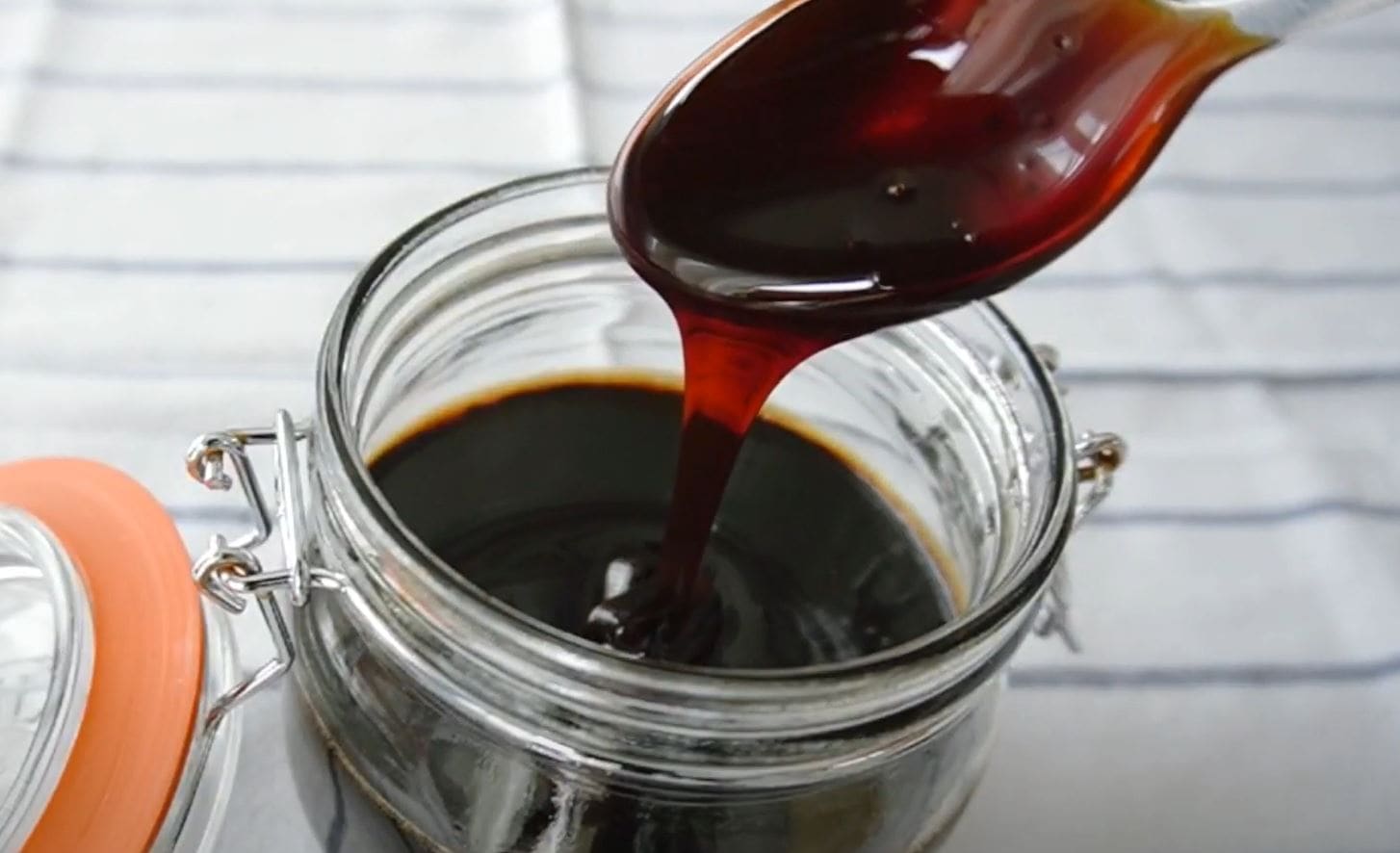
Kecap manis is an Indonesian sweet soy sauce, typically made by combining soy sauce with palm sugar. For more information, read my article on kecap manis and how to make it yourself.
Tips for Successful Nasi Goreng
For best results, use rice that has been refrigerated for at least 12 hours and up to 3 days. If using freshly cooked rice, spread the rice on a tray and let it cool for 5 minutes before using.
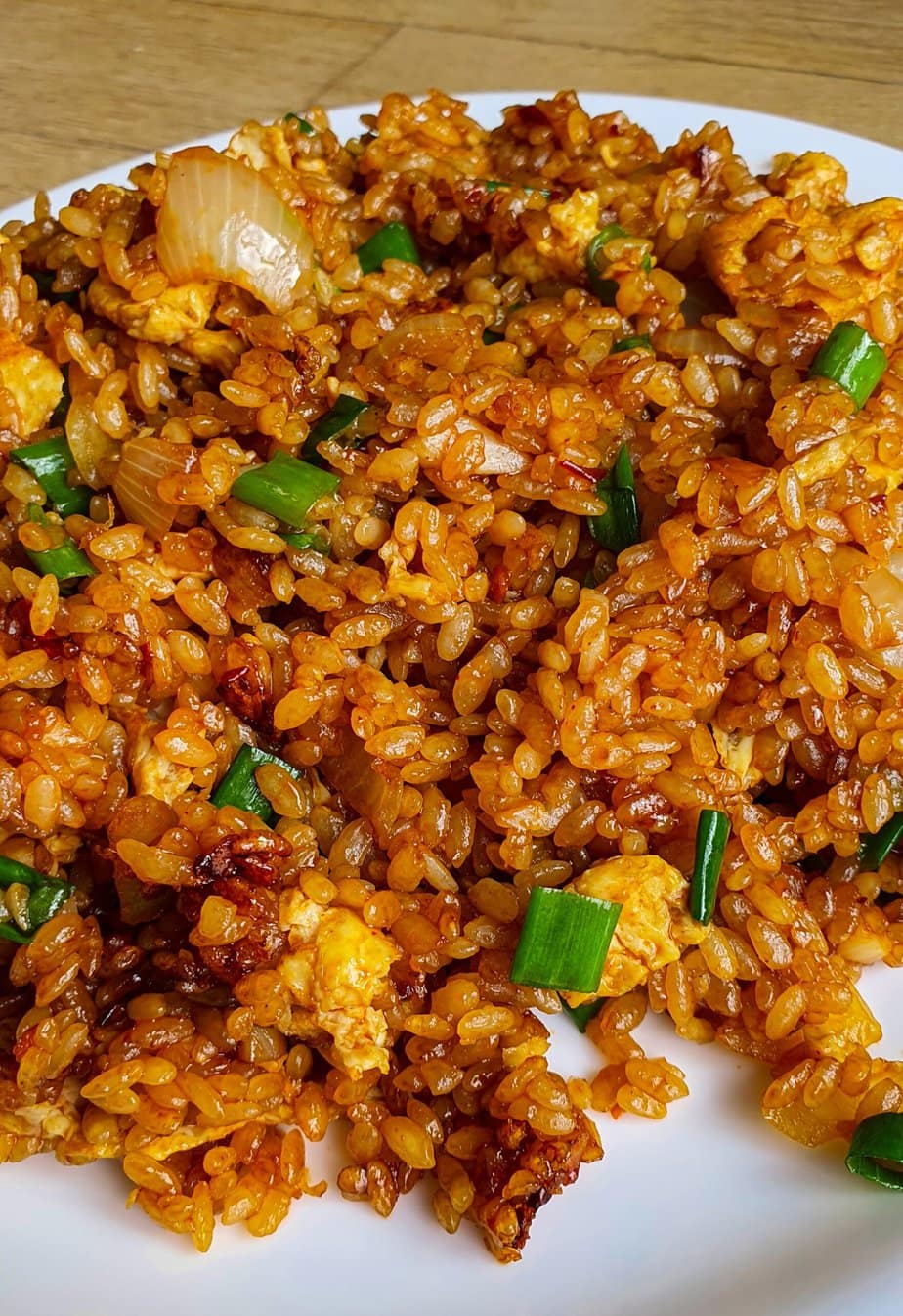
Authentic Nasi Goreng – Indonesian Fried Rice
Equipment
- 1 Wok
- 1 mortar
Ingredients
For the spice paste
- 2 small shallots coarsely chopped
- 3 cloves medium garlic cloves
- 1 teaspoon of sambal oelek or one large green chili, stemmed and seeded
- 0.5 teaspoon of terasi Indonesian shrimp paste
For the Nasi Goreng
- 600 g of cooked and cooled jasmine rice cooked weight
- 30 ml neutral oil
- 30 ml of kecap manis
- 10 ml light soy sauce
- 1 pinch salt
- 1 pinch white pepper
For serving
- 2 large fried eggs optional
- Cucumber slices optional
- Sliced tomatoes optional
- Fried shallots optional
Instructions
For the spice paste
- Place half of the shallots in a mortar and grind with a pestle until a coarse puree forms.
- Add the remaining shallots, followed by the garlic, chili, and terasi (if using), grinding with a pestle until each ingredient is mostly incorporated before adding the next.
- The final paste should resemble thick oatmeal. Alternatively, combine all spice paste ingredients in a small food processor and blend until they form a paste.
For the Nasi Goreng
- If using day-old rice, transfer the rice to a bowl and break the rice up with your hands into individual grains.
- Heat the oil in a large wok or skillet over high heat until shimmering.
- Add the spice paste and cook, stirring constantly and scraping the bottom of the wok or pan to prevent the paste from burning, until a pungent aroma permeates your kitchen and the paste darkens, 2 to 3 minutes. Reduce heat to medium at any point if the paste seems to be browning too quickly.
- Add the rice to the wok and stir to coat with the spice paste.
- Add the kecap manis and soy sauce. Stir and cook until the rice is evenly colored and hot throughout. Season with salt and white pepper.
- Divide the rice between two plates and top each plate of rice with a fried egg. Garnish with cucumber and tomato slices and shower with fried shallots, if desired.
- Serve immediately with kecap manis on the side just in case


Made this nasi goreng about 4 times now, and it always turns out perfectly savory and fragrant, especially with the terasi and kecap manis. Still just as satisfying every time, this recipe is a keeper 🙂
Made this nasi goreng for a dinner with friends last weekend and the kitchen smelled incredible as the paste cooked. Everyone went back for seconds, and two guests asked me to send them the recipe because the sweet-savory kecap manis flavor was so good 🙂
My picky partner usually turns up their nose at anything with shrimp paste, so I was pleasantly surprised when they went back for seconds and asked me to make this nasi goreng again 😋
The smell of the shallots, sambal, and that sweet hit of kecap manis took me right back to my childhood, when my aunt would make fried rice with whatever was in the fridge and a perfectly crisp egg on top. Love how you explain the terasi too, it’s exactly that deep savory note that makes the whole dish feel like home 🙂