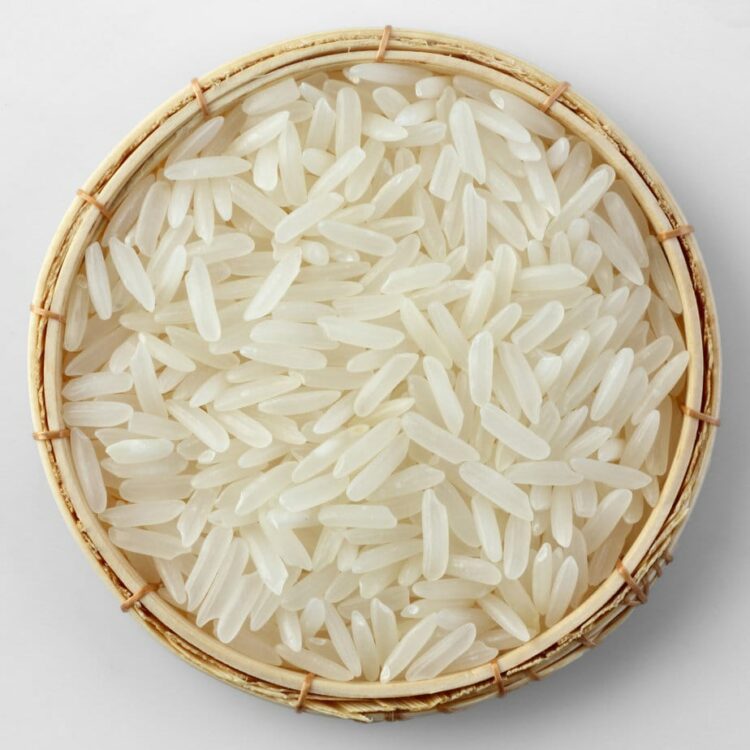
Origins and history of jasmine rice
Jasmine rice is a staple of Asian cuisine. It is a type of long-grain rice, usually white, sourced mainly from Thailand and Cambodia. It owes its name not to its fragrance, but to its color, which resembles that of the jasmine flower.
For many years, Thailand was the world’s leading exporter of jasmine rice, and even today it remains the flagship product of its foreign trade.
The different varieties of jasmine rice
There are several varieties of jasmine rice: the white version, the brown one, and the black one. These three varieties share the same basic characteristics, namely a pronounced aroma and a nutty flavor. That said, the brown version contains more vitamins, fiber, and antioxidants.
According to several rumors, black jasmine rice was once reserved exclusively for the nobility and the upper classes, which is why it was also known as “forbidden rice.” Compared to the other versions, it contains far more protein, iron, and fiber. It is also much richer in anthocyanins.
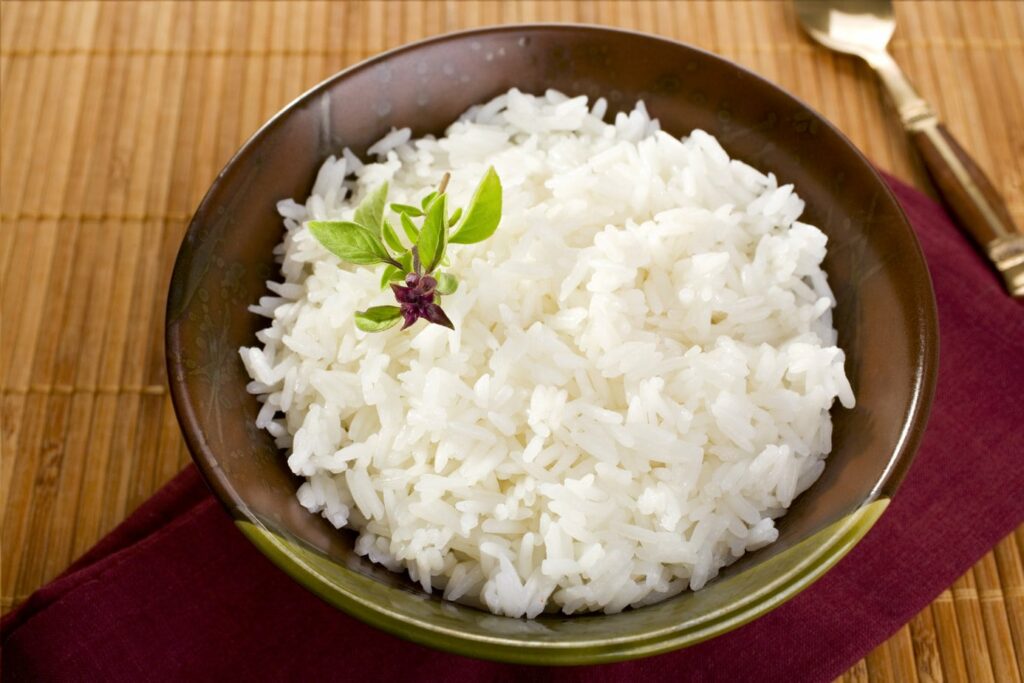
Differences between jasmine rice and basmati rice
Although jasmine rice and basmati rice look very much alike, their flavors and textures are not the same. Jasmine rice has a mild, nutty flavor. It has a more floral, more pronounced aroma and a delicate consistency.
Basmati rice also has a nutty taste, but a much earthier and firmer one. It is used mainly in India and Pakistan. In addition, the grain of basmati rice is longer than that of jasmine rice. It can stretch up to twice its original size when cooked.
Nutrition of jasmine rice
Compared to other white rices, jasmine rice is slightly higher in calories and therefore contains more fat. Some people prefer brown jasmine rice over white jasmine rice because it is considered healthier, higher in protein, and richer in nutrients.
Uses of jasmine rice
Jasmine rice is used as a side dish for meats, fish, and desserts. The good news is that you don’t necessarily need a rice cooker. A saucepan will do the job just fine. In my opinion, the best way to cook jasmine rice is by steaming, that is, by absorption.
How to cook jasmine rice?
A little tip: always rinse the rice in cold water before cooking it, in order to remove the excess starch. Then drain off the rinsing water. For cooking, use one part rice to two parts water. Cover the saucepan and bring to a boil.
Finally, lower the heat and let it simmer for a few minutes until the water is completely absorbed. Stop the cooking and let it rest for a few more minutes… Khõ hai dja! (Enjoy your meal!)
Taste of jasmine rice
Although jasmine rice is generally fairly bland, it nonetheless has a sweet, nutty taste. As it cooks, it releases a smell that I would describe as a cross between buttered popcorn and fragrant flowers.
Once cooked, its texture is light and fluffy. It pairs very well with the spices used in Asia or the Middle East. In fact, it is the seasoning that determines the flavor of the rice.
Substitutes for jasmine rice
I would say that the best substitute for jasmine rice is basmati rice, the rice to which it is often compared. Although its taste, aroma, and texture differ from jasmine rice, its grain and fragrance share similarities with it. It can also be replaced by brown rice, white rice, and wild rice.