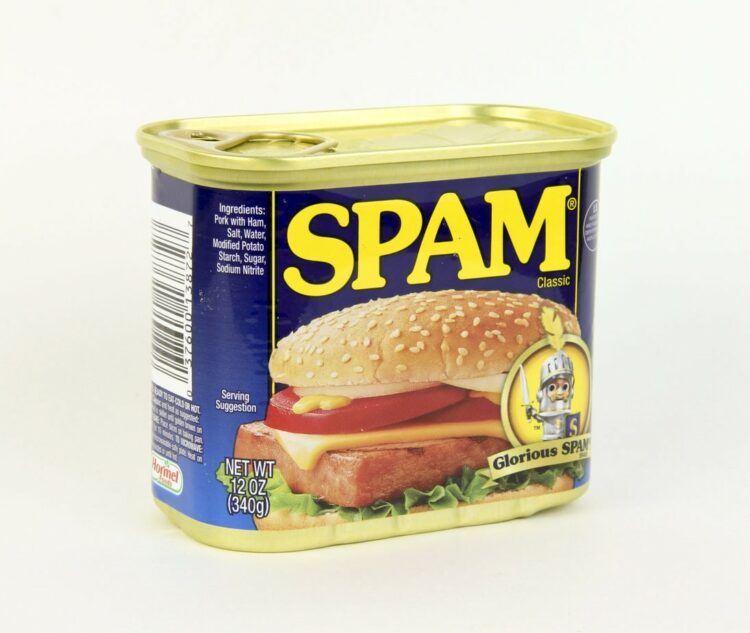
What is Spam?
If you’re not a fan of this food, you’re probably wondering what this unappetizing, dog-food-looking product actually is. Spam is a product made by the American company Hormel Foods. It’s processed pork shaped into a rectangular block, packed in a can with an iconic design.
Why am I telling you about Spam? Because, even though the product is American in origin, it’s a food that has enjoyed phenomenal success in South Korea. During the Chuseok festival, it’s even a must-have gift among families. The Spam gift set has already ranked as the 2nd best-selling product in Korean supermarkets during that period (2017).

What does “SPAM” mean?
There’s a real mystery surrounding the name of this meat… In reality, nobody really knows what these four letters mean! It’s a question frequently asked on the brand’s website, and the company simply replies that the answer is known only to a small circle of company employees.
Among the most credible theories, some say “SPAM” could be the acronym for “shoulder of pork and ham,” or more simply a contraction of “spiced ham.” I even read recently that some claim it could stand for “scientifically processed animal matter”… maybe that’s the reason the brand wants to keep the mystery alive..?
What is Spam made of?
Fortunately, the company is less secretive about the makeup of its meat than about the meaning of the “Spam” name. On its website, you’ll find the list of the six ingredients that make up Spam:
- raw pork with added ham
- salt
- water
- potato starch
- sugar
- sodium nitrite (a preservative to keep it fresh)
These six components are mixed together for 20 minutes. What’s a bit unusual is that the resulting mixture is packed raw into the cans, and it’s these cans, filled with raw meat, that are then cooked and cooled. So the meat cooks right inside its packaging.
The origins of Spam
Spam was developed in Minnesota in 1937 by the company Hormel Foods. Between the two world wars, the economic-depression era made it strategic to put a cheap meat on the market. World War II further helped popularize Spam, thanks to how well it kept and traveled.
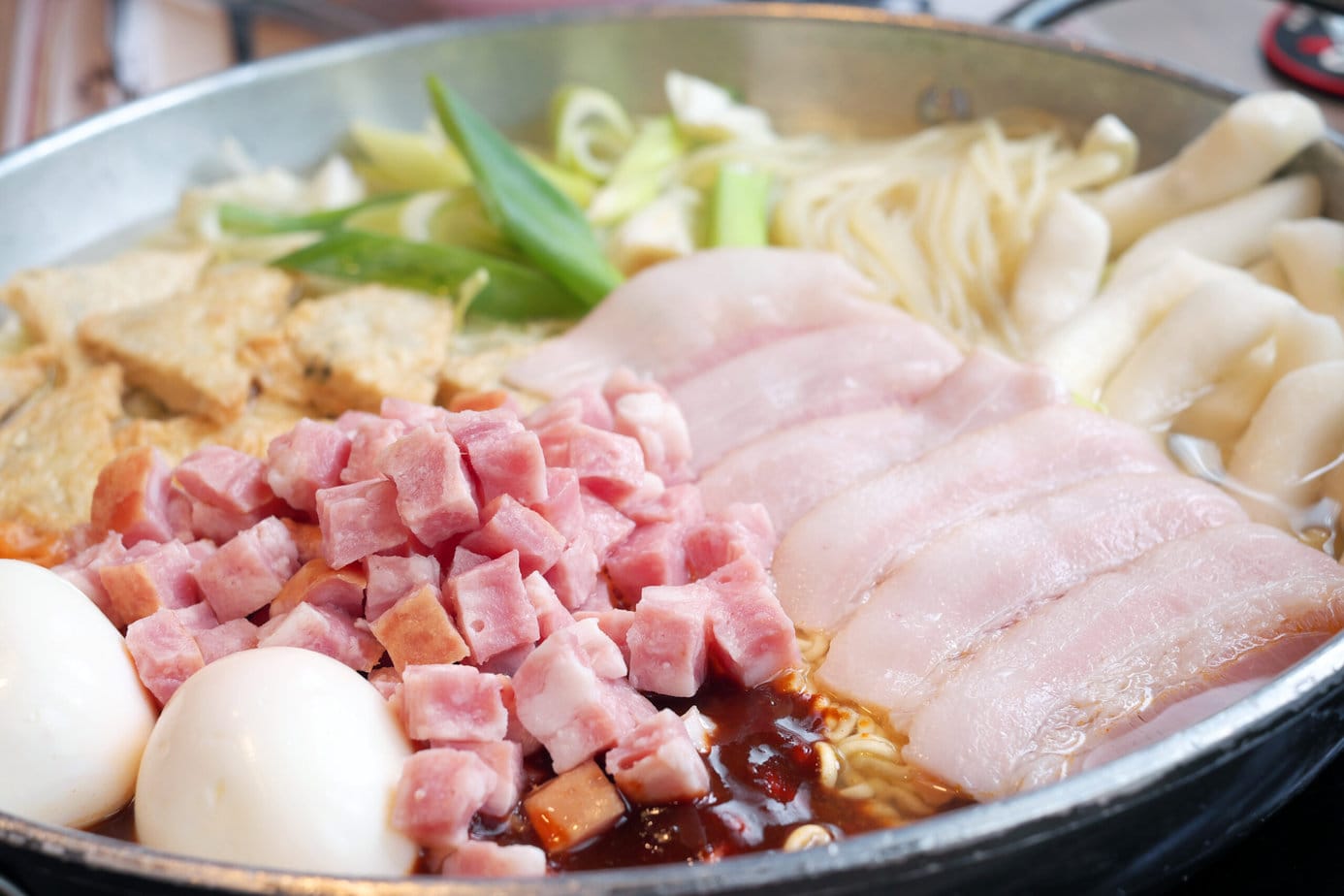
It was precisely when the Americans arrived in Korea in the 1950s that Spam spread throughout the country. At that time, the population could only get hold of meat with great difficulty.
That explains the value they attached to Spam when American soldiers handed it out to them. Today, Spam is so firmly established in Korean cuisine that South Korea has become the world’s second-largest consumer of Spam (after the USA)!
What does Spam taste like?
Spam has a fairly salty taste, which is another reason it became popular in South Korea, since it balances out dishes made with sweet ingredients. The dominant flavor is close to ham. You could place its taste somewhere between bacon and a hot dog.
Is Spam good for your health?
Honestly… not really. Even though Spam provides protein, it’s still ultra-processed meat, which is often linked to a higher risk of developing diabetes or heart disease.
On top of that, Spam is fairly high in calories, fat, and sodium. Like any good guilty pleasure, you don’t have to deny yourself completely, but enjoy it in moderation!