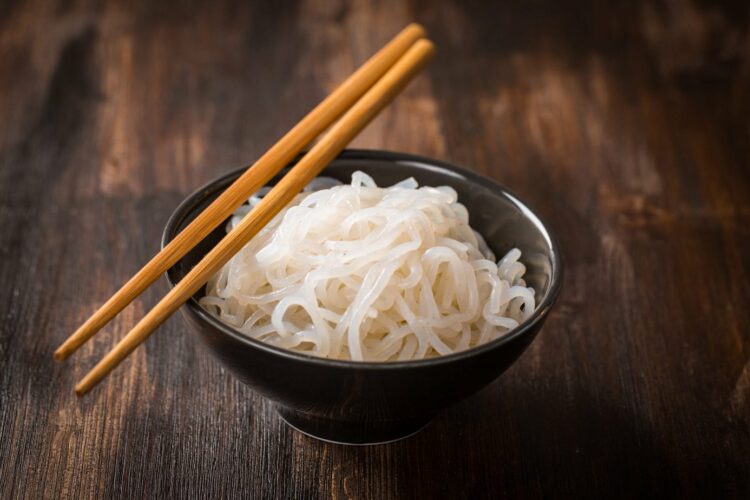
What are konjac noodles?
In Japanese tradition, konjac noodles, commonly known as shirataki, are noodles made from the konjac root. In practical terms, they are a preparation made from konjac flour mixed with still water and limewater.
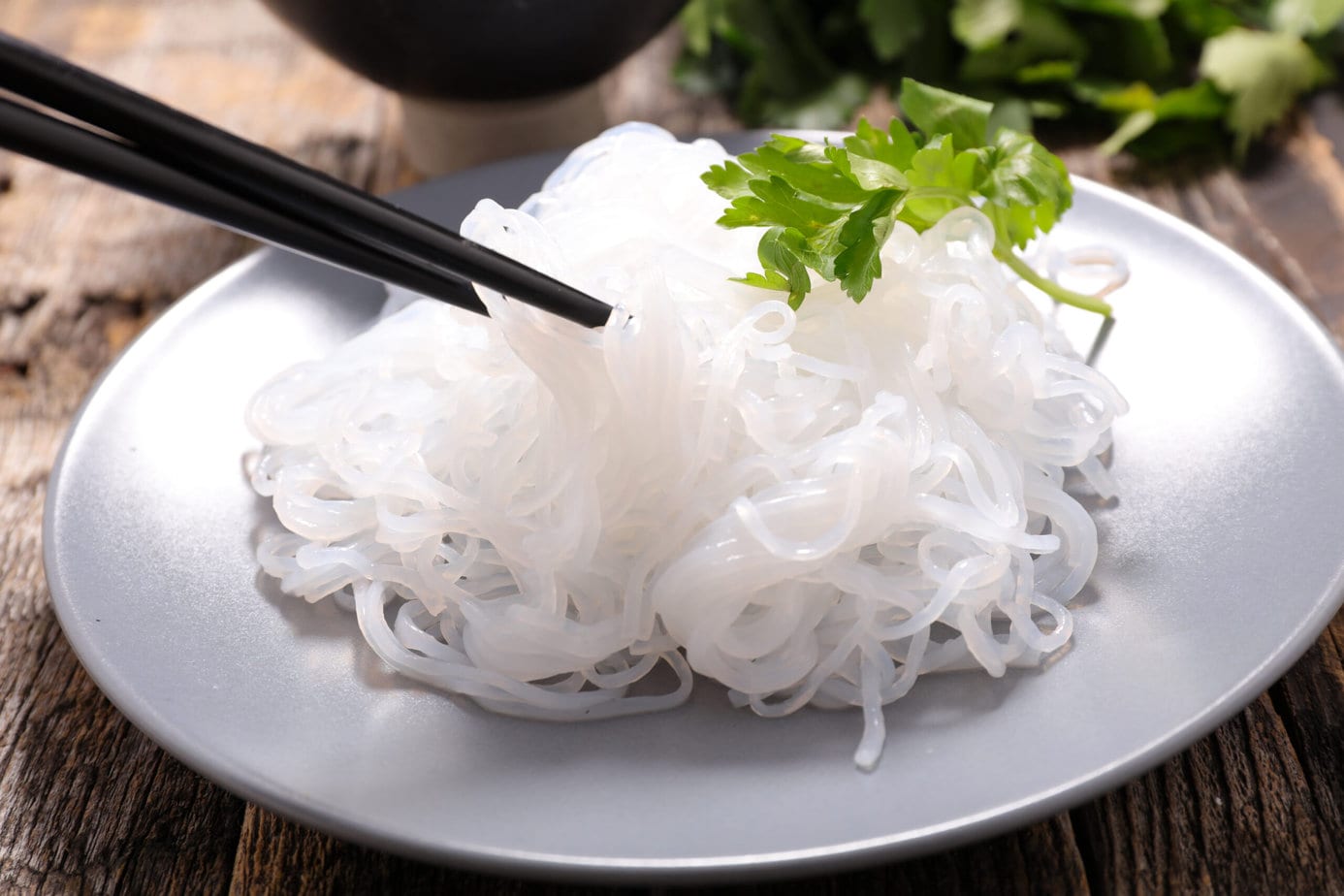
On your plate, they appear as long, almost transparent strands. This is also why the Japanese call them shirataki, which means “white waterfall.” Why? Once poured into a bowl, the noodles resemble a translucent cascade of water. It is an ingredient with the unique ability to soak up whatever flavor you pair it with.
The origins of konjac noodles
In Asia, konjac fiber has been used for 1,500 years. China was the main region cultivating the plant and harnessing its benefits until Japan adopted it and made it a cornerstone of healthy eating as well.
Back then, konjac was thought to have the power to flush all toxic elements from the body. Today, it remains a popular food in Japan, particularly for its many benefits for the body. And not just in cooking! Konjac was also used as a medicine.
The different names for konjac noodles
On the market, konjac noodles may go by other names, such as “miracle” noodles, “devil’s tongue” noodles, or yam noodles. While the name on the label changes, all these terms refer to the same type of product. Konjac noodles are long, white to transparent, and have a filling effect.
How to cook with konjac noodles?
When cooked well, konjac noodles can be a real hit at the table. To avoid the rubbery texture characteristic of these noodles, there are a few tips to follow. First and foremost, rinse the noodles thoroughly before boiling them over high heat for 3 minutes.
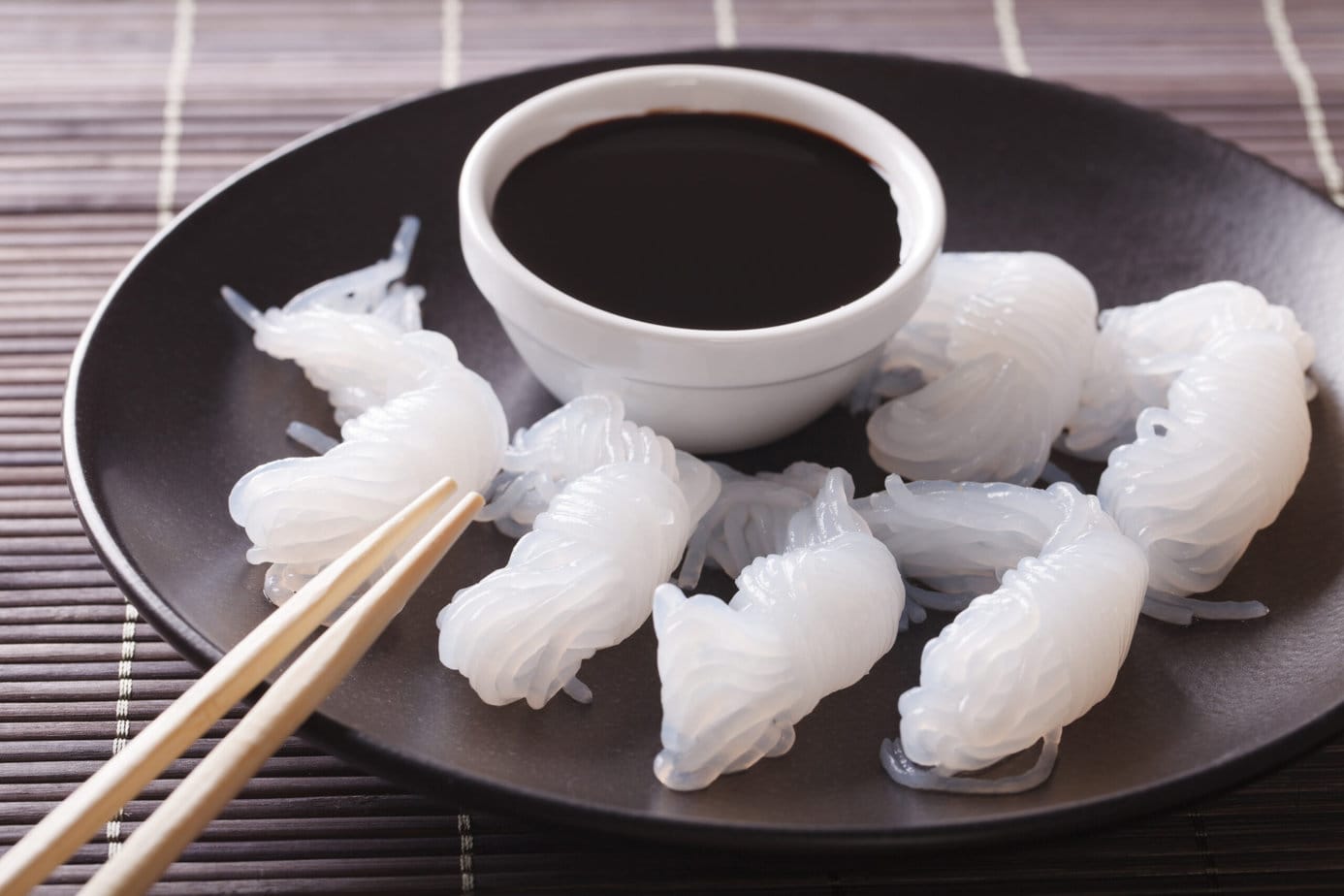
The process is the same as for traditional noodles: drain them and let them simmer in the pan without any fat for about 5 to 7 minutes. The water absorbed by the noodles should evaporate, but be careful not to let your noodles dry out! It is of course even better with a handful of vegetables, some meat, and a sauce.
The taste of konjac noodles
Unlike traditional noodles, konjac noodles introduce more complex textures to the palate. While they sorely lack flavor on their own on the plate, they have the advantage of being filling.
Konjac noodles are nonetheless an interesting ingredient to work with, since they take on all the subtle nuances of the spices, sauces, and vegetables that accompany them. Whether in a classic noodle dish as usual or in a cold salad, konjac noodles are all-terrain! All their subtlety lies in their texture.
Where to buy konjac noodles?
It goes without saying that the best place to find this kind of ingredient remains the Asian grocery store. A few shops specializing in natural products may also offer them. That said, the Asian market remains a sure bet. Worst case scenario, buy some here
Most konjac noodles can be sold dried, like many other types of noodles, but it is always possible to find fresh ones. In that case, they are sold submerged in water in a sealed package.
How to store konjac noodles?
As an ingredient that holds a lot of water, their shelf life is not as long as that of traditional noodles. The best approach is to store them in a dry, dark, and cool place before use. Ideally, they should be eaten as soon as possible.
In their airtight bag, they can last up to a maximum of one year after purchase. Once cooked, they should be eaten promptly.