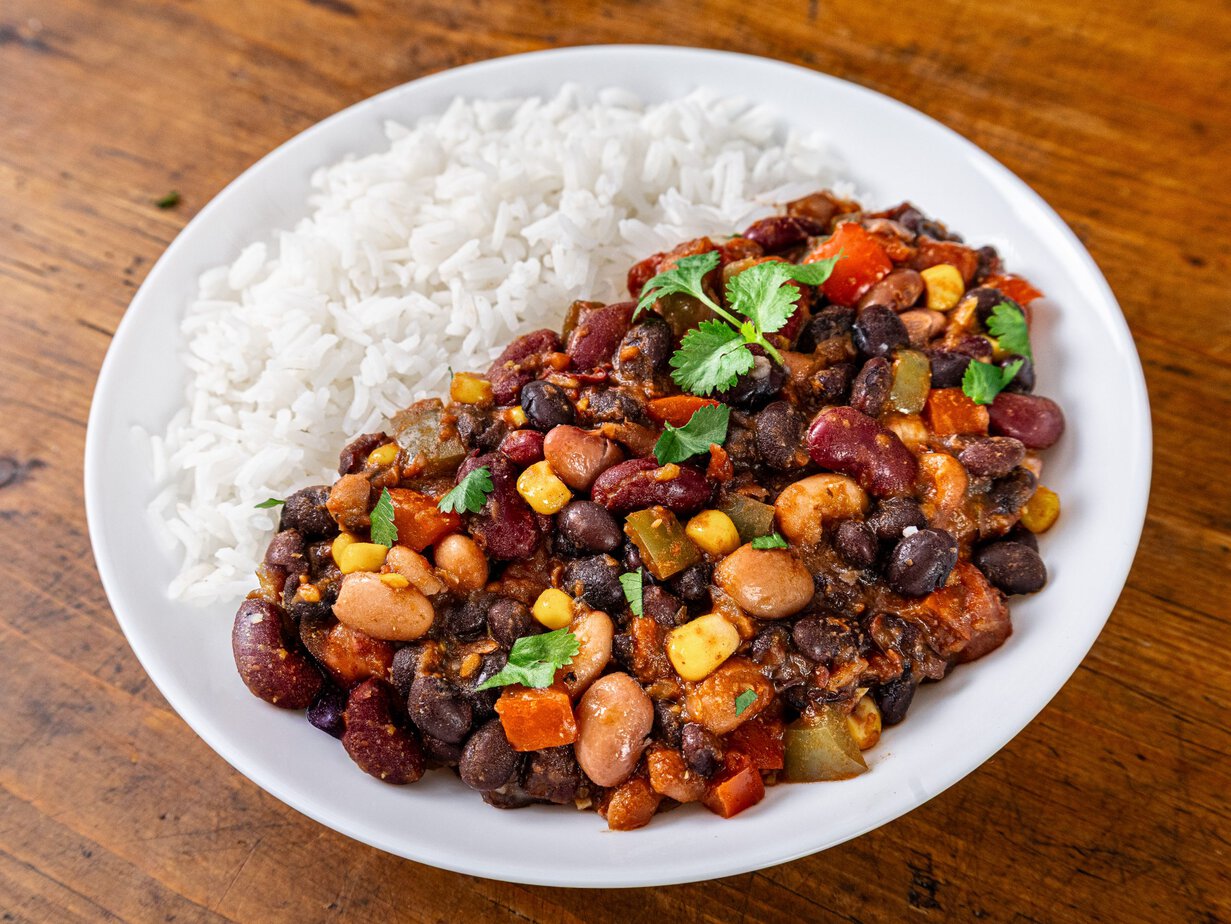
Servings: 6 servings
Ingredients
Vegetables
- 1 tablespoon olive oil
- 1 onion medium yellow or white, chopped
- 1 poblano pepper, or 1 green bell pepper, diced
- 1 red bell pepper, diced
- 3 cloves garlic, minced
- Vegetable broth optional, for deglazing
Spices
- 3 tablespoons chili powder (mild American-style spice blend, see notes)
- 1 teaspoon oregano dried
- 1 teaspoon cumin ground
- 0.5 teaspoon salt
- 0.5 teaspoon paprika smoked
Beans and Tomatoes
- 1 (400 g) can black beans, drained and rinsed
- 1 (400 g) can pinto beans, drained and rinsed
- 1 (400 g) can red kidney beans drained and rinsed
- 1 (400 g) can sweet corn, drained
- 1 (400 g) can fire-roasted diced tomatoes, or plain diced tomatoes
- 800 g canned diced tomatoes
- 180 ml water
- 2 tablespoons tomato paste
- 1 tablespoon maple syrup
For Serving
- Rice cooked white
- Sour cream
- Cheddar shredded
- Green onions, sliced
- Cilantro fresh, chopped
- Avocado, sliced
- Lime, cut into wedges
- Tortilla strips, or tortilla chips
Procédé
Vegetables
- In a large pot, heat the olive oil over medium heat for about 1 minute.1 tablespoon olive oil
- Add the onion, poblano pepper, and red bell pepper.1 onion, 1 poblano pepper,, 1 red bell pepper,
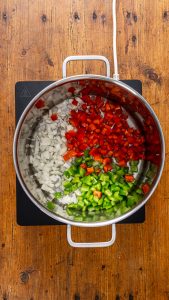
- Sauté for 4 to 5 minutes, until the vegetables start to soften.
- Add the garlic.3 cloves garlic,
- Cook for a few more minutes.
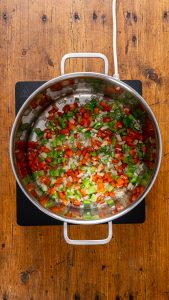
- If the bottom of the pot gets dry, deglaze with a few tablespoons of water or vegetable broth.180 ml water
Spices
- Add the chili powder, oregano, cumin, salt, and smoked paprika.3 tablespoons chili powder, 1 teaspoon oregano, 1 teaspoon cumin, 0.5 teaspoon salt, 0.5 teaspoon paprika
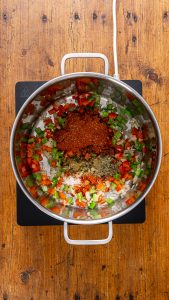
- Stir well into the vegetables.
- Cook for 1 minute, stirring constantly, until the spices are fragrant: they burn quickly.
Simmering
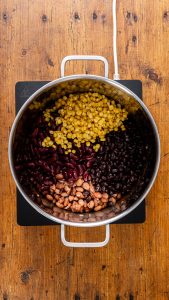
- Add the black beans, pinto beans, kidney beans, and corn.1 (400 g) can black beans,, 1 (400 g) can pinto beans,, 1 (400 g) can red kidney beans, 1 (400 g) can sweet corn,
- Add both kinds of tomatoes, the water, and the tomato paste.1 (400 g) can fire-roasted diced tomatoes,, 800 g canned diced tomatoes, 2 tablespoons tomato paste
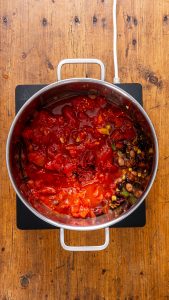
- Stir.
- Bring to a simmer.
- Cover and cook for 10 minutes.
- Remove the lid.
- Cook uncovered for another 10 minutes, stirring occasionally, until the chili reaches the thickness you want.

- Add the maple syrup and stir.1 tablespoon maple syrup
- Taste and adjust the salt if needed.
Thickening (Optional, Recommended)
- Using an immersion blender, blend about a quarter of the chili right in the pot.

- If you don't have an immersion blender, scoop out about 750 ml of chili, working in two batches if your blender is small.
- Pulse it a few times in the blender.
- Return it to the pot and stir.
Serving
- Serve the chili hot, over rice or with the rice on the side.Rice
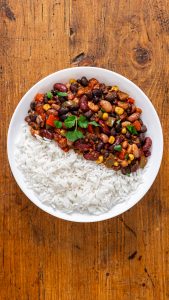
- Top with your choice of sour cream, cheddar, green onions, cilantro, avocado, a squeeze of lime, and tortilla strips.Sour cream, Cheddar, Green onions,, Cilantro, Avocado,, Lime,, Tortilla strips,

Notes
Chili powder: yes, it really is 3 tablespoons. In the United States, “chili powder” is a mild blend of ground chili peppers, cumin, oregano, and garlic. In Europe, a jar labeled “chili” or “ground chili” often contains pure hot chili: 3 tablespoons would be far too spicy. Use a Tex-Mex or chili con carne spice blend, or a mild paprika-based blend, and add pure hot chili only a pinch at a time.
Poblano pepper: this is a mild, dark green chili pepper, less spicy than a jalapeño, that adds a smoky note. For less heat, remove the white membranes, which are the hottest part. It is hard to find in European supermarkets: a green bell pepper can stand in for it.
Fire-roasted tomatoes: they are a little sweeter and smokier than plain diced tomatoes. If you can't find them, just use a can of plain diced tomatoes.
Beans: pinto beans can sometimes be found in the international foods aisle; if not, use an extra can of kidney beans or black beans. Canned beans are the standard choice for this dish. If using dried beans, soak them for 8 to 12 hours, drain them, then boil them vigorously in fresh water for at least 10 minutes: this is essential for kidney beans, which are toxic if not cooked enough. Then simmer them until tender (about 1 to 1½ hours for black beans, 1½ to 2 hours for kidney beans) before adding them to the chili: uncooked beans stay hard in the tomato sauce, which is too acidic.
Thickness: if the chili is too thin, let it simmer uncovered for longer. Starch is usually not needed; blending a small portion of the chili is enough to thicken it.
Variations: replace the water with beer (porter, amber, or a light lager); add fall vegetables (sweet potato, pumpkin, carrot, butternut squash) or celery and mushrooms. For a heartier chili, you can add lentils, crumbled tofu or tempeh, or textured soy protein: these are variations, and the basic recipe doesn't include them.
For a vegan version: plant-based sour cream and cheddar, nutritional yeast. In Germany and much of Europe, chili sin carne is most often served on a bed of white rice, often basmati; you can also serve it over quinoa, pasta, cornbread, or tortilla chips.
Storage: let the chili cool, then keep it in an airtight container in the refrigerator for 4 to 5 days. It can be frozen for up to 3 months. Leftovers make good quesadillas, tacos, or enchiladas.
Did you make this recipe?Tag @marcwiner on Instagram!