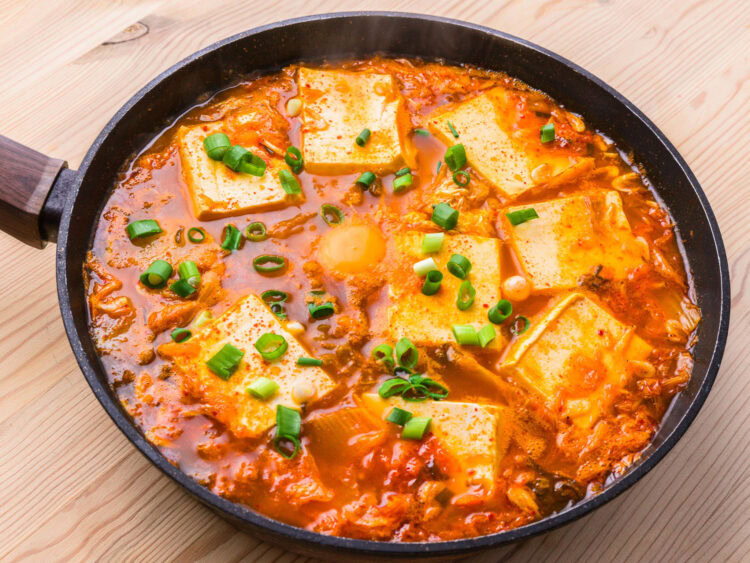
A Korean stew of ultra-soft tofu in a broth flavored with gochugaru, seafood, and garlic.
A ttukbaegi arrives at the table still furiously bubbling. Its red broth, shimmering with gochugaru chili oil, carries aromas of garlic, briny seafood, and a hint of sesame. Beneath the surface, the sundubu breaks into pale, delicate curds—silky on the palate, yet buoyed by a bold, sea-scented broth.
You can already tell: a great meal is within easy reach.
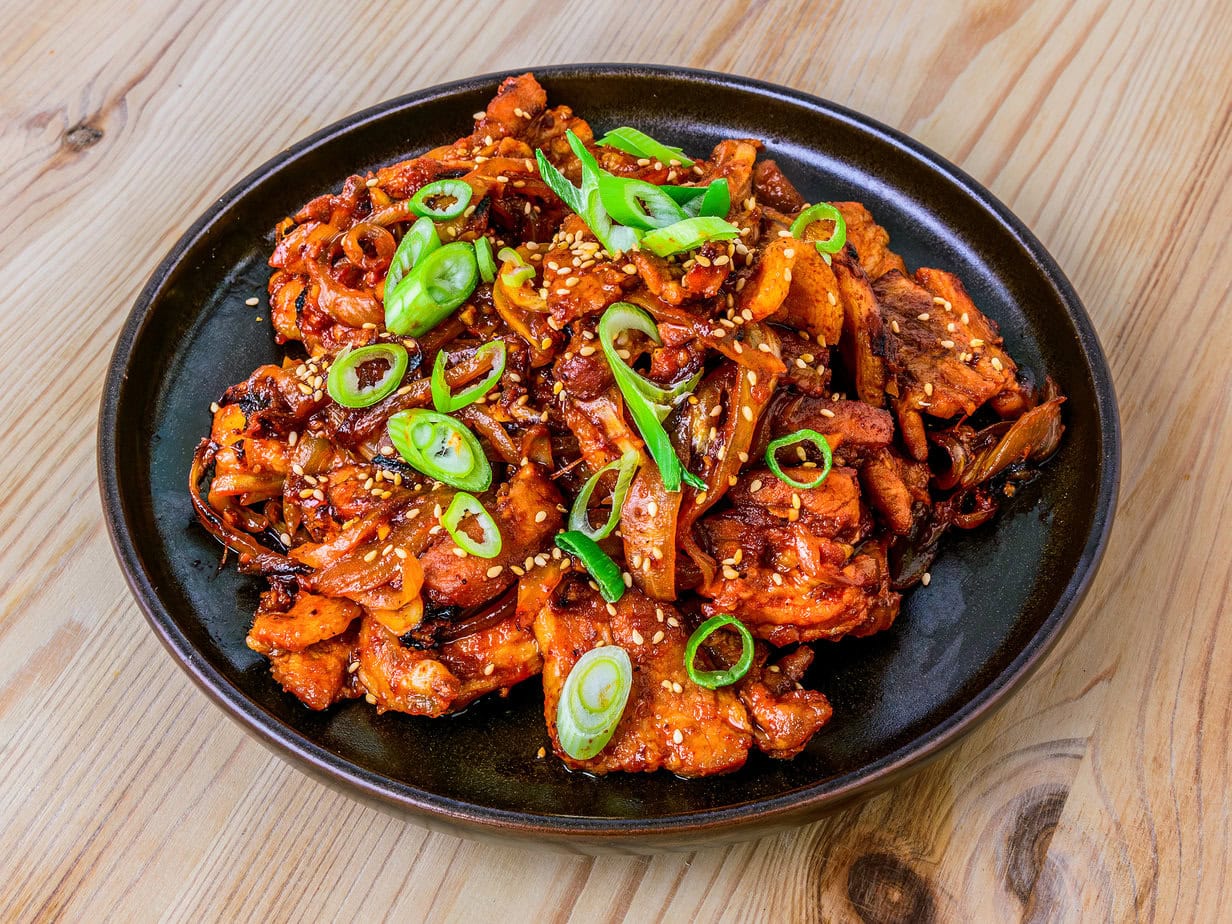
What Is Sundubu Jjigae?
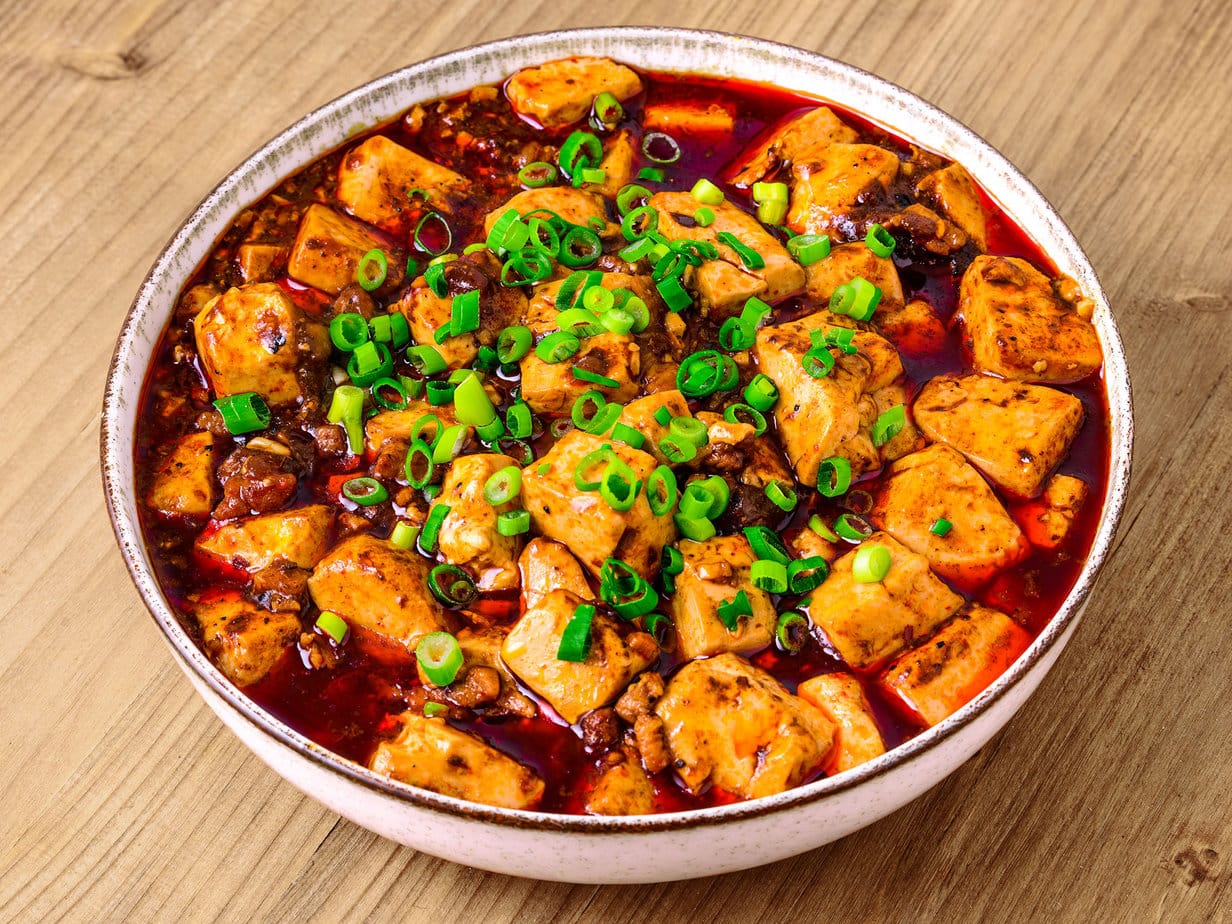
Sundubu refers to fresh, mild, ultra-tender tofu; jjigae means stew. Unlike firmer tofu dishes such as mapo tofu, sundubu jjigae relies on unpressed tofu.
The dish pairs this tofu with an anchovy-kombu broth (called myeolchi-dashima yuksu), a gochugaru seasoning base (known as dadaegi), seafood or pork, vegetables, and a garnish of scallions.
Ideal sundubu comes in small, natural, delicate curds, often described as monggeul-monggeul. It should not be confused with yeon-dubu, a uniformly gelled silken tofu that does not absorb broth as well.
The red color comes from gochugaru, not gochujang : the chili flakes bring bright color and a clean heat, whereas gochujang thickens and mellows the broth.
From Chodang to Koreatown
The most celebrated lineage of sundubu leads to Gangneung, on Korea’s east coast, and to the Chodang tradition. In the mid-Joseon period, the scholar-official Heo Yeop is said to have used renowned well water and mineral-rich seawater, drawn from the East Sea, as a coagulant.
He produced an exceptionally tender tofu, marked by a delicate marine salinity. The name Chodang comes from his pen name, and this tofu remains closely tied to Gangneung’s culinary identity.
Traditional production required a light hand : soy milk was heated carefully, then cooled before nigari was added, with coagulation closely monitored to avoid curds that were too tight or harsh. For a long time, this tender tofu belonged to a simpler, seasonal style of cooking, served as warm curds with soy sauce or slipped into comforting Asian soups.
The version now known around the world owes a great deal to Los Angeles in the 1990s. Served in a bubbling stone pot and loaded with pork, clams, mushrooms, chili oil, and often a raw egg, it took off after BCD Tofu House opened in Koreatown in the middle of the decade.
Served with banchan such as kongnamul muchim, it helped shape the way many people picture the dish today, both in South Korea and abroad.
Key Ingredients and What They Do
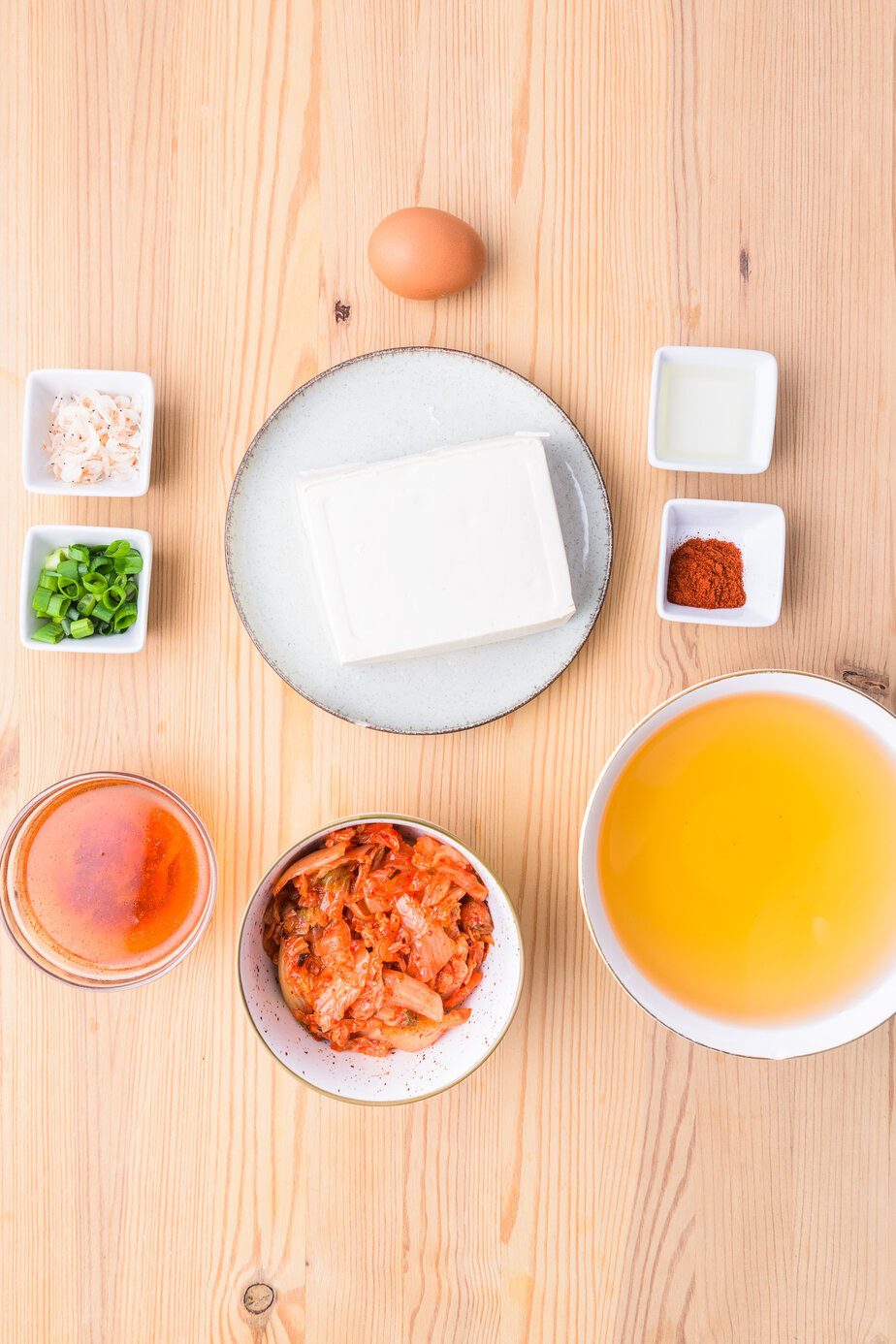
- Sundubu : tender, fresh, unpressed tofu; its silky curds soak up the spicy, briny broth without losing their delicacy.
- Anchovy-kombu broth : the dish’s umami foundation, combining the glutamates of kombu with the inosinates of anchovy.
- Gochugaru : clean heat and vivid red color; infused into oil, it creates the chili oil that defines the stew.
- pork belly or ground pork : adds richness and savory depth to the seasoning base.
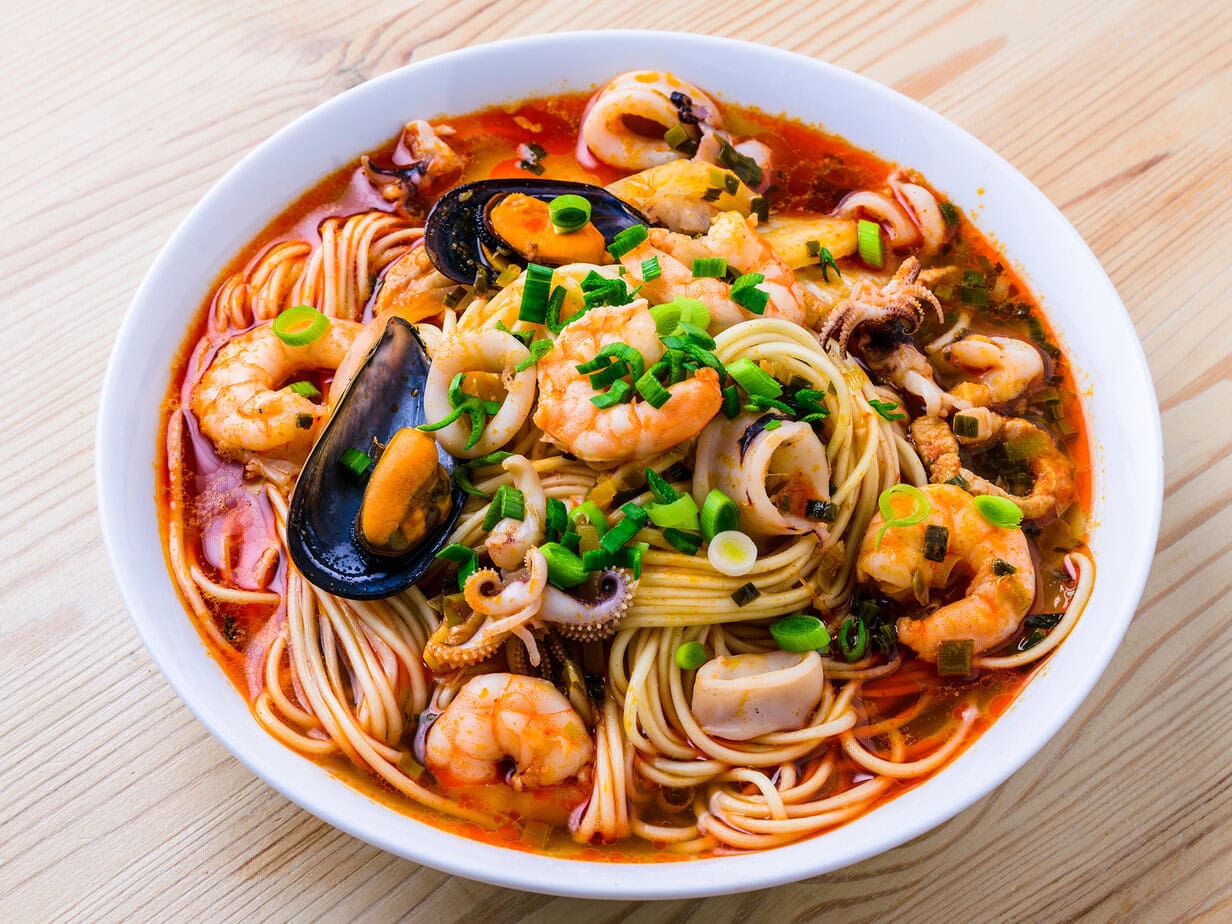
- Clams, shrimp, or oysters : as they cook, they release briny juices that deepen the seafood flavor, much like in jjamppong.
- Garlic and scallion whites : form the aromatic backbone, balancing sweetness and sharpness.
- Soy sauce, saeujeot, or anchovy sauce : add layers of salinity and fermented depth.
- Aehobak, onion, and mushrooms : bring vegetal sweetness and texture alongside the tender tofu; aehobak also features in aehobak jeon.
- Neutral oil, lard, and sesame oil : draw out the aroma and color of the gochugaru; sesame oil adds a nutty note.
- Egg : an optional hallmark of the Los Angeles style; it’s better gently poached, onsen tamago-style, than scrambled.
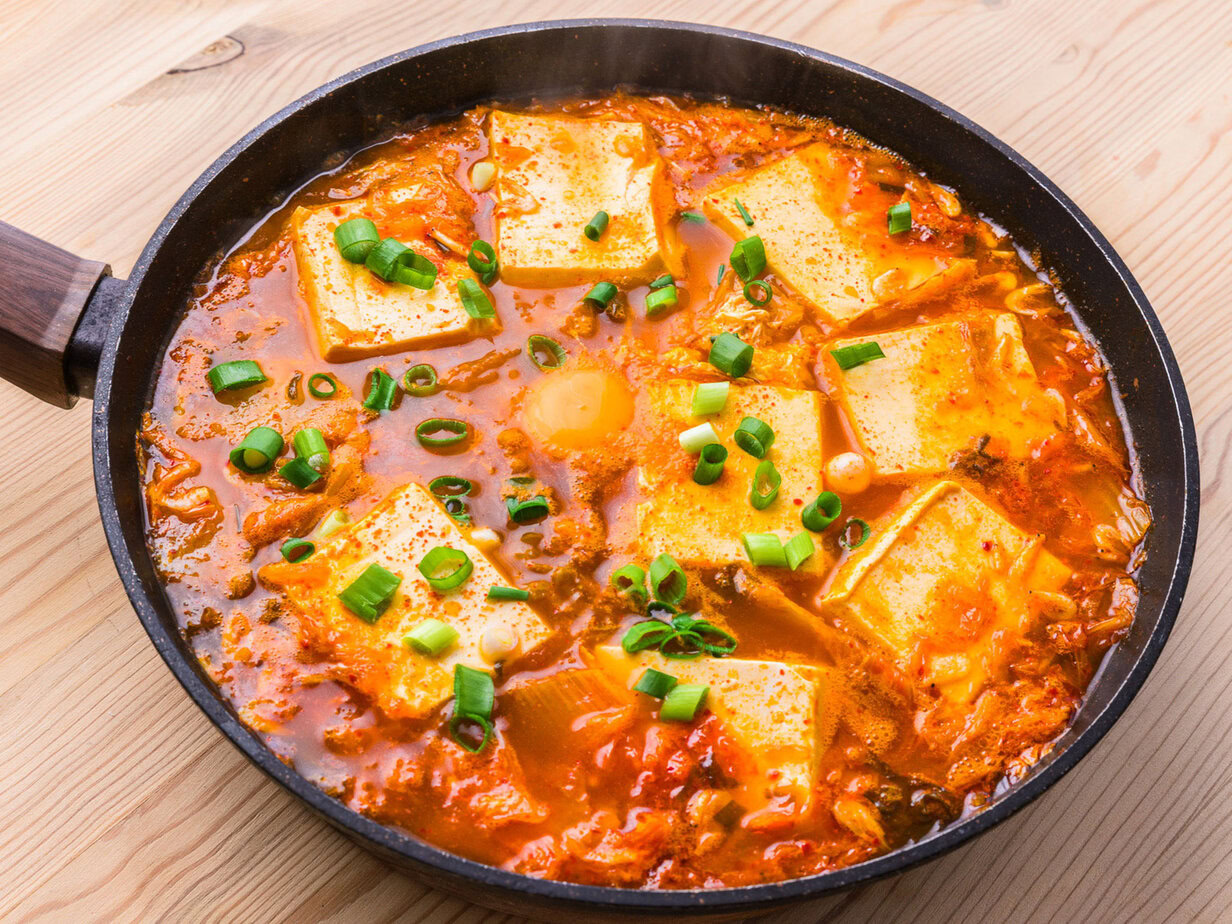
Ingredients
- 1 package silken tofu
- 225 g kimchi finely chopped
- 360 ml anchovy-kombu stock
- 5 teaspoons kimchi juice
- 1 egg optional
For the chili oil
- 2 teaspoons vegetable oil
- 1 teaspoon Korean chili powder
For the seasoning
- 1 teaspoon dried shrimp
- scallion a little, thinly sliced
Instructions
Preparation
- Finely chop the kimchi.225 g kimchi
- Mix the kimchi with the kimchi juice.5 teaspoons kimchi juice
- Heat a dolsot or a saucepan.
- Add the vegetable oil and Korean chili powder.2 teaspoons vegetable oil, 1 teaspoon Korean chili powder
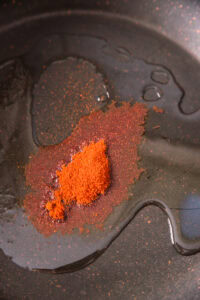
- Cook, stirring constantly, until it begins to sizzle, being careful not to let it burn.
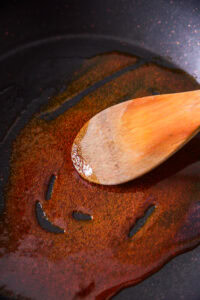
- Add the kimchi and its juices, then cook until the kimchi is tender.
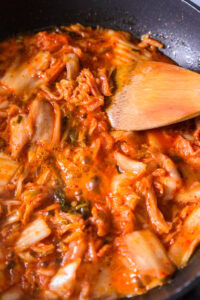
- Add the silken tofu, pour in the stock, bring to a boil, and simmer until the tofu is heated through.1 package silken tofu, 360 ml anchovy-kombu stock
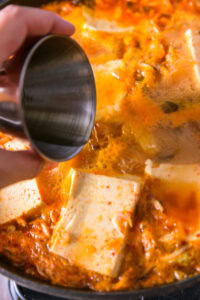
- Taste and adjust the seasoning, adding the dried shrimp as needed.1 teaspoon dried shrimp
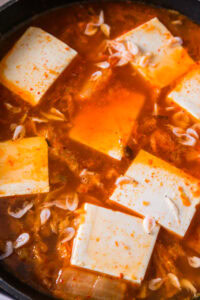
- Add the scallion.scallion
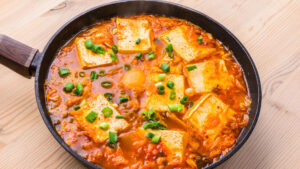
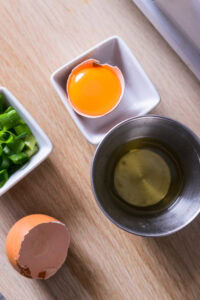
- If using the egg, crack it into a bowl and pour the white into the pot first; just before serving, place the yolk on top.1 egg
Notes
- If you don’t already have stock prepared, use water with Yeondu sauce.
- Alternatively, Korean tuna sauce or anchovy fish sauce can be used to mimic the stock.