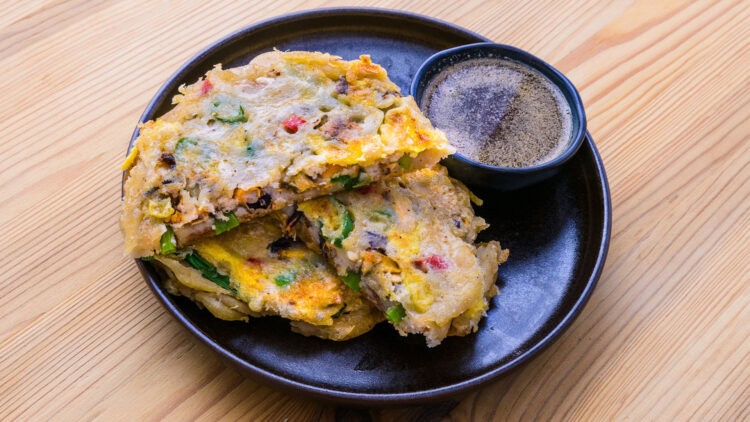
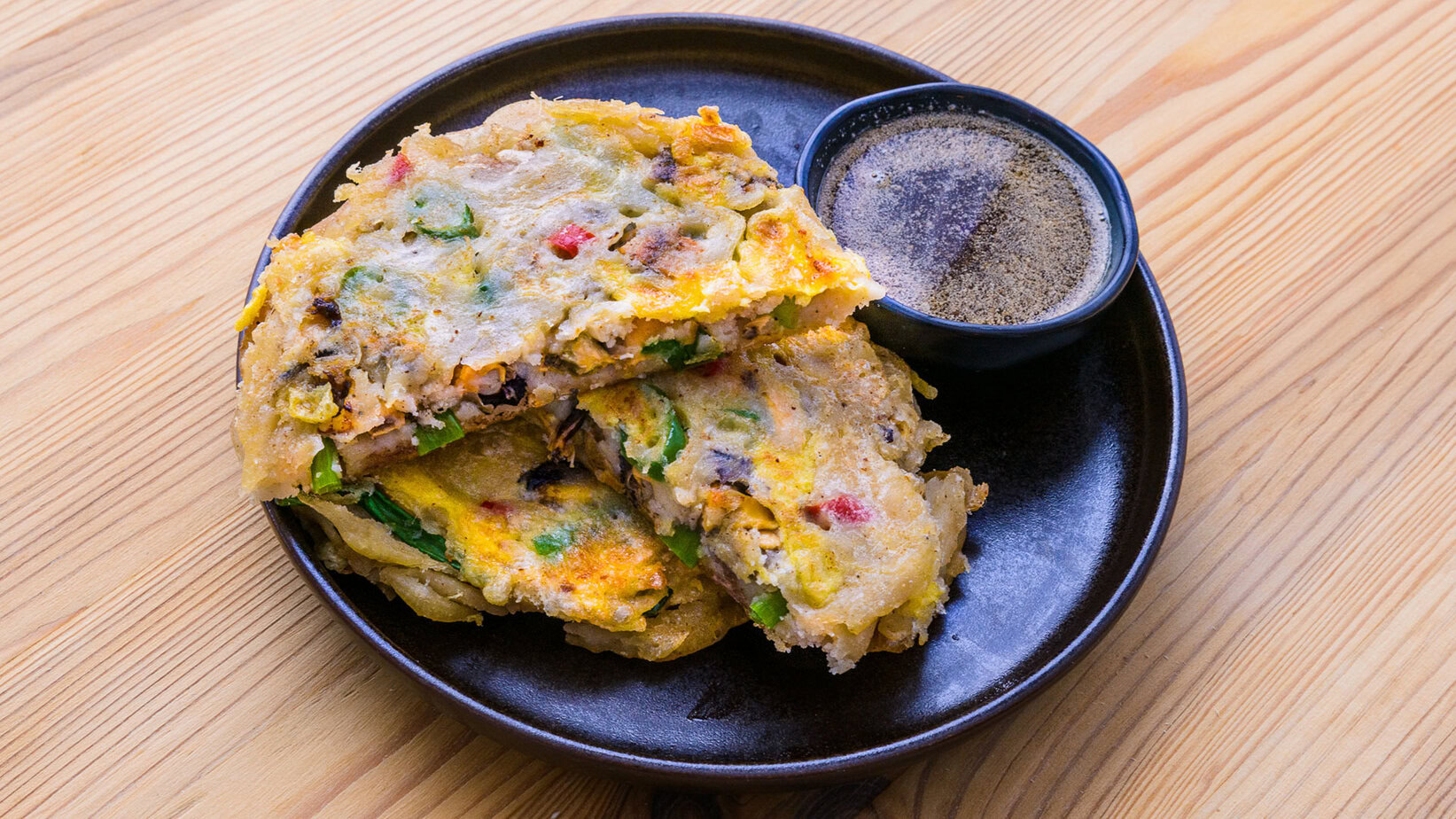
A crisp yet tender Korean pancake packed with seafood and scallions, served piping hot with a tangy soy-vinegar sauce.
The sound of rain starts in the skillet before it ever reaches the window: the oil crackles, the batter quivers, the scallions soften and release a fresh, mellow, almost sweet aroma. A good pajeon is easy to spot: long scallions laid in neat rows, held together by just enough batter to bind them.
The edges turn beautifully crisp, while the center stays tender and full of scallions. If you’re looking for close cousins, the Vietnamese bánh xèo and Japanese okonomiyaki also combine batter and filling, but in a completely different form. In short, it’s a dish well worth discovering.
What is pajeon?
The name is simple. Pa means “scallion,” while jeon refers to a family of batter-coated foods that are pan-fried. In Korean cuisine, jeon preserves the identity of the main ingredient, whether it’s zucchini as in aehobak jeon, assorted vegetables as in yachaejeon, or, here, whole scallions.
Pajeon differs from buchimgae, where the batter takes center stage and the chopped ingredients disappear into a dense pancake. In an authentic pajeon, the scallions remain visible and intact, often jjokpa (Joseon scallions) lined up side by side in the pan.
The batter is there to bind, not to steal the show. Wheat flour provides structure, starch adds delicate crispness, and ice-cold water slows gluten development. Classic pajeon is served with a soy-vinegar dipping sauce.
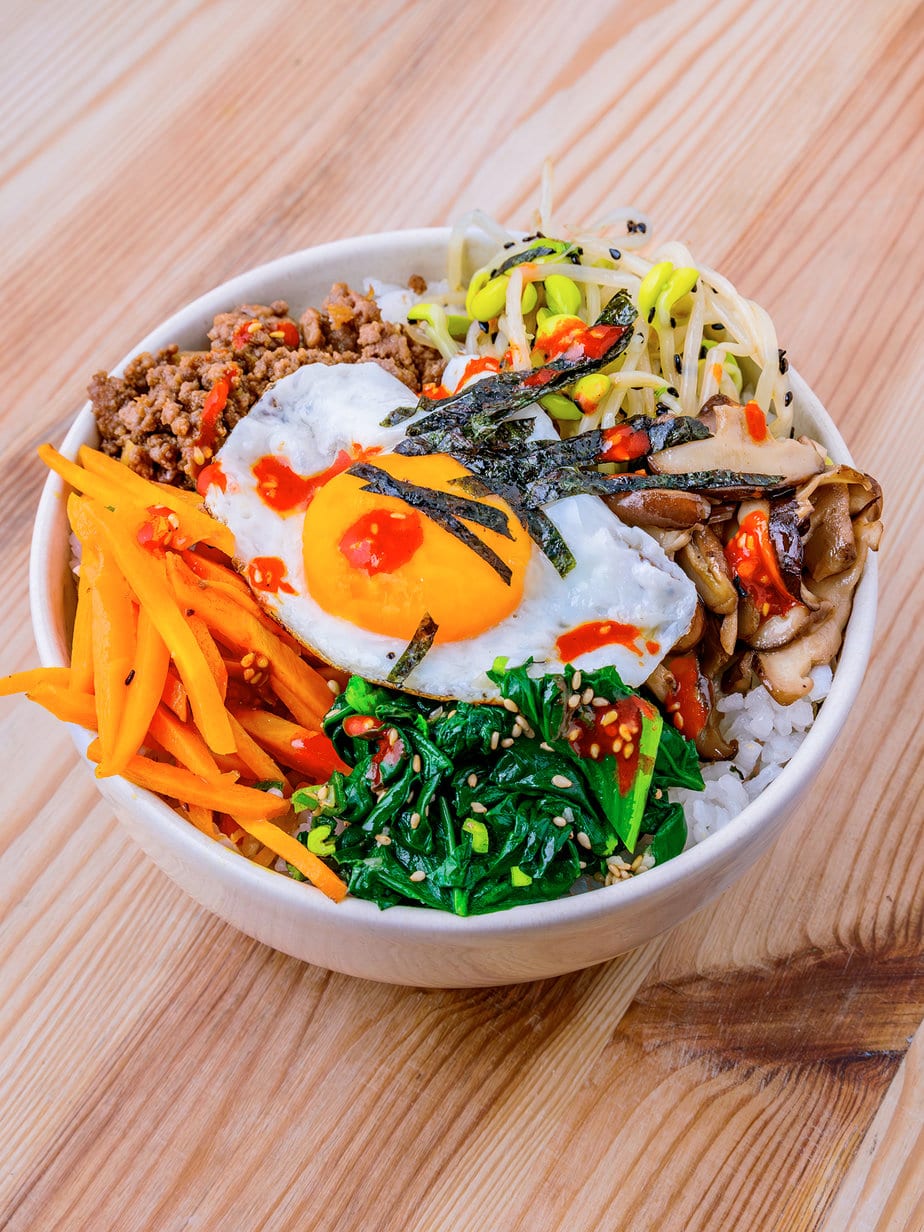
Dongnae pajeon, from Busan, follows a different approach: richer, softer, and packed with seafood, it is served with chojang, a lively sauce made with gochujang and vinegar, similar to a bibimbap sauce.
From American flour to rainy evenings
The history of pajeon is part of the broader story of jeon. At the Joseon court, these refined dishes were called jeonyuhwa, “flowers fried in oil.” Yet pajeon does not appear in any of the major culinary texts of the period: neither the Eumsik Dimibang of 1670 nor the Siuijeonseo of the late 19th century, which nonetheless includes a sparrow jeon.
The first printed mention dates to 1946, in Bang Sin-young’s Chosun Eumsik Mandeuneun Beop: wheat flour, egg, salt, scallions, cooked on an iron griddle. After the Korean War (1950-1953), American aid brought large quantities of wheat into the country.
Wheat, once expensive, became widely accessible, and home cooks adapted their traditional pan-frying methods. This also helps explain why flour plays such an important role in other popular dishes, such as the Korean corn dog.
The Dongnae district of Busan developed its own version in the 1930s around Dongnae Market. Rich with rice flours, seafood, and scallions, this lavish style of pajeon shares with eomuk the same roots in Busan’s seafood culture.
In Korean culture, pajeon remains closely associated with rainy days. It is often shared with makgeolli, whose gentle fizz and lactic tang balance the oil and salt. A kimchi jjigae also hits the spot on a damp evening.
Key ingredients in pajeon
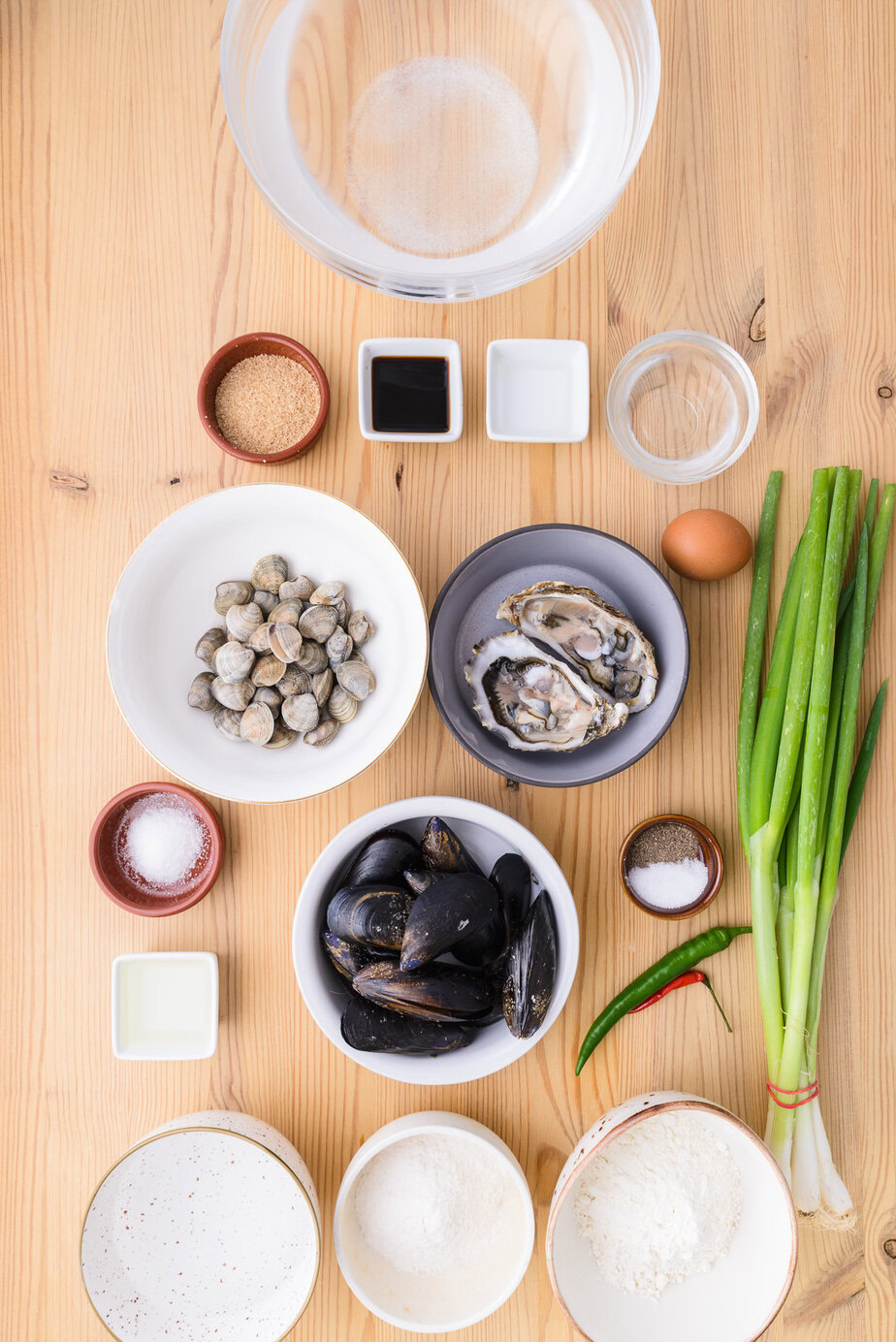
Joseon scallions (jjokpa) are the foundation of the dish. Whole or halved, they are arranged in parallel to give the pajeon its structure. The batter combines wheat flour for body with potato, corn, or tapioca starch for thin, shatteringly crisp edges. Ice-cold or sparkling water slows gluten formation and keeps the texture light. Egg, if used, acts as a subtle binder.
For haemul pajeon, oysters, shrimp, squid, and mussels are added, well drained so they don’t make the pancake soggy. Red and green chilies, sliced on the bias, add color and gentle heat. Korean cuisine also loves them stuffed and fried, as in gochu twigim.
Minari, crisp and herbaceous, is essential to the Dongnae version.
When it comes to sauces, classic pajeon is served with a soy-vinegar dipping sauce. Dongnae-style pajeon prefers chojang, tangy and lightly spicy. Its batter, made with glutinous and non-glutinous rice flours, has a chaljin texture—supple and sticky—also found in gyeongdan. Anchovy and dasima broth season the batter from within, echoing the briny notes of jjamppong.
Ingredients
Seafood
- 100 g mussel meat weight without shells
- 70 g clam meat weight without shells
- 70 g oysters
Salt Water for Rinsing
- 600 g water
- 2 g salt
Seafood Seasoning
- 1 teaspoon salt
- 1 pinch pepper
Topping
- 200 g scallions
- 15 g green chili about 1 chili
- 10 g red chili about 2/3 of a chili
Batter
- 95 g wheat flour
- 30 g non-glutinous rice flour
- 1 g salt about 1/4 teaspoon
- 200 g water
- 1 egg beaten
For Cooking
- 85 g vegetable oil
Soy-Vinegar Dipping Sauce
- 1 tablespoon light soy sauce
- 1 tablespoon rice vinegar
- 1 tablespoon water
- 1 teaspoon pine nuts ground
Instructions
Prepare the Seafood
- Stir the water and salt together to make a light brine.600 g water, 2 g salt
- Gently rinse the mussels, clams, and oysters in the brine, taking care not to damage them, then drain in a colander.100 g mussel meat, 70 g clam meat, 70 g oysters
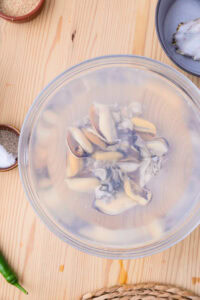
- Cut the seafood into roughly 1 cm pieces.
- Season with the salt and pepper, then marinate for about 10 minutes.1 teaspoon salt, 1 pinch pepper
Prepare the Vegetables
- Trim and thoroughly wash the scallions, then cut them into 10 cm lengths.200 g scallions
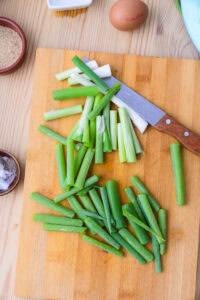
- Slice the green and red chilies on the bias into pieces about 2 cm long and 3 mm thick.15 g green chili, 10 g red chili
Prepare the Batter
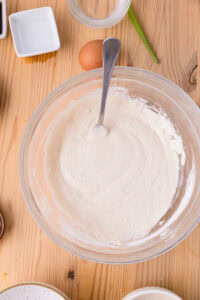
- In a mixing bowl, whisk together the wheat flour, rice flour, salt, and water until smooth.95 g wheat flour, 30 g non-glutinous rice flour, 1 g salt, 200 g water
- Beat the egg in a separate bowl.1 egg
Prepare the Sauce
- Combine the soy sauce, rice vinegar, water, and ground pine nuts. Set aside until ready to serve.1 tablespoon light soy sauce, 1 tablespoon rice vinegar, 1 tablespoon water, 1 teaspoon pine nuts
Cooking
- Heat a frying pan over medium heat, then add the vegetable oil.85 g vegetable oil
- Pour in a layer of batter to form a round about 10 cm in diameter and 8 mm thick.
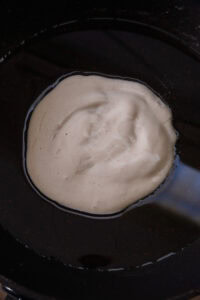
- Lay the scallions over the batter, then scatter the seafood on top. Add the green and red chili pieces.
- Pour about 30 g more batter over the topping and spread it gently to hold everything together.
- Finish by pouring the beaten egg over the top.
- Cook over medium heat for about 5 minutes, until the bottom is set and lightly golden.
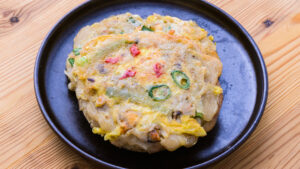
- Flip the pancake, cover the pan, and cook for about 3 minutes more.
- Serve hot with the soy-vinegar dipping sauce.
Notes
- Handle the seafood gently while rinsing so it does not break apart.
- For the best texture, keep the pan over medium heat so the pancake browns well without burning.