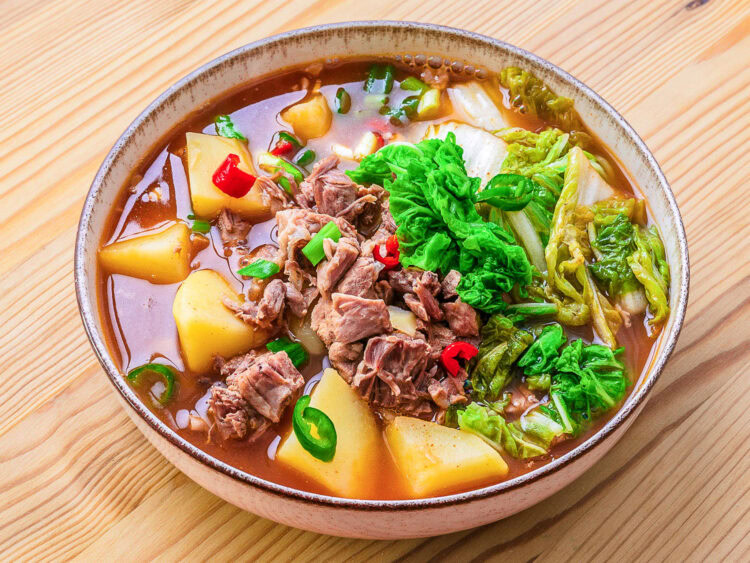
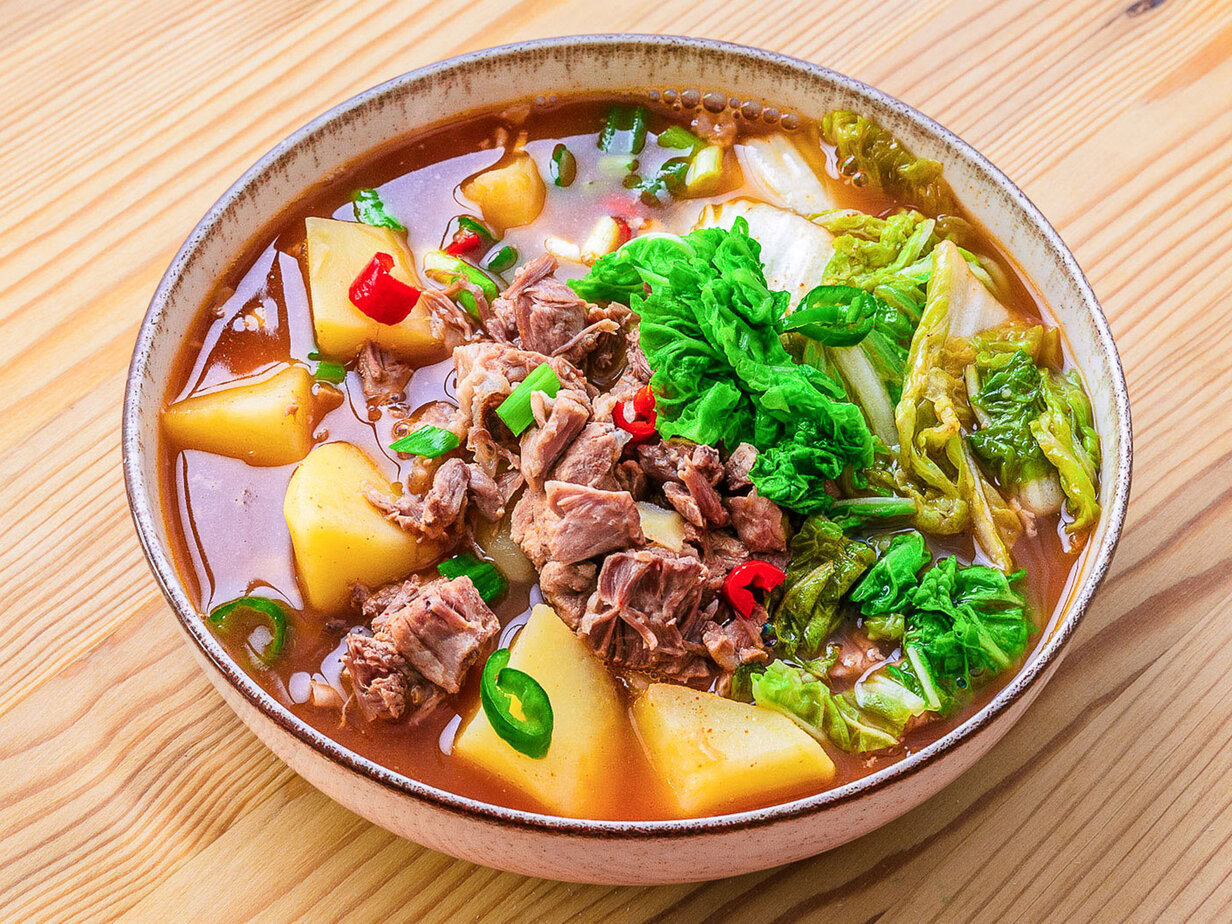
A steaming pork-bone stew, tinted red with gochugaru, thickened with perilla, and packed with tender potatoes.
A pot simmers, its surface stained red by gochugaru and glossy with gelatin. The scent of perilla and doenjang rises in the steam. A potato gives way under the spoon. Around the table, everyone pulls meat from the bones while fresh perilla leaves wilt in the heat.
Like other comforting Asian soups, gamjatang is generous, communal, and a little messy…and above all, delicious.
What is gamjatang?
Gamjatang is a pork-bone stew built on layered, balanced flavors: pork neck bones or vertebrae, fermented doenjang, dried leafy greens, potatoes, and perilla (shiso) in two forms. A cousin of kimchi jjigae and samgyetang, it stands apart thanks to the gelatin released by the bones and the unmistakable flavor of perilla. Gamja means potato, while tang refers to a stew richer than a guk.
One legend claims that gamja refers to a specific pork bone, but no official source confirms it. The likelier explanation is economic: in older versions, potatoes added bulk when meat was scarce. In the 1990s, restaurant chains reversed the proportions with more meat and fewer potatoes, but the name stayed.
From the rice fields of Jeolla to Seoul’s railway construction sites
Gamjatang comes from the rice-growing plains of Jeolla. Cattle were reserved for plowing and banquets, far removed from grilled dishes like LA galbi. Workers made do with pork neck and spine bones, while the feet went into jokbal.
Cooked low and slow, these overlooked cuts released their collagen and marrow. Dried greens from the autumn harvest rounded out the dish during the lean months.
The dish traveled north with the workforce. After the Donghak Peasant Revolution in 1894, workers from Jeolla flocked to Incheon and the construction sites of the Gyeongin Line, Korea’s first railway. Around 1900, Han Dong-gil, from Sunchang and ruined by the unrest, is said to have opened a hambajib near Noryangjin to feed the railway crews : enormous pots of pork vertebrae, potatoes, and siraegi. Cheap, nourishing, and made for hard physical labor.
The Gyeonggi sadaengi variation favored neck bones and left out the potato. In Seoul, Eungam-dong’s “gamjaguk street” brought the dish back into the spotlight in the 1980s. Chains in the 1990s (Wondang, Cham-imat, Jomaru) standardized a meatier tang.
The way it is eaten, however, has not changed: a pot in the center of the table, meat pulled from the bones, and a meal shared among friends in the same spirit as samgyeopsal or yachaejeon.
Main ingredients in gamjatang
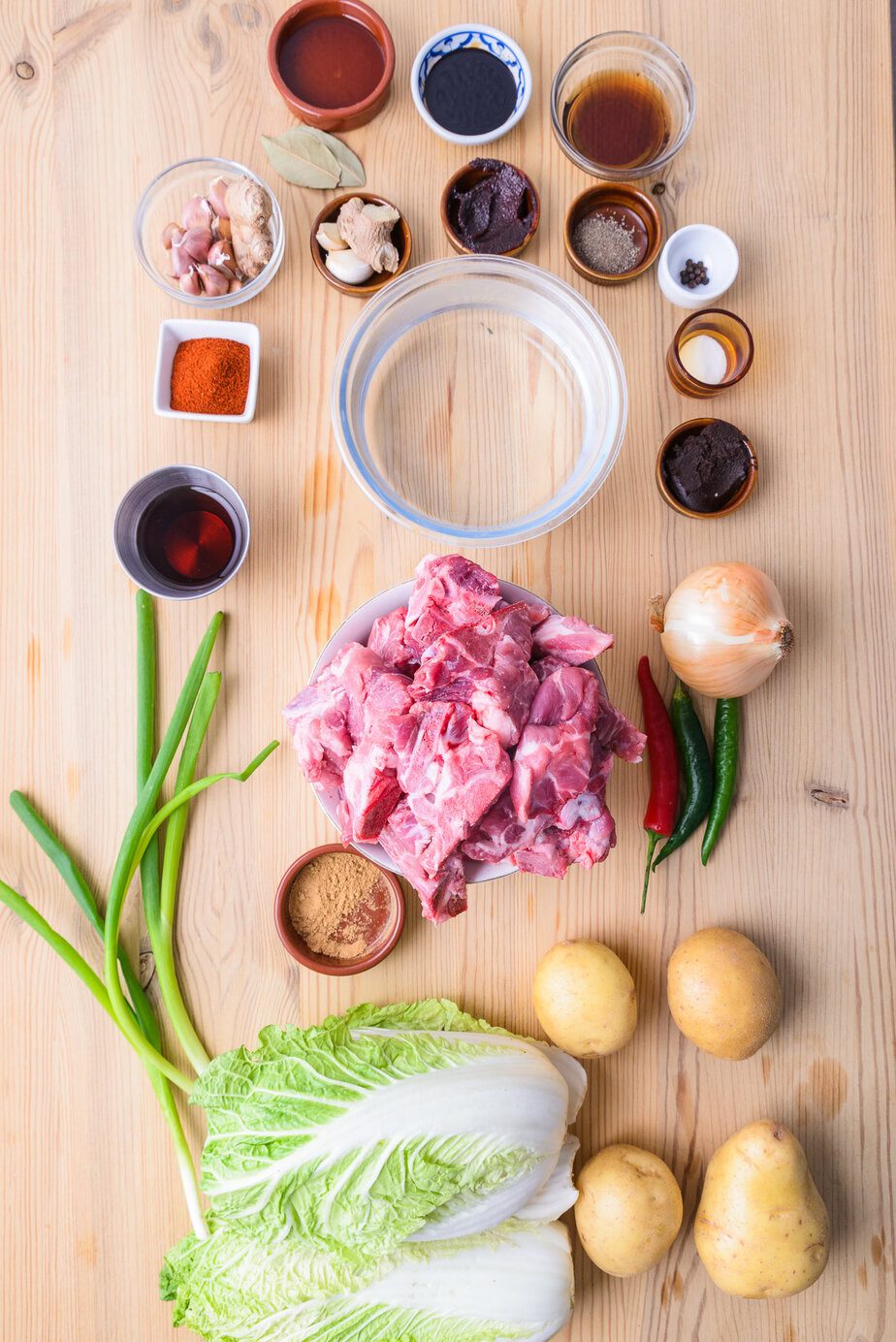
Neck bones (mok-ppyeo) provide tender meat and collagen. Vertebrae (deung-ppyeo) deliver the pleasure of pulling meat from the bone. This is a more rustic style of pork cooking than jeyuk bokkeum, for example.
Potatoes soak up the fat and spicy broth.
Siraegi, made from dried radish greens, adds an earthy base; ugeoji, the outer leaves of napa cabbage, offers a lighter alternative.
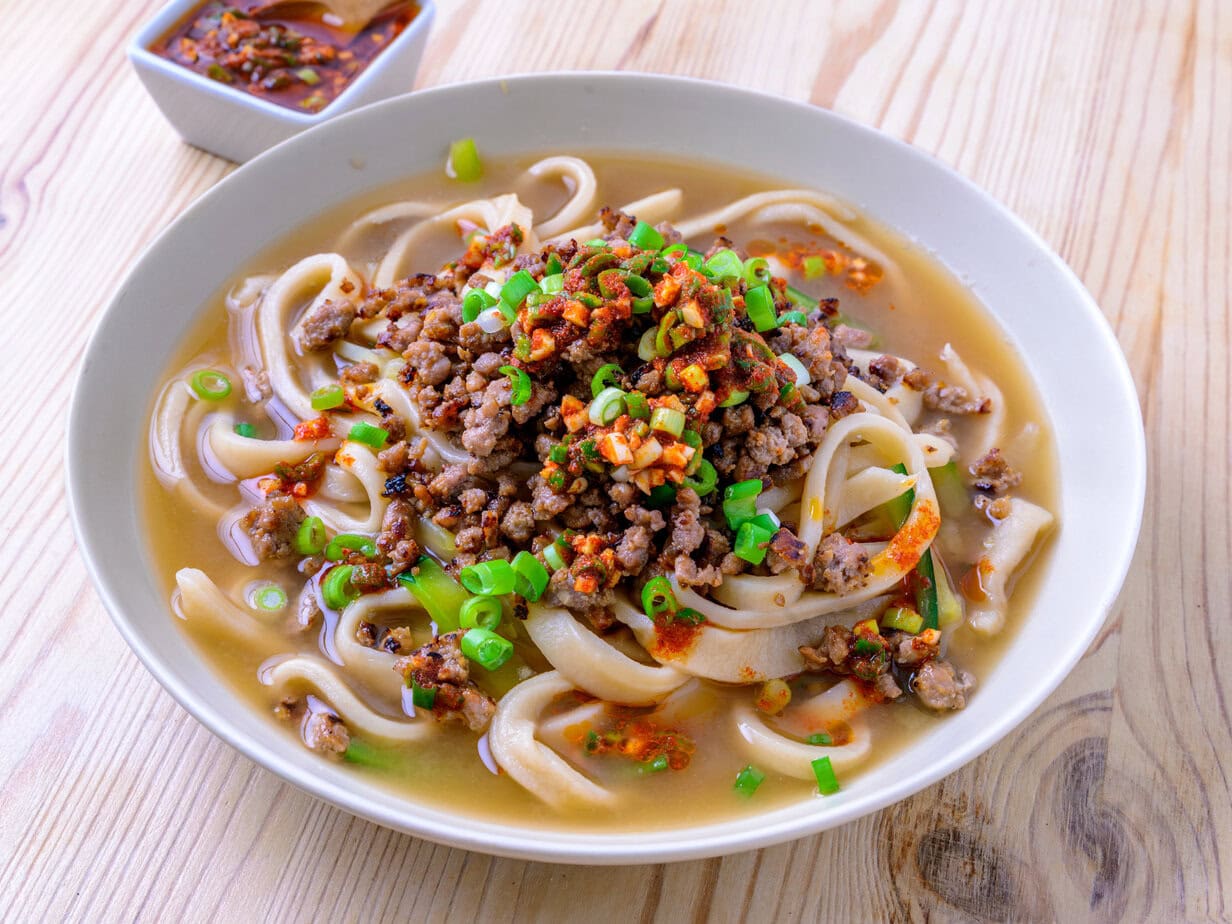
The seasoning starts with doenjang, which balances the fat with deep fermented savoriness. Gochugaru provides color and heat ; gochujang stays in the background so the broth does not become too heavy. Garlic, ginger, guk-ganjang, and aekjeot complete the base.
Perilla is the dish’s signature. Deulkkae garu (perilla seed powder) emulsifies the fat and gives the broth its rounded, nutty character. Fresh kkaennip, added at the end, brings a minty, herbaceous note. Green chilies — which also appear in a very different dish, gochu twigim — and scallions brighten each bowl just before serving.
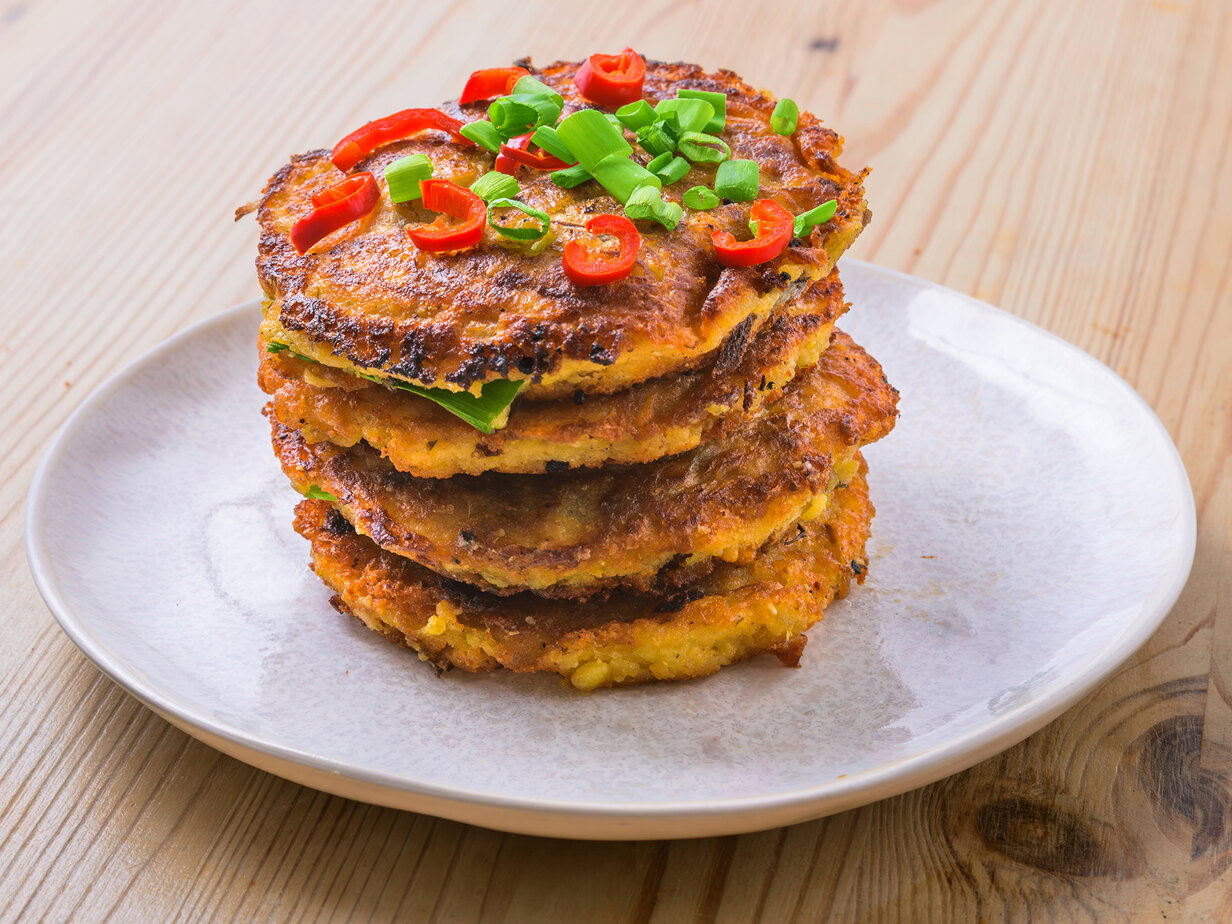
Signs of authenticity and pitfalls to avoid
You can recognize good gamjatang by its intact bones: you should be picking the meat off them, not finding it already boneless.
The broth should be opaque, rich in gelatin, and almost as dense as a paitan ramen broth, but driven by doenjang and deulkkae garu. Look for plenty of siraegi or ugeoji, potato, and fresh perilla.
Warning signs: a sweet broth built on gochujang or corn syrup, Japanese miso used in place of doenjang, or a lack of perilla and leafy greens.
Ingredients
- 1.5 kg pork neck bones
- 4 potatoes peeled and cut into large chunks
- 500 g siraegi (dried radish greens) cooked; or substitute blanched young eolgari cabbage or blanched outer napa cabbage leaves
- 1 stalk Korean green onion roughly chopped
- 1 red chili pepper thinly sliced
- 2 Cheongyang chili peppers thinly sliced
- 12 leaves perilla roughly chopped
- 2 tablespoons perilla seed powder or more to taste
For the meat broth
- 3.5 L water
- 1 tablespoon doenjang heaping; Korean fermented soybean paste
- 2 stalks green onions
- 1 small onion
- 1 handful garlic cloves left whole
- 1 piece ginger about the size of 2 garlic cloves
- 4 tablespoons ginger liquor or cheongju
- 2 leaves bay
- 12 whole peppercorns
For the seasoning
- 3 tablespoons gochugaru heaping
- 2 tablespoons doenjang Korean fermented soybean paste
- 1 tablespoon gochujang
- 1 tablespoon Korean soup soy sauce or dark soy sauce
- 2 tablespoons tuna sauce or fish sauce
- 2 tablespoons Shaoxing wine
- 2 tablespoons garlic minced
- 1 teaspoon ginger minced
- 1 tablespoon perilla oil optional
- 1 pinch black pepper
- 0.5 teaspoon sea salt adjust to taste
Instructions
Prepare the bones
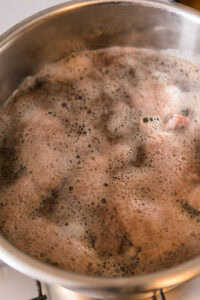
- Rinse the pork neck bones under running water. Place them in a large bowl, cover with water, and soak for 2 to 3 hours, changing the water several times.1.5 kg pork neck bones
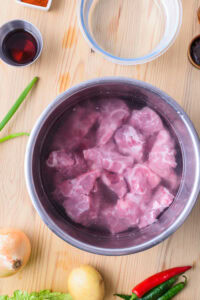
- Blanch the soaked bones in boiling water for 3 to 4 minutes, then rinse each one under cold water.
Prepare the broth
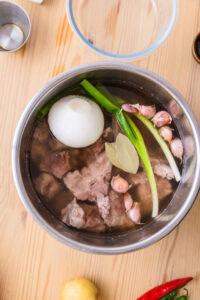
- Place the blanched bones in a large pot with the water, doenjang, green onions, small onion, whole garlic cloves, ginger, ginger liquor (or cheongju), bay leaves, and peppercorns.3.5 L water, 1 tablespoon doenjang, 2 stalks green onions, 1 small onion, 1 handful garlic cloves, 1 piece ginger, 4 tablespoons ginger liquor, 2 leaves bay, 12 whole peppercorns
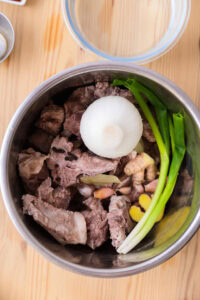
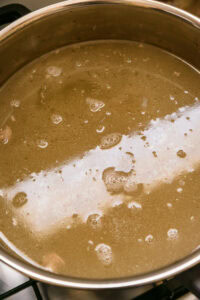
- Bring to a boil, then reduce the heat to medium and simmer for 1 hour 30 minutes, until the broth is rich and flavorful. Strain, reserving both the meat and broth.
Prepare the garnishes and seasoning
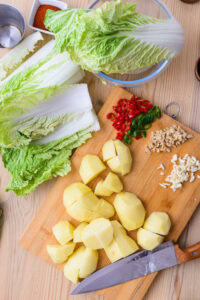
- Prepare the siraegi (or your chosen substitute): rinse gently, remove the thin, transparent skin from the stems if needed, then cut into pieces.500 g siraegi (dried radish greens)
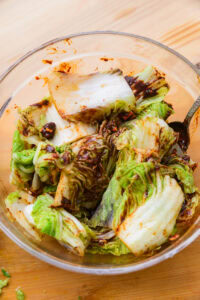
- Mix the siraegi with the gochugaru, doenjang, gochujang, Korean soup soy sauce, tuna sauce (or fish sauce), Shaoxing wine, minced garlic, minced ginger, perilla oil (if using), black pepper, and salt.3 tablespoons gochugaru, 2 tablespoons doenjang, 1 tablespoon gochujang, 1 tablespoon Korean soup soy sauce, 2 tablespoons tuna sauce, 2 tablespoons Shaoxing wine, 2 tablespoons garlic, 1 teaspoon ginger, 1 tablespoon perilla oil, 1 pinch black pepper, 0.5 teaspoon sea salt
- Peel the potatoes and cut them into large chunks. Roughly chop the perilla leaves and Korean green onion, then thinly slice the chili peppers according to your desired heat level.4 potatoes, 12 leaves perilla, 1 stalk Korean green onion, 1 red chili pepper, 2 Cheongyang chili peppers
Finish the stew
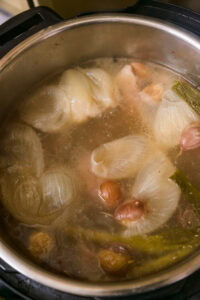
- Return the cooked meat and strained broth to a pot, then bring to a boil. (Optional: strain through cheesecloth to remove excess fat for a cleaner, clearer broth.)
- When the broth is boiling vigorously, add the potatoes and cook for about 5 minutes.
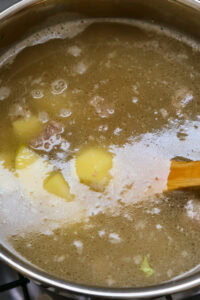
- When the potatoes are about one-third cooked, add the seasoned siraegi and bring back to a boil.
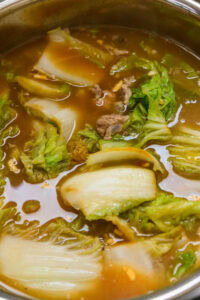
- Cook for another 10 minutes, then add the chili peppers and Korean green onion.
- Taste and adjust the salt if needed. Finish with the perilla leaves and perilla seed powder to deepen the aroma.2 tablespoons perilla seed powder