


A traditional recipe for Korean braised pork hocks. Tender, flavorful, and perfect for sharing with family or friends
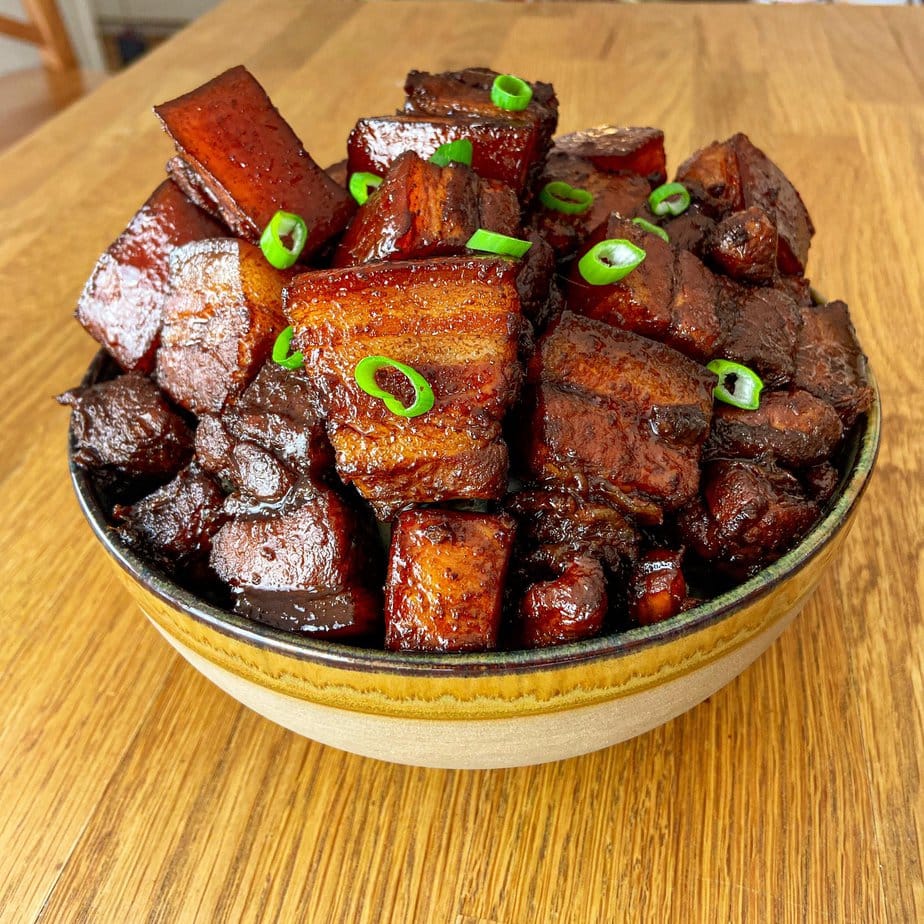
If you like Chinese hong shao rou or the famous Vietnamese braised pork, then you’re going to love this little spin-off from Korean cuisine. By now, everyone knows braised pork belly. But what’s less common (yet just as popular in traditional Asian cooking) is braised pork hock.
Because of the nature of this cut (very thick and rich in collagen), it’s eaten differently from pork belly. You end up with a beautiful piece of meat that, despite being simmered until incredibly tender and juicy, can be thinly sliced and then dipped in a delicious homemade sauce. For fans of Thai food, it’s the Korean equivalent of Khao Kha Moo.
In short, it’s a great dish to share, works equally well as an appetizer or a main course, and promises a real treat for your taste buds.
As a little bonus, it’s a simmered/braised dish, so there’s no need to spend hours watching over it in the kitchen
What Is Jokbal?
Jokbal (족발) is a Korean dish of braised pork made with hocks and feet. It belongs to the anju family, a term for dishes eaten with alcohol. Other dishes in this category include japchae and samgyeopsal.
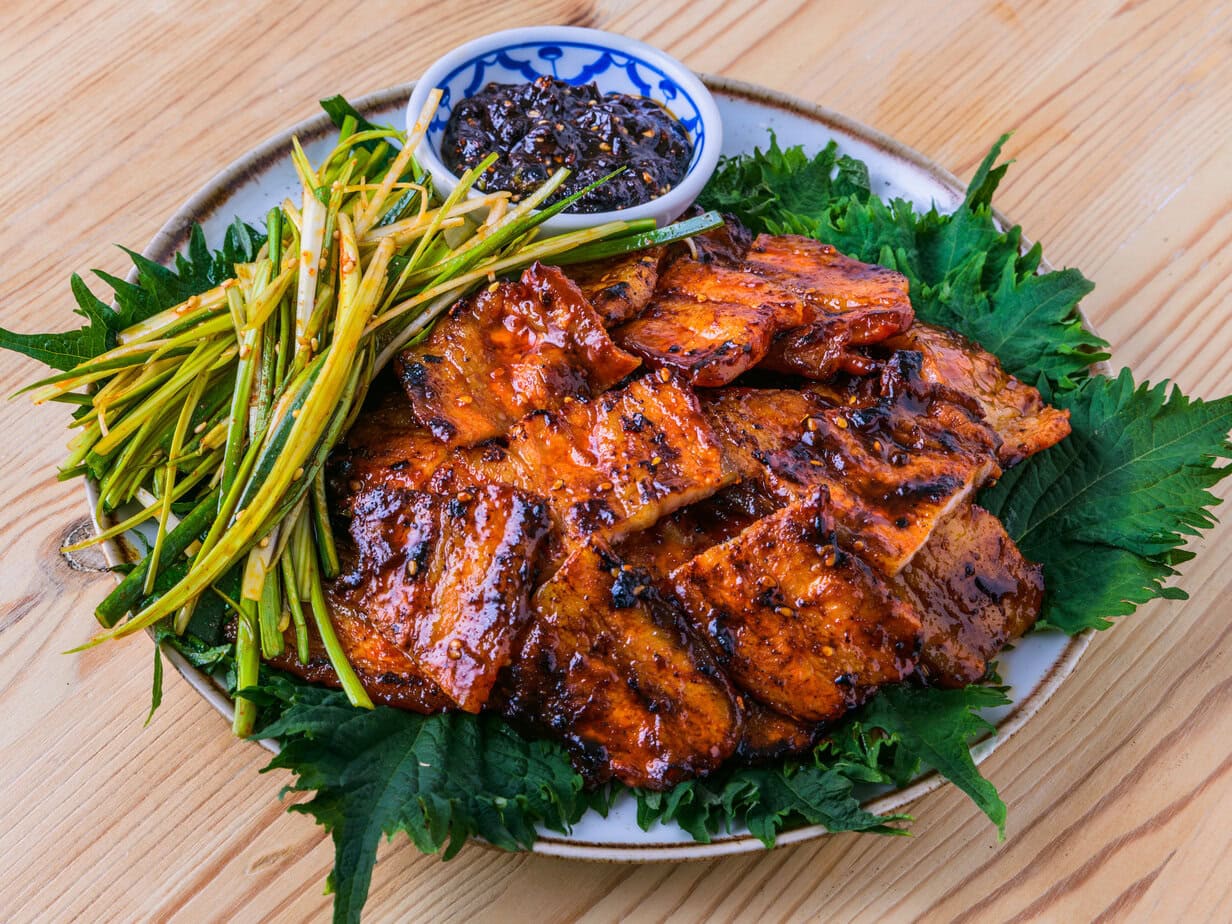
The pork is deboned after cooking, thinly sliced, and served with a dipping sauce. You can wrap it in a shiso leaf or lettuce leaf (or not), add a little ssamjang sauce, and dip it in the sauce.
Picture a platter of snacks served on a tall, round bar table alongside glasses filled with soju. In France, we get peanuts; in Korea, it’s slices of braised pork, haha
The Main Ingredients for Jokbal

Pork: Pork hock or shank (uncured) is pretty much essential here. Pork feet are an optional but highly recommended addition, bringing even more collagen to the dish and giving the sauce a better texture
Rice syrup: Available at Asian grocery stores. In a pinch, you can substitute corn syrup or even homemade invert syrup, but I believe the latter is sweeter, and I haven’t had a chance to test it. So be careful with the quantities.
Oyster sauce: It doesn’t taste like oysters, but it’s a fundamental part of the dish’s flavor, so don’t skip it
Star anise: Adds a welcome hint of anise flavor. You can substitute fennel seeds, but it’s best to put them in a small spice bag; otherwise, they’ll get everywhere and be unpleasant to eat
Light soy sauce: The salty soy sauce available in any supermarket
Gochugaru: Korean chili powder used to spice up the dipping sauce
Fish sauce: Adds saltiness to the dipping sauce
Mirin: Sweetens the sauce with subtle notes of sake

Jokbal – Korean Soy-Braised Pig’s Trotters
Ingredients
- 1 Pork shank or ham hock, unsalted
- 2 pig trotters optional
- 240 ml light soy sauce
- 120 ml of rice syrup
- 220 g of brown sugar
- 600 g of oyster sauce
- 550 ml water
- 10 star anise
- White sesame seeds for garnish
- Green onions thinly sliced, for garnish
Dipping sauce
- 4 Cheongyang green chili peppers washed and sliced (widthwise). Use any green chili pepper as a substitute (not green bell pepper!)
- 75 g of salted shrimp finely chopped
- 10 g of gochugaru
- 4 g white sugar
- 20 g of mirin
- 0.5 teaspoon of fish sauce
- 25 g garlic sliced
- 100 g of Chilsung Cider or a Sprite-type soda
- 10 g of sesame seeds lightly crushed
Instructions
- Bring water to a boil in a large pot and submerge the pork shank and pig’s feet for 7 minutes to remove impurities and odors1 Pork shank, 2 pig trotters

- Rinse the meat thoroughly with cold water after the initial cooking

- Use a disposable razor to remove any remaining hair if necessary
- Place a wok on the stove and pour in the soy sauce, rice syrup, sugar, oyster sauce, and water240 ml light soy sauce, 120 ml of rice syrup, 220 g of brown sugar, 600 g of oyster sauce, 550 ml water

- Mix until the sugar is completely dissolved
- Add the star anise to the mixture10 star anise

- Add the meat

- Bring to a boil and let the mixture boil over high heat for 10 minutes

- Reduce to medium heat and cook the meat for 1 hour and 30 minutes. Cover
- Turn the meat every 30 minutes to thoroughly soak it in sauce and even out the color. Cover each time.
- When the meat is tender, don’t hesitate to uncover and increase to high heat to reduce and slightly caramelize the sauce for a nice color (don’t forget to turn the meat regularly and be careful not to burn it). The sauce should remain slightly liquid

- Move to a cutting board and cut the ham hock into thin slices (with the rind visible). You can also debone the feet.

- Serve on a large platter, pour some of the remaining sauce over it, and garnish with sesame seeds and green onionsWhite sesame seeds, Green onions
- Serve with the dipping sauce
Dipping sauce
- Place the sliced chili peppers in a bowl4 Cheongyang green chili peppers
- Add the chopped salted shrimp to the bowl75 g of salted shrimp

- Add the gochugaru and mix well10 g of gochugaru

- Add the sugar, then mix again4 g white sugar
- Pour in the mirin and incorporate it into the mixture20 g of mirin
- Add the fish sauce and mix0.5 teaspoon of fish sauce
- Incorporate the minced garlic25 g garlic

- Add the Chilsung Cider (or Sprite) and mix everything well100 g of Chilsung Cider
- Add the sesame seeds and mix carefully10 g of sesame seeds

- Taste the sauce to adjust flavors if necessary
Notes
Let the dipping sauce rest in the fridge for 24 hours for better flavor


Servi au dîner entre amis sur un grand plat à partager, tout le monde a adoré la viande fondante et la sauce bien parfumée. Les invités n’arrêtaient pas de me demander comment j’avais réussi cette caramélisation, et deux sont repartis avec le lien de la recette 🙂
Le plat est tellement joli une fois tranché et nappé de sauce, avec les graines de sésame et les oignons verts, qu’on dirait une photo de magazine culinaire 😋 J’ai dû sortir mon téléphone avant même de servir tellement le rendu sur le plateau était appétissant.
Préparé ce jokbal pour un repas de famille du Nouvel An, et le plat a disparu en un rien de temps tellement la viande était fondante et la sauce parfumée. Même les plus difficiles ont demandé la recette, surtout après avoir goûté la sauce de trempette bien relevée 😋
Recette testée ce week-end, la viande était incroyablement fondante et la sauce bien nappante. Faute de sirop de riz, j’ai utilisé du sirop de maïs en diminuant un peu le sucre, et le résultat était même meilleur, moins écœurant. La sauce de trempage après une nuit au frigo vaut vraiment le coup 😋