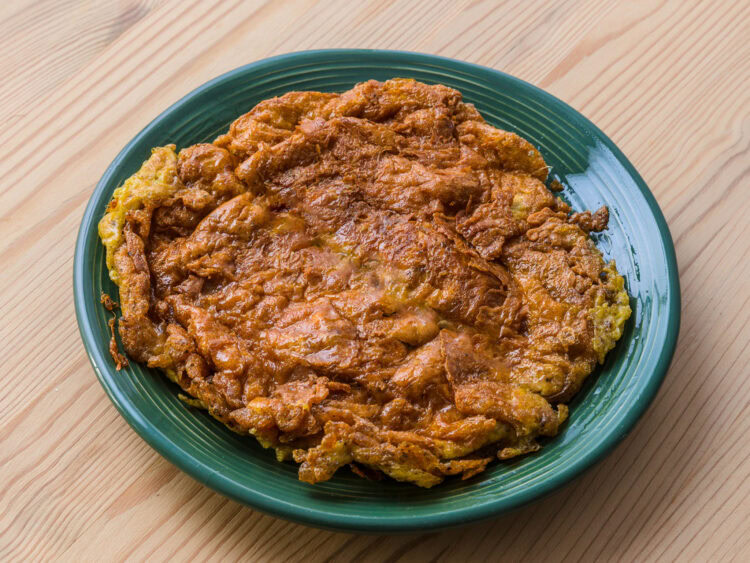
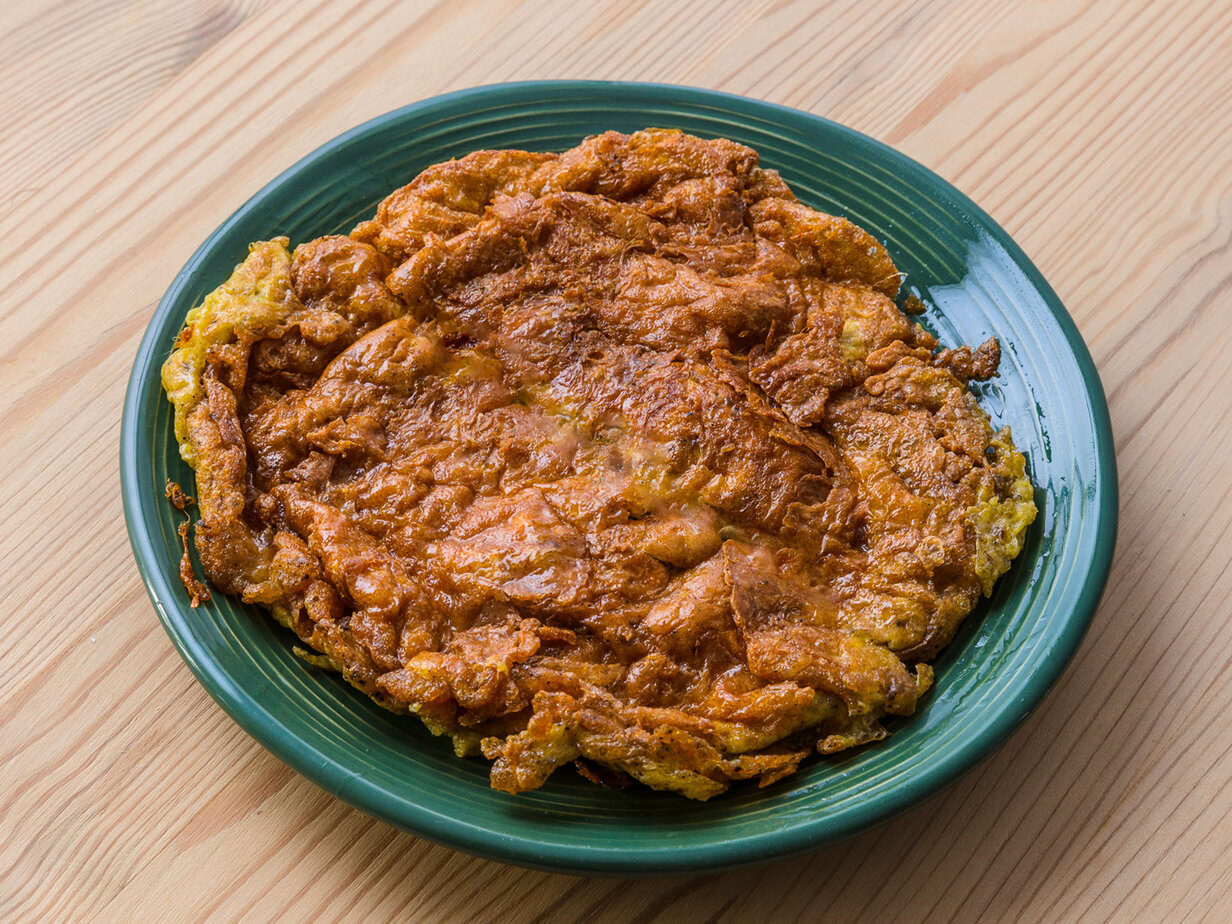
A golden, crispy omelet, deep-fried in a wok and scented with fish sauce.
A puffed omelet lands with a crackle on piping hot jasmine rice. Its frilly edges shatter, and the aroma of caramelized fish sauce rises with the steam. Authentic Kai Jeow is nothing like a pale, folded omelet.
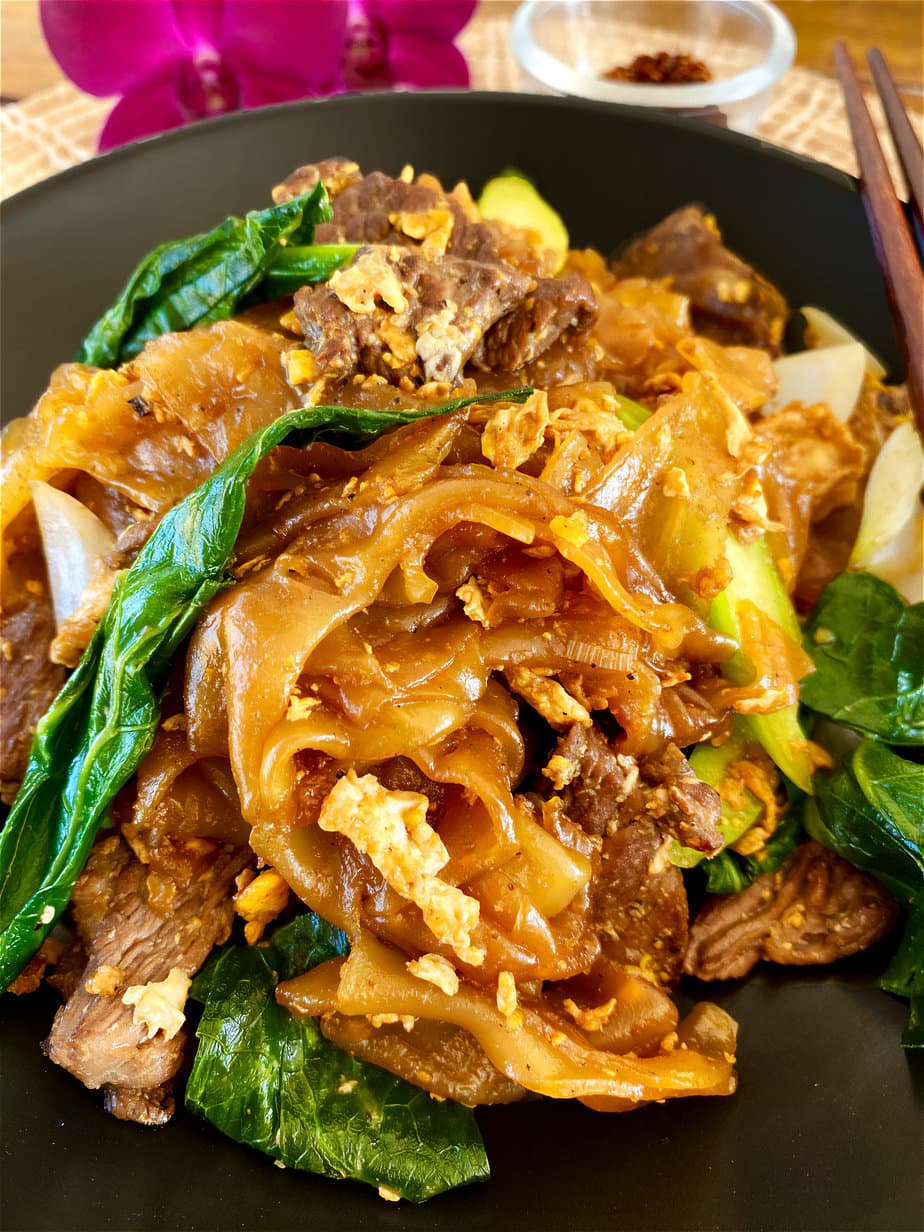
It’s a rustic Thai classic, as direct and satisfying as pad see ew or tom yum kung, relying on fierce heat, a generous amount of oil, and just a touch of acidity to create a tender, airy center.
What Is Kai Jeow?
Kai Jeow, or ไข่เจียว, is often translated as “Thai omelet,” but its name is more specific. “Jeow” derives from the Teochew Chinese term “jiao,” which refers to food that is browned, crisped, or lightly charred.
This isn’t a gently pan-cooked omelet. It’s fried in a generous layer of blazing-hot oil, traditionally in a wok, until the egg puffs up and develops a porous texture with irregular ripples.
The signature seasoning is Thai fish sauce, or nam pla, rather than soy sauce or table salt. Rich in glutamates, it helps the egg brown and form a savory, lightly sweet crust.
A few drops of lime juice, white vinegar, or water also play a key role : when they hit the oil, they turn to steam and help the beaten eggs puff up from within.
From the Teochew Wok to Royal Ceremonies
The history of Kai Jeow can be traced through trade and migration. The Teochew introduced the iron wok and a whole vocabulary of frying that transformed Siamese kitchens. European influence may also have played a part : at the court of Ayutthaya in the 17th century, French diplomatic contacts may have introduced the concept of the omelet, later reinterpreted with Siamese tools, fish sauce, and a preference for deep browning over high heat.
The memoirs of Princess Narinthrathewi mention Kai Jeow among the dishes served during the great ceremonies at Wat Phra Kaew under Rama I, at the end of the 18th century. The generous amount of lard required made it a luxury at the time. Early cookbooks show the dish still evolving : Mae Krua Hua Pa (1908) mentions folded omelets of foreign inspiration, and Tamrap Sai Yaowapa (1935) already describes methods close to the modern version, with eggs beaten vigorously and rippled layers formed on contact with the oil.
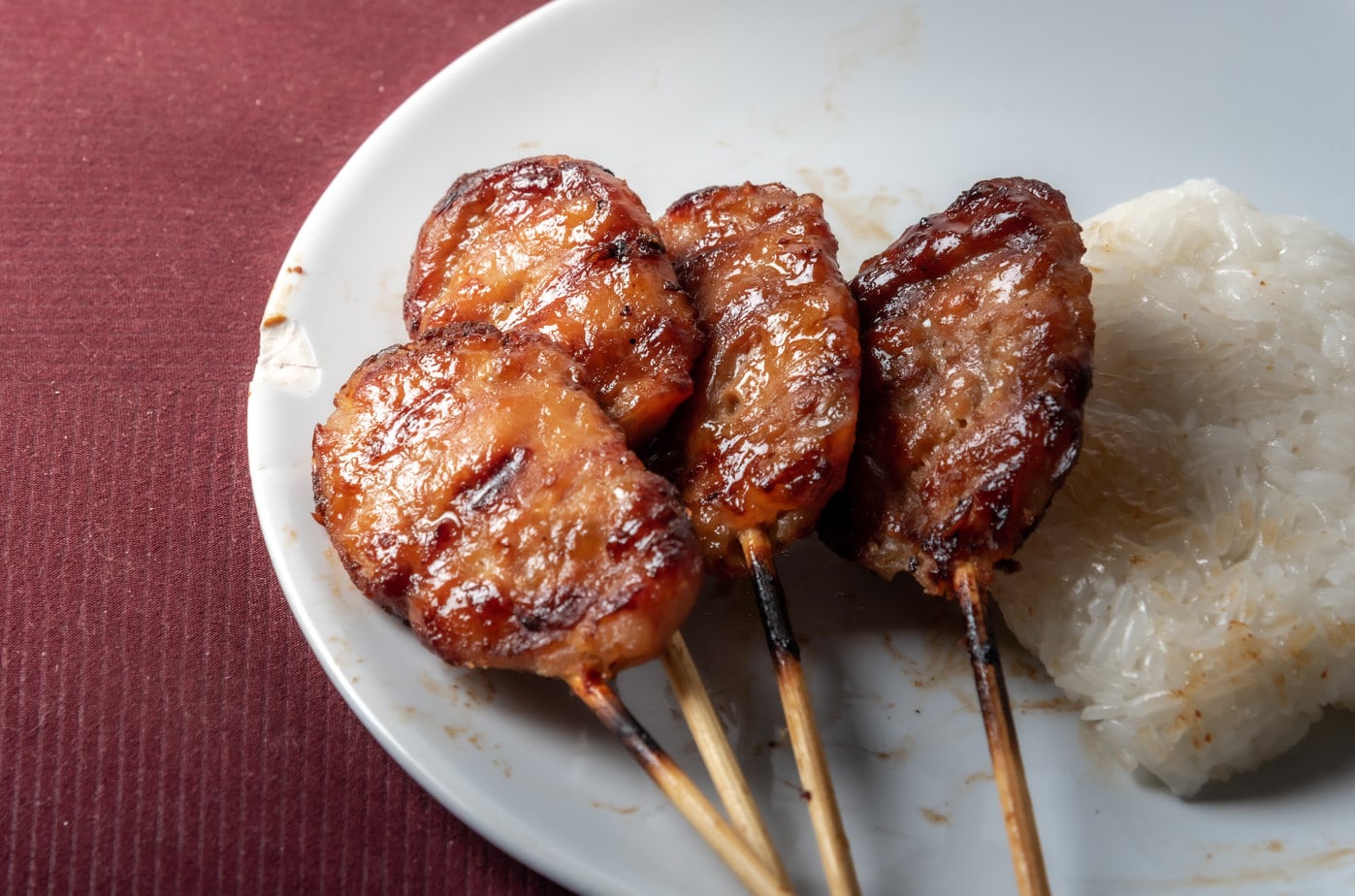
This porous texture mattered beyond the rice plate as well. In Gaeng Chalaem, a clear broth with torn pieces of Kai Jeow and lettuce, the fried egg soaks up the broth while keeping its volume, a world away from the coconut richness of tom kha gai soup. Today, Kai Jeow shows up at street stalls alongside moo ping or Thai chicken satay, sliced into strips for a tangy yam khai dao salad, or served with khao khluk kapi and Thai basil beef.
Key Ingredients in Kai Jeow
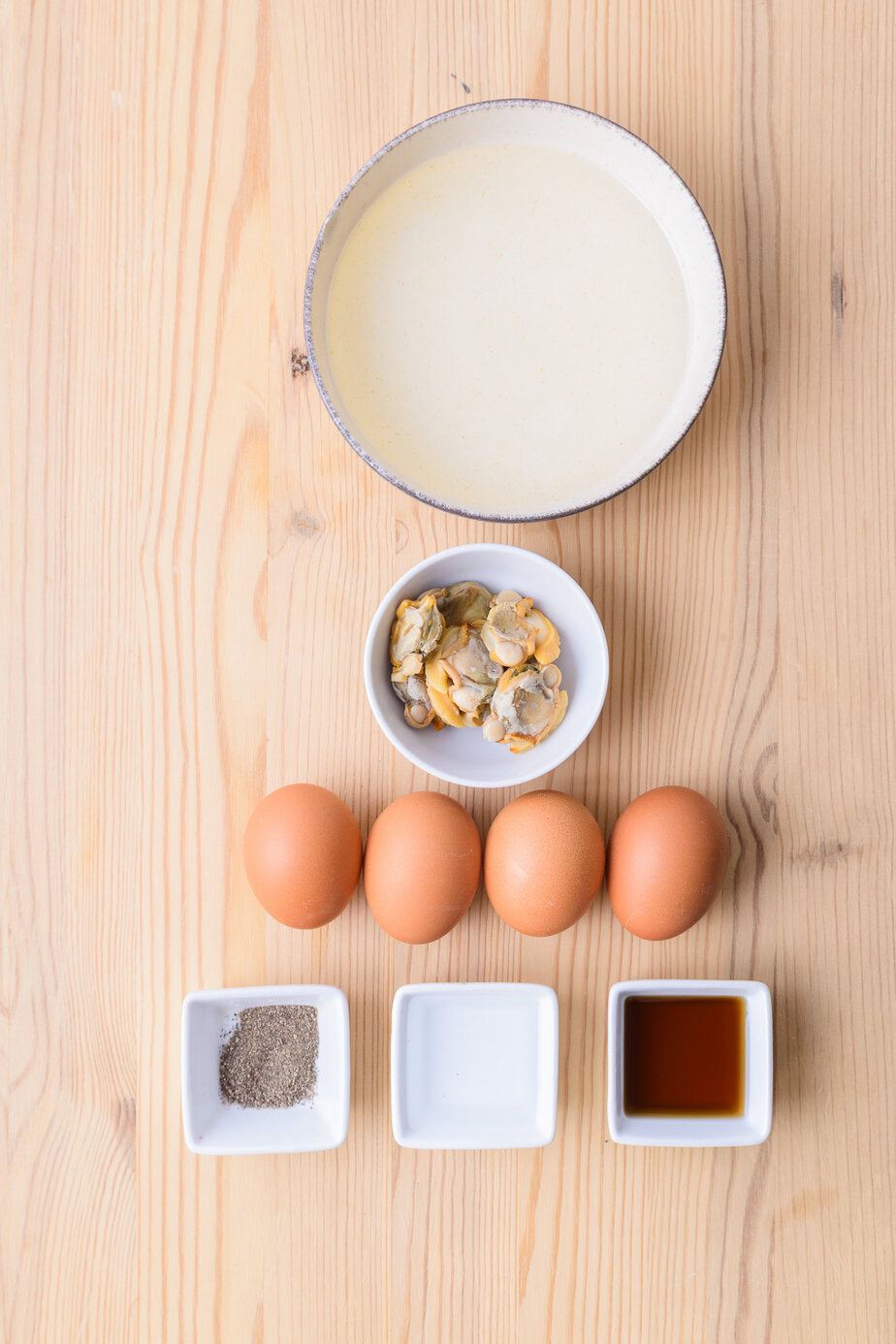
Large chicken eggs provide the protein and moisture that help the omelet puff up properly. Duck eggs make a denser, richer version with a firmer crunch.
For the cooking fat, neutral oil or melted lard carries heat quickly enough to crisp the outside before the center has a chance to fall flat. You need enough oil to fry the omelet in a generous layer, often far more than a mere slick in the pan.
Nam pla brings the salt and umami that give the crust its roasted flavor. Soy sauce or table salt change both the taste and the way the omelet fries. A few drops of lime juice or water help the eggs puff up on contact with the oil.
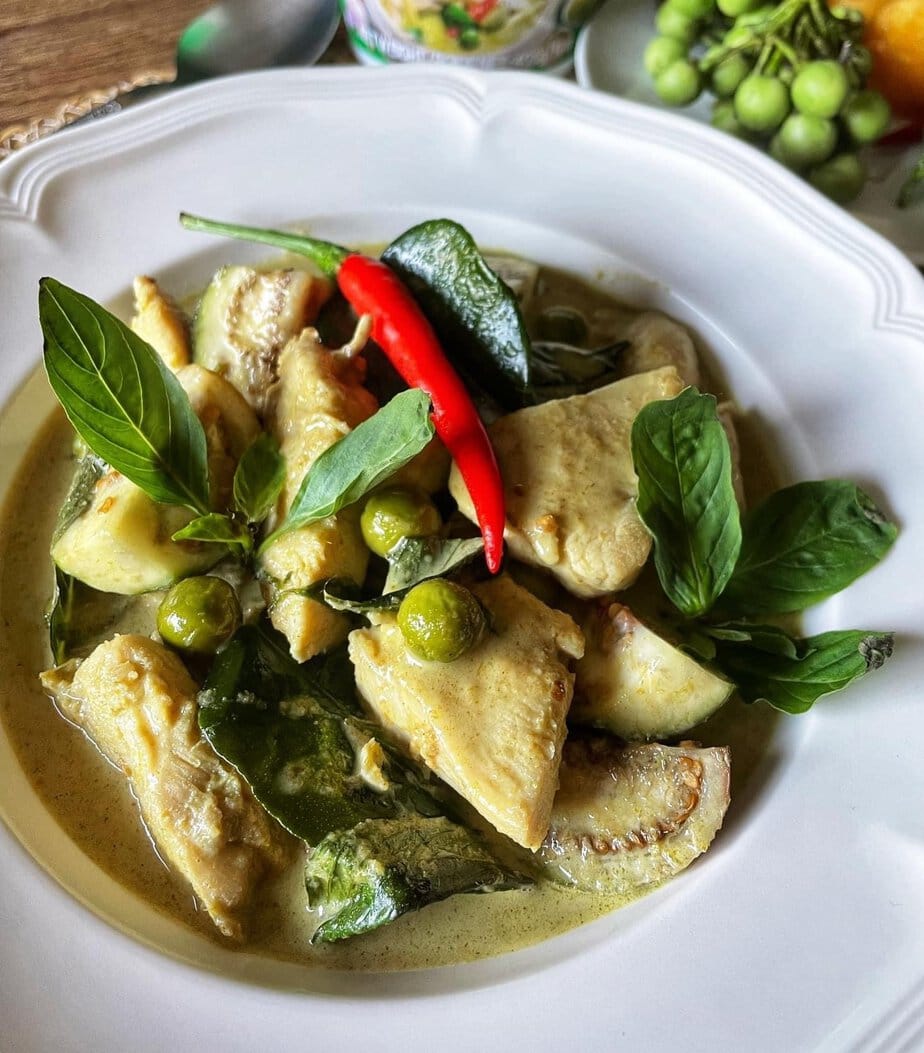
Hot jasmine rice absorbs the richness of the dish, just as it does with Thai green curry or Thai red curry. Prik nam pla or sriracha balance that richness with salt, heat, and acidity.
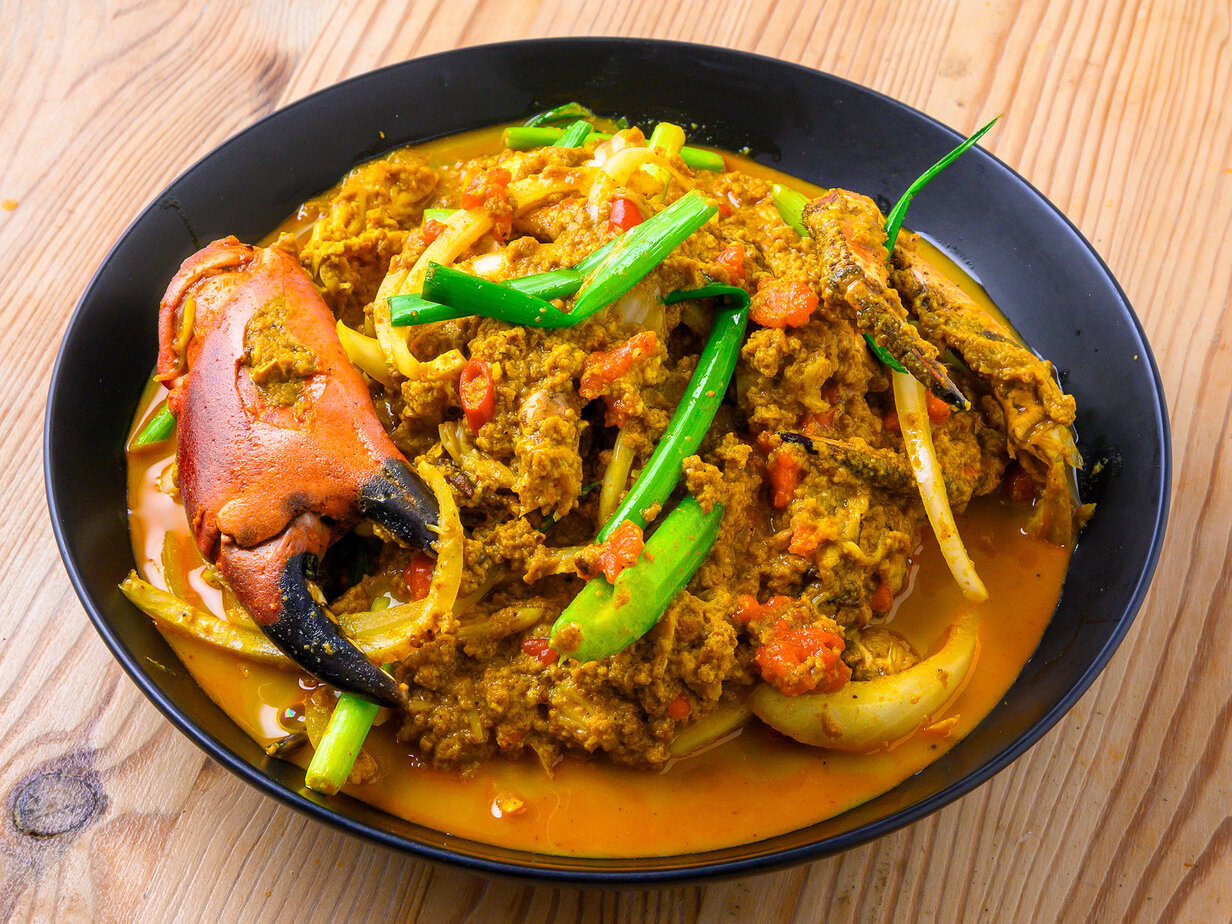
Additions like ground pork, crab (which echoes pad pong karee), or cha-om leaves deepen the flavor, but the best versions keep their lift by letting these add-ins fold into the egg rather than weighing it down.
Signs of Authenticity
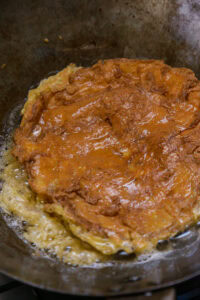
The omelet should be deeply browned, not merely yellow. Its edges should crack into crisp shards, while the center stays tender, with clearly defined layers. The oil must be hot enough for the egg to puff up instantly, and plentiful enough to fry rather than simply sear it. Flour, cornstarch, baking powder, and timid low-heat cooking have no place here.
Ingredients
- 4 eggs
- 2 tablespoons clams cooked, shelled
- 1 tablespoon fish sauce
- 0,5 teaspoon pepper
- 120 ml oil for frying
- 2 tablespoons water
Instructions
Method
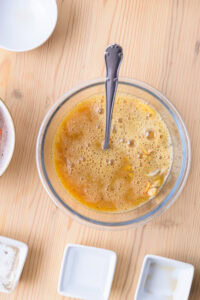
- Crack the eggs into a bowl. Add the clams, fish sauce, pepper, and water, then beat until smooth.4 eggs, 2 tablespoons clams, 1 tablespoon fish sauce, 0,5 teaspoon pepper, 2 tablespoons water
- Heat the oil in a wok over high heat until very hot.120 ml oil
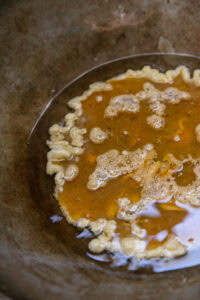
- Pour in the egg mixture and cook until the omelet is puffed and golden brown.
- Serve immediately.