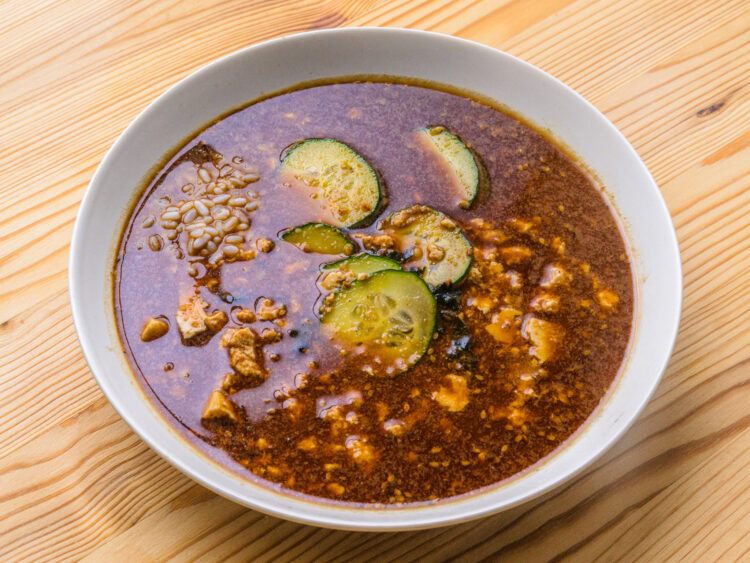
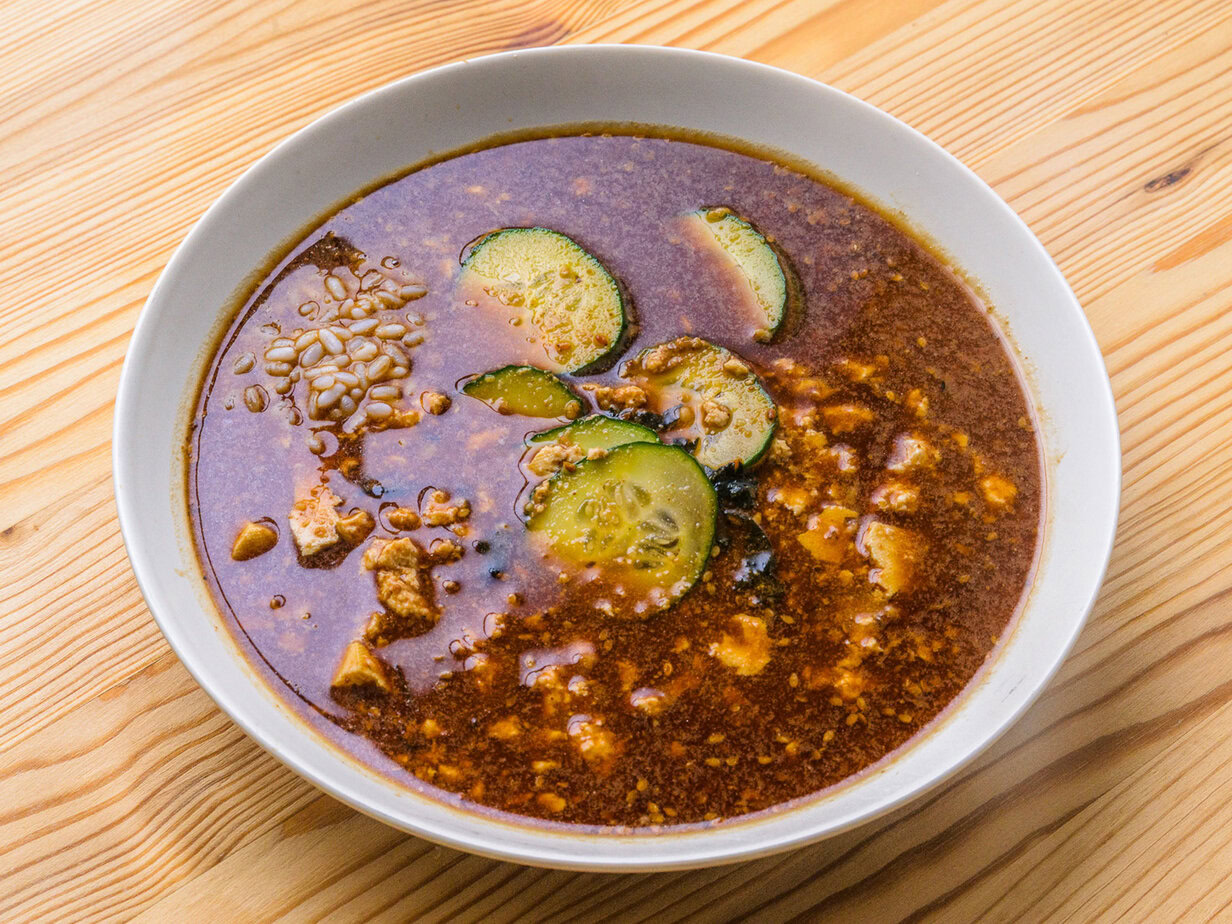
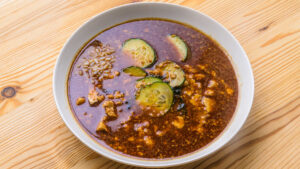
Miyazaki’s chilled bowl : a broth of toasted miso and ground sesame, poured ice-cold over still-warm barley rice.
The air is heavy, your appetite has been gone since noon, and yet this bowl disappears in minutes. The broth comes straight from the fridge, rich with toasted miso and ground sesame, and spills over still-warm barley rice.
Beneath it, hand-torn tofu soaks up the broth, the cucumber keeps its crunch, and shiso and myoga lift everything at the last moment. In Miyazaki, this is what people eat when the heat drains away any desire to cook, making it perfect for those times when you simply can’t be bothered.
What is hiyajiru ?
Hiyajiru (冷や汁) means “cold soup,” but the Miyazaki version is far more codified than that translation suggests. It rests on three pillars: a local fish, dried or grilled, from horse mackerel (aji) to niboshi; a Kyushu barley miso, milder than rice miso, ground with toasted white sesame; and hot barley rice, mugi-meshi, as the base.
The appeal lies in the contrast: the icy broth soaks into grains that are still warm, the salted cucumber slices keep their crunch, and the firm tofu, torn by hand, swells with broth along its ragged edges. Myoga and shiso finish the bowl with their clean, bright aroma.
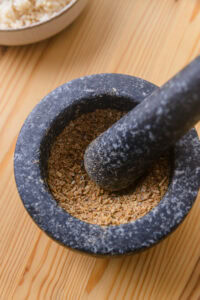
The method matters just as much as the ingredients. The sesame is ground in a grooved suribachi, then mixed with the flaked fish and the mugi-miso. The paste is spread along the sides of the mortar and held over the flame until it barely blackens, deepening the miso’s flavor and softening any overly fishy notes.
It is traditionally thinned with very cold water, although cooks today sometimes prefer a light dashi.
Born of taxed rice and sweltering summers
Miyazaki is widely recognized as the birthplace of hiyajiru, and preservation groups such as the one in the city of Saito still champion the mortar method there.
The dish is often traced back to the Kamakura period, based on a document that supposedly contrasted samurai eating their soup hot with monks eating it cold over rice. This story holds an important place in local memory, but the text cited does not appear in Japan’s general catalogue of national books.
The name, however, is better documented. The culinary treatise Ryori Monogatari, published in 1643, already mentions hiyajiru. The preparation described was closer to an aemono, a dressed dish combining mozuku, nori, chestnuts, ginger, myoga, and fish paste. The name, then, was in use long before the method was fixed.
Its modern form, though, comes from the fields. Nengu took 40 to 60 % of the rice harvest, sometimes more, so peasants ate barley rice rather than polished white rice.
During Miyazaki’s humid summers, people would place raw miso over leftover morning mugi-meshi and pour cold water on top: salt, water, and a meal gulped down during a break. Later generations grilled the fish, added sesame, passed the paste over the flame, and made firm tofu a local hallmark.
The main ingredients of hiyajiru
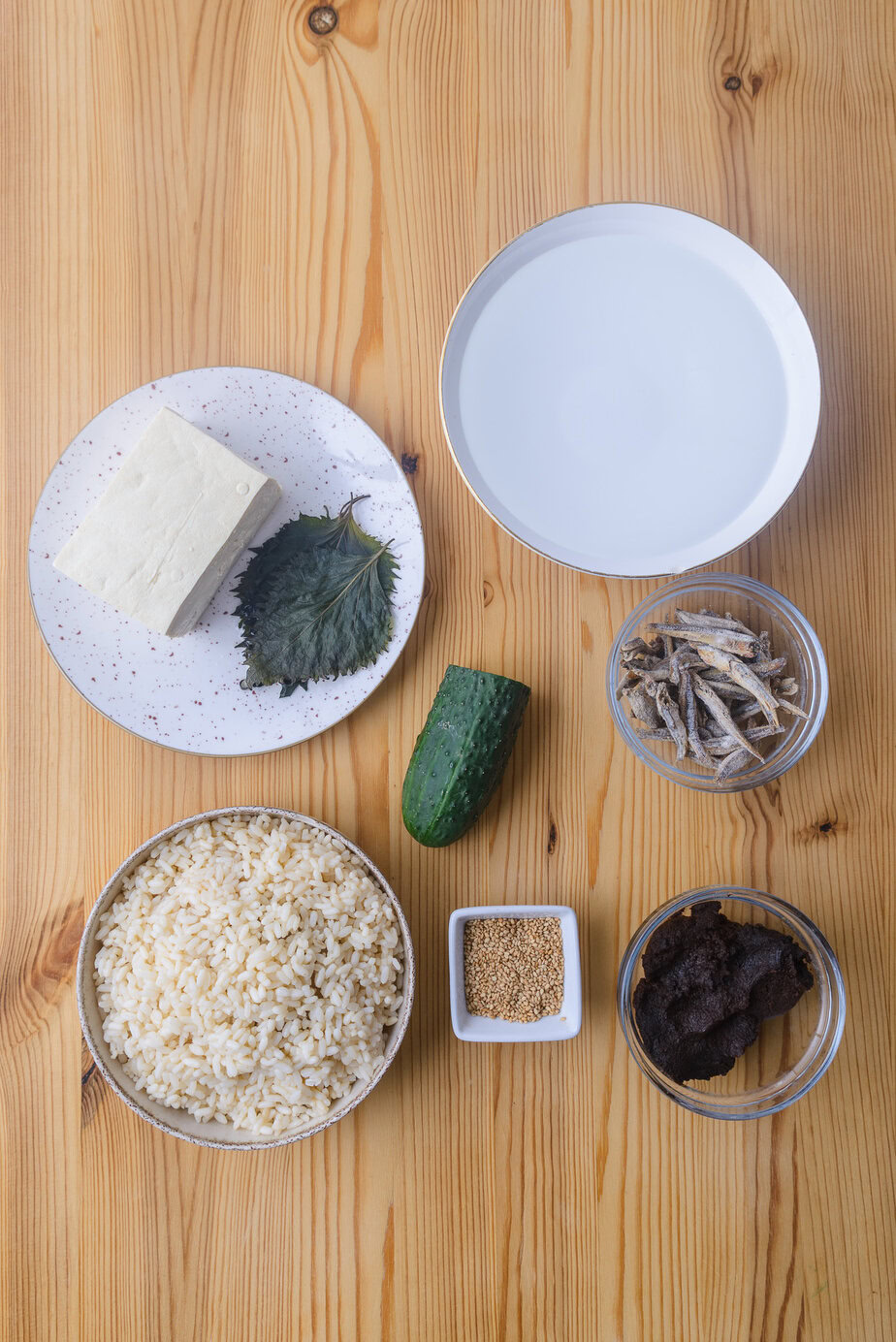
Fish forms the savory base : aji, kamasu, or tai, grilled and flaked, or else niboshi and ago, dried and then roasted. The heads and guts are removed from the small dried sardines to avoid bitterness, and a spell over the fire softens any overly briny aromas. Beneath the broth, barley rice brings chew and the warm counterpoint that defines the dish.
Kyushu barley miso provides salt, body, and a sweetness from barley koji; once toasted, it takes on the browned flavor that sets hiyajiru apart from a simple cold soup.
White sesame seeds, ground until fragrant, bring richness and a creamy texture that helps the paste emulsify. Many cooks stick with ice-cold water to keep the flavor clean; others add a light dashi for an extra layer of umami.
The rest is all about freshness. Firm tofu (momen) is drained, then torn by hand so it absorbs the broth better than neat knife cuts. The cucumber is thinly sliced, salted, and pressed so it stays crisp without diluting the broth. Myoga and shiso, meanwhile, cut through the richness of the sesame and give the bowl its unmistakable summer fragrance.
Ingredients
- 30 g niboshi (small dried sardines) net weight
- 300 ml water
- 25 g sesame seeds toasted
- 50 g barley miso (mugi miso) or use 1.5× as much white miso
- 0.5 block firm tofu (momen)
- 0.5 cucumber
- 2 myoga (Japanese ginger buds) optional
- 5 leaves shiso (ōba)
- 2 bowls rice traditionally barley rice (optional)
Instructions
Niboshi Dashi
- Remove the heads and innards from the niboshi.30 g niboshi (small dried sardines)
- Place 10 g of niboshi in a saucepan with the water, then let soak for 30 minutes.300 ml water
- Bring to a boil, then simmer for 6 to 7 minutes, skimming as needed.
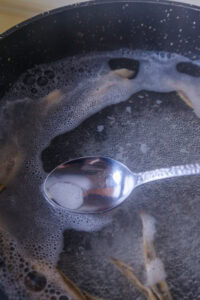
- Strain to make the dashi.
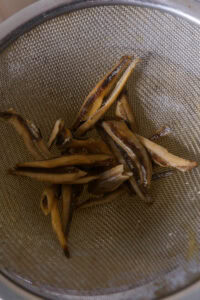
Miso-Sesame Base
- Place the remaining niboshi in a skillet over low heat; once crisp, add the sesame seeds and dry-toast until fragrant.25 g sesame seeds
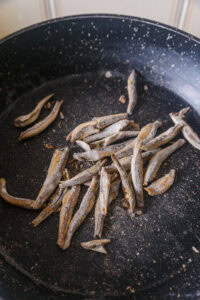
- Grind the sesame-niboshi mixture in a suribachi (Japanese mortar) or a food processor.
- Spread the miso inside the saucepan, invert it, and toast the miso directly over the flame until very fragrant.50 g barley miso (mugi miso)
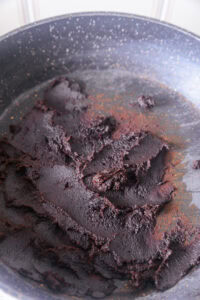
- Add the sesame-niboshi mixture to the miso, then gradually whisk in the dashi. Let cool, then chill in the refrigerator.
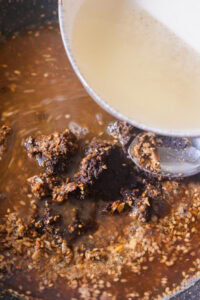
Garnishes and Serving
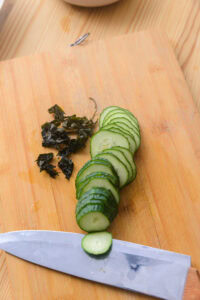
- Thinly slice the cucumber and myoga into rounds, then cut the shiso into fine strips.0.5 cucumber, 2 myoga (Japanese ginger buds), 5 leaves shiso (ōba)
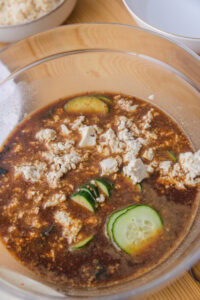
- Add the cucumber, myoga, and hand-crumbled tofu to the chilled broth.0.5 block firm tofu (momen)
- Divide the barley rice between bowls, then pour the chilled broth over the top.2 bowls rice
Notes
- For a milder version, replace the barley miso with white miso (about 1.5× the amount).
- Serve well chilled: a little time in the refrigerator noticeably improves the flavor.
- Myoga is optional, but it adds a fresh, aromatic lift.