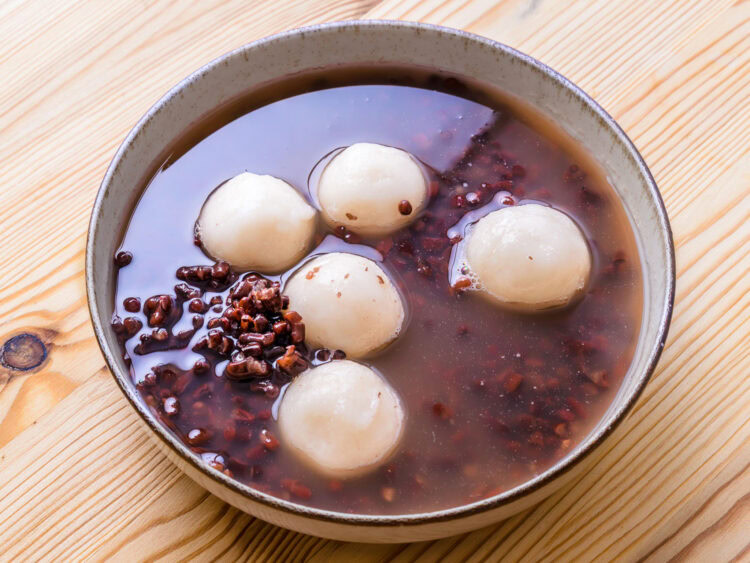
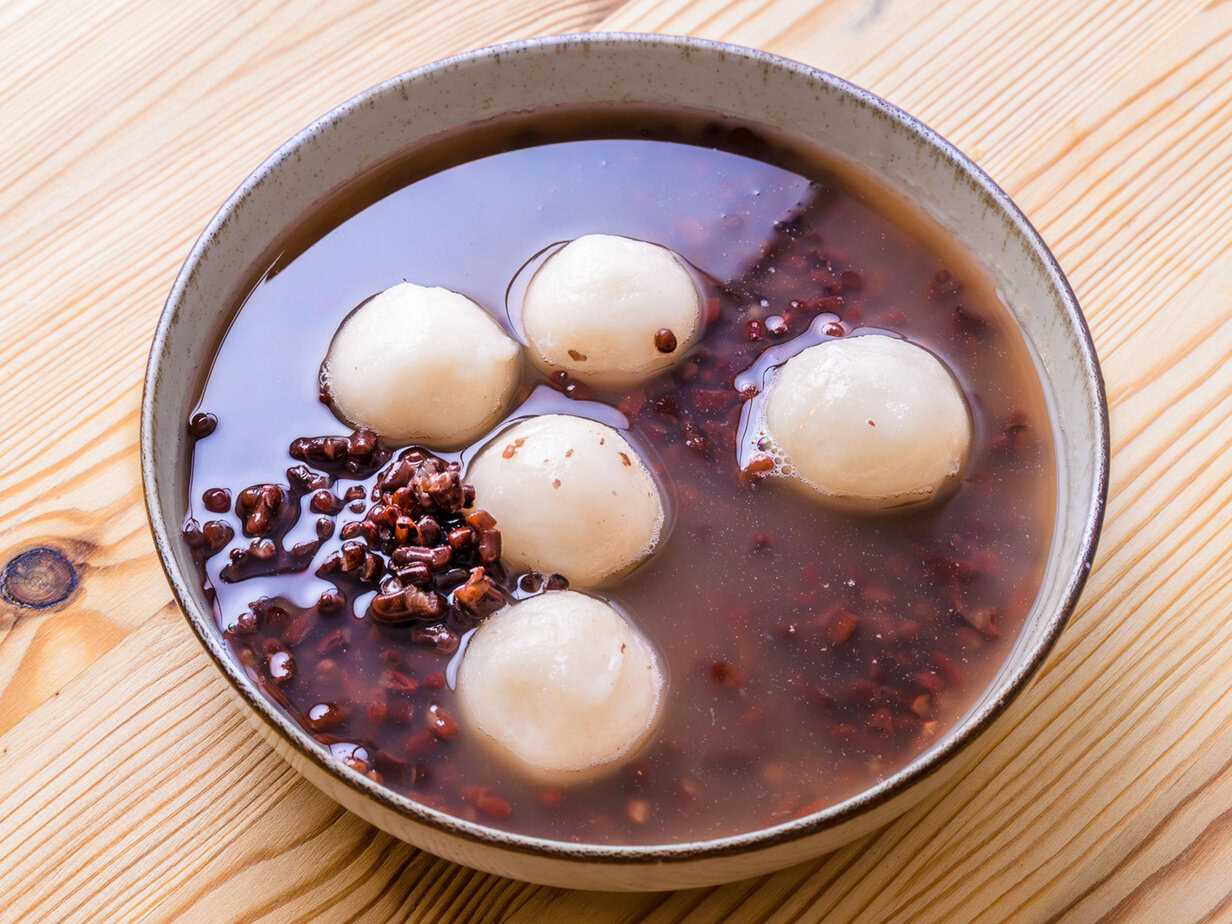
A comforting Japanese zenzai made with gently simmered sweet azuki beans and served with soft shiratama dumplings.
It’s cold, your hands are numb, and the bowl arrives steaming and deep red, with a piece of mochi still puffed up on the surface. The first spoonful is sweet without being cloying, thanks to a pinch of salt that draws out the flavor of the beans. The azuki remain pleasantly intact, while the grilled mochi stretches, warm and lightly toasted.
In Japan, it’s eaten mostly in winter and around New Year, when zenzai feels as much like a dessert as a gesture for good luck. Just five ingredients, nothing more, and you’ll still be scraping the bottom of the bowl.

What is zenzai ?
In Izumo and Kansai, zenzai is a hot, fairly thin soup of sweetened red beans served with grilled mochi. Its texture is closer to tsubu-an : the beans remain whole or only lightly mashed instead of being turned into a smooth paste.
The beans should stay visible in a clear red broth, tender without falling apart. At its core, the dish is just five ingredients: azuki, water, sugar, a pinch of salt, and mochi.
The name comes from Izumo’s Jinzai Mochi, a mochi offering made for the gods. Local pronunciation gradually shifted Jinzai to Zunzai, then to Zenzai, as the dish spread to Kyoto.
Another interpretation links the characters 善哉 to the Buddhist word yokikana, “splendid,” but culinary historians see this as a late ateji rather than the true root of the name.
Izumo, the month of the gods, and mochi offerings
Zenzai comes from Izumo, in Shimane Prefecture. In the rest of Japan, the tenth lunar month is called Kannazuki, the month without gods, because the deities leave their local shrines. In Izumo, it is called Kamiarizuki, the month when the gods are present : they gather at Izumo Taisha to decide the bonds between people, known as en-musubi.
During the Kamiari festival, Jinzai Mochi was served as an offering: rice cakes presented in red bean soup. The deep red color of azuki has long been thought to ward off misfortune, which explains the dish’s place in New Year customs. At Kagami Biraki, on 11 January in most traditions, the ceremonial mochi is broken rather than cut, then eaten in this sweet soup.
Texts from the early Edo period, including the Gion Monogatari, written between 1624 and 1644, already link Kyoto zenzai to Izumo’s Jinzai Mochi and describe a very thin soup with a few pieces of mochi.
The local dialect, Zu-zu ben, likely accelerated the shift in the name. Cafés around Izumo Taisha still serve it to shrine visitors, and zenzai remains one of the classics of Japanese cuisine.
The main ingredients of zenzai
Everything starts with azuki. Large and plump, Dainagon beans hold their shape during cooking and give tsubu-an its characteristic chunky texture, along with that auspicious red color. Water matters almost as much : shibukiri, the first cooking liquid that is discarded, removes astringency. Bikkurimizu, a splash of cold water when the pot boils too vigorously, helps the skin and center of the bean cook at the same pace.
Sugar is added only once the beans are tender; otherwise they toughen and turn mealy. Wasanbon lends a delicate sweetness, while Okinawan kurozato brings deeper, molasses-like notes. A pinch of sea salt is enough to heighten that sweetness and soften the bitterness of azuki polyphenols.
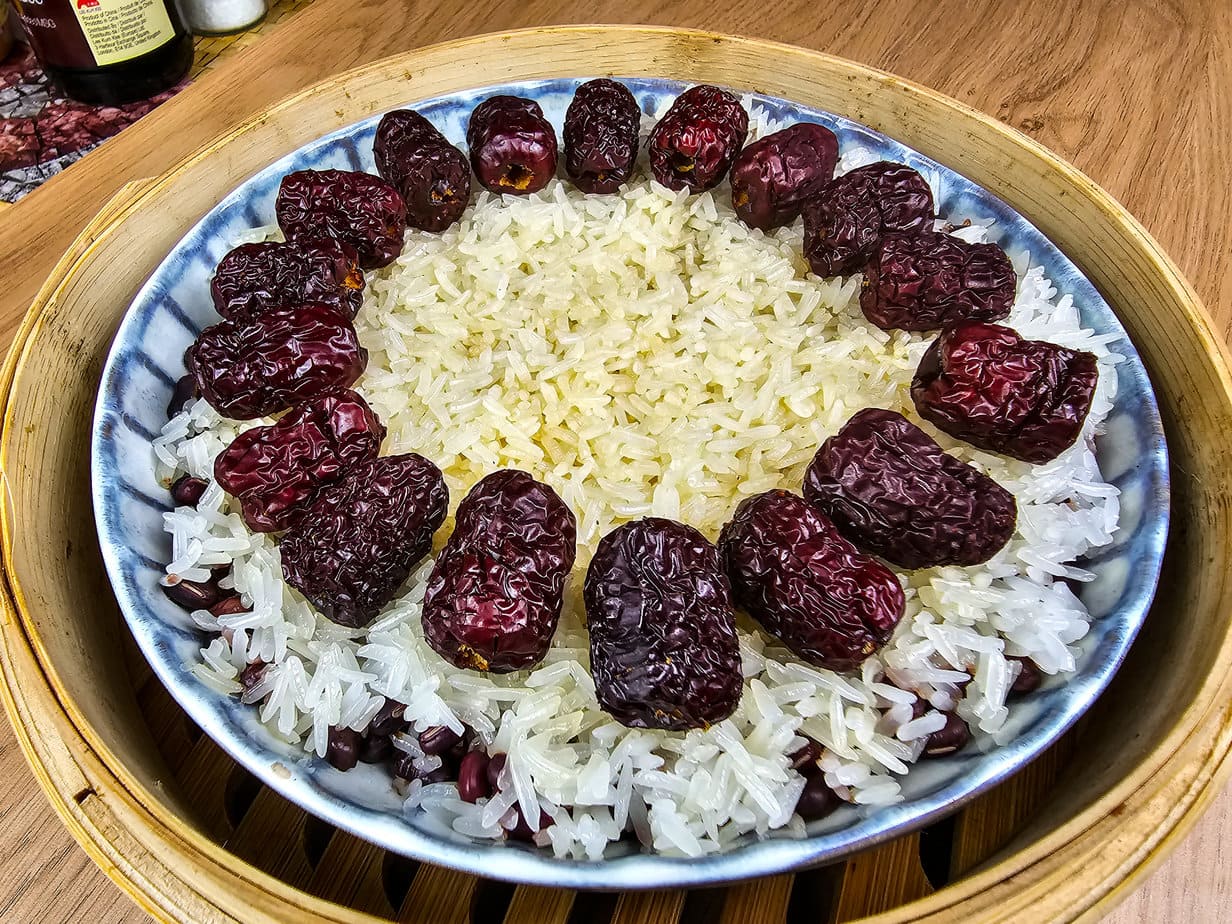
Mochi is made with glutinous rice, ideally Okuizumo mochigome for the most local version. Grilled until puffed and blistered, it adds chew, warmth, and the aroma of toasted rice. You’ll also find red and white shiratama, colored with takakibi sorghum rather than food dye, a nod to en-musubi and the sacred roots of the dish.
Zenzai or oshiruko: what to know before ordering
The same word doesn’t refer to the same bowl everywhere. In Izumo and Kansai, zenzai is thin and filled with whole azuki, while oshiruko more often refers to a smooth soup made with koshi-an.
In Kanto, including Tokyo, it’s the reverse : zenzai is thick, with very little liquid, and the soup versions are called oshiruko, gozen-shiruko when the paste is smooth, inaka-shiruko when it still contains whole beans. In Okinawa, zenzai is something else entirely: a summer dessert of shaved ice poured over beans cooked with brown sugar.
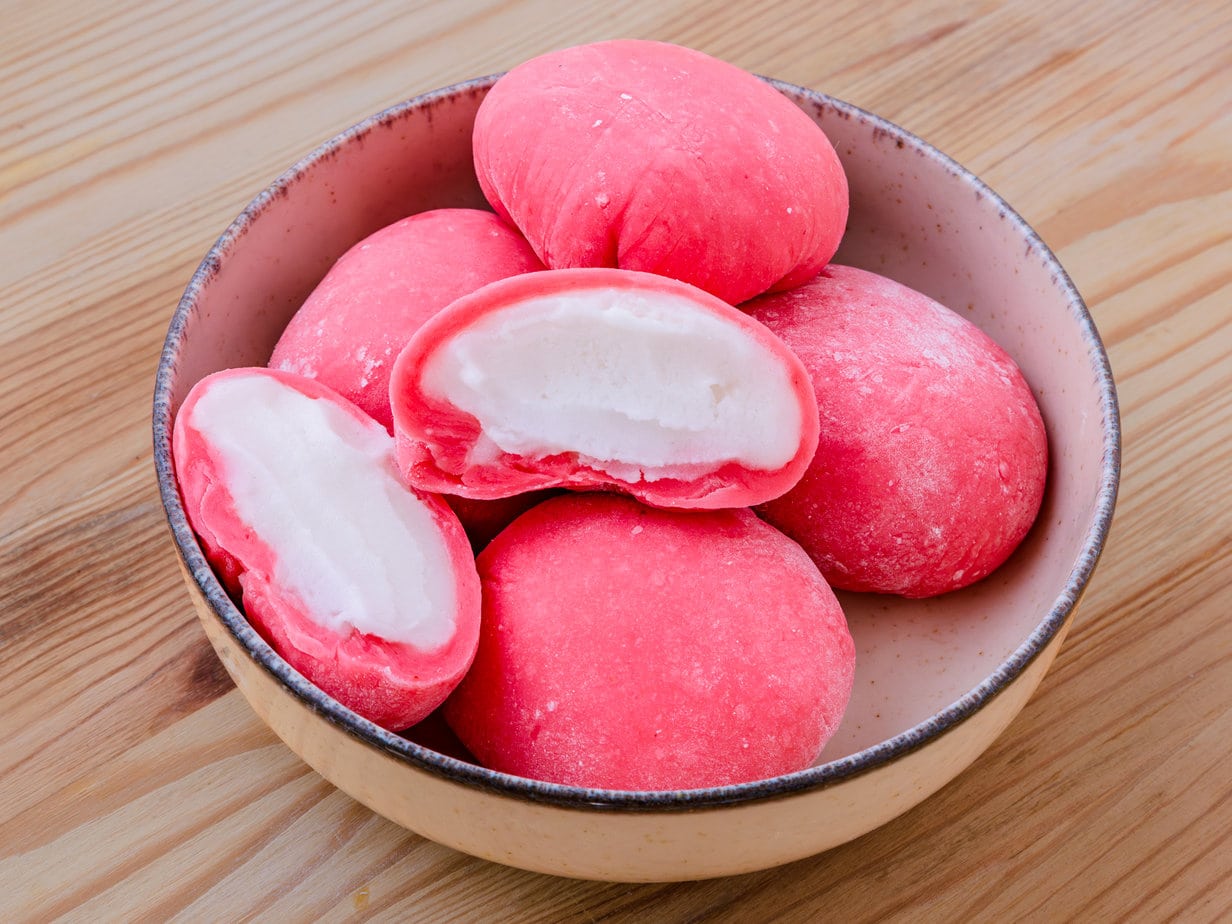
An Izumo-style bowl is easy to recognize. The beans are tender yet distinct in a clear red broth, and the sweetness is nuanced rather than heavy, with no tannic bitterness.
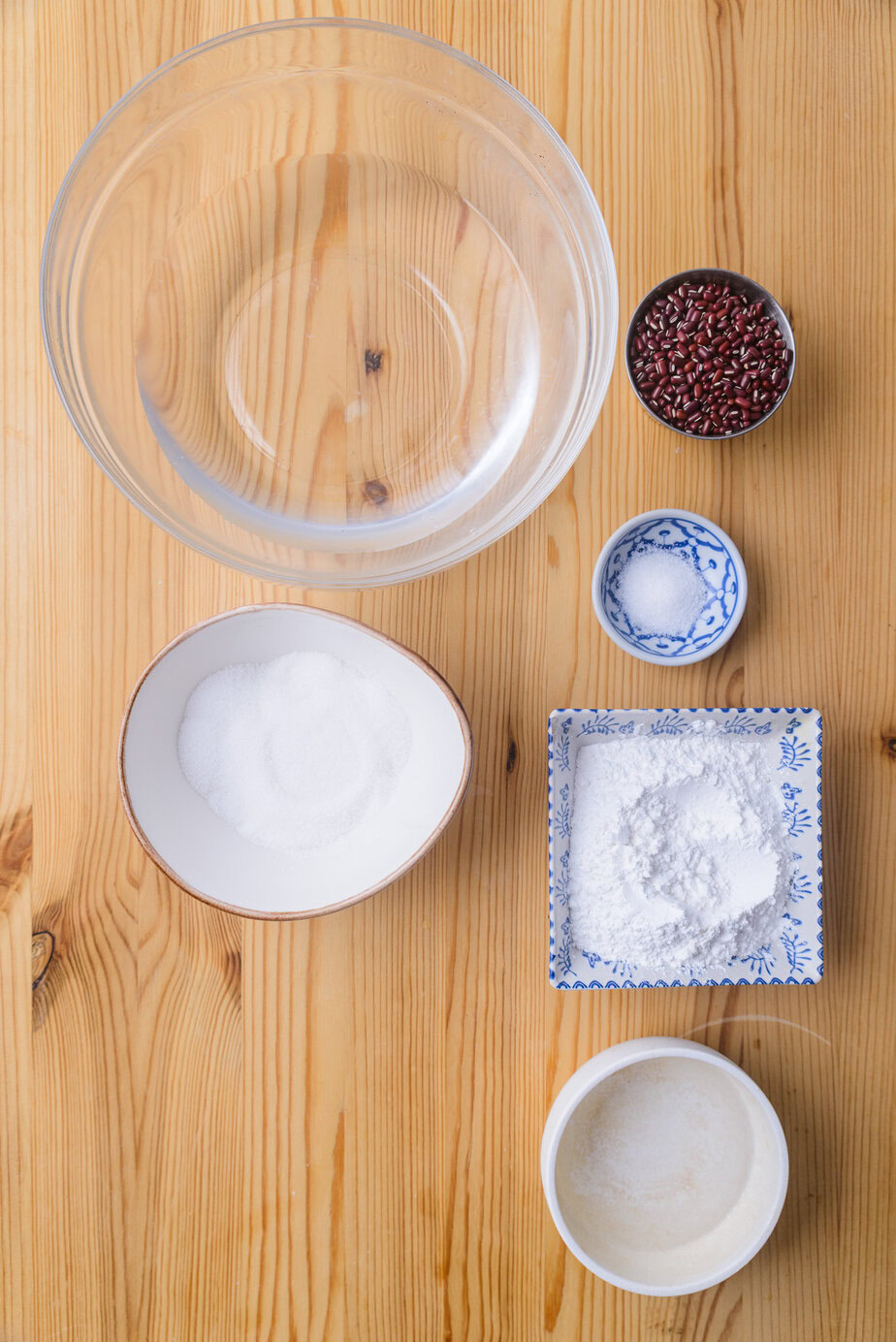
Ingredients
Zenzai
- 125 g azuki beans or Dainagon azuki beans
- 100 g sugar
- 625 ml water
- 1 pinch salt
Shiratama balls
- 100 g glutinous rice flour
- 90 ml water approximately, for the dough
Instructions
Zenzai
- Rinse the azuki beans.125 g azuki beans
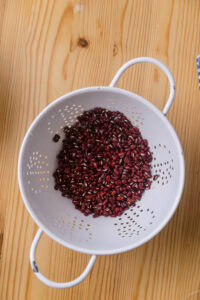
- Place the beans in a saucepan and add enough water to cover them (in addition to the measured water).
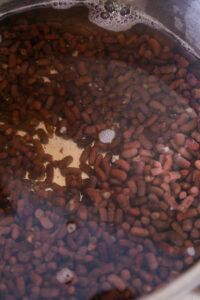
- Bring to a boil over high heat.
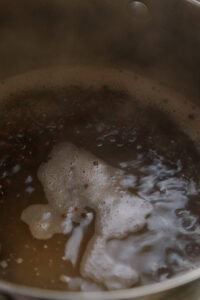
- Discard the cooking water to remove any bitterness.
- Add the measured water and bring back to a boil over high heat.625 ml water
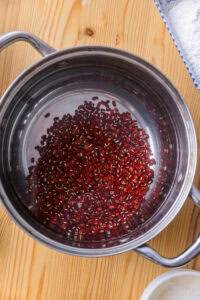
- Once it returns to a boil, reduce the heat to low, cover with the lid slightly ajar, and simmer for about 1 hour, until the beans are tender. Add more water if needed to keep them covered with liquid.
- Once the beans mash easily, add the sugar in 2 to 3 additions and simmer briefly over low heat.100 g sugar
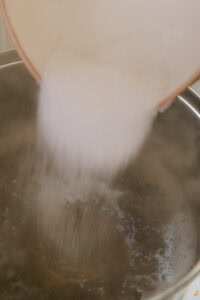
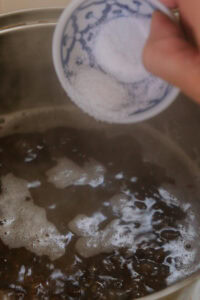
- Add the salt to enhance the flavor.1 pinch salt
Shiratama balls
- Place the glutinous rice flour in a bowl, then add the water little by little, kneading until you have a soft dough (about the consistency of an earlobe).100 g glutinous rice flour, 90 ml water

- Shape into balls of your desired size and press a slight indentation into the center of each one.

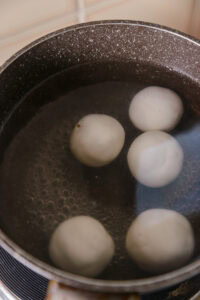
- Drop the balls into boiling water. Once they rise to the surface, cook for about 1 minute more.
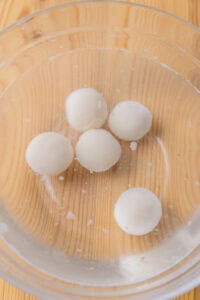
- Remove the balls, transfer them to cold water to cool, then drain.
- Add the shiratama balls to the zenzai and serve.