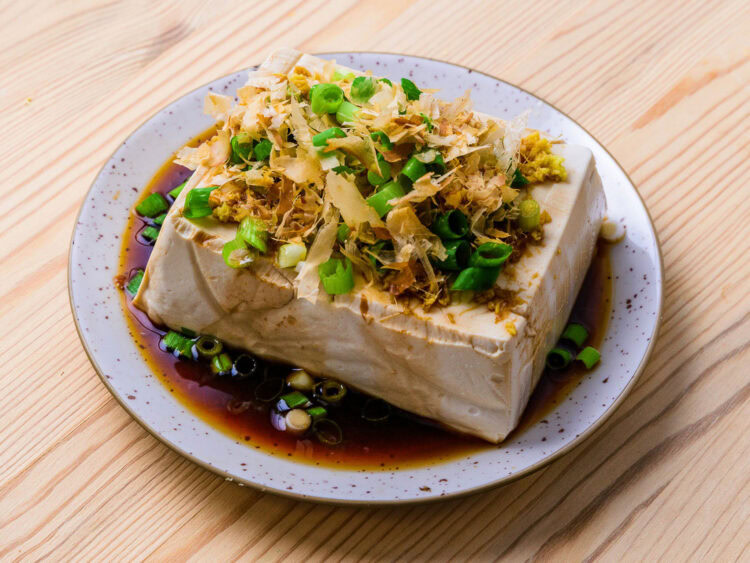
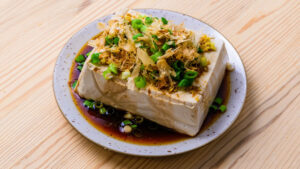
An authentic, refreshingly cold hiyayakko: silken tofu topped with ginger and scallions, finished with kombu-infused soy sauce.
It’s hot, your appetite is fading, and yet a simple block of well-chilled tofu vanishes in just a few bites. Hiyayakko is all about contrast: the silky coolness of the tofu, the bite of ginger, the crispness of negi, and that final splash of shoyu that brings everything to life.
The bonito flakes are still dancing when the plate reaches the table. It seems too simple to be truly special—until the first bite.
What is hiyayakko ?
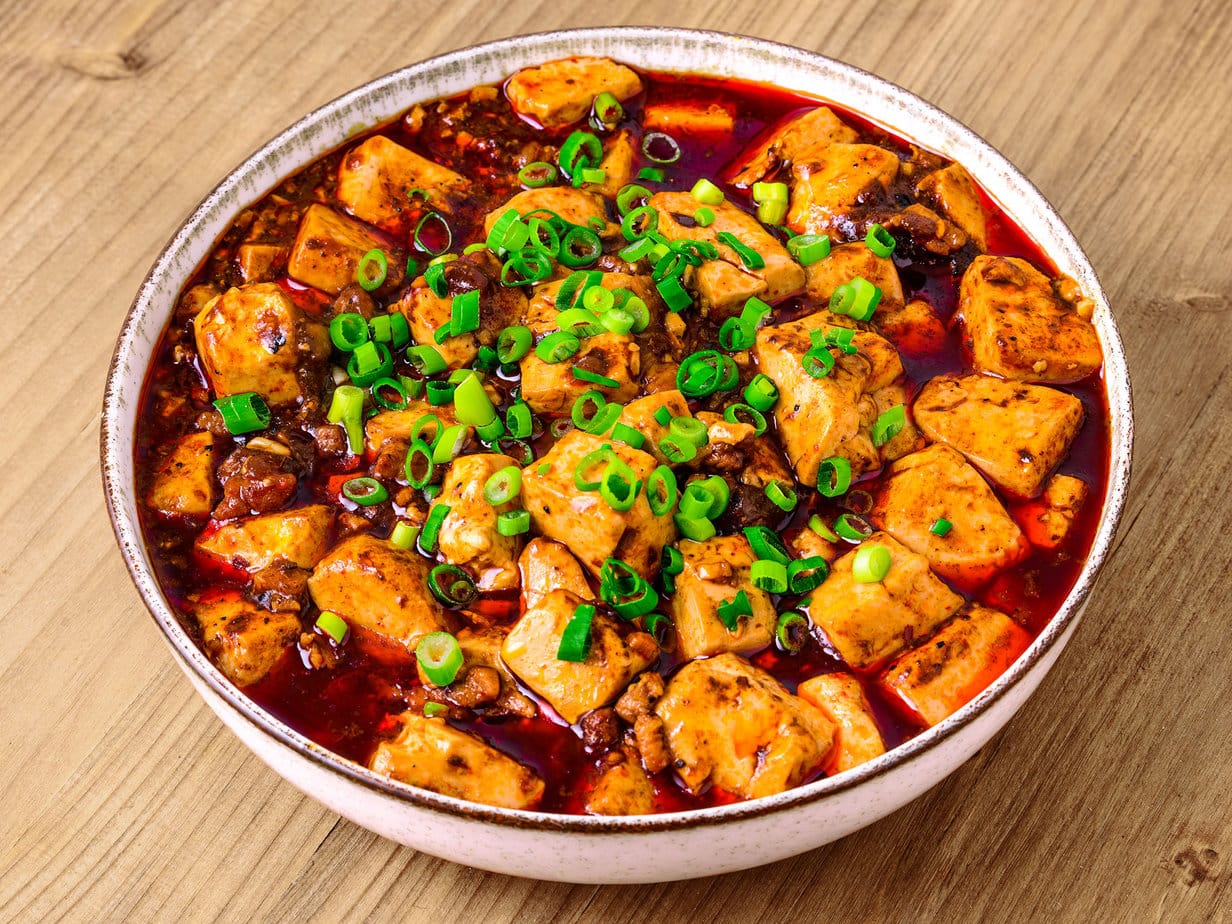
At the heart of the dish is a single element: a block of high-quality Japanese tofu, served cold and almost bare, unlike richly seasoned mapo tofu. Two types are considered classic: kinugoshi, silky and delicate, favored in Kansai, and momen, firmer and associated with Kanto.
Nearly two-thirds of Japanese people now prefer kinugoshi for this dish. A simple drizzle of good shoyu, added at the last moment, draws out the umami of soy and bonito, much like a well-balanced miso soup.
The name combines hiya, “cold,” and yakko, a term that referred to the attendants in daimyo processions during the Edo period. Their hanten jackets bore the kuginuki mon, a square crest whose shape evokes the cut of tofu, hence the expression yakko ni kiru, “to cut into neat cubes about 3 cm across.”
Another theory sees it as a phonetic shift in Edo speech, from hiyayaka to hiyayakko.
From the temples of Nara to the stalls of Edo
Tofu originated in China, an invention traditionally attributed to Prince Liu An of the Han dynasty in the 2nd century BCE. It reached Japan during the Nara and Heian periods, brought by Buddhist monks returning from Tang China, and appears in Japanese sources in 1183 as an offering at Kasuga Shrine.
Long associated with temples, it provided a gentle source of protein in shojin ryori, Buddhist vegetarian cuisine, before making its way onto warriors’ tables during the Kamakura and Muromachi periods.
Tofu became widely popular in Edo. Despite sumptuary edicts, urbanization created daily demand for okazu, the side dishes served with rice. In 1659, the northern part of the city had 5 900 peddling permits, more than 70 % of them held by children, older people, or people with disabilities, who carried tofu and natto through the streets. Tofu was already an everyday staple, long before more specialized preparations such as sushi rice.
Water mattered just as much as anything else. The Kanda and Tamagawa aqueducts supplied the communal wells, and in summer, blocks of tofu were cooled in basins of well water. In 1782, the Tofu Hyakuchin lists “ yakko tofu ” among preparations so familiar they needed almost no explanation: an urban dish born from the coolness of well water and the visual code of sankin-kotai processions.
The main ingredients of hiyayakko
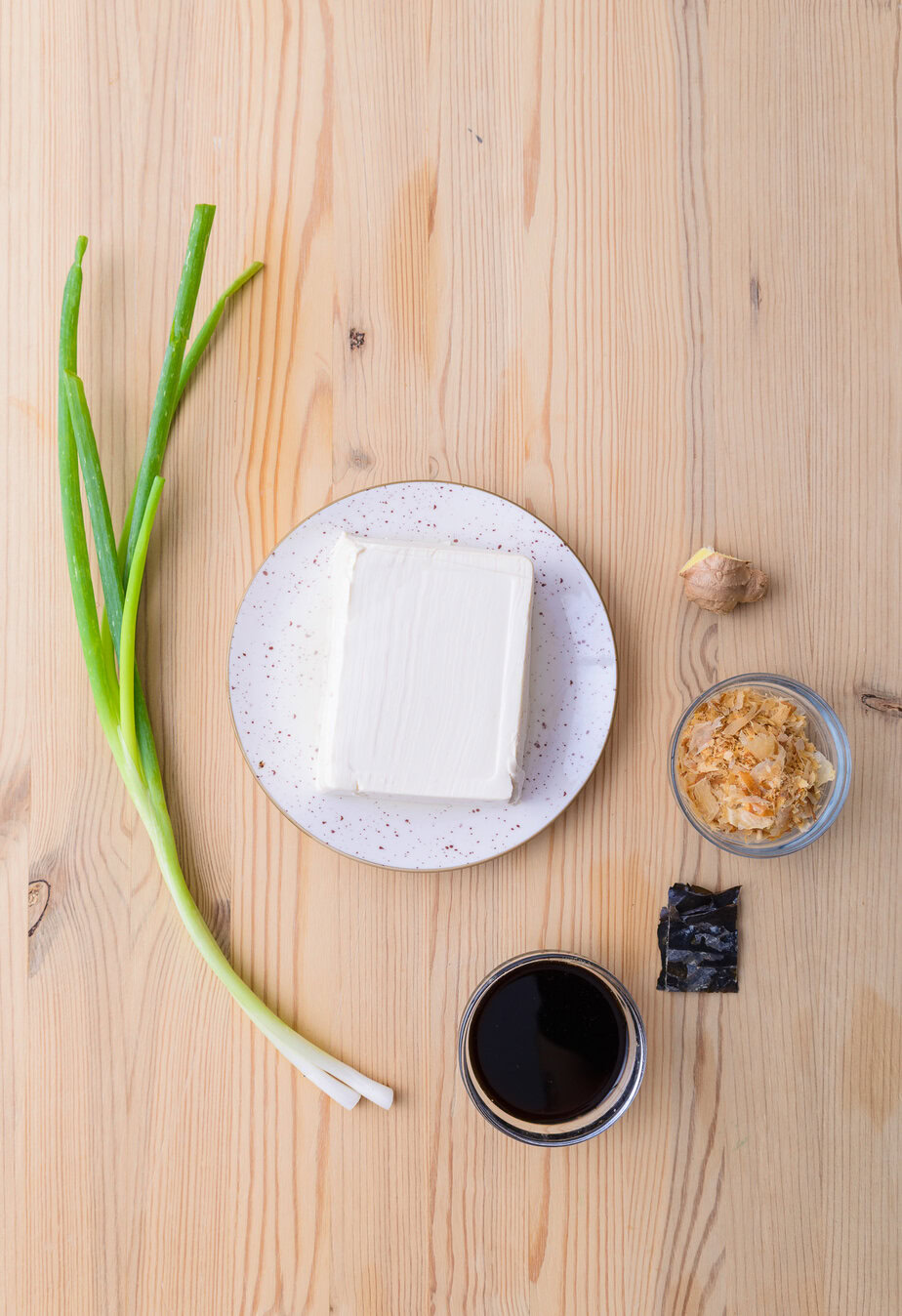
The goal is to preserve the flavor of soy, far removed from preparations in which tofu is transformed, such as crispy tofu fritters.
- Kinugoshi tofu made with nigari : a silky, water-rich tofu with a velvety texture that lets the aromas of ginger and shoyu shine through.
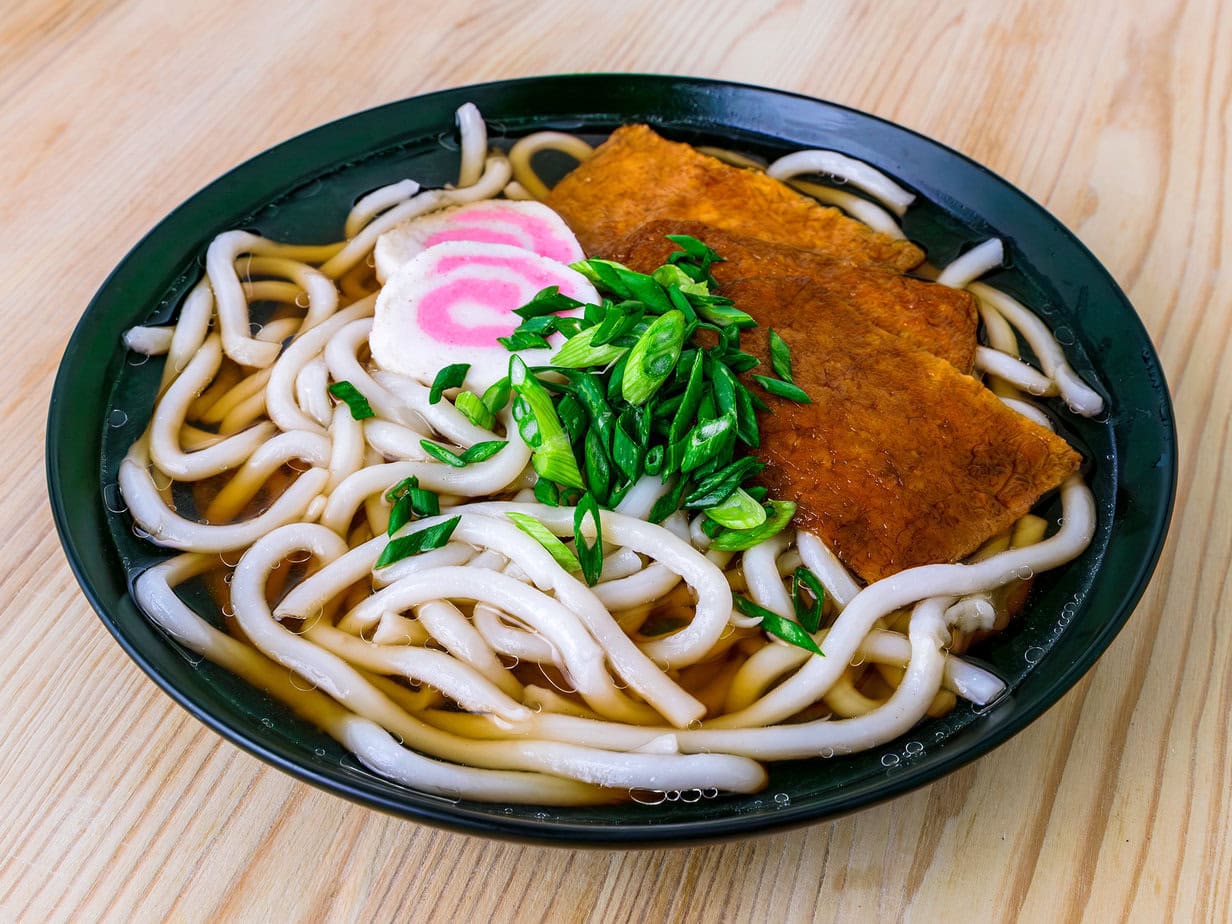
- Momen tofu made with nigari : firmer and easier to cut into neat, stable cubes, it reflects the Kanto tradition, far from the fried tofu used in a kitsune udon.
- Nigari : the traditional coagulant; it adds subtle minerality and a faint bitterness that highlights soy’s natural sweetness.
- High-quality shoyu or light ponzu : the main seasoning. Shoyu brings glutamates and fermented depth; ponzu adds a touch of citrus without taking over. mentsuyu also works in small amounts.
- Katsuobushi : dried bonito flakes that provide inosinate and create deep umami alongside the soy sauce, just as they do on an okonomiyaki.
- Fresh grated ginger : a bright, pungent note that lifts the tofu.
- Negi (scallions): they add a fresh, vegetal crunch that cleanses the palate between bites.
Authenticity and serving
Authenticity lies in both the product and the technique. Nigari remains the standard for tofu served plain, while gypsum produces a more neutral result and acidic coagulants a crumbly texture.
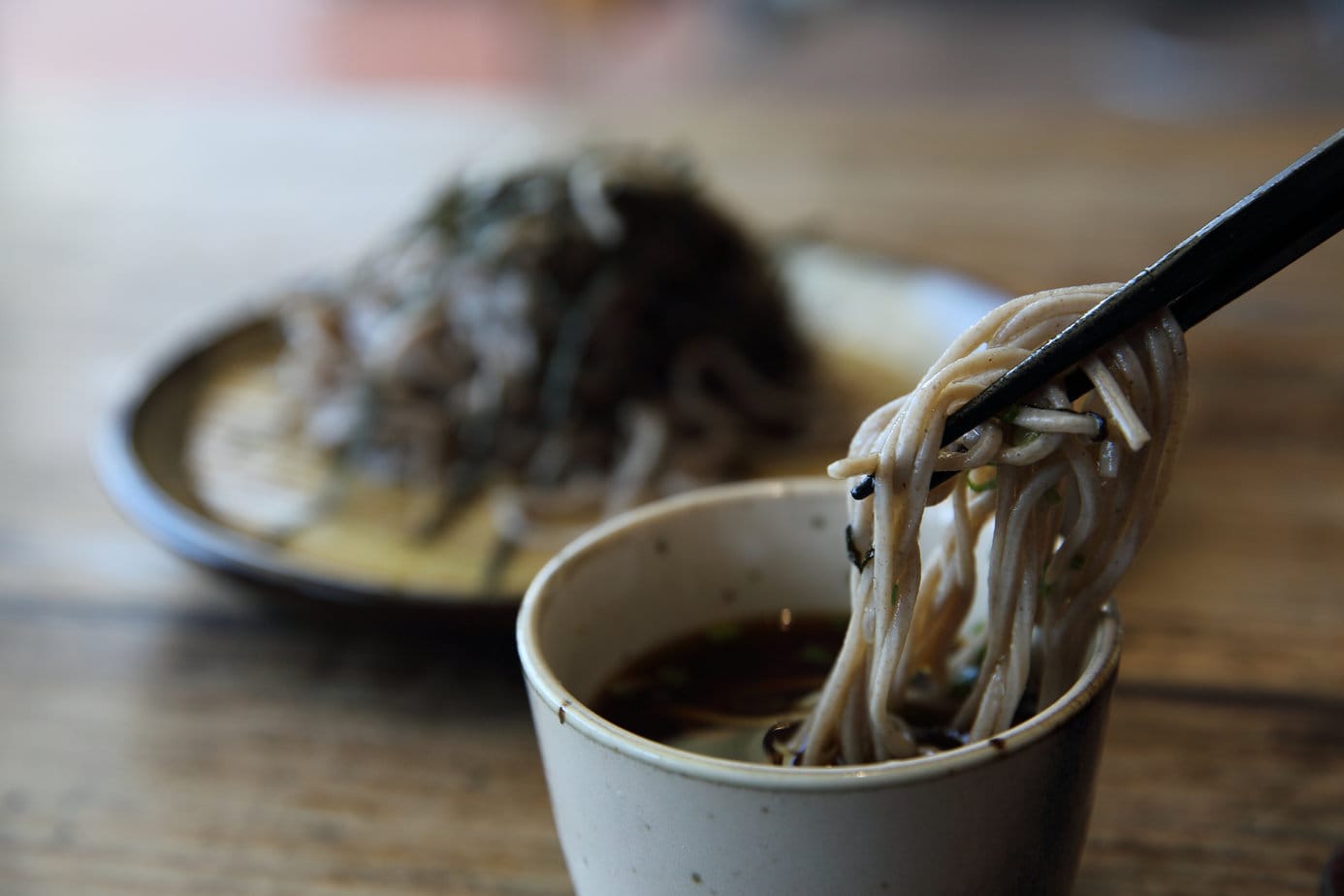
The tofu is cut into neat yakko cubes about 3 cm wide and served at 16 to 18 °C, avoiding both refrigerator chill and crushed ice. As with zaru soba, coolness should never flatten the flavor. The sauce is added only at the very last moment, because the salt in shoyu draws water out of the tofu by osmosis, just as it does with a cold soba dipping sauce.
Classic versions avoid additions that mask the soy: sesame oil, kimchi, mayonnaise-based sauces, or a bed of ice. A few regional variations remain, such as karashi in Ishikawa.
That restraint places hiyayakko alongside other minimalist Japanese dishes, from tamago kake gohan to onsen tamago, and far from heartier preparations such as chanko nabe or Japanese curry.
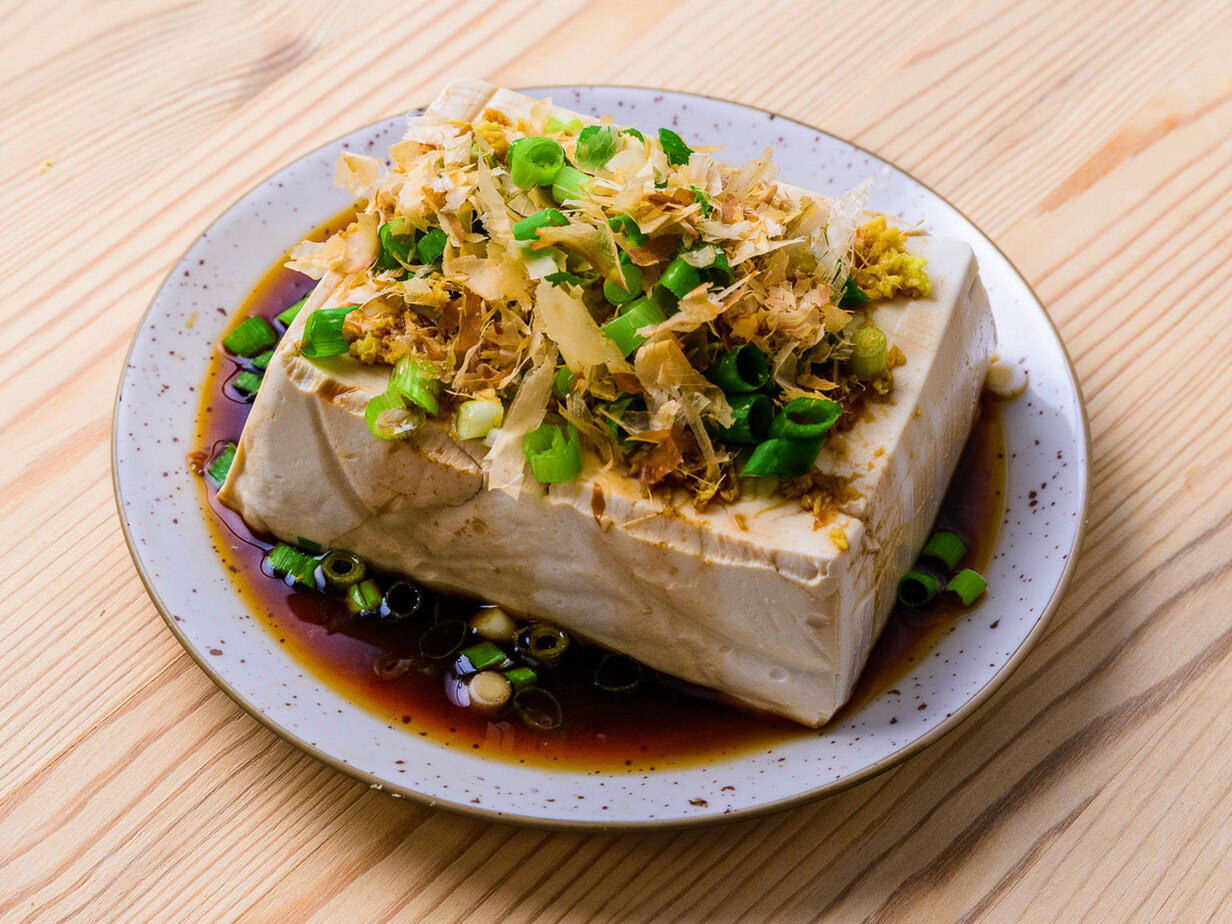
Ingredients
- 4 servings silken tofu (150 g per serving)
- 10 g ginger
- 20 g spring onions
- 3 g dried bonito flakes
- 80 ml Japanese soy sauce Kikkoman-style; otherwise use light soy sauce
- 1 g kombu
Instructions
- Wipe the surface of the kombu with a paper towel to remove any impurities.1 g kombu
- Combine the soy sauce and kombu in a storage container.80 ml Japanese soy sauce
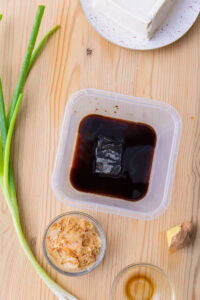
- Refrigerate overnight.
- Wash, peel, and grate the ginger.10 g ginger
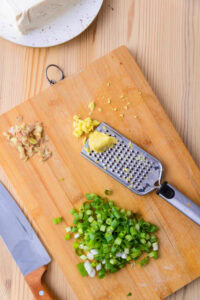
- Wash and drain the spring onions, then finely chop them.20 g spring onions
- Divide the tofu among serving bowls.4 servings silken tofu (150 g per serving)
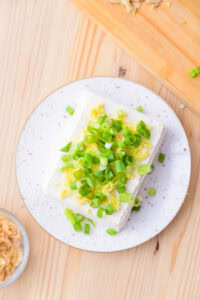
- Top with the grated ginger and chopped spring onions.
- Spoon over the kombu-infused soy sauce.
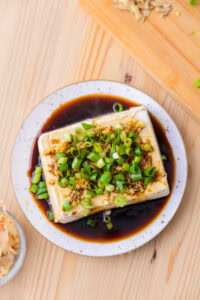
- Scatter the dried bonito flakes over the top.3 g dried bonito flakes
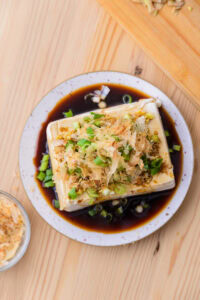
- Serve immediately.
Notes
- Kombu-infused soy sauce develops deeper flavor after a night in the fridge.
- Serve well chilled, with very cold tofu for the most authentic result.