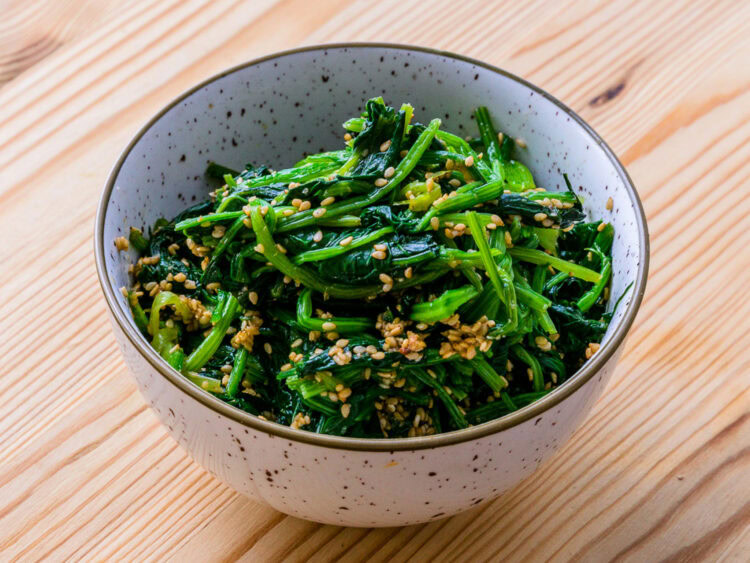
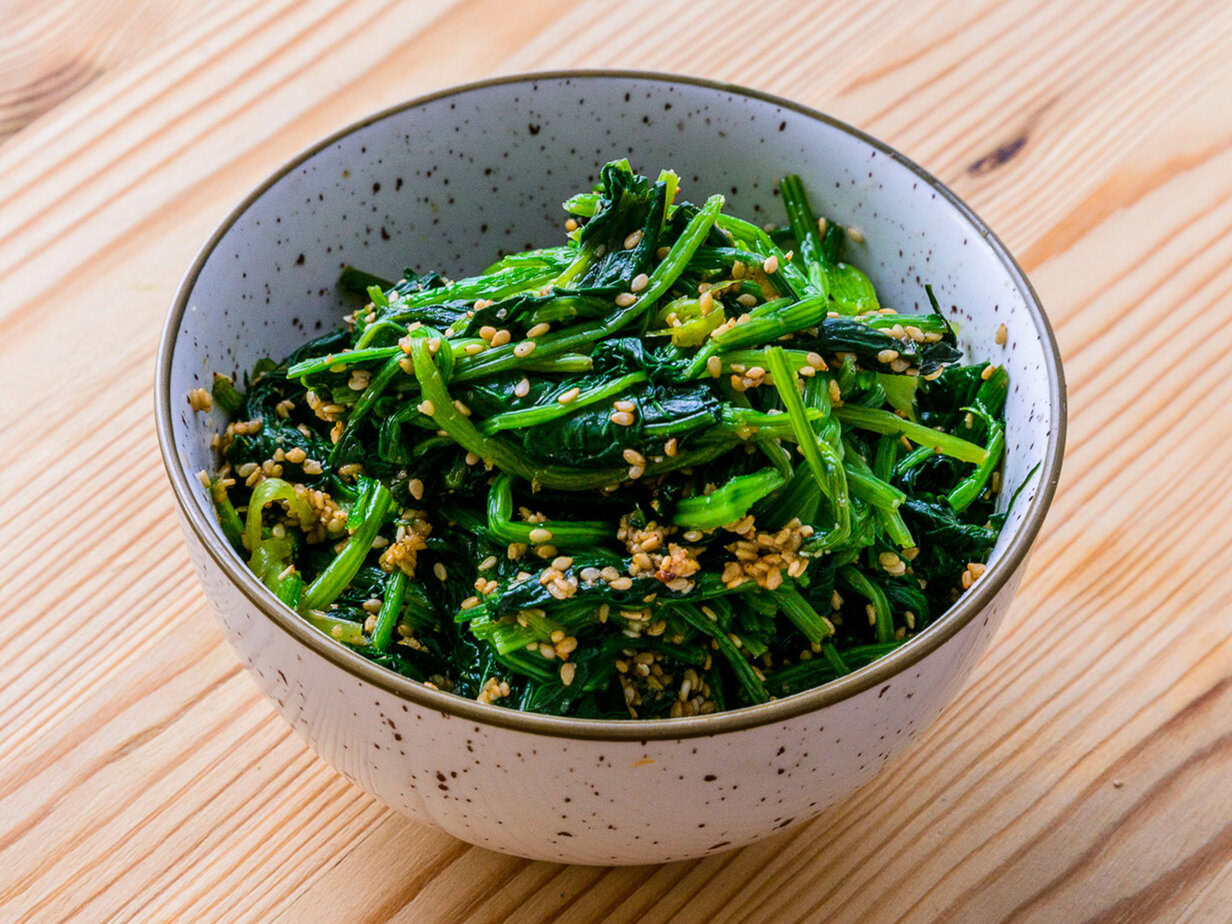
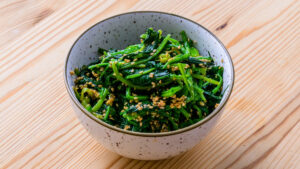
Blanched spinach coated in a ground white sesame sauce that’s sweet-savory and delicately nutty.
A small bowl of glossy spinach, barely warm, and the sesame already takes center stage. The ground white sesame sauce coats each leaf, mellow and lightly sweet, with a toasted nuttiness that keeps you coming back for more.
The spinach keeps its fresh bite, and the sauce doesn’t pool at the bottom of the bowl. It looks like a simple side dish, right up until the first bite.
What is hōrensō gomaae ?
Hōrensō gomaae is blanched spinach coated in a white sesame sauce, seasoned with soy sauce, sugar, sake, and dashi. Sesame leads the way, and the sauce stays relatively light : it clings to the leaves instead of settling at the bottom of the bowl.
The dish belongs to the broad Japanese family of seasoned vegetables, where the vegetable is cooked, thoroughly drained, then mixed with the seasoning just before serving.
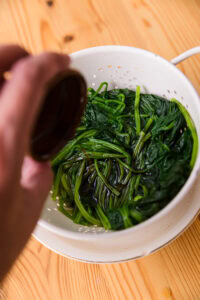
The key technique is called shōyu-arai. After blanching and an initial squeeze, the spinach is drizzled with a little soy sauce, then squeezed a second time.
That lightly seasons it and removes excess water, which keeps the sesame sauce from being diluted. The name says the rest : hōrensō, spinach, and goma-ae, “mixed with sesame.”
The main ingredients in hōrensō gomaae
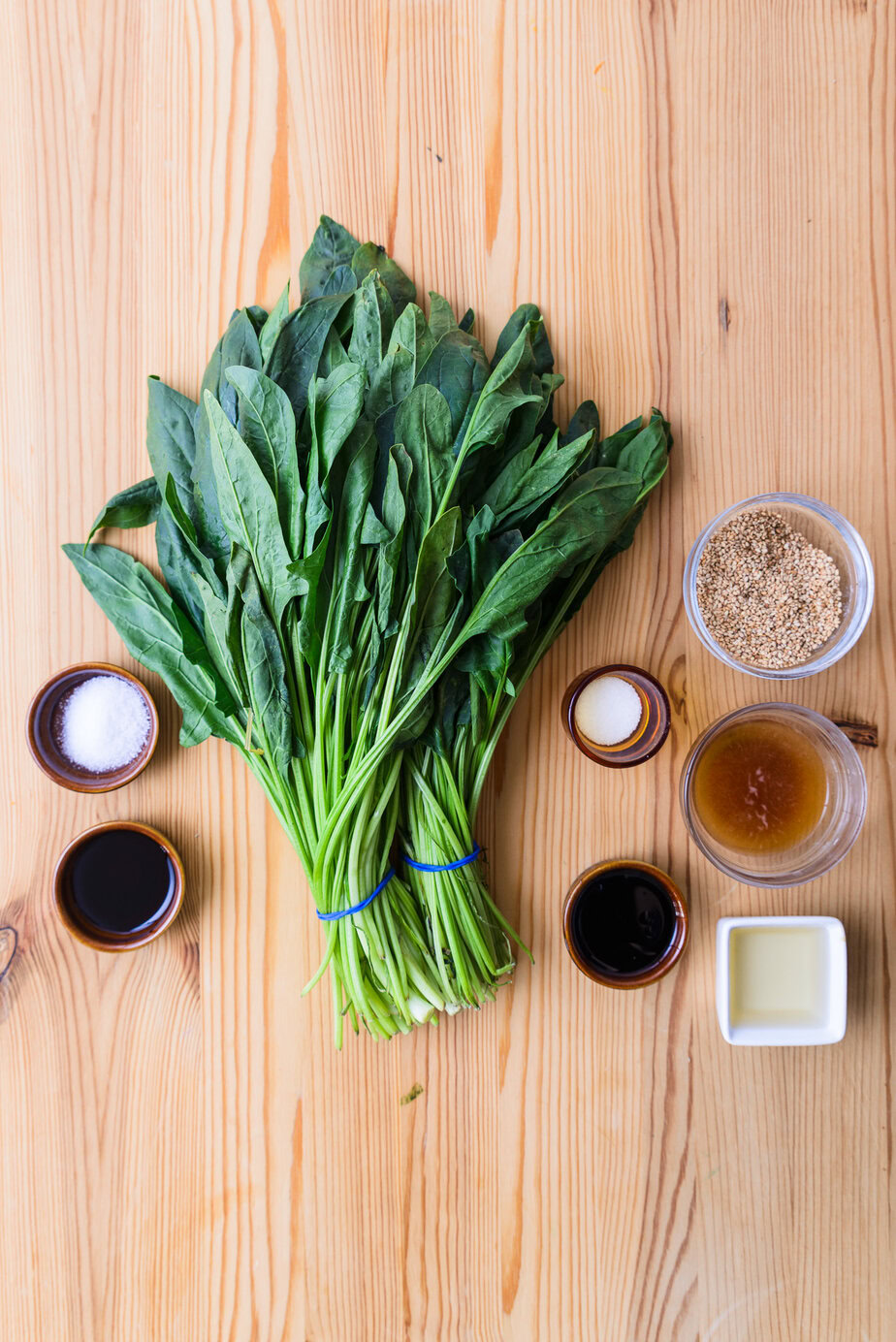
Spinach is the star of the dish. It’s blanched just long enough, cooled in cold water, then squeezed so the sauce coats the leaves without making them soggy. A little salt in the blanching water helps set the bright green color.
White sesame seeds are at the heart of the seasoning. They’re dry-toasted, then ground while still warm in a suribachi, the Japanese mortar, into a thick, slightly grainy paste that clings to the leaves. Soy sauce comes into play at two stages : a touch for the shōyu-arai, then more in the sauce, where it adds umami depth.
Sugar rounds out the saltiness of the soy sauce and softens the spinach’s slight bitterness. Sake fine-tunes the balance, and dashi loosens the sesame paste just enough to create an even coating.
A few pointers for great hōrensō gomaae
Cook the spinach only briefly, stems first and leaves second, then plunge it into cold water to lock in the color. From there, it’s all about squeezing, before and after the shōyu-arai, so nothing waters down the sauce. Build the sauce with warm, freshly ground toasted sesame, and mix in the spinach at the last moment to preserve its texture.
At the table, gomaae works beautifully as a side dish, alongside miso soup, onigiri, or teriyaki chicken. For a plant-based version, kombu dashi can replace classic dashi ; and if needed, a gluten-free tamari can stand in for soy sauce.
Ingredients
- 300 g spinach
- salt for the blanching water
- soy sauce a little, for the spinach (shōyu-arai)
Sesame Sauce
- 5 tablespoons white sesame seeds
- 1 tablespoon sugar slightly less
- 1.5 tablespoons soy sauce Japanese-style (such as Kikkoman)
- 1 teaspoon sake
- 1 tablespoon dashi
Instructions
Prepare the Spinach
- Bring a large pot of salted water to a boil.salt
- Cut a small cross into the base of the spinach stems.300 g spinach
- Add the stems to the boiling water first, then the leaves.
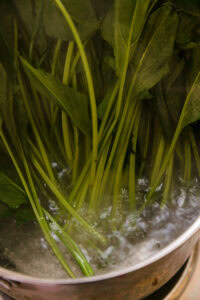
- Blanch until the spinach is just tender, then immediately transfer it to cold water.
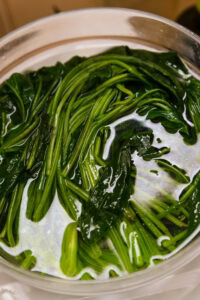
- Squeeze out the excess water.
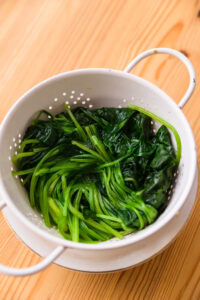
- Drizzle with a little soy sauce, then squeeze again (shōyu-arai).soy sauce
- Cut the spinach into pieces about 3 cm long.
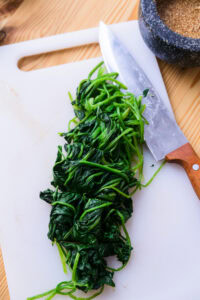
Make the Sesame Sauce
- Dry-toast the sesame seeds in a pan to remove any moisture, then transfer them, while still hot, to a thoroughly dry mortar (suribachi).5 tablespoons white sesame seeds
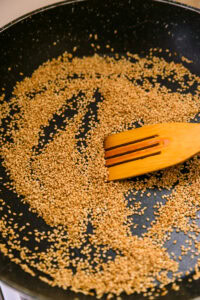
- Grind the sesame seeds well.
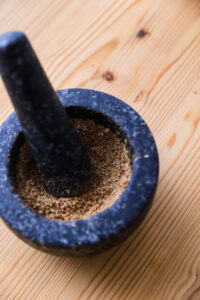
- Add the sugar, soy sauce, sake, and dashi, then mix to make the sauce.1 tablespoon sugar, 1.5 tablespoons soy sauce, 1 teaspoon sake, 1 tablespoon dashi
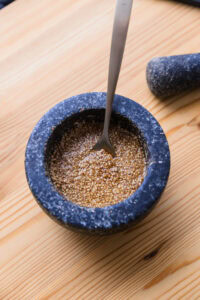
Assemble
- Toss the spinach with the sesame sauce just before serving.
Notes
- Salting the cooking water helps preserve the spinach’s bright green color.
- Cutting a small cross into the stems and adding them before the leaves ensures even cooking; transferring the spinach straight to cold water helps set the color.
- Shōyu-arai (drizzling the blanched spinach with a little soy sauce, then squeezing it) seasons it while removing excess water, which keeps the sesame sauce from becoming diluted.
- As with many Japanese dressed vegetable dishes, toss the spinach with the sauce just before serving to avoid excess moisture.