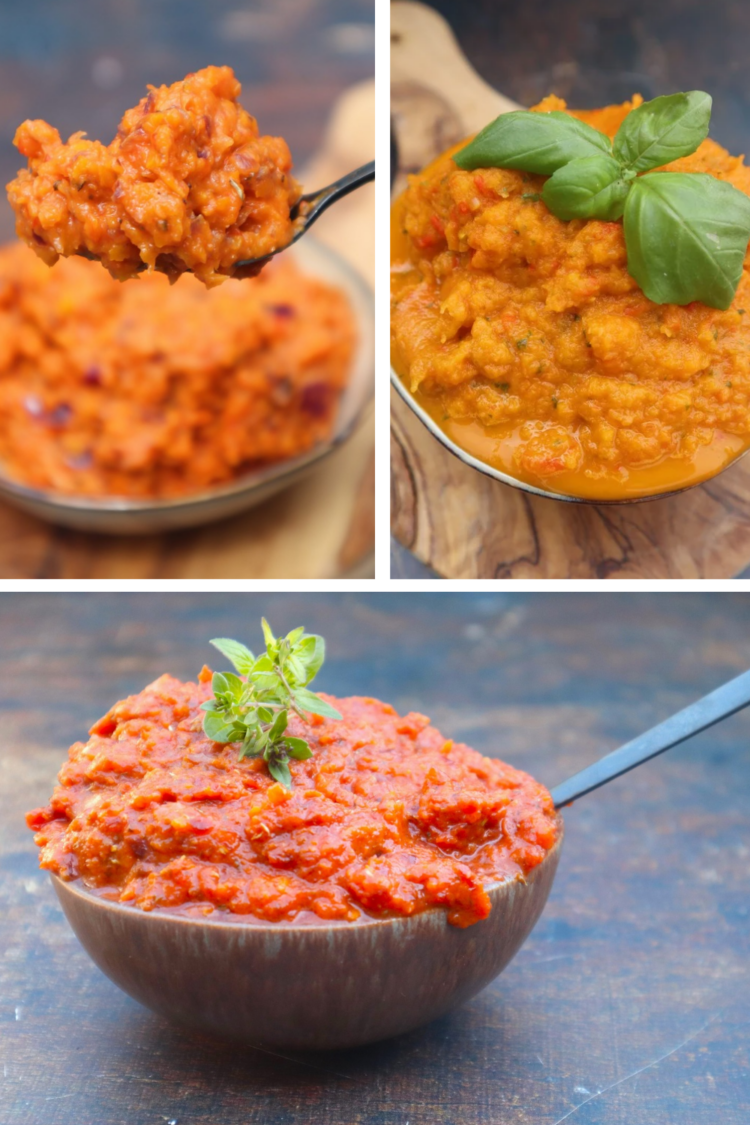
A tomato-free red sauce: blended bell pepper, carrot, garlic and herbs, for spooning over pasta, pizzas, meat and vegetables.
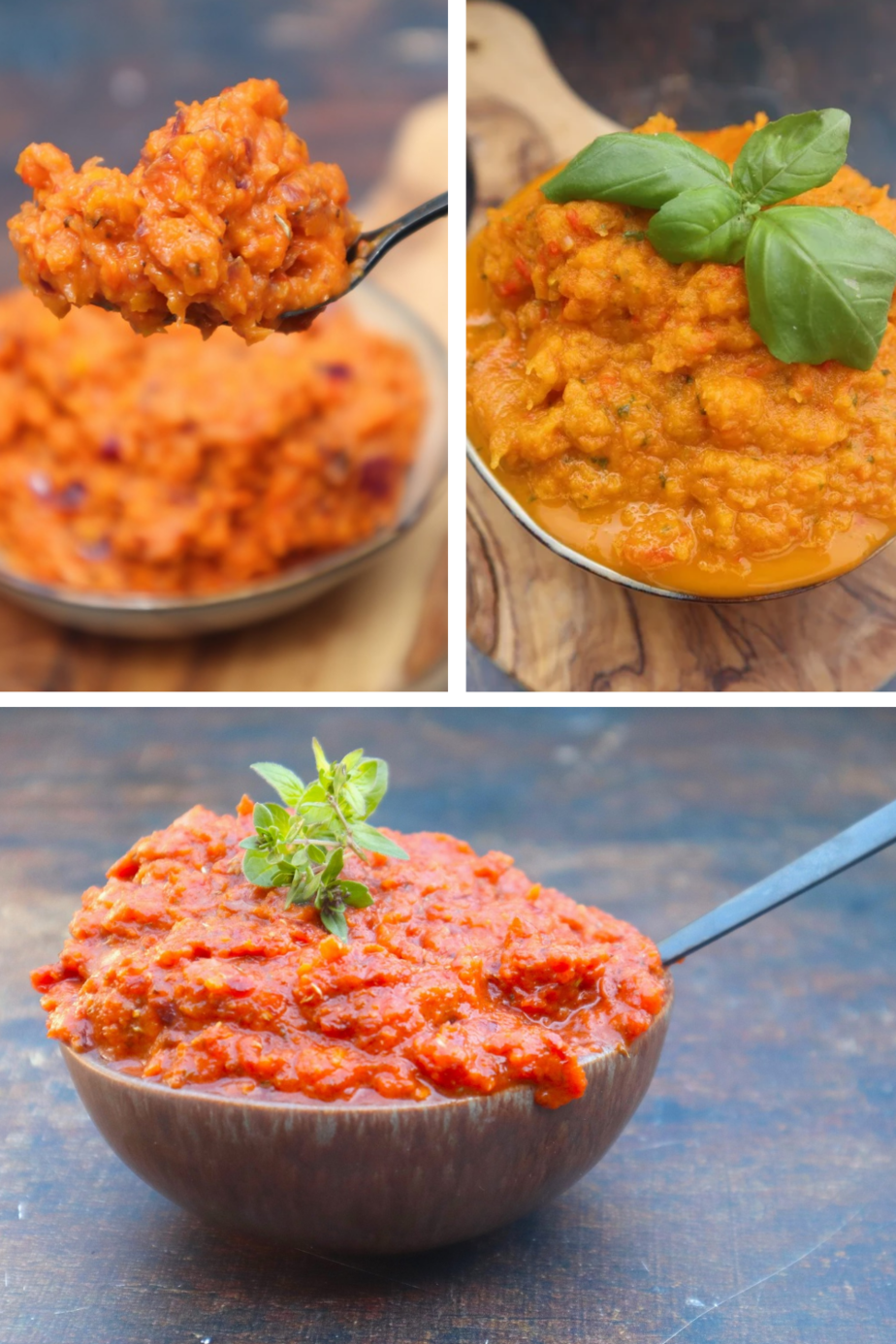
Bright red, smooth and glossy, nomato sauce coats pasta and pizzas just as well as meat and vegetables. Bell pepper, carrot, garlic and herbs create a fragrant base, with 2 g of net carbs per serving. For 4 servings, allow 45 minutes of preparation time, a little longer depending on whether you choose the roasted or stovetop version. This recipe is part of my collection of keto sauces and dips.
What is nomato sauce?
Nomato sauce is a tomato-free red sauce made from cooked, blended vegetables. The idea is simple: recreate the color, sweetness and coating consistency of a red tomato sauce using red bell pepper, carrot and simple aromatics.
Three variations deliver this smooth texture: a roasted version with beetroot and squash, a roasted version built around bell pepper and carrot, and a stovetop version with apple, celery, fresh basil, arrowroot starch and maple syrup, the last two being optional. The oven versions cook at 200 °C; an immersion blender or food processor creates the final texture.
The basics of the recipe
Nomato sauce meets a practical need: a tomato-free red sauce for when tomatoes have no place in the meal, or when you want a milder, less acidic flavor with the character of roasted vegetables. The method relies on simple steps: soften the vegetables through cooking, develop the mellow flavor of the garlic, season with herbs, then blend until smooth and uniform.
The main ingredients
The roasted version with beetroot and squash combines 1 red bell pepper, about 125 g of beetroot, 100 g of squash, 100 g of carrots, 2 heads of garlic and 2 small onions. Beetroot deepens the red color and adds an earthy note, while squash, even if thawed and thoroughly patted dry, lends a silky texture. The 4 tablespoons of olive oil, herbs, salt and 2 tablespoons of maple syrup coat the vegetables before they go into the oven.
The roasted version without beetroot or squash has a deep orange hue. It relies on 2 red bell peppers and 200 g of carrots for most of its sweetness, along with 2 small onions or 1 large one, 2 heads of garlic, 4 tablespoons of extra virgin olive oil, 2 teaspoons of dried oregano or thyme, 2 teaspoons of dried sage or rosemary, 4 generous pinches of salt and 1.5 tablespoons of maple syrup.
The stovetop version brings together 2 red bell peppers, 150 g of carrots, 3 shallots or 2 onions, 4 cloves of garlic, 1 apple and 2 celery stalks for a brighter flavor. The apple adds a fruity note, the celery a fresh touch, and the basil, 4 handfuls torn and added after blending, retains its aroma. The optional arrowroot starch thickens a sauce that is too thin.
Variations, texture and pairings
The roasted version has the most pronounced flavor and the thickest texture. After a few minutes of resting, the bell pepper skins peel off easily, the seeds can be removed, and the soft garlic can be squeezed out by pressing the base of each head. The stovetop method is quicker: onions or shallots soften in oil, then the garlic, carrot, bell pepper and celery simmer with stock for about 8 minutes, with the apple joining the mixture 2 minutes before blending. When blending, start with very little liquid, then adjust with water or oil depending on how you plan to use the sauce.
For pizza, a thick consistency keeps the crust from getting soggy; for pasta, a looser sauce coats better, for example on konjac noodles. It makes a fragrant topping for meat, roasted vegetables or zucchini ribbons, especially air fryer zucchini, air fryer eggplant, air fryer pork tenderloin or air fryer chicken breasts. Use what you need right away, then freeze the rest in portions labeled with the date and reheat gently, adding a little water if the sauce has thickened.
For more low-carb ideas, browse all my keto recipes.
Nomato sauce
Ingredients
Roasted version with beetroot and squash
- 1 red bell pepper
- 125 g beetroot about 1 large beetroot
- 100 g squash frozen can be used
- 100 g carrots about 3 bunched carrots
- 2 heads garlic
- 2 small onions or 1 large
- 2 teaspoons dried oregano or thyme
- 2 teaspoons dried sage or rosemary
- 2 tablespoons maple syrup
- 4 tablespoons extra virgin olive oil
- 4 generous pinches salt (Celtic sea salt)
Roasted version without red beetroot or squash
- 2 red bell peppers
- 200 g carrots about 6 bunched carrots
- 2 small onions or 1 large
- 2 heads garlic
- 1.5 tablespoon maple syrup
- 2 teaspoons dried oregano or thyme
- 2 teaspoons dried sage or rosemary
- 4 tablespoons extra virgin olive oil
- 4 generous pinches salt (Celtic sea salt)
Stovetop version with apple and basil
- 2 red bell peppers
- 150 g carrots
- 3 shallots or 2 onions
- 4 cloves garlic
- 1 apple
- 2 stalks celery
- 4 handfuls fresh basil
- 4 generous pinches salt (Celtic sea salt)
- 2 tablespoons extra virgin olive oil
- 2 teaspoons arrowroot optional
- 2 tablespoons maple syrup optional
Instructions
Roasted version (omit the squash and/or beetroot if desired)
- Preheat the oven to 200 degrees. You will need the oven rack and a baking tray. Line the tray with baking paper or place an ovenproof dish on it.
- Peel the onion, wash the beetroot and cut both into large wedges. Wash (and scrape if necessary) the carrot and cut it into rounds. Cut fresh squash into 2 slices; allow frozen pieces to thaw briefly, then pat them dry (they do not need to thaw completely).2 small onions, 125 g beetroot, 100 g carrots, 100 g squash, 2 small onions, 200 g carrots
- Mix the maple syrup with the oil, salt and green herbs. Toss in the onion, beetroot, carrot and squash. Let marinate briefly.2 tablespoons maple syrup, 4 tablespoons extra virgin olive oil, 4 generous pinches salt (Celtic sea salt), 2 teaspoons dried oregano, 2 teaspoons dried sage, 1.5 tablespoon maple syrup, 4 tablespoons extra virgin olive oil, 4 generous pinches salt (Celtic sea salt), 2 teaspoons dried oregano, 2 teaspoons dried sage
- Wash and dry the bell pepper or peppers. Simply leave the stem in place so you can use it to hold the pepper later.1 red bell pepper, 2 red bell peppers
- Remove the outer skins from the garlic heads, but leave all the cloves attached and intact. Cut off the top of each clove. Drizzle a little oil over the cut surfaces. Wrap the garlic heads individually in aluminium foil.2 heads garlic, 2 heads garlic
- Place the bell pepper or peppers on the oven rack (just as they are, with no further preparation). Place the wrapped garlic heads alongside.
- Put the marinated vegetables in the ovenproof dish, then place it on the baking tray. You can also place them directly on baking paper.
- Slide the rack into the oven, just above the middle. Slide the baking tray underneath. Make sure any juices from the pepper drip beside the dish rather than into it. Alternatively, let them drip onto the baking paper, but not onto the vegetables. The juices burn quickly; this keeps the oven clean and avoids needlessly eating burnt food.
- Set the timer for 30 minutes.
- Remove the dish from the oven. Set the timer for another 15 minutes.
- Remove the pepper and garlic from the oven and let cool. Wait at least about 5 minutes before continuing so you do not burn your hands.
- Peel the pepper and remove the seeds.
- Squeeze the cloves to release the garlic. The easiest way is to leave them attached to the head and squeeze from the base towards the opening.
- Place all the vegetables in a small food processor (or in a bowl with an immersion blender). Blend, adding a little extra oil or water if needed to help with blending. Do not add much, as you can always thin it out later.
- Use the amount you need immediately and freeze the rest in portions.
Stovetop version
- Finely slice the onion and sauté it in the oil over low heat.3 shallots, 2 tablespoons extra virgin olive oil
- Chop the garlic and add it.4 cloves garlic
- Chop the carrot, bell pepper and celery and add them. Deglaze with the stock. Simmer gently for about 8 minutes.150 g carrots, 2 red bell peppers, 2 stalks celery
- Wash the apple and cut it into pieces. If you do not tolerate the skin well, peel the apple first. Add it to the sauce and cook for about another 2 minutes.1 apple
- Blend the sauce.4 generous pinches salt (Celtic sea salt)
- Depending on how you plan to use it, the sauce may be a little too thin. Add arrowroot to thicken it slightly.2 teaspoons arrowroot
- Tear the basil into small pieces and stir it into the sauce.4 handfuls fresh basil
- Add maple syrup to taste, if desired.2 tablespoons maple syrup
- Use the amount you need immediately and freeze the rest in portions.