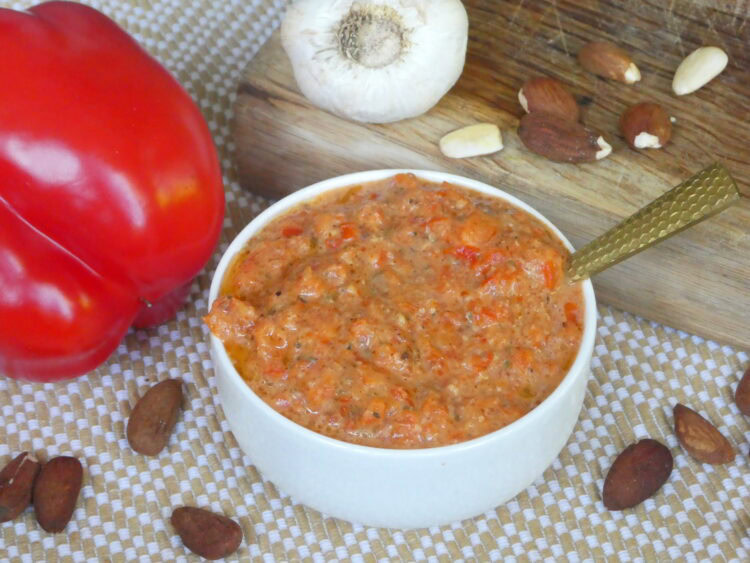
A tomato-free pesto rosso: its color and flavor come from roasted red pepper, mellow roasted garlic and almond butter.
Roasted red pepper releases its sweet juices, oven-roasted garlic turns creamy and almond butter brings everything together into a thick red paste. This pesto rosso replaces sun-dried tomatoes and basil with roasted pepper and dried sage, creating a tomato-free spreadable sauce. Allow about 45 minutes at 200 °C for the pepper, and count on 2 g of net carbs per serving. This recipe joins my collection of keto sauces and dips.
What is pesto rosso?
Here, the term pesto rosso refers to a thick, blended red sauce, similar to pesto but without tomatoes. Its color comes from roasted red pepper, which takes the place of sun-dried tomatoes. Its texture relies on almonds, olive oil and grated cheese or a plant-based alternative, with enough body to spread without running.
The base brings together a roasted pepper, a head of roasted garlic, almonds, almond butter, dried sage and extra virgin olive oil. For saltiness and umami, choose Parmesan, pecorino or nutritional yeast flakes, the latter being suitable for a dairy-free version.
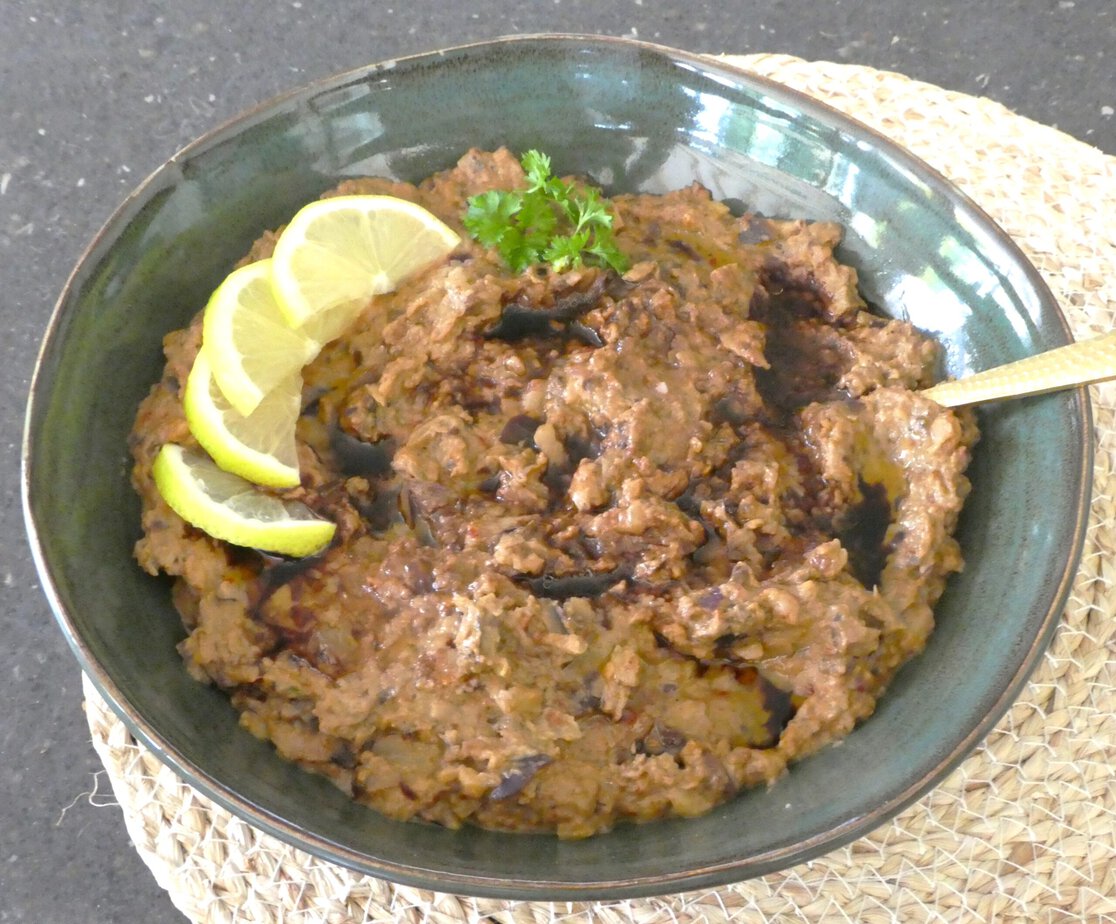
A variation on classic pesto rosso
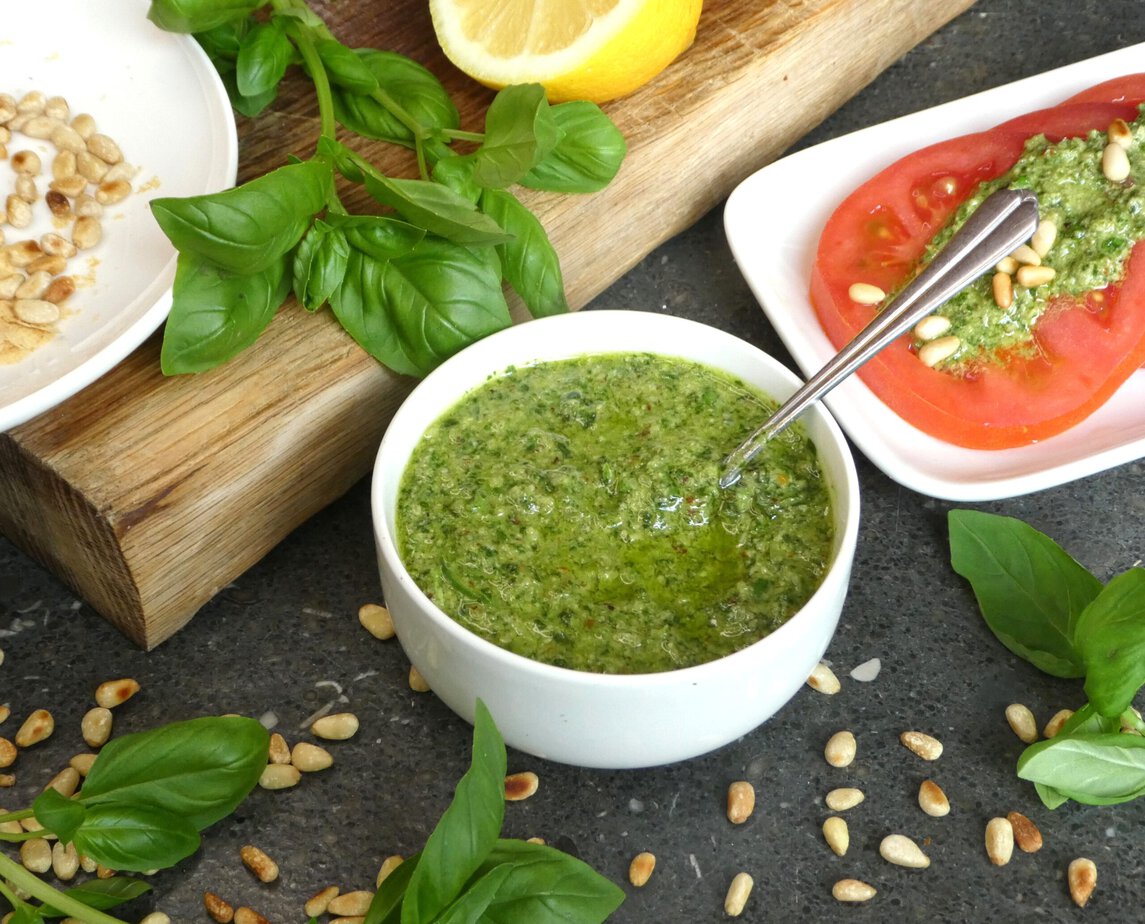
Classic pesto rosso is built around sun-dried tomatoes, basil, pine nuts or almonds, Parmesan, garlic and olive oil. This version takes a different approach: it replaces the tomatoes with a roasted red pepper, favors roasted garlic over raw garlic and uses dried sage instead of basil.
This choice changes the balance of flavors. Sun-dried tomatoes usually bring a concentrated, tangy, salty intensity, whereas roasted pepper offers a milder flavor and natural juices that help adjust the consistency.
Garlic roasted in its skin loses its sharpness and becomes almost creamy. Almond butter adds richness without any cream, and sage lends an herbal, slightly woodsy note. The result is a red, creamy pesto rosso, but without tomatoes.
The main ingredients
Red pepper provides the color and the main flavor. Roasted whole, it collapses, concentrates its sugars and releases valuable juices; peeled and seeded, it contributes color, moisture and a sweet flavor. The roasted head of garlic brings garlic flavor without the bite of raw cloves: once tender after cooking, the cloves can be squeezed out by pressing the base, adding a mellow, almost confit-like note.
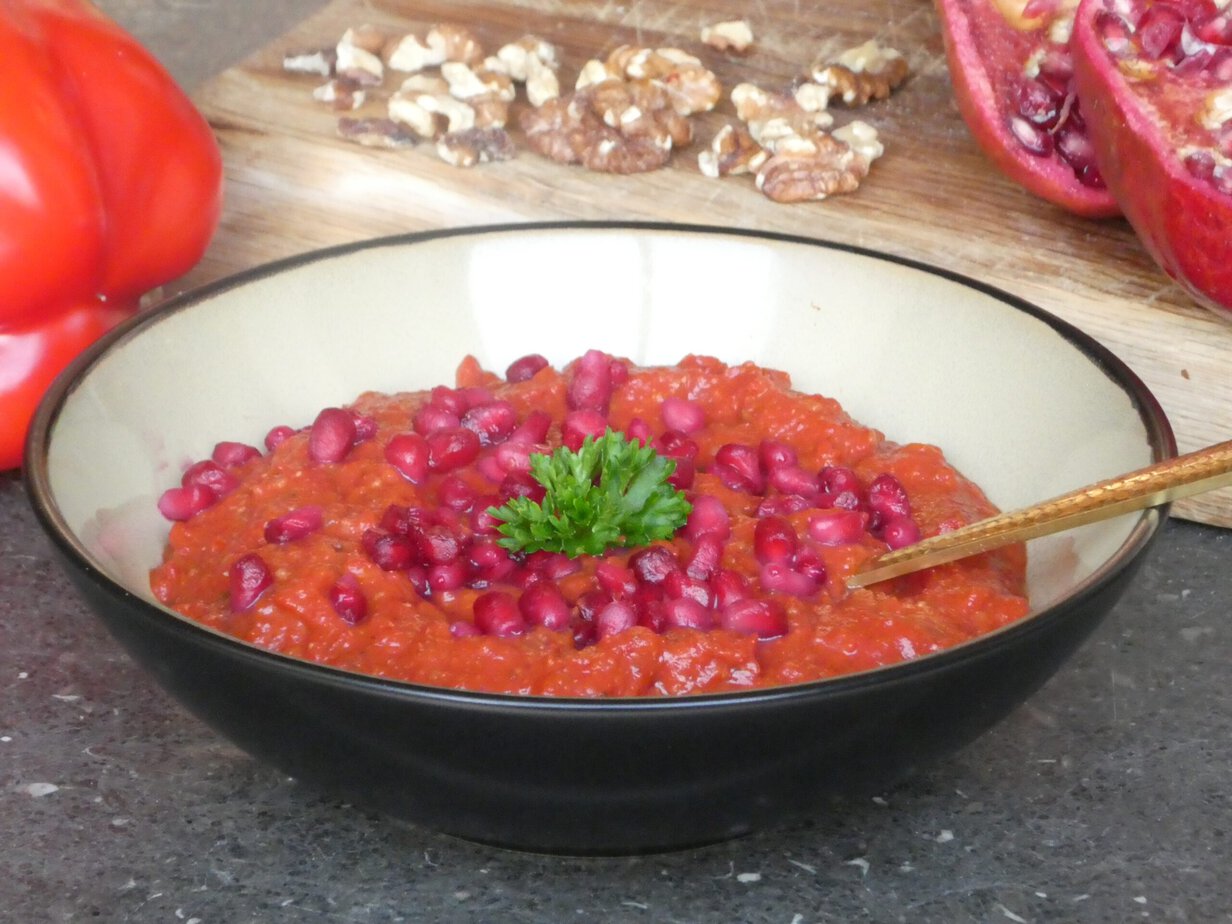
The 20 g of almonds, whole or ground, give the sauce body and a slightly grainy texture once processed. The 2 tablespoons of almond butter play a different role: they bind the ingredients, round out the flavor and make the sauce creamier. Blanched almond butter gives a smoother texture, while whole almond butter provides a more pronounced flavor.
Parmesan, pecorino or nutritional yeast flakes provide saltiness and umami; when using cheese, taste before adding salt. A small amount of extra virgin olive oil binds the sauce and gives it a glossy finish. Dried sage flavors the mixture, salt remains optional depending on the cheese chosen, and the reserved pepper juices are only used if the paste needs thinning.
Technique tips and serving
Success starts in the oven: 45 minutes at 200 °C, until the pepper has collapsed and its skin is wrinkled, sometimes blistered. The garlic is ready when the cloves slide out when squeezed. When blending, avoid overworking the sauce: grind the almonds first, then add the pepper, roasted garlic, almond butter, cheese or nutritional yeast, oil and sage, incorporating the pepper juices a little at a time to keep the paste thick.
Cool this garlic-and-oil mixture quickly, then store it in the refrigerator in a clean, sealed container; for longer storage, freeze it in small portions. When serving with vegetable noodles, air fryer eggplant or air fryer zucchini, add it off the heat to preserve its texture. Whether used as a dip for raw vegetables or as a condiment with grilled food, it comes in at 2 g of net carbs per serving, an approximate figure that may rise to 5 or 6 g depending on the ingredients.
For everyday keto cooking, here are all my low-carb recipes.
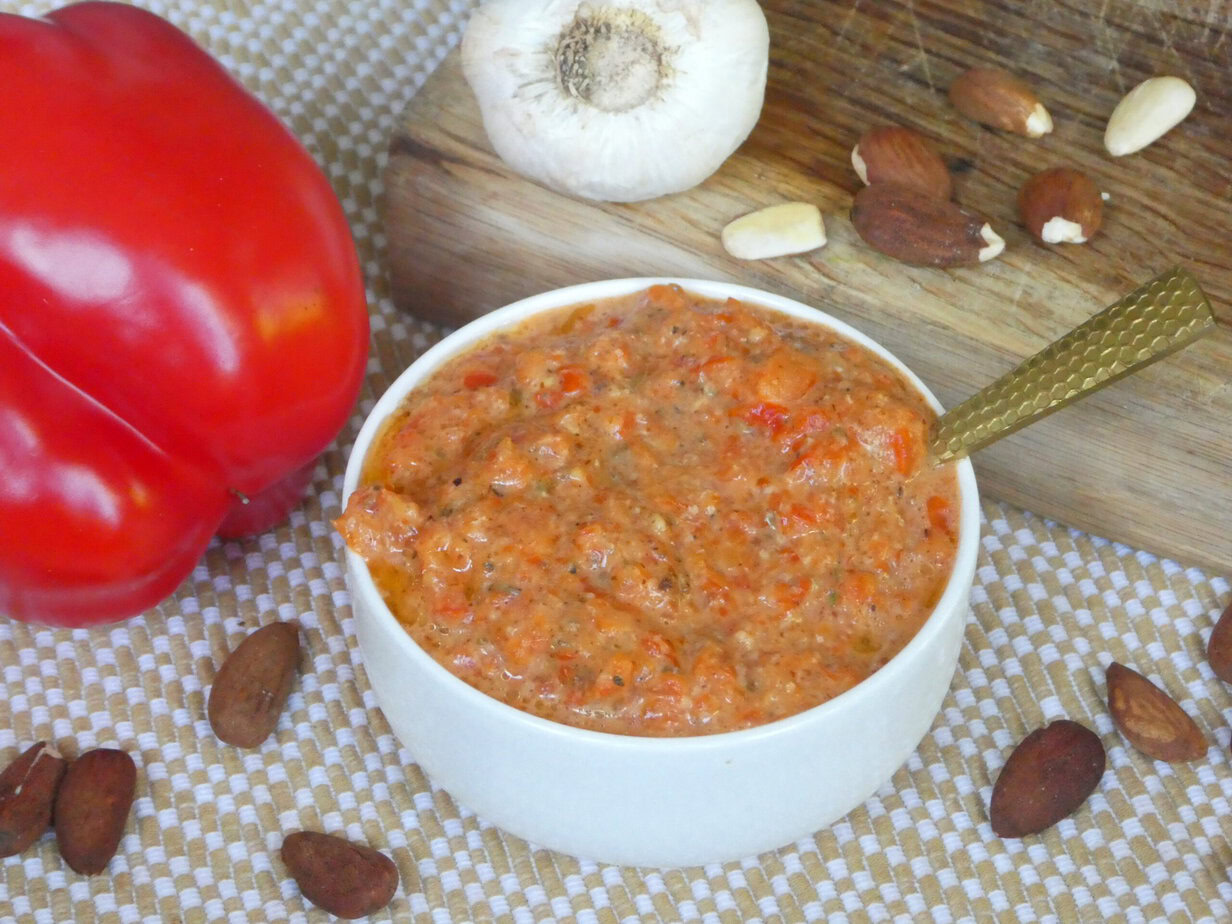
Roasted Red Pepper Pesto Rosso (Tomato-Free)
Ingredients
- 1 red bell pepper
- 1 head garlic
- 1 teaspoon dried sage
- 20 g almonds or ground almonds
- 2 tablespoons almond butter
- 1 handful Parmesan grated, or Pecorino, a lactose-free sheep’s milk cheese, or nutritional yeast flakes
- 1 tablespoon extra virgin olive oil
Instructions
- Preheat the oven to 200 degrees. Wash the pepper and pat it dry. Simply leave the stem in place so you can use it to hold the pepper later.1 red bell pepper
- Remove the outer skins from the head of garlic, but leave all the cloves attached and intact. Cut off the tops of all the cloves. Drizzle a little oil over the cut surfaces. Wrap the head of garlic in aluminum foil.1 head garlic, 1 tablespoon extra virgin olive oil
- Place the pepper on the oven rack (just as it is, without doing anything else). Place the wrapped head of garlic beside it. Set the timer for 45 minutes.
- Remove the pepper and garlic from the oven and let cool. Wait at least about 5 minutes before continuing so you do not burn your hands.
- Peel the pepper and remove the seeds. If it is very juicy, reserve some of the juice. Do not discard it, as it may be useful for thinning the pesto later.
- Squeeze the garlic out of the cloves. The easiest way to do this is to leave them attached to the head and squeeze from the base toward the opening.
- Grate the cheese (if using).1 handful Parmesan
- Place the almonds in the food processor and grind finely.20 g almonds
- Add the pepper and garlic, along with the nut butter, cheese or nutritional yeast, olive oil and sage. Add a little salt to taste, if desired. Blend briefly until well combined.1 teaspoon dried sage, 2 tablespoons almond butter
- Depending on the consistency, add a little more of the reserved pepper juice. If the pesto is still too thick, thin it with water. The water content of the pepper can vary greatly, but further thinning is generally not necessary.