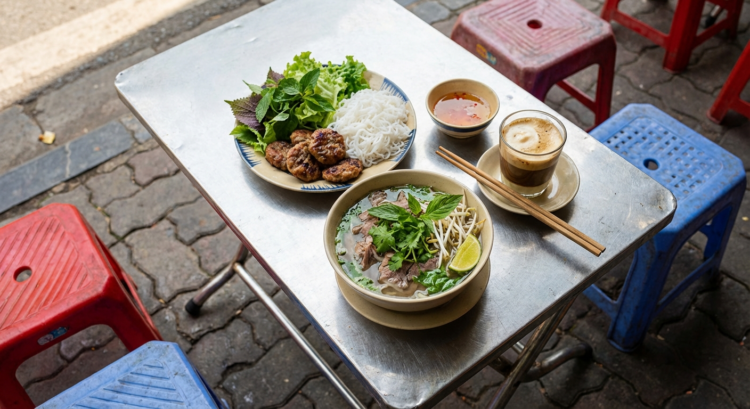
Hanoi runs on soup. From 5:30, charcoal fires heat enormous pots of broth in the alleys of the Old Quarter, and by 6:00 the city smells of star anise, beef bones and grilled pork fat. A restaurant here serves just one thing, and a bowl of phở at one of these specialists costs 50,000 VND, or about 1.90 EUR, less than a baguette in most French bakeries.
Here are my recommendations, street by street, with what I ordered at each place, the prices, and the pitfalls to avoid. If you’re planning a trip to Hanoi, I recommend starting with the food.
- Where to eat phở?
- Where to eat bún chả?
- Which dishes do tourists miss?
- Where to drink egg coffee?
- Where to drink bia hơi?
- Where to eat in Hanoi in the evening?
- Which neighbourhood should you choose for good food?
- How much does it cost?
- Is it safe to eat on the street?
- My other Hanoi guides
Where to eat phở?
Hanoi’s phở is nothing like the version most Westerners know. Northern broth is clear, light and intensely fragrant, built on the pure flavour of bones and a precise balance of star anise, cinnamon and cardamom, closer to a consommé than an ordinary Asian soup. The bowl arrives simply dressed, with rice noodles, slices of beef or chicken, and a few sprigs of chives, and you season it yourself using the tray of condiments on the table. I make this broth at home; my phở recipe is here.
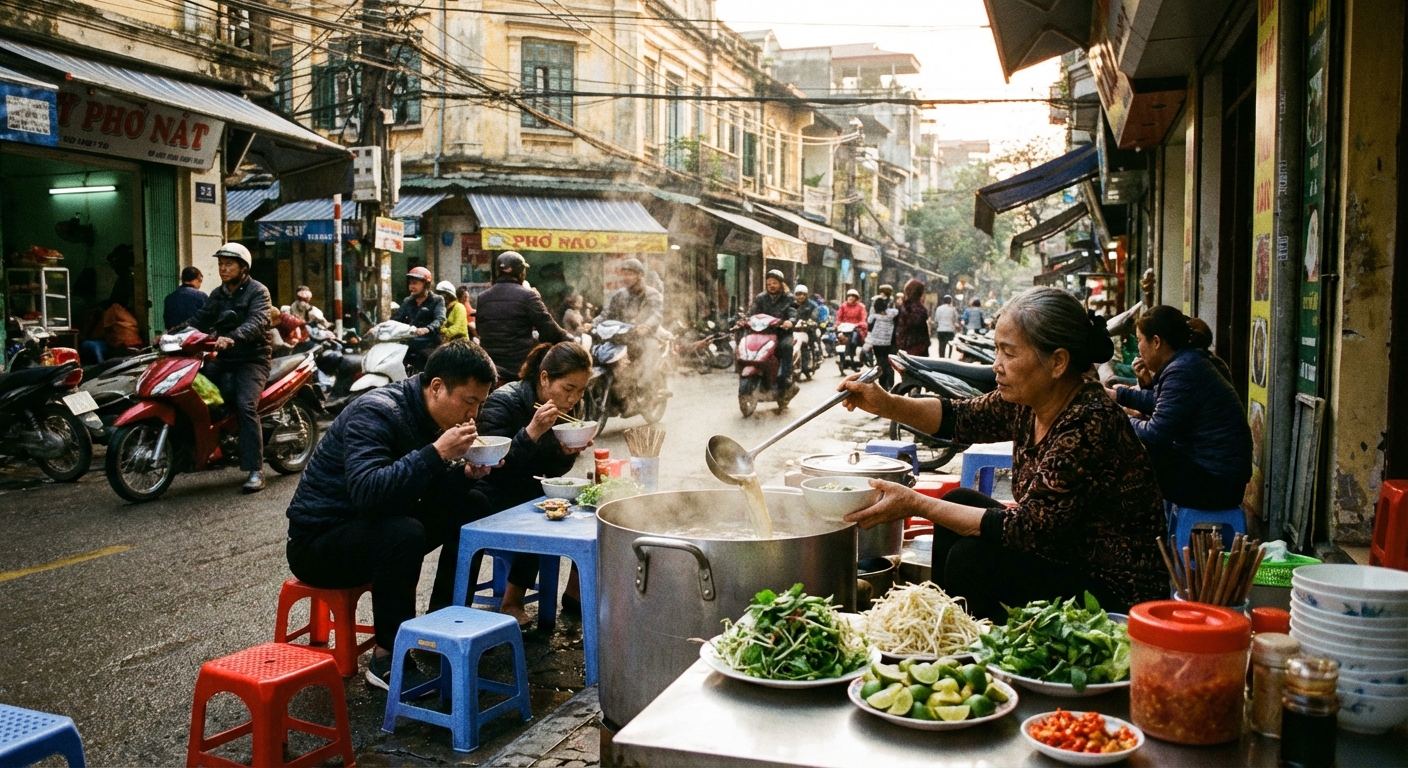
Phở Gia Truyền, 49 Bát Đàn Street
My first bowl in Hanoi, and my first choice for traditional beef phở. The system is no-frills: I queued, paid first, carried my bowl to a table and ate on tiny stools in a room without air conditioning.
The broth is the city’s benchmark, clear, clean and distinctly beefy, the kind that can only come from bones that have been simmering since 3:00. Expect to pay 50,000 to 60,000 VND (1.90 to 2.30 EUR) and to queue between 7:00 and 8:00. I ordered the “tái chín”, a mix of rare and well-done beef, to get both textures in a single bowl. Right next door, a separate stall makes phở xào, phở noodles stir-fried with beef.
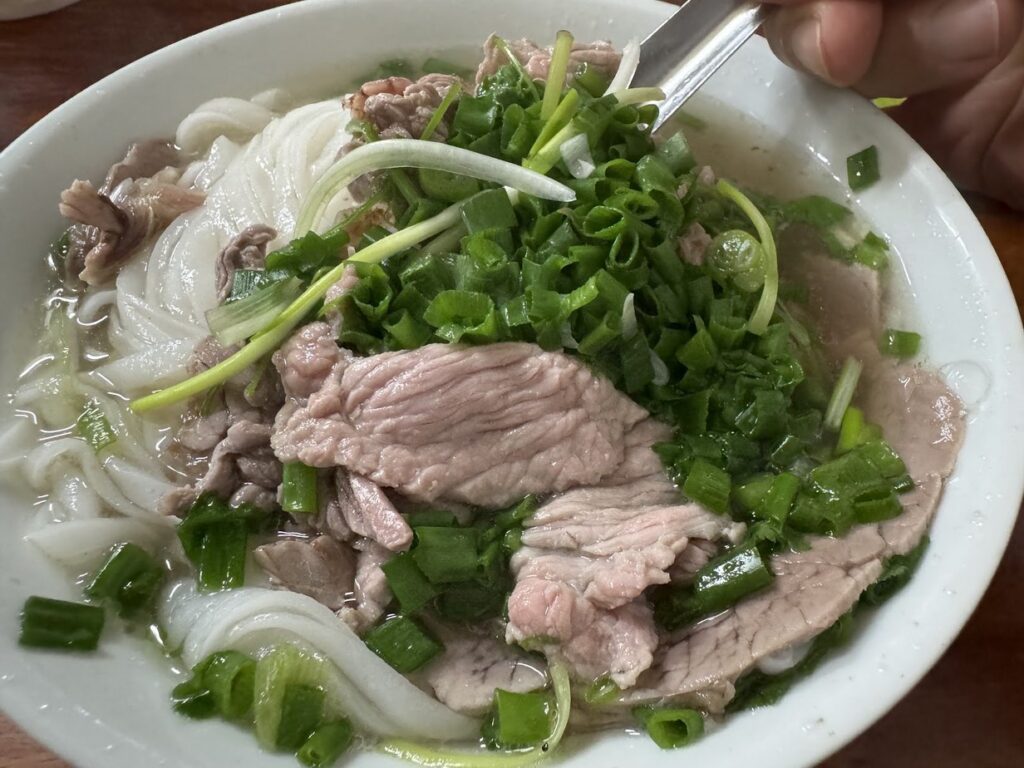
Phở Thìn, 13 Lò Đúc Street
The opposite approach. Phở Thìn stir-fries the beef with garlic before adding it to the soup: the surface of the broth gleams with oil, spring onions are piled high, and the result is rich, bold and divisive. I find it a flavour bomb, but I understand those who think it’s oily, and the quality has become inconsistent with the influx of tourists. A bowl costs 70,000 to 90,000 VND (2.70 to 3.40 EUR). Be careful, there’s another place called “Phở Thìn Bờ Hồ” near Hoàn Kiếm Lake that serves traditional phở: the stir-fried garlic version is at 13 Lò Đúc Street.
Phở 10 Lý Quốc Sư
Near Saint Joseph’s Cathedral, this is the safe, comfortable choice: glass windows, air conditioning, stricter hygiene, and good, consistent phở for a first trip. The downside: a mostly foreign clientele, queues of over 45 minutes, and less soul than the pavement stalls. A bowl costs 70,000 to 90,000 VND. I had the tái nạm, rare beef and flank.
Where Hanoi locals eat
Phở Sướng, in Trung Yên alley, serves a lighter, milder broth in a tucked-away alley setting. Phở Khôi Hơi, at 50 Hàng Vai Street, makes a bowl with brisket and marrow that I recommend if you like fatty cuts. Phở Vui, on Hàng Giầy Street, is an Old Quarter classic, “very Hanoi”, as the locals say. These places charge 40,000 to 50,000 VND.
For chicken phở, go to Phở Gà Mai Anh: I found it better than many beef versions. For phở cuốn, phở noodle rolls stuffed with beef and herbs, a sort of delicate, fresh spring roll, head to Trúc Bạch, where Phở Cuốn Hương Mai and Phở Cuốn Hưng Bến sit side by side in a quiet lakeside neighbourhood.
Where to eat bún chả?
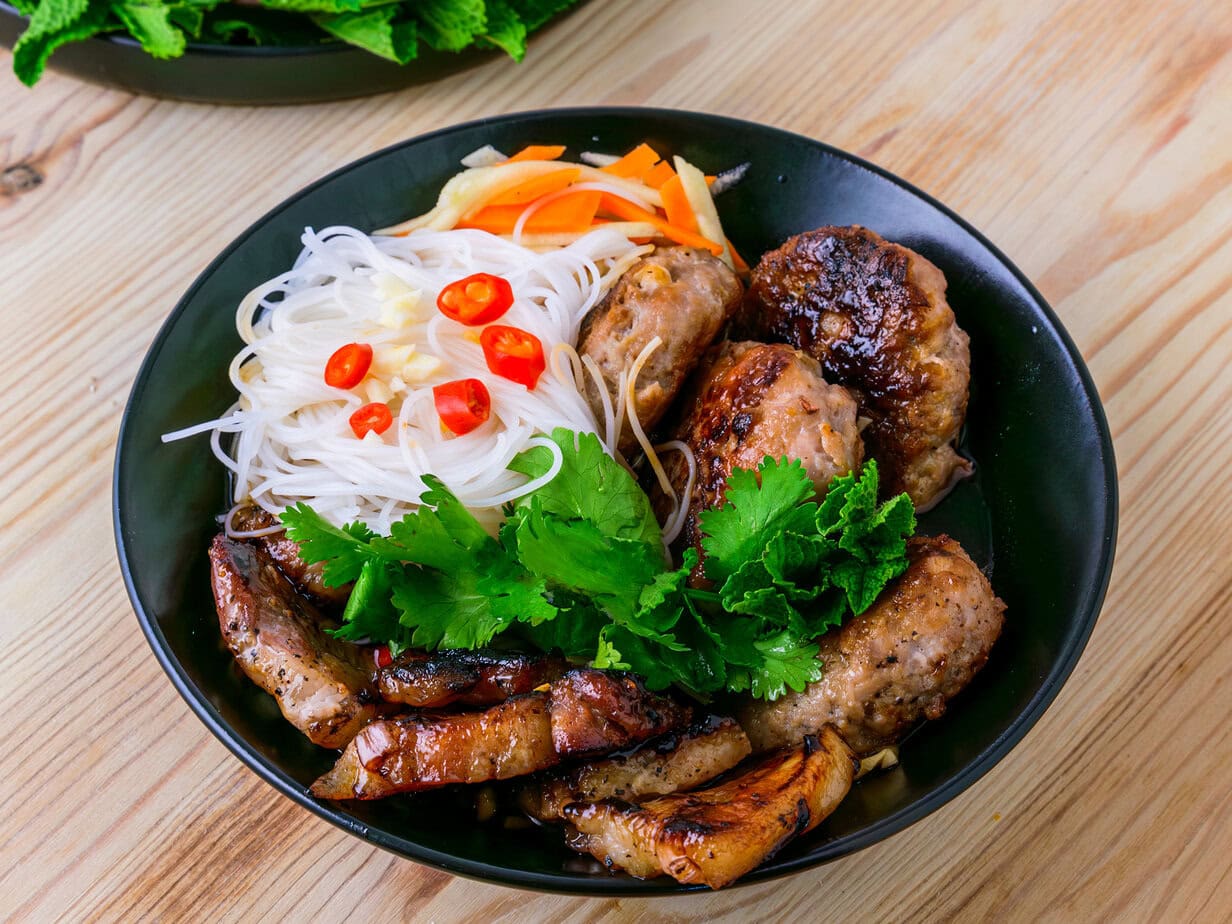
If Hanoi has a single signature dish, it’s bún chả: fatty pork meatballs and slices of pork belly grilled over charcoal until blackened at the edges, served in a bowl of sweet-and-sour broth with cold rice vermicelli, a mountain of fresh herbs and a plate of nem, the same ones sold at Asian takeaway shops in France, but in their original form. It’s a lunchtime dish: most places open around 11:00 and close at 14:00. What makes a great bún chả is the charcoal smoke, so look for stalls where you can see the grill from the street. I also make it at home; my bún chả recipe is here.
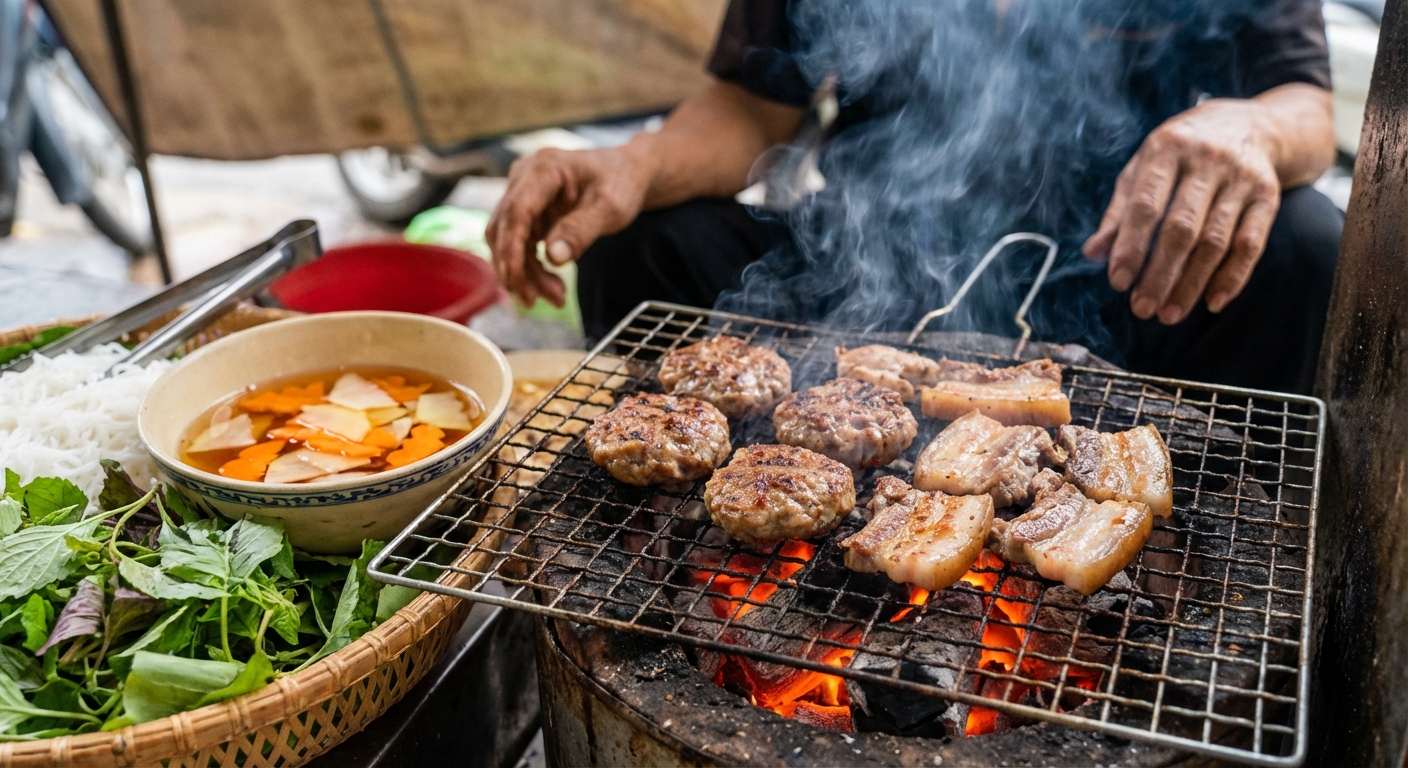
Bún Chả 74 Hàng Quạt
My favourite bún chả in Hanoi. The place is in a narrow alley in the Old Quarter, the pork was grilled over charcoal right in front of me, the broth has that distinct smokiness missing from the Obama restaurant, the portions are generous and the price is fair.
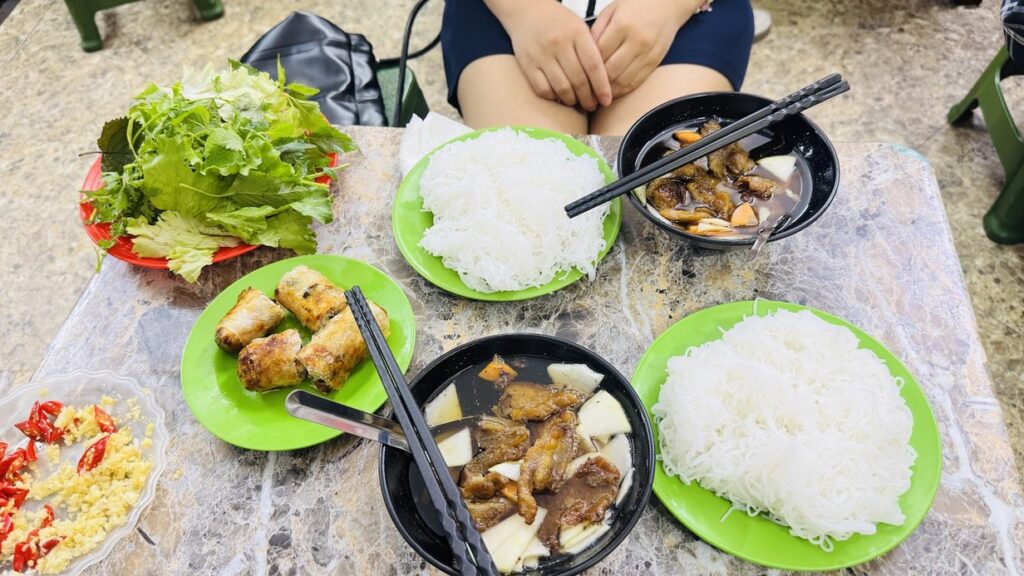
Other good bún chả spots
Bún Chả 34 Hàng Than, a little farther from the centre, is better and cheaper than the tourist spots: the pork is wrapped in a betel leaf (lá lốt) before grilling, giving it a peppery, herbal note you won’t find anywhere in France. Bún Chả 38 Mai Hắc Đế makes caramelised, intensely smoky pork. For a reliable chain with indoor seating where Hanoi locals actually eat lunch, Bún Chả Sinh Từ has several locations and consistent quality. Bún Chả Đắc Kim, on Hoàng Ngọc Phách Street, is touristy and more expensive, but reliable and comfortable.
Bún Chả Hương Liên, the Obama restaurant
In 2016, Anthony Bourdain and President Obama sat on plastic stools at 24 Lê Văn Hưu Street and ate bún chả in front of the cameras. The restaurant now offers an “Obama Combo” (bún chả, a fried seafood roll and Hanoi beer) and has put the table behind glass. My honest take: the food is decent, but the broth is sweeter than the traditional version, the service is rushed, and the charcoal smokiness is less pronounced than in the Hàng Quạt alley. Go for the story, or for its indoor seating and more closely monitored hygiene if street food worries you. For Hanoi’s best bún chả, look elsewhere.
Which dishes do tourists miss?
Chả cá is so important in Hanoi that an entire street in the Old Quarter is named after it: pieces of catfish marinated in turmeric and galangal, pan-fried at your table with huge amounts of fresh dill and spring onions, eaten with rice noodles, peanuts, shrimp paste and herbs. Cooking at the table brings raclette to mind, and every bite is different. Chả Cá Lã Vọng, on the street of the same name, is the original, crowded and expensive but full of atmosphere. I preferred Chả Cá Thăng Long: the same dish, better seating and lower prices. Budget 80,000 to 120,000 VND (3 to 4.60 EUR) per person at local spots.
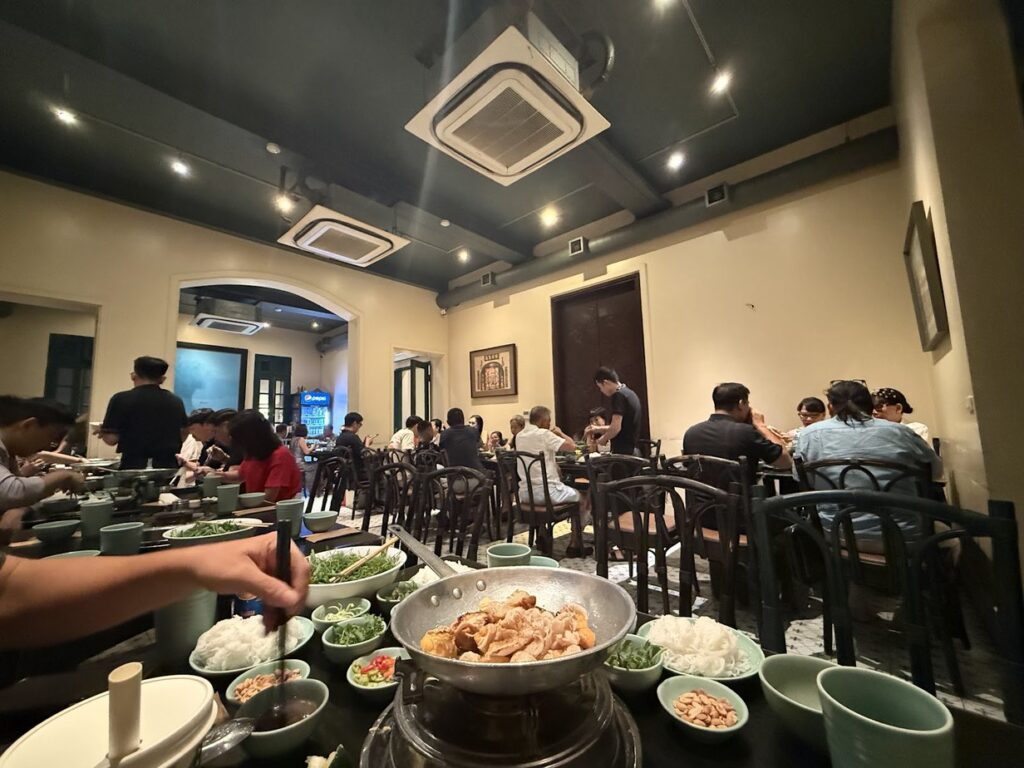
Bún riêu is a tomato broth with crab paste, tofu and rice vermicelli, orange-red, tangy and briny, with an umami flavour reminiscent of shellfish bisque. Try it at 11 Hàng Bạc in the Old Quarter, for breakfast or lunch: it’s a northern dish that most visitors overlook because they’re only thinking about phở.
Bánh cuốn are paper-thin steamed rice sheets rolled around minced pork and wood ear mushrooms, served with fried shallots, chả lụa (Vietnamese ham, a pressed deli meat with no equivalent in France) and a dipping sauce, with a silky texture that’s the opposite of soup. Bánh Cuốn Chị Su, on Hoàng Ngọc Phách street, is opposite Bún Chả Đắc Kim: you can eat at both without walking 30 metres. I make them at home, and my bánh cuốn recipe is here.
Bún thang is a clear chicken broth with shredded chicken, ribbons of omelette and sliced Vietnamese ham over vermicelli, more delicate than phở, a celebration dish in Hanoi families that you’ll find on Đinh Tiên Hoàng street and that almost no tourist orders. The miến lươn spot at 87 Hàng Điếu street has earned a Michelin Bib Gourmand while remaining a pavement eatery: plastic stools, no English menu, local prices, glass noodles with fried eel that’s crispy outside and tender inside, served in broth or dry. Nobody orders it without a recommendation: here’s mine.
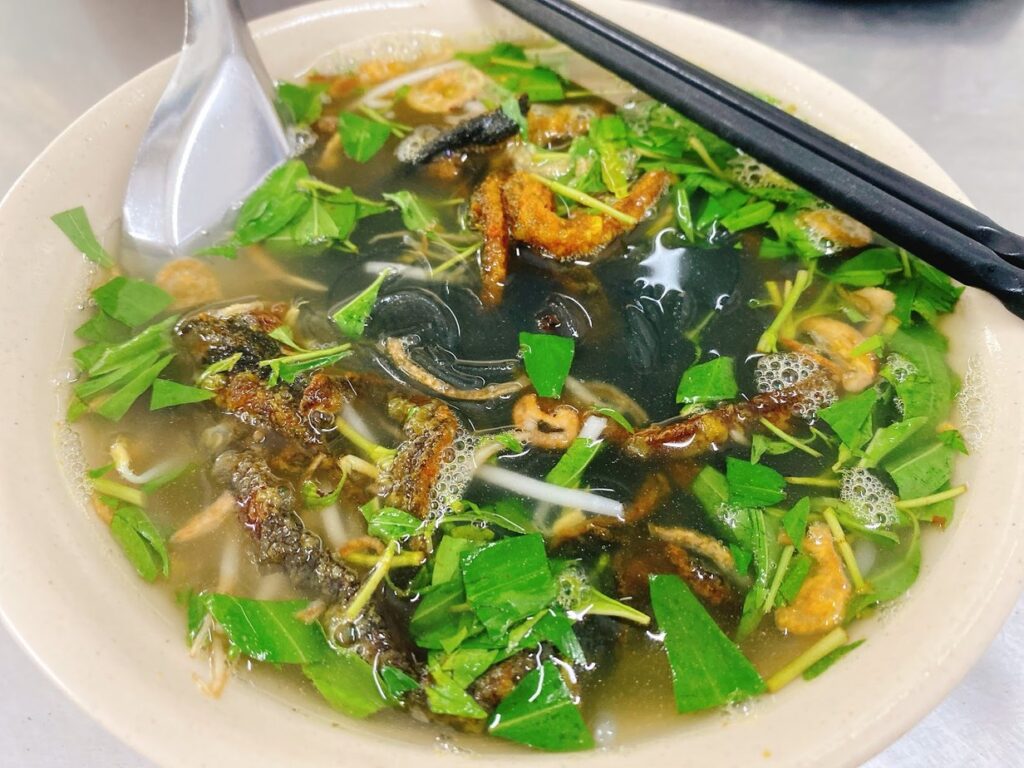
Nộm bò khô, shredded dried beef with green papaya, herbs, fried shallots and peanuts in a lime dressing, is eaten as a snack or with a bia hơi. The place to go is Long Vi Dung, on Đinh Tiên Hoàng street.
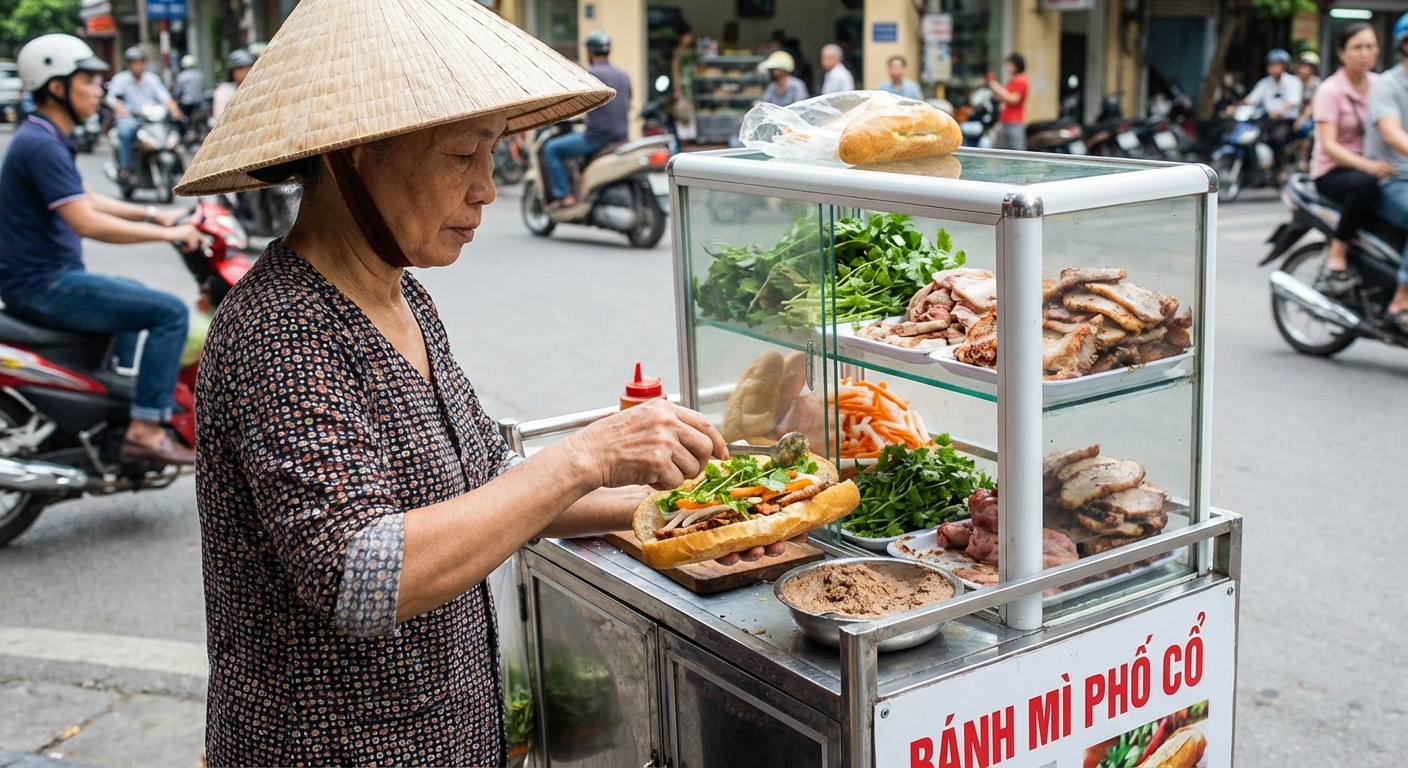
My honest take on bánh mì: Hanoi isn’t the best city in Vietnam for it, that title goes to Hội An or Hồ Chí Minh City, so focus on noodles here. If you’re set on it, Bánh Mì 25 is clean and reliable, and Bánh Mì Trâm makes bánh mì sốt vang, a baguette filled with beef stew in red wine, a bourguignon sandwich inherited from colonial cooking. What defines Hanoi’s bánh mì is the pâté: look for places with a big block of pâté visible on the counter. Expect to pay 15,000 to 25,000 VND (0.60 to 1 EUR). To recreate it at home, my bánh mì recipe is on the site.
Where can you drink egg coffee?
Cà phê trứng was invented in Hanoi in the 1940s, when fresh milk was scarce: a barista at the Sofitel Métropole whipped egg yolk with sweetened condensed milk and Vietnamese coffee, creating a kind of liquid tiramisu sitting on top of a strong black espresso. If your palate is used to sabayon, it makes perfect sense from the first sip.
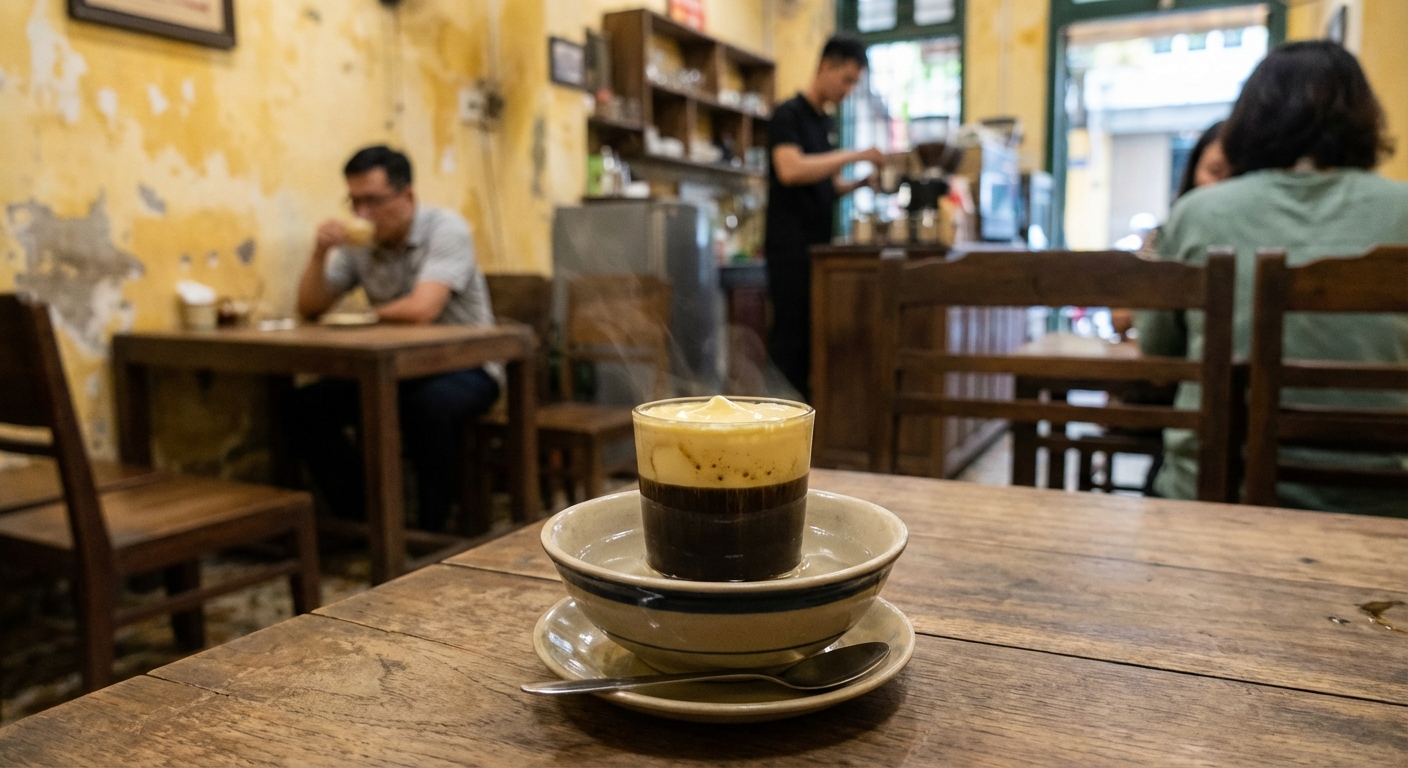
Café Giảng, 39 Nguyễn Hữu Huân street, is the original, the current owner’s father invented the drink, and the experience is chaotic: tiny stools, knee to knee with dozens of tourists, rushed service. Go for the history of the drink. Café Đinh, 13 Đinh Tiên Hoàng street, run by the same family, overlooks Hoàn Kiếm lake: cheaper, less crowded, the same recipe in a setting where you can actually settle in. That’s where I settled in, and it’s the one I recommend. Loading T Café adds cinnamon to its egg coffee in a peaceful colonial villa, with airy rooms and plants, and it wins most of my comparisons.
Cà phê sữa đá, iced coffee with condensed milk, is the daily fix for most Vietnamese people: a metal phin filter lets coffee drip over ice and condensed milk, intensely strong and very sweet. Yogurt coffee (cà phê sữa chua) combines coffee and yogurt in a way that sounds odd but works, and the place to go is Cà Phê Duy Trí, 8 Yên Phụ. Coconut coffee, with sweet coconut cream floating on top, is also worth trying. Blackbird Coffee is the modern option, with less sugar and better beans, and Café Lâm is a historic spot with excellent coffee and fewer people than the Giảng/Đinh circuit. Egg coffee costs 25,000 to 35,000 VND (1 to 1.35 EUR) in local cafés, 35,000 to 50,000 VND at the famous spots.
Where can you drink a bia hơi?
Bia hơi is fresh draught beer brewed that same morning and delivered in large silver metal kegs to pavement bars across the city. Around 3 to 4 % alcohol, 10,000 to 15,000 VND a glass (0.40 to 0.60 EUR), less than a bottle of water in some Parisian cafés. The rule for finding real bia hơi is simple: look for silver kegs visible outside, otherwise it’s probably bottled beer poured into a glass. Late afternoon, 16:00 to 17:00, is the best time, the kegs are at their freshest and the crowds haven’t arrived yet.
Tạ Hiện street (“Beer Street”) is the backpacker strip. Walk through once for the spectacle, stay for a drink, then leave: prices are inflated (30,000 to 50,000 VND for what should cost 10,000 to 15,000), some vendors pass off bottled beer as draught, and the food is expensive and mediocre. Don’t eat on Tạ Hiện.
I drank my real bia hơi at Bia Hơi Phố Cổ, 37 Đường Thành: local customers, fair prices, no tourist circus. Bát Đàn street has quieter bia hơi spots, which you can combine with the phở next door, and Bia Hơi Hải Xồm is a chain of lively beer halls with a Biergarten feel, big communal tables, quick service and mostly Vietnamese customers. Trà đá, weak green tea over ice, free or nearly so at most stalls, is the city’s other drink: you’ll see jugs of it on every table, a palate cleanser between bites.
Where to eat in Hanoi in the evening?
The Old Quarter (Hoàn Kiếm district) packs in more food per square metre than almost anywhere in Southeast Asia. Each street historically specialised in a single trade, an arrangement I explain in my guide to Hanoi’s Old Quarter. For food, keep these streets in mind: Bát Đàn for phở (Phở Gia Truyền at number 49, between 6:00 and 8:00), Hàng Quạt for the bún chả in the alley at number 74, Hàng Bạc for bún riêu at number 11, Hàng Điếu for miến lươn at number 87, Hàng Ngang for chicken vermicelli at number 50 (opens at 18:00), and Lý Quốc Sư, past the cathedral, for Phở 10 and restaurants with English menus.
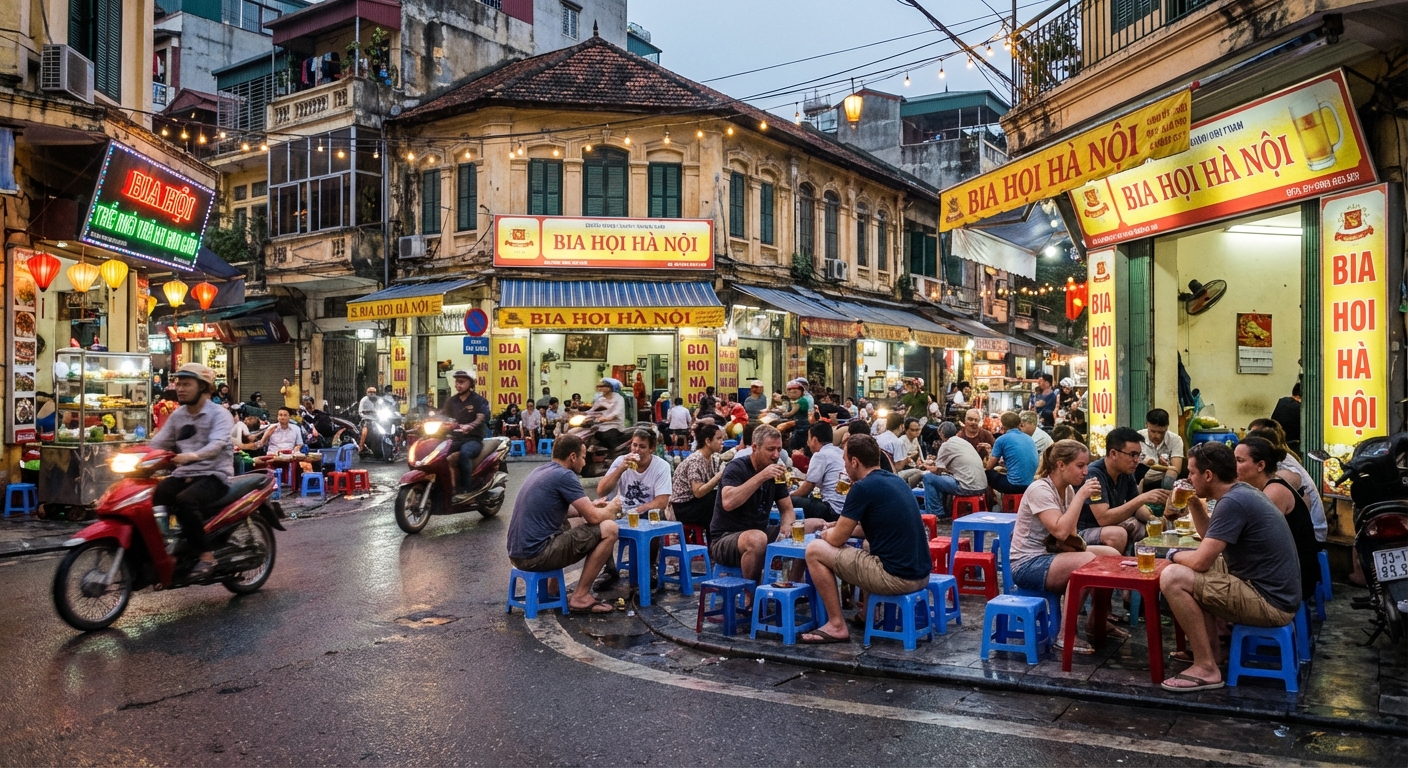
My method for eating your way through the Old Quarter: walk slowly along these streets between meals, stop whenever you see a crowd of Vietnamese people sitting on stools eating something you don’t recognise, point, hold up a finger, sit down and eat. Hanoi’s best discoveries are almost always unplanned. In the evening, the Old Quarter night market runs from Friday to Sunday on Hàng Đào street: grilled meat skewers, bánh tráng nướng (the “Vietnamese pizza”, a grilled rice paper topped with egg, spring onion and dried shrimp) and chè desserts. The streets around Hàng Buồm stay lively well past midnight, with late-night phở and noodle stalls. Đồng Xuân market is mainly a wholesale market, but the surrounding streets feed its vendors with food that is cheaper and more local than anywhere else in the neighbourhood, and early morning is the best time to go.
If you want to eat indoors, Cầu Gỗ overlooks Hoàn Kiếm lake and serves well-executed Vietnamese dishes in an upscale setting, a good introduction before tackling the stalls, and the lake view alone justifies a dinner reservation. Pizza 4P’s, the Japanese-Vietnamese chain, is the place to go when you need a break from noodles: a wood-fired oven, homemade mozzarella, and some of the best pizza I’ve eaten anywhere. After 5 days of soup, there’s no shame in a margherita.
For fine dining, the cooking blends Vietnamese recipes with French techniques, which makes sense given the city’s history. The Sofitel Legend Métropole, open since 1901, houses La Beaulieu for French cuisine and Spices Garden for Vietnamese food; the building has survived wars and revolutions, and you eat here as much for the surroundings as for the food. Main courses start at around 500,000 to 800,000 VND (19 to 31 EUR), far below the prices of a Michelin-starred restaurant in Paris, and Sunday brunch is an event. The French legacy doesn’t end there: the bánh mì baguette, pâté, coffee culture and the habit of lingering for hours over a single cup date back to Indochina, and small bakeries selling croissants and pains au chocolat dot the streets around the Opera House. For a French person, eating in Hanoi feels both familiar and a world away, and that’s what makes it so different from Bangkok, Bali or Phuket.
Which neighbourhood should you choose for good food?
Where you choose to stay in Hanoi determines what you can eat within walking distance. The Old Quarter (Hoàn Kiếm) puts you next to the biggest concentration of stalls, Phở Gia Truyền, Bún Chả 74 Hàng Quạt, the bún riêu on Hàng Bạc, the miến lươn on Hàng Điếu, egg coffee cafés and bia hơi spots. It’s the most practical base for a food-focused trip, and also the noisiest.
Trúc Bạch (Ba Đình district), near West Lake, is the neighbourhood for phở cuốn and a quieter experience. Hai Bà Trưng and Đống Đa are the districts where Hanoians actually live and eat: Phở Thìn on Lò Đúc, the Obama bún chả on Lê Văn Hưu, Bún Chả 38 on Mai Hắc Đế. Eating there gives you the real city, away from the tourist bustle of the centre.
How much does it cost?
Hanoi is one of the cheapest cities in the world for eating well. A realistic daily budget is 300,000 to 400,000 VND (11.50 to 15.50 EUR) for 3 proper meals and snacks, roughly the price of a sandwich and a coffee near the Gare du Nord in Paris. For a full budget breakdown and currency tips, read my practical guide to Hanoi.
In detail: street-side phở in the morning 40,000 to 50,000 VND, bún chả for lunch 40,000 to 60,000 VND, bánh mì from a local stall as a snack 15,000 to 25,000, bia hơi in the afternoon 10,000 to 15,000 a glass, a rice or noodle dish in the evening 40,000 to 60,000, egg coffee between meals 25,000 to 35,000, so well under 300,000 VND for a full day. My typical day: phở at Phở Gia Truyền at 6:30, egg coffee at Café Đinh at 10:00 with a lake view from upstairs, bún chả at 74 Hàng Quạt at 11:30 with nem, phở cuốn in Trúc Bạch at 14:00, bia hơi on Bát Đàn street at 16:30 for 10,000 VND a glass, then Chả Cá Thăng Long or the bún riêu at 11 Hàng Bạc at 18:30. 6 experiences for around 250,000 VND, or 9.60 EUR.
The price gap between tourist spots and local stalls is consistent: a bowl at Phở Gia Truyền costs 50,000 to 60,000 VND, at Phở 10 Lý Quốc Sư 70,000 to 90,000, and the cheapest bowl is the best. Places with English menus, air conditioning and glass doors are almost always more expensive and less good than stalls without signs, so follow the crowds of Vietnamese workers at lunchtime. The biggest budget trap is Tạ Hiện street and the tourist restaurants around Hoàn Kiếm lake: a beer there costs 3 to 4 times what it does 2 streets away. Walk 5 minutes in any direction and prices drop.
A cooking class is one of my favourite activities in Hanoi: a market visit to learn to recognise herbs and sauces, then 4 or 5 dishes you cook yourself, generally phở, spring rolls and a salad. Rose Kitchen is my top choice for a class: well organised, English-speaking instructors and a market visit included. Ella Hanoi combines a walking food tour and a class, and the Ella Hanoi Food Tour on its own covers 6 to 8 dishes in the Old Quarter with a guide who orders in Vietnamese.
Apron Up is a good budget option. Expect to pay 600,000 to 1,200,000 VND (23 to 46 EUR) depending on the school and group size. Hanoi Kids is a student association offering free guided tours; you only pay for the food. All of these work well on the first or second day, to build your confidence before eating on your own.
Is street food safe to eat?
The best indicator is the crowd. A stall packed with Vietnamese customers at lunchtime means fresh ingredients and fast turnover, an empty stall means the opposite, and places that serve just one dish are safer than those with long menus. The saying I keep in mind: if the chairs are high, the food is average; if you’re crouched on a blue plastic stool, it’ll be excellent. These stalls survive on their local reputation, so thousands of Hanoi residents have tried them before you.
If your stomach needs time to adjust, start with sit-down restaurants like Phở 10 Lý Quốc Sư or Bún Chả Hương Liên for the first few days, then move on to the stalls: avoiding street food completely means missing the heart of Hanoi. Tap water isn’t safe to drink, so use bottled water, even for brushing your teeth if you’re being cautious. Ice in established restaurants and cafés is commercially produced using purified water, and the free trà đá at stalls also uses commercially produced ice in most cases. More health details in my practical guide. Avoid any restaurant in the Old Quarter advertising a hundred dishes and “Vietnamese & Western Food”: they’re tourist traps.
If you’re vegetarian, the word to remember is “chay”. Restaurants with “Cơm Chay” in their name serve plant-based food, often with convincing versions of meat dishes made from tofu and mushrooms, for 30,000 to 50,000 VND per set meal, and they’re packed on the 1st and 15th of the lunar month. Vietnamese cuisine relies on nước mắm, shrimp paste and meat broths, so it’s less straightforward than it seems. Phở and most noodles are rice-based and gluten-free, but sauces can contain wheat. Keep your dietary restrictions written in Vietnamese on your phone, as most vendors won’t understand them in English.
My other Hanoi guides
To help you plan the rest of your stay, I’ve written what to do in Hanoi, what to see in the Old Quarter, where to stay in Hanoi and planning a trip to Hanoi, covering budget, visas and when to go. If you’re heading south next, my guide to eating in Hô Chi Minh-Ville picks up from here, bánh mì included. It’s all brought together in my complete Hanoi guide.