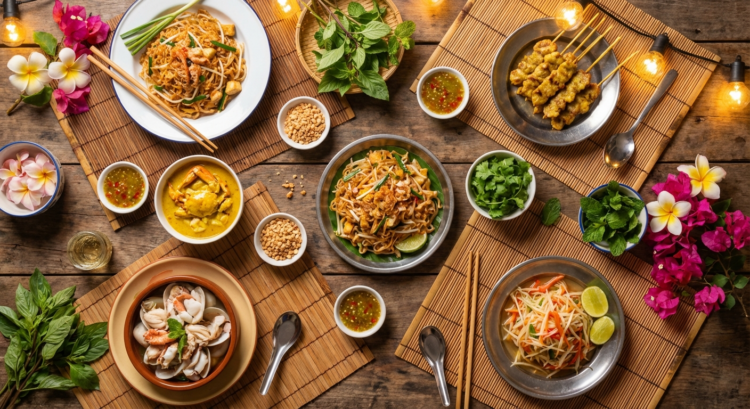
Phuket’s food scene is reason enough to visit the island. Forget the beaches for a moment. What really pulls people in here is the mix of southern Thai spices, Chinese Hokkien noodles, Malay-influenced roti, and Peranakan braised pork, all served on plastic tables under neon lights. As we explain in our complete guide to visiting Phuket, the island has plenty to offer, but its food should be at the very top of your list.
This guide covers the dishes you absolutely should order, the restaurants where locals actually eat, and how to get the best out of Phuket’s night markets without stumbling into yet another overpriced tourist trap.
Phuket’s signature dishes
Phuket has its own cuisine, something most visitors completely miss. Southern Thai cooking is very different from what you may have tasted in Bangkok or Chiang Mai: spicier, more seafood-driven, and shaped by centuries of Chinese and Malay immigration.
The Peranakan, or “Baba,” community left an especially strong mark; its recipes blend Chinese Hokkien cooking with Malay spices and Thai ingredients. Ordering Pad Thai here is like going to Lyon and asking for fish and chips. The dish exists, but locals are not queuing up for it.
Moo Hong (braised pork belly)
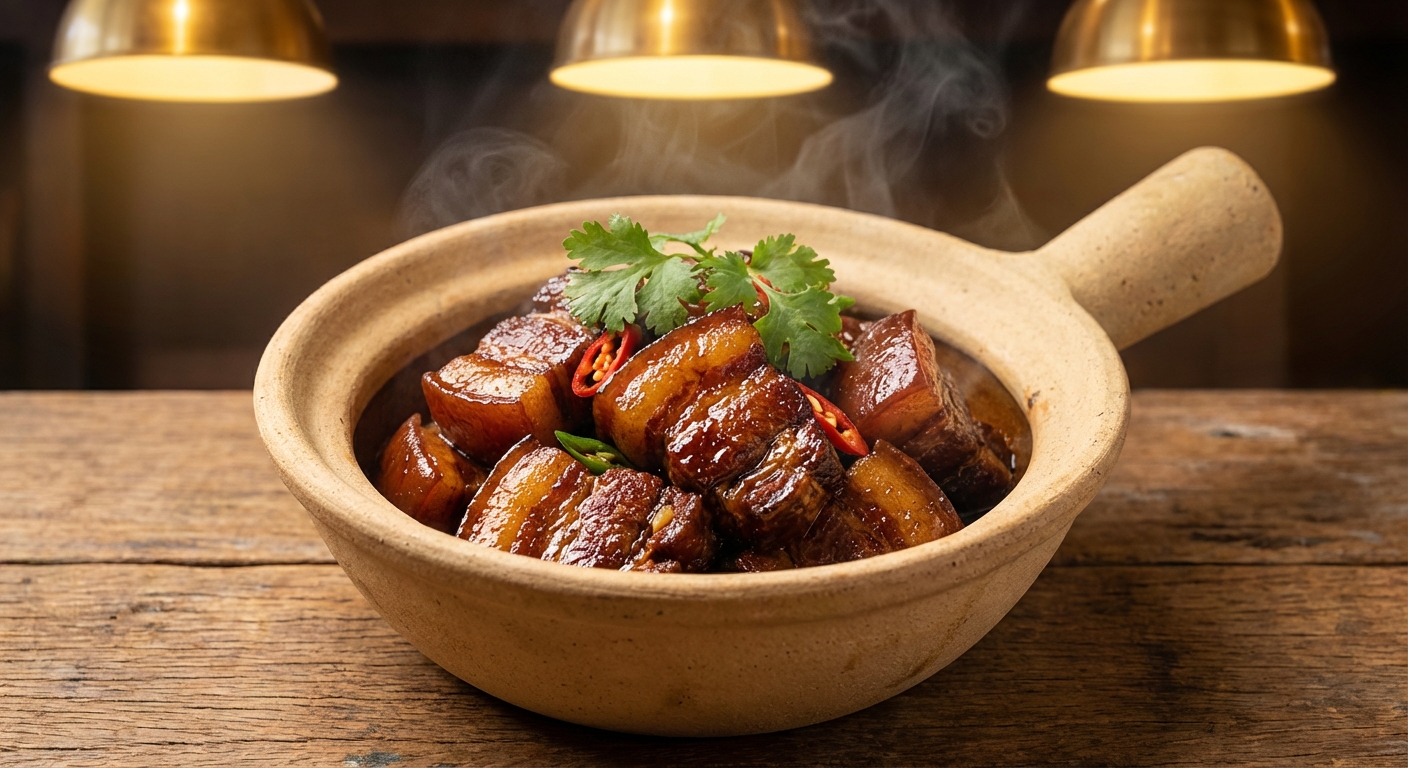
If you try only one dish in Phuket, make it Moo Hong. This is the island’s signature: pork belly slowly braised over low heat in a sweet-savory sauce of soy, garlic, and black pepper. Think Provençal beef stew, but in Sino-Thai form: the meat should quite literally melt under your fork. The flavor is distinctly Peranakan, a Sino-Malay-Thai fusion you will not find anywhere else in Thailand quite like this.
The best versions are at One Chun and Raya Restaurant in the Old Town, although Nam Yoi arguably outdoes them both. More on that below.
Mee Hokkien (Phuket Hokkien noodles)
Thick yellow noodles stir-fried with seafood and pork. There are two styles: a soup version and a dry version served with red chili sauce and broth on the side. Both are excellent, but the dry version with red sauce is the more distinctly Phuket-style choice.
Mee Ton Poe is the best-known spot, and deservedly so. A bowl of noodles costs 60-80 THB (about 1.50 to 2 EUR), the place is always packed, and some expats go back at least once a week. For the dry version, Ko Yoon Noodle in Phuket Town is the insider pick.
Gaeng Som (sour and spicy curry)
This orange curry defines southern Thai cuisine. Made with fish or shrimp, it gets its tang from tamarind and its punch from serious heat. Not “tourist-friendly Thai spicy,” but the kind of spice that makes you sweat through your shirt. For chili lovers, it is pure joy.
Order it at One Chun or Nam Yoi. If you are sensitive to spice, say “mai pet” (not spicy) when ordering, though even the mild version still has plenty of character.
Other dishes to try
Khanom Jeen is a morning dish that most tourists never discover. Rice noodles come with the curry of your choice, then you garnish them yourself with fresh herbs and vegetables laid out on the table. This is what locals actually eat for breakfast, not the hotel buffet version of Thai food.
Oh Aew is a shaved-ice dessert made with banana-starch jelly and basil seeds, and it is unique to Phuket. You will find it at dessert stalls in the Old Town for next to nothing.
Roti with Massaman curry comes from the island’s Muslim community. Aroon Po Chana, in the Old Town, makes an excellent version.
And for late-night cravings, Khao Tom Haeng (dry rice porridge with crispy pork) at Go Benz is a Phuket institution. Go Benz is a small street restaurant where there is always a queue. Its grilled pork neck has a cult following; one expat calls it the “best grilled pork neck in all of Phuket.” It is exactly the kind of place where you end up after a night out, sitting on the sidewalk at midnight.
Night markets: where to go and what to eat
Phuket has several night markets, and they are not all created equal. The food varies, the crowds vary, and the experience can range from a quiet beer with snacks to a dense, humid crush of people under tarps. Here is what to expect from each one.
Chillva Night Market
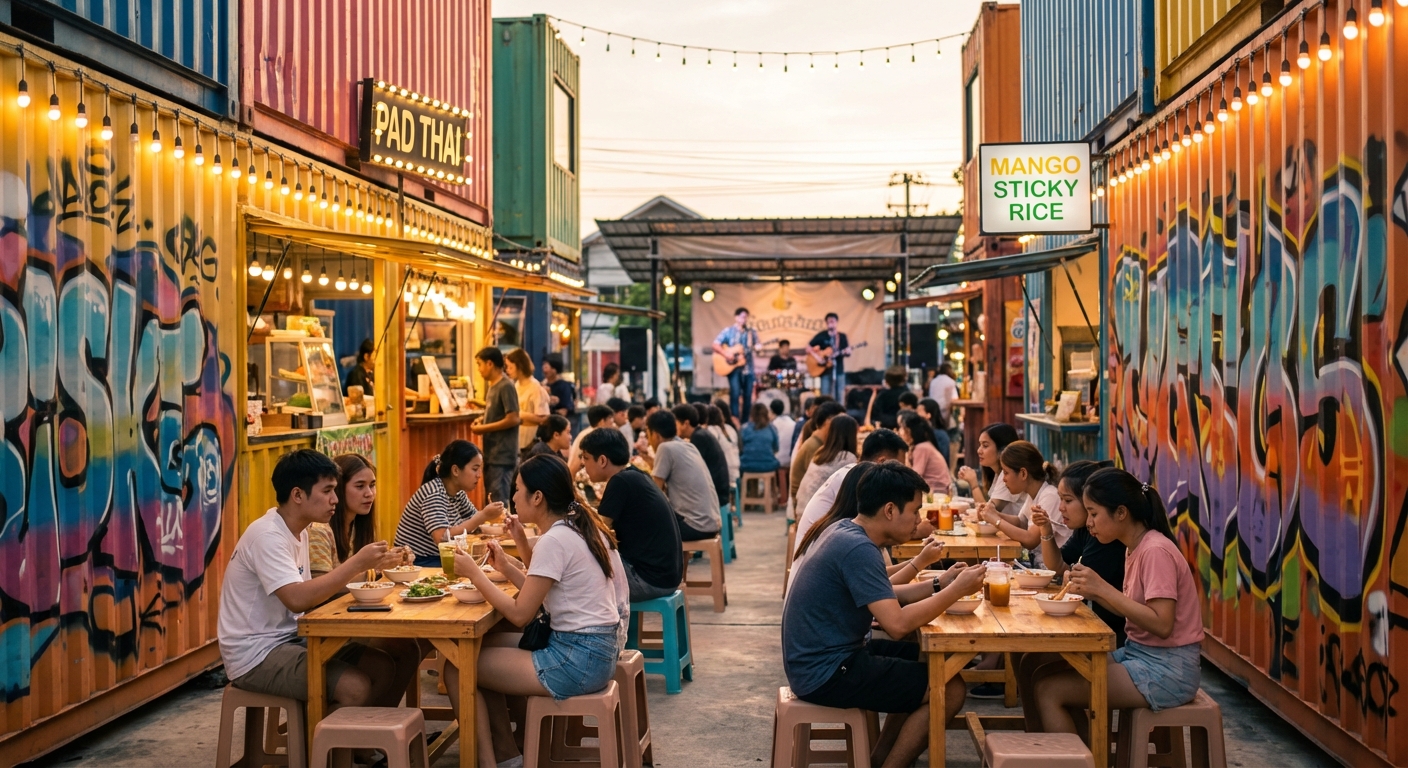
Chillva is the best night market for food. It runs from Thursday to Saturday and draws a younger, more local crowd than Naka. The layout uses recycled shipping containers, there is live music most evenings, and the atmosphere is more relaxed than at the larger markets.
The boat noodles in the back corner are excellent. Look for the Leng Saap stall, which serves “volcano” pork spine soup: a huge mound of pork bones in a spicy, sour broth, as much fun to eat as it is to look at.
For something less adventurous, you will find skewers, fried chicken, and sushi balls everywhere. The insect stall sells crickets and silkworms if you are feeling brave.
The trick at Chillva is to head for the bars set up in the containers on the second level. Buy your food downstairs, go up, and eat overlooking the market with a beer or a Thai whisky cocktail. It is far more pleasant than trying to eat at one of the crowded tables on the ground floor.
A good strategy: treat Chillva as a pre-dinner snack stop, then walk to a restaurant in the Old Town for a proper sit-down meal. Hing Lung Seafood is right next to the market if you want fresh shrimp and stir-fries without going far.
Naka Weekend Market
Naka is the big one. Open on Saturday and Sunday evenings, it is sometimes nicknamed the “Chatuchak of Phuket” after the famous market in Bangkok. It is huge, more focused on shopping than food, and becomes uncomfortably hot and crowded after 7 p.m.
For food, look for grilled squid with Nam Jim sauce (a spicy green seafood sauce), mango sticky rice, buttered corn, and coconut ice cream served in a coconut shell. You will also see stalls selling crocodile skewers, scorpions, and tarantulas, bought more for the Instagram photo than for the eating.
Arrive between 5:00 and 5:30 p.m. This matters. The food stalls are at their freshest, the tourist coaches have not yet arrived, and you can actually move through the aisles. Do your food tour first and shop afterward. By 7 p.m., the food area turns into a slow-moving wall of people.
Phuket Indy Night Market
Smaller and more relaxed than Chillva and Naka, Indy Night Market has fewer food options but also fewer people. If the crowds at the bigger markets sound exhausting, this is a quieter alternative for an easygoing evening. The food selection is smaller, but what is there is perfectly decent.
Sunday Walking Street Market in the Old Town
On Sunday evenings, Thalang Road in Phuket Old Town closes to traffic and fills with food stalls and street vendors. This market pairs perfectly with a stroll past the neighborhood’s Sino-Portuguese houses. It is smaller than Naka or Chillva, but the setting is much prettier.
The food stalls are more geared toward locals than those at the larger markets, and you can easily slip into one of the nearby Old Town restaurants if you want to sit down for a proper meal after wandering around.
What to eat at Phuket night markets
Some dishes appear at every market. Banana roti (a crisp fried pancake drizzled with condensed milk), Moo Ping skewers (marinated grilled pork), Kanom Krok (small coconut pancakes, crisp outside and soft within), and mango sticky rice are everywhere. Fresh fruit smoothies and cut-fruit stalls are perfect for cooling down. Rolled ice cream is fun to watch being made, even if the result is essentially just ice cream.
The Old Town: the best neighborhood for eating in Phuket
Phuket Town is one of the best areas to stay in for food lovers, and its Old Town neighborhood is home to many of the island’s best restaurants. The area is filled with Sino-Portuguese buildings, many of them converted into places to eat.
The big three: Raya, One Chun, and Tu Kab Khao
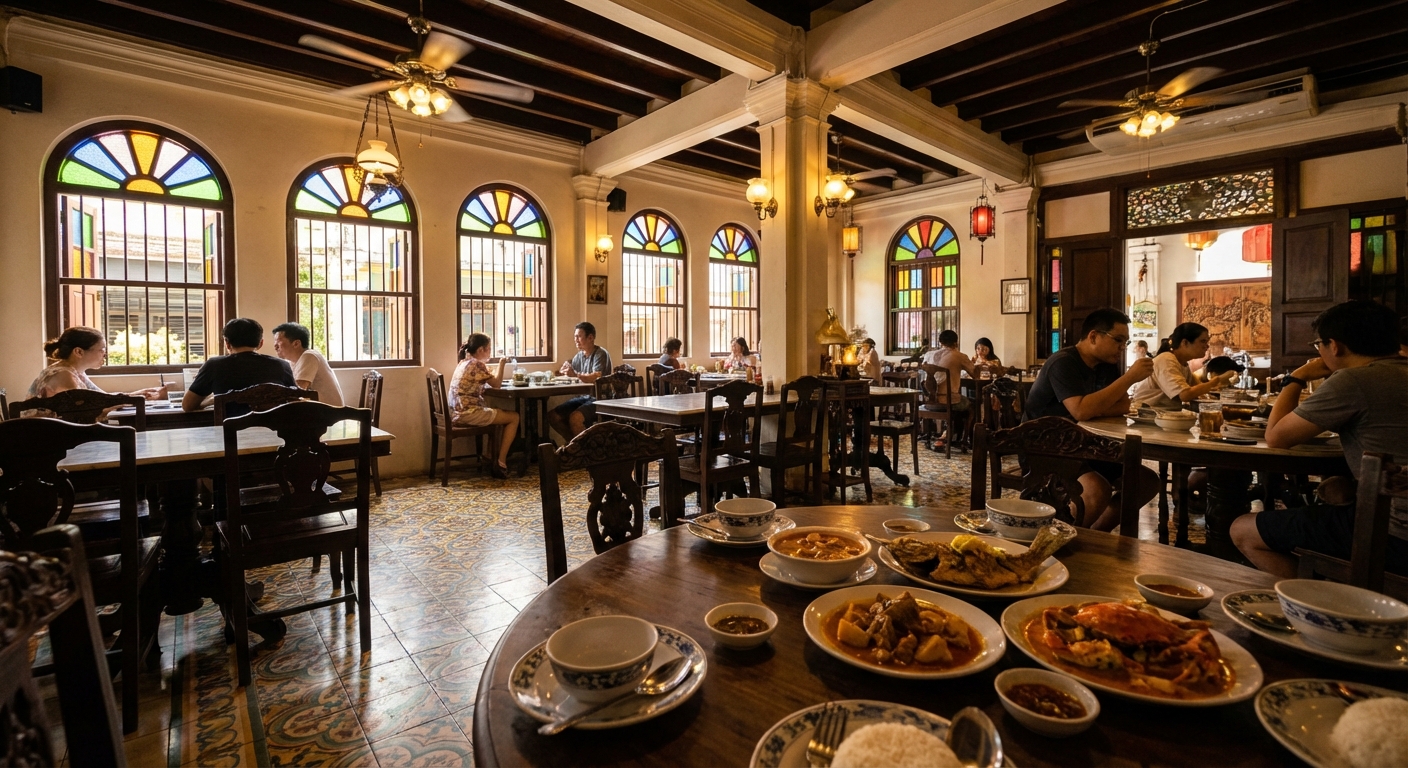
These three restaurants come up in every conversation about where to eat in Phuket, and all three are excellent. They differ more in atmosphere than in quality.
Raya Restaurant is the oldest and most established. It occupies a beautiful Sino-Portuguese building and is famous for its crab curry. It is more expensive and more formal than the other two, and dinner reservations are recommended.
One Chun is the slight favorite among those who have tried all three. The menu is broader, the food is consistently excellent, and the atmosphere is more relaxed. One telling sign: the dining room is usually filled with Thai families, not just tourists. Both the Moo Hong and the crab curry are must-orders here.
Tu Kab Khao is the most photogenic of the three. The interior is polished and the atmosphere more upscale, but the cooking is still real southern Thai food. This is the ideal address if you want a beautiful setting for dinner without sacrificing flavor. Expect 150 to 300+ THB per dish (about 4 to 8 EUR) at each of these three places.
Nam Yoi
This is the restaurant Phuket residents will recommend. It is less polished than the big three, the menu is more focused, and the cooking ranks among the best southern Thai food on the island. One expat summed it up this way: “There is no debate, Nam Yoi serves some of the best food I have eaten in my life.” Both the Moo Hong and the Gaeng Som are exceptional here. The place is also less touristy, so you usually will not need to book.
Other Old Town addresses
Lock Tien is an old-school food court with several stalls serving fresh spring rolls, satay, noodles, and other local dishes. It is ideal for trying several specialties cheaply in one meal. Kopitiam by Wilai is a café-restaurant for lunch with well-executed local cooking. Chom Chan is less overrun by tourists than the big three and earns praise for both its setting and service.
For dessert, Torry’s Ice Cream is housed in a Sino-Portuguese building and offers local flavors, including “Bi Co Moi” (black sticky rice with coconut milk). It is much better than you might expect.
Seafood: Rawai and beyond
Phuket is an island, so the seafood is excellent. But where you eat it makes all the difference. Beachfront restaurants in Patong will charge you five times the Rawai price for the same fish. To decide which beach to choose, check out our dedicated guide.
Rawai Seafood Market
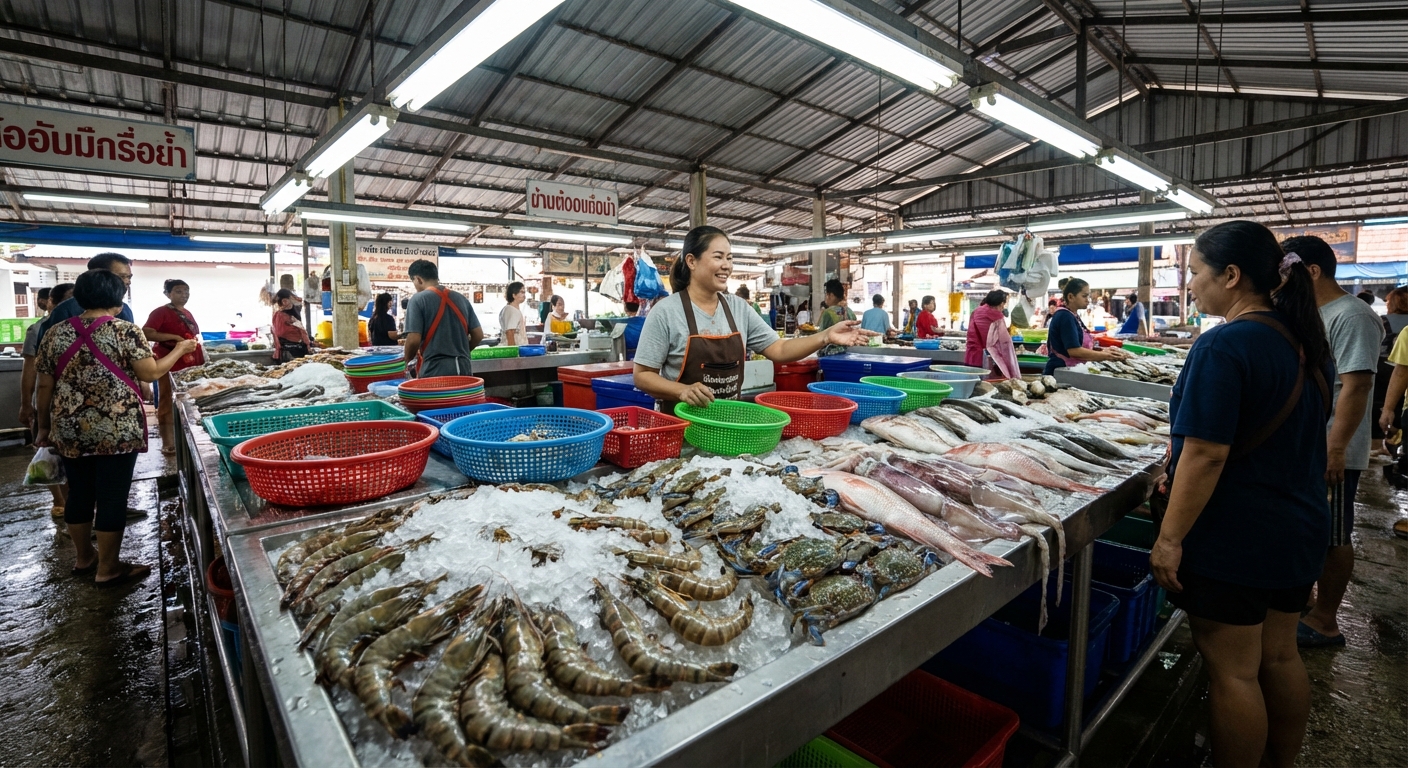
This is the seafood experience that comes up most often when people talk about eating in Phuket. The idea is simple: on one side of the street, vendors sell live seafood (shrimp, crabs, fish, squid, lobsters). Choose what you like, negotiate the price, then cross the street and hand your catch to a restaurant that will cook it for you.
The cooking fees are fixed, around 100 THB per kilogram (about 2.50 EUR), regardless of which restaurant you choose. The seafood price, however, is not fixed: you have to bargain.
Mook Manee is regularly cited as the best restaurant for preparing your catch. You will be asked how you want each item cooked: grilled, steamed, fried, or made into curry. Khun Pha is another reliable option. The experience is touristy, admittedly, but it is enjoyable and the food delivers.
A few tips: never accept the first price quoted for raw seafood, and be specific about what you choose. Point to the exact shrimp or crabs you want. Make sure they are weighed in front of you. Vendors here are used to negotiating, and it is part of the experience.
Kan Eang @ Pier
In the Chalong area, Kan Eang has been open for more than 50 years. It is a reliable choice for a seafood dinner with a sea view. The ingredients are fresh, the atmosphere is smart-casual, and you are unlikely to have a bad meal here. It is not cheap, but the value for money is fair.
Laem Hin Seafood
On the east coast, Laem Hin offers a completely different experience. You take a free longtail boat to floating restaurants called “krachang.” The crab is excellent, and the atmosphere is more relaxed and local than at Rawai. No bargaining required. If you want very fresh seafood without the market negotiation ritual, this is a good alternative.
Mor Mu Dong
Set in the mangroves, Mor Mu Dong is a rustic spot known for unusual local dishes such as stuffed fish and spicy salads. The setting is half the appeal: you eat surrounded by mangrove trees, right by the water. It sees few tourists and is well worth the detour.
Eating in Patong (and how to find real food there)
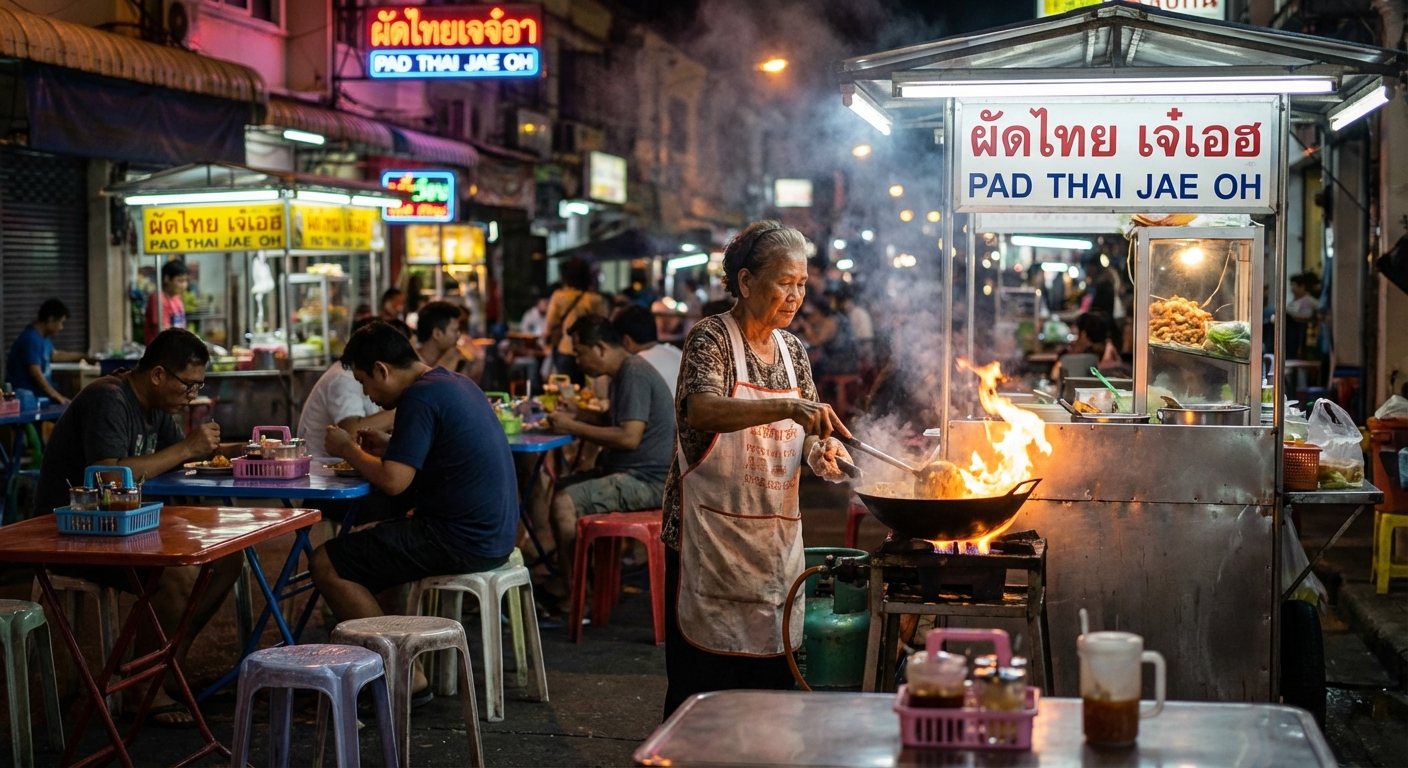
Patong is the hardest place on the island to find real Thai food. The beach road and the Bangla Road area are lined with restaurants serving the same overpriced Pad Thai and hybrid Thai-Western menus. But there are exceptions.
Kaab Gluay is one of the few restaurants in Patong where you can still eat real Thai food at reasonable prices. Briley Chicken Rice makes good Khao Man Gai (Hainanese-style chicken and rice), a simple, inexpensive meal. P.S. Restaurant, at the end of Bangla Road, is a decent option for Thai food after a night out.
The fresh market opposite Jungceylon shopping mall offers local takeaway food, but you need to get there before noon. After 12 p.m., the best dishes are already gone.
The general rule in Patong: move away from the beach. Head up Nanai Road and look for small family-run restaurants. The farther inland you go, the lower the prices and the better the food gets.
Here is a quick way to spot whether a restaurant is worth a stop, wherever you are in Phuket: neon lighting, plastic chairs, an old condiment tray on the table, and either no English menu or a very short one. If the place serves both pizza and Pad Thai on the same laminated menu, keep walking.
Another clue: check whether Grab or FoodPanda delivery riders are waiting outside. If they are, the place is popular with locals.
Fine dining and upscale options
Phuket also has fine dining that goes well beyond the usual hotel restaurants. Blue Elephant is the upscale Thai option, housed in a colonial-era building. The crab curry is expensive but excellent.
Toh-Daeng at Baan Ar-Jor has earned Michelin recognition and serves refined versions of traditional Phuket recipes in a heritage house. Tu Kab Khao, mentioned above, bridges the gap between polished dining and southern Thai gastronomy. Savoey Seafood is a good option for crab and lobster in a polished setting, with reasonable prices for this level of quality.
For fine dining, expect 500+ THB per dish (about 13 EUR and up). Reservations are strongly recommended at all these places.
Vegetarian options and special diets
Eating vegetarian in Phuket takes a bit of effort. Fish sauce goes into almost everything in Thai cooking, and strict vegan eating is difficult outside dedicated restaurants.
Look for the “Jae” symbol: a yellow flag with a red Thai character that looks like the number 17. It indicates Buddhist vegan food stalls.
Ruamjai Vegan, on Ranong Road in the Old Town, is a no-frills buffet serving cheap vegan food in a thoroughly local style. Indian restaurants in Patong and the Old Town are reliable options for vegetarians, thanks to the island’s well-established Indian community.
At night markets, you can eat well with fruit smoothies, cut fruit, grilled corn, banana roti, and Pad Thai (ask for “mai sai nam pla” to have it made without fish sauce). In restaurants, saying “gin jae” (I eat vegetarian) will be more effective than trying to list every ingredient you want to avoid.
If you visit Phuket in September or October, you may catch the Vegetarian Festival. For around nine days, much of the Old Town turns into a huge vegetarian street food market, and many regular restaurants offer special vegetarian menus. This festival is a Phuket tradition linked to the island’s Chinese community.
Cooking classes
If you want to learn how to prepare these dishes yourself, cooking classes are among the best things to do in Phuket. Several providers in the Old Town area offer half-day classes that usually begin with a visit to the local market, where you buy your own ingredients, before returning to the kitchen for the hands-on part.
You usually choose several dishes from a set selection, and classes often cover southern Thai specialties such as Massaman curry and Tom Kha Gai. It is a good way to spend a morning, especially if the weather is not beach-friendly, and you leave with recipes you can recreate at home.
Tips for eating on a budget
You can eat very well in Phuket for very little money, provided you know where to go. For a detailed budget for your trip, check out our practical guide.
Street food costs 60 to 80 THB per dish (1.50 to 2 EUR). Local restaurants with plastic chairs and no air conditioning charge 100 to 150 THB (2.50 to 4 EUR). Even well-known Old Town restaurants like One Chun are usually around 150 to 300 THB per dish (4 to 8 EUR), which is still very affordable by any European standard.
Love Asian food? Also discover where to eat in Bali and its Balinese specialties.
The Super Cheap Market area sells takeaway bags of curry at ridiculously low prices. This is where locals do their shopping, and the place is absolutely not designed for tourists, but if you are comfortable pointing and hoping for the best, the food is excellent and cheap.
The most economical strategy is to snack at night markets (expect 100 to 200 THB for several small bites, or 2.50 to 5 EUR), then have your main meal at a local restaurant. Avoid any restaurant directly on the beach or in a tourist-heavy area of Patong. The same dish that costs 80 THB at a street stall in Phuket Town will cost 250 to 400 THB at a beachfront restaurant, and the beachfront version is usually worse.
The farther you move away from the west coast beaches and toward the inland areas, the more affordable the food becomes. Phuket Town, Chalong, and Kathu all have good-quality food at low prices. You do not need to rent a car or scooter to reach these neighborhoods; a Grab taxi from Patong to Phuket Old Town takes about 25 minutes and costs around 300 to 400 THB (8 to 10 EUR).
One final tip: eat where locals eat, which usually means Phuket Old Town. If you make the trip for even one dinner, you will eat better than you would during an entire week in beachfront restaurants. Check out our complete Phuket guide to learn more about getting around the island and planning your days.
Street food lover? Also discover where to eat in Bangkok, the world capital of street food.
Street food lovers will also love Hanoi: discover where to eat in Hanoi, from pho to bun cha