Why Phuket divides travelers
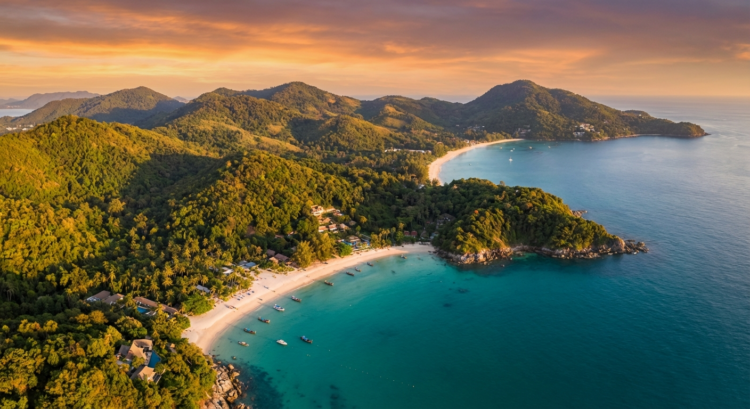
Phuket is Thailand’s most divisive island. Spend a week in Patong and you’ll leave convinced it is overpriced and overcrowded. Stay in Kata, wander through Old Town on a Sunday evening, eat Hokkien Mee at a small shop near the clock tower, and you’ll wonder why anyone speaks badly of it. The difference between loving and hating Phuket comes down almost entirely to where you stay and how you spend your days.
It is the country’s largest island, with the best hospitals, the most international flights, and a variety of food and beaches unmatched on the Andaman coast. But it also has some of Thailand’s highest tuk-tuk prices, real scams aimed at tourists, and a party district that can sometimes feel like a theme park gone wrong. Both realities coexist. The trick is knowing which parts of the island deserve your attention and which ones to avoid.
This guide covers everything you need to plan your trip: where to stay, the best beaches, what to eat, the activities worth your time, a sample one-week itinerary, when to go, and how to get around without getting scammed. Each section links to a more detailed guide if you want to dig deeper.
Where to stay (and why it matters more than you think)
Your choice of neighborhood will shape your entire stay. People who complain about Phuket almost always stayed in one place and barely left it. Here are the main areas to help you choose the right base.
Patong
Loud, chaotic, and packed with bars, nightclubs, and touts. This is where you’ll find Bangla Road, the go-go bar district, and the source of most “I hated Phuket” stories. If you are looking for nightlife, Patong delivers. If that is not your scene, stay elsewhere.
One advantage, however: Patong has the island’s highest concentration of hostels, making it the easiest place to meet other solo travelers.
It is also the best-connected area for transport, with tuk-tuks and Grab drivers available at all hours. Some travelers defend Patong as a practical base, as long as you leave every morning and only return at night. That is a reasonable approach, although you will still have to deal with the noise.
Kata and Karon
The happy medium. Beautiful beaches, plenty of restaurants, walkable streets, and a family-friendly atmosphere. Kata in particular is often recommended for a first stay. It is quieter than Patong but lively enough that you do not feel isolated. Karon Beach is longer and wider, with more room to spread out. Both neighborhoods have convenience stores, pharmacies, and ATMs within walking distance of the beach, which matters more than you might think when you are sunburned and need aloe vera at 9 p.m.
Old Town (Phuket Town)
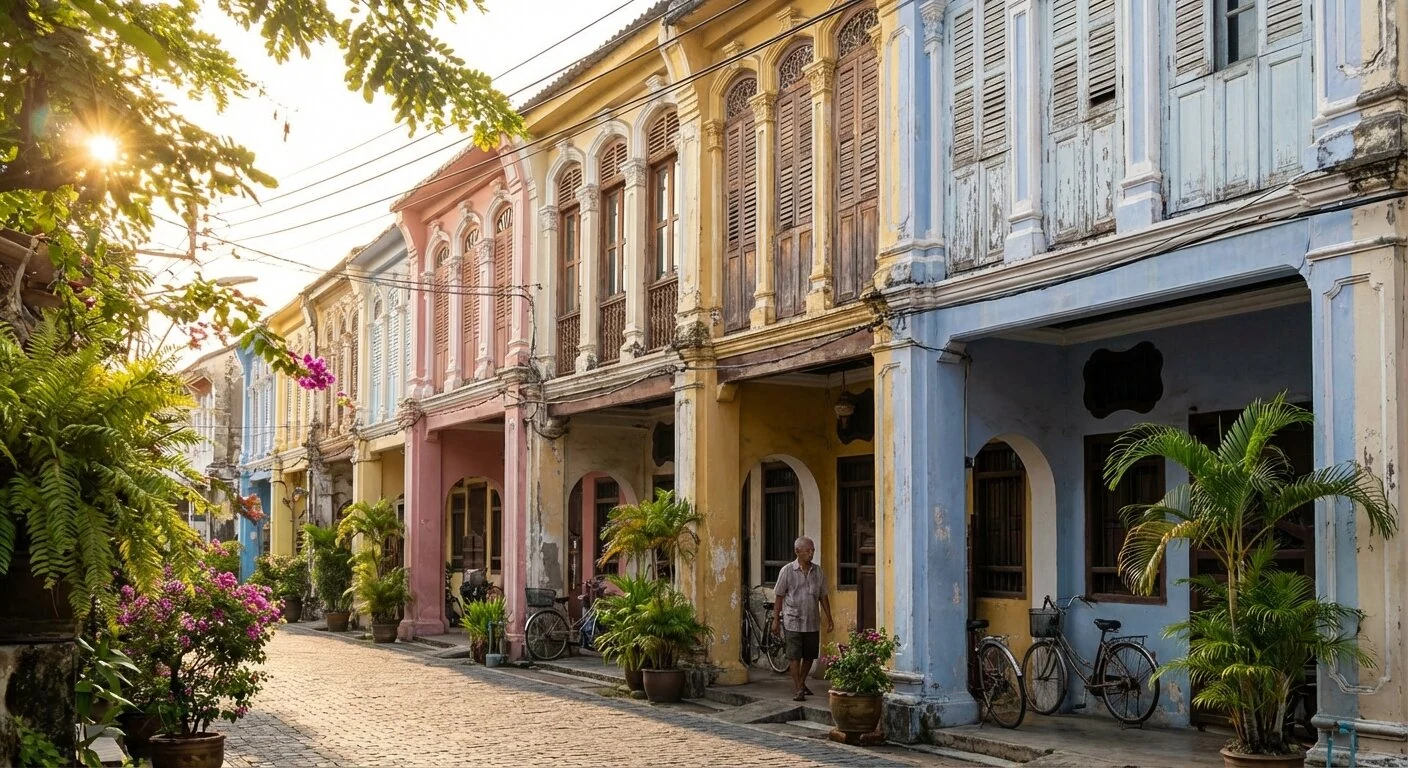
No beach, but the most characterful district on the island. Sino-Portuguese shophouses, independent cafés, and the Sunday night market, Walking Street (Lard Yai), which is simply the best evening activity in Phuket. Spend at least one or two nights here. Some travelers stay in Old Town for the culture and food, then move to a beach area for the second half of their trip.
Rawai and Nai Harn
The expat area. Nai Harn Beach is a local favorite: clear water and no jet skis. Rawai has good cafés, a seafood market where you buy your fish from a stall and pay the neighboring restaurant to cook it, and a more “authentic” feel than the main tourist areas.
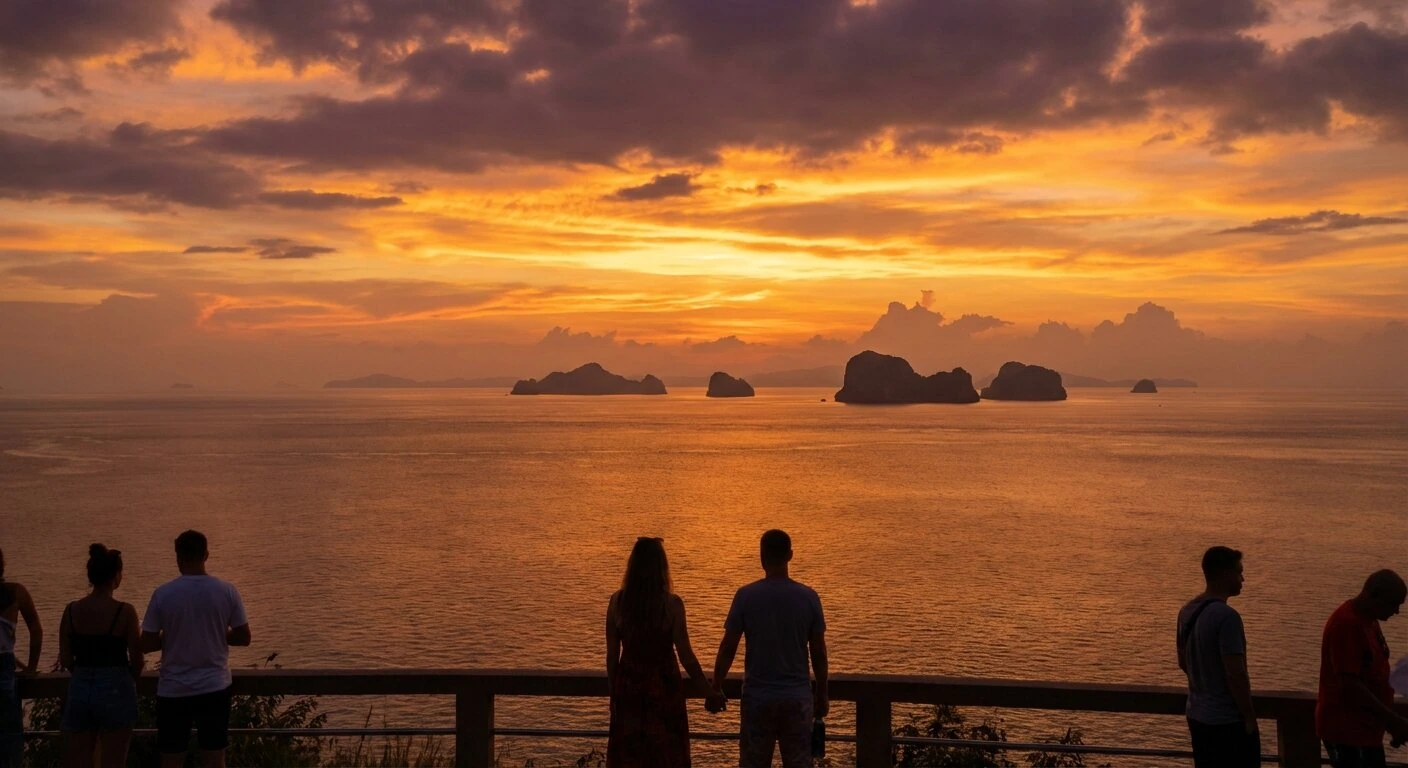
If you are staying more than a week, this is the neighborhood for you. Rawai Beach itself is not ideal for swimming (the water is shallow and crowded with long-tail boats), but Nai Harn is just a few minutes away by scooter, and Promthep Cape, one of the best sunset spots, is right around the corner.
Kamala
Relaxed and slightly upscale. Popular with families and couples looking for quiet evenings and a beautiful beach without the Patong circus. The beach is clean and uncrowded during the week. A few stylish beach clubs (Cafe Del Mar, for example) are located here, giving it a more polished feel than the wilder beaches in the south.
Bang Tao and the north
Bang Tao is the resort belt: large hotel complexes, immaculate gardens, and higher prices. It feels more like a resort bubble than a Thai island, which can be either a plus or a minus depending on what you are looking for. Farther north, Mai Khao and Nai Yang sit within Sirinat National Park. These beaches are long, empty, and lined with pine trees rather than hotels. If you want silence and do not mind being far from restaurants, the north is for you.
The two-base strategy
If you have a week, do not spend it all in the same hotel. A common strategy is to split your stay between Old Town (for food and culture) and a beach area such as Kata or Nai Harn. You get to experience two sides of the island without much hassle.
For a full overview of each neighborhood, with prices and traveler profiles, see our neighborhood-by-neighborhood guide to choosing where to stay.
The beaches
Phuket has more than 30 beaches along its west coast, and they vary widely. Some are overrun with sun loungers and jet skis. Others are rocky coves where you may be alone all afternoon. Knowing which is which will save you from wasting a day in the wrong place.
The must-visit beaches
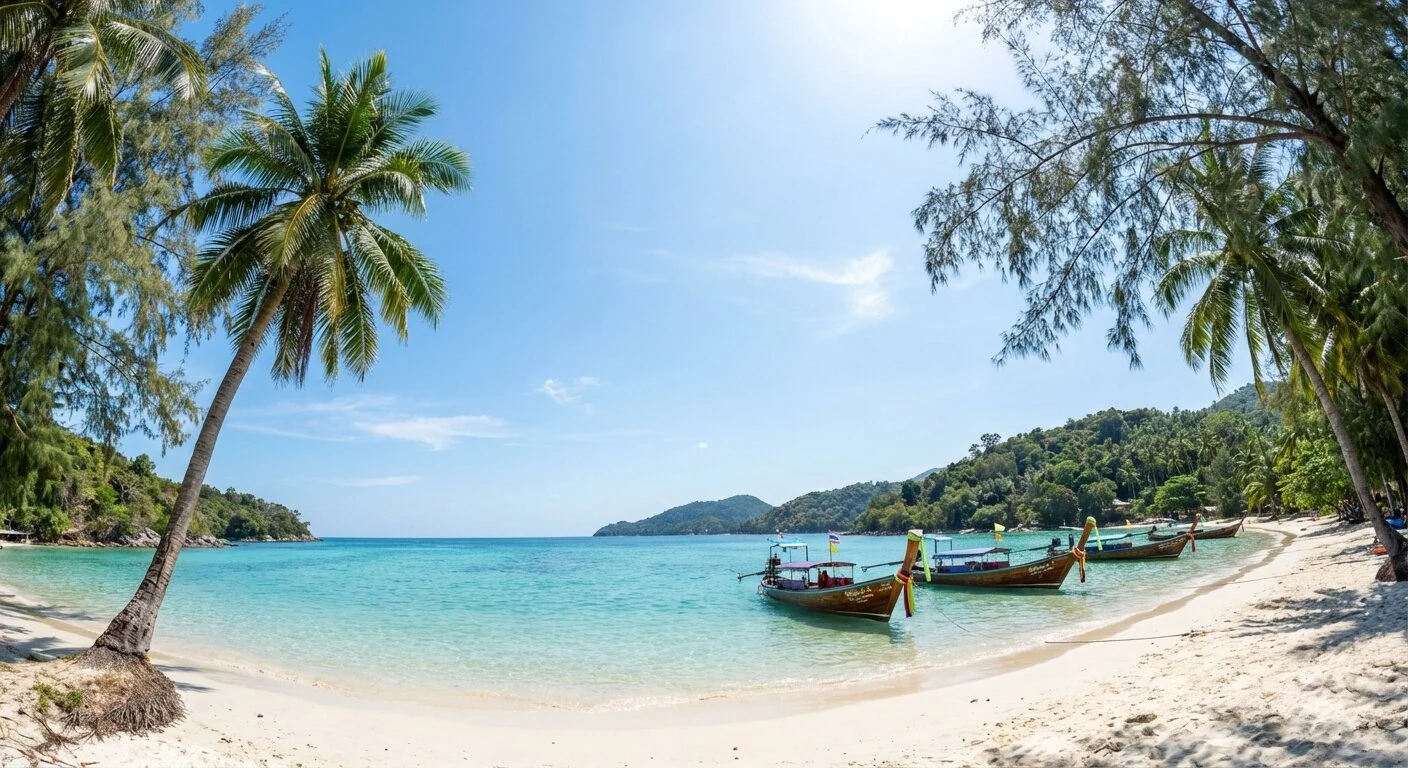
Kata Beach is an excellent choice for a first visit. It has a good range of restaurants, manageable waves for bodyboarding, and enough space not to feel cramped. Nai Harn, in the far south, is considered by locals and long-term residents to be the island’s most beautiful beach. The water is crystal clear, there are no jet skis, and the surrounding hills give it an intimate, unspoiled atmosphere.
Freedom Beach is harder to reach (you will need a long-tail boat or a steep hike), but that isolation is exactly what makes it so appealing. Yanui Beach, just below Windmill Viewpoint, is small and perfect for a lazy afternoon. In the north, Mai Khao Beach stretches for kilometers with almost no one around. Planes from the nearby airport pass right overhead, which is either annoying or entertaining, depending on your tolerance.
Beaches to discover for yourself
Ao Sane, near Nai Harn, is a good snorkeling spot with a rocky shoreline that keeps the crowds away. Banana Beach, near the airport, takes a little effort to find and stays quiet for that reason. Ao Yon, on the Panwa peninsula, attracts hardly any tourists. Laem Ka Beach, in the south, is another peaceful option, although access can be complicated because of private land disputes near the entrance.
A word about beach quality
Phuket’s beaches face west, which means beautiful sunsets but also full exposure to the Andaman monsoon from May to October. During this period, some beaches have dangerous rip currents and red flags. Lifeguards are present on the main beaches (Kata, Karon, Patong) but not on the smaller or more remote ones.
Water clarity also varies. The best snorkeling and clearest water are found in the Similan Islands, not off Phuket itself. If you want to snorkel near the shore, Ao Sane and the rocks around Nai Harn are your best options.
For our full ranking with photos and access information, see our complete guide to the 15 most beautiful beaches in Phuket.
What to eat
Most tourists arrive in Phuket and order Pad Thai. That is perfectly respectable, but the island has its own cuisine, quite distinct from what you find in Bangkok or Chiang Mai. Phuket’s food culture was shaped by Hokkien Chinese immigrants who settled here generations ago, resulting in a style built around pork, noodles, seafood, and slow-braised dishes as much as classic Thai flavors.
Southern Thai food in general is also much spicier than what you are probably used to. If a server asks whether you want it spicy, answer “a little” unless you know exactly what you are getting into.
Dishes you absolutely need to try
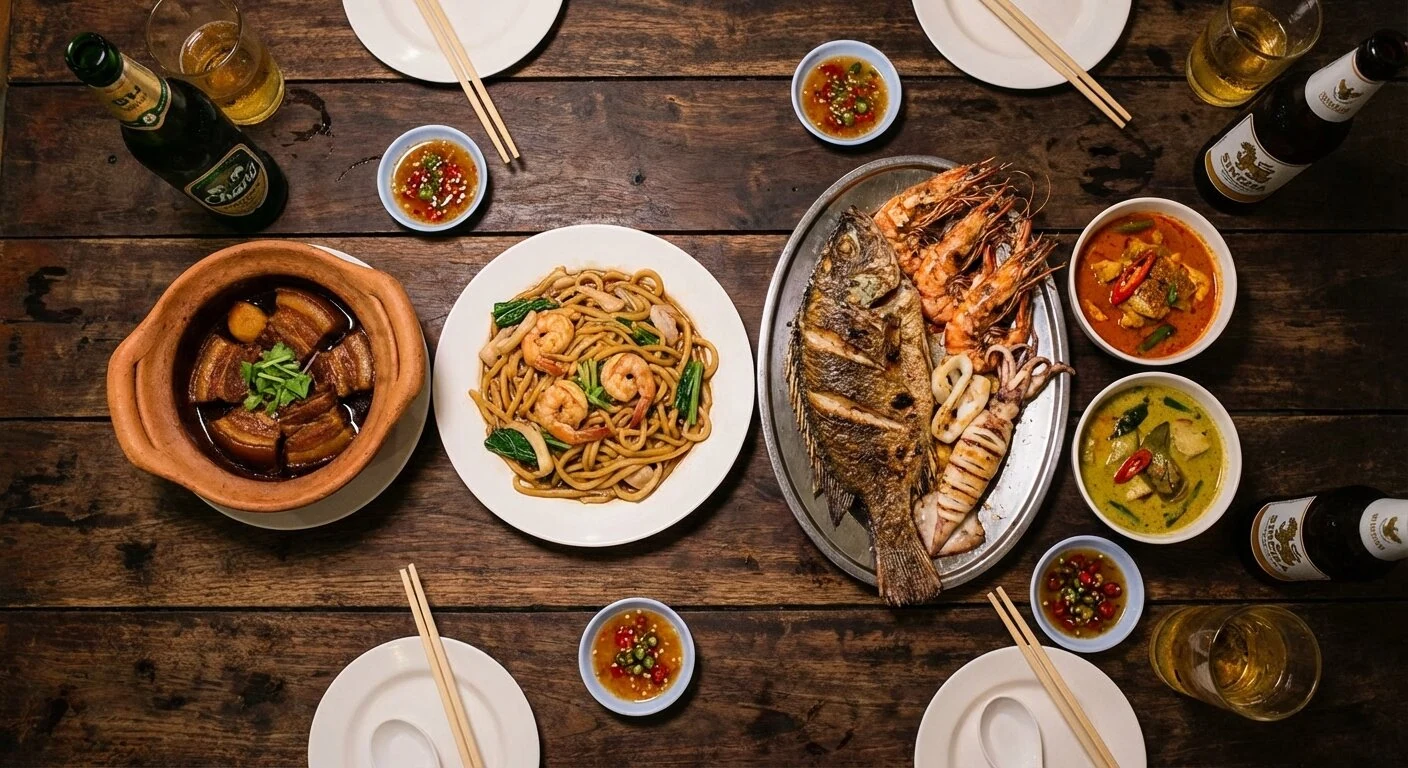
Hokkien Mee is Phuket’s signature noodle dish: thick wheat noodles stir-fried in a rich dark soy sauce broth. Mee Ton Poe, near the clock tower in Old Town, is the benchmark address. It does not look like much from the outside, but that is usually a good sign.
Moo Hong is pork slowly braised with soy sauce, pepper, and garlic until it is meltingly tender. One Chun and Raya, both in Old Town, are the two most frequently mentioned restaurants for this dish. They are sister establishments with almost identical menus.
Kanom Jeen is rice noodles served with curry and fresh vegetables, eaten for breakfast and lunch. You will see it everywhere, from street stalls to proper restaurants. It is the kind of dish locals eat daily and tourists often walk past without realizing what they are missing.
Mook Manee in Rawai works on a “choose it, we cook it” basis: choose your fresh seafood from a stall at the nearby market, bring it to the restaurant, and they will prepare it for a small fee on top of the market price. This is how locals eat seafood. Compare that with a beachfront seafood restaurant where you will pay three to four times more for lower quality.
Where to eat well without overspending
Lock Tien Food Court in Old Town is inexpensive and has a rotating selection of vendors. Go Benz draws queues for its Khao Tom Haeng (dry rice porridge). Tu Kab Khao, also in Old Town, serves crab curry in a colonial building at reasonable prices. Mor Mu Dong is a hard-to-find mangrove-side restaurant serving some of the spiciest food on the island, including a famous stuffed fish.
The golden rule for eating cheaply: move away from the beach. On Patak Road in Karon, the farther uphill you go, the more local the restaurants become. Meals drop from 300-400 baht (around €8-10) to 100-200 baht (€3-5) within a few streets. Avoid seafood restaurants with fish displays on ice and touts pulling at your sleeve. They are almost always tourist traps.
The Michelin Bib Gourmand selection for Phuket is actually particularly useful here, which is rare for Michelin in Southeast Asia. Most recommended addresses are genuine local restaurants serving meals for under 200 baht. Chillva Market is the night market locals go to. It is less polished than the ones aimed at tourists, but the food is better and cheaper.
For restaurant-by-restaurant recommendations with addresses and price ranges, see our complete guide to the best places to eat in Phuket.
What to do
Phuket has enough activities to fill two weeks without repeating anything, but some are genuinely worth your time while others are poorly disguised tourist traps. Here is what deserves your attention.
Culture and sightseeing
The Big Buddha sits atop a hill visible from much of the west coast. This 45-meter white marble statue is technically still under construction (and has been for years), but the viewpoint at the top offers a sweeping panorama over Chalong Bay and the surrounding hills. Dress modestly to enter the temple. Sarongs are available at the entrance if you arrive in beachwear.
Wat Chalong, Phuket’s most important temple, is a few minutes’ drive downhill, and the two naturally combine into a half-day outing.
Old Town deserves at least a full afternoon for its Sino-Portuguese architecture and café culture.
The Thalang Road area has the most beautiful shophouses, small galleries, and independent cafés. If your stay includes a Sunday, Walking Street (Lard Yai) is the best evening activity on the island. It runs from about 4 p.m. to 10 p.m. along Thalang Road. Expect food stalls, local vendors, live music, and a crowd that is more Thai than foreign. Arrive early for the best selection. By 8 p.m., the most popular stalls start selling out.
Day trips and island hopping
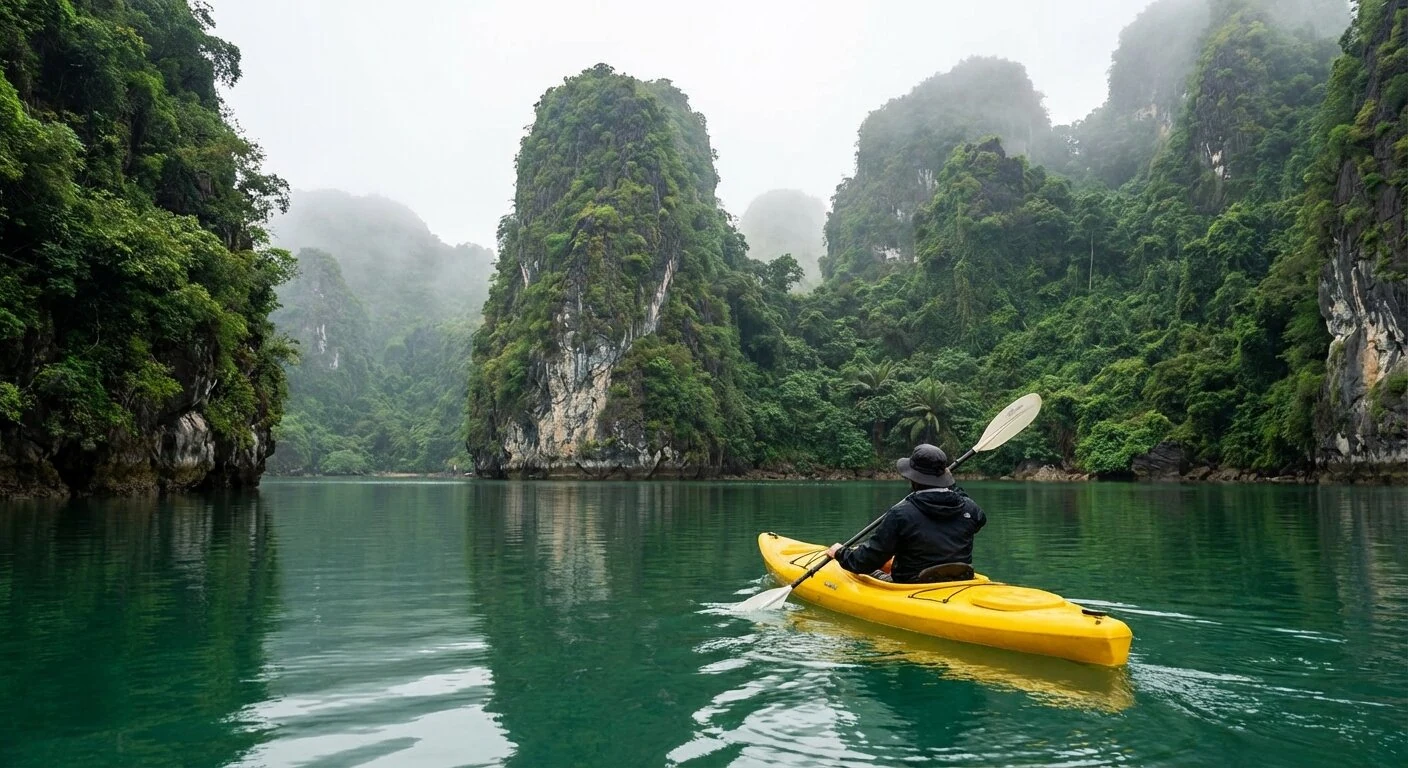
Phang Nga Bay is home to the limestone karst scenery you have seen in photos (and in a James Bond film). Sea canoeing through the caves and hongs is the best way to experience it. Book this trip for a cloudy day. Snorkeling trips need sun for underwater visibility, but Phang Nga Bay is spectacular in any light.
The Similan Islands have the clearest water in the region, far better than anything you will find off Phuket’s beaches. They are only open roughly from November to May, and the journey takes about 90 minutes by speedboat from Khao Lak (north of Phuket). If snorkeling or diving is a priority and you are visiting in season, this trip should be at the top of your list.
The Phi Phi Islands are the most popular day trip from Phuket, and also the most crowded. If you go, hire a private long-tail boat from Rawai or Chalong Pier rather than joining a speedboat group.
Better yet, spend a night there to experience the island after the day-trippers have left. Some travelers skip Phi Phi entirely in favor of Koh Yao Yai, a peaceful island in Phang Nga Bay with almost no tourist infrastructure.
Nature and wildlife
The Gibbon Rehabilitation Project in the north is a legitimate conservation NGO that rehabilitates gibbons rescued from the tourism industry. It is one of the few animal attractions on the island that deserves your support. Phuket Elephant Sanctuary (PES) in Paklok is the benchmark for ethical elephant experiences: observation only, no elephant riding, no bathing, and no mud photo sessions. Avoid Tiger Kingdom completely.
Samet Nangshe Viewpoint is technically across the bridge in Phang Nga province, but it is the most beautiful panorama in the region. Go at sunrise. On the island, Black Rock Viewpoint requires a short climb but overlooks the southern tip with almost no one else around, unlike the crowded Promthep Cape just a few minutes away.
Sports and outdoor activities
Hanuman World offers a zipline course through the canopy if you need a break from the beach. Kayaking through the mangroves at Bang Rong Pier, on the east coast, is a peaceful activity well worth a morning. Soi Taied (Fitness Street) in Chalong is lined with Muay Thai gyms and has become a destination in its own right for travelers who want to train while on the road.
For the complete list with booking tips, ethical recommendations, and day-by-day planning suggestions, see our detailed guide to the 20 must-do activities in Phuket.
Suggested 7-day itinerary
Seven days is a good amount of time for Phuket if you use the island as a base and vary your activities. It is too long if you plan to sit by the same pool all week. Here is a structure that works well.
Days 1 and 2: Old Town and southern Phuket
Arrive and settle in Old Town or Kata. If you land in the morning, spend the afternoon wandering around Old Town, eating at One Chun or Lock Tien Food Court, and getting your bearings. Jet lag works in your favor here: you will be up early enough to enjoy the quiet streets before the heat sets in.
On the second day, combine the Big Buddha and Wat Chalong in the morning (they are about ten minutes apart by car), then head to Nai Harn Beach for the afternoon. If your first or second day falls on a Sunday, rearrange your plans to make Walking Street your evening activity. It is the one activity most travelers are glad they did not miss.
Days 3 and 4: the islands
Take the ferry to Koh Phi Phi or Koh Lanta and spend the night. Phi Phi is more festive and better for meeting people. The hostel bar scene is lively and fairly young. Koh Lanta is peaceful and authentic, with long beaches and almost no nightlife. In both cases, staying overnight lets you experience the island once the tour boats have left, and the atmosphere is completely different.
The 600 tourists who arrived by speedboat at 10 a.m. are gone by 4 p.m., and you have the beach to yourself.
If you would rather avoid both, Koh Yao Yai is 30 minutes by boat from Phuket, with almost nothing but a few resorts and empty beaches. Many consider it the region’s best-kept secret. Travel light for this night. You can leave your main luggage at your Phuket hotel.
Day 5: Phang Nga Bay
Book a sea canoeing trip in Phang Nga Bay. Full-day tours leave around 8 a.m. and return in the late afternoon. You will paddle through sea caves, pass James Bond Island, and float inside collapsed hongs (hidden lagoons open to the sky). This is one of the most consistently recommended activities in every Phuket discussion thread. Consider a half-day catamaran option if full-day speedboat tours wear you out. The constant engine vibration for eight hours is more draining than you might think. Eat lightly in the evening. You will not have the energy for a long restaurant dinner.
Day 6: wildlife or nature
Visit Phuket Elephant Sanctuary in the morning. In the afternoon, head up to Samet Nangshe Viewpoint if you did not do it at sunrise earlier in the trip, or go kayaking in the mangroves at Bang Rong Pier. Another option: hire a private driver for a temple and viewpoint circuit around the island. For a group, a private driver for the day costs less than four separate Grab rides.
Day 7: beach day
Finish with a quiet beach. Freedom Beach if you want to earn it with a hike. Yanui if you want something simple and intimate. Ao Sane if you want to snorkel. Skip the big tourist beaches for your last day and find a cove where you can actually hear the water.
Itinerary notes
This plan works best if you do not try to lock everything in advance. Book excursions one or two days ahead so you can check the weather and shift your plans if it rains. Full-day tours are physically tiring, so do not do two in a row. And do not plan a big dinner after a full-day excursion. You will be sunburned and half asleep by 7 p.m.
When to go
Phuket is on the Andaman coast, which means a rainy season from roughly May to October. The driest and busiest months run from November to April, with December and January as high season (the highest prices and biggest crowds). March and April are hot but less crowded.
The rainy season does not mean nonstop rain. Tropical weather forecasts are notoriously unreliable. Your weather app may show rain icons every day for a week, but in practice you might only get a 20-minute afternoon shower after a clear morning. Do not cancel a trip because of a forecast.
That said, the sea is rougher during the monsoon months, and some beaches have strong rip currents. The Similan Islands close entirely from May to October.
One advantage of visiting during the wet season: Phuket handles rain better than most Thai destinations because it is a large island with shopping malls, cinemas, and indoor activities.
Smaller destinations such as Krabi almost grind to a halt when it rains. Prices also drop by 30 to 50% in low season, and the island is noticeably less crowded. A hotel room costing 3,000 baht (around €80) in January may cost you 1,200 baht (around €30) in July.
February is often the ideal compromise: dry weather, warm water, and slightly fewer tourists than during the December-January peak. If your dates are flexible, aim for late November to February for the best balance of weather and reasonable prices. For travelers coming from France, this is also a period when you can find good fares on direct or one-stop flights to Phuket.
Getting around
Transport is Phuket’s biggest headache and the most common source of complaints. The island is large (you cannot walk from one beach to another), and public transport is almost nonexistent. Here is what actually works.
Ride-hailing apps
Grab, Bolt, and InDrive all operate in Phuket. Bolt tends to be the cheapest. Even if you do not plan to use them, install one to check the fare before negotiating with a tuk-tuk driver. Having a price displayed on your phone is your best bargaining tool. These apps work 24 hours a day.
Tuk-tuks and taxis
Phuket’s tuk-tuks charge some of the highest fares in Thailand. A short ride that would cost 50-80 baht in Bangkok will cost you 400-800 baht here. Always agree on the price before getting in. Never accept a ride from a driver who tells you your hotel is “closed” or “burned down.” It is a scam to redirect you to a business that pays him a commission.
Phuket Smart Bus
A public bus serves the west coast between the main beaches for a fixed fare of 100 baht. It is useful but limited in route and frequency. It is handy for getting between Kata, Karon, Patong, and the airport on a small budget.
Scooter rental
Renting a scooter opens up the entire island, and many travelers love that freedom. But the risks are real. Phuket’s roads are hilly, sandy in places, and filled with unpredictable drivers.
Police checkpoints are frequent, and if you are stopped without an international driving permit with a motorcycle endorsement, the fine is 500 to 1,000 baht. More importantly, most travel insurance policies do not cover motorcycle accidents if you do not have the proper license. Do not learn to ride a scooter here for the first time. And never leave your original passport as a deposit. Offer a cash deposit or a photocopy instead.
Airport transfers
The official taxi counter at Phuket airport uses fixed fares. Expect 800 to 1,000 baht (around €20-25) to reach Kata or Patong. It is reliable and saves you from negotiating after a long flight.
For detailed transport fares, anti-scam tips, visa information for French and European nationals, and a complete budget, see our practical guide to budget, transport, and formalities.
Budget overview
Phuket is more expensive than most of Thailand but remains affordable by European standards. Here is a daily estimate for a solo traveler.
Street food meals cost 100 to 200 baht each (€2.50-5). If you eat in restaurants with tablecloths and English menus near the beach, expect 300 to 500 baht per dish (€8-13). A budget traveler eating mostly street food can get by on 700-800 baht per day (€18-20) for food alone.
Transport adds up quickly. If you rely on tuk-tuks, budget an extra 500 to 1,000 baht per day (€13-25). Scooter rental costs 200 to 350 baht per day (€5-9) and pays for itself from the second ride. Grab and Bolt sit somewhere in between.
Accommodation ranges from 300-500 baht (€8-13) for a hostel dorm to 1,500-3,000 baht (€40-80) for a decent mid-range hotel. In high season (December-January), prices rise by 30 to 50%.
Day trips booked locally cost 1,000 to 2,500 baht (€25-65) depending on the destination. The same tours on Viator or TripAdvisor often cost twice as much. Book through street agencies or your hotel reception one or two days in advance.
“Super Cheap” is a local grocery chain where you can stock up on water, snacks, and basics at non-tourist prices. 7-Elevens are everywhere and offer surprisingly good toasted sandwiches, iced coffees, and cheap meals for days when you do not feel like sitting down in a restaurant.
Nightlife
Phuket’s nightlife is concentrated in Patong, especially along Bangla Road. If you have never been, it is worth seeing at least once, if only for the spectacle. The sensory overload of neon lights, noise, and touts grabbing at your sleeve is an experience in itself. Buy a beer at 7-Eleven and walk through first to get a feel for it before settling anywhere.
New York Bar on Bangla Road has live music and a more relaxed atmosphere than the go-go bars. Illuzion is Patong’s biggest nightclub, with professional sound and lighting that would not feel out of place in a European club.
Outside Patong, nightlife takes a very different form. Catch Beach Club in Bang Tao and Cafe Del Mar in Kamala bring in international DJs and attract an older, more affluent crowd. They are daytime venues that continue into the evening, with pool access, cocktails, and music that builds in intensity as the sun goes down. In Old Town, the vibe is more cafés and wine bars. Everything closes early by Patong standards, but that is exactly the neighborhood’s charm.
Scams to know about
Phuket has its share of scams that come up again and again in travel forums. Knowing them in advance makes them easy to avoid.
The jet ski scam is the most notorious. You rent a jet ski, return it, and the operator claims you damaged it, demanding thousands of baht (or even dollars) for repairs. The damage was already there. Film the entire jet ski before touching it, or simply skip jet skis altogether.
Tuk-tuk overcharging is constant. Always agree on the price before getting in, and check the fare on your ride-hailing app to know what the trip should cost.
The “it’s closed” scam: a tuk-tuk driver tells you your destination is closed today (fire, public holiday, construction) and offers to take you somewhere else. That “somewhere else” pays him a commission. Your destination is not closed. Refuse and find another driver.
Gem shop and tailor scams follow a similar pattern. A friendly “local” tells you about a special sale happening only today and offers to take you there. The shop pays him a commission. You will face aggressive sales tactics and leave with overpriced items.
On Bangla Road, do not follow touts promising cheap drinks or special shows. Bills of 10,000 to 18,000 baht (€250-450) have been reported in bars with hidden charges.
Phuket as a base or as a destination
A useful way to think about Phuket is as a base rather than a single destination. The island has the best air connections in southern Thailand, good hospitals, reliable internet, and a wide range of accommodation at all price points. Use it as an anchor and take day trips or overnight trips to Phi Phi, Koh Lanta, Koh Yao Yai, the Similans, or Phang Nga Bay.
If Phuket feels too developed for your taste, consider using it as an arrival point before heading to Koh Lanta (quiet and unspoiled) or Krabi (more spectacular natural scenery, with the dramatic limestone cliffs that Phuket does not have).
A day trip to Phang Nga Bay gives you access to those karst landscapes without leaving Phuket completely. But for a first trip to southern Thailand, Phuket’s convenience is hard to beat. You can snorkel in the Similans in the morning, eat Hokkien Mee in Old Town for lunch, and watch the sunset from a quiet beach in the south at the end of the day.
How to use these guides
This article gives you the big picture. For the details, each aspect of your trip has its own dedicated guide. If you are still unsure where to base yourself, see our neighborhood-by-neighborhood guide to choosing where to stay. For a beach-by-beach ranking with access details and crowd levels, see our complete guide to the 15 most beautiful beaches in Phuket.
Restaurant recommendations with addresses and price ranges can be found in our complete guide to the best places to eat in Phuket.
Details on activities, ethical recommendations, and booking advice are in our detailed guide to the 20 must-do activities in Phuket.
And for the practical aspects of budget, transport, visas, and scams to avoid, read our practical guide to budget, transport, and formalities.
For another must-visit destination in Asia, discover our complete guide to visiting Bali.
The people who love Phuket are the ones who treat the whole island as their playground rather than rooting themselves in a single resort. Get out of your neighborhood, eat where locals eat, and you will understand why millions of people return to this island year after year.
Before or after Phuket, do not miss Bangkok: check out our complete guide to visiting Bangkok.
To discover Vietnam from Thailand, see our complete guide to visiting Hanoi