Ho Chi Minh City, formerly Saigon, has more than 10 million residents, and every neighborhood has its specialties. I ate bánh mì as early as 6:00, noodle soups and black sesame desserts at street stalls here.
Here are my picks, district by district: bánh mì stalls that open at dawn, soups, pancakes and desserts, with opening hours, exact addresses and what I ordered. Most are places where Saigon locals eat, and I’ll tell you which ones are worth the trip.
- Where to eat bánh mì?
- Where to eat bánh mì outside the city center?
- Where to eat noodle soup?
- What to eat in Ho Chi Minh City besides bánh mì?
- Where to eat dessert?
- Where to eat in Ho Chi Minh City at night?
- Which neighborhood should you choose for good food?
- How much does it cost?
- My other Vietnam guides
Where to eat bánh mì?
In Saigon, every bánh mì stall has its specialty: cold cuts, meatballs, fish, roast pork. Most open between 5:00 and 6:00 and close before noon or in the late afternoon, and the most popular sell out very quickly. I make this sandwich at home; my bánh mì recipe is here.
Bánh Mì Hòa Mã, 53 Cao Thắng
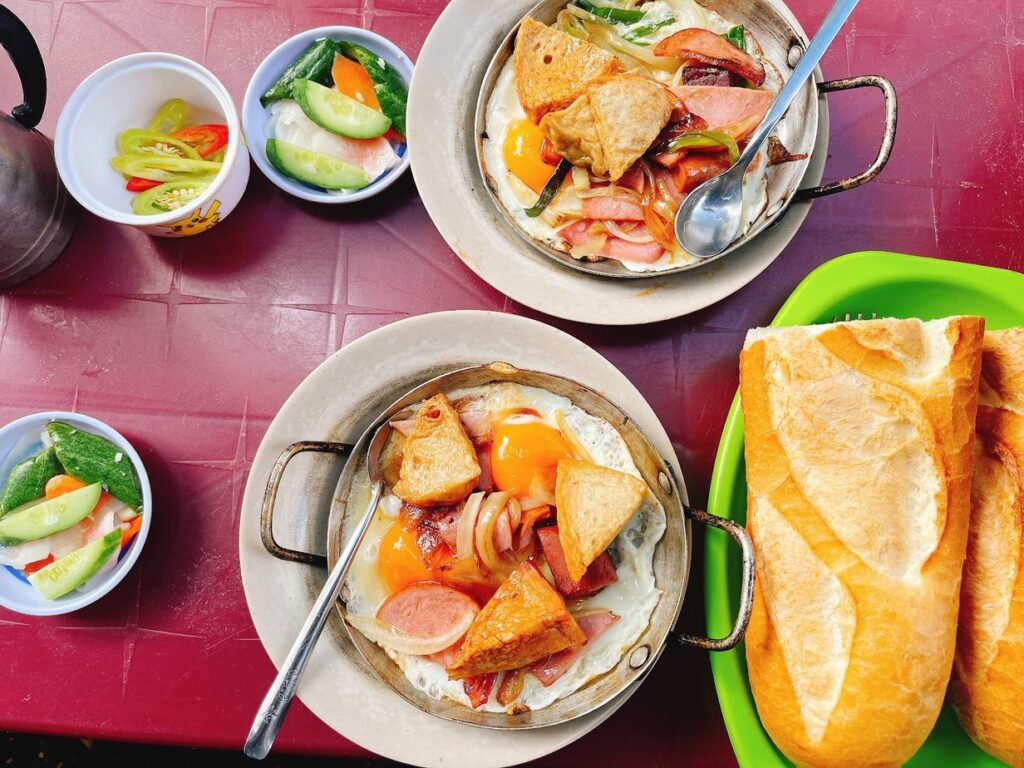
The legendary spot: this is where, in District 3, the modern bánh mì was born. In 1958, Lê Minh Ngọc and Nguyễn Thị Tịnh, migrants from the North, opened this bakery named after their home village near Hanoi, and they are considered the inventors of bánh mì as it is known today. The menu is simple: I ordered the “bánh mì ốp la đủ thứ,” served in a sizzling skillet (bánh mì chảo) with fried eggs, ham, chả lụa, chả quế, sausage, salted pork belly and onions, plus a crusty bread roll spread with butter and pâté. Three generations later, the family still runs the place, at 53 Cao Thắng, Phường 3, from 6:00 to 11:00. Get there early, it sells out fast.
Bánh Mì Cụ Lý, 189 Hai Ba Trung
A District 1 institution for more than 80 years, now run by the third generation, open only from 6:00 to 9:00. The bánh mì chả combines several sausages in a crusty bread roll: beef sausage, cinnamon sausage, fried sausage and Vietnamese pork sausage. It’s a subtle sandwich: the first bites seemed understated to me, and by the third, it was a revelation.
Bánh Mì Bảy Hổ, 10 Huynh Khuong Ninh
One of Saigon’s oldest stalls, in Da Kao, selling bánh mì since the 1970s and claiming nearly 100 years of history; it has even been featured on Netflix. Its specialty is traditional bánh mì thịt chả, served from 6:00 to 12:30. Be aware: 2 stalls with the same name face each other, and the original is the smaller one, at number 10.
Bánh Mì Bùi Thị Xuân, 122E and 77 Bui Thi Xuan
At 122E Bui Thi Xuan, in Pham Ngu Lao, the bánh mì thịt nguội (cold cuts) resembles the famous Huỳnh Hoa sandwich, in a lighter, smaller version. The stall has been a favorite with Saigon locals since 1989, open from 5:30 to 23:00, and the bread is freshly made, which explains that perfect crunch. If you like plenty of fillings, butter and pâté, this is your spot. A little farther along, at 77 Bui Thi Xuan, in District 1, Bánh Mì Chả Cá Bùi Thị Xuân serves fried fish cakes from 14:00 to 21:00, made by the owner herself with fresh sea fish, at very affordable prices. I could smell the fish cakes before I even arrived.
A Tùng Bánh Mì Bò Nướng Bơ Campuchia
At 171 Cong Quynh, in Nguyen Cu Trinh, from 14:30 to 22:30: a bánh mì with butter-marinated grilled beef, inspired by Cambodian flavors. This is my pick for a change from cold cuts.
Where to eat bánh mì outside the city center?
The residential neighborhoods have their own legends, and that’s where I ate the city’s most distinctive bánh mì.
Bánh Mì Bì, at 239/26 Tran Van Dang, Phường 11 (District 3), right next to the train tracks, opens for just 2-3 hours between 15:00 and 19:00, is closed on Sundays, and sells out quickly. The bánh mì bì xíu mại (pork skin and meatballs) here is delicious, and I ordered the special bánh mì for 25k to try all the flavors.
In District 10, Bánh Mì Phá Lấu Xá Xíu, at 40 Vinh Viễn, open from 14:30 to 18:00, makes a bánh mì phá lấu xá xíu with roast pork and tripe: the marinated meat has a rich flavor, complemented by the sauce and the crunch of pig’s ear. If you don’t like pig’s ear, simply order the “bánh mì xá xíu.” Very popular, so get there early.
In Bình Thạnh, Bánh Mì Cô Oanh, at 229/53 Bùi Đình Túy, open from 10:00 to 19:00, has been going for nearly 30 years, and its bánh mì cá nục with braised mackerel is the most famous: the fish is braised until tender, so there’s no need to worry about bones. Bánh Mì Cô Lành, at 6 Hồ Xuân Hương, Phường 14, open from 6:00 to 19:00, makes a bánh mì thịt bò nướng whose stars are grilled beef meatballs and salted egg meatballs; the combo costs 35k.
In Gò Vấp, Bánh Mì Cóc Cô Bích, at 112a Nguyen Thai Son, Phường 3, open from 5:00 to 18:00, created bánh mì cóc: a sandwich unique to HCMC, shaped like a hamburger and filled with traditional bánh mì ingredients. This was the first stall to invent this shape.
Near the airport, in Tân Bình, Bánh Mì Anh Việt 2, at 58 Dong Ho, Phường 8, is open 24h/24 and makes a bánh mì heo quay da giòn with crispy-skinned roast pork, also available for delivery on Grab. A favorite with lovers of intense flavors; if it’s your first day in Vietnam and you’re not used to strong flavors, wait a little before trying it.
Where to eat noodle soup?
Saigon’s soups come from all over the country, and even from Phnom Penh. In District 1, Hủ Tiếu Nam Vang serves hủ tiếu, a Phnom Penh-style noodle soup, and Phát Ký Noodles serves local noodles. In District 3, Ma Oi, a restaurant run by a local family, is known for its authentic bún bò Huế, the spicy beef noodle soup from Hue; I make this broth at home, and my bún bò Huế recipe is here.
In Chinatown (Chợ Lớn, District 5), Hủ Tiếu Sa Tế Gia Truyền Tô Ký, at 36 Gò Công, Phường 13, makes a dish I haven’t seen anywhere else: noodles in a spicy satay broth with venison, a rare Chinatown specialty.
In Thủ Đức, Hủ Tiếu Sa Đéc Ngân serves noodles from Sa Đéc in the Mekong Delta, Chế Tép Mì Gia serves delicious shrimp noodles, and Bánh Canh Cua Ngọc Thanh serves bánh canh cua, a thick crab soup. For northern and central Vietnamese flavors, head to Bánh Đa Cua for northern noodles with flavorful meat, and to Mì Quảng, Cao Lầu Hội An for both Hoi An specialties.
For vermicelli, Bún Thịt Nướng Hằng (District 1) and Bún Thịt Nướng Cô Nga, Vĩnh Khánh serve bún thịt nướng, vermicelli with grilled pork, with fried spring rolls at Hằng. The Buns (Bún Chả Cá) makes bún chả with homemade fresh spring rolls, and Bún Chả Hà Nội, in Phú Mỹ Hưng (District 7), makes excellent Hanoi-style bún chả, a little farther from the center.
What to eat in Ho Chi Minh City besides bánh mì?
Crêpes, rice and grilled dishes fill the other part of my list of places to eat. Bánh Cuốn Nóng Hảo Hoa, at 177/1 Lý Tự Trọng, in Bến Thành, makes bánh cuốn, stuffed steamed rice crêpes, also known as steamed dumplings. Bánh Xèo Bánh Khọt Phương Nga serves crispy crêpes, the Vietnamese crêpe with shrimp and pork; I make bánh xèo at home, and my bánh xèo recipe is here. In Thủ Đức, Bánh Xèo Tôm Nhảy Dì Dư makes the central Vietnamese version with “jumping” shrimp, and another place serves a little-known southern variation.
Bột Chiên Đạt Thành makes bột chiên, rice cake fried with eggs, a delicious Chinese-Vietnamese specialty, and Điểm Tâm 134 makes Vietnamese dim sum: meatballs and the Vietnamese equivalent of siu mai. For nem nướng, Nha Trang-style grilled pork sausage, there’s Nem Nướng Nha Trang Cô Điệp Khánh Hội, and in Thủ Đức, a much less touristy nem nướng spot at 12 Quang Trung, Hiệp Phú, Quận 9. Quan Nem Restaurant makes giant fried spring rolls that are “out of this world”.
In District 4, a residential neighborhood with very local places to eat, Bò Né Thanh Tuyền, at 20/6-7 Nguyen Truong To, Phường 12, serves bò né from 6:00 to 11:00: beef on a sizzling hot plate with fried eggs, pâté, vegetables and bread or rice. A hearty, delicious breakfast; keep the early opening hours in mind. I make it too, and my bò né recipe is on the site.
For rice: Tiệm Xôi Tôn Đản for xôi, sticky rice with various toppings, Cơm Tấm for broken rice with a pork chop, and cơm phần, a complete meal, either northern-style or southern-style. Cháo Vịt serves duck rice porridge, Bò Lá Lốt serves grilled beef wrapped in lolot leaves, and Lẩu Gà Lá É serves chicken hot pot with herbs. In Thủ Đức, Bánh Tráng Nướng Lucky makes Vietnamese pizza, and 20 meters away, the owner’s cousin sells bánh canh hẹ, a typical Phú Yên dish with a variety of onion unique to the region.
Where to eat dessert?
Chè Mè Đen, in District 1, serves a sweet black sesame soup similar to Chinese tangyuan, and Chè Style du Nord serves northern-style chè, sweet Vietnamese desserts. Chuối Bí Ngô Chiên Giòn makes traditional banana and pumpkin fritters.
For bánh bò nướng, the baked coconut milk cake, I have 2 spots: Bánh Dừa Tản Đà, in Chinatown, for its special version, and COCOCake Minh Khai, “so good”. And for a drink, Cà Phê Sữa Tươi Sương Sáo serves milk coffee with grass jelly.
Where to eat in Ho Chi Minh City at night?
Fancy a bánh mì at midnight? Bánh Mì Xíu Mại Chén Đèn Dầu, at 131 Hai Ba Trung, in Ben Nghe, opens from 16:00 to 2:00: juicy meatballs in a rich, aromatic sauce, with quail eggs. There are several branches around the city; search for “Bánh mì xíu mại chén đèn dầu” on Google Maps.
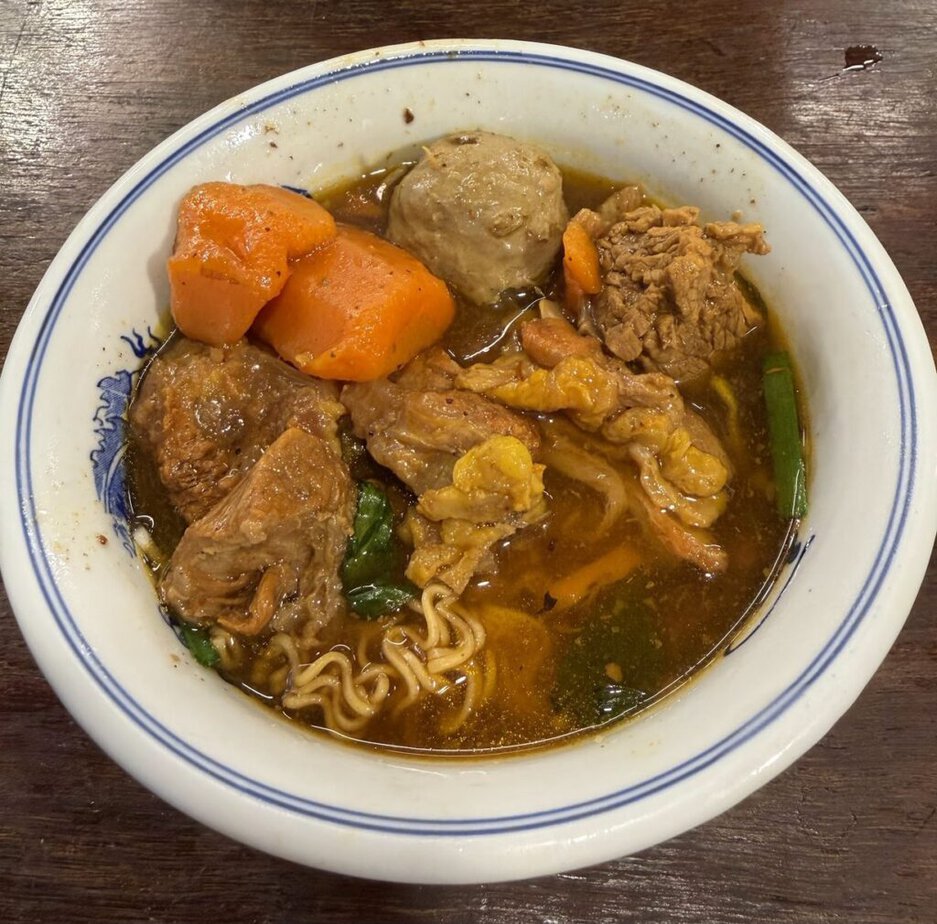
In District 10, Bò Kho Gánh Sài Gòn, Block H/029 Sư Vạn Hạnh, open from 7:00 to 22:00, started in 1975 as a simple street cart and has been listed in the Michelin Guide for 2 consecutive years. Bò kho is a beef stew simmered with lemongrass, star anise and cinnamon, served as bánh mì bò kho; it’s always packed, especially in the evening.
Which neighborhood should you choose for good food?
District 1 is the historic heart, where tradition and modernity meet, with the highest concentration of places to eat. District 3 is the birthplace of the modern bánh mì, created in 1958 at Hòa Mã. District 4 is residential and very local, District 5 is Chinatown (Chợ Lớn), rich in Chinese-Vietnamese flavors, and District 7, Phú Mỹ Hưng, is the modern neighborhood.
District 10 and Bình Thạnh are large residential districts with excellent local spots and hidden gems, Gò Vấp is a residential neighborhood far from the tourist trail, and Tân Bình is the airport district. Thủ Đức, the former suburb turned new city, has regional specialties and the Thu Duc Wholesale Market, a local agricultural produce market.
In Bình Thạnh, Phan Xích Long street is entirely devoted to street food, and isn’t touristy: it’s where I found the locals’ Saigon.
How much does it cost?
Prices are very affordable: expect to pay between 15,000 and 50,000 VND (€0.60 to €2) for a bánh mì, and between 30,000 and 80,000 VND (€1.20 to €3.20) for a noodle or rice dish. Bánh mì stalls open very early (5:00-6:00) and often close before noon or in the late afternoon, so get there early.
I found 2 apps useful: Grab, for deliveries and motorbike taxi rides, and Google Maps, essential for finding places in the alleyways. Dishes can be spicy: ask for “không cay” (not spicy) or “ít cay” (a little spicy) if you’re not used to it. The vocabulary I found useful: bánh mì (Vietnamese sandwich), bún (rice vermicelli), phở (noodle soup), cơm (rice), chè (sweet dessert), ngon (delicious) and cảm ơn (thank you). Enjoy your meal, ăn ngon nhé!
My other guides to Vietnam
If you’re heading north, my guide to eating in Hanoi picks up where this one leaves off, phở and bún chả included, and my complete guide to Hanoi covers the rest of your stay. Everything I cook from the country is gathered in my guide to Vietnamese cuisine.