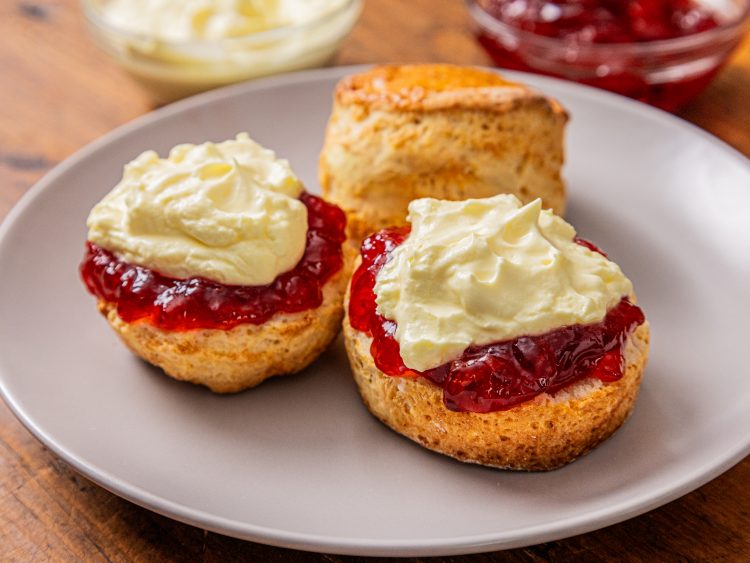
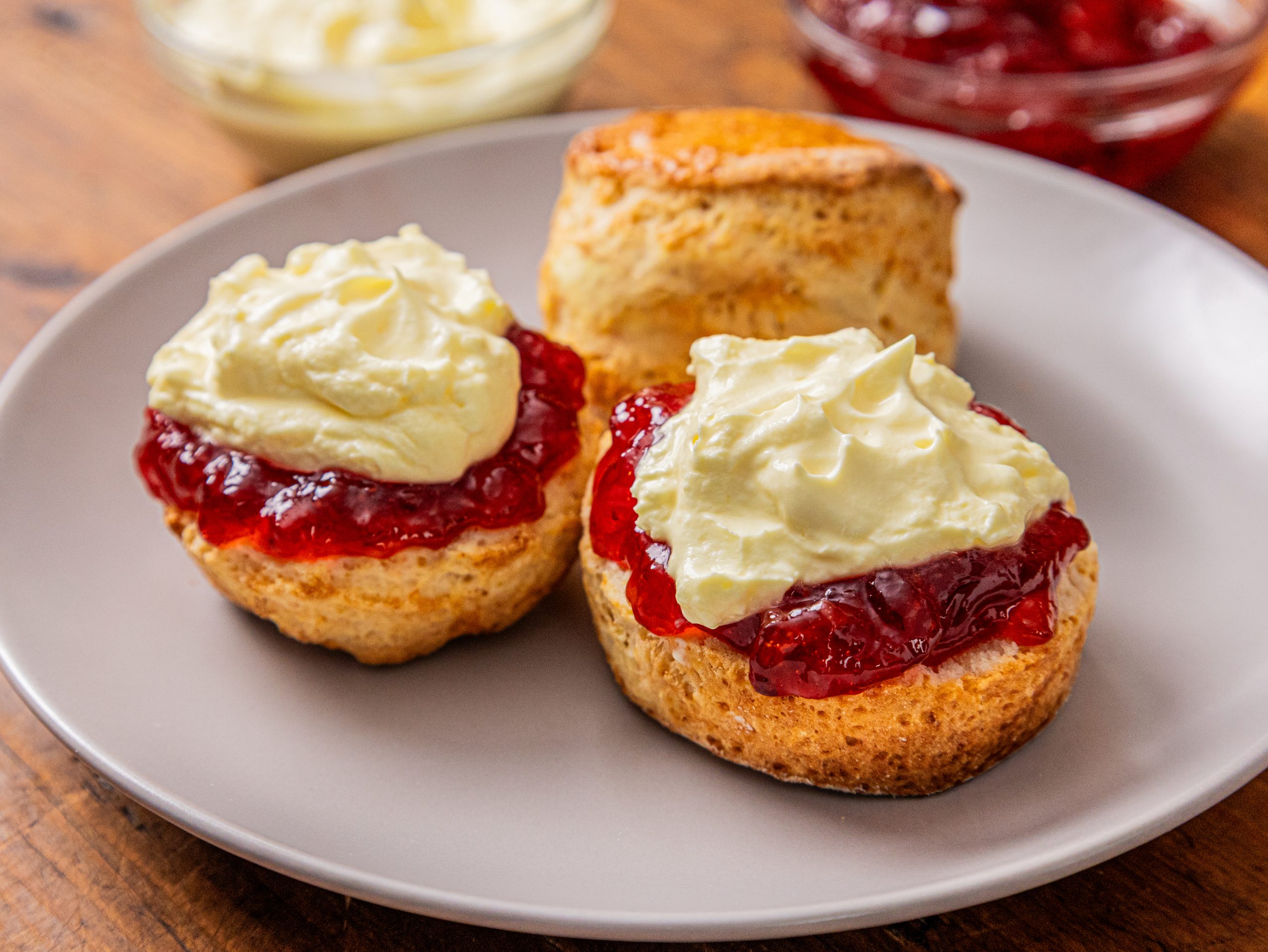
Plain British scones, tall and golden, to split open while still warm and fill with clotted cream and strawberry jam.
Sunday at four o’clock, the teapot is steaming and the baking sheet has only just come out of the oven. You split a scone in half by hand, the still-warm crumb comes apart in soft layers and a little steam escapes.
A spoonful of strawberry jam, a generous layer of clotted cream, and the aroma of butter meets that of the black tea. A few crumbs fall onto the plate, and your hand is already reaching back toward the baking sheet.
What Is a Scone?
The British scone is a small quick bread, leavened with baking powder and made without any proofing. It sits somewhere between bread and pastry: soft and slightly crumbly inside, yet sturdy enough to hold the cream and jam. Like American pancakes, it rises thanks to baking powder, and its dough is never kneaded, unlike a brioche-style bun such as melon pan.
This recipe makes the plain version served at a cream tea: round, tall, straight-sided and only lightly sweetened. American scones are a different recipe, shaped into triangles, sweeter and often glazed.
From Griddle Cakes to the Cream Tea
The exact origin of the scone remains uncertain. The earliest ones were flat cakes cooked on a griddle, before they became small breads baked in the oven. Baking powder made them taller, with an airier crumb.
A cream tea brings together tea, scones, jam and clotted cream, and is still associated with Devon and Cornwall. The two counties don’t top their scones in the same order: in Devon, it’s cream first and then jam; in Cornwall, jam first and then cream.
The Main Ingredients for Scones
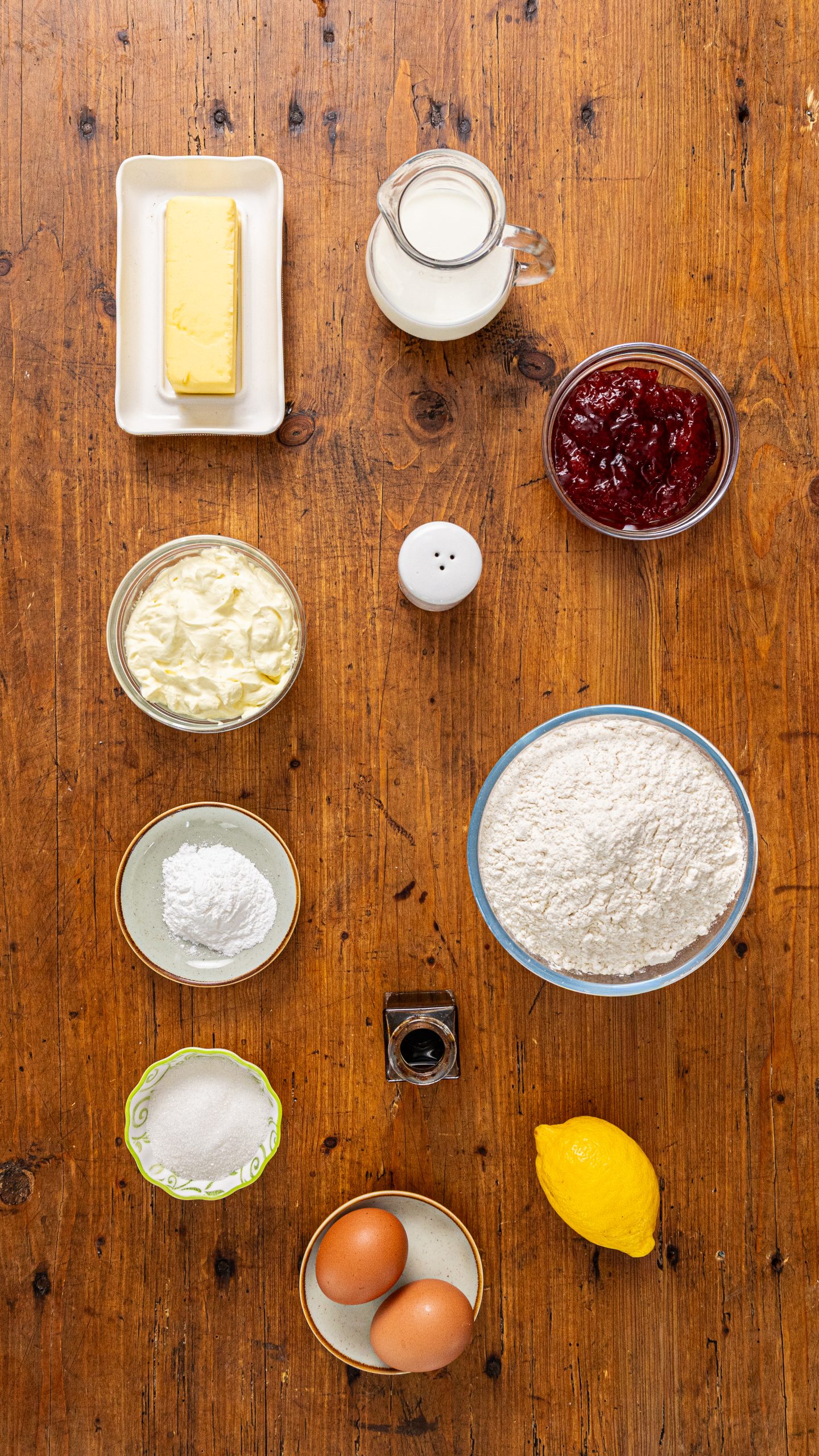
The base is self-rising flour, known in Britain as self-raising flour, sold as farine fermentante in Belgium and as farine à gâteaux à levure incorporée in France. Add 1.5 teaspoons of baking powder to it, or 3 teaspoons in total with an all-purpose flour such as T45 or T55, measured with proper measuring spoons. Be careful not to confuse baking powder with the baker’s yeast used in cinnamon rolls.
Unsalted butter, well chilled and rubbed into the flour, gives the scones their tender, crumbly texture. The milk, curdled for a few minutes with a little lemon juice, acts like buttermilk: the scones rise better and don’t taste of lemon at all. One large egg binds the dough, the sugar is kept light and the vanilla is optional.
Clotted cream is a very thick cream with about 55% fat. If you can’t find an imported jar, mix one part mascarpone with two parts whipped cream, or use equal parts mascarpone and thick crème fraîche. Whipped cream on its own is too light; save it for filling a fruit sando.
Technique Tips for Straight-Sided Scones
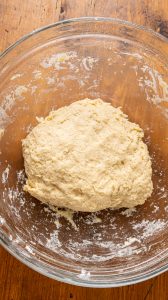
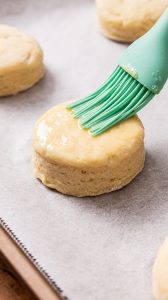
Handle the dough as little as possible: rub the butter in with your fingertips, then mix just long enough to bring the dough together. Pat it out by hand to an even thickness of 2.5 cm, edges included, and press the cutter straight down without ever twisting it. Keep the egg wash on the tops only: if it drips down the sides, the scones won’t rise as well.
At Teatime
Scones are eaten warm, about ten minutes after they come out of the oven. Black tea is the classic, but jasmine tea or oolong tea goes very well too. On the teatime tray, they sit alongside American cookies or American brownies, and those with a real sweet tooth slather them with homemade El Mordjene spread.
For the fruit version, add sultana raisins soaked for 20 minutes just after rubbing in the butter, before the liquid.
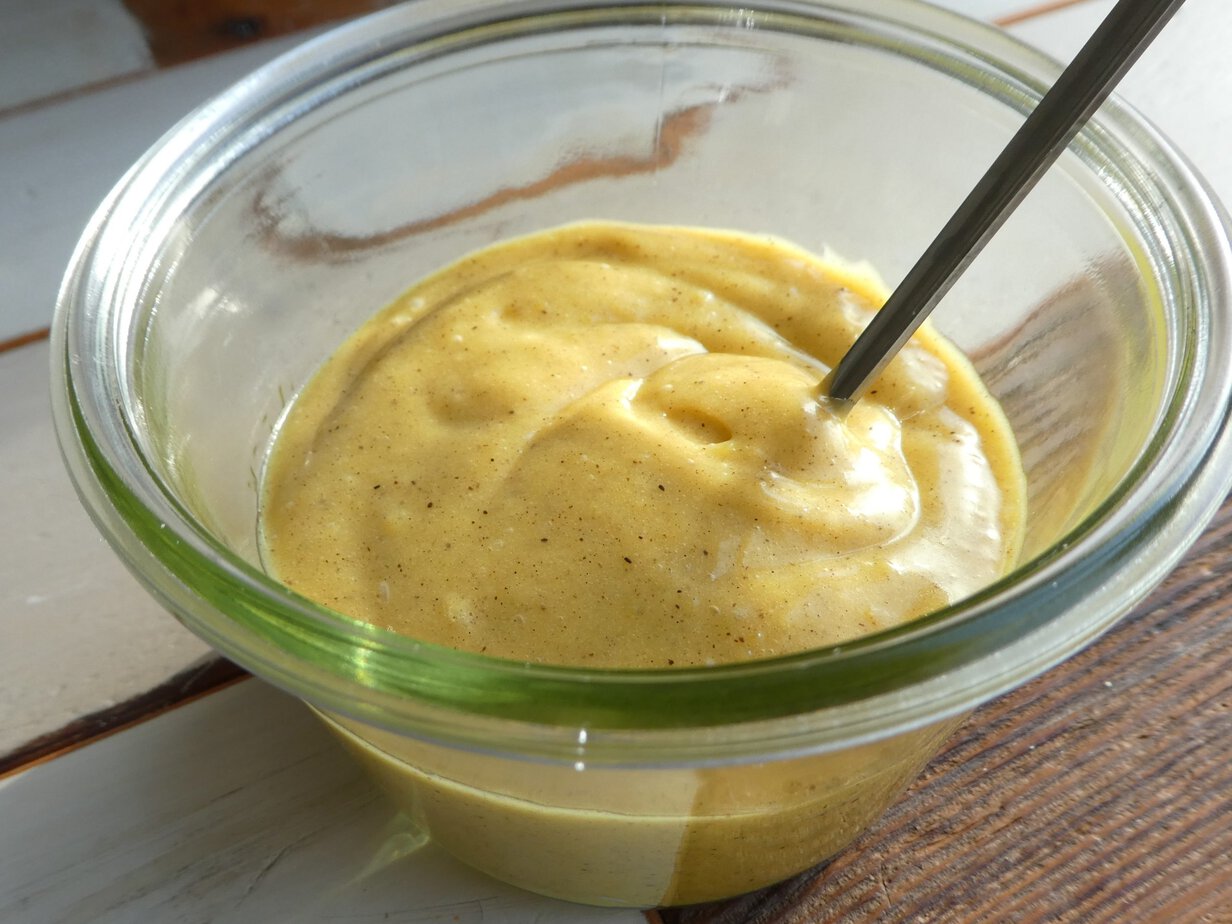
Scones are best the day they’re made. Once cooled, they keep for 2 days in an airtight container, unfilled, and for up to 3 months in the freezer.
Ingredients
Dough
- 400 g self-rising flour (self-raising flour), or 400 g of all-purpose flour (T45 or T55)
- 1.5 teaspoons baking powder, or 3 teaspoons in total with all-purpose flour (T45 or T55)
- 45 g sugar superfine
- 1 pinch salt
- 90 g butter unsalted, well chilled
Liquid
- 145 ml milk whole, or reduced-fat milk
- 1 tablespoon lemon juice fresh
- 1 teaspoon vanilla extract, optional
- 1 large egg
Egg wash
- 1 egg medium
To serve
- Strawberry jam
- Clotted cream
Instructions
Oven and baking sheet
- Preheat the oven to 220°C, or 200°C for a convection oven.
- Line a baking sheet with parchment paper.
Rubbing in the butter
- Put the flour, baking powder, salt, and sugar in a large mixing bowl.400 g self-rising flour, 1.5 teaspoons baking powder,, 1 pinch salt, 45 g sugar
- Stir to combine.
- Cut the cold butter into small cubes, or grate it straight into the bowl.90 g butter
- Add the butter to the bowl.
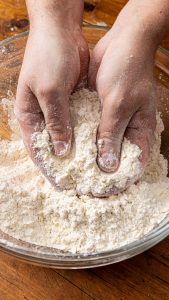
- Rub the butter into the flour with your fingertips, or pulse in a food processor, until the butter is fully incorporated and the mixture looks like breadcrumbs.
Liquid
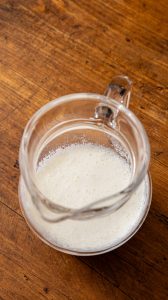
- Pour the milk into a pitcher.145 ml milk
- Add the lemon juice.1 tablespoon lemon juice
- Let stand for one to two minutes, until the milk curdles and looks lumpy.
- Add the large egg and the vanilla.1 large egg, 1 teaspoon vanilla extract,
- Whisk until well combined.
Dough
- Pour the liquid into the bowl of flour.
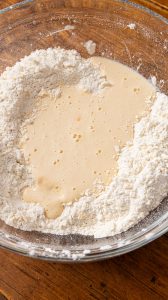
- Mix just enough to bring the dough together, without working or kneading it.
Shaping
- Turn the dough out onto a floured work surface.
- Pat it out by hand, as briefly as possible, into a rough rectangle about 2.5 cm thick.
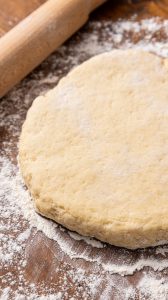
- Make sure the thickness is even all over, edges included.
- Cut out rounds with a 6.5 cm round cutter.
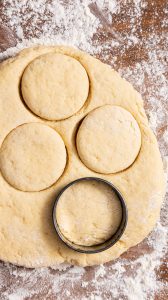
- Press the cutter straight down and lift it out without ever twisting it.
- Gather up the scraps and pat them out again to the same thickness, handling the dough as little as possible.
- Cut out more rounds until all the dough is used up.
- Place the scones on the baking sheet.
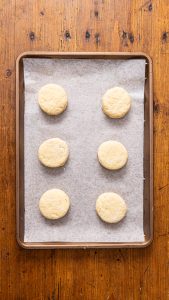
Egg wash and baking
- Beat the medium egg.1 egg
- Brush the tops of the scones with the beaten egg, without letting it drip down the sides.
- Bake for 12 to 14 minutes.
- Check for doneness: the scones should be well risen, golden on top and underneath, and sound hollow when tapped on the bottom.
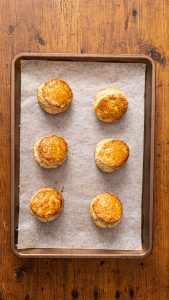
- Let the scones cool on a wire rack.
Serving
- Split the scones in half, by hand or with a knife.
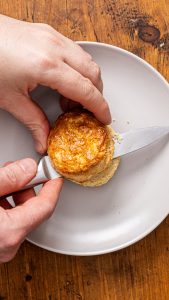
- Top with strawberry jam and clotted cream.Strawberry jam, Clotted cream
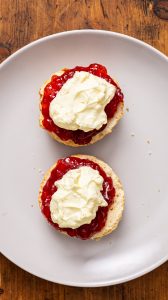
- Ideally, serve them warm, about ten minutes after they come out of the oven.