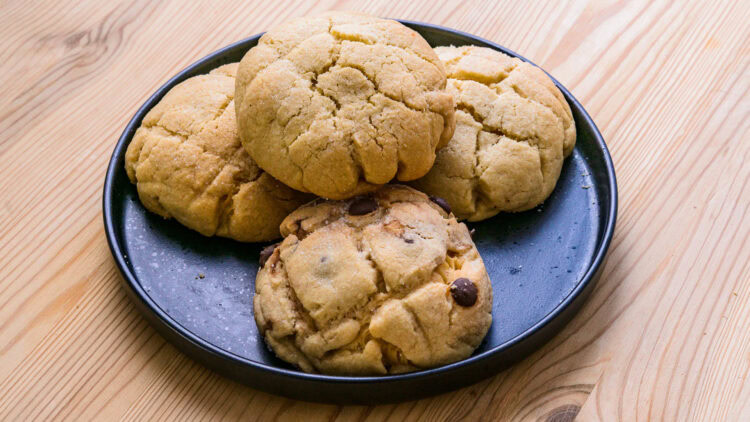
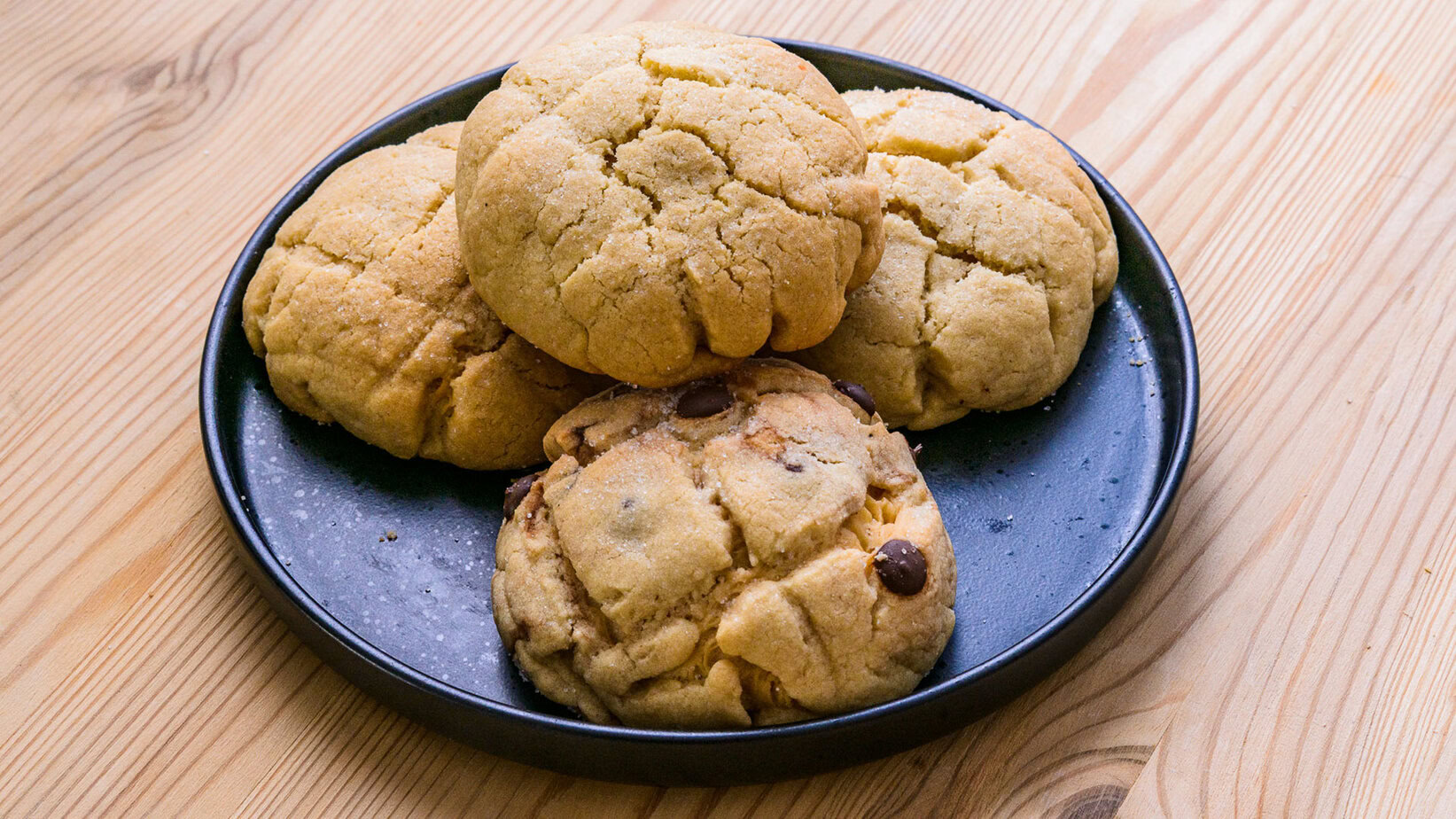
Japanese melon pan with a soft, fluffy center and a crisp exterior, wrapped in a thin layer of sweet cookie dough and beautifully scored in a classic grid pattern.
Bite in, and the sweet crust snaps like a cookie before giving way to a risen, airy, buttery crumb that pulls apart in tender strands. On top, the deep grid pattern and sparkling zarame crystals promise plenty of crunch.
Melon pan is an icon of kashipan, the family of sweet breads that developed in modern Japan during the Meiji era. In short, it’s the kind of pastry you buy still warm from the neighborhood bakery and eat on the way home. It belongs to the same wave of local adaptations of Western culinary techniques that shaped yoshoku, as seen in Japanese curry or omurice.
What is melon pan?
The name combines the English word “melon” with pan, a Japanese term derived from the Portuguese pão. Wheat bread arrived in Japan with the Portuguese in the 16th century, but Western baking techniques only became widespread from the Meiji era onward, when European cuisines were adapted to local tastes and helped shape yoshoku. Melon pan is part of that history of local adaptation: a foreign-inspired bread reimagined around texture.
Its structure is built from two doughs. At the center is a small enriched, yeasted dough made with bread flour, milk, egg, sugar, and butter. On the outside, a thin, shortbread-like cookie layer combines low-protein flour, butter, sugar, and egg, sometimes with a little baking powder. Before baking, the top is scored in a crosshatch pattern; in the oven, the dough rises while the crust tightens and then cracks along those cuts.
The traditional flavor profile is deliberately simple: butter, vanilla, caramelized sugar, and subtle notes of fermentation. It contains no melon juice, purée, or melon flavoring. The bun is usually round, topped with a layer of cookie dough that covers the top and comes partway down the sides, while the base is often left exposed so the dough can expand. It can then be coated with zarame for extra crunch. The ideal melon pan has a soft, slightly elastic crumb beneath a firm, dry, crumbly shell, firmer than that of Hong Kong bolo bao. If the crust is soft, something has gone wrong.
From Armenia to Kansai: the origins of melon pan
The story of melon pan is usually told through two main theories. In Tokyo, the more romantic version leads to Hovhannes, or Ivan, Sagoyan, an Armenian master baker trained in French and Viennese techniques.
After time spent in Moscow and then Harbin during the Russian Revolution, he is said to have settled in Meguro. He was then reportedly recruited by the Imperial Hotel through the industrialist Okura Kihachiro. Sagoyan is believed to have worked there before opening his own bakery, Monsieur Ivan.
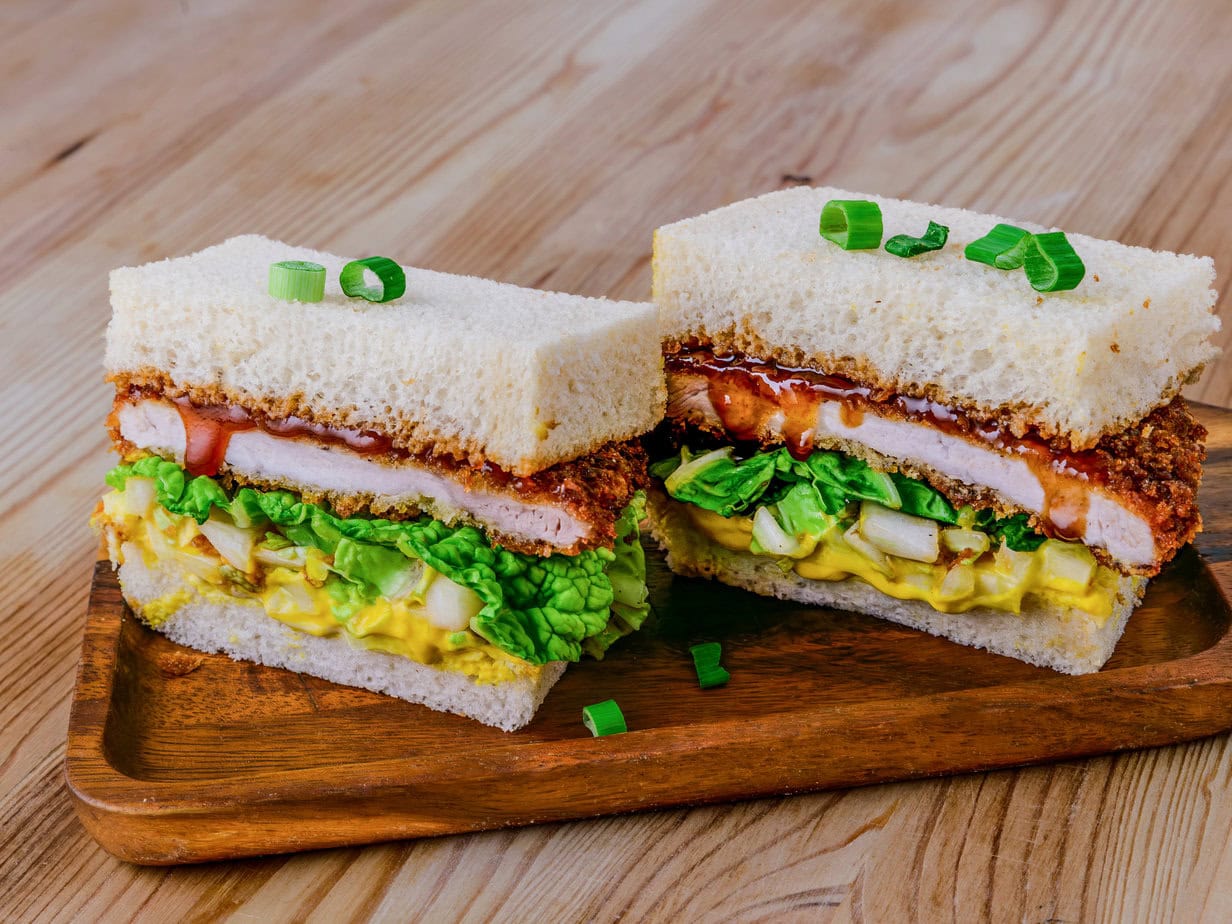
There, he is thought to have helped popularize a sweet bread that combined a soft yeasted dough with a crisp cookie crust, known as melon pan or Sunrise. His influence was not limited to this one product. His students contributed to the rise of Japanese milk bread, or shokupan, which became essential in dishes such as katsu sando and tamago sando.
In Kansai, the story is told differently. In Kobe, the Kinseido bakery is said to have sold a cookie-crusted bread called sanuraisu, or Sunrise, before the war. Its radiating pattern is thought to have been inspired by the flag of the Imperial Japanese Navy, a naval symbol closely associated with the military port and shipyards of Kure.
Local “melon pan” could also refer to a tapered, rugby-ball-shaped bread whose name was linked to the meron-gata, an old rice mold used in yoshoku restaurants. In Kobe in particular, the name could describe a regional version that was often smooth, without a cookie crust, and filled with shiro-an, a sweet white bean paste.
In the naval city of Kure, the Melonpan bakery, founded in 1936, developed another local version: a bread molded in a meron-gata and filled with pastry cream. The radiating pattern, then, is mainly associated with Sunrise, while the Kure version stands out more for its molded shape and filling.
The archives make the origin more complex: a utility model was registered in 1931, but similar breads may already have been circulating by the middle of the Taishō era. Science journalist Kazuko Tojima, in The Truth About Melon Pan, also discusses theories connecting some similar breads to Latin American influences, especially Mexican ones, because of their resemblance to concha.
She explicitly dismisses the theory involving German prisoners, citing a lack of solid archival evidence. Over time, the Tokyo version—round, crosshatched, and topped with cookie dough—became the national reference. Kansai, meanwhile, has preserved its own names, shapes, and fillings. This coexistence can still create confusion from one region to another.
The main ingredients in melon pan
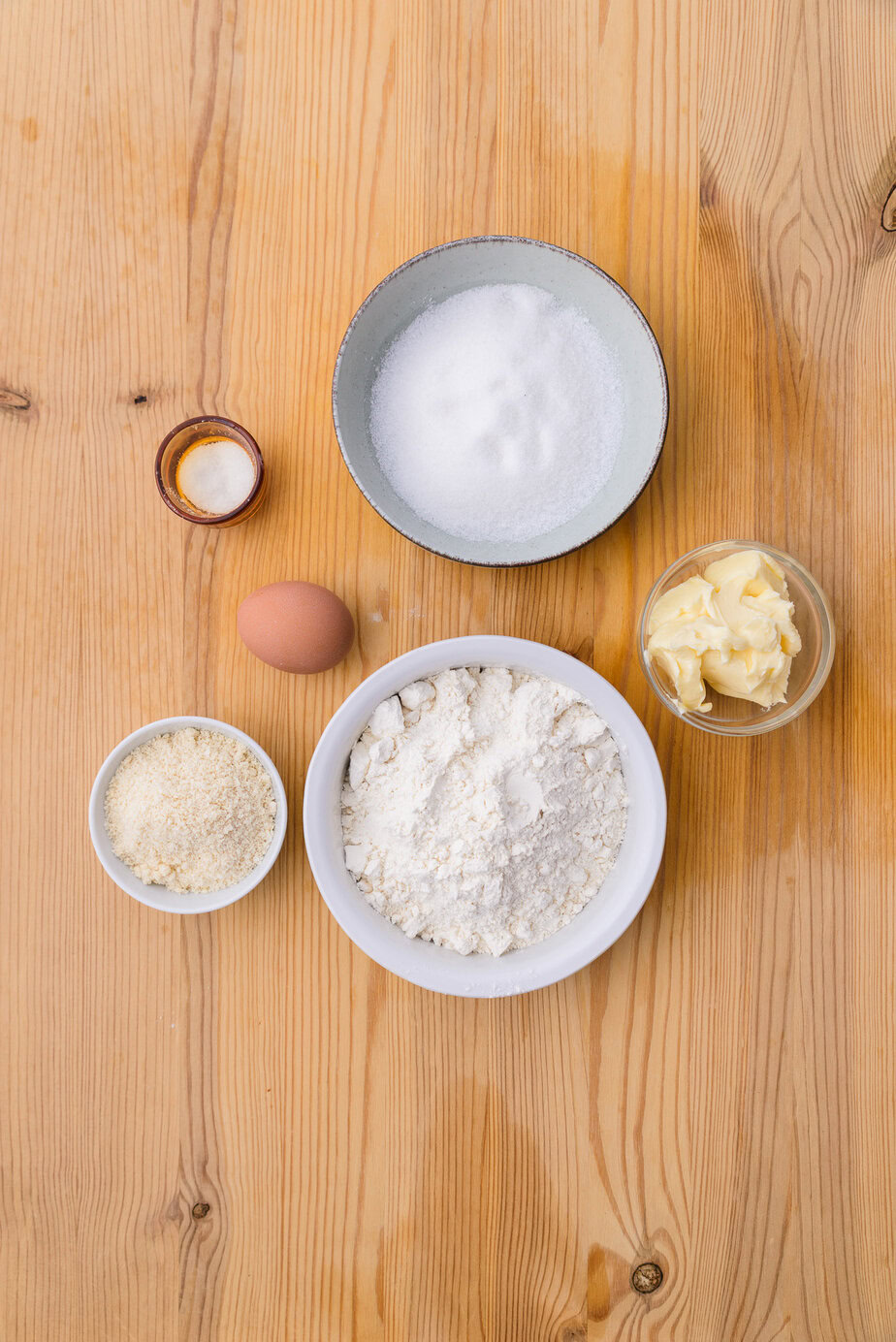
- Bread flour: rich in protein, it forms the gluten network that traps gas and gives the crumb its elasticity. Some bakers add a little low-protein flour for a softer texture. It is the same type of flour that gives structure to katsu sando and tamago sando.
- Unsalted butter: added after kneading has begun, it softens the crumb without weakening the gluten too much. In the crust, it creates that shortbread-like crunch and buttery aroma as it bakes. Margarine works too, but you can taste the difference.
- Whole milk and egg: milk hydrates the dough, adds lactose, and brings a rounded dairy flavor; egg binds, colors, and adds softness. Together, they keep the crumb tender without making it heavy.
- Dry yeast: it provides volume and those subtle aromas of warm bread. Sugar feeds the yeast during fermentation. This is completely different from baking powder, which is used only in the cookie crust to lighten it.
- Low-protein flour (cookie crust): low in protein means low in gluten, so the texture stays short, crumbly, and never rubbery. This is what gives melon pan its signature crunch.
- Vanilla: it defines the classic flavor profile. Lemon zest appears in some versions, but less often. Melon, however, is absent from the historical version: green or fruit-flavored buns are modern variations.
- Zarame: these large sugar crystals scattered over the dome add sparkle and extra crunch. You’ll find that same caramelized sugar note in other Japanese sweets, such as mitarashi dango.
Signs of authenticity and pitfalls to avoid
Crispness is essential. A soft or sticky crust often means the bread has been wrapped in plastic for too long. Moisture from the crumb migrates into the cookie layer, gets trapped in the packaging, and softens what should snap. Melon pan keeps its texture best when it cools uncovered on a rack and is eaten soon afterward.
In the round version that has become the national standard, “melon” mainly refers to its appearance: a deep grid pattern, a domed shape, and a cracked surface. In some regional traditions, the name can also refer to the meron-gata mold used to shape the bread, or, according to the Co-op Kobe archives, to a tapered shape meant to evoke makuwauri, an oriental melon.
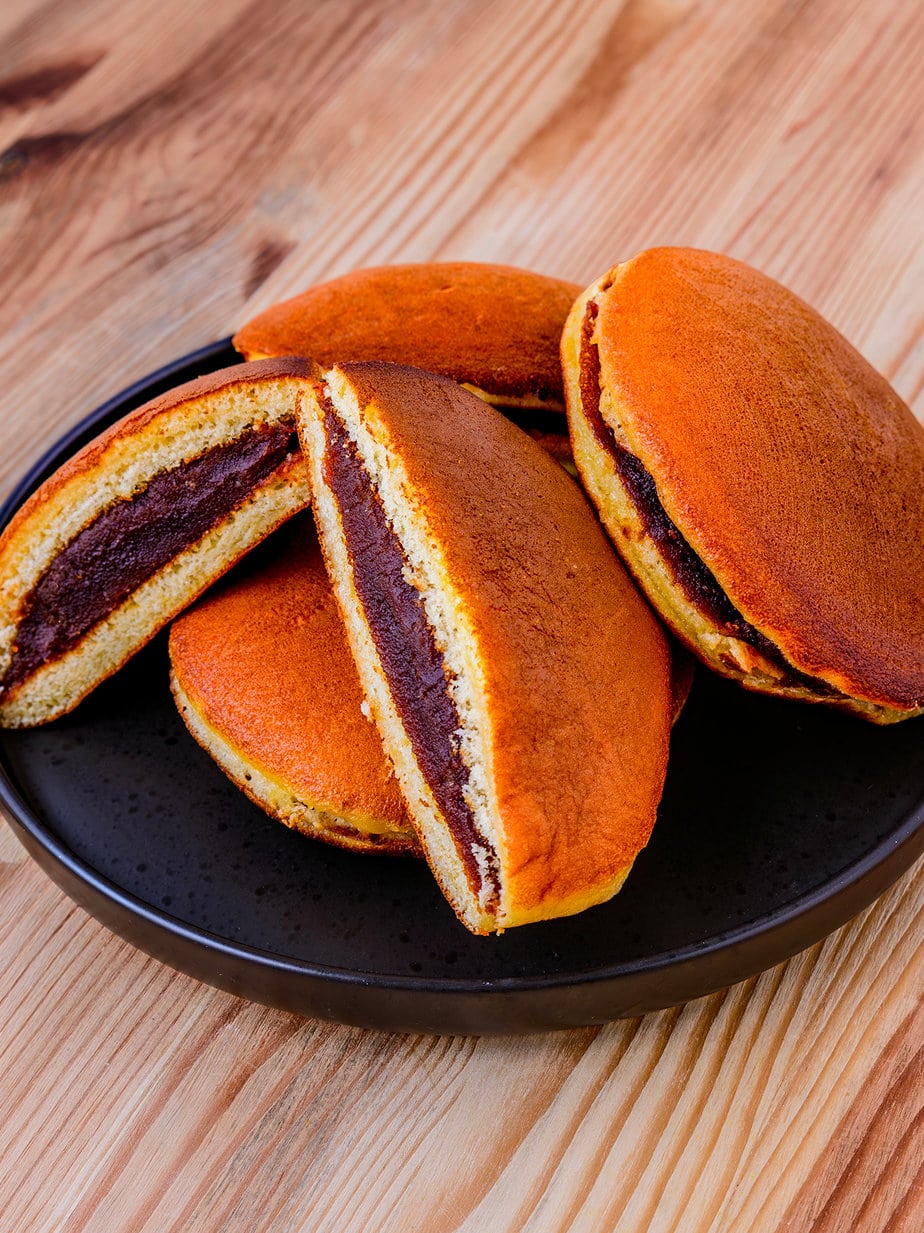
Green versions, fruit-flavored buns, and melon pan filled with cream, chocolate, or ice cream all show how lively this bread remains today. That evolution echoes other Japanese sweets such as dorayaki and mochi.
Some modern fillings, such as black sesame paste or taro paste, do move away from the historical model. The most reliable signs remain the same: a light crumb, a dry and crumbly cookie crust, and a clean crunch from the very first bite.
Ingredients
Cookie dough (for 2 batches)
- 90 g unsalted butter softened
- 100 g superfine sugar
- 1 whole egg at room temperature (55 to 60 g)
- 220 g cake flour T45
- 40 g almond flour blanched
- 2 pinches fine Guérande salt
Bread dough (preferment)
- 140 g bread flour 10–11% protein
- 15 g cane sugar
- 95 g whole milk
- 1.5 g instant dry yeast not baking powder
Bread dough (final mix)
- 20 g bread flour
- 40 g all-purpose flour T55, less than 10% protein
- 10 g cane sugar
- 10 g buttermilk powder
- 3.5 g salt
- 1 egg yolk
- 20 g milk
- 20 g unsalted butter softened
Topping
- 30 g granulated sugar
Variation
- 5 g chocolate chips optional
Instructions
Cookie dough
- Weigh the butter and let it soften; bring the egg to room temperature. Sift together the cake flour, almond flour, and salt.90 g unsalted butter, 1 whole egg, 220 g cake flour, 40 g almond flour, 2 pinches fine Guérande salt
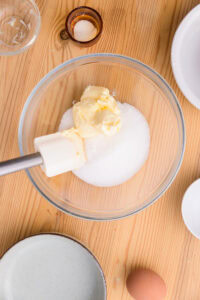
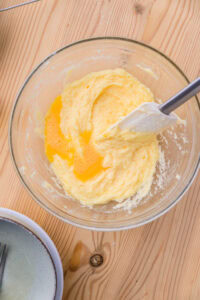
- Add the sugar to the butter and mix with a spatula until smooth and pliable. Beat the egg, then add it to the butter in 4 to 5 additions, emulsifying well after each addition.100 g superfine sugar
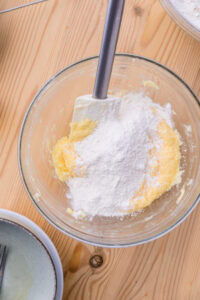
- Add the sifted dry ingredients and mix with a spatula. Once partly incorporated, mix by hand until no streaks of flour remain, then knead briefly about 10 times.
- Divide the cookie dough into 2 portions, wrap, and flatten. Refrigerate the portion you will use right away and freeze the other; let rest for at least 1 hour (ideally 6 to 8 hours). If needed, thaw in the refrigerator 1 to 2 hours before using.
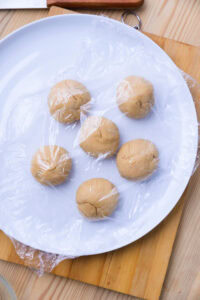
Preferment
- Warm the milk to about 30 °C, sprinkle the yeast over it, and let stand. In a bowl, mix the bread flour and sugar, then add the milk-yeast mixture and stir until smooth.140 g bread flour, 15 g cane sugar, 95 g whole milk, 1.5 g instant dry yeast
- Knead lightly about 1 minute to eliminate dry spots, shape into a ball, then ferment at 30 °C about 1 hour, until ~1.8 times the original volume.
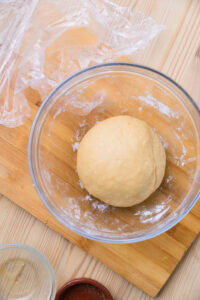
Final mix
- Weigh the final-mix ingredients and let the butter soften. Tear the preferment into ~10 pieces.20 g bread flour, 40 g all-purpose flour, 10 g cane sugar, 10 g buttermilk powder, 3.5 g salt, 1 egg yolk, 20 g milk, 20 g unsalted butter
- Combine the flours, sugar, salt, and buttermilk powder. Mix the egg yolk and milk, then add to the dry ingredients and mix partially. Add the pieces of preferment and knead; when the dough is ~80% incorporated, add the butter and knead until smooth.
- First fermentation: Shape into a ball, place in a bowl, and cover. Ferment at 30 °C about 1 hour, until doubled (finger test).
- Divide the dough into 6 portions, shape into balls, cover, and rest 15 minutes.
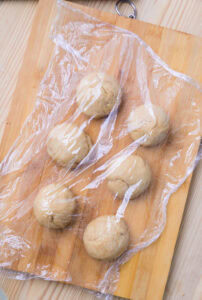
Cookie dough (portioning)
- During the first fermentation, divide the cookie dough into 6 portions; knead each portion 4 to 5 times and shape into balls. Keep well chilled in the refrigerator if made ahead. For the chocolate version, fold the chocolate chips into the cookie dough.5 g chocolate chips
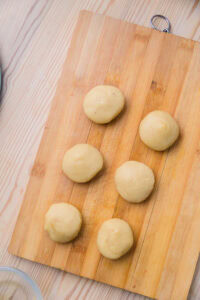
Shaping and finishing
- Flatten each portion of cookie dough into a disk slightly larger than the bread dough ball. Round the bread dough again, then wrap it with the cookie dough; flip so the cookie side is up and round.
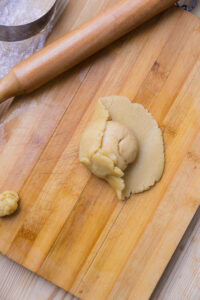
- Sprinkle the topping sugar evenly over the cookie surface and score a light crosshatch without cutting too deeply.30 g granulated sugar
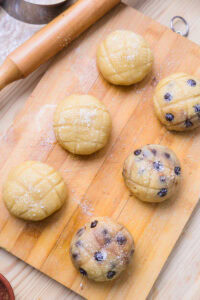
Second proof and baking
- Proof at 30 °C for 45 minutes (no steam). Preheat the oven to 200 °C so it’s ready at the end of proofing.
- Lower the oven to 190 °C and bake 13 to 15 minutes, until lightly colored. Cool on a rack.
Notes
- For the best contrast with the exceptionally soft, airy crumb, make the melon pan fairly large.
- The cookie dough quantity is enough for 2 batches, so you do not have to use a partial egg; for a single batch, halve all the cookie dough ingredients.
- For the topping, regular granulated sugar works better than very fine sugar.
- If the cookie dough rests only briefly, the surface will be crispier and more likely to crack during baking.