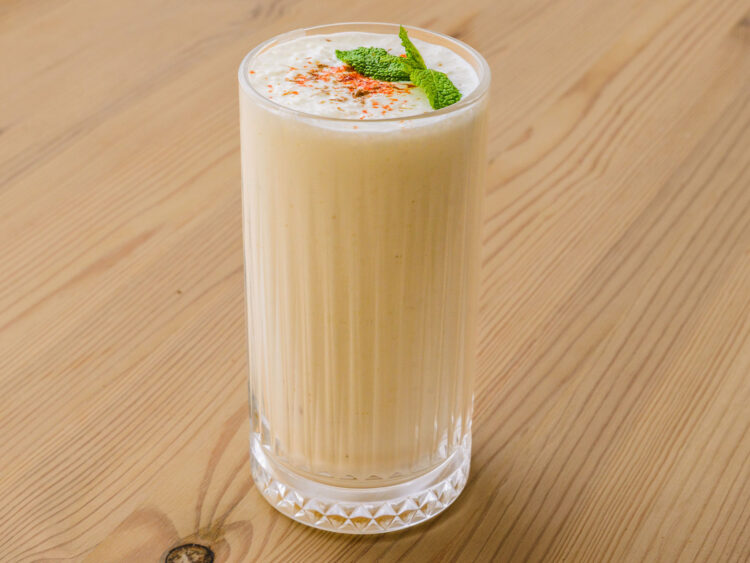
An ultra-refreshing savory yogurt lassi, brightened with black salt and toasted cumin
In the height of summer in Punjab, when the air nears 40 °C, a tall glass cooled in clay can feel almost medicinal: cold on the lips, creamy on the tongue, and topped with a light foam that quivers without collapsing.
Nearby, a wooden madhani beats its rhythm in an earthen pot; the curd loosens with water, and the drink is born from motion, cold, and fermented milk. If you’re here, you know the taste, and you certainly won’t be disappointed.
What is lassi?
The word lassi comes from the Punjabi lass, meaning “mixture,” and that simple definition matters. Traditional Punjabi lassi is not simply a yogurt-enriched dessert drink.
It is a blend of whole plain yogurt, cold water, ice cubes, and seasoning, churned into a drink that is rich yet easy to sip.
In modern preparations, ice cubes play an important role: they keep the drink cold while gradually adding the water it needs, even though ice long remained a luxury reserved for the elite.
The most prized base is fresh buffalo-milk dahi. Across Punjab, it is loved for its higher fat and protein content, which gives lassi body and natural sweetness.
From this base come two great classics: the meethi version, sweetened with khand, misri, or jaggery and sometimes flavored with cardamom or rose water; and the savory namkeen version, often made with black salt and toasted cumin.
Its texture also depends on old tools with very specific effects. A porous clay kujja or matka cools through micro-evaporation and adds a faint earthy nuance.
A wooden madhani gently aerates without heating the mixture or working it too aggressively, as a high-speed blender would. This preserves the emulsion instead of breaking it. Lassi is also distinct from takra, or traditional buttermilk.
In takra, churning separates out the fat, which is removed; lassi keeps it. As a result, it retains a creamier texture and the stable crown of foam associated with a well-made glass.
From the fields of Punjab to elite tables
Lassi is at home in Punjab, the large agricultural region stretching between northwestern India and eastern Pakistan. There, it became the farmers’ cooling drink, a sign of hospitality and a simple way to cope with the heat.
In rural courtyards, the morning sound of the madhani against terracotta accompanies a daily ritual: preparing breakfast, loosening the curd, and getting ahead of the day’s heat.
The idea of curd thinned with water and seasoned long predates the modern name. Classical South Asian culinary traditions describe, among other things, ghola, a simple savory drink made from curd.
They also mention rasala or marjika, in which curd is whisked with sugar, dried ginger, and rock salt, as well as sattaka, flavored with aromatics such as clove and pomegranate. These examples point to a long history of fermented milk, valued for its flavor, digestibility, and suitability in hot weather.
In everyday Punjabi life, lassi remains naturally associated with hearty breakfasts: halwa poori, chole bhature, nihari, a few samosas, or chapatis generously slicked with ghee.
In Lahore, it is especially appreciated at Ramadan suhoor, because its water content, dairy richness, and cooling effect make it a sustaining drink before dawn. In diaspora restaurants, a glass of lassi also readily accompanies chicken tikka masala, even if this pairing is more modern than rural.
The tables of the Mughal elite probably helped refine this style of milk-based drink. Access to ice brought from afar, a true luxury at the time, would have made it possible to serve intensely chilled milk drinks, while saffron and rose water added a more elaborate fragrance. According to Ayurveda, sweet, thick lassi is often considered cooling, nourishing, and restorative.
When prepared with fermented curd containing live cultures, it may also offer probiotic benefits and be better tolerated by some people who have difficulty digesting lactose.
Ayurveda does, however, distinguish it from takra, which is considered more medicinal. It also traditionally advises against sweet, thick lassis after sunset or outside periods of intense heat, as they are considered heavy.
The main ingredients in lassi
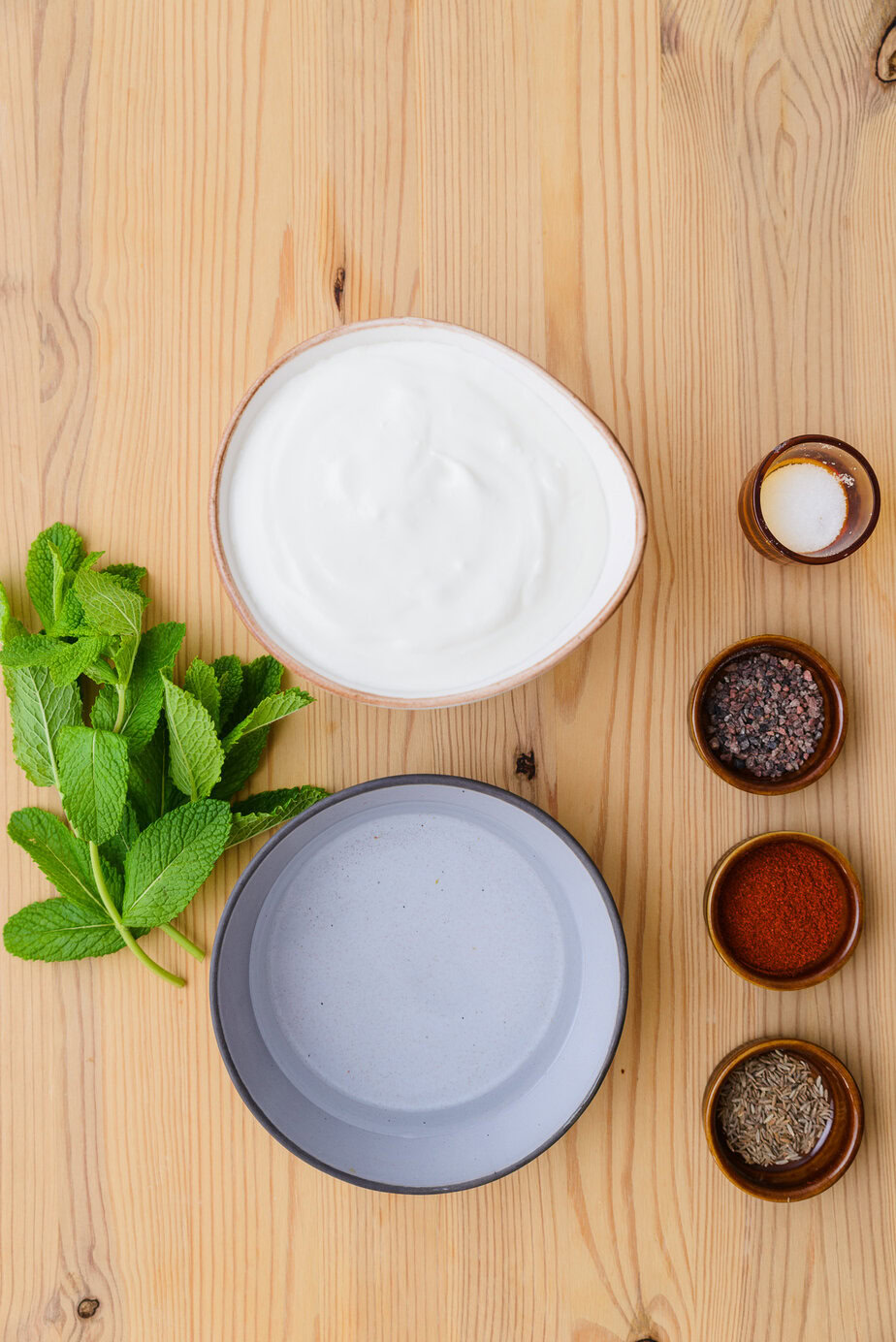
- Whole plain yogurt or dahi: this is the base. Fresh buffalo-milk dahi brings body, a gentle tang, natural sweetness, live cultures, and enough fat to help the foam hold.
- Ice cubes: in the preparation described here, they are essential. They drop the temperature quickly and, as they slowly melt, loosen the thick curd.
- Cardamom or rose water: use them optionally and with restraint, to perfume the fermented milk without overwhelming it.
- Black salt: this is a key ingredient in namkeen lassi, prized for its mineral salinity and distinctive sulfurous note.
- Toasted cumin: toasted jeera brings warmth, depth, and a note traditionally associated with digestion, balancing the yogurt’s acidity. In a very different register, that aromatic intensity recalls cumin beef.
- Dried mint: it adds a fresh note to savory versions, especially welcome in the heart of summer.
Regional enrichments have their place, but they reflect specific local traditions: malai or makhan for the richness of Amritsar, saffron and almond paste in Patiala-style versions, and khoya or peda for the caramelized milk note found in some Lahore recipes. Even a small splash of cream, in some homes, is mainly there to make the drink smoother.
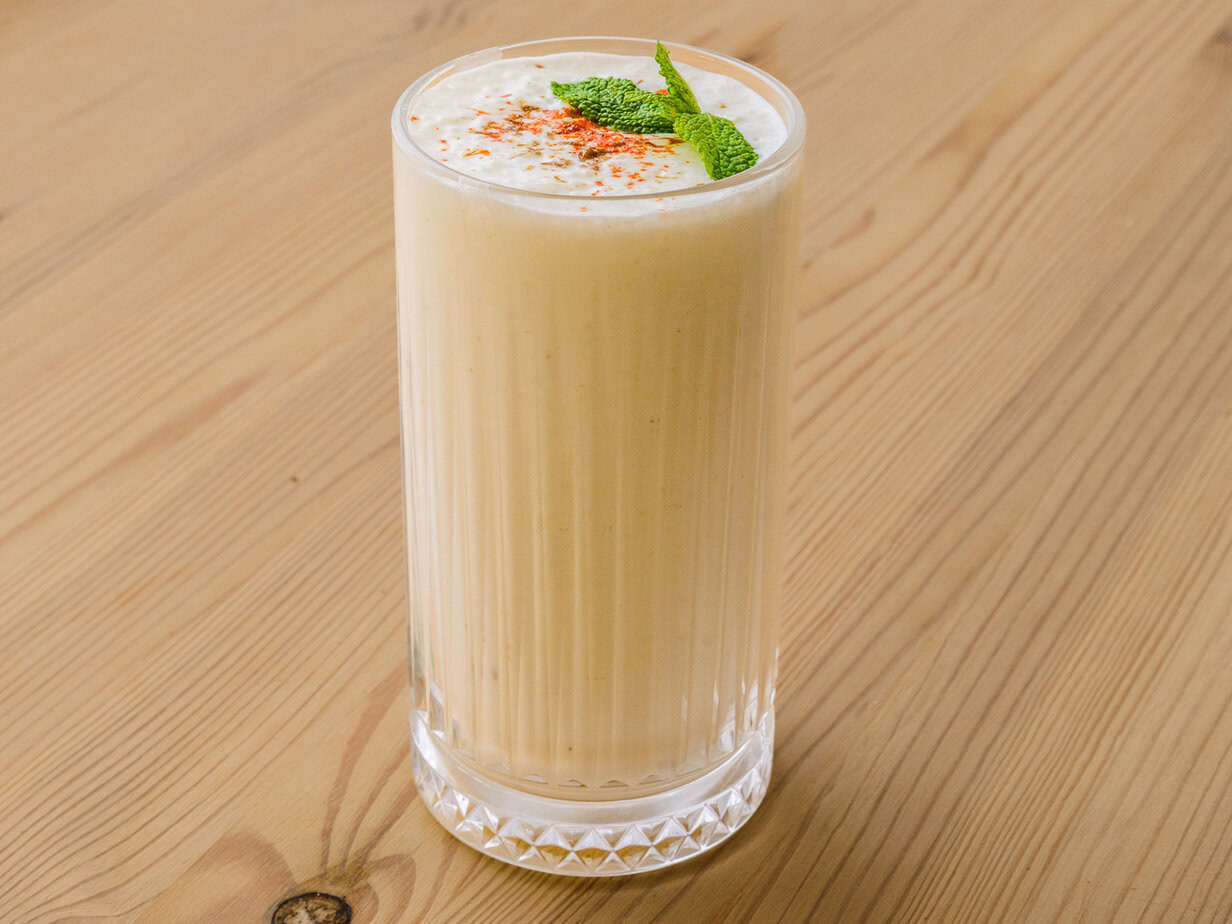
Ingredients
- 600 g plain yogurt
- 230 ml water
- 1 teaspoon black salt or regular salt, to taste
- 1.5 teaspoons roasted ground cumin
- mint leaves for garnish
- ice cubes optional
- roasted ground cumin for sprinkling, optional
- red chili powder for sprinkling, optional
- chaat masala for sprinkling, optional
Instructions
Preparation
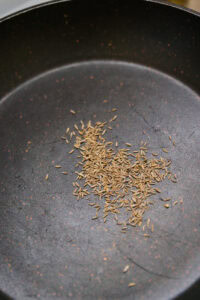
- To prepare the roasted cumin, toast cumin seeds in a small skillet until fragrant, then grind them into a powder in a blender or with a mortar and pestle.
- Place the yogurt in a bowl, then add the water, black salt, and ground cumin.600 g plain yogurt, 230 ml water, 1 teaspoon black salt, 1.5 teaspoons roasted ground cumin
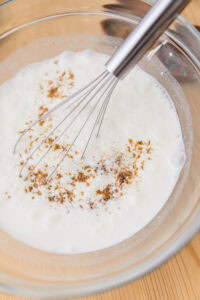
- Blend with a churner (madhani) or blender until frothy, then taste and adjust the seasoning as needed.
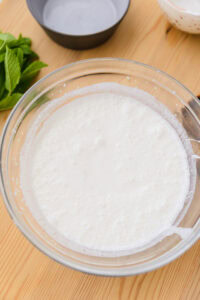
- Pour into glasses. Garnish with mint, add ice cubes if desired, and serve well chilled.mint leaves, ice cubes
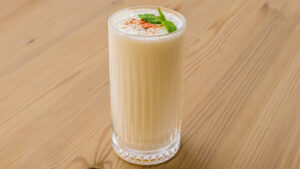
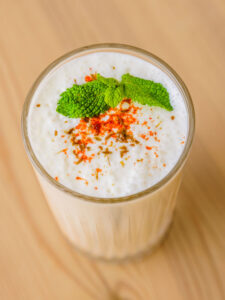
- Sprinkle with a little roasted ground cumin, red chili powder, and/or a pinch of chaat masala, as desired.roasted ground cumin, red chili powder, chaat masala
Notes
- Add ice cubes, or use well-chilled yogurt and water.
- Sprinkle with a little roasted ground cumin, red chili powder, and a light pinch of chaat masala for even more flavor.