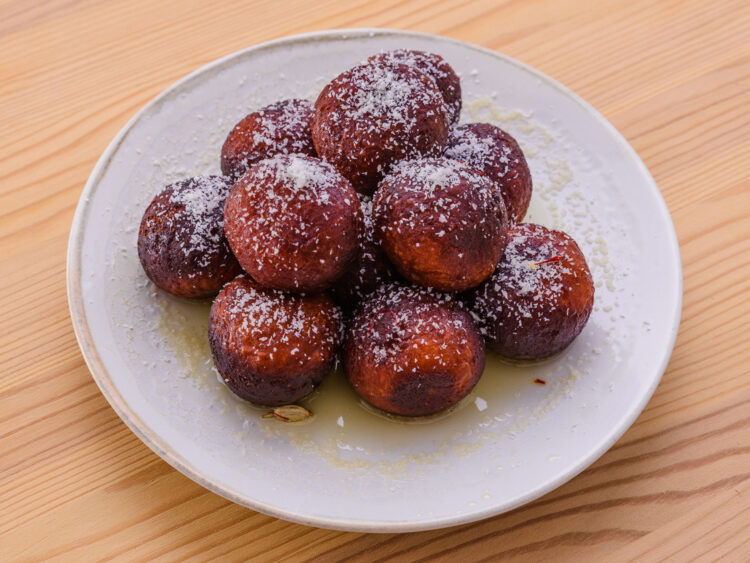
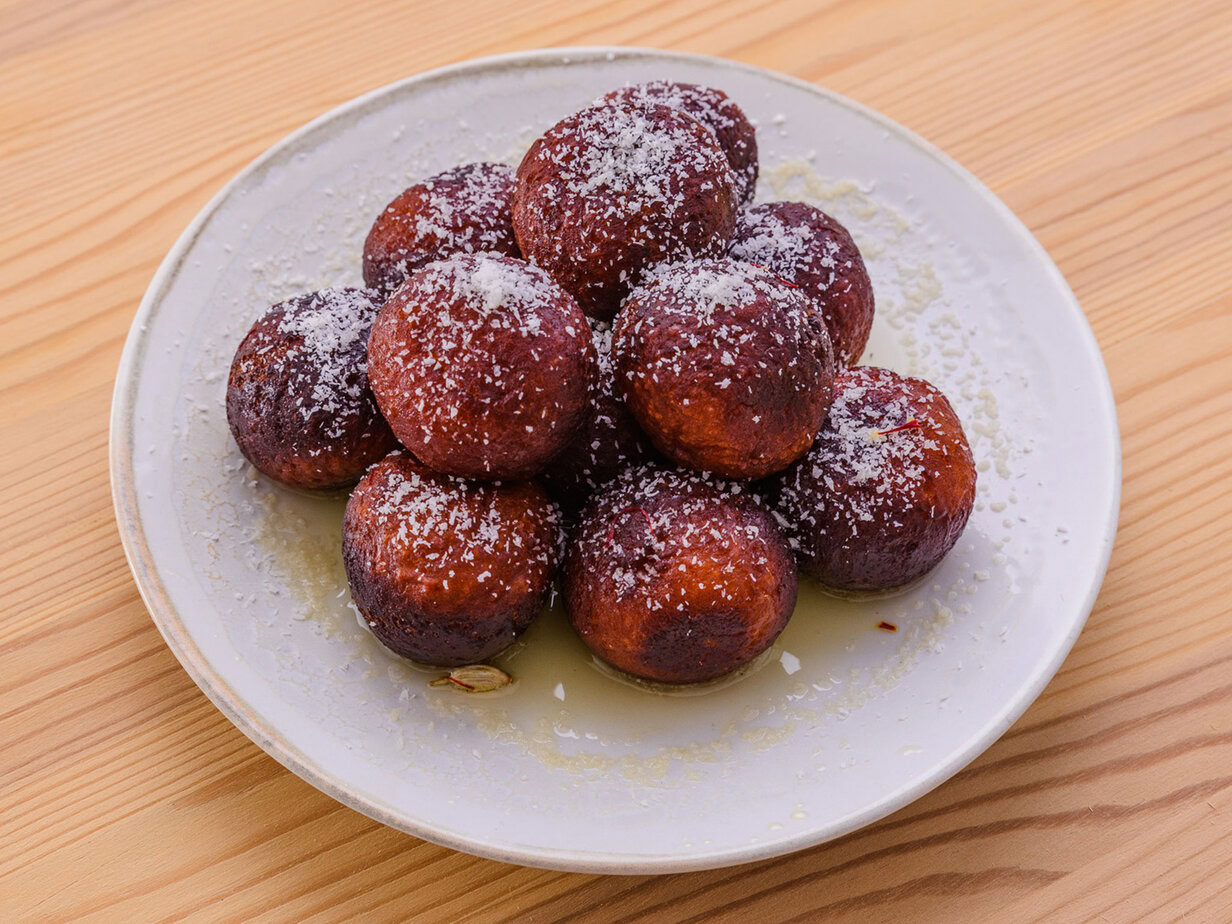
Tender fried milk dumplings soaked in a fragrant cardamom, saffron, and rose water syrup: an irresistible Indian dessert.
Warm milk-based dumplings, fried in ghee, soak in a light syrup perfumed with saffron, cardamom, and rose water. This is Gulab Jamun at its most indulgent.
On a winter evening, a halwai might place two of them in an earthenware kulhad or in a dona, a small bowl made from stitched-together leaves. Porous kulhads, in particular, can absorb some of the excess syrup while adding a distinctive earthy note.
It is best understood as a syrup-glossed milk confection, much more than an American doughnut. Clearly not made for anyone watching their waistline, this beloved Indian dessert is pure pleasure in every bite.
What is Gulab Jamun?
The name already hints at both its fragrance and its shape : gulab combines the Persian gul (“ flower ”) with ab (“ water ”), while jamun refers to the Indian fruit of the same name, echoed in the sweet’s size and deep color. At its core, Gulab Jamun is a milk-based confection built around khoya, with flour used only as a binder.
That is what sets it apart from fried sweets made with flour and yeast : its structure comes mainly from milk, not gluten, which gives it its unique texture. The classic base is chikna khoya, also called hariyali or dhap. These milk solids have a very high water content and are much moister than batti or danedar; they are kneaded into a smooth dough. For this version, we’ll use milk powder.
A very small amount of maida simply acts as a binder. In authentic versions, the flour is kept to a minimum, often around a 4 : 1 ratio of khoya to maida by weight, to avoid a texture too close to bread. So this is a world away from a flour-based batter, like the one used for some American pancakes.
The aromatics remain classic and restrained : green cardamom, a little saffron, and a few drops of rose water, used as a finishing touch rather than a dominant note. Some halwais tuck a little mishri, a cardamom seed, or a sliver of pistachio into the center. They say this can keep the center from becoming too firm and encourage a small cavity to form, where the syrup can settle.
The syrup is usually light and warm, so it can pass through the thin fried crust. It should be neither thick nor boiling. Leavening agents are kept to a minimum : in modern kitchens, that usually means a pinch of baking powder.
Historically, halwais may also have relied on pearl ash or manual aeration.
The origins of Gulab Jamun
Texts from the Deccan already mentioned related preparations. The 12th-century Mānasollāsa (Annabhoga) describes foods that resemble small, round, fried milk-based bites. Historians often connect Kṣīraprakāra with early forms of Gulab Jamun and Bengali pantua.
It is made by thickening milk, then separating the curds before draining them, frying them in ghee, and soaking them in syrup.
Unlike the Arab-Persian luqmat al-qadi, a loose, yeast-raised flour batter poured into oil and then dipped in honey or rose water-scented syrup, Gulab Jamun does not rely on gluten. K. T. Achaya and later commentators argued that its base of khoya with minimal flour made it an Indian sweet of local origin rather than a direct Persian import.
The Mughals mainly brought a more refined aromatic palette. Medieval and early modern royal kitchens prized rose water and kewra alongside saffron, ghee, and highly developed dairy craftsmanship. Texts such as the 16th-century Nimatnama-i-Nasiruddin-Shahi and the 17th-century Nuskha-e-Shahjahani bear witness to this courtly world, both aromatic and milk-rich, which helped shape the later profile of Gulab Jamun.
Today, this sweet is deeply rooted in festive traditions. It is especially associated with Diwali, Ganesh Chaturthi, Eid ul-Fitr, and Eid al-Adha, and is offered in the palm of the hand at weddings to “ sweeten the mouth ,” a phrase that evokes an auspicious beginning. Within the vast world of Indian cuisine, it holds a special place.
The main ingredients in Gulab Jamun
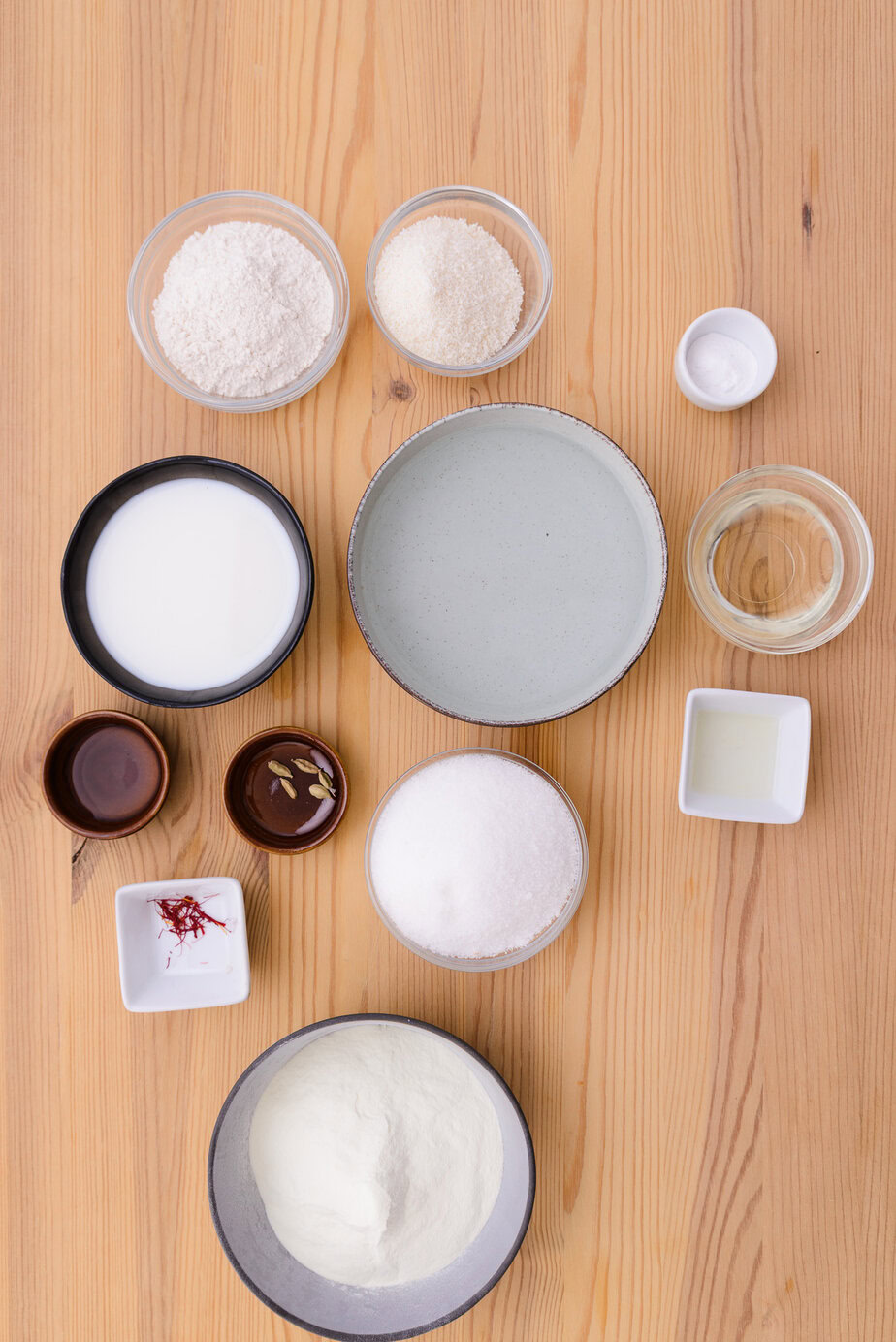
Khoya chikna, also called hariyali, is the central ingredient : soft, high-moisture milk solids that can be kneaded into a glossy dough. During frying, that moisture quickly turns to steam, helping create tiny cavities. Those cavities then help the syrup reach the center of the crumb instead of staying on the surface around a dry middle. In this version, we mix milk with milk powder to try to achieve a similar effect.
Chhena or paneer, in some traditional formulas, adds extra structure. When thoroughly smoothed into the khoya, it can aerate the mixture and prevent excessive density, creating a tender interior that holds the syrup without collapsing: a softness also found in coconut pearls.
Maida acts as a binder, not the base. Without a small amount of gluten, the milk solids can crack in the hot fat ; with too much flour, the crumb becomes bread-like. Traditional practice keeps it to the bare minimum, often around a 4 : 1 ratio of khoya to maida by weight, to preserve a tender, milky texture while keeping each sphere intact.
Leavening agents are used sparingly, with delicacy in mind. Today’s cooks use baking powder ; historically, halwais may have relied on pearl ash or manual aeration to achieve a slight expansion without making the interior spongy.
Desi ghee provides the traditional aroma and promotes even frying. Slow frying in ghee develops a thin, tender crust that the syrup can penetrate. Neutral oils are common modern substitutes, but they move the flavor away from the classic version. For a general guide to frying technique, you can also consult the basics of double frying, even though the method here is different.
The sugar syrup (chashni) is kept warm and lighter than the “ one-thread ” stage so it can seep in without weighing down the surface. Green cardamom and saffron give it its classic fragrance ; a few drops of lemon juice prevent recrystallization without changing the aroma.
Rose water provides the “ gulab ”. Used sparingly (it is very, very strong), it helps bring out the richness of the milk rather than covering it up.
Ingredients
- 200 g sugar
- 240 ml water
- 5 pods cardamom
- 1 tablespoon lemon juice
Syrup
- 4 tablespoons vegetable oil
- 6 tablespoons all-purpose flour
- 120 g whole milk powder for baking
- 1 tablespoon baking powder
- 120 ml milk whole
- saffron as needed
- rose water as needed
Dough
- vegetable oil as needed, for frying
- grated coconut or ground pistachios for garnish
Instructions
Syrup
- Combine the sugar and water in a saucepan and heat until the sugar has completely dissolved.200 g sugar, 240 ml water
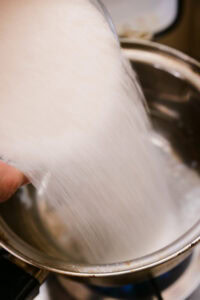
- Do not stir with a metal spoon, as this can cause the syrup to crystallize.
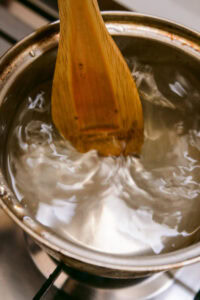
- Add the cardamom pods and simmer until the syrup begins to thicken slightly.5 pods cardamom
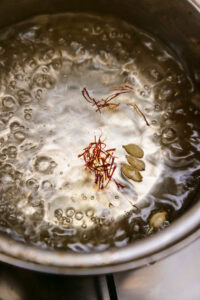
- Add saffron and rose water to taste, then simmer until the syrup thickens a little more.saffron, rose water
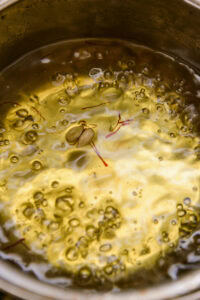
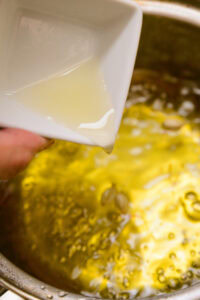
- Add the lemon juice and stir gently.1 tablespoon lemon juice
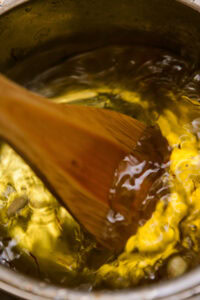
- Remove the syrup from the heat and let it cool completely.
Dough and Shaping
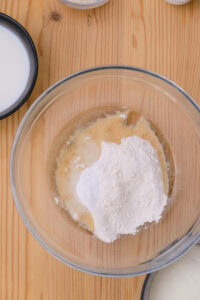
- Combine the flour, vegetable oil, and baking powder in a bowl.6 tablespoons all-purpose flour, 4 tablespoons vegetable oil, 1 tablespoon baking powder
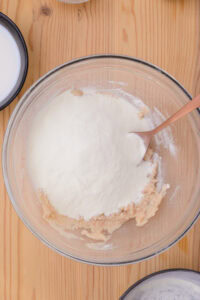
- Add the milk powder and mix well.120 g whole milk powder
- Gradually add the milk until the dough comes together.120 ml milk
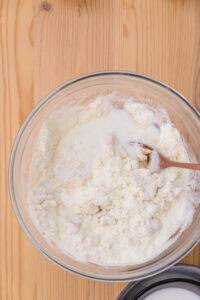
- Knead the dough for about one minute, then shape it into smooth, walnut-sized balls. Repeat until all the dough is used.
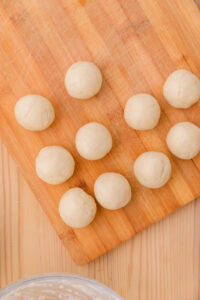
Frying, Soaking, and Serving
- Heat the oil for frying in a saucepan until hot.vegetable oil
- Gently lower the balls into the oil over low heat and fry slowly until golden brown.
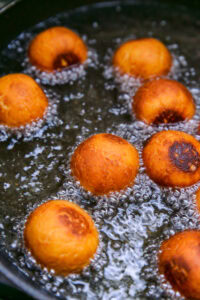
- Remove the balls from the oil and immediately transfer them to the cooled syrup so they can soak it up.
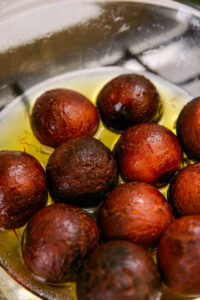
- Lift them out of the syrup, garnish with grated coconut or ground pistachios, and serve.grated coconut or ground pistachios