


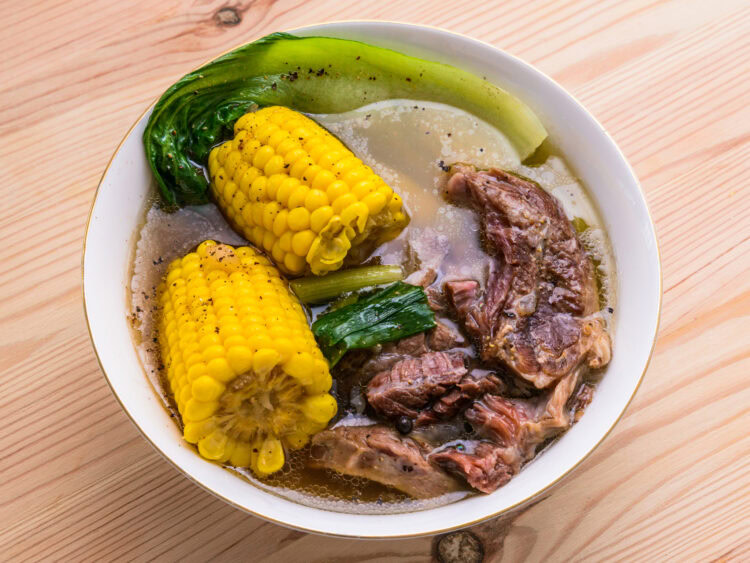
A rich, comforting Filipino broth, slowly simmered with beef shanks, corn, and bok choy for a deeply savory soup.
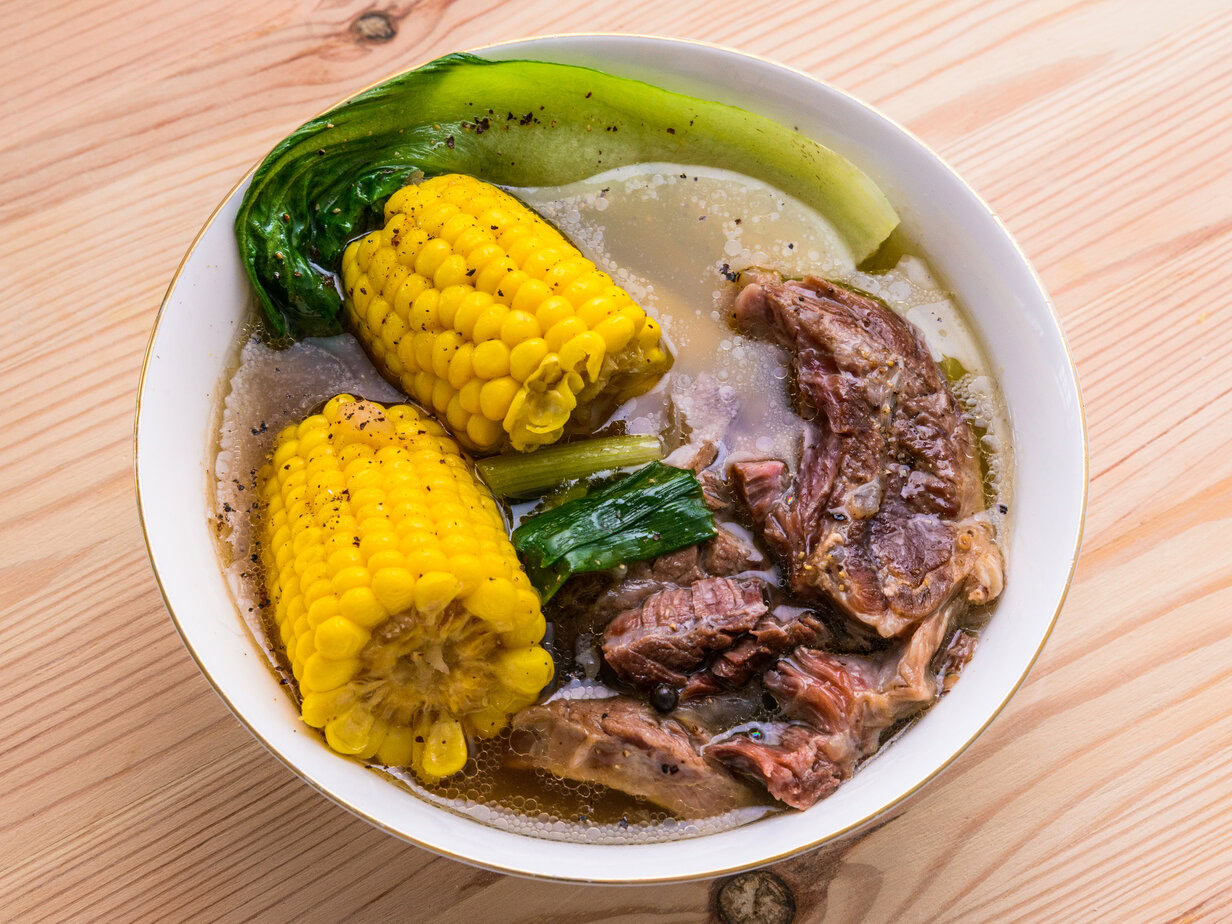
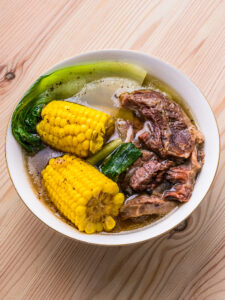
In the bowl, a clear golden broth releases wisps of steam; the deep aroma of beef mingles with sweet onion and the gentle warmth of whole peppercorns. The shanks pull apart into long, tender strands, while the silky marrow melts into the steaming rice.
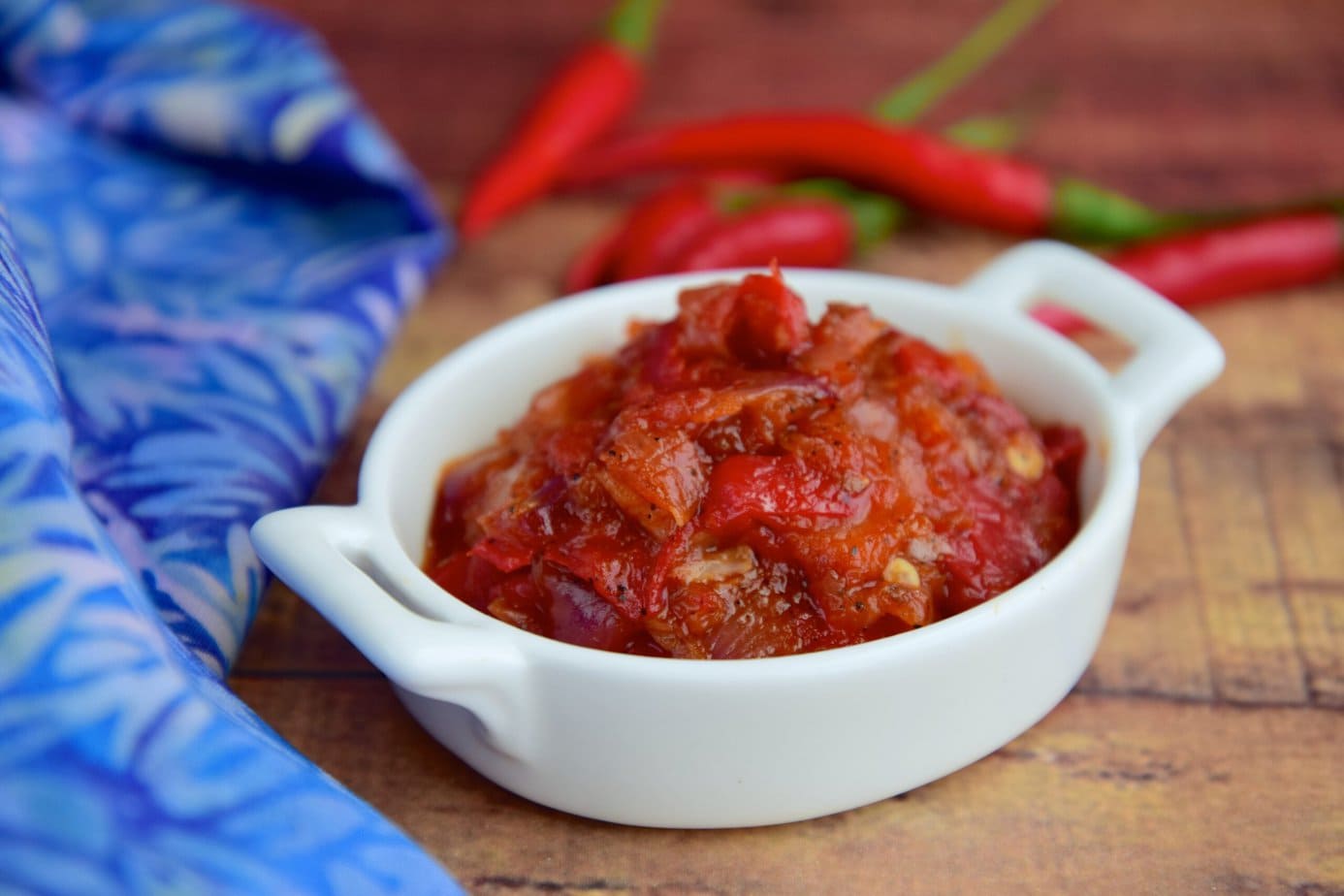
A splash of patis and calamansi, sometimes brightened with sambal oelek, instantly lifts all that richness. In Tagaytay, a city on the border between Cavite and Batangas, savoring a steaming bowl of bulalo with a view of Taal Lake is almost a ritual.
What is bulalo?
In Tagalog, bulalo means “bone marrow.” In some dialects, the word can also refer to the knee bone or kneecap, which neatly captures the soul of the dish: a beef shank soup in which the marrow takes center stage. Very few ingredients, plenty of time.
The preparation begins with clear water. Slices of bone-in beef shank cook slowly with minimal seasoning: salt, patis, or both for salinity and umami, along with whole peppercorns and quartered onion that eventually melts into the broth. The goal is a clear broth with no dominant spices. It should taste cleanly of beef and marrow, while still feeling light on the palate despite its gelatinous richness.
In its most traditional form, especially in Batangas, no vegetables are added to the pot; some cooks even insist that the classic version contains no other “sahog” besides beef. Today, green cabbage or pechay and corn cut into chunks are often added toward the end of cooking for crisp freshness and a gentle sweetness, all while soaking up the broth. Seasoning is then adjusted at the table with the classic sawsawan: patis + calamansi juice + bird’s eye chili, bringing salt, acidity, and gentle heat.
What bulalo is not: a soup perfumed with Western herbs (no thyme, no rosemary), nor a broth heavy with spices. Shortcuts such as bouillon cubes and flavor enhancers are common modern solutions, but they move away from the most authentic profile, which depends on slow extraction.
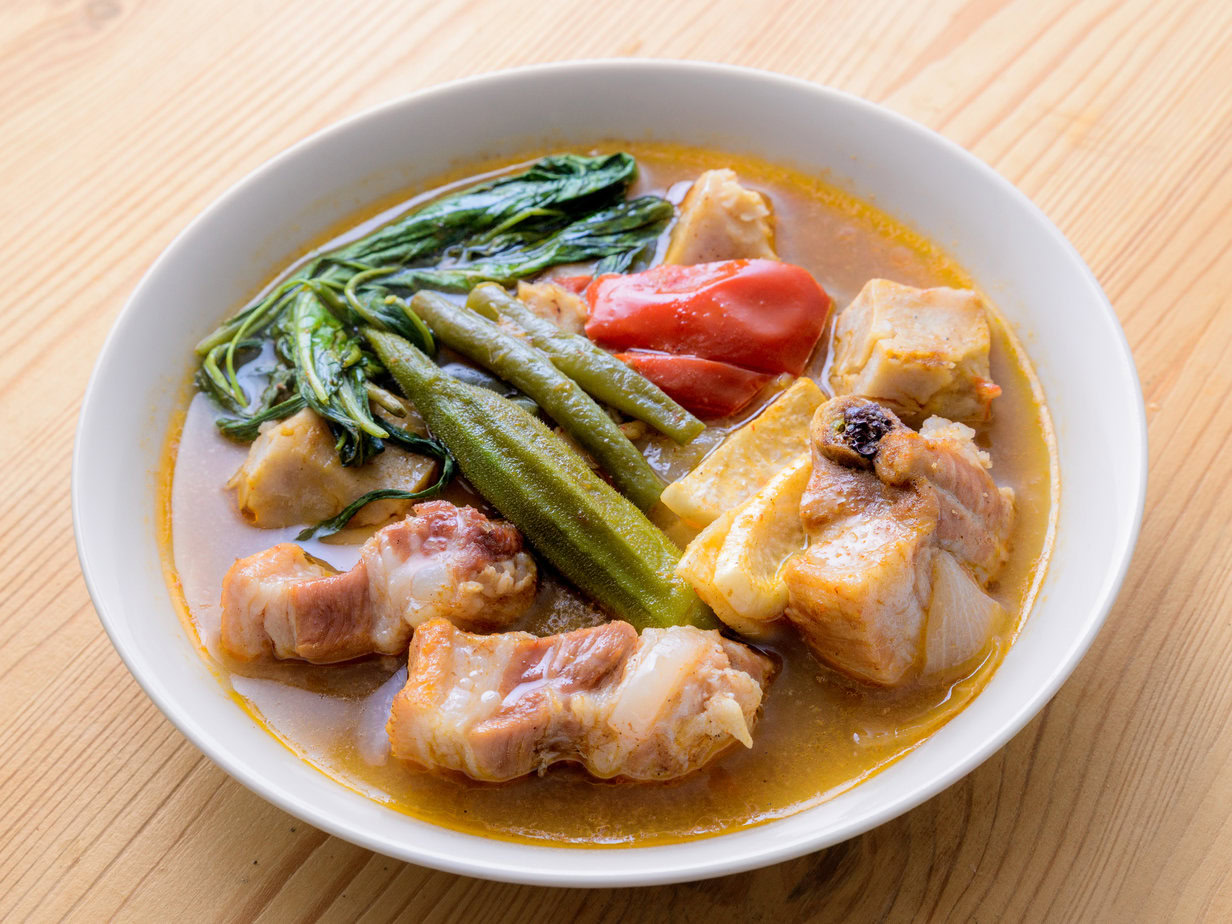
It differs from sinigang in its flavor profile (marrow-rich rather than sour) and, more broadly, from the wider family of soups and broths through its essential use of marrow bones. Corn has become common in modern versions, while nilaga more often includes potatoes, though some versions of bulalo use them too.
The origins of bulalo
In southern Luzon, especially in Batangas and Cavite (with Tagaytay, thanks to its cooler climate, standing as one of the dish’s strongholds), this soup was born in cattle country. It also relies on an ancient cooking method: simmering meat in water, a practice local tradition links to the pre-Hispanic era and one found in the nilaga family of “boiled meats.”
In the past, large cauldrons were set over wood or charcoal and left to simmer for hours. The collagen released its gelatin, the tendons softened, the marrow enriched the broth, and the liquid deepened in both color and flavor.
In Tagaytay, bulalo is part of a deeply rooted tradition: a simmering pot, steaming bowls, and a shared meal overlooking Taal Lake. At home, just as in roadside bulalohan, hospitality sits at the center of the table: one large bowl for everyone, rice within easy reach, and small saucers of sawsawan ready to customize each bite. The marrow is eaten straight from the bone, and the meltingly tender pieces are passed around the table.
Local practice makes clarity a priority. The broth is skimmed carefully and kept at a gentle simmer, never a rolling boil. Some cooks also blanch the shanks before the long simmer to produce an especially clean broth. In Tagaytay, the soup is often kept over a very low flame to prevent the fat (called sebo when it cools and solidifies) from setting in the cold. Other cooks, in search of the purest possible beef flavor, cook the meat and vegetables separately. Now let’s look at the ingredients and the role each one plays in a faithful bulalo.
Main ingredients in bulalo
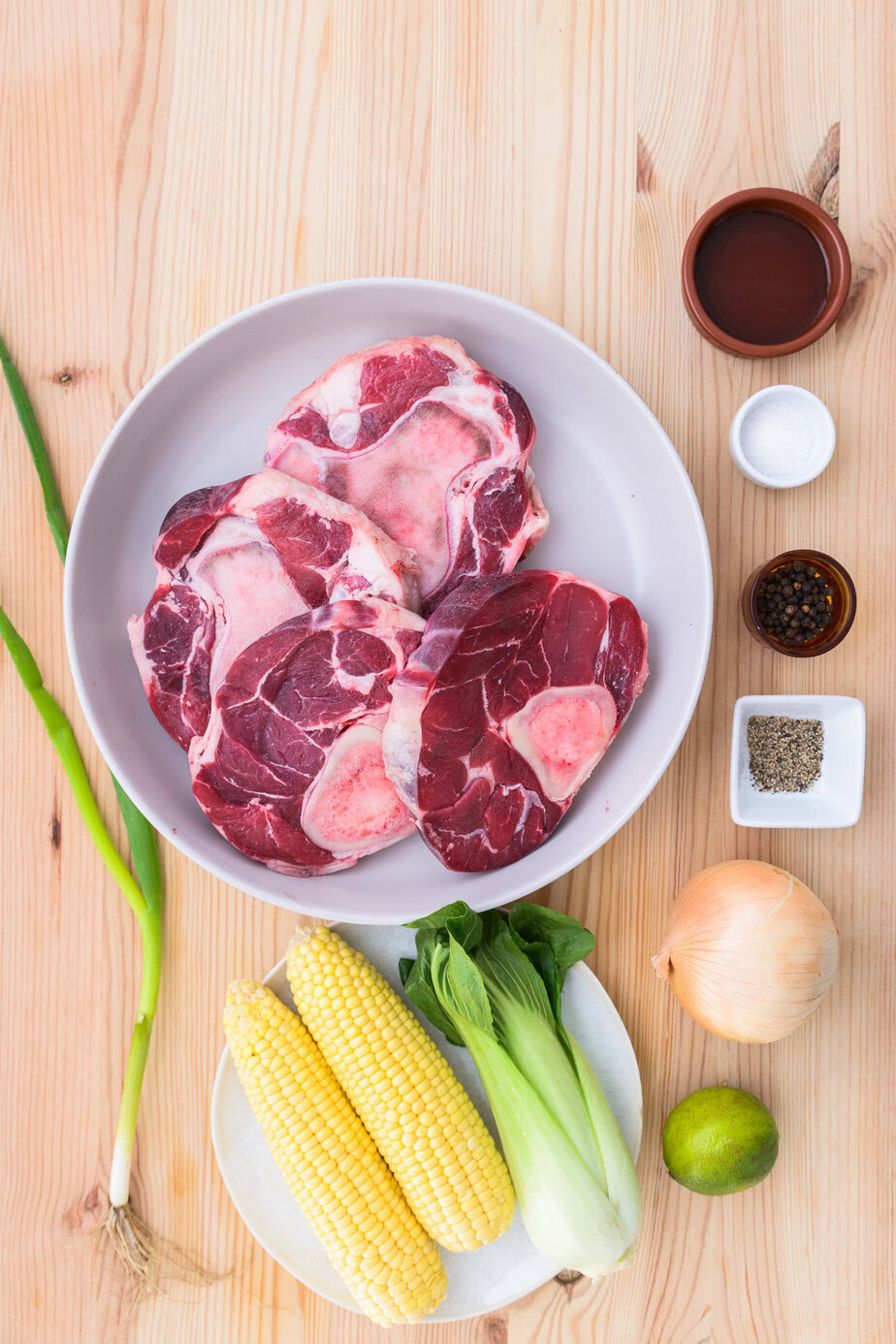
The essential ingredient is beef shank cut into thick slices, with bone and marrow: the famous “bulalo cut.” The meat becomes meltingly tender, while the bones release marrow and collagen into the broth.
As for vegetables, the strictest tradition leaves them out; modern practice often welcomes green cabbage or pechay for freshness and crunch, added near the end of cooking to keep the broth clear.
Corn cut into chunks adds juicy sweetness and soaks up the broth; some cooks prepare it separately to avoid making the main pot too sweet. Potato, more typical of “nilaga,” can thicken and cloud the broth, while chayote offers a lighter, more discreet alternative. Carrots and green beans belong to more modern versions rather than the Batangas style.
Among the subtle accents: a little fried garlic for savory depth, ginger for freshness that cuts through the richness, and, occasionally, a bay leaf. These are more modern additions and are not especially typical of the traditional Batangas style.
In Batangas, some cooks occasionally add a small sachet of sibot (dried Chinese herbs) for herbal depth, though it is optional and rare outside the region. Flavor enhancers such as monosodium glutamate, vetsin, and bouillon cubes are common contemporary shortcuts; use them sparingly, because the most authentic balance comes from slow extraction, not artifice.
One essential rule if you want that characteristic gelatinous texture: use marrow bones. For serving, have the sawsawan ready (patis + calamansi + chili) and plenty of steamed white rice to accompany the broth and marrow.
Serving and condiments
Serve piping hot and share: place the bowl in the center, divide the marrow fairly, and offer small cups of broth to sip between bites if you like. At the table, everyone seasons their portion with patis, calamansi, and chili; in some regions, a soy sauce–calamansi alternative (toyo-mansi) is also offered.
The markers of authenticity come down to a few clear signs: a clear broth, powerful but lightly seasoned; shank with visible marrow bones; discreet vegetables, or none at all, as in Batangas; and long, gentle cooking, which is preferable if you are aiming for the most traditional profile, rather than modern shortcuts such as cubes or flavor enhancers.
Keep the soup at a simmer so the sebo does not set: bulalo is best enjoyed scalding hot and in good company.
Ingredients
- 1 kg beef shanks bone-in
- water as needed (to cover the meat, then for simmering)
- 1 white onion
- 2.5 tablespoons fish sauce
- 2 teaspoons whole peppercorns
- 1 bok choy separate the leaves, then cut into bite-size pieces
- 2 ears of corn cut into 3 pieces each
- 1 stalk scallion finely chopped
- salt to taste
- black pepper freshly ground, to taste
- calamansi optional, or lime (for serving)
Instructions
Blanch the meat
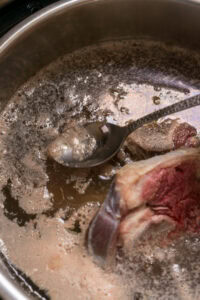
- Place the beef shanks in a large pot, cover with water, and bring to a boil. Boil for about 10 minutes.1 kg beef shanks, water
- Skim off the scum and any fat that rises to the surface. Remove the meat, then discard the blanching water.
Prepare the vegetables
- Peel the onion and cut it into quarters.1 white onion
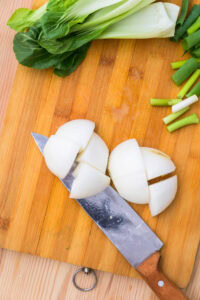
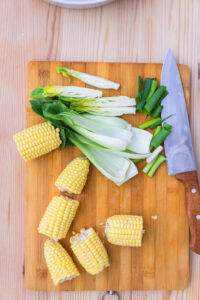
- Husk the corn if needed, then cut each ear into three pieces.2 ears of corn
- Cut the bok choy into bite-size pieces and chop the scallion. Set the vegetables aside.1 bok choy, 1 stalk scallion
Cook the broth
- Return the meat to the pot, add fresh water, and bring to a boil. Skim as needed until the broth looks clear.
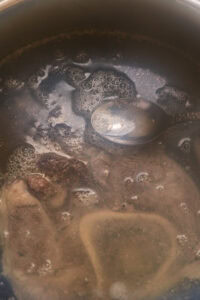
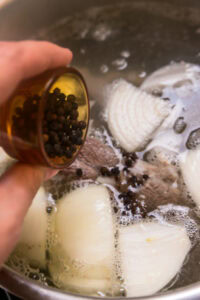
- Add the peppercorns, onion, and fish sauce. Reduce to a gentle simmer and cook for up to 3 hours, or until the meat is tender (pressure cooker: 45 minutes to 1 hour).2 teaspoons whole peppercorns, 2.5 tablespoons fish sauce
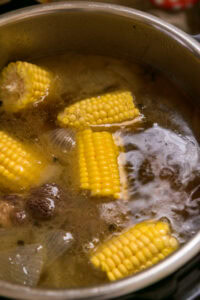
- Add the corn and boil for 15 to 20 minutes, or until tender. Season with salt to taste.salt
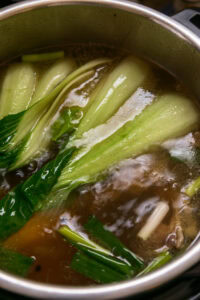
- Add the bok choy and cook for 2 to 3 minutes. Turn off the heat.
Serving
- Serve very hot, with extra fish sauce and/or calamansi (or lime) on the side for squeezing in at the table. Add black pepper to taste.black pepper, calamansi
Notes
Culinary sources
• Bulalo: A Hearty Soup for the Filipino Soul – SBS Filipino (English)
• Bulalo – Wikipedia (English)
• The Origins and Variations of Filipino Bulalo – KOLLECTIVE HUSTLE (English)
• Bulalo – Traditional Soup Recipe from the Philippines – 196 flavors (English)
• Bulalô – Reddit (English)
• Bulalo – Ang Sarap (English)
• Discover the Original Way to Prepare Bulalo in Batangas – GMA Network (Filipino)
• Batangas Bulalo Recipe – Panlasang Pinoy (English)
• Everything You Need to Know About Bulalo – Yummy.ph (English)
• Bulalo – Kawaling Pinoy (English)
• It’s true: real bulalo is the kind you “slurp,” not the one… – Facebook (Filipino)
• How do you cook your bulalo? Is it normal to add potatoes? – Reddit (English)
• Filipino Beef Bulalo Recipe – Lahat Sarap (English)
• My First Bulalo. Sarap!!! – Reddit (English)
• Tagaytay Food Trip – Reddit (English)
• How do you tell bulalo apart from nilagang baka? – Reddit (English)


Made this bulalo about 4 times now, and the blanching step always gives me that clean, clear broth with super tender shanks. Still just as satisfying every time, especially with patis and a good squeeze of calamansi 🙂
This bulalo took me right back to rainy weekends when my lola would keep a pot gently simmering all afternoon and call us to the table for hot rice and sawsawan with calamansi. The clear broth and that sweet corn flavor feel exactly like home, especially when you scoop the marrow straight from the bone 😊
This bulalo is the ultimate comfort food, with that clear, beefy broth and melting marrow that feels like a warm hug on a rainy day. Cozy vibes all around, especially with rice and a squeeze of calamansi 🙂
Thank you for sharing this bulalo recipe, the clear broth tips and timing made it so easy to follow and the flavor turned out incredibly comforting. The patis and calamansi suggestion was especially helpful for balancing the richness 😊