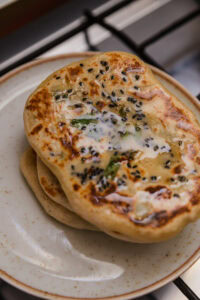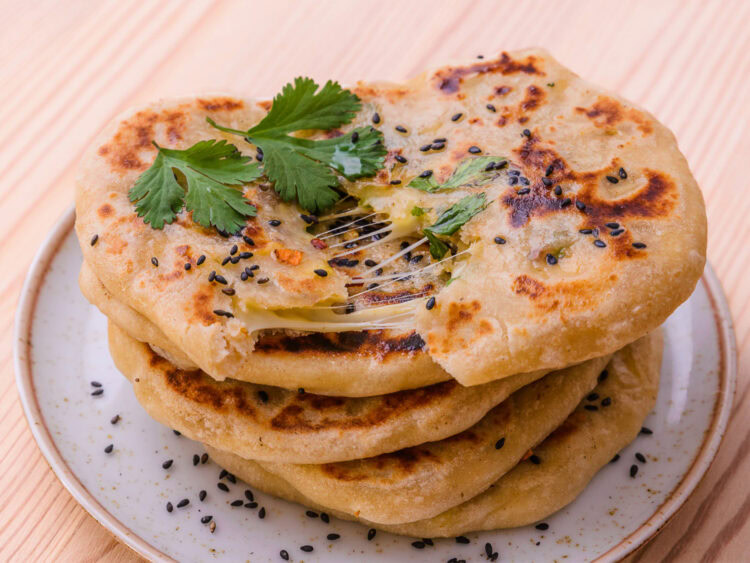
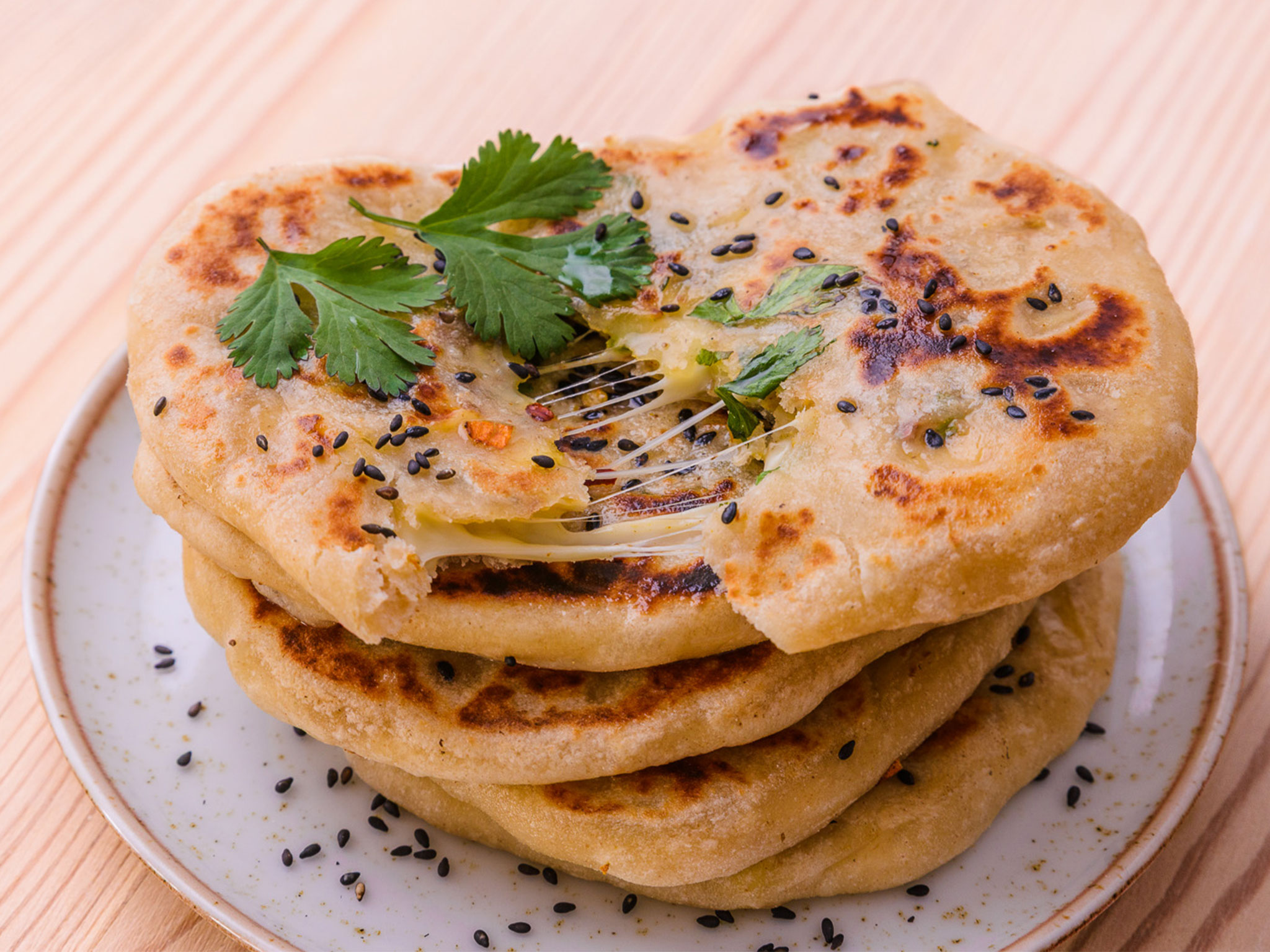
Soft naans stuffed with mozzarella and a touch of chili, cooked in a pan, then held over a flame until beautifully blistered and golden
Golden and puffed, cheese naan can mean different things depending on the kitchen: either a savory, melty center or a warm filling of well-spiced paneer. The name “ cheese naan ” therefore does not refer to just one dish, but to two, each with its own story.
One is a paneer-stuffed bread from Punjab. The other, born in Paris, celebrates cheese at its meltiest. Both are worth a closer look. In short, there’s a reason it’s one of the most ordered dishes in Indian restaurants
What Is Cheese Naan?
The word naan comes from the Persian nān, a general term for bread in the Persian-speaking world. In South Asia, it refers to a leavened flatbread cooked against the wall of a tandoor. The dough is usually made with refined wheat flour, maida, sometimes mixed with atta. It is hydrated with water and, often, plain yogurt, dahi, which makes it softer and gives it a gentle tang.
Milk is sometimes added too, along with ghee or oil. The dough may be leavened with yeast or, in many modern kulcha-style preparations, with baking powder and baking soda, which react with the yogurt. This keeps the dough stretchy and supple. As it cooks, it puffs up, browns in spots, and develops a light, layered crumb, like other flatbreads.
Today, the term “ cheese naan ” most often points to two major traditions. In regional cuisines, paneer naan or Amritsari Paneer Kulcha is made with a dry, fragrant, non-melting paneer filling sealed inside the dough before cooking. It is often seasoned with cumin, coriander, ginger, green chili, and a noticeably tangy ingredient such as amchur or chaat masala.
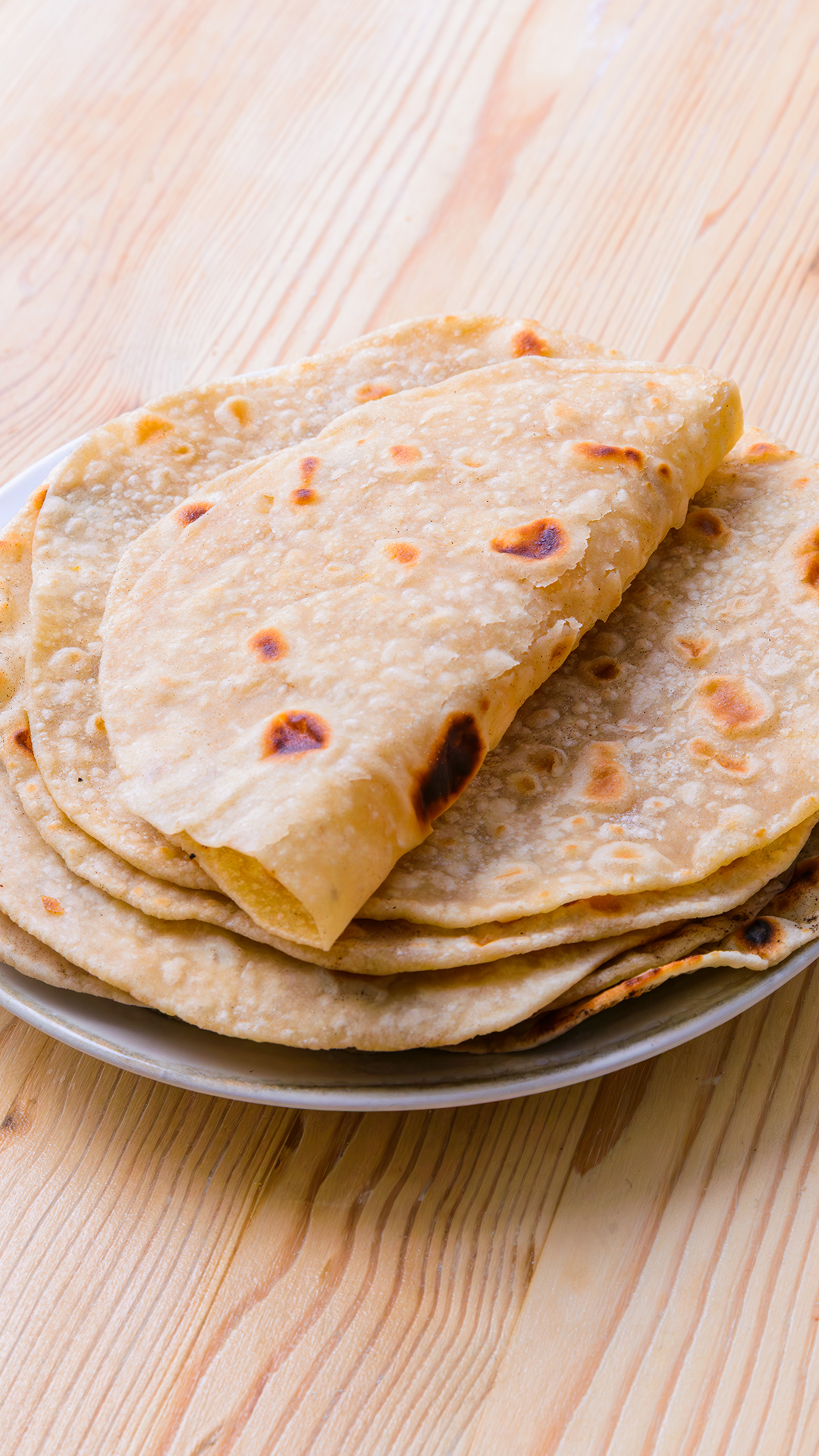
The Paris-born style, on the other hand, relies on a spreadable processed cheese, especially La Vache Qui Rit, and aims for a creamy, stretchy center. Later, some diaspora and restaurant versions adopted mozzarella and cheddar blends to heighten that gooey effect. In both cases, intense heat is essential.
A tandoor can reach around 480 °C. At home, an iron tawa is often preheated before being turned over an open flame. Expect a lightly firm, blistered surface, a tender crumb, and an interior that is either crumbly and aromatic, with paneer, or creamy and stretchy, with melted cheese. Quick glossary: kalonji refers to nigella seeds; ajwain is carom seed.
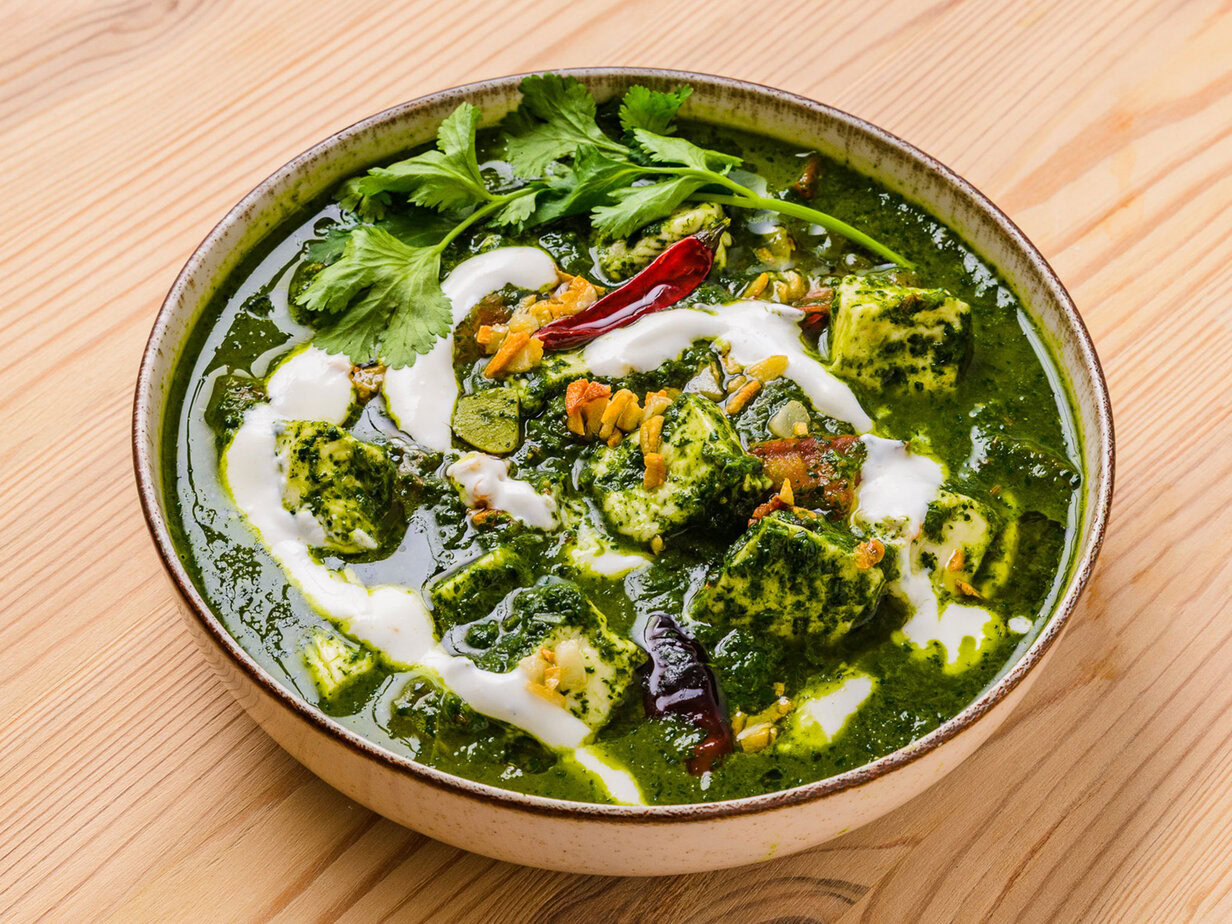
The Origins of Cheese Naan
Flatbread traditions in South Asia are ancient. Tawa-type cooking utensils have been reported at Harappan sites. Literary sources later mention various breads, then stuffed preparations.
The leavened bread called naan is generally linked to the Persian nān and to cooking in a tandoor. Around 1300, Amir Khusrau, in Delhi, mentions nān-e-tanuk, a light, thin bread, and nān-e-tanuri, cooked in a tandoor.
In Mughal circles, naan was associated with courtly luxury: it appeared in elite meals, including breakfast with kebabs or keema. Its dough, made from flour, water, salt, and a starter, was often enriched with ghee, milk, and yogurt, and sometimes eggs. It was then entrusted to specialized bakers, the naanbais.
Court cuisine also included stuffed pastries, including samosas, as well as other filled preparations. In Punjab, a close cousin, kulcha, became a staple of street stalls and dhabas.
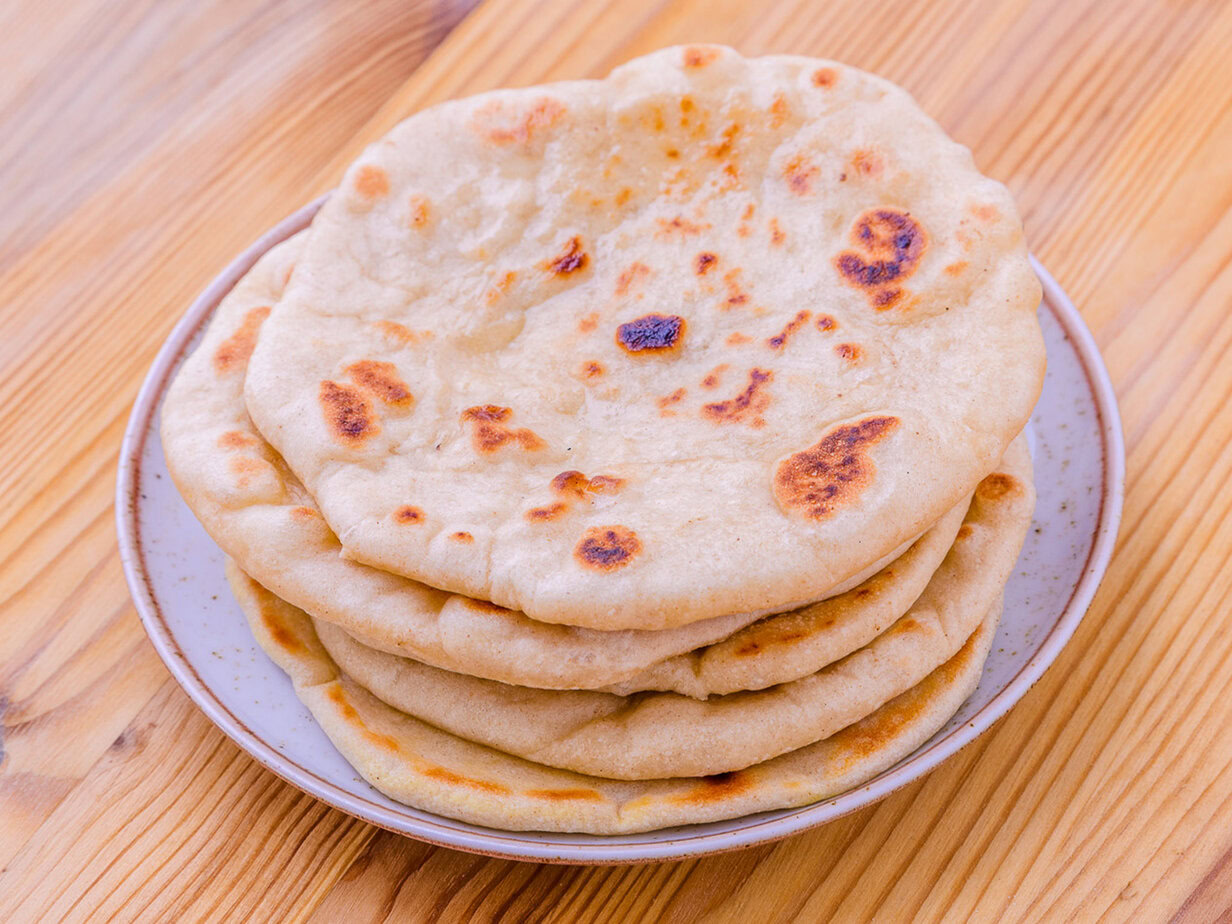
In modern versions, the dough often relies on baking powder and baking soda to save time. There is also a direct regional ancestor of cheese-stuffed bread: paneer naan, or Amritsari Paneer Kulcha, in which well-spiced, non-melting paneer brings aroma and chew rather than a molten center.
The melted-cheese version appeared in Paris in the late 1960s, notably around the opening of Annapurna in 1967. It is most often associated with André Risser and the idea of sealing La Vache Qui Rit inside the dough, although some sources attribute its creation to the Gupta family.
It has become an iconic specialty. The popularity of melted-cheese naan abroad probably encouraged similar offerings to appear in Indian restaurants catering to tourists, alongside other classics such as chicken tikka masala.
From one region to another, these leavened, stuffed breads hold a special place in convivial meals, whether served with rich sauces or simply brushed with cultured butter.
Main Ingredients in Cheese Naan
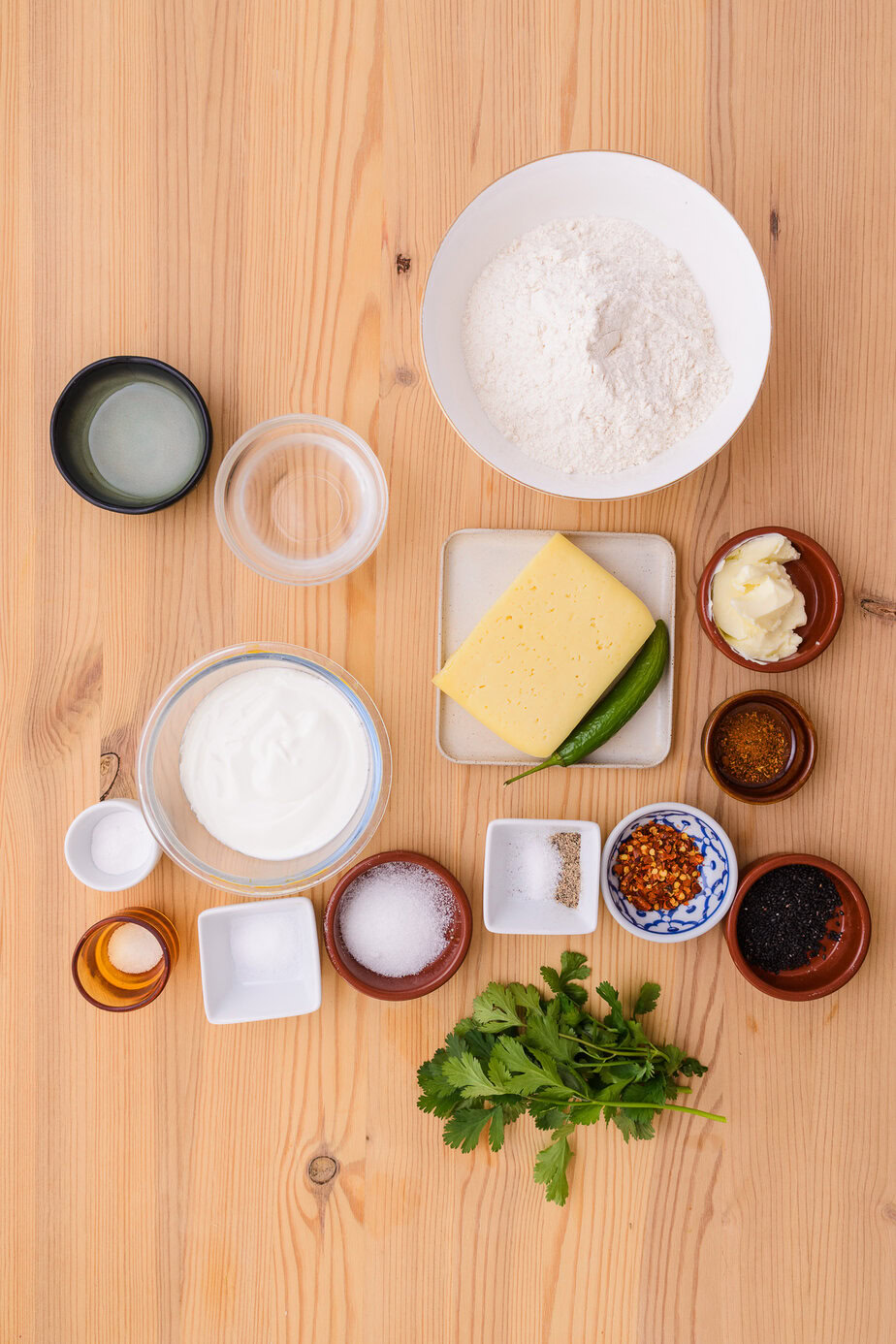
Processed cheese spread (historically, especially La Vache Qui Rit ; today, in India, industrial cheeses such as Amul also appear in some modern versions) : melts evenly and creates a creamy center. Personally, I like mozzarella best.
Mozzarella and cheddar blends : used in more recent diaspora and restaurant adaptations for extra stretch and a gooier center.
Richer dough (often with more milk or butter, and sometimes other enriching ingredients) : gives the naan an especially soft texture.
garlic butter, and more rarely truffle oil in some upscale Parisian variations : add a distinctive, more Western-inspired finish.
Ingredients
For the dough
- 250 g all-purpose flour (maida)
- 120 g plain yogurt
- 1 teaspoon sugar
- 0.5 teaspoon baking powder
- 0.25 teaspoon baking soda
- salt to taste
- 1 teaspoon oil
- 60 ml warm water
For the filling
- 115 g mozzarella small cubes
- 1 teaspoon green chilies chopped
- 1/4 teaspoon dried red chili flakes
- 2 tablespoons cilantro chopped
- 1/4 teaspoon chaat masala
- salt to taste
- black pepper to taste
Other ingredients
- 1 teaspoon black sesame seeds
- 2 tablespoons cilantro chopped
- 6 tablespoons butter
- all-purpose flour for rolling out
- 2 pinches salt
- water
Instructions
Make the filling
- Place the mozzarella, green chilies, dried red chili flakes, cilantro, chaat masala, salt, and pepper in a bowl.1 teaspoon green chilies, 1/4 teaspoon dried red chili flakes, 2 tablespoons cilantro, 1/4 teaspoon chaat masala, salt, black pepper
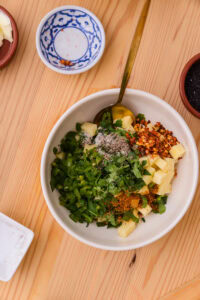
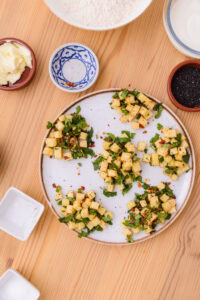
- Mix until evenly combined, then divide the filling into 6 equal portions and set aside.
Make the dough
- Mix the pinches of salt with a little water in a small bowl, then set aside (salt water).water
- Place the flour, yogurt, sugar, baking powder, baking soda, salt, and oil in a mixing bowl.120 g plain yogurt, 1 teaspoon sugar, 0.5 teaspoon baking powder, 0.25 teaspoon baking soda, salt, 1 teaspoon oil, 60 ml warm water
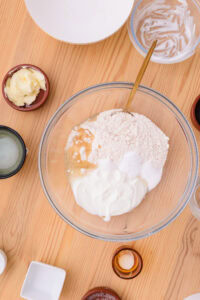
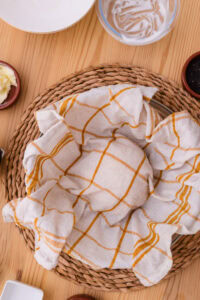
- Add the warm water and knead to make a soft dough. Cover with a damp cloth and let rest for 1 hour in a warm place.
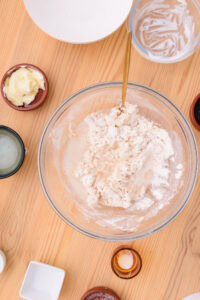
- Divide the dough into 6 equal portions.
Shape and cook
- Roll out a portion of dough with a little flour into a disc about 7.5 cm in diameter. Place a portion of filling in the center, bring the edges to the center, and seal. Flatten slightly.2 pinches salt
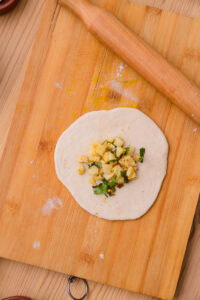
- Sprinkle with black sesame seeds and cilantro, then roll out again (with a little flour) into a roughly 17.5 cm rectangle.2 tablespoons cilantro, 6 tablespoons butter
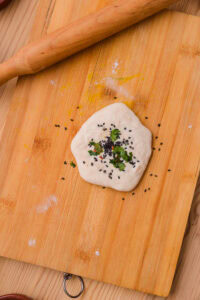
- Heat a nonstick pan over high heat. When hot, sprinkle it with the salt water (do not wipe). Brush one side of the naan with a little water, then place it wet side down on the pan.
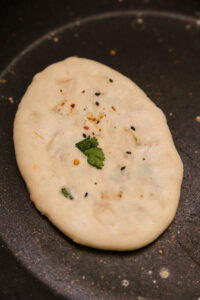
- Cook until small bubbles appear on the surface, then invert the pan over an open flame and cook, rotating, until brown spots appear.
- Remove from the heat and brush with about 1 teaspoon butter. Repeat with the remaining naans and serve immediately.all-purpose flour