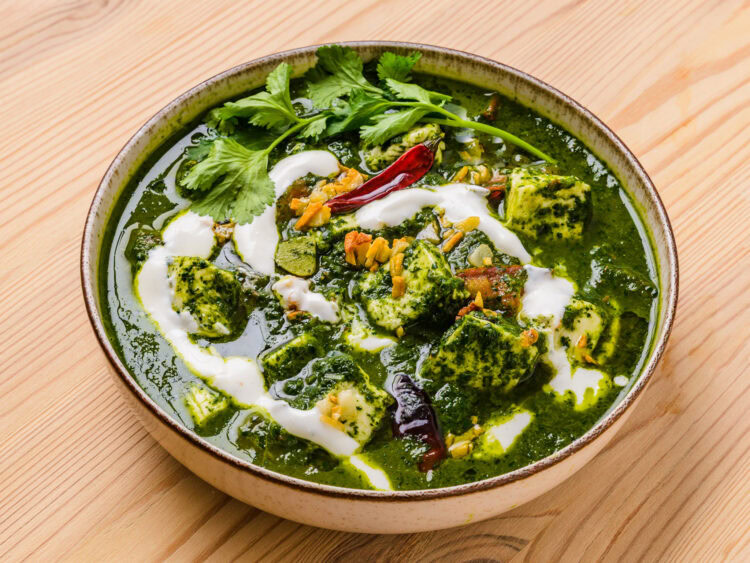
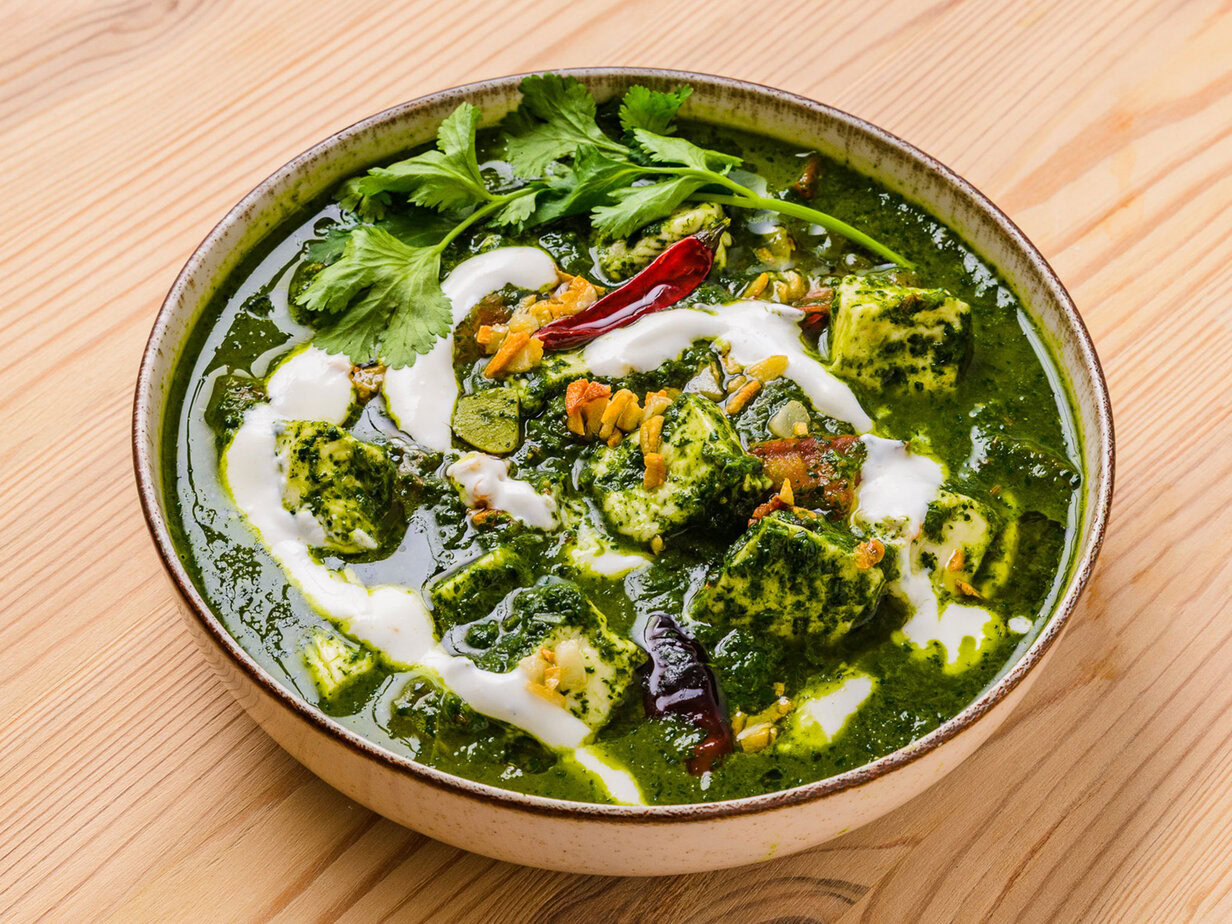
A deeply garlicky palak paneer finished with sizzling tadka and softened with a touch of cream: a comforting, flavorful Indian dish.
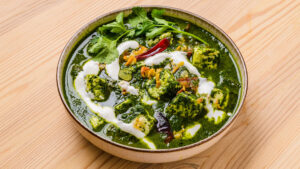
An emerald swirl of rustic spinach, studded with pale cubes of paneer and topped with a crackling fried garlic tadka: lasooni palak paneer announces its signature flavor right away. It is a boldly garlicky, dhaba-style take on Punjabi palak paneer.
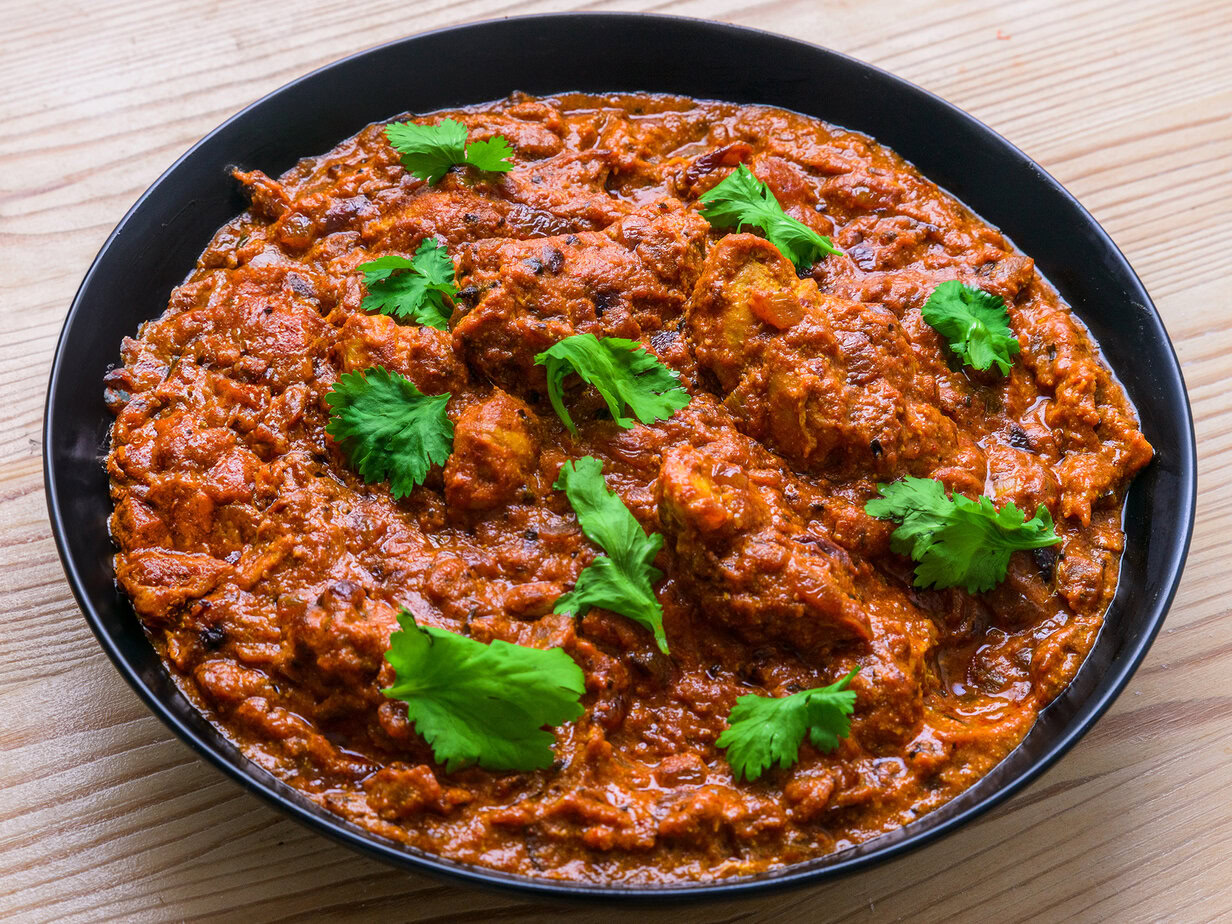
It belongs to the family of North Indian curries popularized in the West, like chicken tikka masala, but here garlic takes center stage.
If you have been reading me for a while, you know that last point alone meant I couldn’t pass this dish up.
What Is Palak Paneer?
“Lasooni” comes from lasun or lahsun, words for garlic. “Palak” means spinach. “Paneer” comes from the Persian panir, a word that spread into several regional languages and, in northern India, refers to a fresh cheese. Here, paneer is exactly that: an acid-set cheese that does not melt and holds its shape among the greens.
The name tells you this is a spinach-led curry in which garlic is not just a background note, but the dish’s aromatic signature. It appears first in the base, mellowed with ginger and green chilies until its raw sharpness softens. Then it returns in the tadka, where it crackles, sliced or chopped, in hot ghee with cumin and dried red chilies.
The best versions do not try to imitate the ultra-smooth spinach purée served in some restaurants. They keep a little texture: the spinach is briefly blanched in boiling salted water, immediately cooled in an ice bath to preserve its color, then roughly crushed or pulsed to leave small pieces and a light, fibrous bite.
In traditional Punjabi kitchens, a wooden madhani is used to crush and churn the cooked greens, binding them without turning them into a smooth purée. A good modern version shows the same restraint, rather than reducing the spinach to something completely uniform.
The History of Palak Paneer
Palak paneer draws much of its character from Punjab’s winter love of cooked leafy greens; the lasooni version pushes that foundation in a bolder direction with a distinctly garlic-forward finish.
Long before spinach became the mild, year-round green of urban restaurant menus, the region’s great green dish was saag, especially sarson ka saag, made with mustard greens and often supported by bathua or fenugreek.
As these preparations moved from village homes to city tables and restaurant menus, palak offered a milder flavor and a more supple texture. It was easier to serve in every season and easier to offer to diners with a wide range of tastes.
Paneer’s history reflects many influences, too. The word has Persian roots, and this firm, sliceable cheese became deeply embedded in the vegetarian cooking of northern India over the centuries through trade, migration, courtly adaptations, and an agrarian culture rich in dairy. That is also what makes it a staple of protein-rich vegetarian recipes.
During the Mughal era, from the early 16th century to the mid-19th century, court kitchens helped showcase paneer in opulent sauces made with nut pastes, saffron, and dairy fats. Rustic Punjabi-style palak paneer, however, remains more restrained than those courtly sauces. It favors leafy greens, fresh cheese, careful seasoning, and fat used for aroma rather than excess.
The garlic-forward character of the lasooni version fits naturally with dhaba cooking: roadside establishments where travelers find hot rotis, samosas, smoky hearths, and direct, satisfying flavors. The final tadka, made in ghee with garlic, cumin, and whole dried red chilies, gives the dish its characteristic sizzle while preserving the unmistakable green of the spinach.
Main Ingredients in Palak Paneer
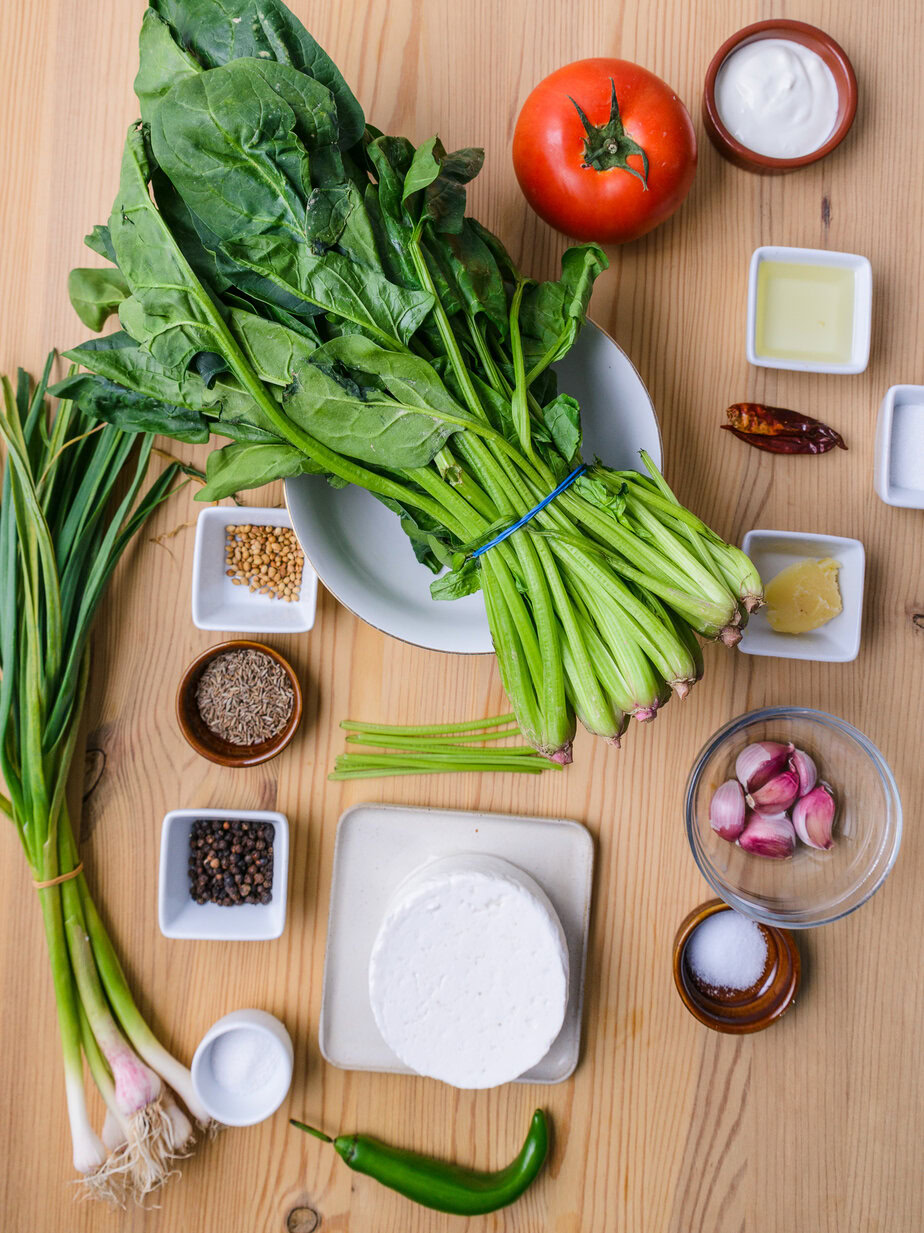
- Spinach, or palak: the heart of the dish, bringing gentle vegetal sweetness, vivid color, and a little bite. It also helps the curry cling to the paneer without becoming too loose or watery.
- Paneer: a fresh cheese that does not melt, adding milky sweetness and protein. Its porous texture lets it absorb the seasoned juices while staying tender, never rubbery.
- Ghee or mustard oil: the carrier for the aromatics. Ghee brings warmth and nutty notes, while properly heated mustard oil adds a deeper, earthier regional character.
- Cumin seeds: once toasted in the fat, they give the dish clean warmth and nutty depth that supports the spinach.
- Whole dried red chilies: they add dry heat, earthy depth, rich color, and a toasted aroma that blooms in the tadka, with more nuance than simple chili powder.
- Ginger and green chilies: they bring a fresh, peppery flavor and a clean heat that keep the spinach from tasting flat or heavy.
- Kasuri methi: these dried, crushed fenugreek leaves add a bittersweet, herbaceous finish.
- Garam masala: it adds a measured final warmth. Use it lightly so it does not overpower the spinach or the garlic.
- Makki atta: corn flour that gently thickens the curry, stabilizes the greens, and adds a subtle earthy note without the heaviness of cream or the overly smooth texture of starch.
- Hing and makhan, optional: a pinch of asafoetida can deepen the savory notes, while a small knob of makhan, freshly churned white butter, adds richness and milky roundness without weighing the dish down.
The Aromatic Structure of the Lasooni Signature
The guiding principle is a garlic-led balance. Lasooni palak paneer should have depth and fragrance without being weighed down by cream, cashew paste, tomato purée, or too much curry powder.
Unlike a Thai red curry or a green curry, it does not rely on a densely packed aromatic paste. Spinach is best briefly blanched in boiling salted water, then immediately cooled in an ice bath to preserve its vivid color. After that, it should be roughly chopped, not pulverized.
When the leaves keep a little fibrous texture, the curry feels more rustic and less uniform. In that sense, it is quite different from the smoother, more coating texture of a Japanese curry.
Garlic works best in two stages. In the base, it mellows alongside ginger and green chilies, adding roundness and savoriness. In the tadka, it hits very hot fat and browns quickly; if it cooks too long, it darkens and turns bitter.
The cumin and dried red chilies crackle with the garlic and perfume the ghee, or the well-heated mustard oil, while the kasuri methi and a touch of garam masala are added at the end for extra depth.
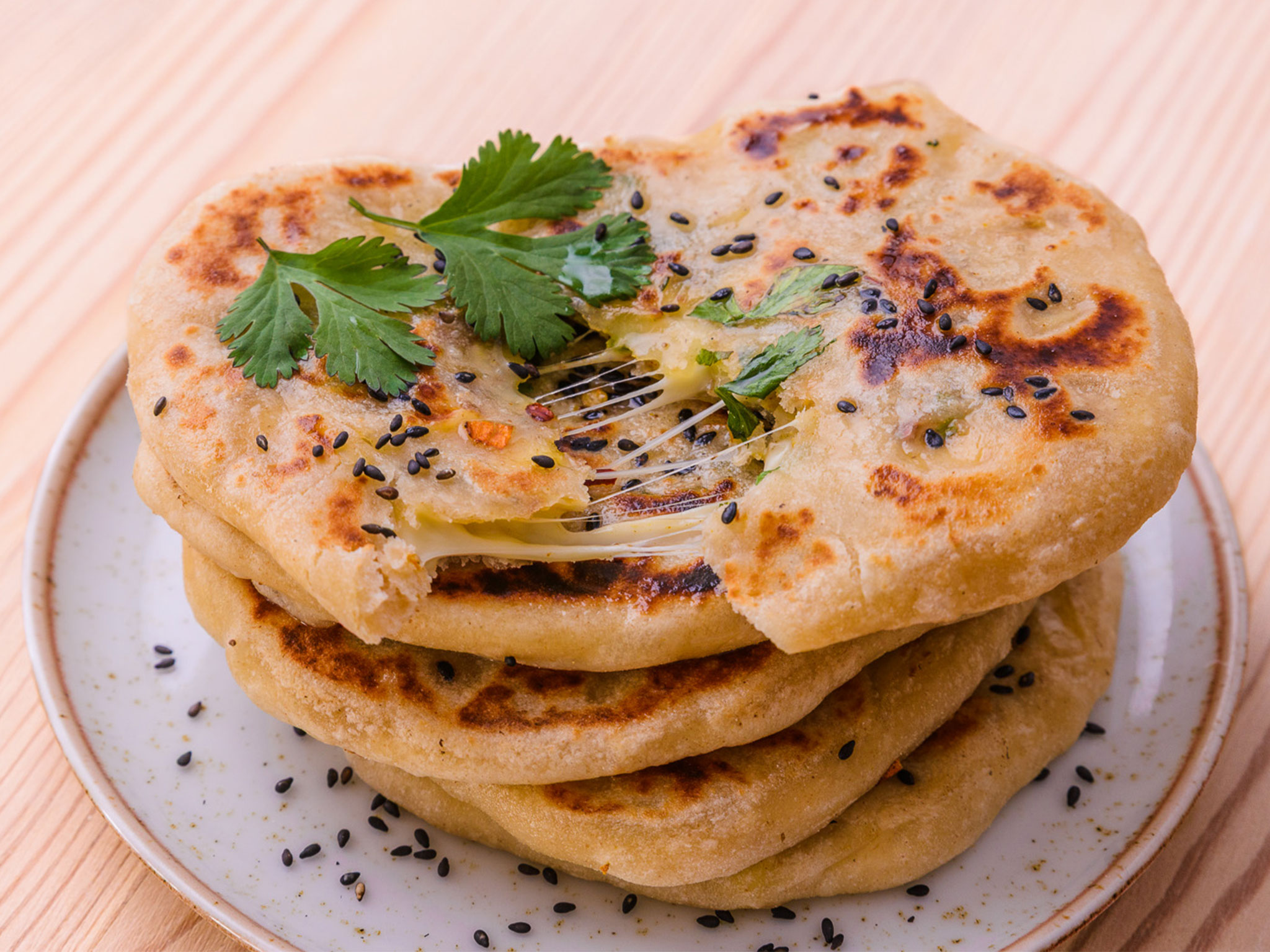
The final texture of the paneer matters just as much: soft if added fresh, tender with a slight bite if seared and then rehydrated, never rubbery. The most common accompaniments are roti, paratha, naan, chapati, or steamed rice; makki di roti pairs especially well with a meal that fully embraces the Punjabi saag tradition.
Ingredients
For blanching the spinach
- water as needed
- salt to taste
- 1/2 teaspoon baking soda
- 2 large bunches spinach roughly chopped
- 1 small handful green garlic chopped
- 1 mild green chili halved
- ice water for cooling
For the paneer
- 500 g paneer cut into medium cubes
- oil for frying
- water as needed, for soaking
For the masala
- 1/2 tablespoon coriander seeds
- 1 tablespoon black peppercorns heaping
- 2 teaspoons cumin seeds
- salt to taste
For the lasooni palak
- 2 tablespoons oil
- 2 dried red chilies
- 2 teaspoons cumin seeds
- 6 cloves garlic sliced
- 1 prepared spinach paste
- 1 teaspoon ghee
- salt to taste
- 1 pinch sugar
- 120 ml water
- 1 tablespoon cilantro stems finely chopped
- 60 to 120 ml water extra, as needed for desired consistency
- 1,5 teaspoon prepared masala
- 1 large tomato diced
- 1 fried and soaked paneer
For the tadka
- 1 tablespoon oil
- 1 dried red chili
- 4 to 5 cloves garlic finely chopped
For finishing
- heavy cream to taste
- 1 prepared tadka
- 1 sprig cilantro
Instructions
Prepare the masala
- Heat a small dry skillet. Add the coriander seeds, black peppercorns, cumin seeds, and a little salt, then toast for about 1 minute, until fragrant.1/2 tablespoon coriander seeds, 1 tablespoon black peppercorns, 2 teaspoons cumin seeds, salt
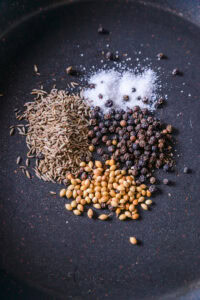
- Transfer to a mortar and pound coarsely. Set aside.
Fry, then soak the paneer
- Heat a little oil in a skillet, add the paneer cubes, and brown on all sides.500 g paneer, oil
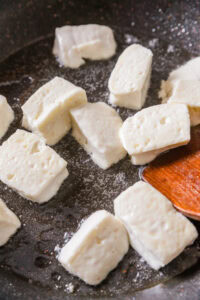
- Remove the paneer, then submerge in a bowl of water for 10 to 15 minutes so it stays tender. Drain and set aside.water
Blanch the spinach
- Bring a large pot of water to a boil with salt and the baking soda. Add the spinach, green garlic, and green chili, then cook for 1 minute.water, salt, 1/2 teaspoon baking soda, 2 large bunches spinach, 1 small handful green garlic, 1 mild green chili
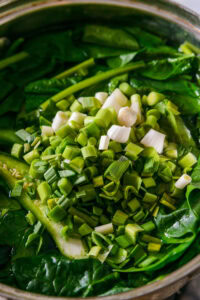
- Drain immediately, transfer to ice water for 1 minute, drain again, then gently squeeze out excess water.ice water
- Blend to a smooth, homogeneous paste. Set aside.
Make the lasooni palak paneer
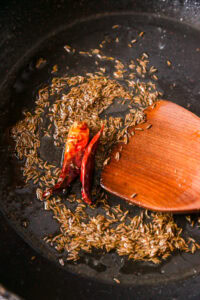
- Heat the oil in a kadai or sauté pan. Add the dried red chilies and cumin seeds; let them crackle for a few seconds, then stir in the sliced garlic and sauté until lightly colored.2 tablespoons oil, 2 dried red chilies, 2 teaspoons cumin seeds, 6 cloves garlic
- Add the spinach paste, ghee, salt, and sugar. Mix well and cook for a few minutes to develop the flavors.1 prepared spinach paste, 1 teaspoon ghee, salt, 1 pinch sugar
- Pour in 120 ml water, add the cilantro stems, then cook 2 to 3 minutes over medium heat.120 ml water, 1 tablespoon cilantro stems
- Stir in the masala, the diced tomato, and the drained paneer. Mix gently.1,5 teaspoon prepared masala, 1 large tomato, 1 fried and soaked paneer
- Add a little extra water if needed to adjust the texture, then simmer a few moments more. Adjust seasoning.60 to 120 ml water
Make the tadka
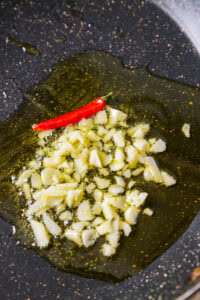
- In a small skillet, heat the oil. Add the dried red chili, then the finely chopped garlic, and sauté until the garlic is well golden and fragrant (without burning it). Remove from the heat.1 tablespoon oil, 1 dried red chili, 4 to 5 cloves garlic
To serve
- Transfer the lasooni palak paneer to a serving dish, spoon over a little heavy cream, top with the hot tadka, and finish with a sprig of cilantro. Serve immediately (ideally with rotis or naan).heavy cream, 1 prepared tadka, 1 sprig cilantro
Notes
- Baking soda helps keep the spinach bright green, but do not add more or it may taste soapy.
- Soaking the paneer after frying makes it softer and more tender.
- Adjust the water at the end of cooking to make the sauce as thick or loose as you like.