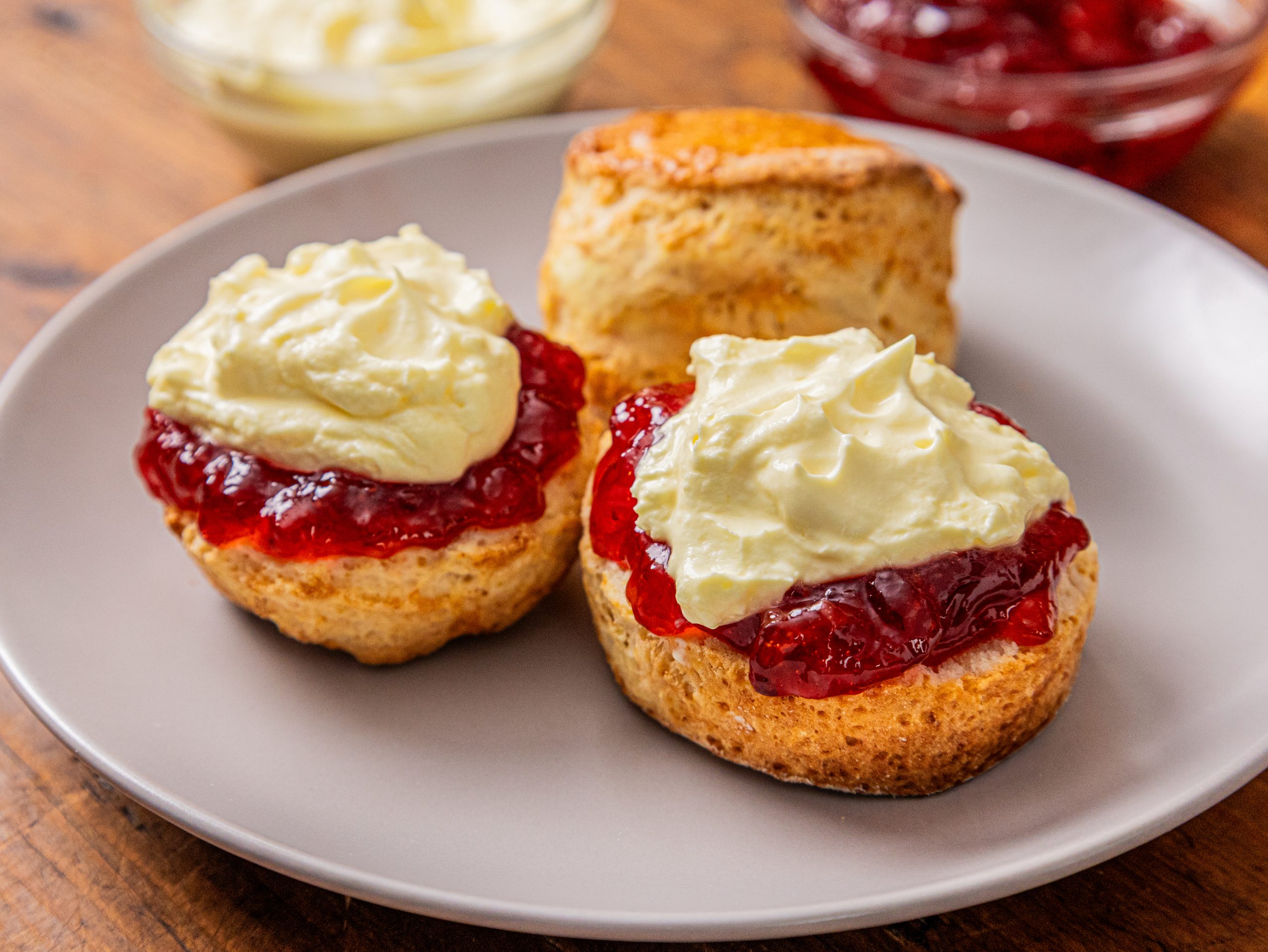
Servings: 8 scones
Ingredients
Dough
- 400 g self-rising flour (self-raising flour), or 400 g of all-purpose flour (T45 or T55)
- 1.5 teaspoons baking powder, or 3 teaspoons in total with all-purpose flour (T45 or T55)
- 45 g sugar superfine
- 1 pinch salt
- 90 g butter unsalted, well chilled
Liquid
- 145 ml milk whole, or reduced-fat milk
- 1 tablespoon lemon juice fresh
- 1 teaspoon vanilla extract, optional
- 1 large egg
Egg wash
- 1 egg medium
To serve
- Strawberry jam
- Clotted cream
Procédé
Oven and baking sheet
- Preheat the oven to 220°C, or 200°C for a convection oven.
- Line a baking sheet with parchment paper.
Rubbing in the butter
- Put the flour, baking powder, salt, and sugar in a large mixing bowl.400 g self-rising flour, 1.5 teaspoons baking powder,, 1 pinch salt, 45 g sugar
- Stir to combine.
- Cut the cold butter into small cubes, or grate it straight into the bowl.90 g butter
- Add the butter to the bowl.
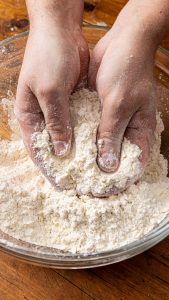
- Rub the butter into the flour with your fingertips, or pulse in a food processor, until the butter is fully incorporated and the mixture looks like breadcrumbs.
Liquid
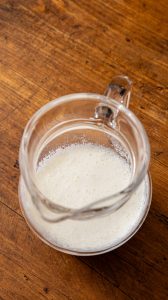
- Pour the milk into a pitcher.145 ml milk
- Add the lemon juice.1 tablespoon lemon juice
- Let stand for one to two minutes, until the milk curdles and looks lumpy.
- Add the large egg and the vanilla.1 large egg, 1 teaspoon vanilla extract,
- Whisk until well combined.
Dough
- Pour the liquid into the bowl of flour.
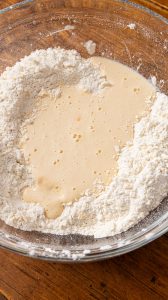
- Mix just enough to bring the dough together, without working or kneading it.
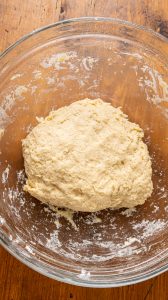
Shaping
- Turn the dough out onto a floured work surface.
- Pat it out by hand, as briefly as possible, into a rough rectangle about 2.5 cm thick.
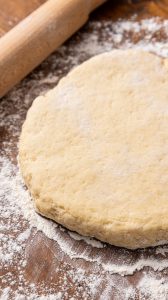
- Make sure the thickness is even all over, edges included.
- Cut out rounds with a 6.5 cm round cutter.
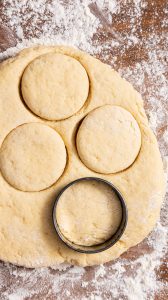
- Press the cutter straight down and lift it out without ever twisting it.
- Gather up the scraps and pat them out again to the same thickness, handling the dough as little as possible.
- Cut out more rounds until all the dough is used up.
- Place the scones on the baking sheet.
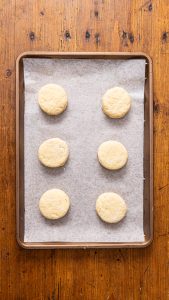
Egg wash and baking
- Beat the medium egg.1 egg
- Brush the tops of the scones with the beaten egg, without letting it drip down the sides.
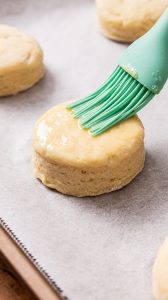
- Bake for 12 to 14 minutes.
- Check for doneness: the scones should be well risen, golden on top and underneath, and sound hollow when tapped on the bottom.

- Let the scones cool on a wire rack.
Serving
- Split the scones in half, by hand or with a knife.
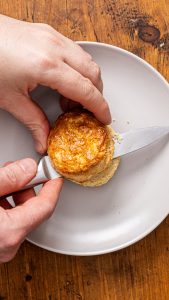
- Top with strawberry jam and clotted cream.Strawberry jam, Clotted cream

- Ideally, serve them warm, about ten minutes after they come out of the oven.
Notes
These are the British cream tea scones, round and tall, served with clotted cream and strawberry jam. Very sweet triangular scones, glazed or studded with chips, are the American version, which is a different recipe.
Flour: British self-raising flour is flour that already has baking powder mixed in. In Belgium, it is sold as farine fermentante; in France, as farine à gâteaux à levure incorporée. With all-purpose flour (T45 or T55 in France, Type 405 in Germany), use 3 teaspoons of baking powder in total instead of 1.5. Measure the baking powder with proper measuring spoons, and check that it hasn't expired: baking powder or flour that is too old will no longer make the scones rise.
The lemon juice curdles the milk and turns it into a kind of buttermilk: the scones rise better and have a more tender crumb, with no taste of lemon.
Why they rise straight: the dough needs to be thick enough (about 2.5 cm, because scones rise less than you might think), an even thickness, and cut without twisting the cutter. Twisting the cutter seals the edges and makes the scones lean; dough that is thinner along one edge also gives lopsided scones. Egg wash that drips down the sides holds back the rise. Dough 2.5 cm thick rises better than dough 2 cm thick: that is the thickness used here.
Dry, tough scones: the dough was overworked, kneaded, or re-rolled too many times, or there wasn't enough liquid. The number of scones depends on the cutter and the thickness: about 8 with a 6.5 cm cutter.
You can chill the rounds in the refrigerator for 30 minutes before baking, but it makes little difference to the result.
The egg wash gives a golden, glossy top; milk works too, with a less shiny top. It doesn't affect the flavor.
Fruit scones, the classic variation: soak 100 g of sultana raisins, or mixed dried fruit, in 100 ml of water for 20 minutes so they don't burn, then drain them. Stir them into the flour and butter mixture right after rubbing in the butter and before adding the liquid. This makes about 10 scones, which bake for 12 to 15 minutes.
Cream first or jam first: in Devon, you spread on the clotted cream and then the jam; in Cornwall, the jam and then the cream.
Clotted cream is a very thick cream (about 55% fat), made by slowly heating very rich cow's milk until a golden crust forms on the surface. You can sometimes find imported clotted cream in jars. Otherwise, gently fold 1 part room-temperature mascarpone into 2 parts heavy cream whipped to soft peaks, or mix equal parts mascarpone and thick crème fraîche. Whipped cream on its own is too light.
Storage: scones are best eaten the day they are made. Once cooled, they keep for 2 days in an airtight container. They can be frozen for up to 3 months, in a freezer bag, an airtight container, or tightly wrapped in plastic wrap.
Did you make this recipe?Tag @marcwiner on Instagram!