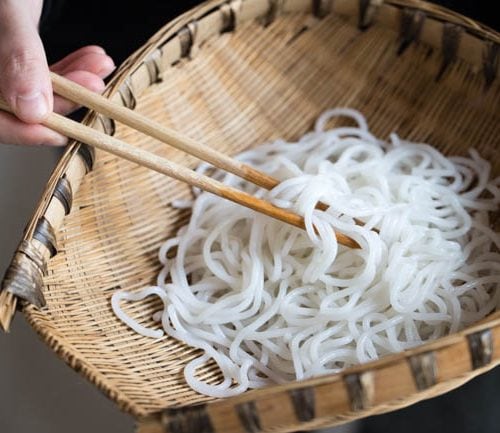
What are rice noodles?
Rice noodles are noodles made from rice flour, water and salt. They are mainly eaten in Southeast Asia, but can also be found in some parts of China.
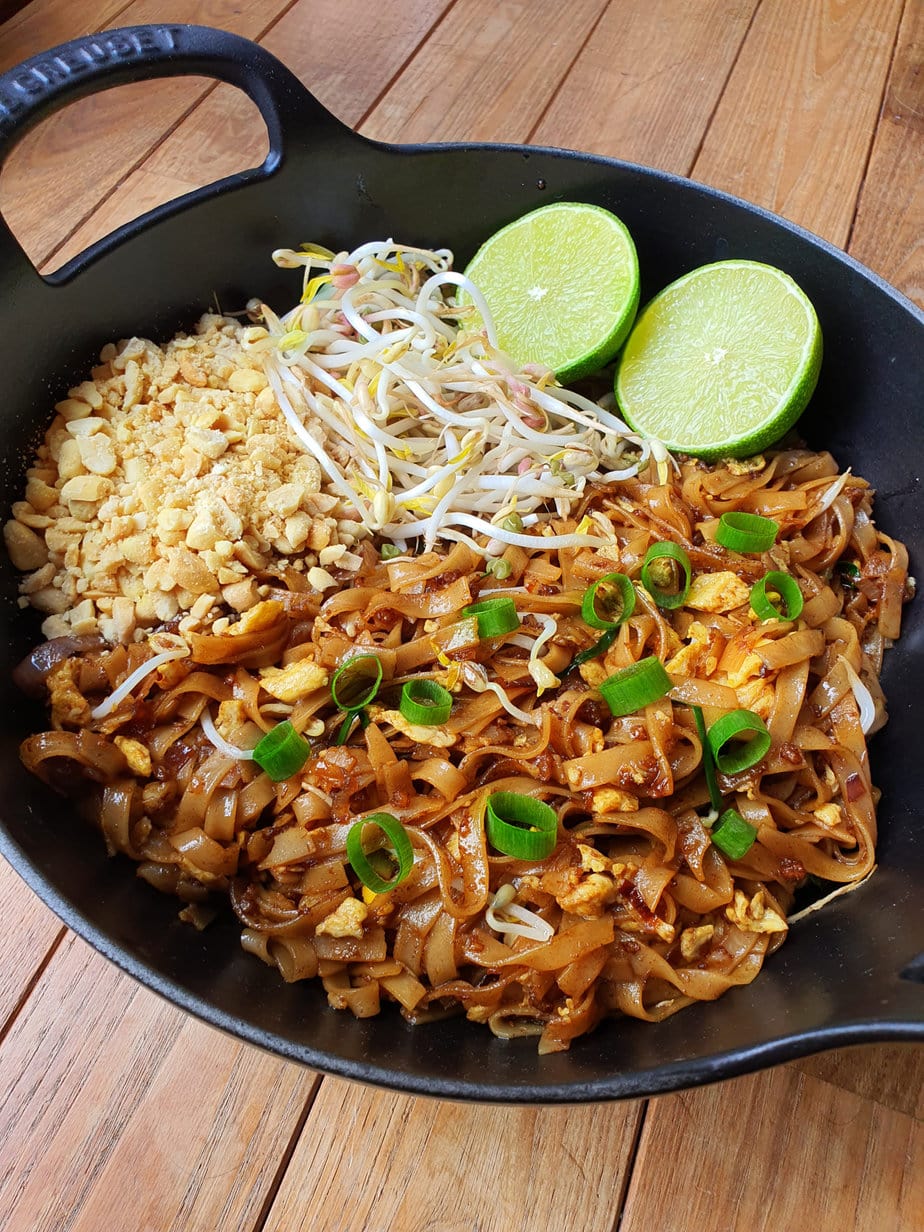
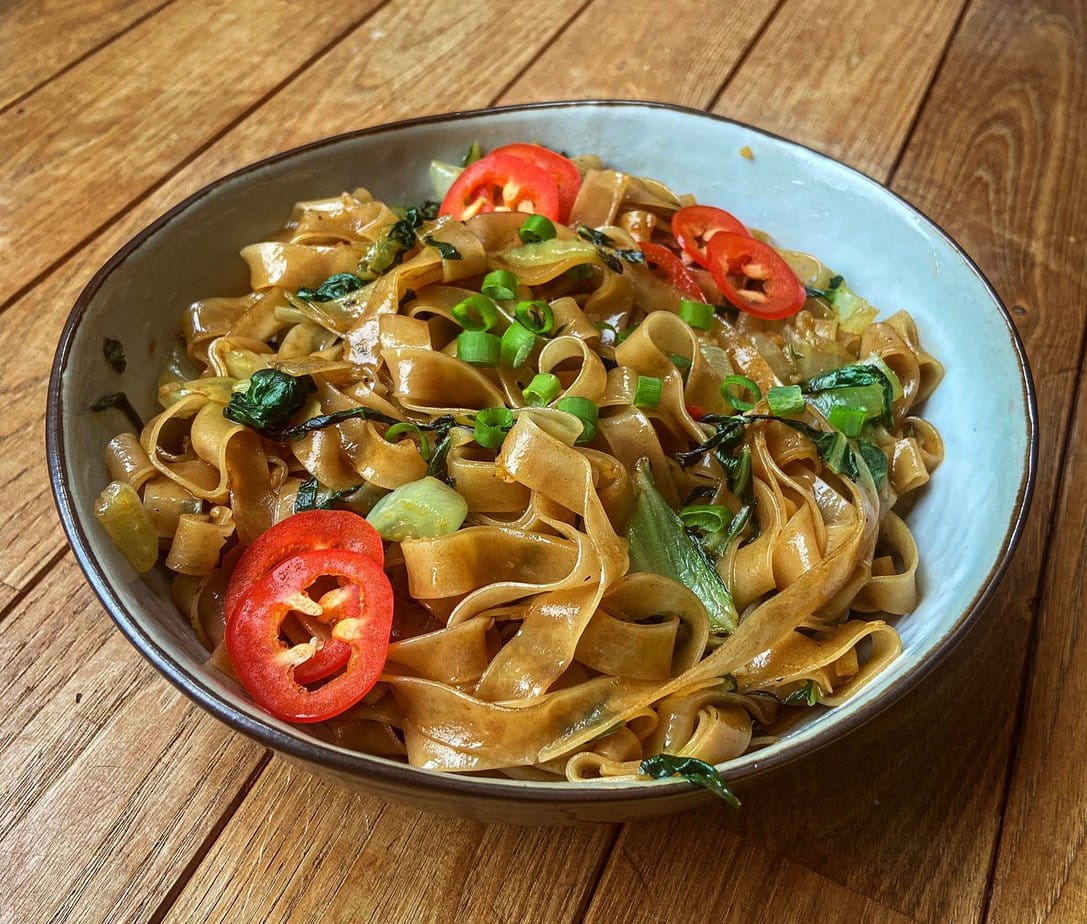
They are traditionally served in a hot soup with various toppings, each more delicious than the last. They can also be used in stir-fried dishes, as is often the case in Thailand. (and that is by far my favorite way to prepare them).
Stir-fried dishes notably include pad see ew and pad thai. Rice noodles in Thailand are usually served with beef, shrimp, chicken, vegetables and fish sauce.
Origins of rice noodles
The history of rice noodles is long and fascinating, which is why I’m going to give you a quick summary, since we’re all a little pressed for time. If you want to learn more, I can point you to my source.
This ingredient has in fact existed for more than three thousand years. The earliest written recipes for rice flour noodles were found on a tombstone from the Han dynasty in 2nd-century-BC China.
Rice vermicelli was also mentioned in a Chinese poem from the Tang dynasty (618-907 AD).
It is interesting to note that rice vermicelli was the most popular variety at that time because it was easy to produce, inexpensive and easy to store once dried; it lasted much longer than wheat-based pasta.
How to cook rice noodles?
There are many ways to cook rice noodles. However, while I detail the more advanced method in my pad thai recipe or my article how to cook rice noodles, the method explained below is not really any different from traditional pasta and gives very good results if you don’t want to fuss over it.
First of all, start by bringing water to a boil in a pot. Then add a pinch of salt before adding the rice noodles.
Cook over high heat, stirring occasionally. After 10 minutes of cooking, strain off the water and place the noodles in a bowl to serve.
- A little tip if you plan to use them in a “stir-fried” dish: rinse them in cold water in a colander. The noodles will firm up for when you stir-fry them.
The different kinds of rice noodles

Rice noodles come in a wide variety of types and shapes. The main variants depend on the ingredients, the thickness and the cooking time. Here I’ll introduce you to the two most common types.
Rice vermicelli
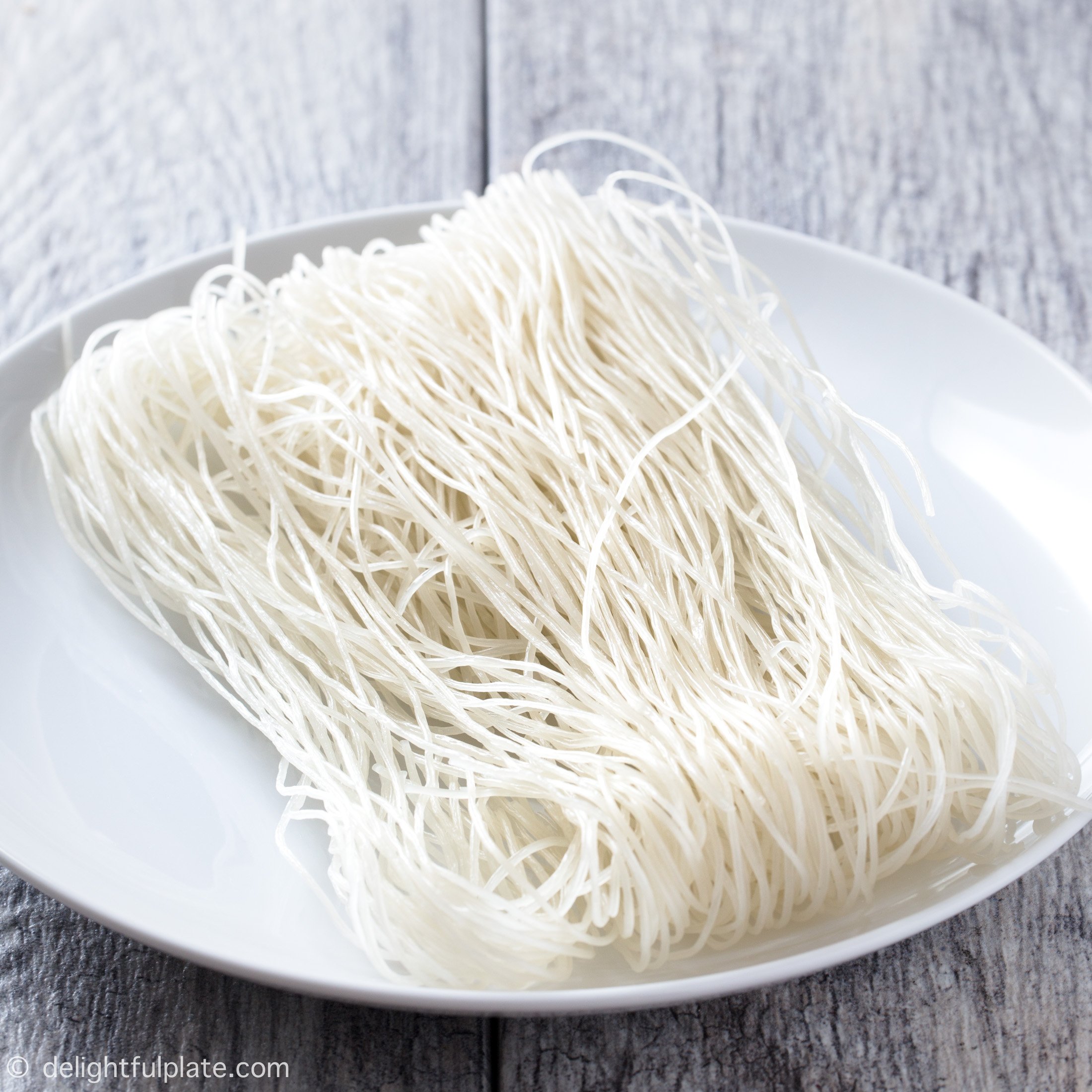
Rice vermicelli is a type of rice noodle that is very popular in many cultures. It is often eaten as a cold dish or in a hot soup.
Rice vermicelli can be boiled, but is usually soaked in cold water to hydrate it and keep it from sticking together.
Once hydrated and drained, it can be seasoned with oil and various spices such as garlic, soy sauce, sesame oil, and so on. You’ll even find it in Vietnamese spring rolls.
You can find rice vermicelli on Amazon
Rice sticks
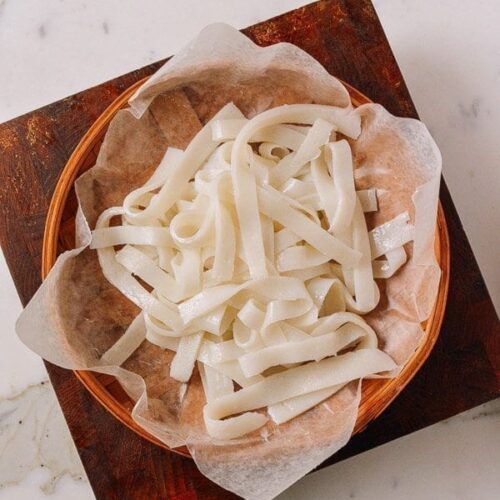
Rice sticks are a type of dried noodle originating in China. They’re best when they’re fresh and crunchy.
This is what gives us the most widespread type of rice noodle in Europe. They are traditionally served at various festivals in Asia. Rice sticks are made from a dough of rice flour, salt, water and oil, which is then cut into thin strips before being fried or oven-dried to make dry, crispy noodles.
The thickness of the noodles
Rice noodles are available in different thicknesses – the thickest ones are often used to prepare hearty, heavily stir-fried and vigorously tossed dishes like the Chinese dish Beef Ho Fun. Conversely, more delicate dishes such as pad see ew or pad thai are made with thinner noodles.

Calories in rice noodles
Since rice noodles differ mainly in their shape and not in their base ingredients, these values apply to all the kinds described above: 100 grams of rice noodles represent an energy value of 2 calories