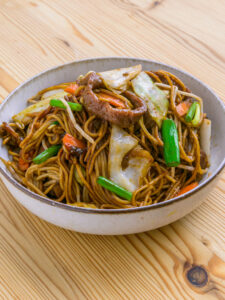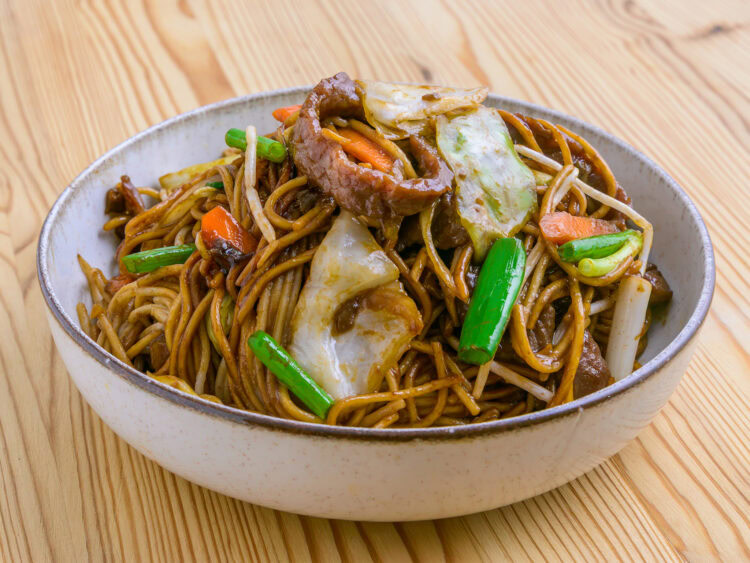
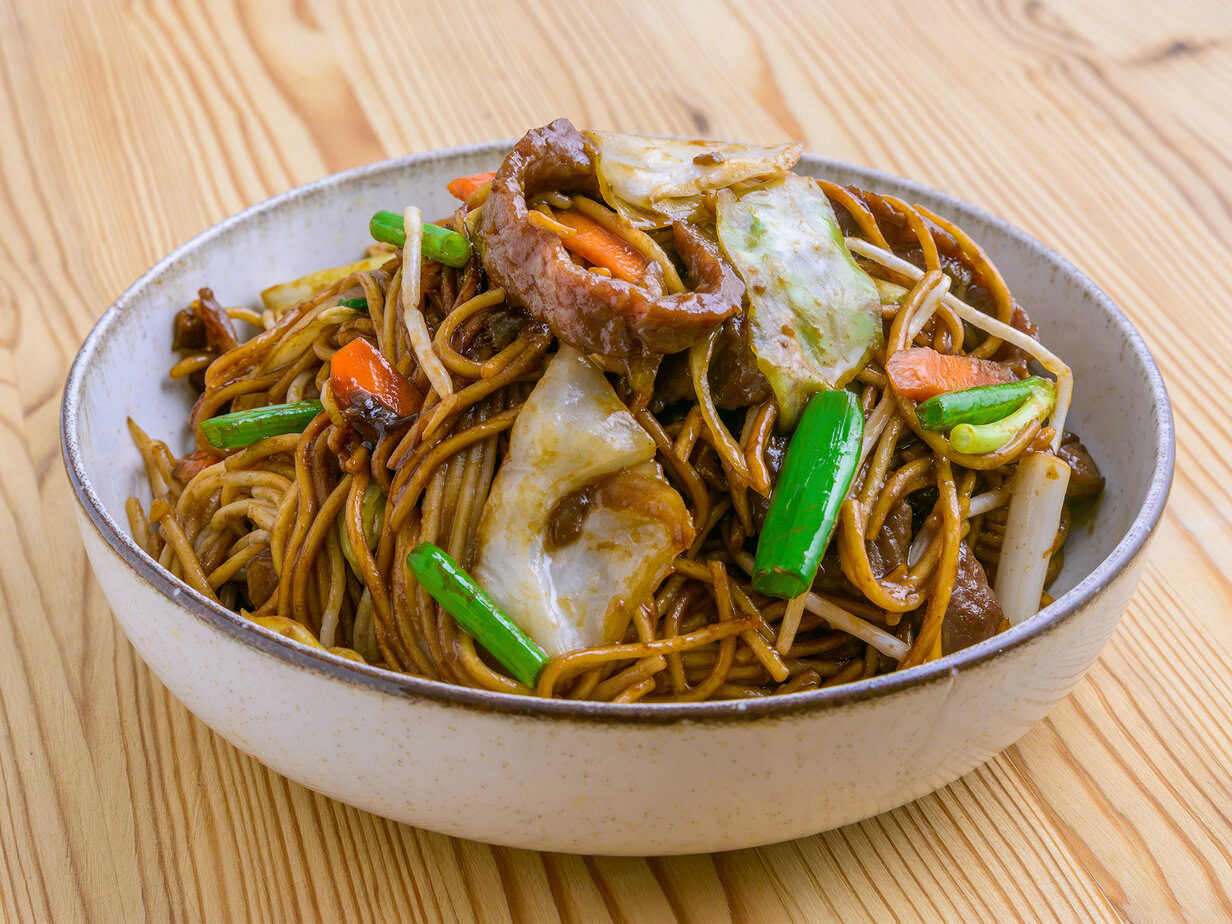
Egg noodles stir-fried in a wok with marinated beef, cabbage, carrot and a glossy soy sauce, just like Chinese takeout.
It’s late, you’re hungry, and you find yourself thinking about that cardboard carton from the Chinese takeout place, those glossy brown noodles you pick up straight from the box with chopsticks.
Homemade lo mein brings back that same pleasure: soft, springy noodles, tender slices of beef, cabbage that still has some crunch and that aroma of garlic and ginger rising from the wok. The sauce glazes every strand without drowning the plate. At the end, a handful of bean sprouts and green onions adds a freshness that keeps you coming back for more.

What Is Lo Mein?
Lo mein is a dish of fresh egg noodles that are boiled, drained and then tossed in a wok with a sauce and toppings. In this beef version, the noodles meet thin strips of marinated meat, cabbage, onion and carrot. Light soy sauce adds salt, dark soy sauce gives the mahogany color, oyster sauce brings shine and toasted sesame oil perfumes the whole dish. Chow mein is its closest cousin, with noodles fried longer in the oil, making them firmer and sometimes crispy.
The name comes from the Cantonese lou mein (撈麵), which translates as “tossed noodles”: the noodles are cooked separately, then stirred into the sauce. The spelling lo mein is the one found on the menus of Chinese restaurants in America.

From Cantonese Food Stalls to America’s Chinese Takeout Spots
In Guangzhou and Hong Kong, lo mein is a simple dish: thin, springy alkaline noodles, lightly seasoned, often served with a bowl of clear broth on the side. The texture of the noodles matters more than the sauce.
With the Cantonese immigrants who settled in the United States, the dish took on a new look in restaurants serving Chinese cuisine. The broth disappeared, the egg noodles got thicker, and soy sauce, oyster sauce and sesame oil came to play a bigger role. The result is darker, glossier and much more generously sauced.

It’s this takeout version, served in a carton with beef, chicken, shrimp or just vegetables, that is known today as lo mein, in Europe and America alike.
Main Lo Mein Ingredients
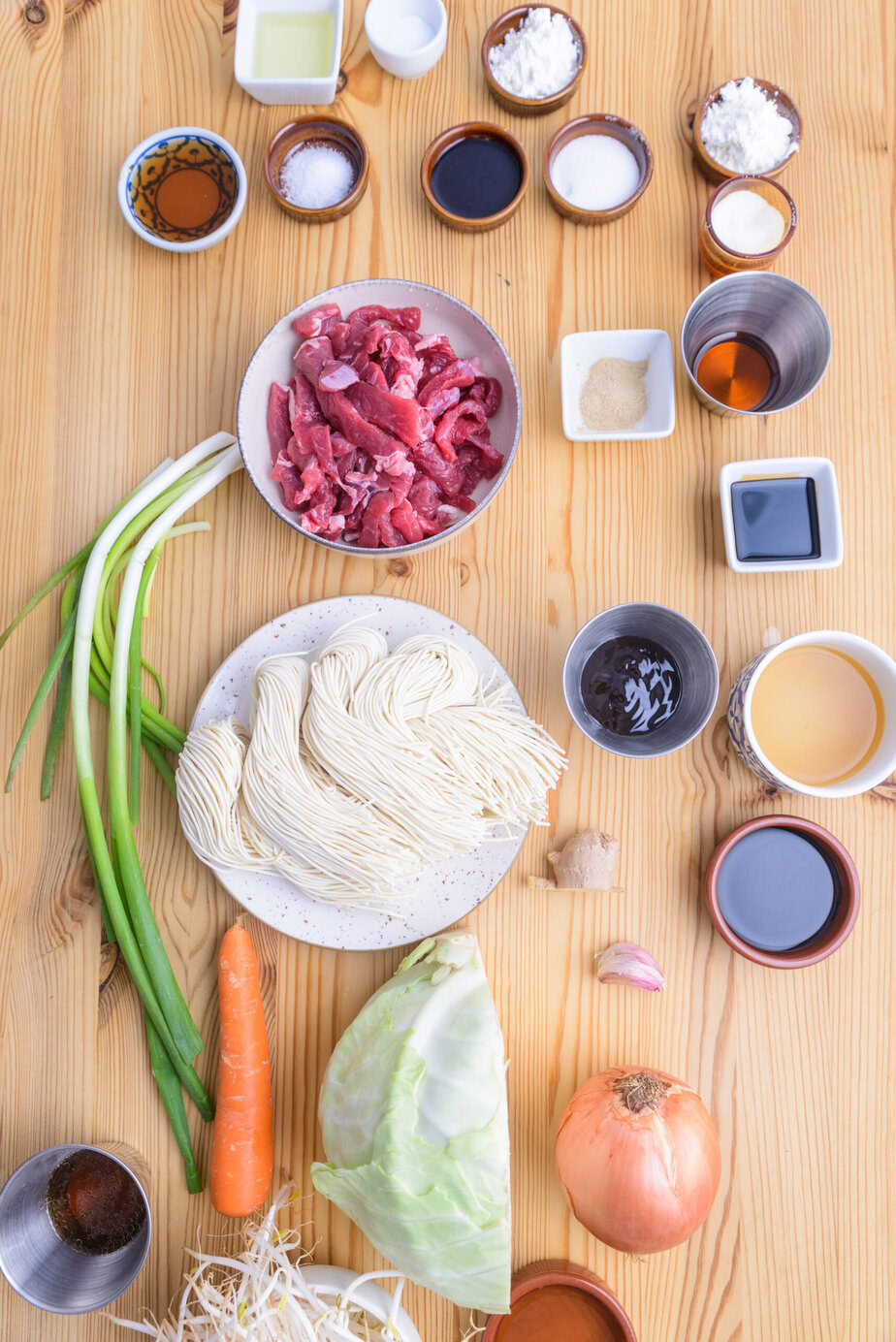
Fresh lo mein noodles are egg noodles you’ll find in the refrigerated section of Asian grocery stores. Thick and springy, they soak up the sauce without falling apart. The beef comes from a quick-cooking cut such as flank steak, hanger steak or strip steak. Cabbage, onion and carrot add crunch and a touch of sweetness, while green onions and bean sprouts bring freshness at the last minute.
The beef marinade follows the Chinese restaurant method. A little baking soda tenderizes the meat, then cornstarch, sugar, salt, light soy sauce, Shaoxing wine and oil coat it in a thin film that keeps it juicy over high heat.
The sauce combines chicken broth, light and dark soy sauces, oyster sauce, white pepper, sugar and a little cornstarch, which thickens it within seconds once it hits the wok. A spoonful of toasted sesame oil is all it takes to flavor it.
Key Techniques for Great Lo Mein
Both the beef and the noodles need to be nice and dry before they go into the wok: the marinade clings better to meat that has been pressed dry, and noodles that are drained, dried and then oiled take on the sauce without sticking. On a home stove, a wok loses its heat quickly, which is why the cooking is done in stages: the vegetables, then the beef, then the aromatics and the noodles.
Pour the Shaoxing wine and the sauce down the scorching side of the wok, not over the noodles, so they reduce and caramelize in a matter of seconds. The same very-hot-wok approach applies to stir-fried beef noodles and beef chow fun.
Ingredients
Marinated Beef
- 225 g beef a quick-cooking cut such as flank steak, hanger steak, or strip steak
- 0.25 teaspoon baking soda
- 0.25 teaspoon cornstarch
- 0.25 teaspoon sugar
- 1 pinch salt
- 0.25 teaspoon light soy sauce
- 0.5 teaspoon Shaoxing wine
- 0.5 teaspoon neutral oil
Sauce
- 1 tablespoon cornstarch
- 1.5 teaspoons sugar
- 0.25 teaspoon ground white pepper
- 0.5 teaspoon kosher salt
- 60 ml chicken stock, or 0.5 teaspoon chicken bouillon powder dissolved in 4 tablespoons water
- 2 tablespoons light soy sauce
- 1 teaspoon dark soy sauce
- 2 tablespoons oyster sauce
- 1 teaspoon toasted sesame oil
Noodles
- 450 g fresh lo mein noodles from the refrigerated section
- A little neutral oil to coat the noodles
Stir-Frying
- 90 g cabbage coarsely chopped
- 30 g onion thinly sliced
- 30 g carrot cut into thin slices
- 1 tablespoon neutral oil preferably peanut, for the vegetables
- 2 tablespoons neutral oil preferably peanut, for the beef
- 1 tablespoon neutral oil preferably peanut, for the aromatics
- 1 tablespoon ginger minced
- 1 tablespoon garlic minced
- 1 tablespoon Shaoxing wine for deglazing
Finishing
- 2 to 4 green onions cut into 2.5 cm pieces
- 50 g bean sprouts
Instructions
Marinated Beef
- Cut the flank steak into thin strips against the grain.225 g beef
- Rinse the strips under cold running water for 1 minute, massaging them the whole time.
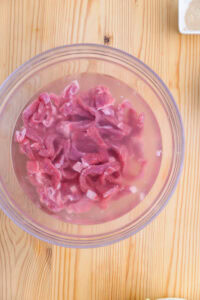
- Drain well and squeeze the meat to remove the water.
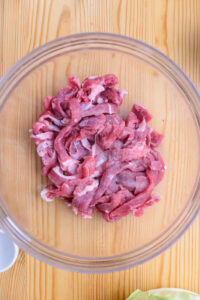
- Add the baking soda and massage it into the meat for 1 minute.0.25 teaspoon baking soda
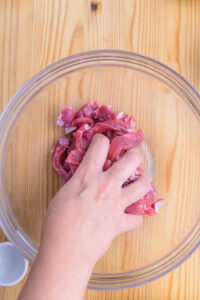
- Add the cornstarch, sugar, salt, light soy sauce, Shaoxing wine, and oil.0.25 teaspoon cornstarch, 0.25 teaspoon sugar, 1 pinch salt, 0.25 teaspoon light soy sauce, 0.5 teaspoon Shaoxing wine, 0.5 teaspoon neutral oil
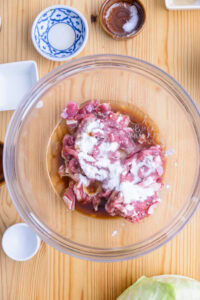
- Stir to combine.
- Let marinate for at least 15 minutes, or overnight in the refrigerator.
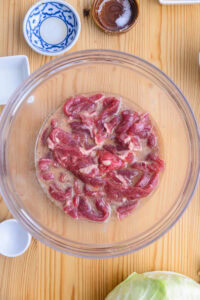
Sauce
- In a small bowl, combine the cornstarch, sugar, white pepper, and salt.1 tablespoon cornstarch, 1.5 teaspoons sugar, 0.25 teaspoon ground white pepper, 0.5 teaspoon kosher salt
- Add the chicken stock and whisk until the dry ingredients are completely dissolved.60 ml chicken stock,
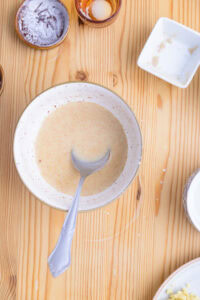
- Add the light soy sauce, dark soy sauce, oyster sauce, and sesame oil.2 tablespoons light soy sauce, 1 teaspoon dark soy sauce, 2 tablespoons oyster sauce, 1 teaspoon toasted sesame oil
- Mix well and set aside.
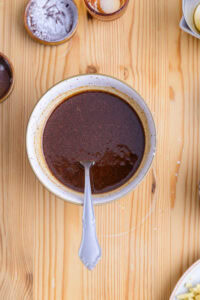
Noodles
- Cook the noodles according to the package directions.450 g fresh lo mein noodles
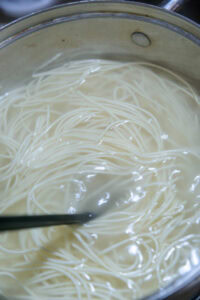
- Drain well.
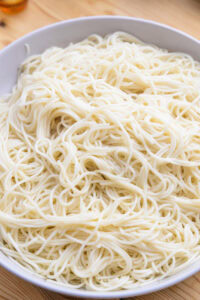
- Dry the noodles thoroughly in a salad spinner, or by spreading them out on a baking sheet to let the steam escape.
- Toss the noodles with a little oil so they don’t stick together.A little neutral oil
Stir-Frying
- Heat the wok over medium-high heat until it is lightly smoking.

- Add the oil for the vegetables.1 tablespoon neutral oil
- Add the cabbage, onion, and carrot.90 g cabbage, 30 g onion, 30 g carrot
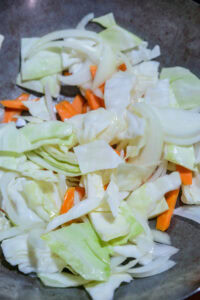
- Stir-fry for 1 minute, until the vegetables are tender but still crisp.
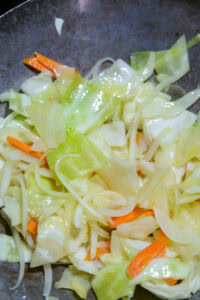
- Set the vegetables aside.
- Return the wok to medium-high heat and add the oil for the beef.2 tablespoons neutral oil
- Add the marinated beef and press it into a single layer.
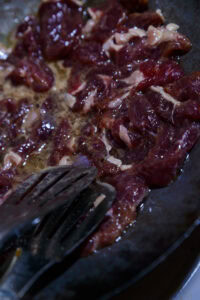
- Let it sear without stirring until the first side is nicely browned.
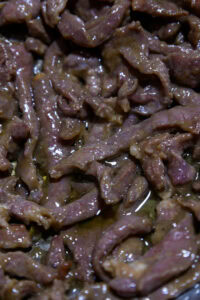
- Set the beef aside with the vegetables.
- Return the wok to medium-high heat and add the oil for the aromatics.1 tablespoon neutral oil
- Add the ginger and garlic and stir-fry for 10 to 15 seconds, until fragrant.1 tablespoon ginger, 1 tablespoon garlic
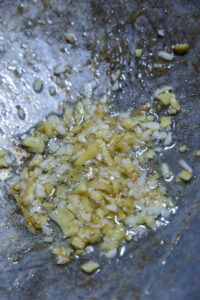
- Immediately add the noodles.
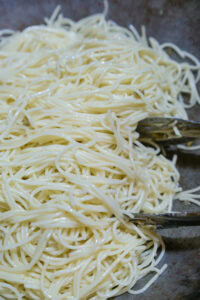
- Toss them with the aromatics until softened and well coated, lowering the heat if they start to stick.
- Return the vegetables and beef to the wok.
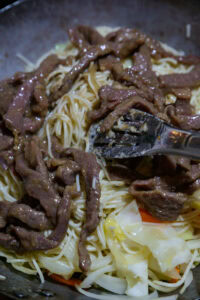
- Toss until everything is evenly distributed.
- Push the noodles to one side of the wok.
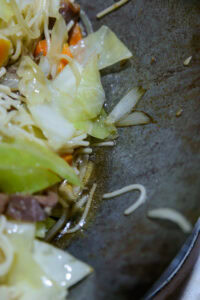
- Pour the Shaoxing wine directly onto the hot wall of the wok, not onto the noodles.1 tablespoon Shaoxing wine
- Toss the noodles with the wine.
Finishing
- Push the noodles to one side of the wok again.
- Stir the sauce to re-suspend the cornstarch.
- Pour the sauce directly onto the wall of the wok, not onto the noodles.
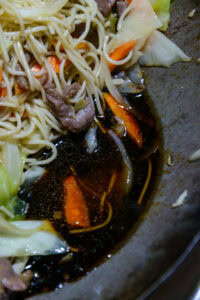
- Let it bubble for 15 to 20 seconds, until it thickens and caramelizes around the edges.

- Turn off the heat.
- Gently toss the noodles in the thickened sauce until well coated, without breaking them.
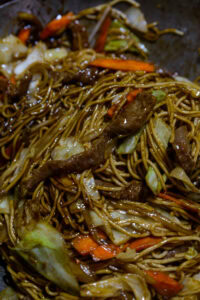
- Add the green onions and bean sprouts.2 to 4 green onions, 50 g bean sprouts
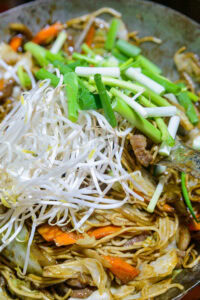
- Toss well and serve immediately.