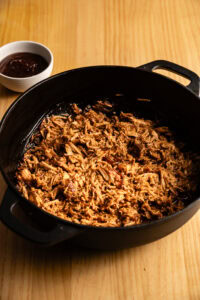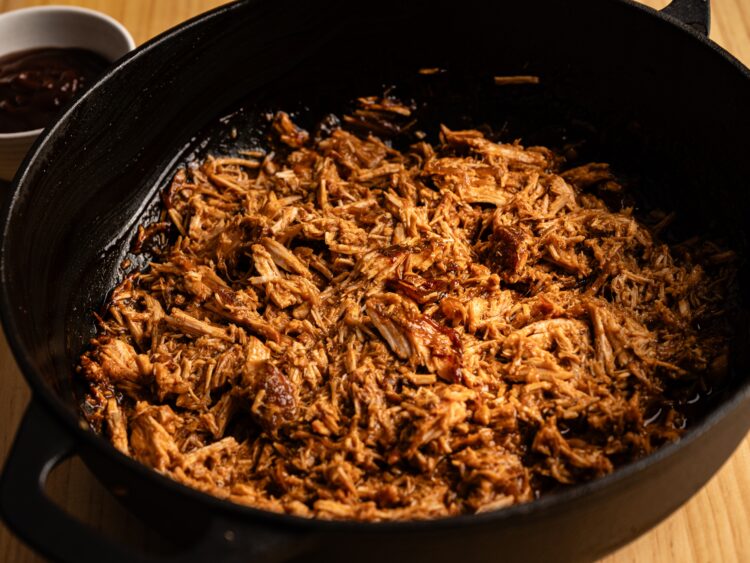
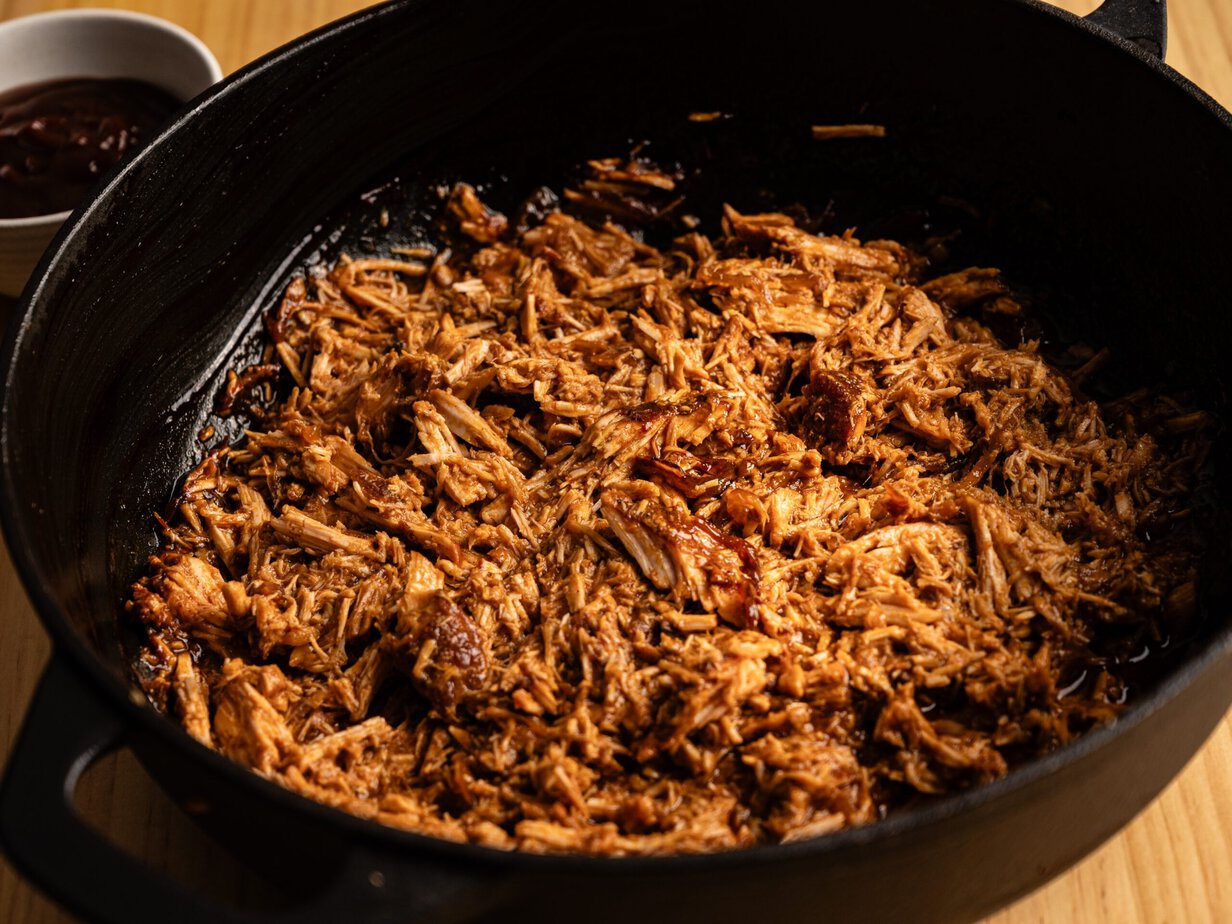
Spice-rubbed pork shoulder, seared, then oven-braised in a Dutch oven, shredded with a fork and returned to its juices.
On a rainy Sunday, the Dutch oven has been in the oven since early afternoon and the whole house smells of brown sugar, paprika and meltingly soft onion. When you finally lift the lid, the meat gives way at the first press of a fork and falls apart into long strands glistening with juice.
You pile it into a soft bun with a spoonful of barbecue sauce, and nobody says a word for a few minutes. The best part is that it all comes out of an ordinary kitchen oven.
What Is Pulled Pork?
Pulled pork is pork shoulder cooked for a very long time at low heat, then shredded with a fork and mixed with its juices or a barbecue sauce. In the American South, it cooks for hours in the smoke above hot coals. This recipe is the homemade version: the meat is rubbed with spices, seared, then braised in the oven in a covered cast-iron Dutch oven. The flavor comes from the seared crust, the spices and the braising juices, with no smoker or wood fire.
The name comes from the verb to pull: the meat is pulled into strands, by hand or with a fork, while it’s still hot. The French call it porc effiloché, or shredded pork, a name that describes the same texture.

Born in the Barbecue Pits of the Carolinas
Pulled pork comes from Southern barbecue, and especially from both Carolinas. Whole hogs were cooked there all night over hot coals, in pits dug into the ground, for large communal meals. The meat was then pulled and served with a sharp sauce meant to cut through the fat. The word barbecue itself comes from barbacoa, the wooden grill of the Indigenous peoples of the Caribbean.
Each region has kept its own sauce. Eastern North Carolina relies on vinegar and pepper, Lexington style adds a little ketchup, and South Carolina prefers a mustard sauce. Today pulled pork is a classic of American cuisine, served as a sandwich all over the country.
The oven version is the home-kitchen adaptation of this tradition. It keeps the slow cooking and the fatty shoulder, and replaces the smoke with a deep, dark sear and a covered braise. A cast-iron Dutch oven and a few hours of patience are all you need.
The Main Ingredients for Pulled Pork
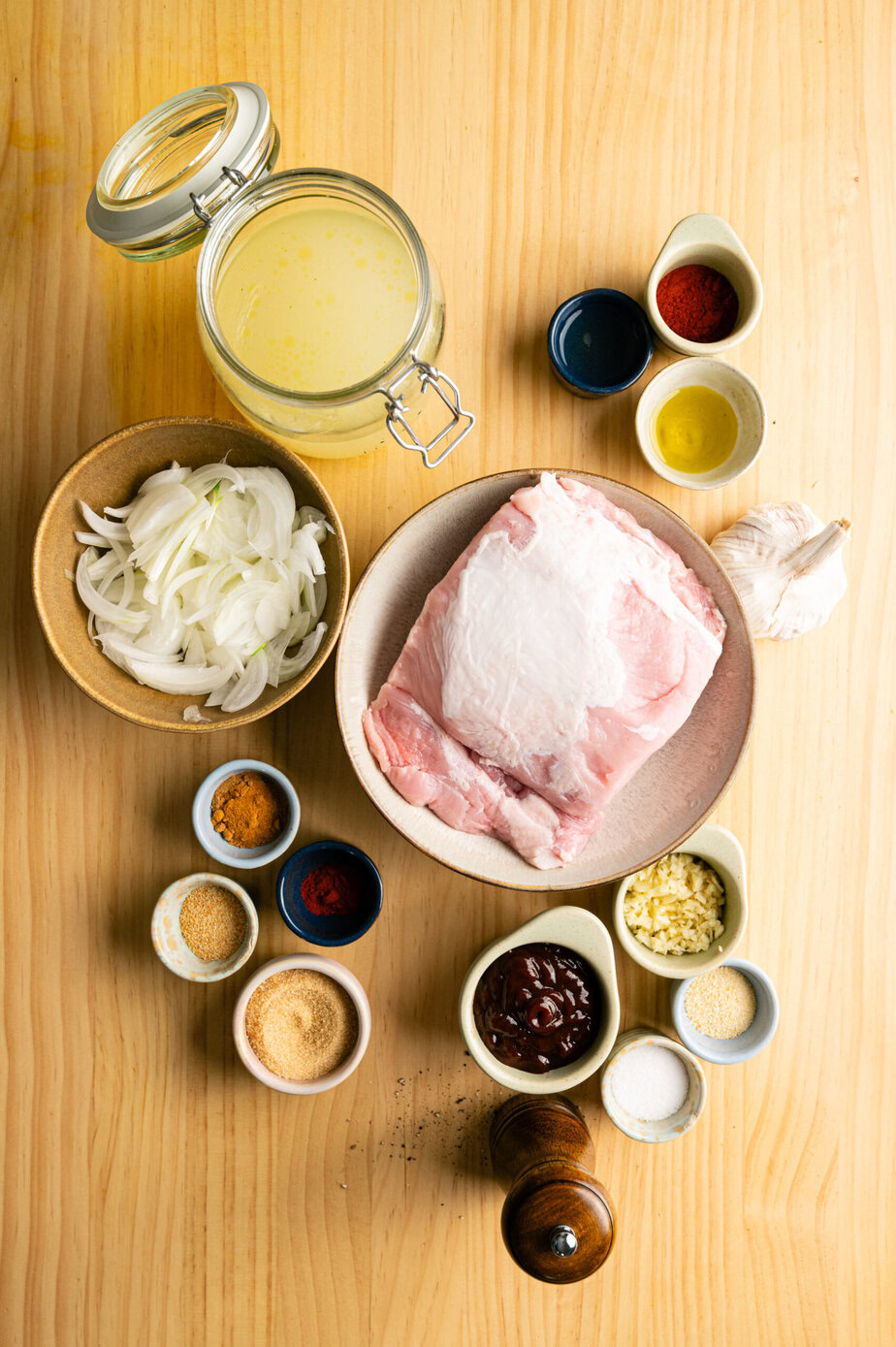
The shoulder blade roast, the upper part of the shoulder that Americans call Boston butt, gives the best results. It is fattier than the rest of the shoulder and rich in collagen, which melts during the slow cooking and makes the meat juicy. A boneless shoulder works too. Lean cuts, such as the loin or a pork roast, dry out and turn tough when braised.
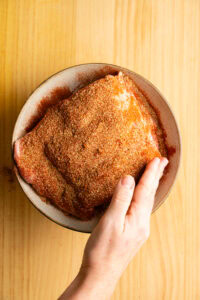
The rub is a dry mix: brown sugar, paprika, onion and garlic powder, mustard powder, coarse salt and black pepper. The chili powder here is the American spice blend, not pure ground chili pepper. Pressed over the entire surface, the rub forms a dark crust during searing, and the brown sugar caramelizes.
The braise is made with a sliced onion, garlic, chicken broth, barbecue sauce and a spoonful of apple cider vinegar. The vinegar cuts through the fat, and the sauce brings sweetness and tang. A barbecue sauce made with ketchup and Worcestershire sauce works well, whether store-bought or homemade.
Technical Tips for Good Oven Pulled Pork
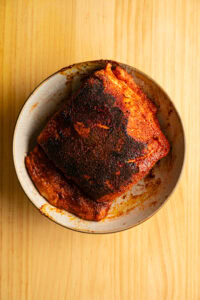
Sear the shoulder until it has a deep, dark crust on all sides: that crust is what gives the juices their flavor. The liquid should come halfway up the meat, under a tight-fitting lid. A thermometer is the best guide: at an internal temperature of 93 to 95 °C, the meat shreds with no resistance. Below that, it still slices, and you need to cook it 20 to 30 minutes longer.
Let the meat rest, covered, for 20 minutes before shredding it, then return it to its juices, skimmed of fat if needed. The slow cooker version works too, and you’ll find its cooking times in the recipe notes.
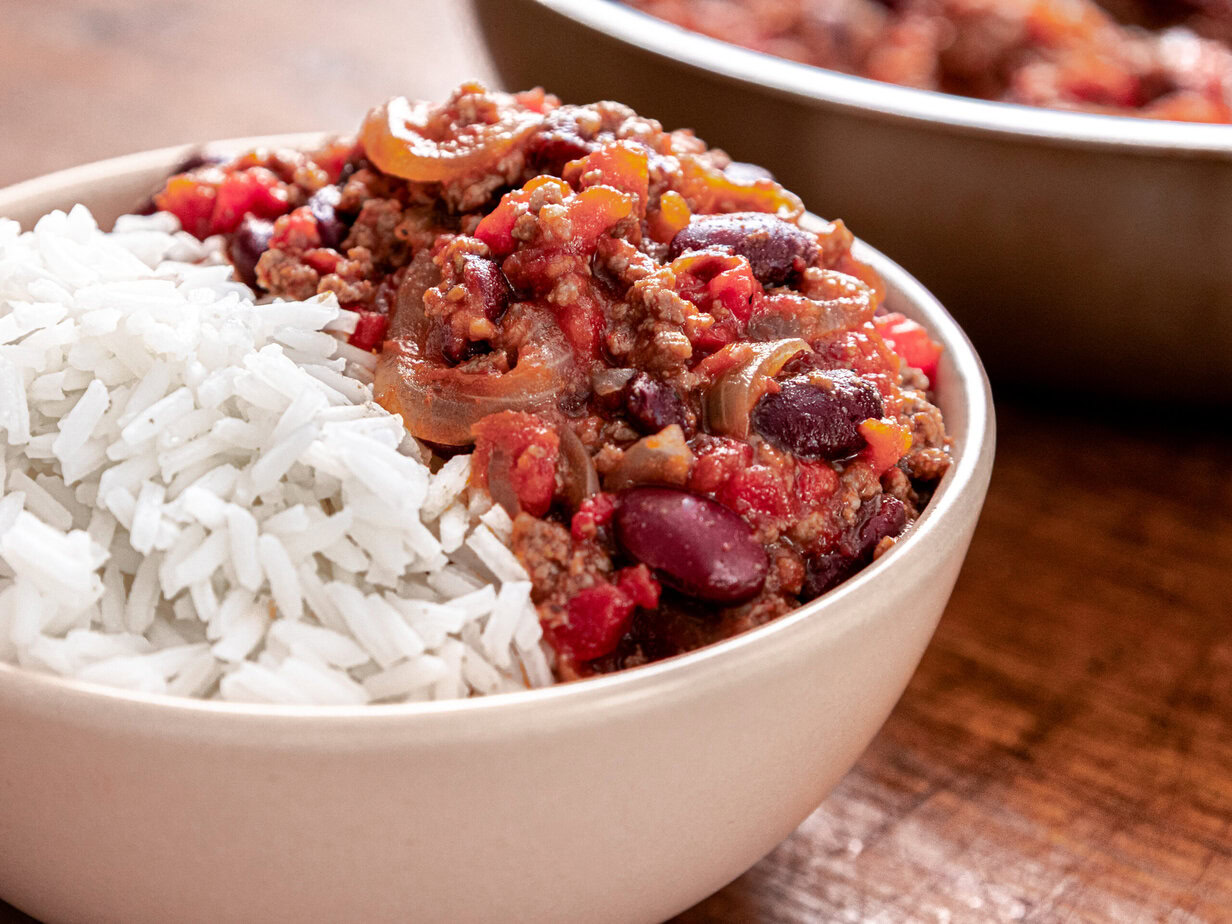
Serve the pulled pork in soft buns with coleslaw, or in tortillas, like beef tacos. It can easily be made the day before and reheated in its juices. Leftovers keep for 4 days in the refrigerator, or 3 months in the freezer.
Ingredients
Rub and Sear
- 2.3 to 2.7 kg pork shoulder boneless, or pork butt
- 3 tablespoons brown sugar
- 4 teaspoons paprika
- 2 teaspoons onion powder
- 2 teaspoons garlic powder
- 2 teaspoons chili powder
- 2 teaspoons mustard powder
- 2 teaspoons coarse salt
- 0.5 teaspoon black pepper
- 2 tablespoons olive oil, or avocado oil
Oven Braise
- 1 onion medium, peeled and thinly sliced
- 6 to 7 cloves garlic, minced
- 240 ml chicken broth, plus 120 ml if the Dutch oven is very wide
- 120 ml barbecue sauce
- 1 tablespoon apple cider vinegar
Sauce and Serve
- Barbecue sauce extra
Instructions
Rub and Sear
- Preheat the oven to 150 °C.
- Trim the pork shoulder, removing any large pieces of thick, hard fat, and leave a layer about 0.5 cm thick on top: it melts as it cooks and keeps the meat moist.2.3 to 2.7 kg pork shoulder
- Pat the meat dry with paper towels.
- In a small bowl, mix the brown sugar, paprika, onion powder, garlic powder, chili powder, mustard powder, coarse salt and pepper.3 tablespoons brown sugar, 4 teaspoons paprika, 2 teaspoons onion powder, 2 teaspoons garlic powder, 2 teaspoons chili powder, 2 teaspoons mustard powder, 2 teaspoons coarse salt, 0.5 teaspoon black pepper

- Coat the pork on all sides with all of the rub, pressing the spices into the meat with your hands.
- Heat the oil in a large cast-iron Dutch oven over medium-high heat.2 tablespoons olive oil,
- When the oil is hot and shimmering, add the pork.
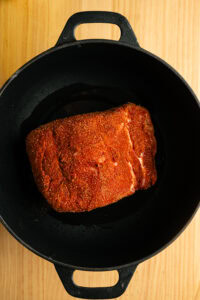
- Sear it for 3 to 4 minutes per side, until a deep brown crust forms on all sides.
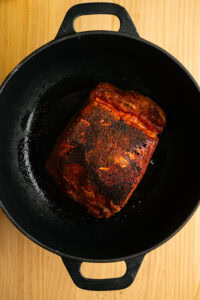
- Transfer the pork to a plate.
Oven Braise
- Add the onion and garlic to the same Dutch oven while it is still hot.1 onion, 6 to 7 cloves garlic,
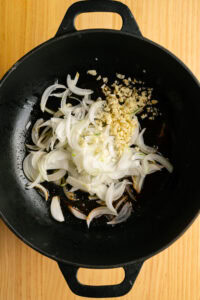
- Sauté them for 2 to 3 minutes, scraping up the browned bits stuck to the bottom of the pot with a wooden spoon: that’s where the flavor comes from.
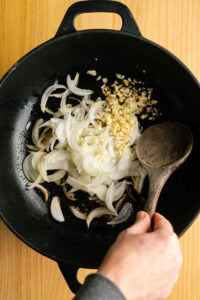
- Pour in the chicken broth, barbecue sauce and apple cider vinegar.240 ml chicken broth,, 120 ml barbecue sauce, 1 tablespoon apple cider vinegar
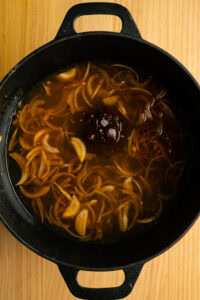
- Stir and bring to a gentle simmer.
- Return the pork to the Dutch oven along with any juices released on the plate.
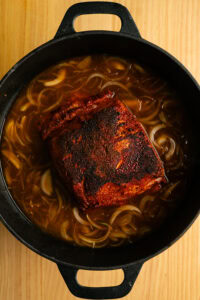
- Check that the liquid comes halfway up the meat; if the Dutch oven is very wide and the liquid is too low, add the extra broth.
- Cover with a tight-fitting lid.
- Transfer to the oven and braise for 3 to 3½ hours, turning the meat once halfway through.
- Check for doneness: the meat is ready when the internal temperature reaches 93 to 95 °C and it shreds with no resistance when pulled with a fork.
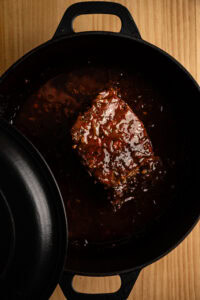
- If the meat still resists, it hasn’t reached that temperature yet: put the lid back on and cook for another 20 to 30 minutes.
Rest and Shred
- Take the Dutch oven out of the oven.
- Let the meat rest, covered, at room temperature for 20 minutes: the juices redistribute and the meat stays more tender.
- Shred the pork with two forks while it is still hot.
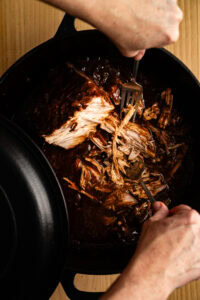
- If the cooking liquid looks greasy, skim some of the fat from the surface before returning the meat to it.
Sauce and Serve
- Return the shredded meat to the cooking liquid and stir so it stays moist and tender.
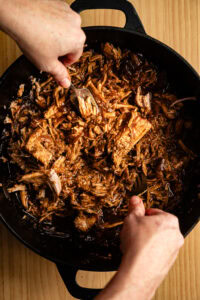
- Taste, then adjust with a little barbecue sauce, salt or a splash of apple cider vinegar to balance the sweetness and acidity.
- Serve with extra barbecue sauce.Barbecue sauce