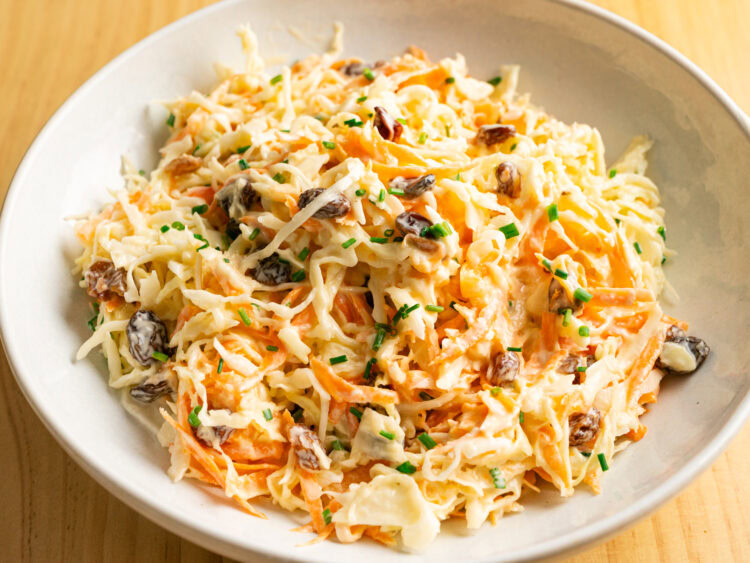
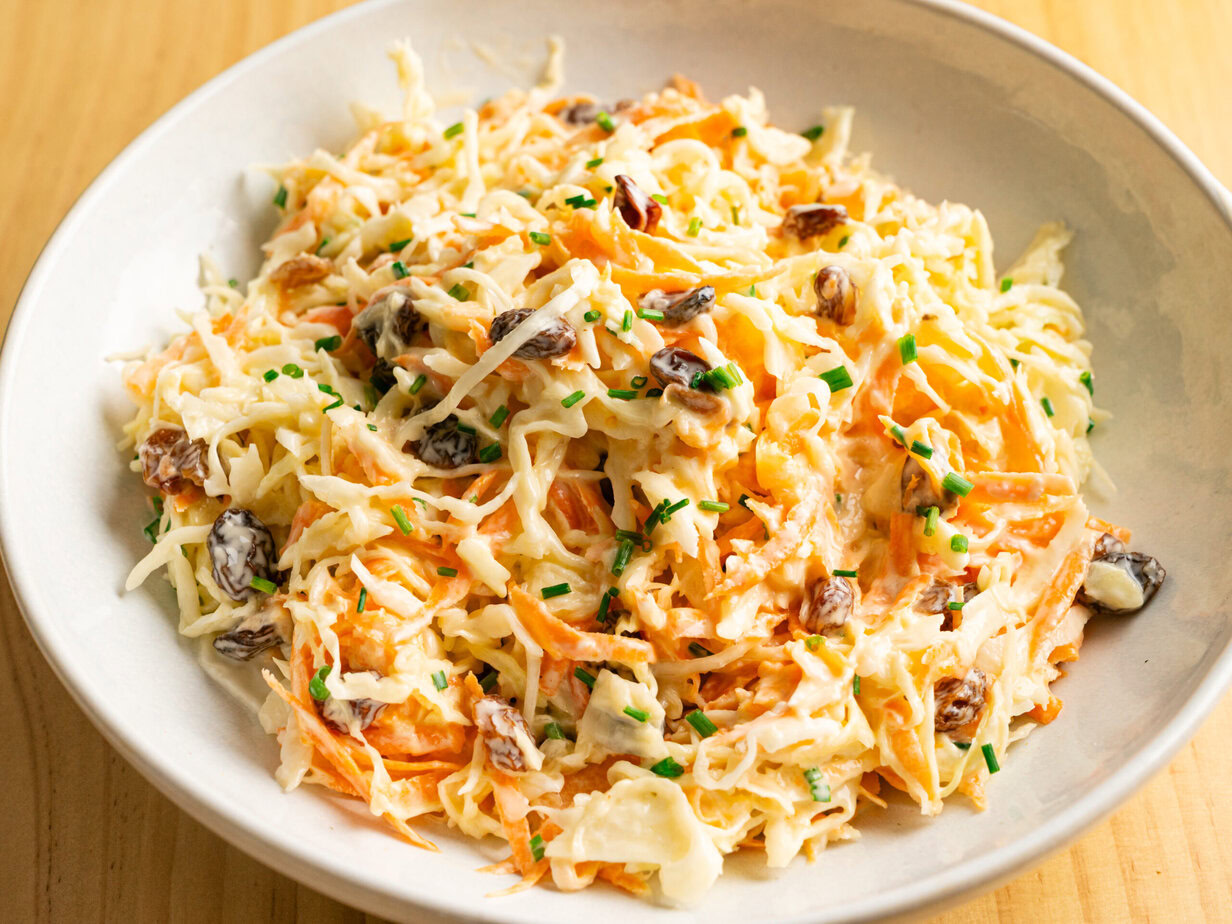
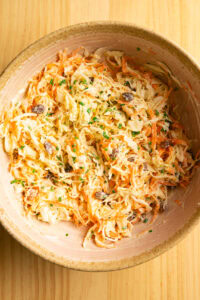
Shredded green cabbage and carrots, chives and golden raisins in a creamy yogurt and mayonnaise dressing that’s sweet and tangy.
The grilled meats are coming off the barbecue, the bread is sliced, and the table is still missing something fresh. A bowl of well-chilled coleslaw does the trick: the cabbage crunches between your teeth, the carrot brings its sweetness and the creamy dressing has just enough bite.
The golden raisins slip in a sweet note here and there, and the chives wake everything up. One forkful alongside some still-hot fried chicken, and you quickly see why Americans can’t imagine a barbecue without coleslaw.
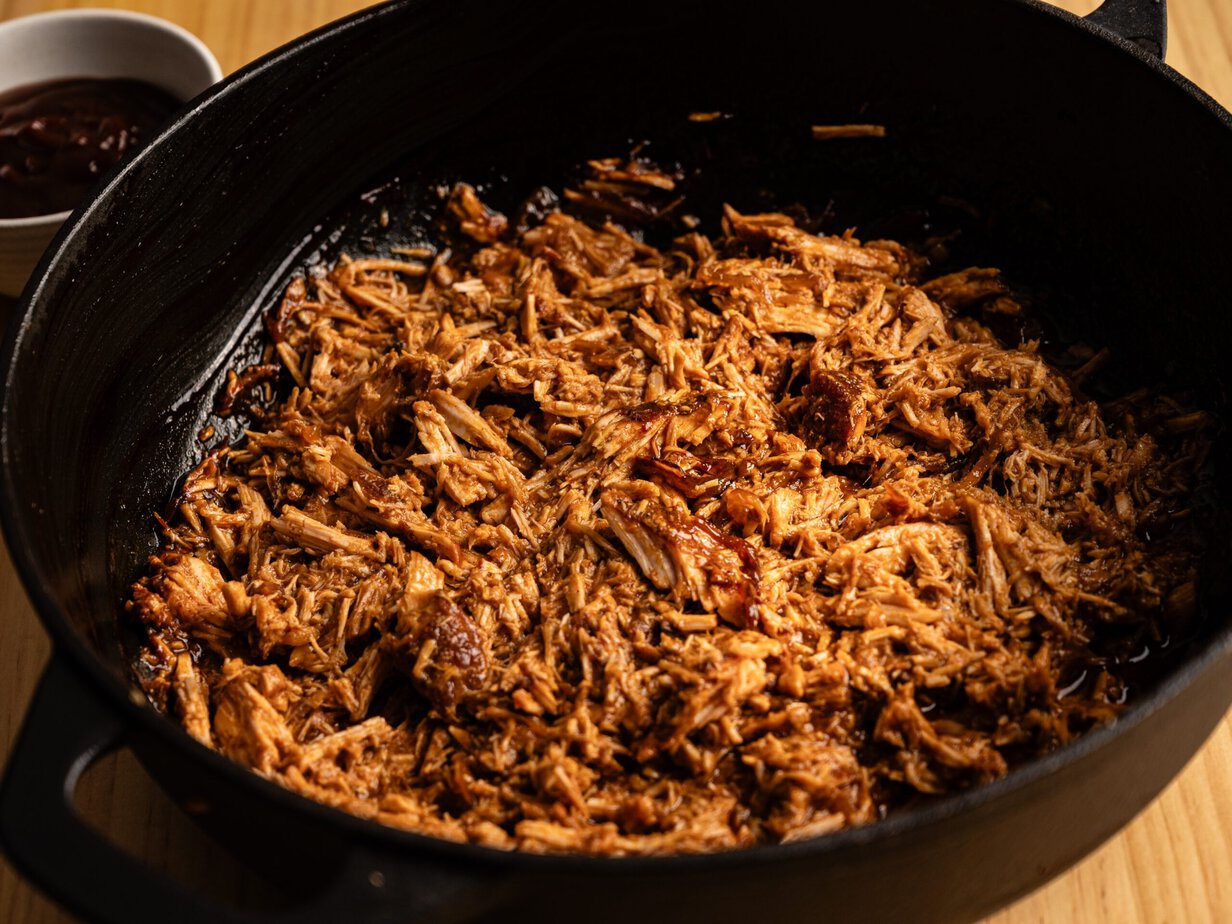
What Is Coleslaw?
Coleslaw is a salad of American origin made with shredded cabbage and carrots, bound with a creamy sweet-and-sour dressing. This version brings together green cabbage, carrots, chives and golden raisins, with a dressing of yogurt (or quark), mayonnaise, vinegar and sugar. It goes with grilled meats, a buffet or a picnic, and it’s right at home next to an onion ring burger or chicken tenders.
The name comes from the Dutch koolsla, from kool, cabbage, and sla, salad. American English turned it into coleslaw.
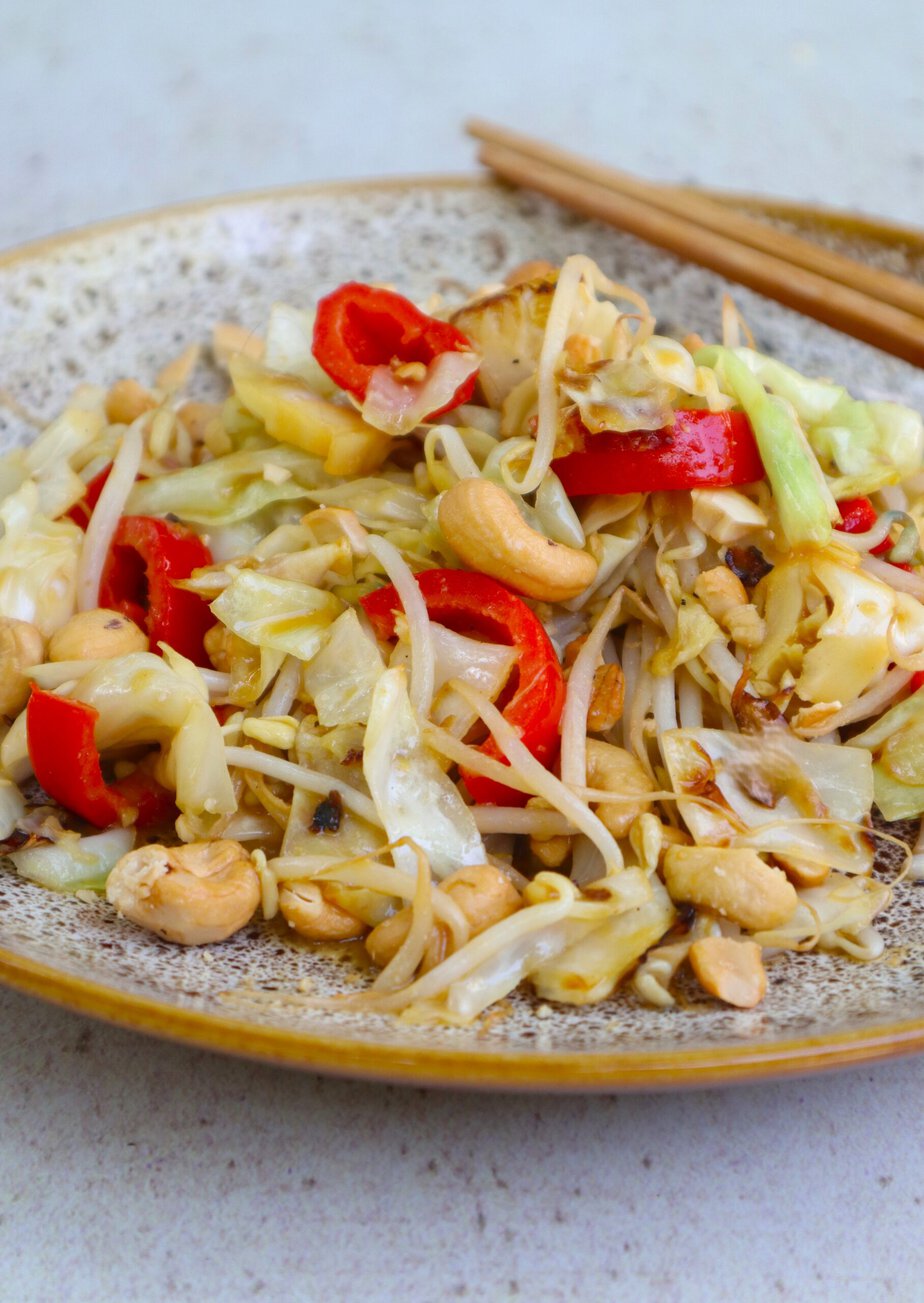
From New York Vegetable Gardens to American Delis
The Dutch colonists who settled in New Amsterdam, the future New York, in the 17th century grew cabbage along the Hudson. They ate it as a salad, dressed with melted butter, vinegar and oil, as described in a 1667 Dutch cookbook, De Verstandige Kock.
The creamy version came much later. In the early 20th century, jarred mayonnaise was sold on a massive scale in the United States and gradually replaced the oil and vinegar. Coleslaw became the salad of barbecues, diners and delis, and a classic of American cuisine. Each region has kept its own style: with buttermilk in the South, with celery seed in delis, and very finely chopped at fried chicken chains.
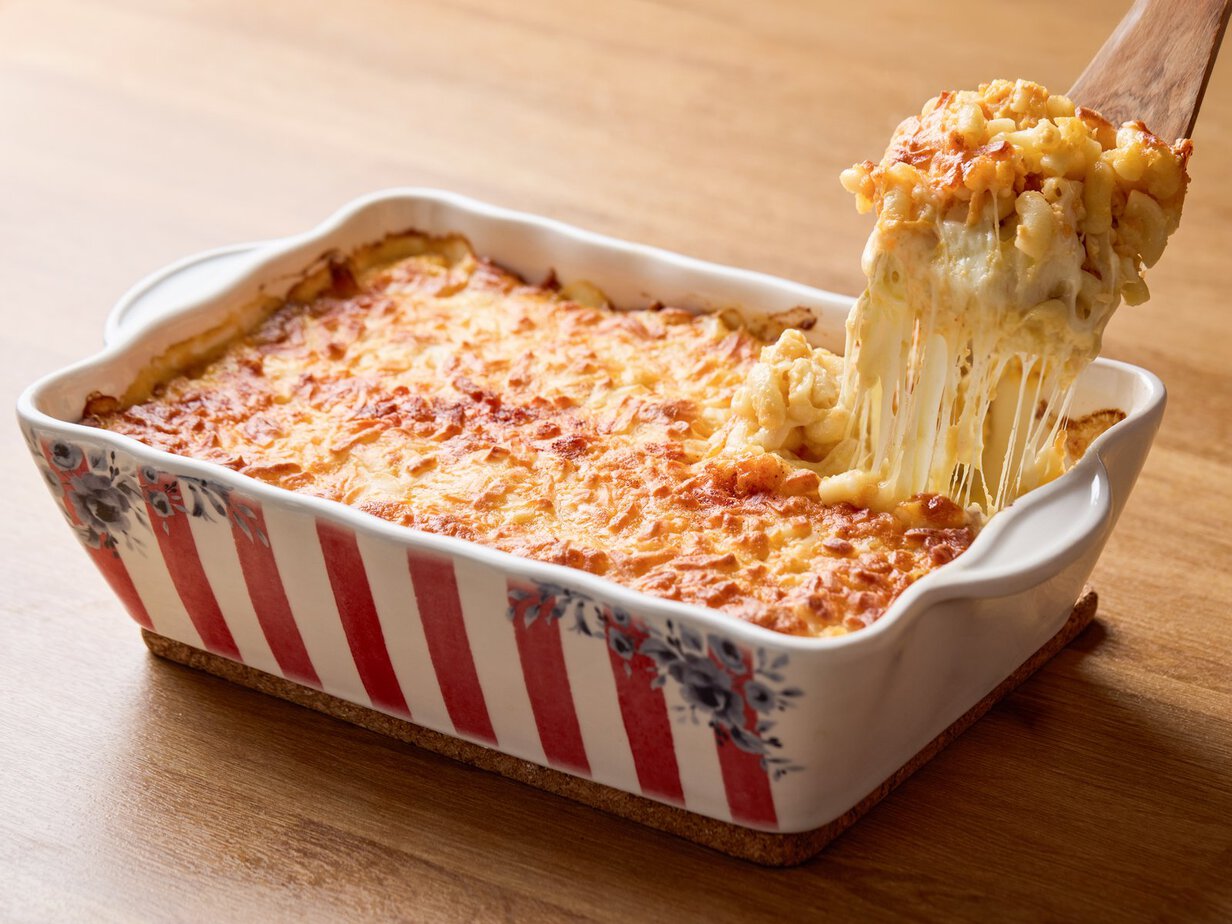
The Main Ingredients in Coleslaw
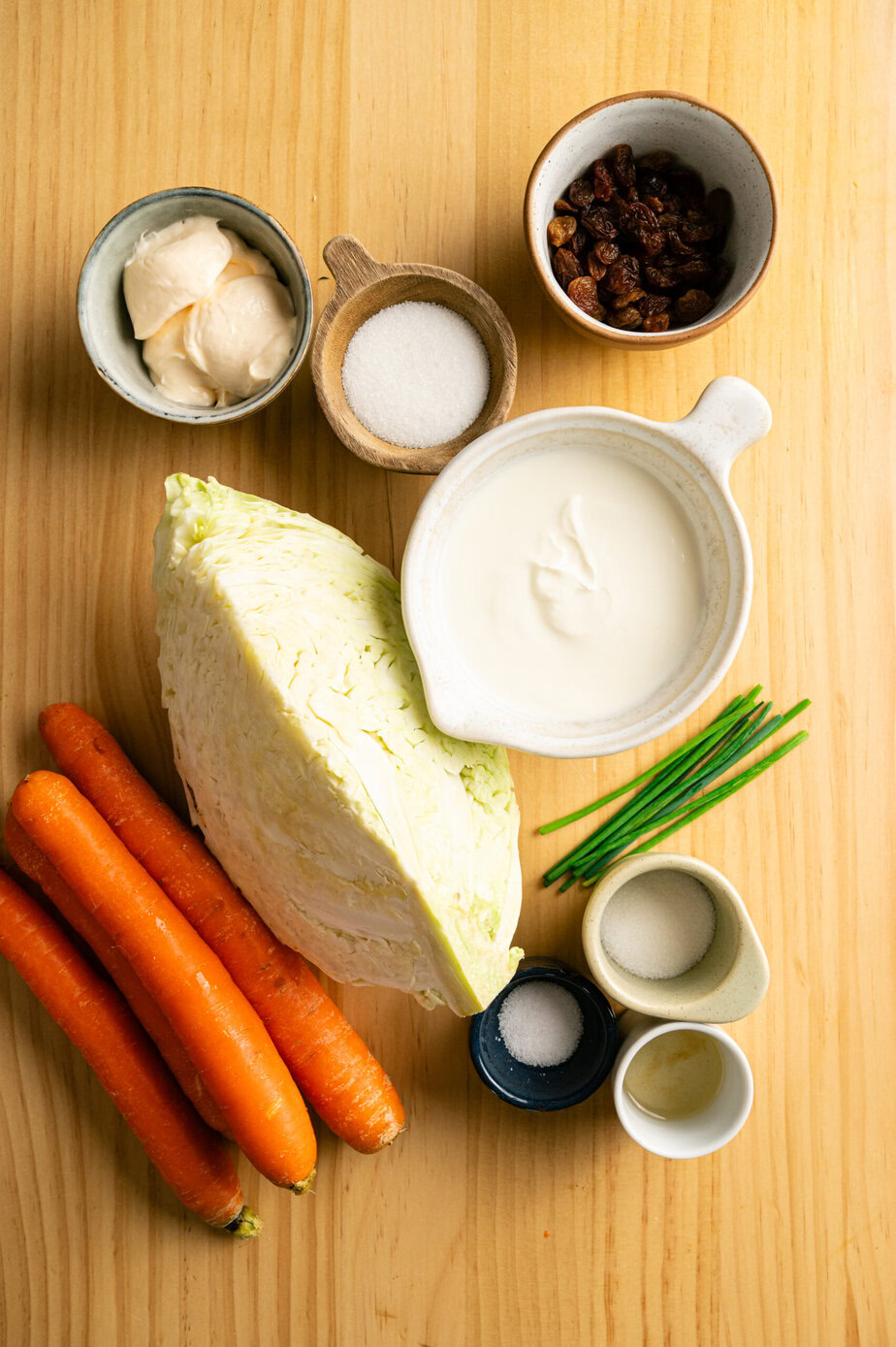
Green cabbage is the base: a quarter of a cabbage, about 600 g including the core, for 4 people. It’s about 90% water, hence the step of drawing out the moisture. The shredded carrots add color and sweetness, the chives a light oniony note, and the golden raisins little bursts of sweetness.
The dressing combines plain yogurt or quark, mayonnaise, white or apple cider vinegar, and sugar. The yogurt lightens the dressing and gives it a fresh tang, a bit like in a raita. The mayonnaise gives it body and shine, and homemade Japanese mayonnaise works too.
The vinegar and sugar strike the sweet-and-sour balance. The acidity of the dressing also tames the bitterness and sharpness that cabbage develops once it’s cut.
Key Techniques for Crunchy Coleslaw
Cut the cabbage across the length of the leaves: this slices through the ribs and keeps the pieces tender.
Sugar and salt draw the water out of the cabbage through osmosis. In 30 minutes, it softens and will no longer make the dressing watery. Salt alone, in a large enough amount, would end up making the cabbage salty; sugar draws out just as much water without penetrating the leaves.
Then rinse the cabbage and dry it in a salad spinner. Don’t wring it out in a kitchen towel: once crushed, it loses its crunch.
Pour the dressing over as soon as the vegetables are ready, then keep the bowl in the fridge. Coleslaw can be made ahead and keeps for up to 5 days in the refrigerator: stir it before serving. Chopped more finely, it fills a sandwich or tops hot dogs or a Korean corn dog. For a completely different cabbage salad, try this Japanese cabbage salad.
Ingredients
Creamy Dressing
- 1 yogurt plain (125 g), or 125 g fromage blanc
- 4 tablespoons mayonnaise (about 100 g)
- 2 tablespoons vinegar white, or apple cider vinegar
- 2 tablespoons sugar granulated
Cabbage
- 0.25 cabbage green (about 600 g including the core)
- 2 tablespoons sugar granulated
- 1 teaspoon salt
Assembly
- 4 carrots medium
- A few sprigs of chives
- Raisins golden, for a touch of sweetness
- Salt
- Pepper freshly ground
Instructions
Creamy Dressing
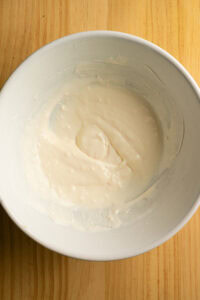
- Pour the yogurt or fromage blanc, mayonnaise, vinegar, and sugar into a large bowl.1 yogurt, 4 tablespoons mayonnaise, 2 tablespoons vinegar, 2 tablespoons sugar
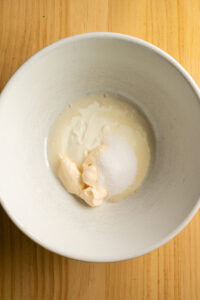
- Mix well, then set the dressing aside.
Cabbage
- Cut the core out of the cabbage.0.25 cabbage
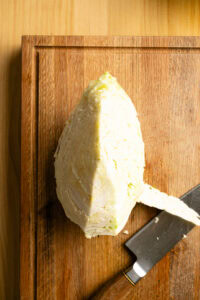
- Shred the cabbage with a food processor, a mandoline, or a knife, cutting crosswise to the length of the leaves: this slices through the ribs, so the pieces are less tough.
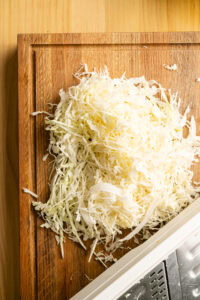
- Put the shredded cabbage in a large colander.
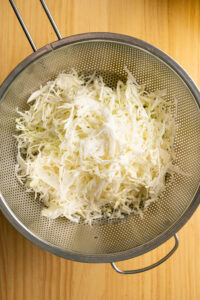
- Sprinkle the sugar and salt over the cabbage, then mix well.2 tablespoons sugar, 1 teaspoon salt
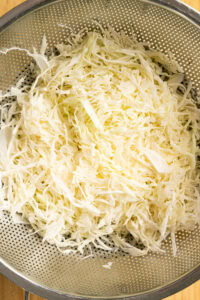
- Let the cabbage release its water for 30 minutes: after a few minutes, water starts to appear on the surface of the cabbage as it softens.
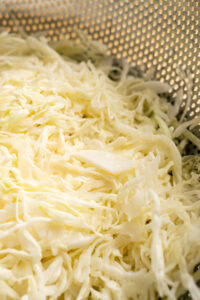
- Rinse the cabbage thoroughly under running water to remove the sugar and salt dissolved on the surface.
- Spin the cabbage dry in a salad spinner; for a small amount, pat it dry with a clean kitchen towel or paper towels.
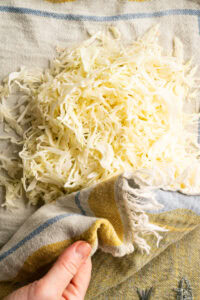
- Don’t squeeze the cabbage in a kitchen towel: once crushed, it loses its crunch.
Assembly
- Peel the carrots.4 carrots
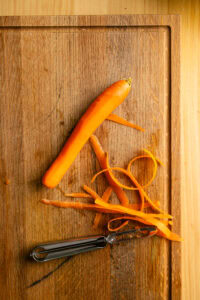
- Grate them.
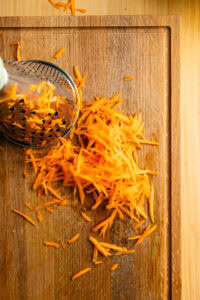
- Finely chop the chives.A few sprigs of chives
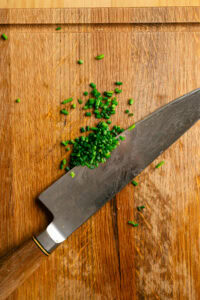
- Put the cabbage, carrots, chives, and raisins in a large salad bowl.Raisins
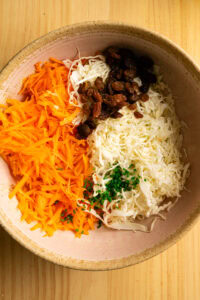
- Pour in the dressing right away and stir well: the acidity of the dressing tempers the bitterness and sharpness that cabbage develops once cut.
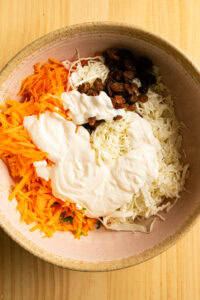
- Keep refrigerated until ready to serve.
- Stir well before serving.
- Taste and adjust the seasoning with salt and pepper: cabbage takes well to freshly ground pepper.Salt, Pepper