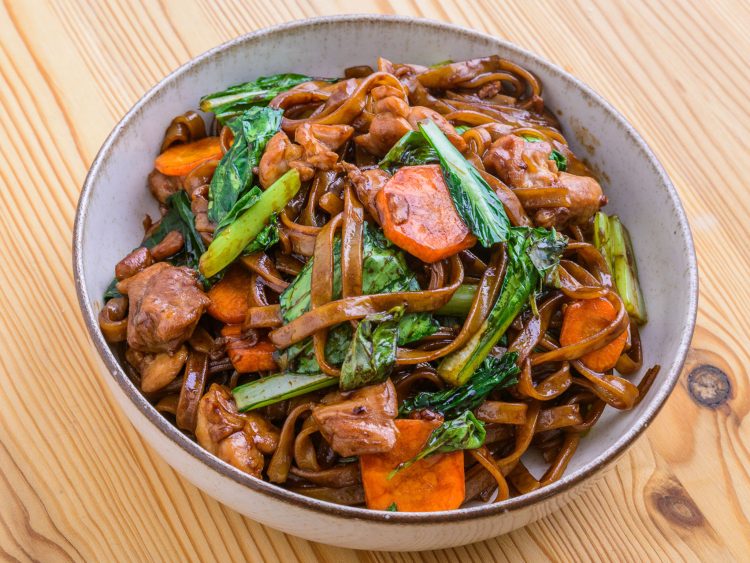
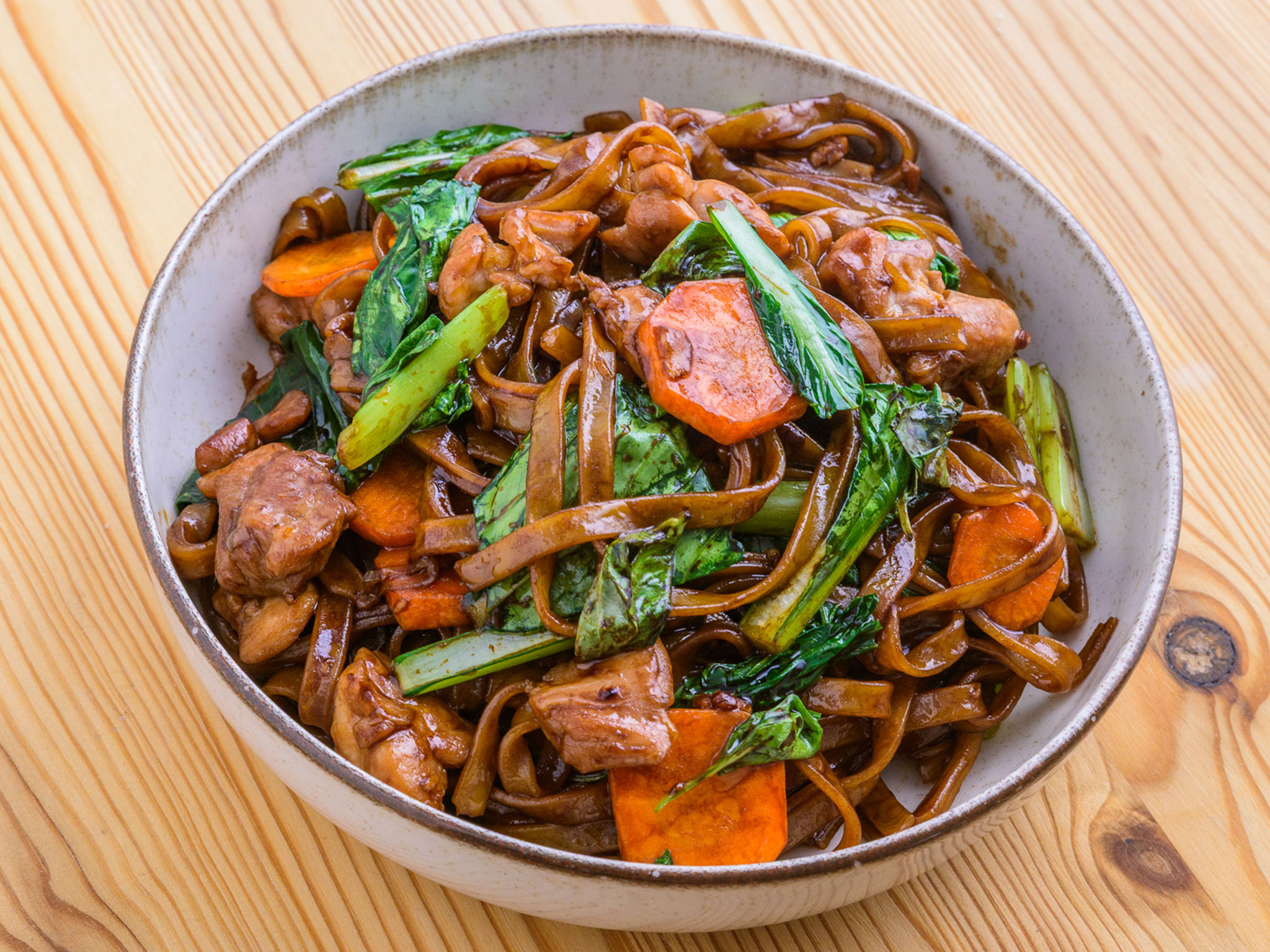
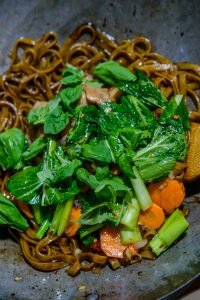
Wide rice noodles stir-fried in a wok with chicken, garlic, chili and holy basil: Thai restaurant pad kee mao, made at home.
It’s late, hunger is kicking in and you want something that wakes you up. Pad kee mao arrives piping hot from the wok: wide ribbons of rice noodle glistening with brown sauce, tender chicken, stalks of Chinese broccoli that are still crisp. The aroma of pounded garlic and chili hits your nose, and the basil adds the final fragrance to the plate. You often order it at a Thai restaurant without realizing it’s just as quick to make at home.
What Is Pad Kee Mao?
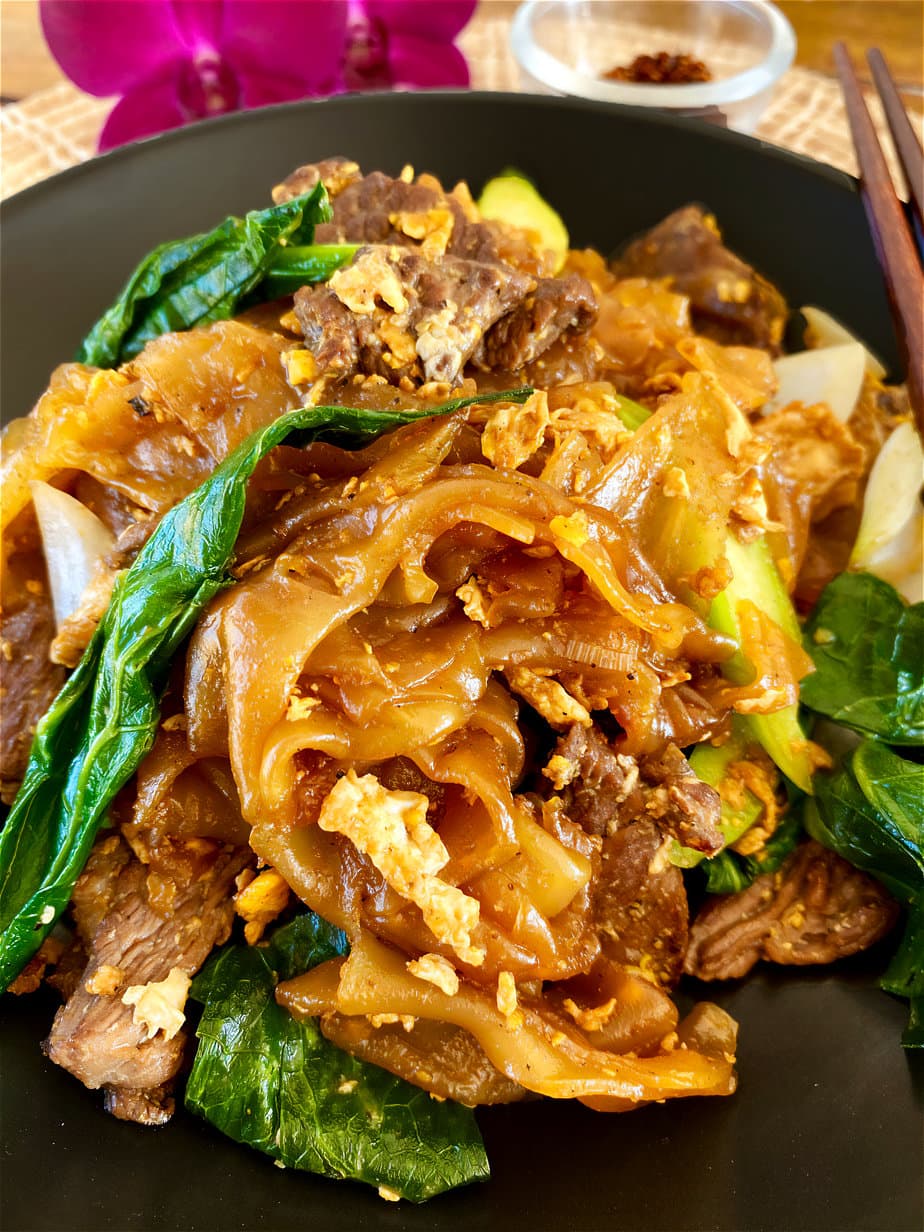
Pad kee mao is a wide rice noodle stir-fry from Thai cuisine, made here with chicken, Chinese broccoli and carrot. A paste of garlic and bird’s eye chili gives it its heat, and the basil gives it its fragrance. A dark sauce coats everything in a salty flavor rich in umami, which the sugar mellows without making the dish sweet. It shares its noodles with pad see ew, but is much spicier.
In Thai, pad means to stir-fry and kee mao means a drunkard, hence the nickname “drunken noodles.” The dish contains no alcohol, though.
Between the Chinese Wok and Thai Chili
Wide rice noodles, soy sauces and wok cooking come from Chinese cuisines, which arrived in Thailand with Chinese merchants and immigrants. Pad kee mao adds what is distinctly Thai: bird’s eye chili, garlic and basil. No date, city or inventor is attributed to it with any certainty.
Two stories circulate about its name. The first makes it the spicy dish you eat late at night with an ice-cold beer. The second says a drunk person improvised it with whatever was left in their kitchen. Neither proves that the dish cures a hangover.
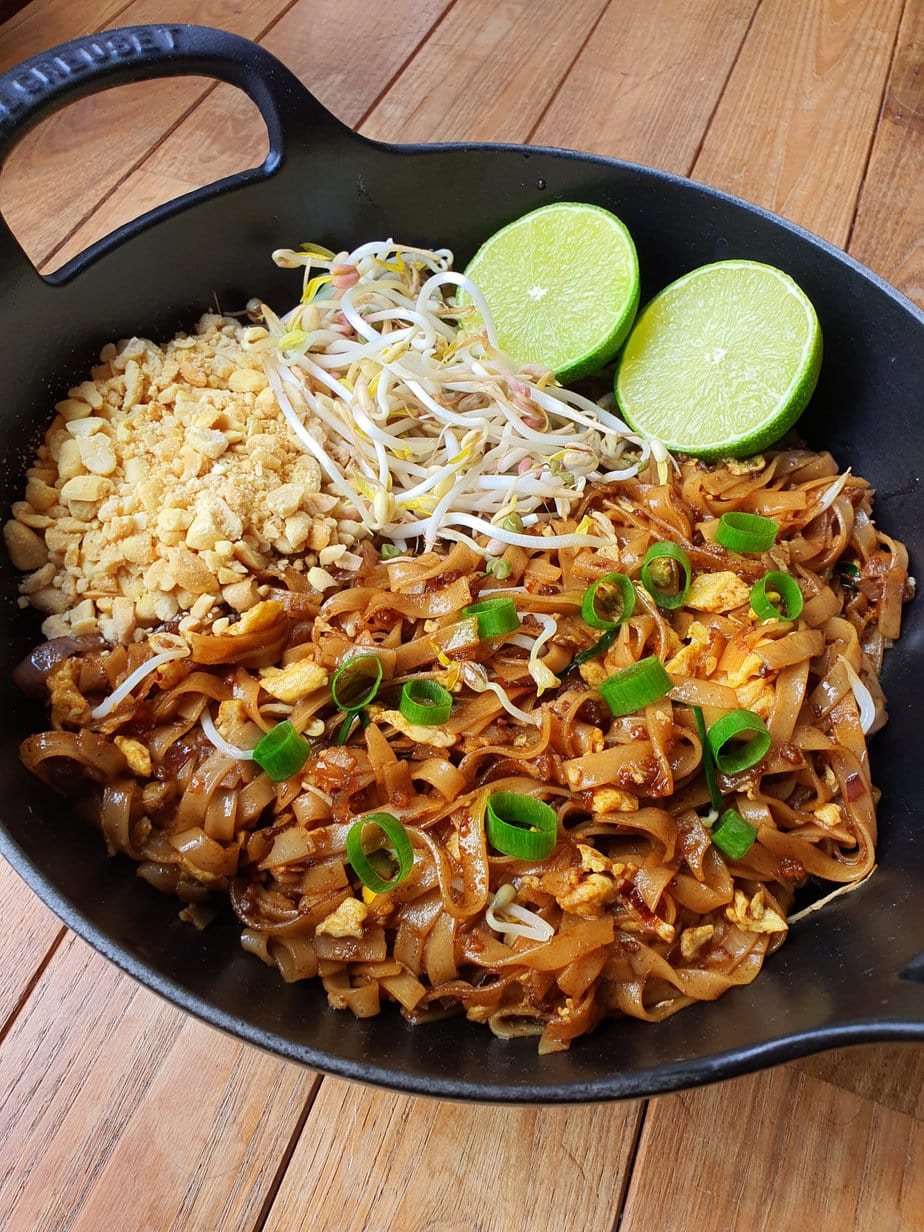
In Thailand, the name refers first and foremost to a very spicy stir-fry without noodles, served over rice. Home cooks also make it with spaghetti. The wide rice noodle version is the one served in Thai restaurants in Europe and the United States.
The Main Ingredients in Pad Kee Mao
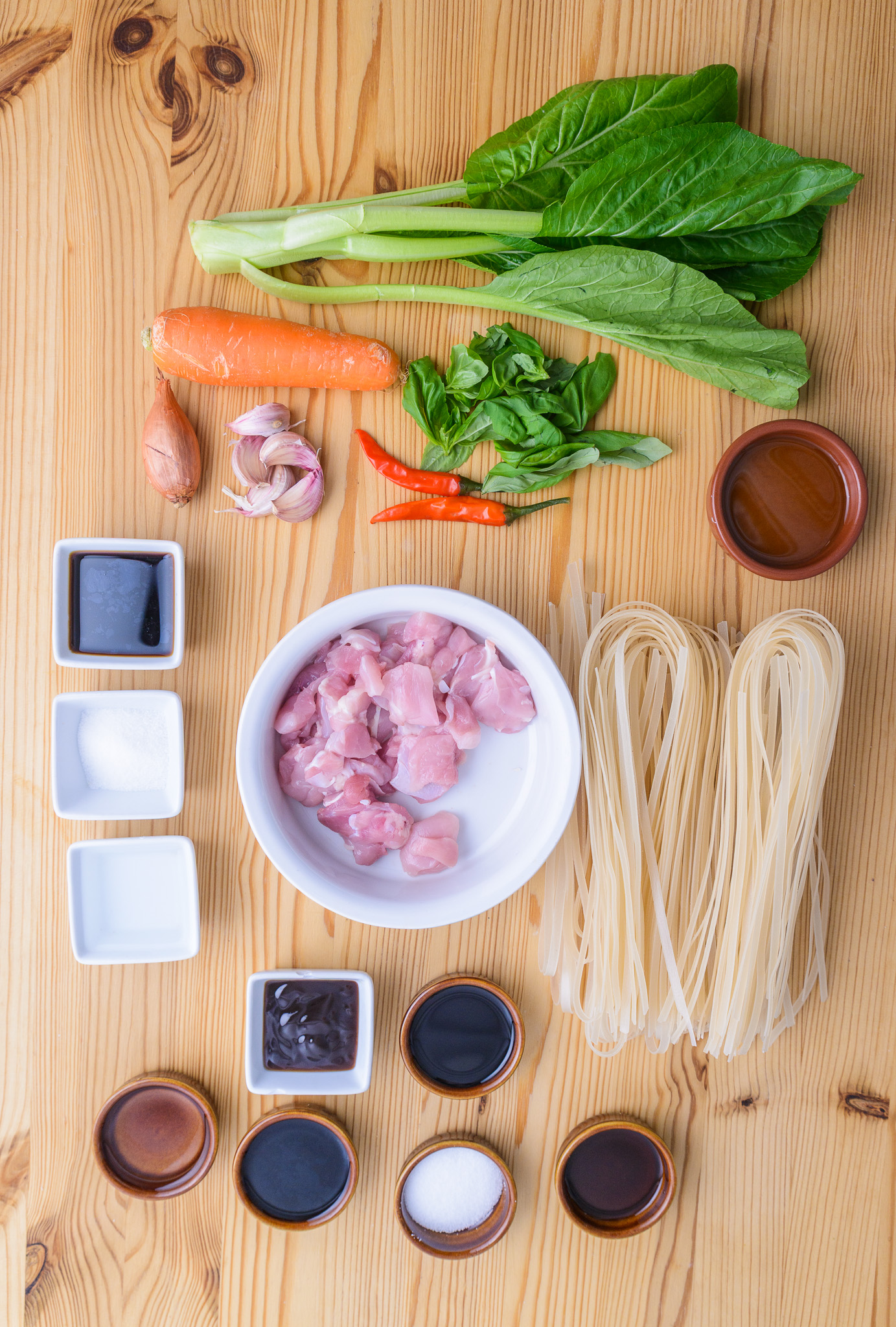
Sen yai are wide fresh rice noodles, sold in the refrigerated section of Asian grocery stores, and their width holds on to the sauce. Dried ones work too: to cook dried rice noodles, follow the package directions. The chicken is thigh meat, which stays tender. Chinese broccoli (kai-lan) has stems that stay firm and slightly bitter leaves.
The sauce combines two soy sauces. Light soy sauce brings the salt: the word “light” refers to its color, not to a lower salt content. Dark soy sauce colors the noodles. Thick oyster sauce helps the sauce cling, and fish sauce boosts the seasoning.
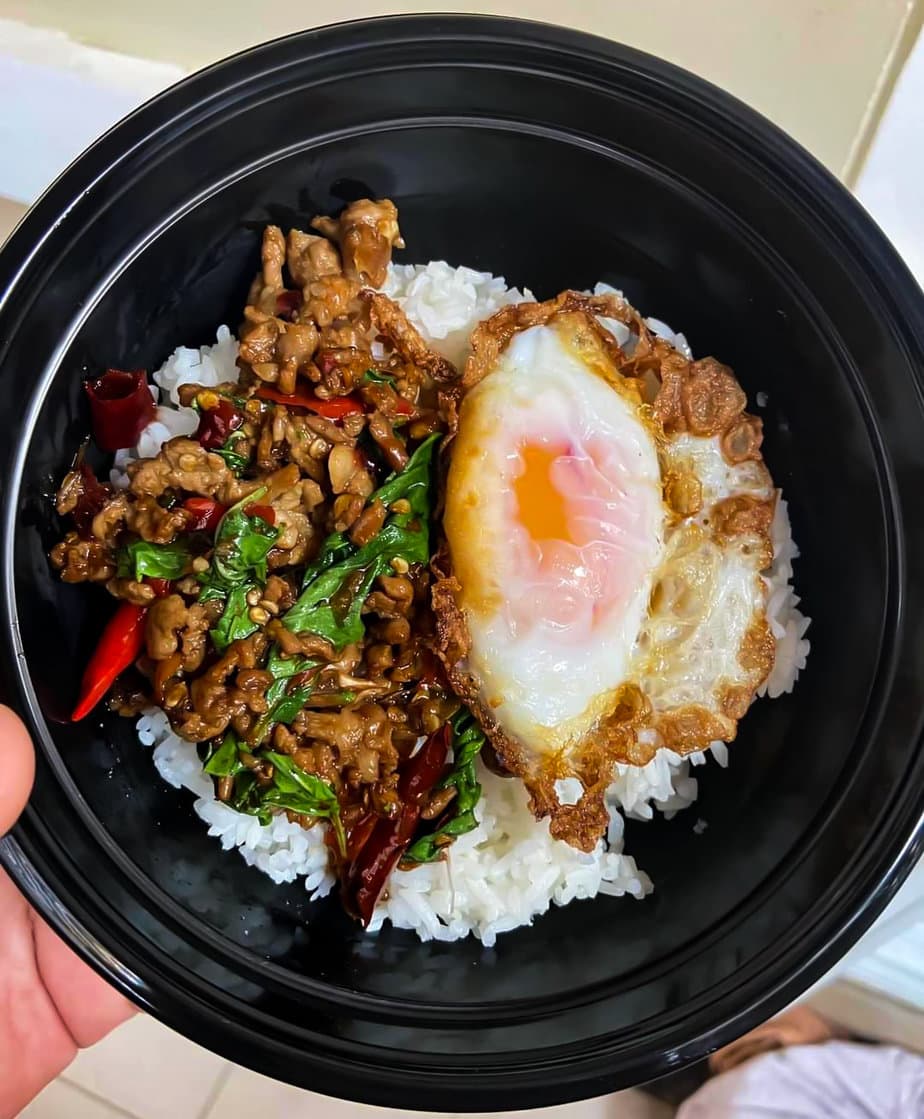
The basil makes the dish. Peppery holy basil, kra pao, is the one used for pad kee mao in Thailand. Thai basil, horapa, purple-stemmed and anise-flavored, is easier to find in Europe and takes its place. The garlic and seeded bird’s eye chilies are pounded together in a mortar into a paste that flavors the oil from the very start of cooking.
Technique Tips for Good Pad Kee Mao
Everything moves fast, so have everything ready before you turn on the heat: chicken marinated, sauce mixed, noodles separated, garlic and chili paste pounded.
The chicken and vegetables are cooked separately, then go back in at the end. The chicken doesn’t dry out and the vegetables stay crisp.
Once the sauce is in, leave the noodles undisturbed on the bottom of the wok for 30 seconds. They pick up a lightly charred, smoky flavor, a bit of wok hei, the “breath of the wok” of Cantonese cooking. A home stovetop doesn’t get as hot as a restaurant burner: don’t overcrowd the wok, and cook in two batches if you double the recipe.
Serve right away, while the noodles are still supple and the basil has only just hit the wok.
Ingredients
Chicken Marinade
- 225 g chicken thighs boneless and skinless, cut into bite-size pieces
- 2 teaspoons light soy sauce
- 0.5 teaspoon sugar
- 1 tablespoon water
Sauce
- 2.5 tablespoons oyster sauce
- 2 tablespoons light soy sauce
- 2 tablespoons dark soy sauce
- 1 tablespoon fish sauce
- 1 tablespoon granulated sugar
- 1 tablespoon water
Stir-Fried Noodles
- 450 g wide rice noodles fresh (sen yai)
- 2 tablespoons vegetable oil
- 5 cloves garlic, roughly chopped
- 2 Thai bird’s eye chilies, seeded and chopped
- 1 shallot, thinly sliced
- 3 stalks Chinese broccoli (kai-lan), cut into bite-size pieces
- 1 carrot, peeled and thinly sliced into rounds
- 10 g holy basil leaves, or Thai basil
Instructions
Chicken Marinade
- Put the chicken, light soy sauce, sugar, and water in a bowl.225 g chicken thighs, 2 teaspoons light soy sauce, 0.5 teaspoon sugar, 1 tablespoon water
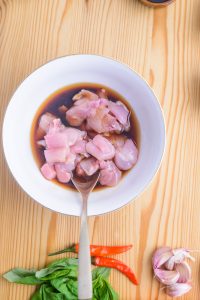
- Stir to coat the chicken well.
- Let marinate for 15 minutes.
Sauce
- In a small bowl, combine the oyster sauce, light soy sauce, dark soy sauce, fish sauce, sugar, and water.2.5 tablespoons oyster sauce, 2 tablespoons light soy sauce, 2 tablespoons dark soy sauce, 1 tablespoon fish sauce, 1 tablespoon granulated sugar, 1 tablespoon water
- Stir until the sugar has dissolved.
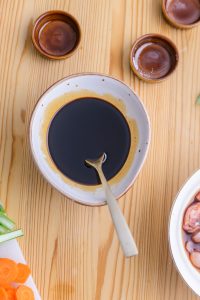
- Set aside.
Stir-Fried Noodles
- Gently separate the fresh noodles.450 g wide rice noodles
- If they are hard to separate or a little dry, soak them in lukewarm water to soften them.
- If using dried noodles, cook them according to the package directions.
- Pound the garlic and chilies into a paste with a mortar and pestle, or blend them in a food processor.5 cloves garlic,, 2 Thai bird’s eye chilies,
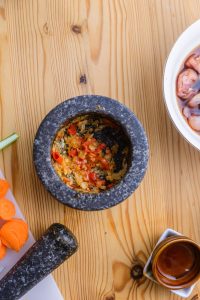
- Heat half the oil in a wok or large frying pan over medium-high heat.2 tablespoons vegetable oil
- When the wok is hot, add the marinated chicken and spread it out in a single layer.
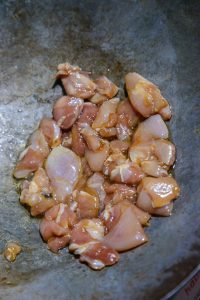
- Sear it for 1 minute on each side, until cooked through.
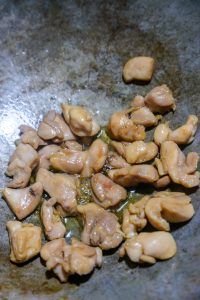
- Remove the chicken and set it aside.
- In the same wok, heat the rest of the oil over medium heat.
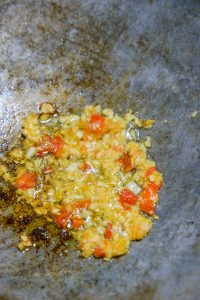
- When the wok is hot, add the garlic and chili paste and stir-fry for about 10 seconds, until fragrant.
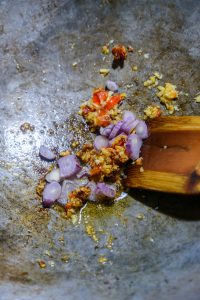
- Add the shallot and stir-fry for 1 minute.1 shallot,
- Add the Chinese broccoli and carrot.3 stalks Chinese broccoli, 1 carrot,
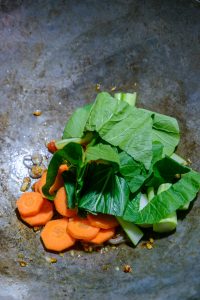
- Stir-fry them for about 1 minute, until slightly tender.
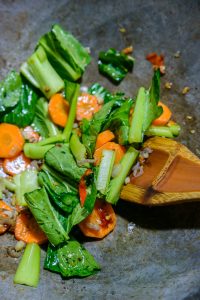
- Remove the vegetables and set them aside.
- Put the noodles and sauce in the wok.
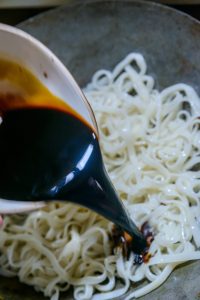
- Toss gently until the noodles are well coated.
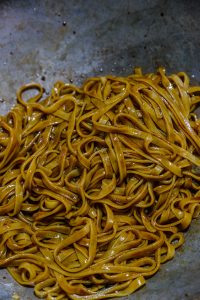
- Spread the noodles out in the wok and leave them undisturbed for 30 seconds so they get lightly charred on the bottom.
- Reduce the heat to low.
- Return the chicken and vegetables to the wok.
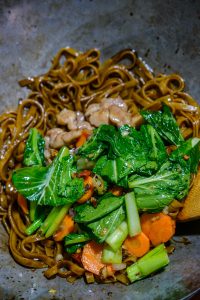
- Add the basil.10 g holy basil leaves,
- Gently toss everything together, taking care not to break the noodles.
- Serve immediately.