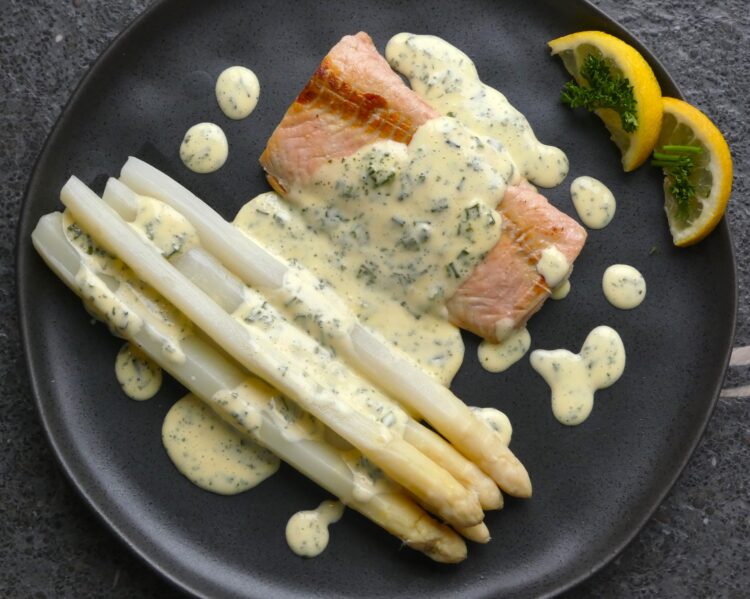
A flour-free hollandaise sauce made with an immersion blender: butter, egg yolks and a touch of acidity.
Warm and glossy, the sauce coats asparagus in a satiny veil, the butter melts in your mouth and the acidity of the lemon cuts through the richness. It’s an emulsified sauce made with butter, egg yolks and an acidic ingredient, blended with an immersion blender rather than whisked over a bain-marie. Allow a few minutes to make enough for 2 people, and serve immediately. Add it to your collection of my keto sauces and dips.
What is hollandaise sauce?
Hollandaise is a warm emulsified sauce: melted butter is dispersed into egg yolks, which give it body and gloss. The acidic ingredient, whether lemon juice, white vinegar or apple cider vinegar, balances the richness of the butter. With no flour or added sugar, it fits into a low-carb meal.
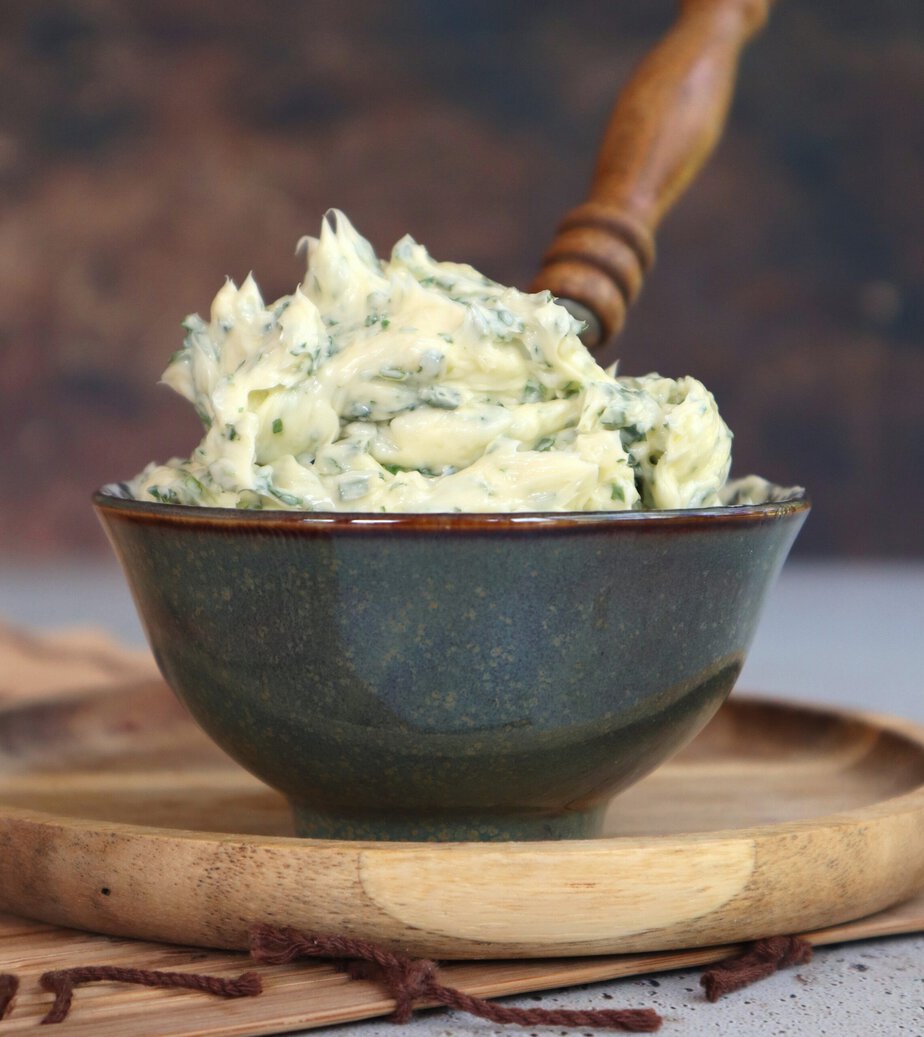
Aim for a smooth consistency that coats the back of a spoon, with no greasy film on the surface or separation. The recipe serves 2 people, with around 423 calories per serving.
Its place in French cuisine
Hollandaise belongs to the repertoire of warm French sauces, served immediately to keep their fluid texture. It accompanies delicate vegetables, fish and egg dishes, where the contrast between richness and acidity brings out the main ingredient without overpowering it.
Over just-cooked asparagus, gently cooked salmon or eggs Florentine, it adds a warm, glossy finish. Pour it on at the last moment: its texture is at its most fluid in the minutes after emulsifying.
The main ingredients
Butter gives the sauce its body: 200 g provides richness and a satiny mouthfeel. Grass-fed butter works well, but regular butter is also suitable. Depending on your needs, clarified butter, lactose-free butter or goat butter will do the job, and a plant-based substitute is also an option, though it will not make the recipe vegan, as it still contains egg yolks.
The 4 room-temperature egg yolks emulsify and thicken the sauce: they incorporate the melted butter and give the sauce its structure. When cold, they are less able to handle contact with warm butter. The acidity comes from 3 tablespoons of lemon juice, white vinegar or apple cider vinegar, which cuts through the richness. For a low-salicylate version, replace the lemon juice with rice vinegar.
A generous pinch of salt, such as Celtic sea salt, brings out the butter and acidity. Dried chives and dried parsley, 2 teaspoons each, add a herbal note to the sauce.
Technique tips and serving
Using an immersion blender, first blend the yolks with the acidic ingredient until the mixture thickens and becomes smooth, then pour in the melted butter in a thin stream with the blender running, gently moving it up and down to incorporate the butter into the yolks. The butter should be melted but not piping hot: if it is too hot, it will curdle the yolks and leave grainy bits; if poured in too quickly, it will not incorporate and the sauce will split. A successful hollandaise is smooth and coats the back of a spoon, with no trace of butter on the surface.
Make the sauce last, once the accompaniments are ready: as it cools, the butter sets, and reheating risks curdling it. Serve within minutes, spooned over asparagus, salmon, eggs Florentine or stir-fried Chinese cabbage. This method does not pasteurize the yolks; for vulnerable people, use pasteurized yolks.
For a dish that showcases this sauce, here are my skillet eggs Florentine.
Find all my keto recipes.
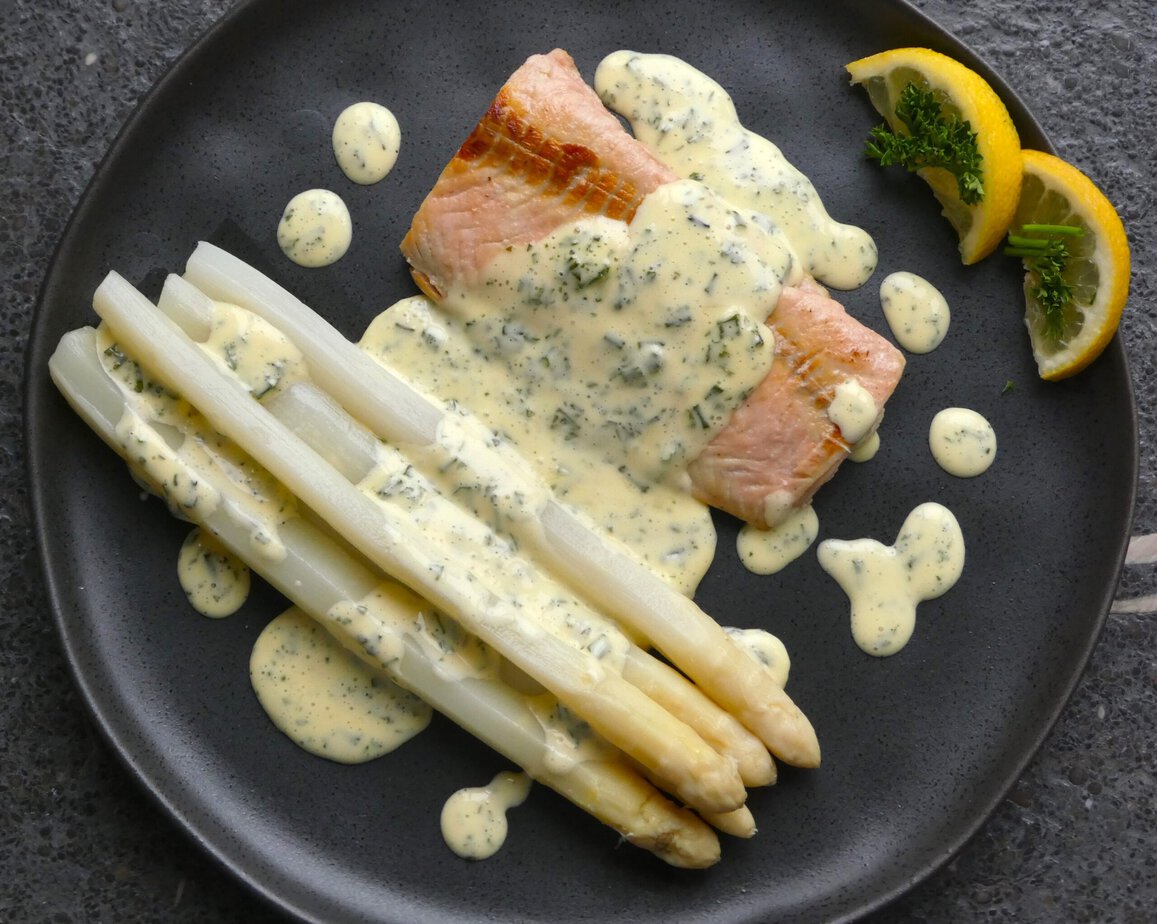
Hollandaise sauce
Ingredients
- 200 g butter (from grass-fed cows) can be replaced with clarified, lactose-free, goat’s milk or vegan butter
- 4 egg yolks at room temperature
- 3 tablespoons lemon juice white vinegar or apple cider vinegar
- 2 teaspoons chives (dried)
- 2 teaspoons parsley (dried)
- 1 generous pinch salt (Celtic sea salt)
Histamine variation
- 3 tablespoons white vinegar or apple cider vinegar NO lemon
Low-salicylate variation
- 3 tablespoons rice vinegar NO other vinegar or lemon
Instructions
- Melt the butter in a small saucepan. It can get warm, but not too hot.200 g butter (from grass-fed cows)
- Use room-temperature eggs. Separate the yolks from the whites. The whites are not needed. Place the yolks in the immersion blender’s beaker.4 egg yolks
- Add the acidic ingredient.3 tablespoons lemon juice, 3 tablespoons white vinegar or apple cider vinegar, 3 tablespoons rice vinegar
- Place the immersion blender in the beaker and blend until thickened. Move it up and down from time to time as well.
- Take the small saucepan of butter. Continue blending and add a little butter in a thin stream. Repeat until the small saucepan is empty.2 teaspoons chives (dried), 2 teaspoons parsley (dried), 1 generous pinch salt (Celtic sea salt)