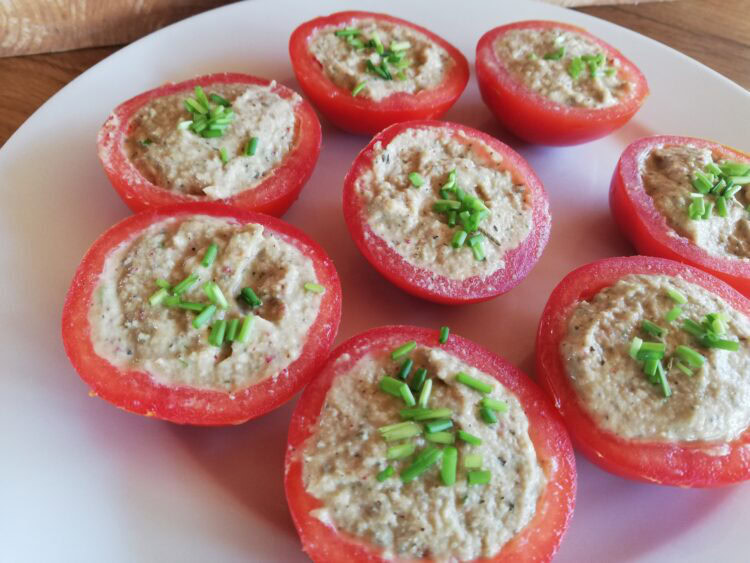
A chilled mackerel mousse with mustard, brightened with mint, chives and radishes.
Chilled and distinctly briny, this mousse leads with mustard, followed by mint, chives and a hint of citrus, with radish adding crunch. It is a French classic with a smooth texture, served in small glasses, hollowed-out tomatoes or endive leaves, as an elegant starter or an appetizer bite. This version stays moderate in carbohydrates, at 8 g of net carbs per serving. This recipe joins my collection of keto sauces and dips.
What is mackerel mousse?
Here, mousse means a smooth, creamy preparation that sits softly on a spoon, rather than something whipped or airy. Mackerel forms the base: an oily fish with a distinctive flavor, finely blended with a creamy binder, a condiment and fresh herbs.
It all comes down to a simple balance: the fillet provides briny depth and body, the yogurt mellows it, the Dijon mustard adds punch and the lemon brightens everything. Mint, chives and radish round out the mousse with fresh notes. The aim is a dense, chilled, uniform texture, stable enough to hold its shape in a small serving glass.
The character of the dish and how to serve it
Fish mousses are part of the French tradition of cold starters, served in small glasses, on an amuse-bouche platter or at the center of a buffet. They rely on clear flavors, simple presentation and a creamy texture that turns a boldly flavored fish into an elegant bite.
Mackerel is well suited to this: its richness calls for bold contrasts, mustard livens up the flesh, citrus cuts through the fat and herbs add freshness. Grated radish and mint bring a fresh vegetal note without upsetting the balance of salt, acidity and creaminess.
Preparation is quick, taking 20 minutes in total, in the spirit of a quick meal. It works well in individual portions and delivers a distinctive flavor despite its short ingredient list.
The main ingredients
The mackerel fillet, weighing 125 to 140 g, forms the base: with the skin and bones removed, the flesh is worked into a fine paste with a clear marine aroma that should remain at the forefront. The 4 radishes, grated before being folded in, bring peppery freshness and a little texture to an otherwise very uniform mixture; for a milder, crunchier version, daikon radish also works.
The 3 teaspoons of Dijon mustard give the seasoning its backbone, bringing punch and a subtle bitterness that complements the richness of the mackerel; add salt sparingly. A small amount of plain yogurt, 2 teaspoons, loosens the fish mixture, softens the mustard and provides creaminess; choose an unsweetened, neutral-tasting yogurt, without a coconut flavor that would overpower the other ingredients.
Fresh mint, 5 to 10 leaves, counterbalances the density of the fish, while 15 chive stems add a delicate herbal note, with 2 teaspoons going into the mousse and the rest reserved for garnish; for another way to enjoy this flavor, try chive blossom butter. Citrus juice brings everything together: half a lime or a quarter of a lemon is enough, squeezed separately to remove the seeds and added sparingly, as the radishes already contain water.
Texture tips and serving
The right texture holds its shape while remaining smooth and supple, dense enough to stay in place and creamy enough for a spoon to glide through it. Fine flecks of mint and chives are welcome, but pieces of skin, bones or large chunks of fish have no place here. Serve the mousse chilled to preserve the bite of the mustard, the freshness of the herbs and the brightness of the citrus.
Keep it refrigerated in a covered container and leave it at room temperature only briefly when serving. In small glasses, it makes 2 to 4 servings, depending on whether it is served as a starter or an appetizer; fill hollowed-out tomatoes, cherry tomatoes and endive leaves at the last minute so they stay crisp and do not release water. For a lower-carb plate, these bread-free presentations preserve the fresh character of the recipe.
For everyday keto cooking, here are all my low-carb recipes.
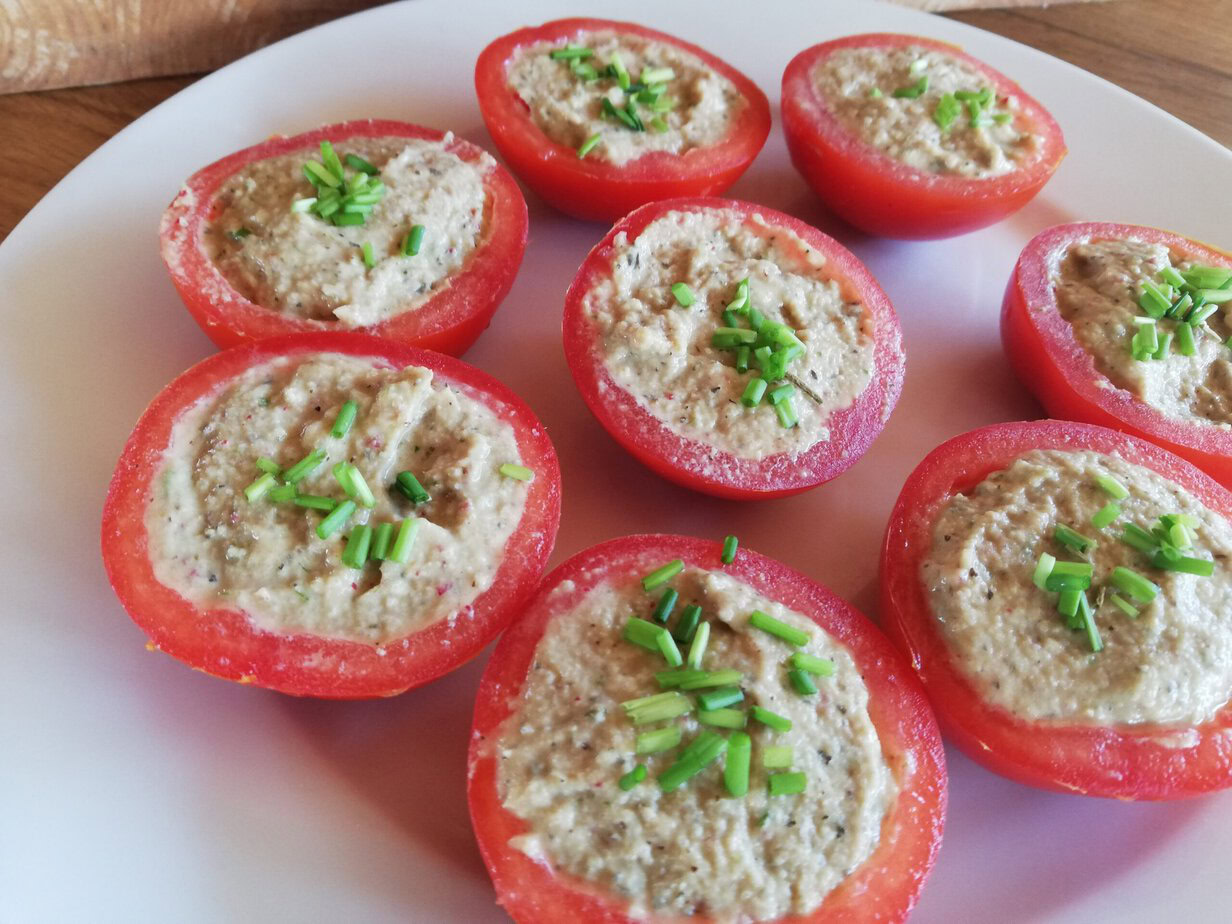
Mackerel Mousse
Ingredients
- 1 mackerel fillet between 125 and 140 g
- 4 radishes
- 3 teaspoons Dijon or smooth mustard
- 2 teaspoons dairy or plant-based yogurt preferably not coconut-based
- 5 to 10 leaves fresh mint
- 15 stalks fresh chives 2 teaspoons + garnish
- 0.5 lime, juiced moderate in carbs; or 0.25 lemon, juiced, low in carbs
Optional
- 4 tomatoes to use as cups for filling
- several cherry tomatoes for bite-sized appetizers
- 1 endive to use the leaves as appetizer “spoons”
Instructions
- Remove the bones and skin from the mackerel. Place in the immersion blender beaker.1 mackerel fillet
- Grate 4 radishes and add the grated radishes and the small remaining ends to the mackerel.4 radishes
- Squeeze half a lime into a small bowl (to catch any seeds) and add the juice.0.5 lime, juiced
- Add the mustard, yogurt, mint and chives.3 teaspoons Dijon or smooth mustard, 2 teaspoons dairy or plant-based yogurt, 5 to 10 leaves fresh mint, 15 stalks fresh chives
- Blend with an immersion blender.