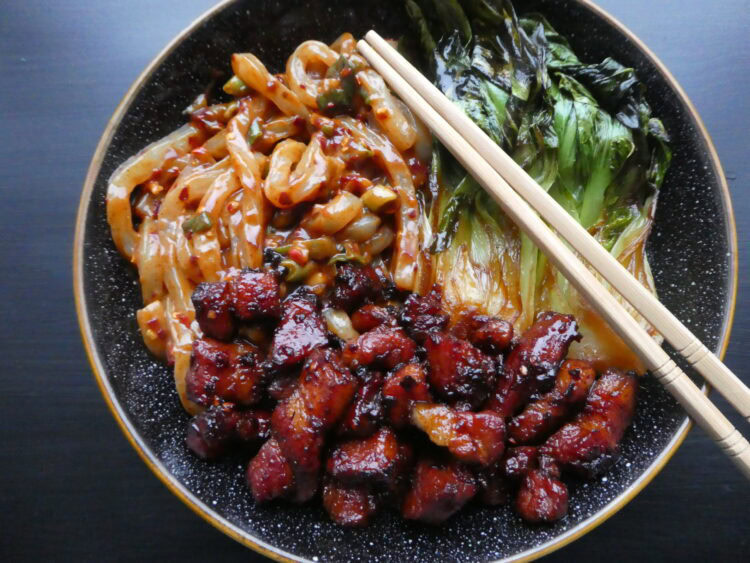
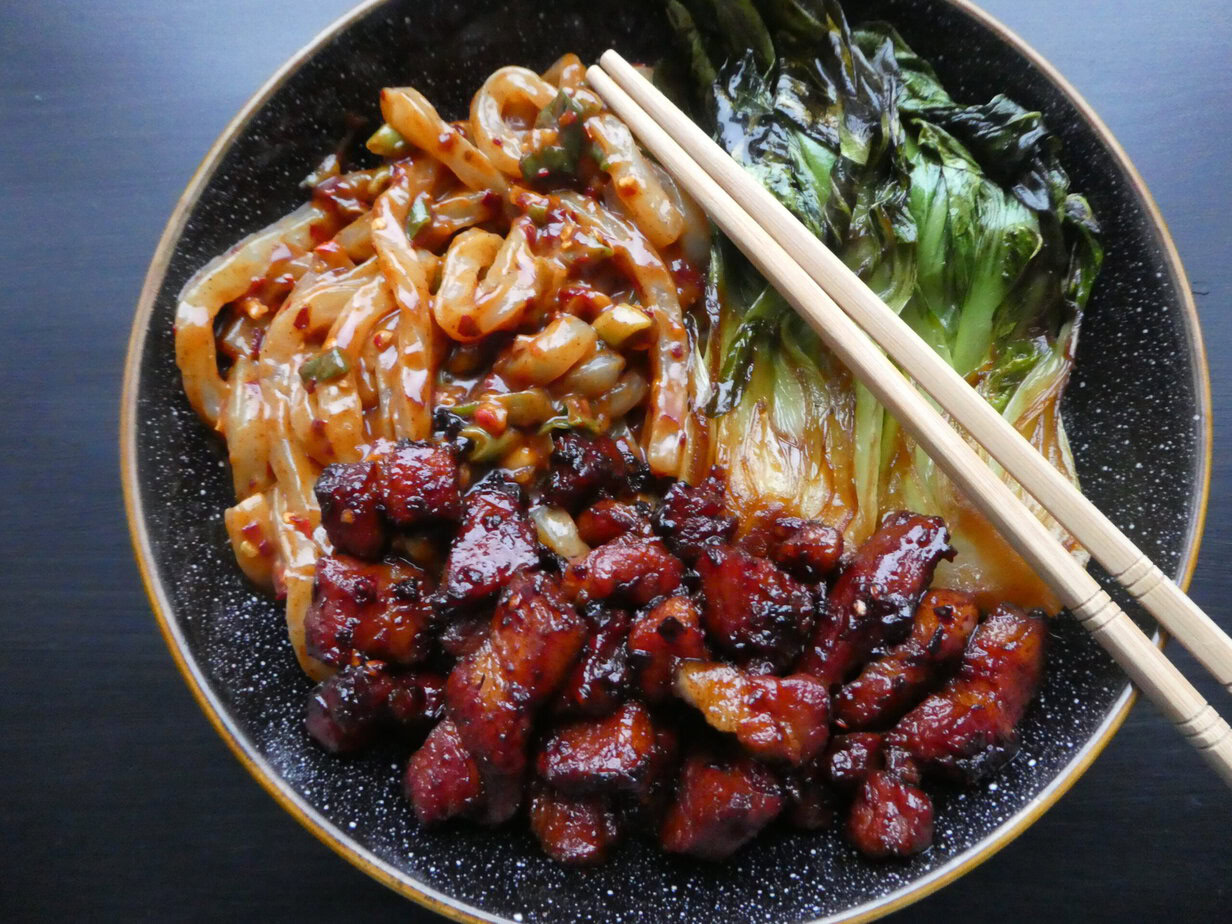
A Chinese-inspired keto bowl: golden pork strips over konjac noodles with a garlic and sesame sauce.
Strips of pork belly sizzle, turn golden at the edges and glisten under a light sweet-savory coating. At the bottom of the bowl, the konjac noodles stay supple, coated in garlic oil, tahini, soy sauce and sesame. This modern, low-carb version replaces sugar with sweeteners and wheat with konjac; for one serving, allow at least an hour of marinating and 20 minutes of cooking, or about 1 hour 20 minutes in total. This recipe is part of my collection of keto main dishes.
What are konjac noodles with pork?
Konjac noodles, also called shirataki, are made from konjac. They are known for their very low carbohydrate and calorie content, and their supple, almost elastic texture. Here, they provide a keto base for a well-seasoned bowl, cooked in a wok or skillet like a Chinese stir-fry, with soy sauce, chili, sesame and nicely browned pork.
The pork is cut into strips or cubes, then marinated with baking soda, vinegar, chili, fish sauce and soy sauce. Kelp noodles can replace the konjac noodles. For a different dish made with wheat noodles, see my pork noodles.
The origins of this version
This bowl belongs to contemporary keto cooking. The coating is made without starch, sugar gives way to erythritol and a liquid sweetener, and konjac replaces wheat noodles. The techniques remain those of a stir-fry: seared meat, a small amount of sauce, and noodles coated at the last moment.
The main ingredients
Fresh pork belly, ideally bought from a butcher, works better than smoked or brined pork. Measure the baking soda for the marinade carefully: half a teaspoon is enough, and white or apple cider vinegar adds brightness while neutralizing some of the baking soda.
Fish sauce with no added sugar deepens the savory flavor, while soy sauce, or tamari, is used both in the marinade and for the final coating. Tamari works for a gluten-free version, provided you check all the sauces. Chili flakes deliver a bold heat, and optional Sichuan pepper adds citrusy, floral notes along with its gently numbing effect.
Brown or white erythritol provides the sweetness in the sweet-savory flavor profile; on the pork, it creates a glossy film without the caramelization of regular sugar. Avocado oil, a mild olive oil or high-oleic sunflower oil all work as the cooking fat. Tahini adds creaminess and helps the sauce coat the noodles; almond butter can replace it for a milder flavor.
Technique tips and serving
For a successful marinade, cut the pork into evenly sized pieces, distribute the seasonings thoroughly and leave it in the refrigerator for at least an hour. With konjac noodles, the key is to remove excess water by rinsing, draining thoroughly and drying, which helps the tahini sauce cling to them. Sear the pork over high heat in a wok or large skillet with enough oil; once the edges are golden, the erythritol and final spoonful of soy sauce create the glossy coating, taking about 15 minutes overall depending on the size of the pieces. Meanwhile, let the garlic gently infuse the oil, taking care not to let it burn.
Next, toss the noodles over low or medium heat with the garlic oil, soy sauce and caramel-flavored liquid sweetener. Add the green onion and tahini, or almond butter, during the last few minutes, and the sesame oil right at the end. Place the pork over the noodles just before serving, with cucumber pickled without added sugar, stir-fried bok choy or sautéed spinach. Allow for at least 3 g of net carbs per serving, and up to around ten grams depending on the products used; refrigerate leftovers promptly, keeping the pork and noodles separate, and avoid freezing the konjac noodles.
For more low-carb ideas, browse all my keto recipes.
Konjac Noodles with Crispy Pork (Keto)
Ingredients
Pork belly
- 2 slices of pork belly (free-range)
- 0.5 teaspoon baking soda
- 2 teaspoons white vinegar or apple cider vinegar
- 1 teaspoon fish sauce (sugar-free)
- 3 tablespoons soy sauce or tamari
- 1 tablespoon chili flakes
- 2 tablespoons brown erythritol or white erythritol
- a generous splash avocado oil mild olive oil or high-oleic sunflower oil
Optional
- 0.5 teaspoon Sichuan pepper ground
Konjac noodles
- 1 serving konjac noodles or kelp noodles
- 3 tablespoons avocado oil, mild olive oil or high-oleic sunflower oil
- 3 cloves garlic
- 1 spring onion
- 1 tablespoon tahini or 1 tablespoon of almond butter
- 1 tablespoon soy sauce or tamari
- 1 tablespoon caramel-flavored liquid sweetener
- 1 tablespoon sesame oil
Instructions
- Cut the pork belly slices into strips or cubes. Marinate the pork belly pieces with the baking soda, vinegar, chili flakes, fish sauce and 2 tablespoons of soy sauce. Let rest for about an hour at least.2 slices of pork belly (free-range), 0.5 teaspoon baking soda, 2 teaspoons white vinegar or apple cider vinegar, 1 tablespoon chili flakes, 1 teaspoon fish sauce (sugar-free), 3 tablespoons soy sauce or tamari
- Rinse the noodles under running water in a colander. Let drain and pat dry.1 serving konjac noodles
- Heat the mild olive oil in a small saucepan. Do not let it get too hot. Crush the garlic with a garlic press and add it to the oil. This allows the garlic flavor to slowly infuse into the oil.3 tablespoons avocado oil, mild olive oil or high-oleic sunflower oil, 3 cloves garlic
- Heat the wok or frying pan and pour in a generous splash of oil. In Chinese cooking, you don’t skimp on the oil… Stir-fry the pork belly over high heat.a generous splash avocado oil
- Once the pork belly is golden around the edges, lower the heat a little. Add the erythritol and the remaining tablespoon of soy sauce. Add more to taste if desired. Stir occasionally. Cook for about a quarter of an hour in total.2 tablespoons brown erythritol
- If using Sichuan pepper, grind it and add it to the meat.0.5 teaspoon Sichuan pepper
- Add the noodles, caramel syrup and soy sauce to the oil and garlic in the small saucepan. Let simmer together, keeping the heat gentle.1 tablespoon caramel-flavored liquid sweetener, 1 tablespoon soy sauce or tamari
- During the last few minutes of heating/simmering, add the sliced spring onion to the noodles. Also add the nut or seed butter. Let it melt briefly and mix well.1 spring onion, 1 tablespoon tahini
- Just before serving, add the sesame oil to the noodles.1 tablespoon sesame oil