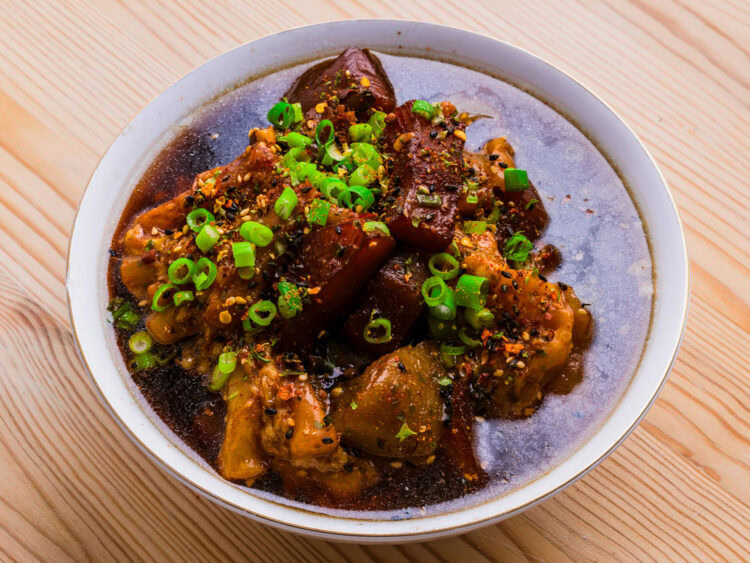
Beef tendons slowly simmered with daikon and konnyaku in a sweet-savory broth of sake, soy sauce and mirin.
Outside, the sky is gray, and in the kitchen a pot has been simmering since early afternoon. The air smells of soy sauce and ginger, and the beef tendon has finally become wobbly, what the Japanese call puru-puru.
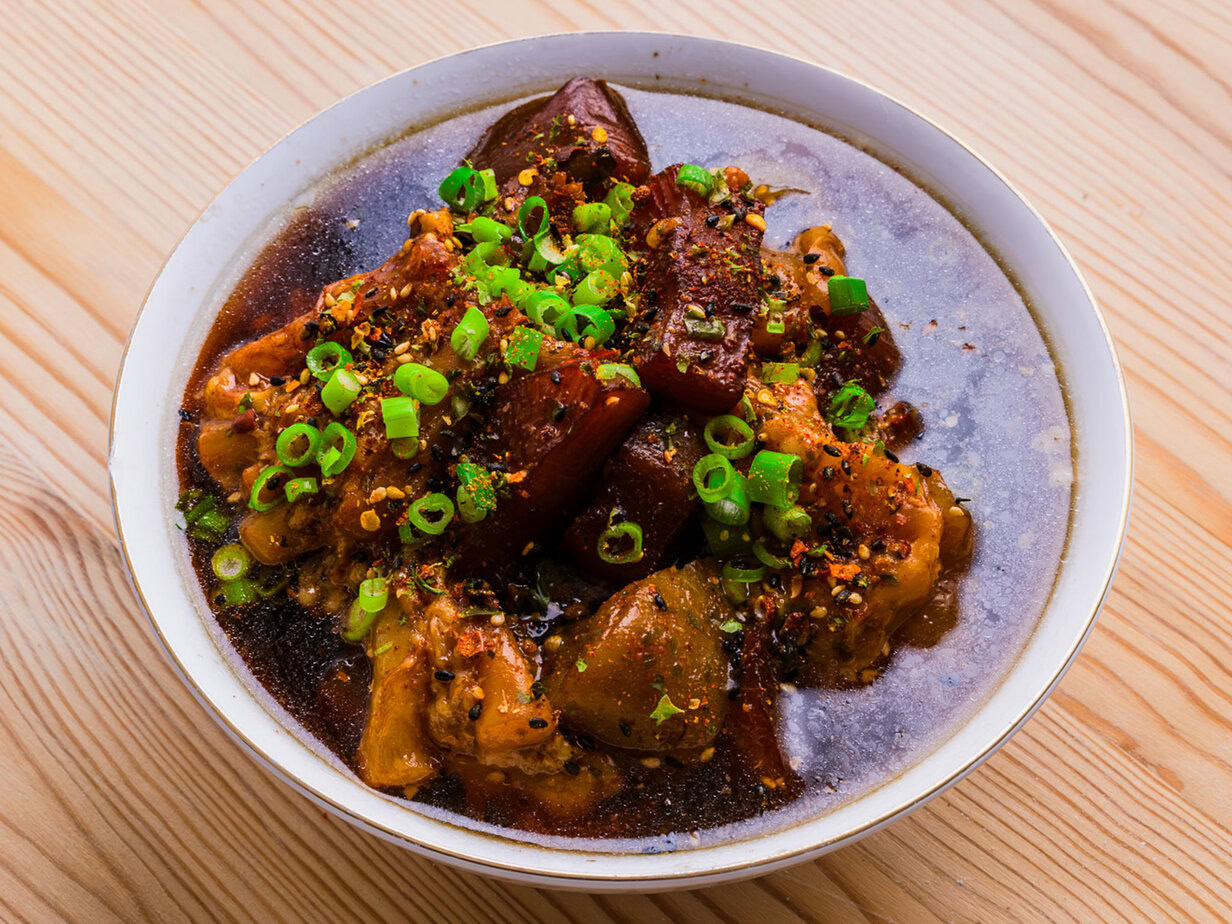
The daikon has soaked up the broth right to its core, the sauce clings to the konnyaku, and a pinch of shichimi livens everything up. What you need most is patience: the pot does the rest.
What is gyusuji nikomi?
Gyusuji nikomi is a Japanese beef tendon stew. The tendons are blanched, washed, then simmered with daikon and konnyaku in a broth of sake, sugar, soy sauce and mirin.
During cooking, the collagen in the tendon turns into gelatin and gives the broth body. Some regional versions, such as Osaka’s doteyaki, are seasoned with miso, while this one sticks to soy sauce.
The name reads like a label: gyu means “beef,” suji means “tendon,” and nikomi means “simmered dish.” So it is, quite simply, simmered beef tendon.
From Kobe’s slaughterhouses to Tokyo’s bar counters
Beef tendon stew comes from Kansai, the region encompassing Kobe and Osaka, where eating beef took hold as soon as the bans on meat were lifted in the 19th century. In 1919, a slaughterhouse opened in Kobe’s Nagata district.
The tendons were cheap cuts that nobody wanted, and locals bought them for next to nothing before simmering them for hours in light soy sauce.
This gave rise to sujikon, a contraction of gyusuji and konnyaku, also known as bokkake, from the verb bukkakeru, “to pour over.” It is indeed poured over rice, udon or an okonomiyaki. In Osaka, a close cousin became a fixture in the standing bars of the Shinsekai district: doteyaki, simmered in white miso.
After the war, the dish took root in Tokyo. In Asakusa, a street of open-air izakayas, nicknamed Nikomi-dori and later Hoppy Street, serves large pots of tendon and offal stews alongside shochu mixed with Hoppy, a beer-flavored drink invented in 1948.
Tendon, long regarded as slaughterhouse waste, became a comforting staple of everyday Japanese cooking.
The main ingredients in gyusuji nikomi
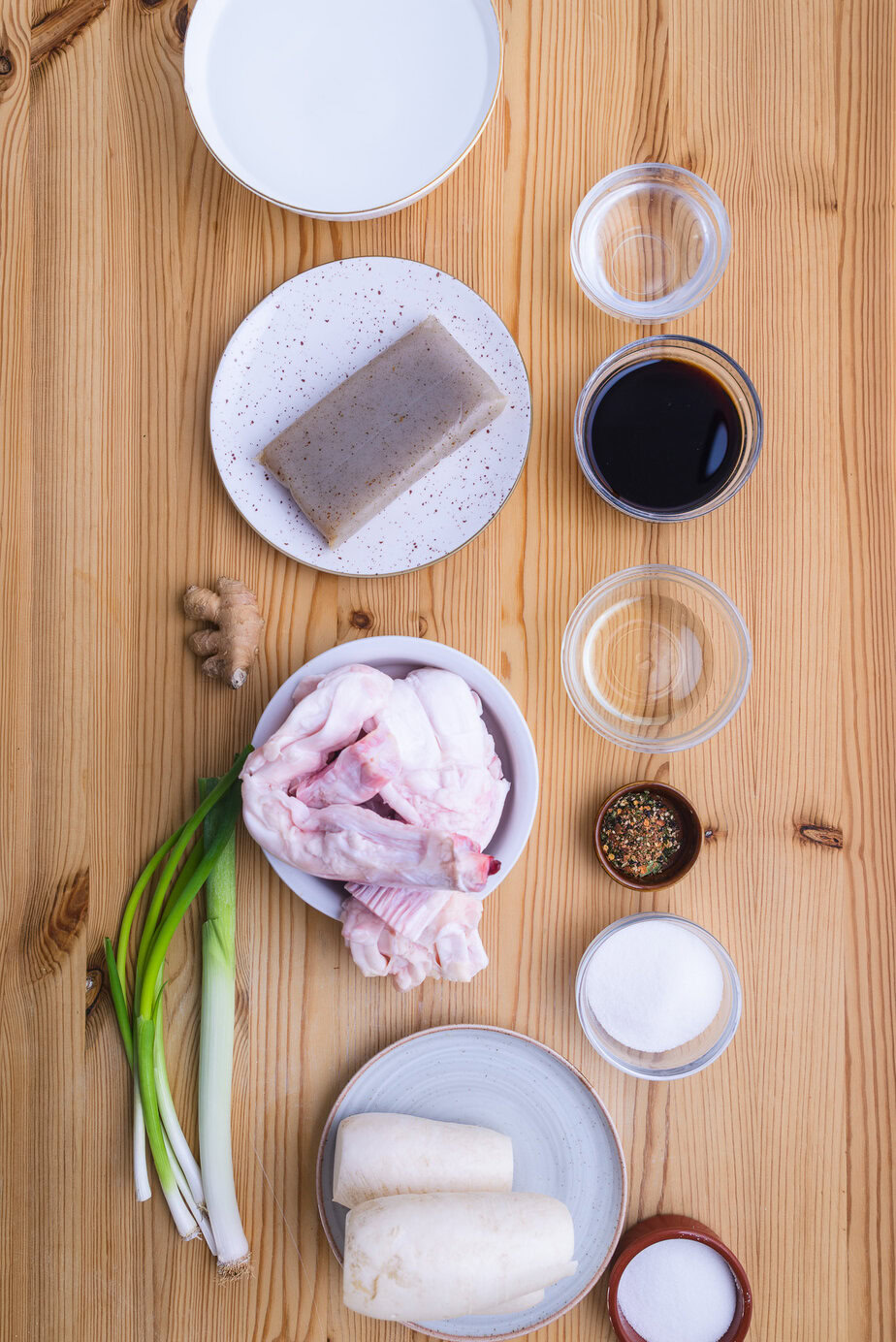
Beef tendon is the heart of the dish. Raw, it is tough and fibrous; after long, gentle cooking, it becomes soft, glossy and gelatinous. The daikon, cut into quarter-round slices, absorbs the broth and turns translucent. The konnyaku, a firm konjac-based gel, is torn by hand, and its uneven edges hold the sauce better.
The ginger, thinly sliced with its skin on, and the green part of the Japanese leek flavor the initial cooking liquid and tone down the tendon’s odor, then are removed. The seasonings come next: sake, sugar, soy sauce and mirin, for the sweet-savory balance of Japanese stews. The base is water, and the tendon itself provides the umami that would otherwise come from dashi.
When serving, a little Kujo green onion, or scallion, and a pinch of ichimi or shichimi togarashi add freshness and heat.
Key techniques for a good gyusuji nikomi
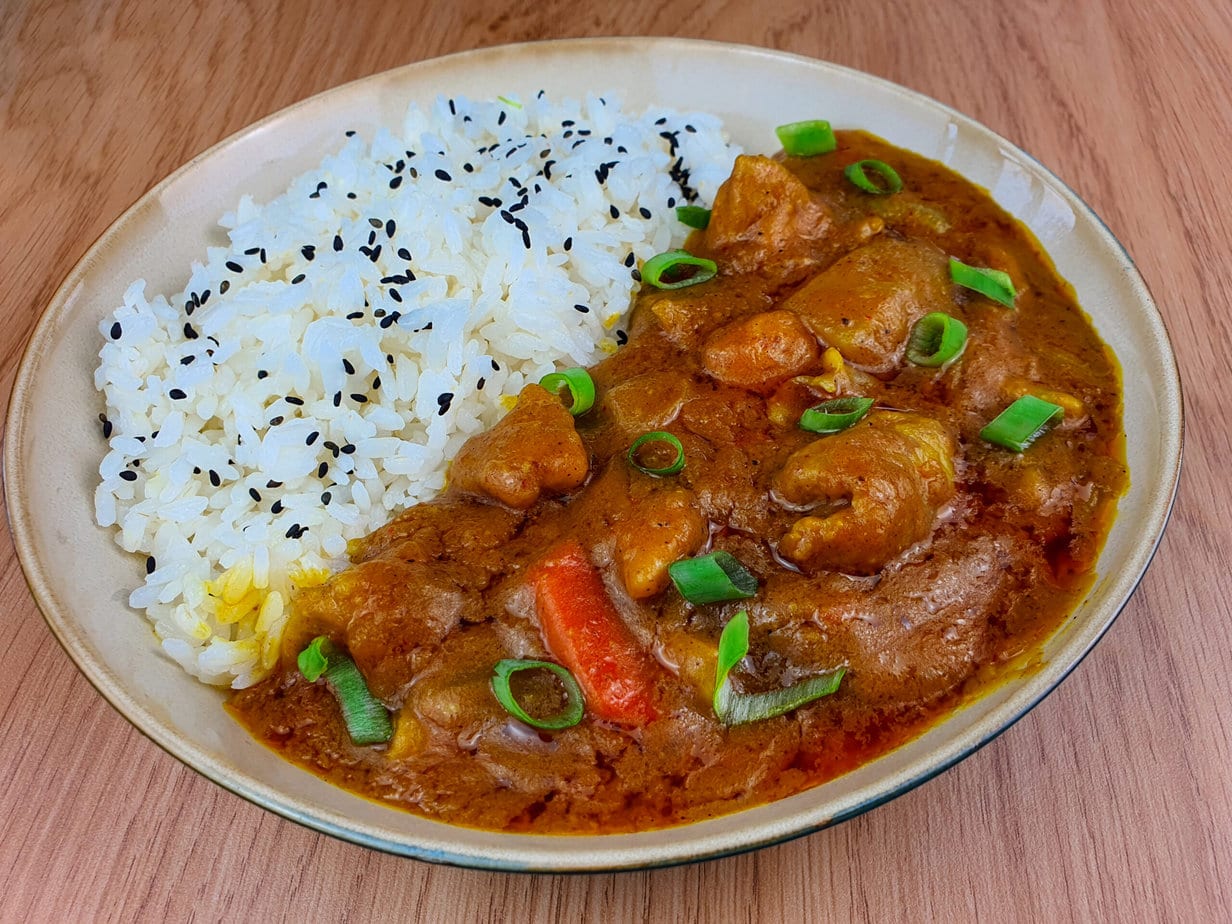
It all starts with blanching, or yudekoboshi: the tendons are boiled, drained and washed, for a clear broth without any strong odor.
Then keep the heat very low, cooking for about 3 hours in total, until the tendon wobbles and can be cut with a spoon. The result you are looking for: a glossy broth, meltingly tender daikon and tendon that yields without resistance. Serve piping hot, with a bowl of Japanese rice to make it a complete meal.
Ingredients
- 500 g beef tendons gyusuji
- 500 g daikon
- 200 g konnyaku
- 2 teaspoons sugar for coating the daikon
- 15 g ginger fresh
- 1 Japanese leek (naga-negi) green part only
- 1000 ml water
- ichimi or shichimi togarashi to taste
- kujo green onion, or thin scallions finely sliced, for garnish
Assaisonnement A
- 100 ml sake
- 30 g sugar
- 100 ml light soy sauce
- 60 ml mirin
Instructions
Préparation des légumes
- thinly slice the ginger, leaving the skin on.15 g ginger
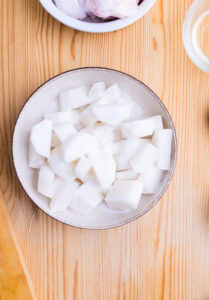
- Peel the daikon and cut it into 1.5 cm quarter-round slices (ichō-giri);500 g daikon
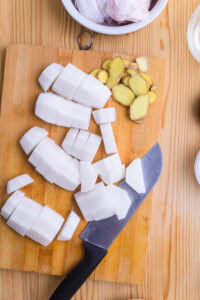
- coat the pieces with the sugar and rub it in.2 teaspoons sugar
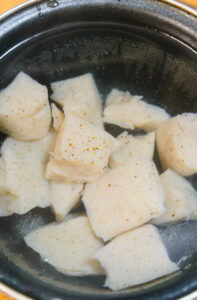
- Tear the konnyaku into bite-sized pieces by hand, rub it with a little salt, then briefly blanch it in hot water.200 g konnyaku
Cuisson
- Place the beef tendons in a saucepan with plenty of water and bring to a boil.500 g beef tendons
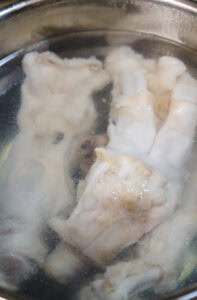
- Boil for about 10 minutes, skimming off any scum, then drain.
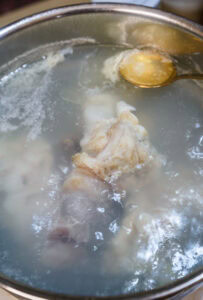
- Wash the tendons thoroughly under running water to remove fat, scum and odors, then cut them into large pieces.
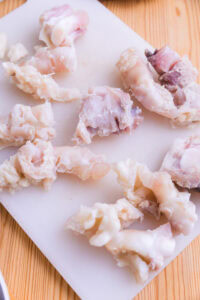
- Rinse the saucepan, then add the water, tendons, ginger and green part of the leek. Bring to a boil, skim off any scum and cook for 5 minutes.1 Japanese leek (naga-negi), 1000 ml water
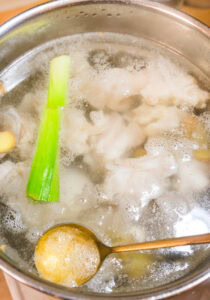
- Cover and gently simmer the tendons for about 1 hour, until they start to soften.
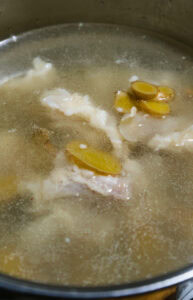
- Remove the ginger and leek. Bring back to a boil, skim off any scum, cook for 5 minutes, then cover and simmer gently for about 1 more hour, until the tendons are tender and gelatinous (puru-puru). At this point, the basic tendon preparation is complete; it can also be set aside for a curry or soup.
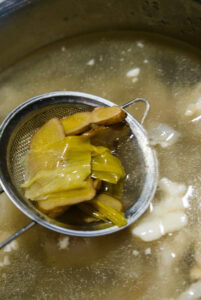
- add the daikon and konnyaku and cook for 10 minutes.
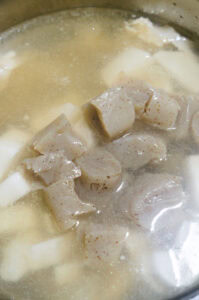
- Add all the seasoning A ingredients (sake, sugar, soy sauce, mirin), cover and cook for 5 minutes.100 ml sake, 30 g sugar, 100 ml light soy sauce, 60 ml mirin
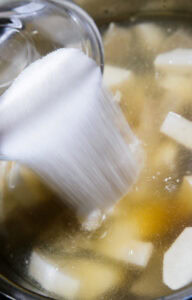
- Final simmer: cover and simmer gently for about 1 hour, allowing the daikon, konnyaku and tendons to absorb the broth.
- serve the stew and sprinkle with finely sliced kujo green onion and ichimi or shichimi togarashi to taste.ichimi or shichimi togarashi, kujo green onion, or thin scallions