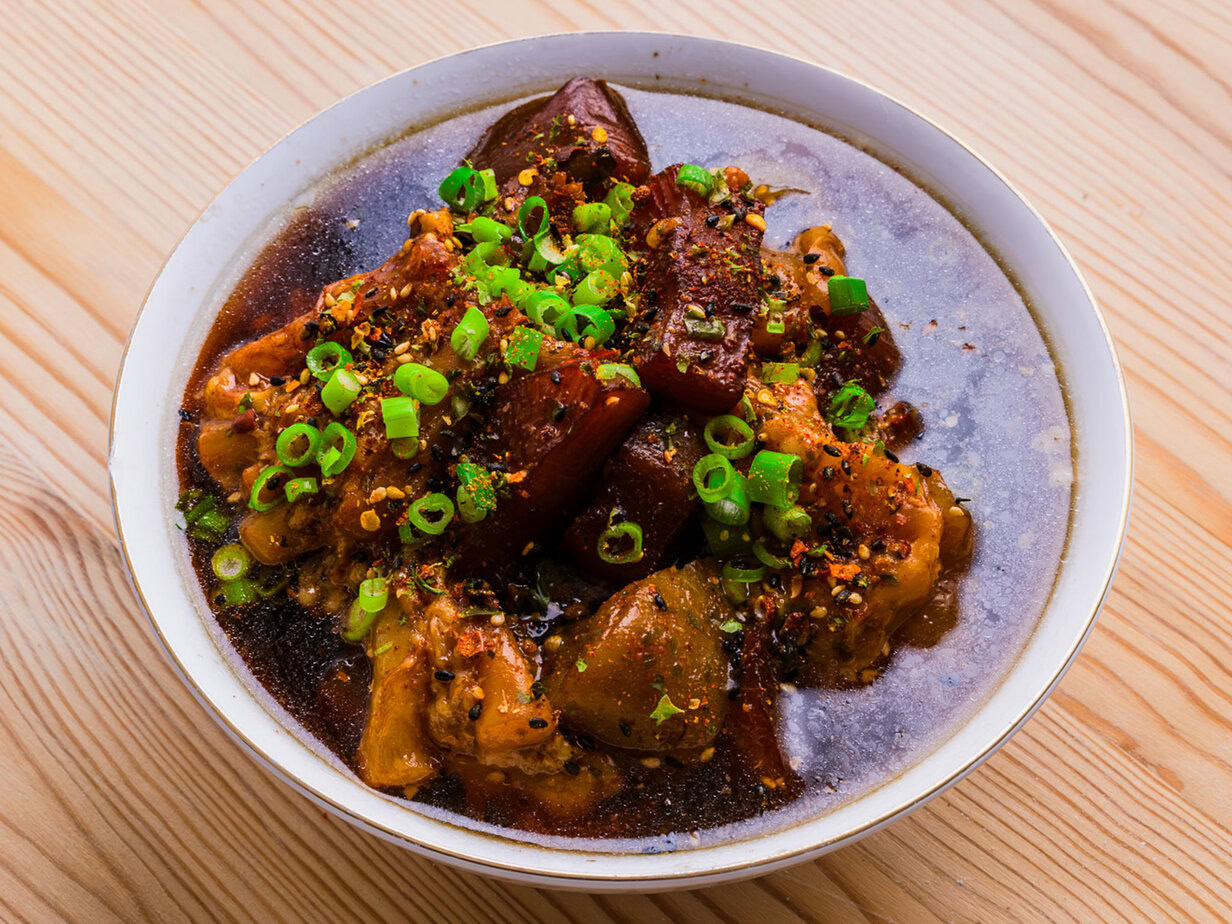
Servings: 4 servings
Ingredients
- 500 g beef tendons gyusuji
- 500 g daikon
- 200 g konnyaku
- 2 teaspoons sugar for coating the daikon
- 15 g ginger fresh
- 1 Japanese leek (naga-negi) green part only
- 1000 ml water
- ichimi or shichimi togarashi to taste
- kujo green onion, or thin scallions finely sliced, for garnish
Assaisonnement A
- 100 ml sake
- 30 g sugar
- 100 ml light soy sauce
- 60 ml mirin
Procédé
Préparation des légumes
- thinly slice the ginger, leaving the skin on.15 g ginger
- Peel the daikon and cut it into 1.5 cm quarter-round slices (ichō-giri);500 g daikon
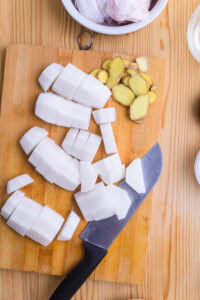
- coat the pieces with the sugar and rub it in.2 teaspoons sugar
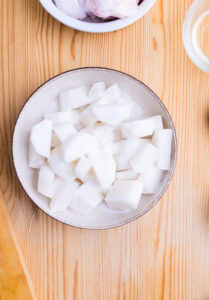
- Tear the konnyaku into bite-sized pieces by hand, rub it with a little salt, then briefly blanch it in hot water.200 g konnyaku
Cuisson
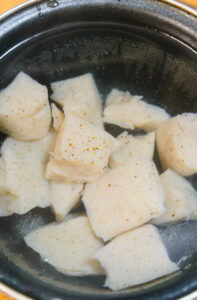
- Place the beef tendons in a saucepan with plenty of water and bring to a boil.500 g beef tendons
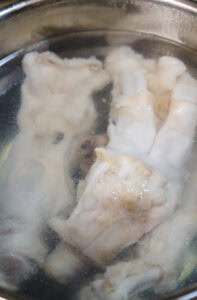
- Boil for about 10 minutes, skimming off any scum, then drain.
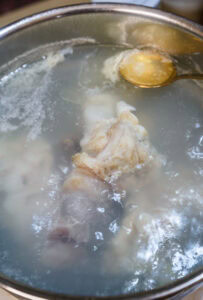
- Wash the tendons thoroughly under running water to remove fat, scum and odors, then cut them into large pieces.
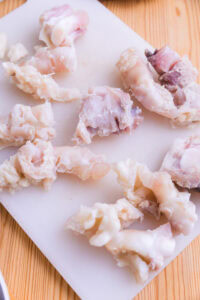
- Rinse the saucepan, then add the water, tendons, ginger and green part of the leek. Bring to a boil, skim off any scum and cook for 5 minutes.1 Japanese leek (naga-negi), 1000 ml water
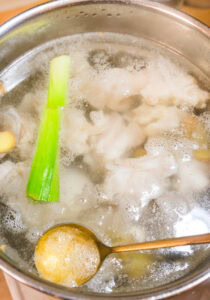
- Cover and gently simmer the tendons for about 1 hour, until they start to soften.
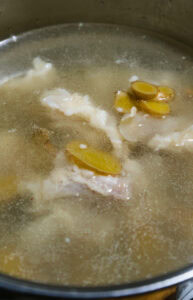
- Remove the ginger and leek. Bring back to a boil, skim off any scum, cook for 5 minutes, then cover and simmer gently for about 1 more hour, until the tendons are tender and gelatinous (puru-puru). At this point, the basic tendon preparation is complete; it can also be set aside for a curry or soup.
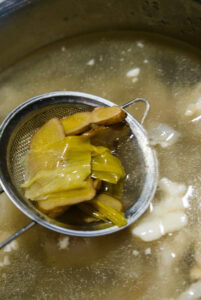
- add the daikon and konnyaku and cook for 10 minutes.
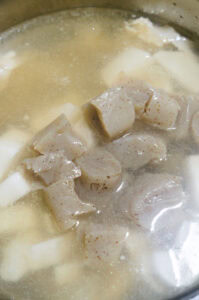
- Add all the seasoning A ingredients (sake, sugar, soy sauce, mirin), cover and cook for 5 minutes.100 ml sake, 30 g sugar, 100 ml light soy sauce, 60 ml mirin
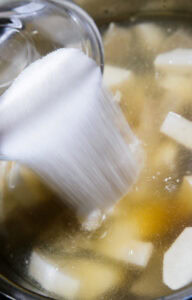
- Final simmer: cover and simmer gently for about 1 hour, allowing the daikon, konnyaku and tendons to absorb the broth.
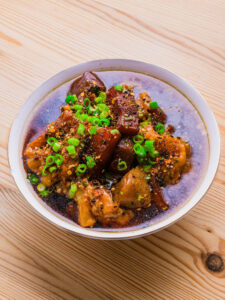
- serve the stew and sprinkle with finely sliced kujo green onion and ichimi or shichimi togarashi to taste.ichimi or shichimi togarashi, kujo green onion, or thin scallions
Notes
The tendons only become tender and gelatinous with long, gentle cooking: allow about 3 hours of simmering in total, plus preparation time.
Tearing the konnyaku by hand (rather than cutting it cleanly) gives it rough surfaces that absorb more flavor.
The ginger and leek greens are aromatics that help control the odor of the tendons during the initial simmer; remove them before adding the seasonings.
Did you make this recipe?Tag @marcwiner on Instagram!