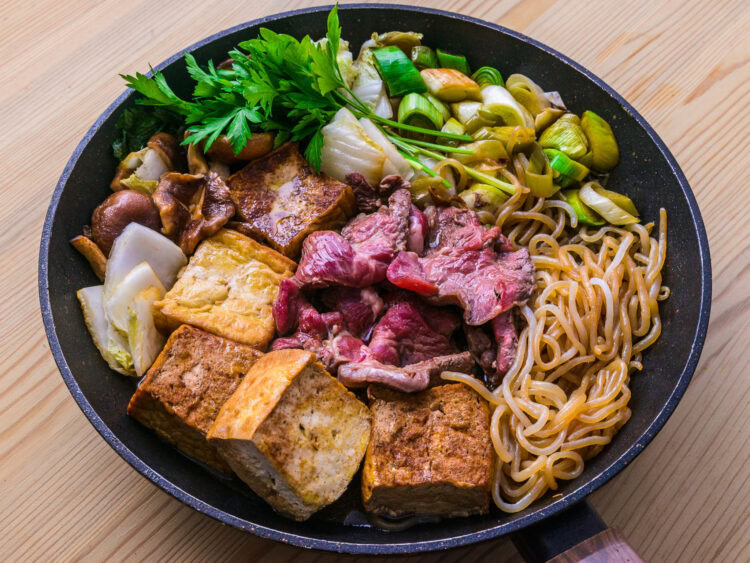
Authentic Japanese sukiyaki, with thinly sliced beef and vegetables simmered in a sweet-and-savory warishita sauce
Marbled beef sizzles the moment it hits the iron pan. Sugar browns at the edges, and the soy sauce mingles with the steam rising from the pot. Sukiyaki is cooked at the table and shared one bite at a time. The gestures, the order of preparation, and the dip in beaten egg are all part of the dish.
What is sukiyaki?
The word points to rustic cooking: suki refers to a plowshare or spade, while yaki means to grill or sear. The name evokes outdoor cooking at the edge of the fields, directly on iron, long before sukiyaki made its way into restaurants and family dining rooms.
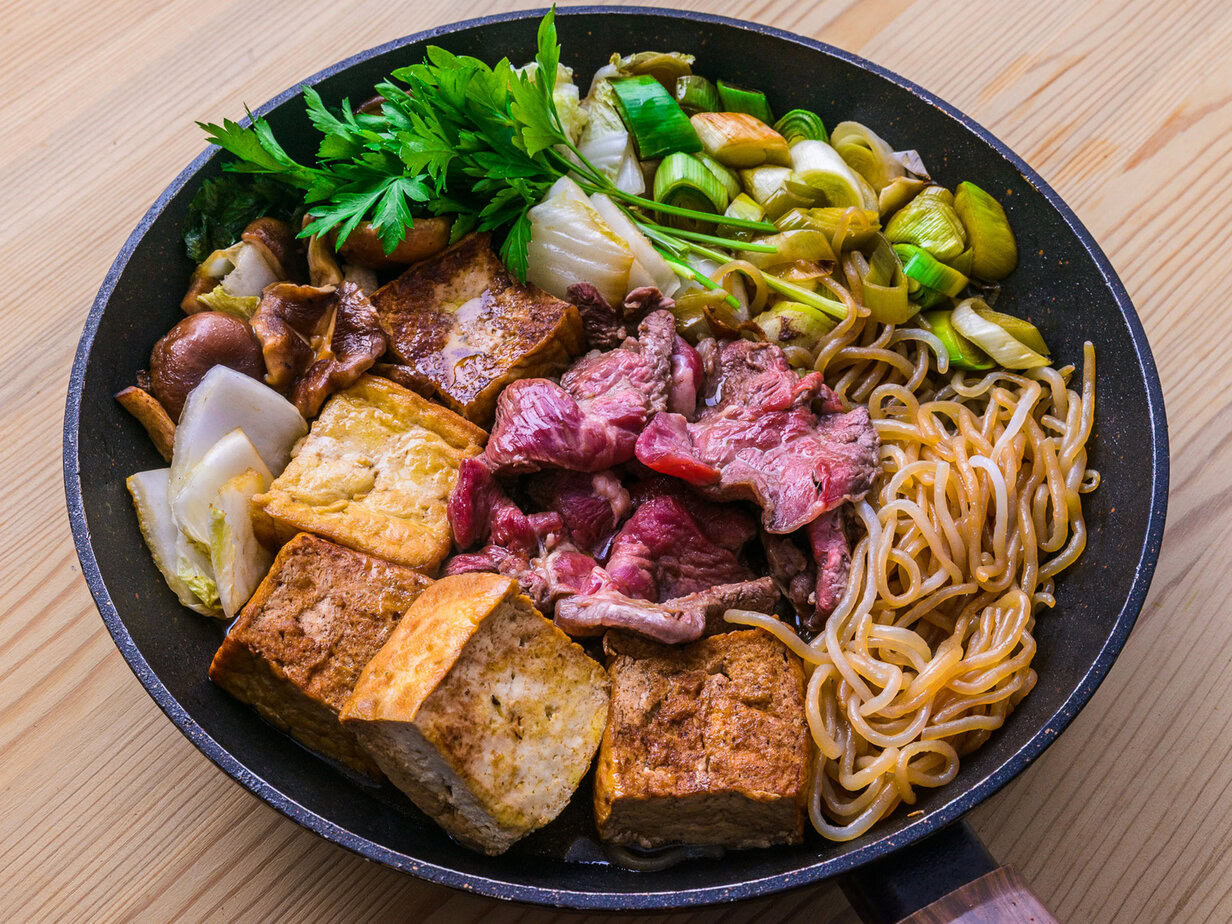
In its authentic modern form, sukiyaki is a Japanese nabemono cooked at the table. It combines thin slices of meat, naganegi, shungiku, shiitake, yaki-dofu, shirataki, and a sweet-and-savory soy sauce-based seasoning.
In eastern Japan, that seasoning most often takes the form of warishita, made with soy sauce, mirin, sake, sugar, and dashi, usually prepared from kombu and bonito flakes. Traditionally, each diner has a bowl of beaten raw egg on the side.
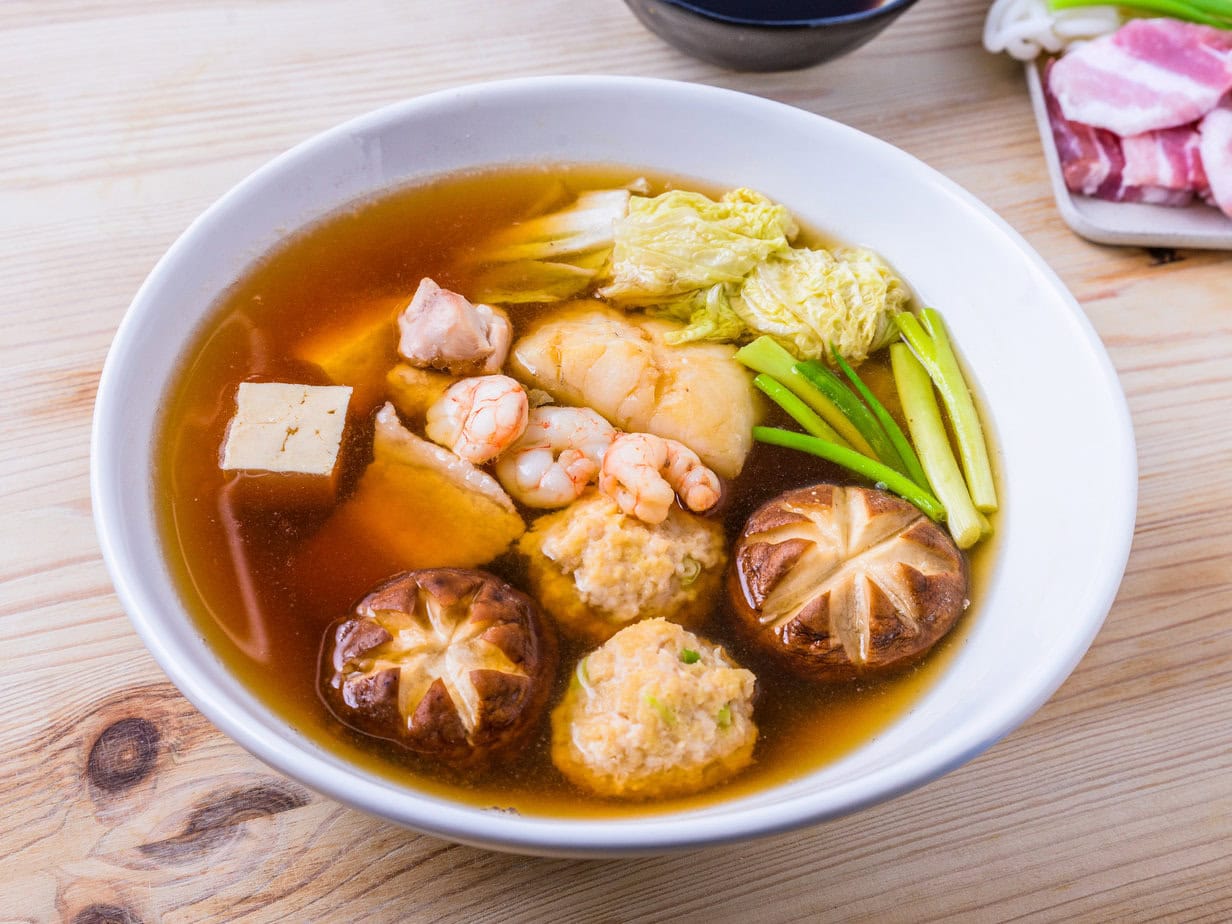
It is just as important to clarify what sukiyaki is not: it is not a chili-spiked dish, not a noodle soup served in individual bowls, and not Thai “suki” with its red chili-garlic sauce. In today’s authentic usage, it is also not a catch-all name for pork, chicken, or seafood hot pots.
From plowshare to the Meiji-era table
The history of sukiyaki begins with the restrictions that long surrounded meat consumption. For centuries, the influence of Buddhism and imperial restrictions discouraged the eating of four-legged animals in Japan.
Meat did not disappear completely, but its consumption remained limited: it was used as medicine, grilled outdoors, or prepared away from the domestic hearth. According to one origin story, agricultural workers grilled game, fish, or, more rarely, beef outdoors on the broad, flat iron blade of a suki.
The Meiji era profoundly changed Japanese eating habits. As Japan moved toward modernization, beef became a symbol of strength and cosmopolitan ambition.
The official lifting of the ban in 1871, followed by Emperor Meiji’s public consumption of beef in 1872, sent a clear official signal, while thinkers such as Yukichi Fukuzawa defended meat as part of national renewal.
In the Kanto region, especially in Yokohama, in Kanagawa Prefecture, and later in Tokyo, the rise of beef consumption gave birth to gyunabe: simmered beef with naganegi in an iron pot, often seasoned with a pronounced miso to soften the then-unfamiliar aroma of the meat.
The Great Kanto Earthquake of 1923 later destroyed restaurants and scattered cooks. Restaurateurs from Kansai settled in Tokyo as it was being rebuilt, bringing with them the name “sukiyaki,” the dip in raw egg, and a fuller assortment of tofu, mushrooms, and shirataki.
Kanto adopted the name and the egg while keeping the dish simmered at its core. Over time, the old gyunabe style, strongly marked by miso, gave way to a more refined soy sauce-based warishita. From this evolution came two fully recognized styles: Kansai style, which begins by searing the meat, and Kanto style, which starts with the broth.
Two styles, one pot
The Kansai and Kanto versions are both authentic, but they rely on different methods. Both gather diners around a shallow iron pot; both are built around beef, naganegi, shungiku, shiitake, yaki-dofu, shirataki, and egg. The difference lies mainly in the cooking and seasoning technique.
Kansai preserves the yaki dimension of sukiyaki. Beef tallow coats the hot pan, then the wagyu is seared directly in it. Coarse-grained zarame sugar and soy sauce season the meat itself.
The first bite can be served almost immediately, with lightly caramelized edges. The vegetables are added next, releasing enough moisture to turn the beef fat, soy sauce, and sugar into a concentrated glaze.
Kanto-style sukiyaki descends from Meiji-era gyunabe. It begins with a warishita made from soy sauce, mirin, sake, dashi, and sugar, then simmers the meat and vegetables together.
The beef does not develop a seared crust; it cooks gently in the broth, while the tofu, mushrooms, and shirataki soak up the dish’s sweetness and umami.
In both styles, the egg plays a specific role. In Kansai, it cools and tempers still-sizzling seared beef; in Kanto, it softens the sauce and coats each bite. The consistency of the Kanto style makes it especially well suited to home cooking, while restaurants in both regions continue to preserve this tableside craft.
Main ingredients for sukiyaki
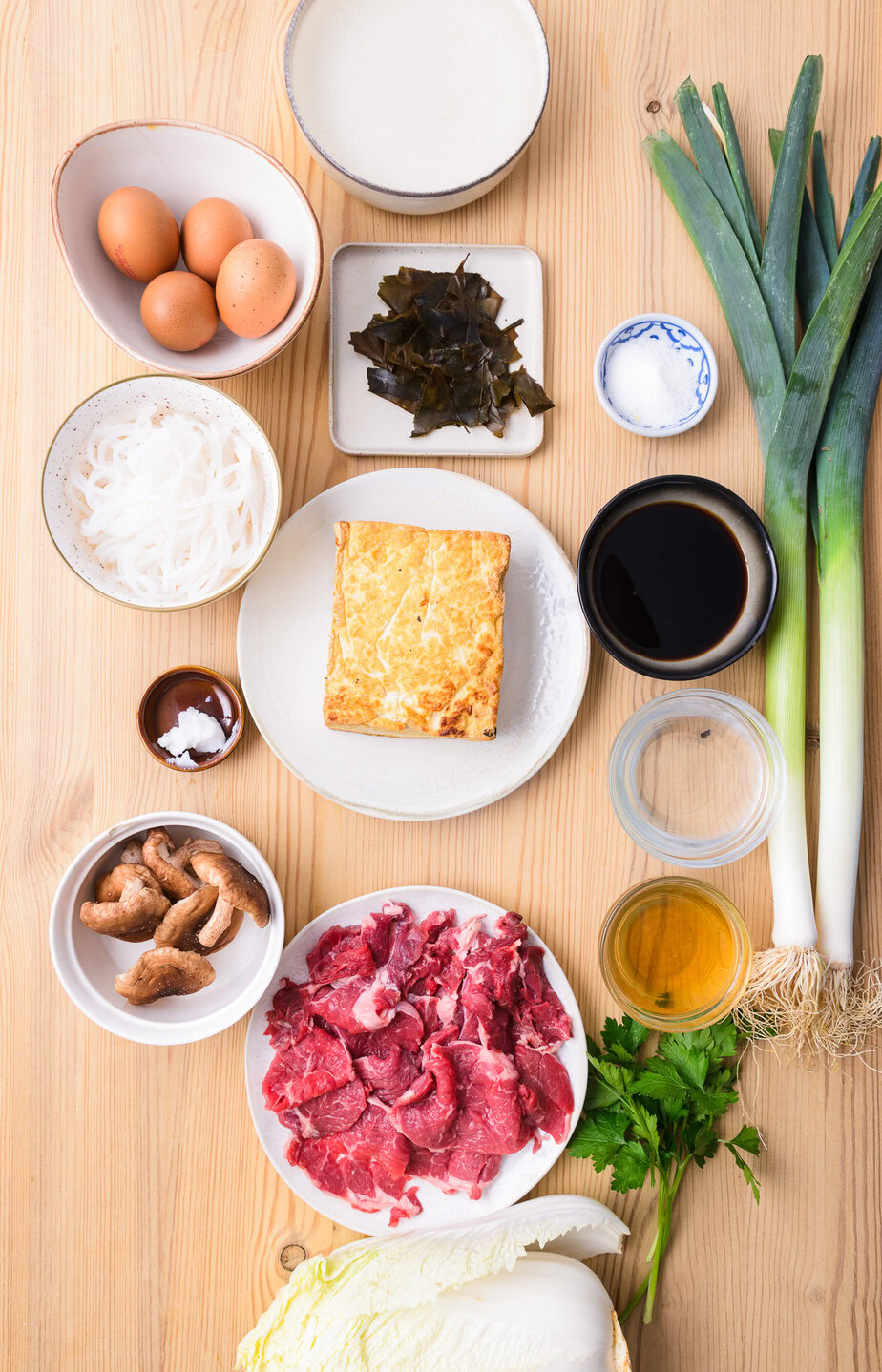
Thinly sliced Kuroge Wagyu: Kuroge Wagyu is served in slices slightly thicker than those used for shabu-shabu. Cuts such as ribeye or sirloin offer dense marbling that melts at low temperatures and keeps the beef tender, whether seared or simmered.
Beef tallow: Rubbed over the hot pan, it prevents the meat from sticking and creates a rich, fragrant fat base, especially in Kansai-style sukiyaki.
Naganegi: This long Japanese leek softens as it cooks and adds an allium depth that supports the soy sauce, sugar, and mirin.
Shungiku: This edible chrysanthemum brings a slightly bitter, herbaceous note that helps balance the fat and sweetness.
Shiitake mushrooms: Their guanylate-rich umami deepens the broth and balances the sweetness of the seasoning.
Yaki-dofu: This firm grilled tofu holds together well during cooking and absorbs flavor beautifully. If you cannot find it, pressed firm tofu is a good substitute.
Shirataki: These translucent konjac noodles add a supple, slightly springy texture while soaking up the sauce.
Seasoning base: Soy sauce, mirin, sake, sugar, and, in Kanto-style sukiyaki, dashi create the dish’s characteristic sweet-and-savory glaze or broth. The ideal balance is salty, sweet, and rich in umami, with no chili heat.
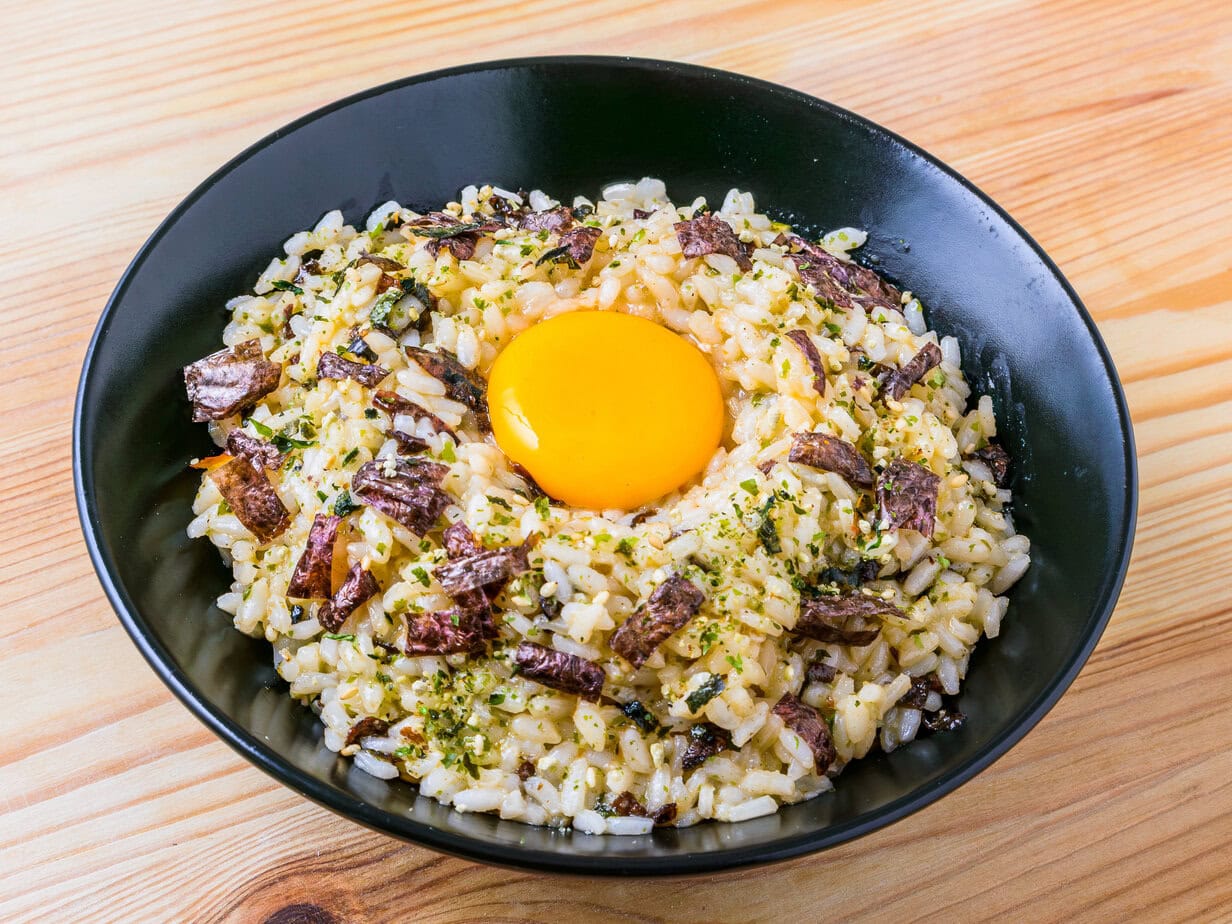
Raw beaten egg: Traditionally raw, and ideally very fresh or pasteurized when needed, this final dip cools piping-hot meat, emulsifies the sauce on each slice, and softens the saltiness, in the spirit of tamago kake gohan.
Tradition-friendly additions, such as shimeji, can deepen the umami without changing the character of the dish. Cilantro, chilies, and modern versions made with pork, chicken, or seafood, however, generally move it away from traditional Japanese sukiyaki.
Ingredients
- 500 g beef thinly sliced for sukiyaki
- 1 block grilled tofu
- 2 Japanese leeks or 1 onion
- 6 shiitake mushrooms
- 0.5 bunch shungiku optional
- 120 g shirataki noodles
- 1 piece beef fat
- 4 eggs
- 500 ml water
- 5 g kombu soaked for about 30 minutes
Recommended optional vegetables
- napa cabbage optional
- mitsuba optional
- komatsuna optional
- tomato optional
- bamboo shoots optional
- watercress optional
- mountain vegetables optional
- bell pepper optional
Warishita sauce
- 100 ml light soy sauce
- 100 ml mirin
- 100 ml sake
- 2 tablespoons sugar
Instructions
Prepare the ingredients
- Cut the beef into bite-size pieces, taking care not to make them too small.500 g beef
- Slice the Japanese leeks on the diagonal into pieces about 1 cm thick.2 Japanese leeks
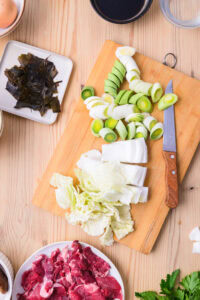
- Pat the grilled tofu dry with paper towels, then cut it into 8 pieces.1 block grilled tofu
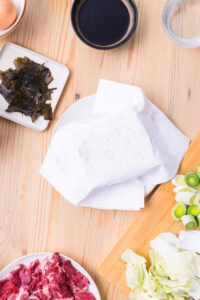
- Cut the shirataki noodles into pieces about 10 cm long, then boil for 2 to 3 minutes to remove their odor. Drain well.120 g shirataki noodles
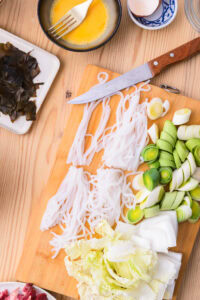
- Prepare the shungiku: trim off the base, then cut the stems in half, along with the leaves if they are long.0.5 bunch shungiku
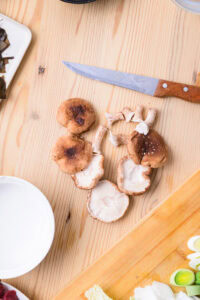
- Prepare the shiitake mushrooms: remove the stems and tough bases, halve the stems lengthwise, make decorative cuts in 2 mushrooms if desired, then halve the remaining mushrooms.6 shiitake mushrooms
- Arrange all the ingredients in groups for an attractive presentation at the table, including any optional vegetables.napa cabbage, mitsuba, komatsuna, tomato, bamboo shoots, watercress, mountain vegetables, bell pepper
Warishita sauce
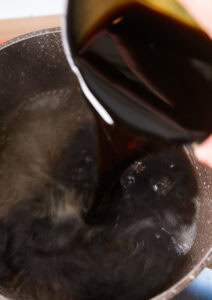
- Combine the mirin, sake, and sugar in a saucepan. Heat to cook off the alcohol, then turn off the heat once the sugar has completely dissolved.100 ml mirin, 100 ml sake, 2 tablespoons sugar
- Add the soy sauce and stir. For a rounder, more mellow flavor, let it rest overnight if possible.100 ml light soy sauce
Prepare the eggs
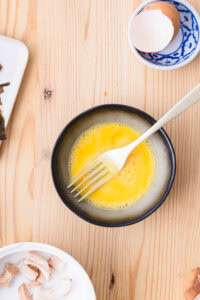
- Beat the eggs in individual bowls and set them aside before you start cooking.4 eggs
Cook the sukiyaki
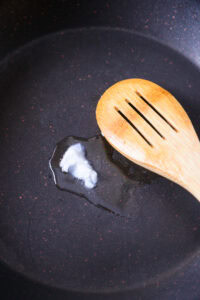
- Heat a sukiyaki pan or large skillet over medium heat. Add the beef fat and let it melt gently without overheating.1 piece beef fat
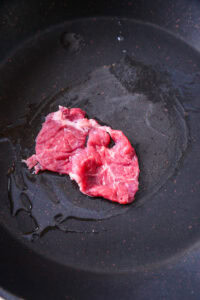
- Add the first portion of beef and brown it on one side. Pour in a small amount of warishita sauce and let the flavor soak in lightly. Taste this first bite.
- Add the leeks, tofu, shirataki noodles, shiitake mushrooms, and any other vegetables you have chosen. Add just enough warishita sauce and simmer until everything absorbs the flavor, avoiding adding too much too quickly, as the tofu will release water.
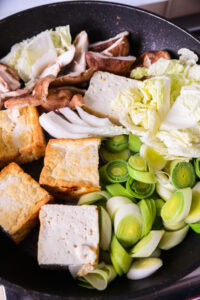
- Coat the tofu with the beef fat and let the vegetables soften. If the bottom starts to stick, add a little kombu broth made with the water and soaked kombu.500 ml water, 5 g kombu
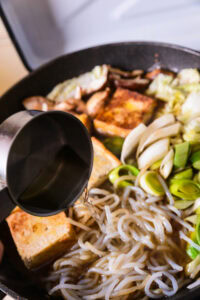
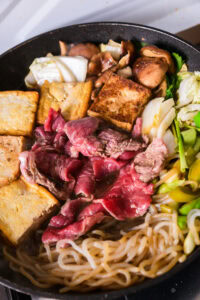
- Push the cooked ingredients toward the edge, add more beef, and cook it on one side before placing it over the vegetables. Drizzle a little sauce over the top and cook as if grilling in the sauce rather than boiling.
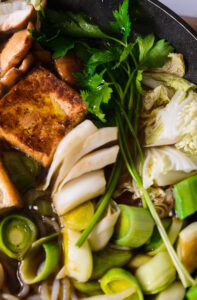
- Add the shungiku at the very end and cook it briefly. Enjoy the sukiyaki as it cooks, dipping each bite into the beaten egg.
Notes
- Make a generous batch of warishita sauce using a 1:1:1 ratio of soy sauce, mirin, and sake, then sweeten to taste.
- Store the warishita sauce in the refrigerator for about 1 month; letting it rest for 2 to 3 days gives it a deeper flavor.
- Always sear the beef before simmering it, then place it over the other ingredients to avoid cooking it too directly.
- Use well-marbled, thinly sliced wagyu or Japanese beef if possible, or at least a well-marbled cut.
- Cook sukiyaki as if you were grilling in the sauce rather than boiling, adding only as much sauce as needed.
- Let the vegetables and beef fat create the cooking juices naturally; adjust the intensity of the sauce at the table with the amount of egg you use for dipping.