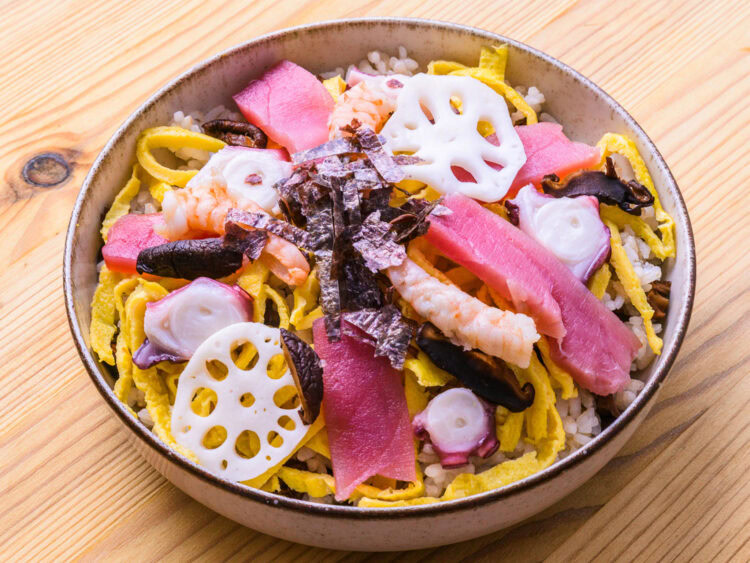
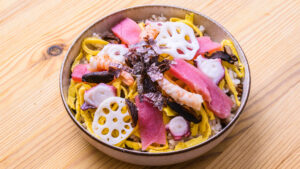
Glossy shari, subtly infused with kombu, is topped with ribbons of kinshi tamago, ikura, shrimp, snow peas, nori, shiitake, and eel.
If chirashizushi feels festive, it is because it so often appears at celebrations. During Hina Matsuri, on March 3, its colors herald spring. Its ingredients also carry symbolic meaning : shrimp represents longevity, while lotus root suggests an open view toward the future.
And yet, nothing is placed there at random. Each element is prepared separately, then assembled to balance color, texture, and umami. Its uniqueness begins with the very meaning of the word “sushi” and with the way the bowl is built.
What is chirashizushi?
Chirashizushi literally means “scattered sushi,” but the key word is still “sushi.” The name is not defined by raw fish; it rests on seasoned rice with a bright, lively acidity.
The word “sushi” goes back to older terms associated with acidity, a reference to ancient preservation methods based on fermentation. Modern chirashi belongs to the lineage of haya-zushi, or “quick sushi,” which appeared between the end of the Muromachi period and the beginning of the Edo period. In this style of sushi, cooked rice is seasoned with awase-zu, a mixture of rice vinegar, sugar, and salt.
This rice, called shari, forms the base of the dish. It should be vinegared, glossy, and served at room temperature, or close to it, rather than steaming hot. Traditional proportions aim for a bright but balanced acidity : about 60 to 80 milliliters of rice vinegar for three Japanese measures of uncooked rice. The sugar and salt are adjusted to support the acidity without overwhelming it.
Both mixed into the rice and arranged on top, the toppings are prepared with care. They may include simmered vegetables, such as shiitake, kanpyo, or lotus root, as well as finely shredded egg, shrimp, eel, aromatic herbs, nori, or raw fish, depending on the region.
Goshiki, the principle of the five colors in washoku, guides the composition: red, yellow, and green complement the white of the rice and the black of the nori. In the Kanto region, chirashi tends to showcase sashimi on vinegared shari, with no ingredients mixed into the rice; in Kansai, cooked and simmered ingredients are folded into the rice before the final garnish is added. Kaisendon may look similar, but without vinegared shari or these traditional markers, it belongs to a different style of bowl.
From hidden bowls in Okayama to the markets of Edo
The history of chirashizushi is part of the broader history of Japanese sushi, long before its festive presentations of today. Originally, sushi was nare-zushi: salted fish packed with rice for months of lactic fermentation.
The rice was used to preserve the fish and was often discarded. Later, nama-nare shortened the process to the point where the fish and rice could be eaten together. The decisive turning point came with haya-zushi, when vinegar gave fresh rice the acidity that fermentation had once provided.
The 1643 Ryori Monogatari, often considered the oldest surviving complete Japanese cookbook, does not yet present chirashi in its current form.
However, the book already brings together several of its building blocks: raw fish seasoned with vinegar in namasu-style preparations, the growing use of soy sauce, and soy-sauce-based cooking methods that help place the sweet-savory preparations later used for chirashi toppings in context.
In western Japan, particularly in Okayama and Kansai, the history of chirashi takes on, according to regional tradition, a political dimension. According to Okayama’s origin story, severe flooding is said to have led to the establishment of the Ichiju Issai rule. Imposed by the daimyo Ikeda Mitsumasa, it limited each meal to one soup and one side dish.
Households are said to have responded with ingenuity: fish, vegetables, and egg were chopped or arranged so they could be hidden beneath the vinegared rice, or mixed into it. What looked modest to inspectors became, at the table, bara-zushi: a precursor to Kansai-style chirashi, in which cooked ingredients are mixed with the rice.
In Edo, present-day Tokyo, another logic then shaped Kanto chirashi as Edomae sushi developed. Near the fish markets, sushi masters placed irregular but exceptionally fresh, high-quality pieces of tuna, flounder, squid, and other seafood on the shari. Here, freshness and precise knife work take center stage.
Chirashizushi, especially in its decorative, home-style Kansai or gomoku version, later found a festive setting in Hina Matsuri, where shrimp, lotus root, egg, herbs, and nori express wishes associated with spring.
Main ingredients in chirashizushi
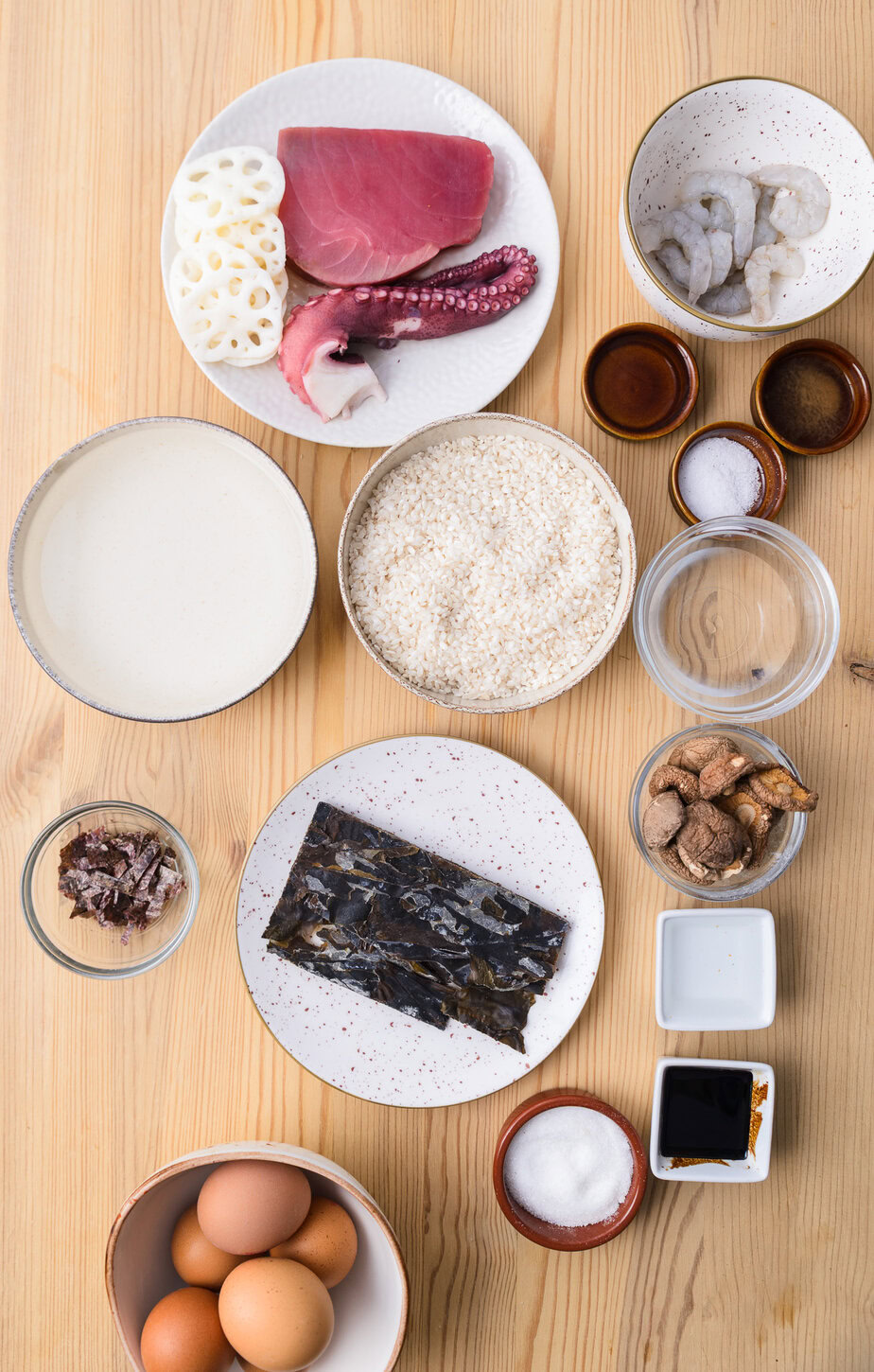
Japanese short-grain rice: Varieties such as Koshihikari produce rice that is sticky yet still made up of distinct grains: a glossy white base that holds the seasoning without turning mushy.
Kombu: A small piece slipped into the pot as the rice cooks releases a glutamate-rich savoriness, giving the shari subtle depth even before the toppings are added.
Rice vinegar, sugar, and sea salt: Vinegar defines sushi; sugar rounds out the acidity; salt sharpens the overall seasoning. To make the grains shine, cut through the rice with a spatula using clean strokes rather than stirring, then fan it as it cools.
Dried shiitake: Slowly rehydrated in cold water, they develop deep, woodsy umami, while their soaking liquid becomes a flavorful simmering broth.
Kanpyo: This dried gourd is massaged with salt, softened, then simmered until it absorbs a mirin-sweetened soy sauce; its supple, tender texture is a classic feature of Kansai-style chirashi.
Lotus root and bamboo shoots: Lotus root adds crunch, and its open, lacy shape is considered lucky; bamboo shoots bring a bright, springlike bite.
Dashi, soy sauce, mirin, and sugar: Together, they season the nimono. The balance often rests on a ratio of about 2: 1: 1 for sugar, soy sauce, and mirin, in a base of dashi or mushroom soaking liquid. This mixture brings gloss, roundness, and umami.
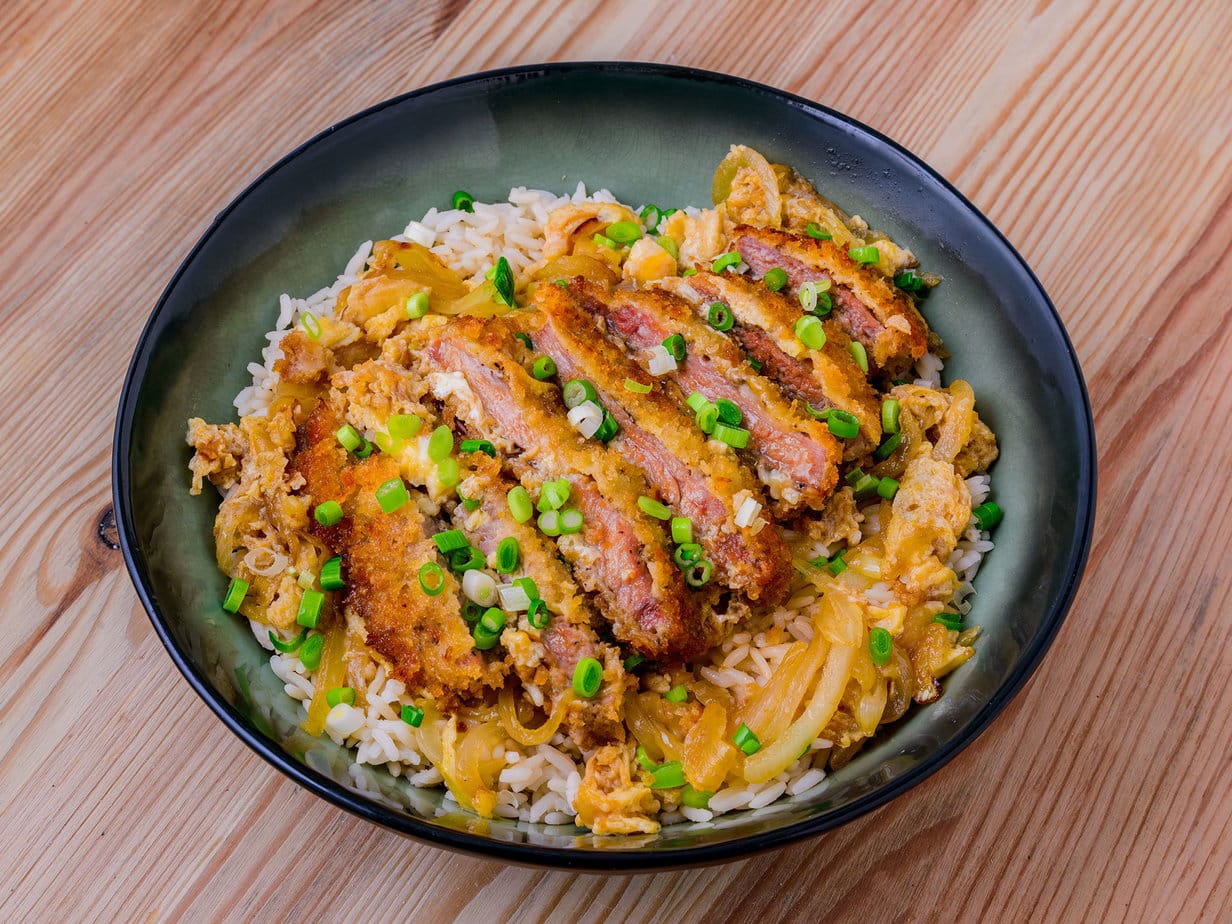
Kinshi tamago: Very thin egg crepes, cooked without browning and then cut into golden threads, add a light texture and the yellow element of the goshiki palette.
Shrimp and eel: Shrimp offers a firm bite and strong festive symbolism; eel, called unagi or anago depending on the preparation, adds lacquered, sweet-savory richness.
Kanto-style raw toppings: Tuna, white fish such as flounder, scallops, squid, uni, and, in contemporary versions, salmon highlight the exceptional freshness of the seafood and the precision of the cut.
Snow peas, asparagus, mitsuba, or shiso: They bring crunch, herbaceous notes, and seasonal brightness.
Shredded nori, beni shoga, or ikura: Nori brings its black, umami-rich strands; pickled ginger or salmon roe adds a red, tangy, or briny accent.
Ingredients
Sushi su
- 6 tablespoons rice vinegar
- 5 tablespoons sugar
- 1 tablespoon salt
Dried shiitake mushrooms
- 30 g shiitake mushrooms dried
- 2 tablespoons mirin
- 4 tablespoons sugar
- 2 tablespoons dark soy sauce
Kōya dōfu
- 2 pieces kōya dōfu freeze-dried tofu
- 200 mL dashi
- 2 tablespoons sugar
- 2 tablespoons mirin
- 1 tablespoon usukuchi soy sauce light-colored
Kanpyō
- 30 g kanpyō dried calabash gourd strips
- 150 mL dashi
- 1 tablespoon sugar
- 1 tablespoon mirin
- 0.5 tablespoon light soy sauce
Shrimp
- 10 shrimp
- 1 tablespoon rice vinegar
- 0.5 tablespoon sugar
- 1 tablespoon dashi
Toppings
- tuna a small amount, sashimi-grade
- octopus a small amount, sashimi-grade
- lotus root a small amount, vinegared
- young ginger a small amount, pickled in sweet vinegar
- ito nori a small amount, shredded nori
- 8 eggs
- salt as needed
Instructions
Preparation
- Cook the rice with the water, sake, and kombu.600 g Japanese short-grain rice, 720 g water, 2 tablespoons sake, 1 piece kombu
- Once the rice is cooked, pour in the sushi su and gently mix to make the sushi meshi.6 tablespoons rice vinegar, 5 tablespoons sugar, 1 tablespoon salt
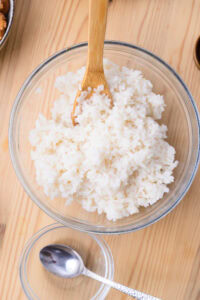
- Rehydrate the shiitake mushrooms in lukewarm water, remove the stems, then cook them with the listed mirin, sugar, and soy sauce.30 g shiitake mushrooms, 2 tablespoons mirin, 4 tablespoons sugar, 2 tablespoons dark soy sauce
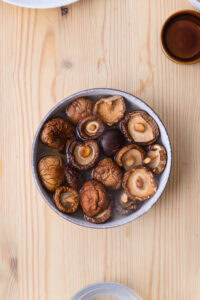
- Thinly slice some of the shiitake mushrooms for garnish.
- Cut the remaining shiitake mushrooms into roughly 5 mm cubes for the sushi meshi filling.
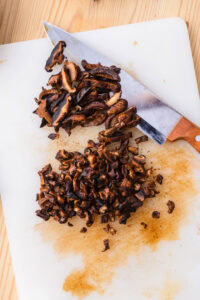
- Rehydrate the kōya dōfu in lukewarm water, rinse it several times until the water runs clear, then squeeze it out firmly.2 pieces kōya dōfu
- Cut the kōya dōfu into roughly 5 mm cubes, then simmer it with the dashi, sugar, mirin, and usukuchi soy sauce.200 mL dashi, 2 tablespoons sugar, 2 tablespoons mirin, 1 tablespoon usukuchi soy sauce
- Rub the kanpyō with salt, then boil it to rehydrate.30 g kanpyō, salt
- Cut the kanpyō into roughly 5 mm cubes, then simmer it with the dashi, sugar, mirin, and light soy sauce.150 mL dashi, 1 tablespoon sugar, 1 tablespoon mirin, 0.5 tablespoon light soy sauce
- Fold the diced shiitake mushrooms, kōya dōfu, and kanpyō into the sushi meshi.
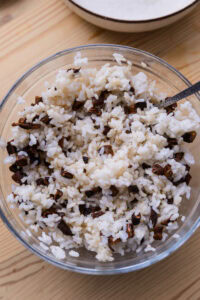
- Cover with a damp cloth to keep the rice from drying out.
- Devein the shrimp, thread them onto skewers to keep them straight, then cook them in salted boiling water.10 shrimp
- Let the shrimp cool, then peel them, halve them lengthwise, and marinate them in the rice vinegar, sugar, and dashi.1 tablespoon rice vinegar, 0.5 tablespoon sugar, 1 tablespoon dashi
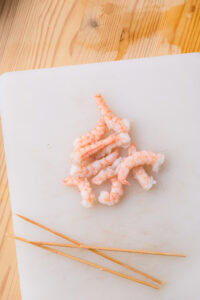
- Crack the eggs into a bowl, add a pinch of salt, and whisk well.8 eggs
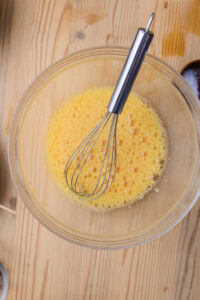
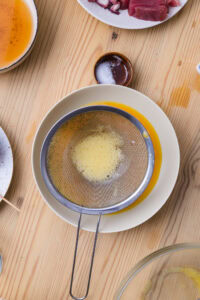
- Strain the eggs through a sieve, cook them into thin omelets, then cut them into fine strips to make shredded egg.
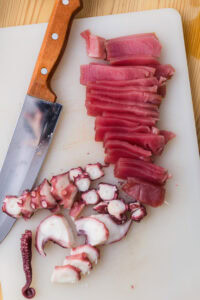
- Cut the tuna and octopus into bite-size pieces.tuna, octopus
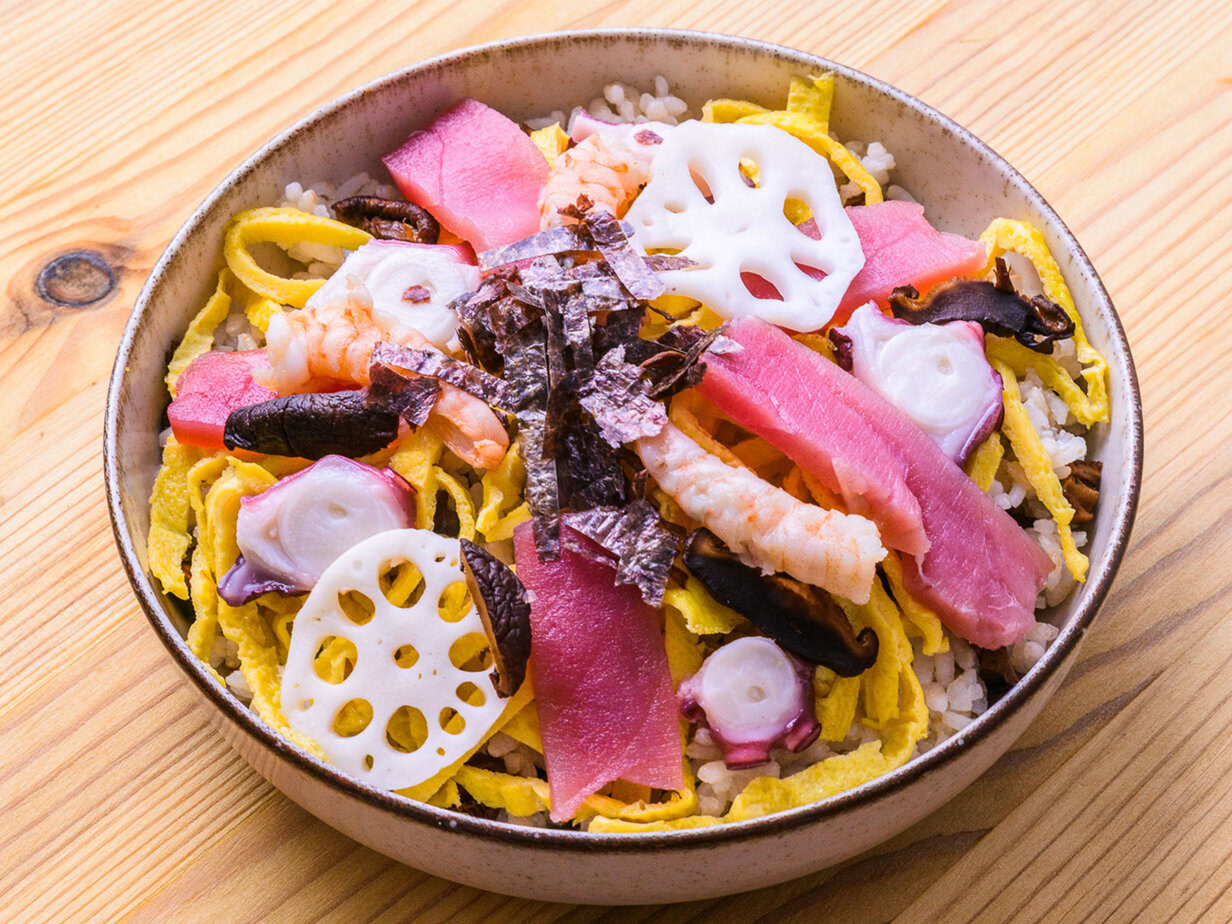
- Arrange the mixed rice in a serving dish, top with the shredded egg, then garnish with the shrimp, tuna, octopus, vinegared lotus root, pickled young ginger, and ito nori.lotus root, young ginger, ito nori
Notes
- For the sushi su, store-bought sushi vinegar works well and is very convenient.
- As a guide, use 2 tablespoons of sushi su for every 150 g of rice.
- Do not add the cooking liquid from the shiitake mushrooms, kōya dōfu, or kanpyō to the sushi meshi.
- Feel free to vary the toppings with chirimen jako, kamaboko, and other favorites.
- If you are not cooking the rice with kombu and sake, use the sushi setting on your rice cooker, or reduce the water slightly.
- When making sushi meshi, vinegar equal to about 10% of the rice weight is generally a good guideline.