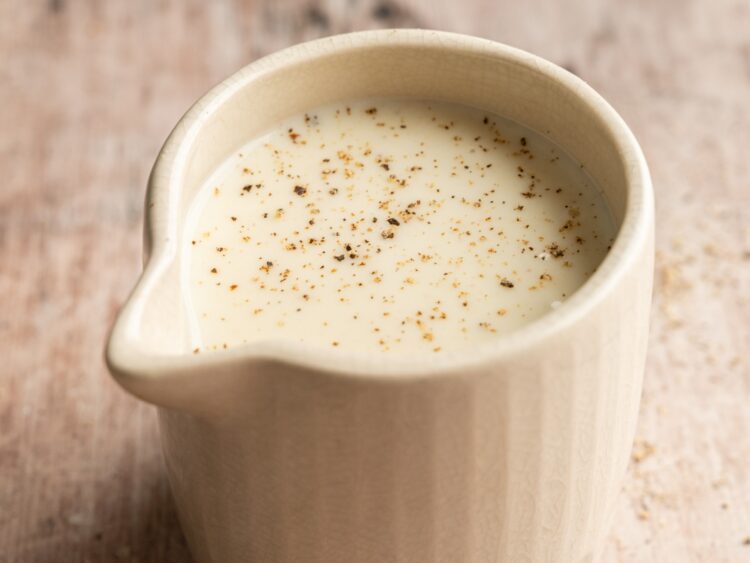
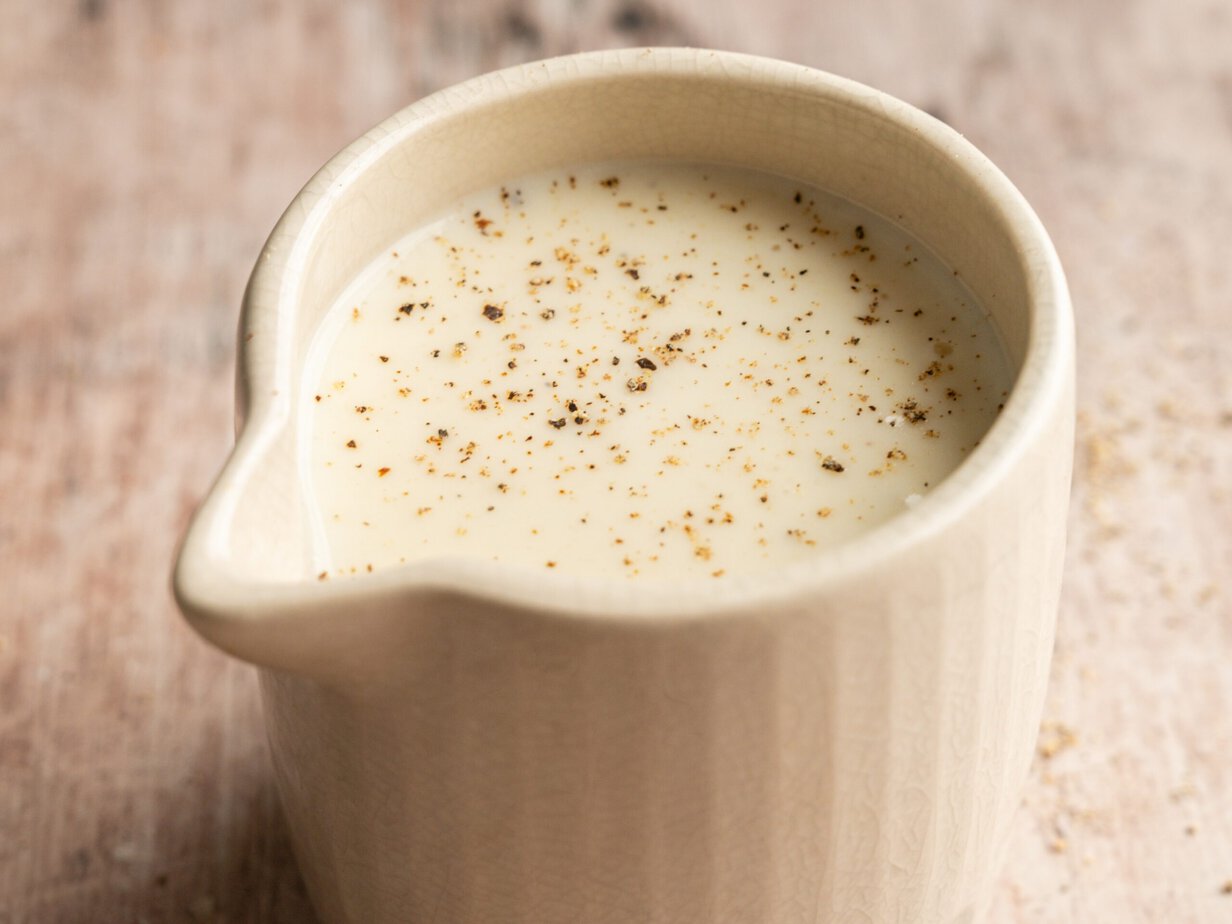
The basic white sauce of French cooking: a roux of butter and flour, cold milk, salt, pepper and a pinch of nutmeg.
A croque-monsieur with a bubbling, browned top, lasagna that melts under your fork, a cauliflower gratin golden from the oven: they all start in the same little saucepan. The butter foams, the flour blends in without taking on any color, then the cold milk turns this paste into a smooth, glossy sauce.
At the last moment, grated nutmeg fills the whole kitchen with its aroma. A little butter, flour and milk, a whisk, and the sauce is already coating the back of the spoon.

What Is Béchamel?
Béchamel is a white sauce thickened with a white roux: equal weights of butter and flour, cooked together without browning, then thinned with milk. It’s seasoned with salt, pepper and nutmeg, nothing more. It’s one of the mother sauces of classical cooking, like hollandaise sauce: a neutral base that you then build on. Add melted cheese and it becomes Mornay sauce.
Its name honors Louis de Béchameil, Marquis de Nointel (1630-1703), a financier and chief steward to Louis XIV. There’s nothing to suggest he ever cooked himself: back then, cooks were happy to dedicate their creations to noblemen. In Italy, the same sauce is called besciamella.
A Sauce Born in 17th-Century French Cooking
Until the 17th century, sauces were thickened with breadcrumbs, pounded almonds or egg yolks. The roux, a mixture of fat and flour cooked together, gradually took their place. In 1651, François Pierre de La Varenne’s Le Cuisinier françois was already describing a roux-and-milk sauce close to today’s béchamel.
In 1903, Auguste Escoffier listed it among the five mother sauces in his Guide culinaire, alongside velouté, espagnole, hollandaise and tomato sauce. His restaurant version simmered for a long time with lean veal. Home cooks have kept the essentials: the roux, the milk and the seasoning.
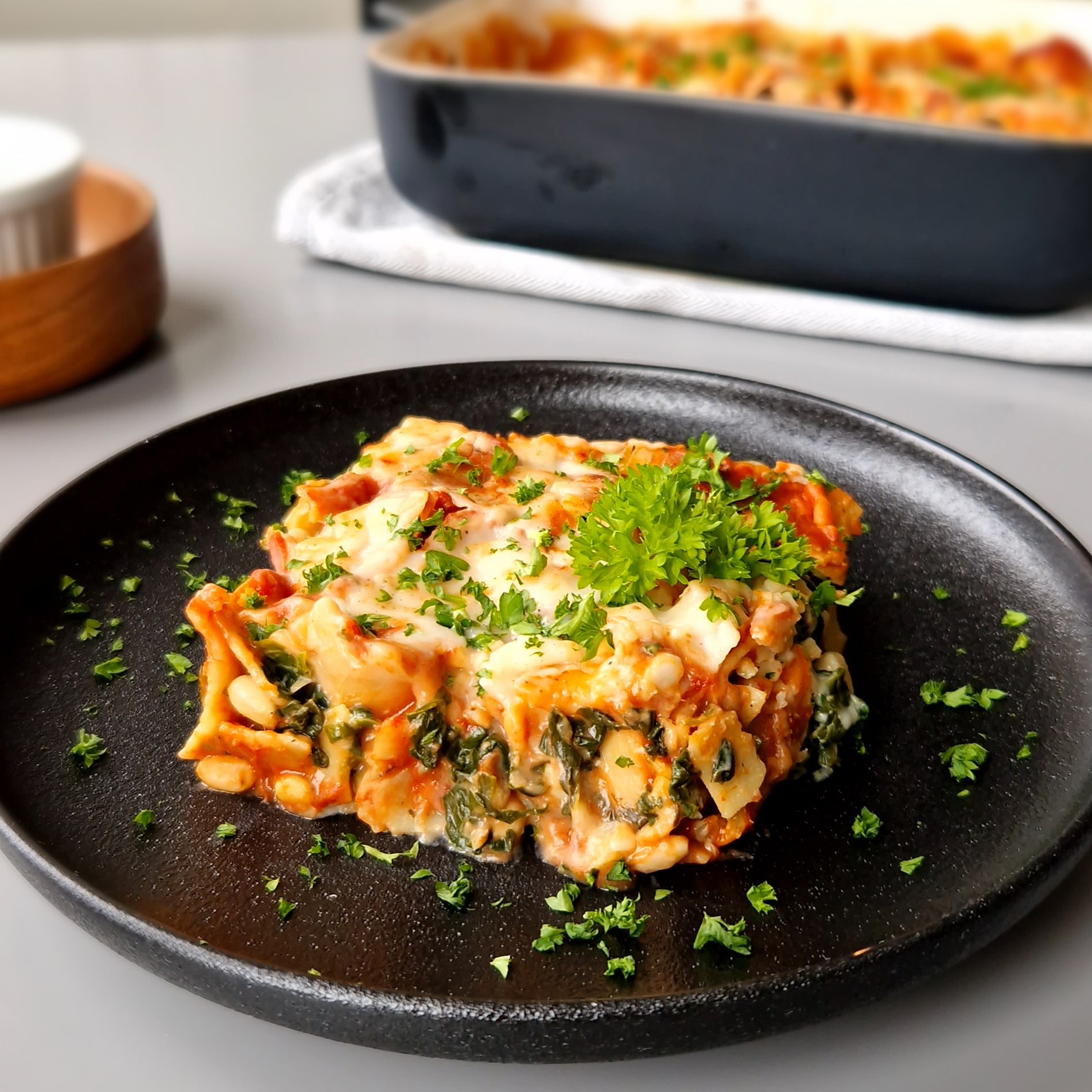
Italy tells a different story: Catherine de’ Medici is said to have brought a salsa colla, a “glue sauce,” from Tuscany when she married the future Henry II. Yet the records of her household mention no Italian cooks. There, besciamella became the binder for baked dishes, from lasagna Bolognese to cannelloni.
The Main Ingredients in Béchamel
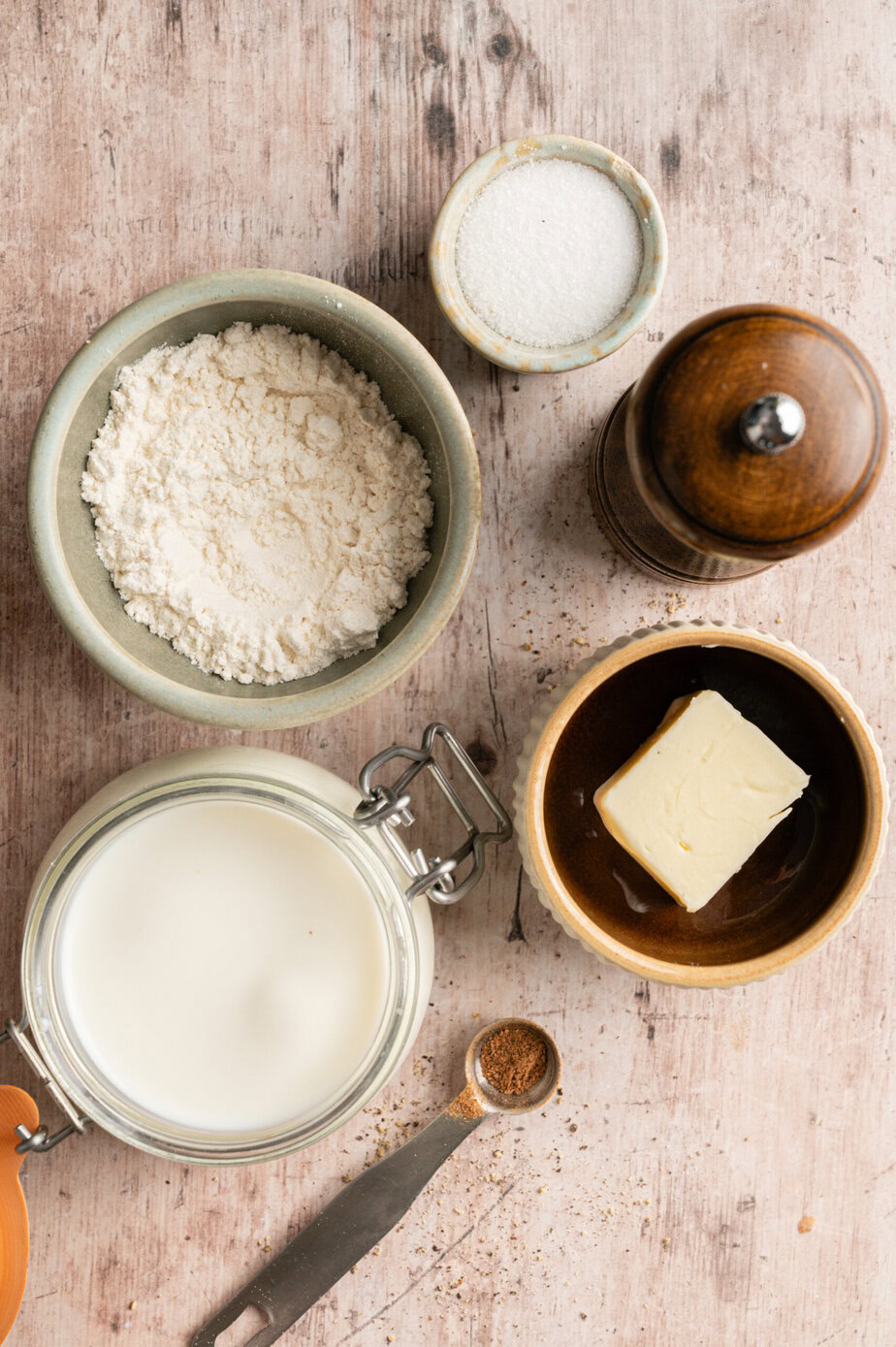
Butter and flour, 25 g of each, make up the white roux. Cooked for a few minutes while stirring, without browning, it loses its raw flour taste and stays pale. For a gluten-free béchamel, a gluten-free flour blend replaces the wheat flour.
The milk should be cold. Poured over the hot roux, it heats up gently and blends in more easily, which helps prevent lumps. It’s the milk that gives the sauce its mildness and creamy texture.
Salt and pepper do the seasoning, and freshly grated nutmeg adds the classic touch. Just a pinch is enough: it adds fragrance without overpowering.
Key Techniques for a Smooth Béchamel
The first addition of milk is small, 2 tablespoons, and the roux should absorb it completely before you go on. The rest of the milk goes in little by little, whisking constantly. If lumps form anyway, strain the sauce through a sieve.
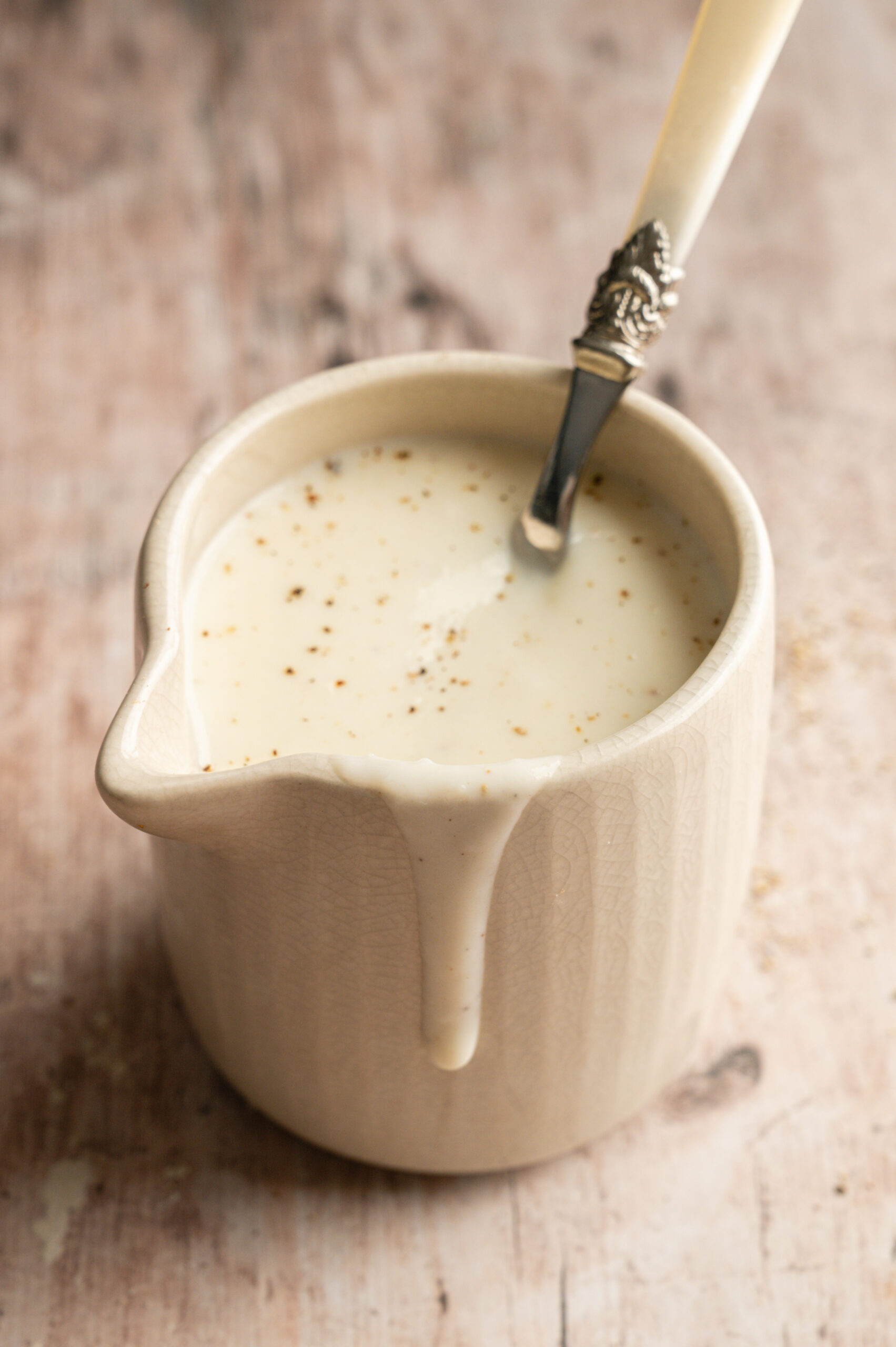
The right texture coats the back of a spoon: creamy, flowing, never pasty. If it’s too thin, keep cooking it while stirring. If it’s too thick, loosen it with a little cold milk.
To store it, press plastic wrap directly onto the surface, or a skin will form. It keeps for 3 to 4 days in the fridge and 2 to 3 months in the freezer. Reheat it over low heat, stirring, with a splash of cold milk if it has thickened too much.
How to Use Béchamel
These amounts make a small saucepan’s worth, enough for croque-monsieurs or a dish of vegetables coated in sauce. For lasagna or a large gratin, double or triple everything. To coat asparagus, broccoli or leeks, replace some of the milk with a little of their cooking water.
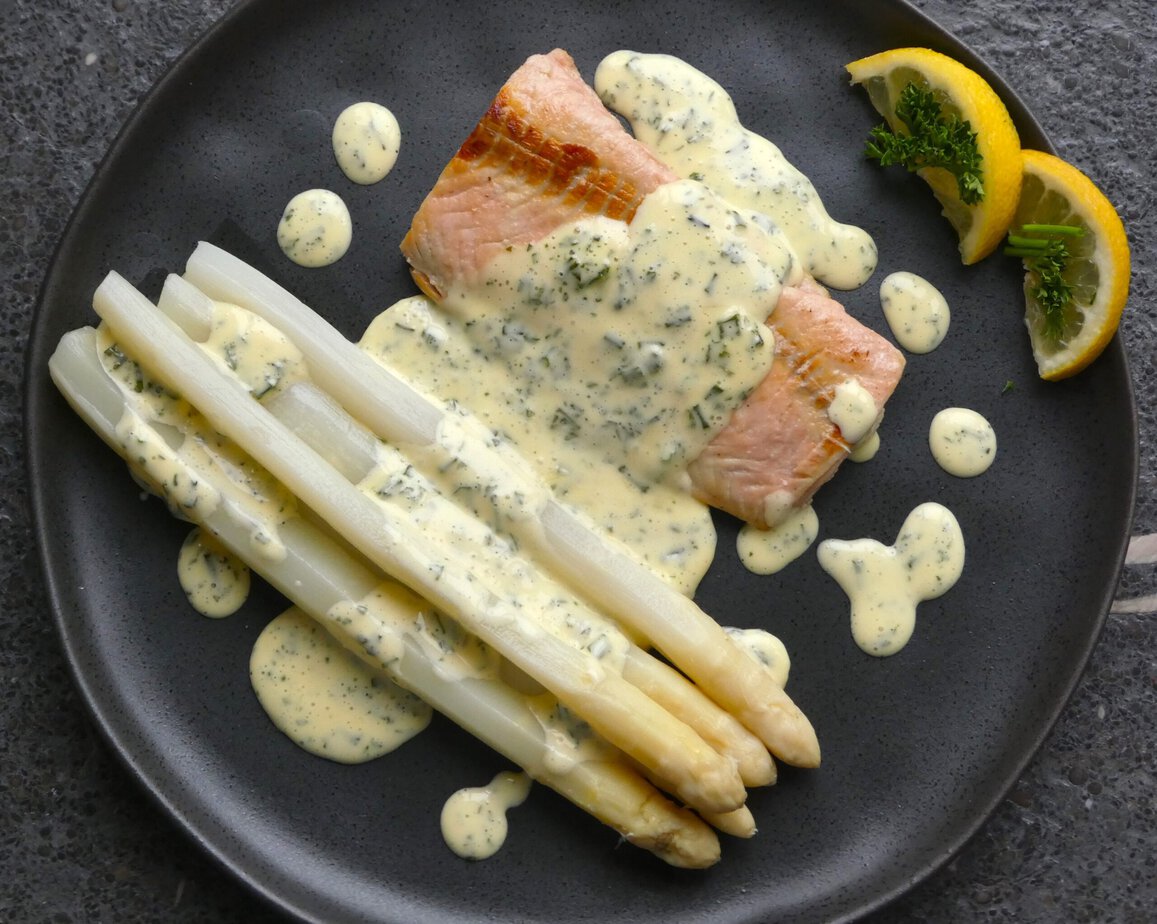
Melt 100 g of grated Gruyère or Comté into the hot béchamel over low heat and you have Mornay sauce, the base for cheese gratins.
Ingredients
White Roux
- 25 g butter
- 25 g flour
Sauce
- 25 cl milk, cold
- Salt
- Pepper
- 1 pinch nutmeg, grated
Instructions
White Roux
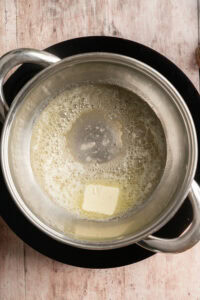
- Melt the butter over medium heat in a small saucepan.25 g butter
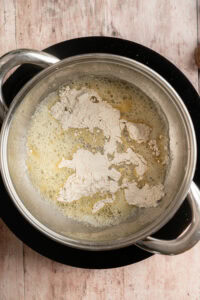
- Add the flour.25 g flour
- Whisk constantly until the flour is fully combined with the butter and forms a white roux.
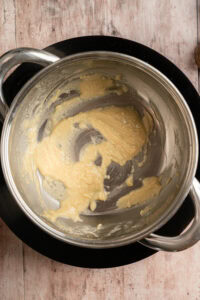
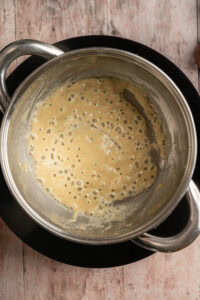
- Cook the roux for 3 to 4 minutes, stirring, without letting it brown: this cooks out the raw flour taste.
Sauce
- First, pour in 2 tablespoons of the cold milk.25 cl milk,
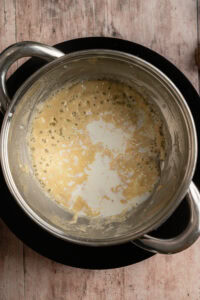
- Whisk until the roux has completely absorbed this milk.
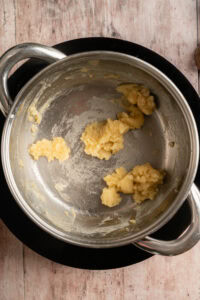
- Then pour in the rest of the milk a little at a time, whisking constantly: this is what prevents lumps.
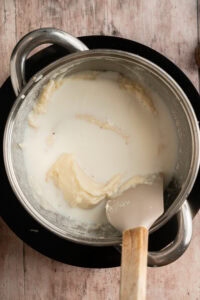
- Cook over medium heat for about 5 to 7 minutes, stirring constantly so the sauce doesn’t stick to the bottom, until it thickens and becomes smooth, glossy and thick enough to coat the back of a spoon.
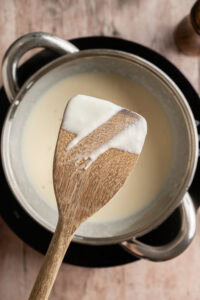
- Adjust the consistency if needed: if it’s too thin, cook it a little longer, stirring; if it’s too thick, add a little cold milk, a bit at a time, whisking.
- Season with the salt, pepper and nutmeg.Salt, Pepper, 1 pinch nutmeg,
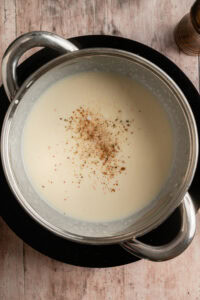
- If you’re not using the sauce right away, press plastic wrap directly onto its surface to keep a skin from forming.