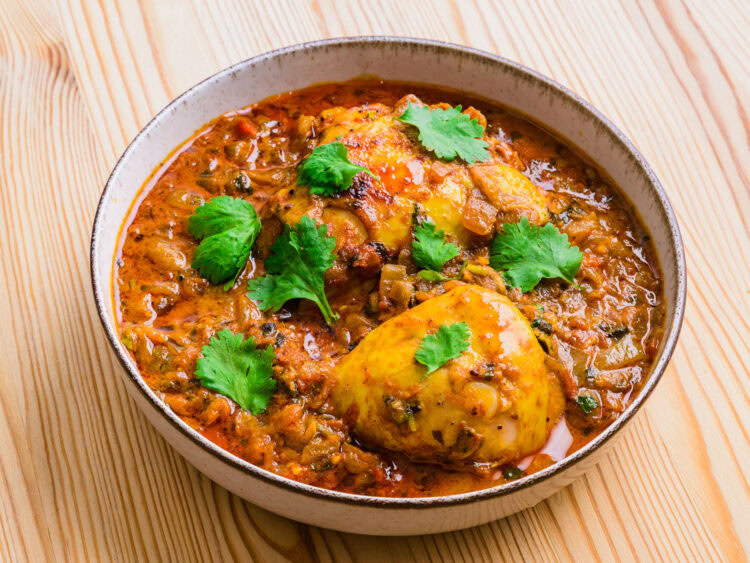
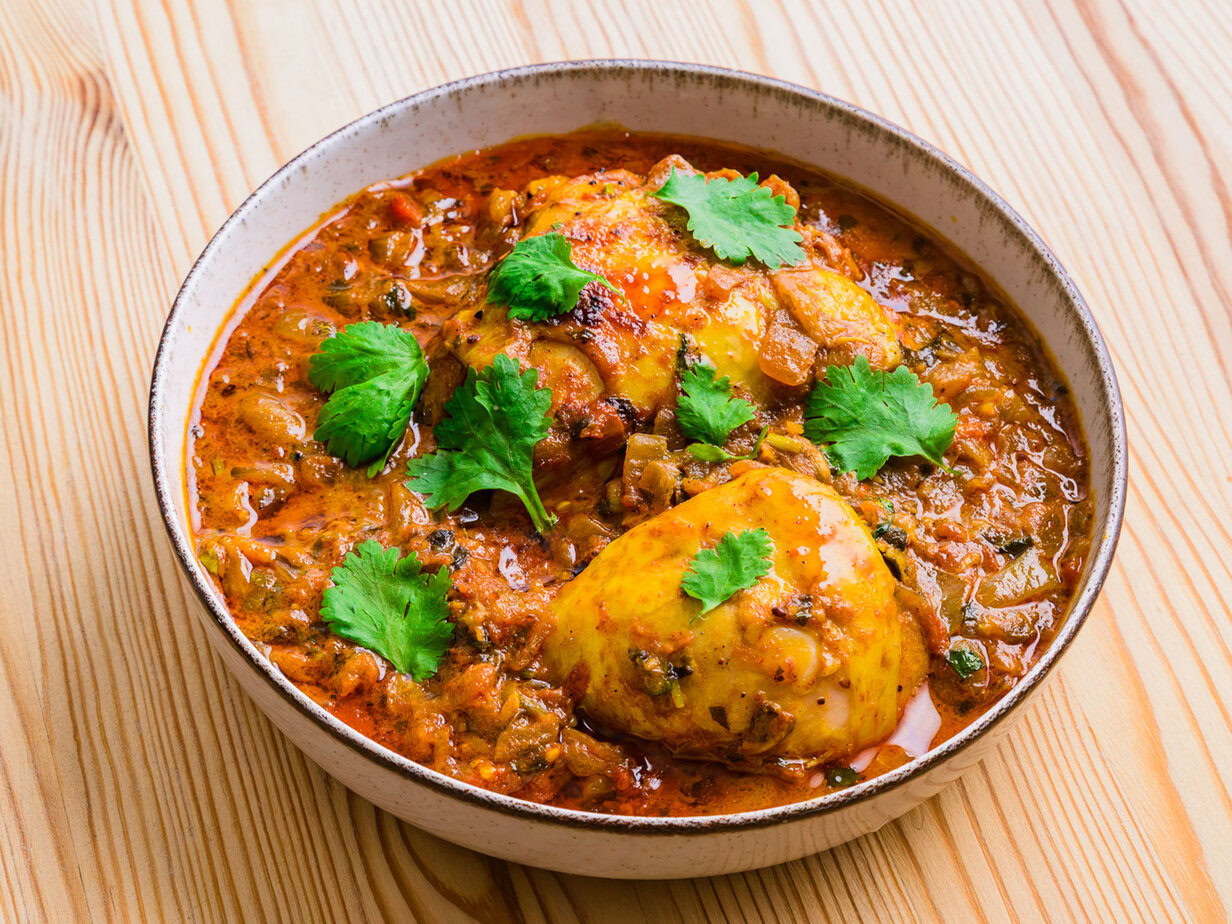
Chicken legs simmered in a North Indian sauce with golden onions, tomatoes, yogurt and spices.
The onions start to turn golden in oil scented with cinnamon and cardamom, and the whole house already smells like dinner.
Next come the ginger, garlic and tomatoes, which cook down into a deep red sauce that coats the chicken. The meat falls off the bone, fresh coriander goes in last, and you are already reaching for a piece of naan to mop up the sauce. All this dish really asks for is a little patience at the stove; the spices do the rest.
What is chicken curry?
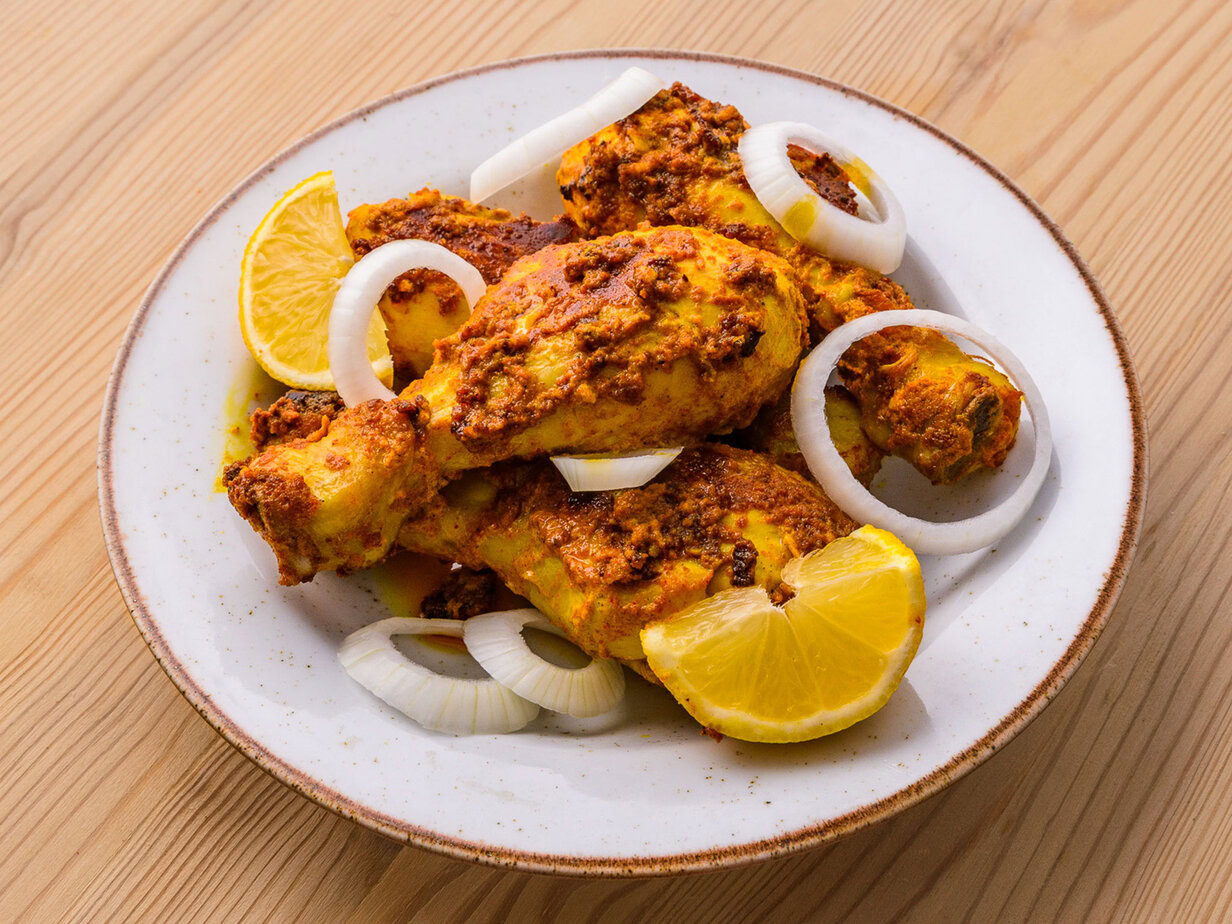
This chicken curry is the home-style chicken curry of northern India, known as tariwala murgh in Punjab. The chicken, preferably bone-in, simmers in a base of golden onions, tomatoes and yogurt, seasoned with whole and ground spices.
Its sauce is lighter than that of restaurant-style butter chicken or chicken tikka masala, which rely on butter and cream. It is an everyday dish in Indian cuisine, the kind you make at home.
The word “curry” comes from the Tamil kari, meaning “sauce” or “spiced sauce.” The English adopted it in the 17th century to describe almost any dish in a sauce from the subcontinent. In Hindi, tari refers to a thin, fragrant gravy, and murgh means chicken: tariwala murgh is therefore simply chicken in gravy.
From the Indus Valley to the shops of London
The trio of ginger, garlic and turmeric is far older than the word curry. Archaeologists have found starch grains from these three plants on teeth and pottery from Farmana and Harappa, two Indus Valley sites dating back around 4 500 years.
The same villages cooked lentils, vegetables and domesticated chicken. Tomatoes and chillies, meanwhile, did not arrive from the Americas until the 16th century.
Curry powder is a British invention: ready-made blends designed to recreate these flavours in England, sold in London as early as 1784 by Sorlie’s perfumery.
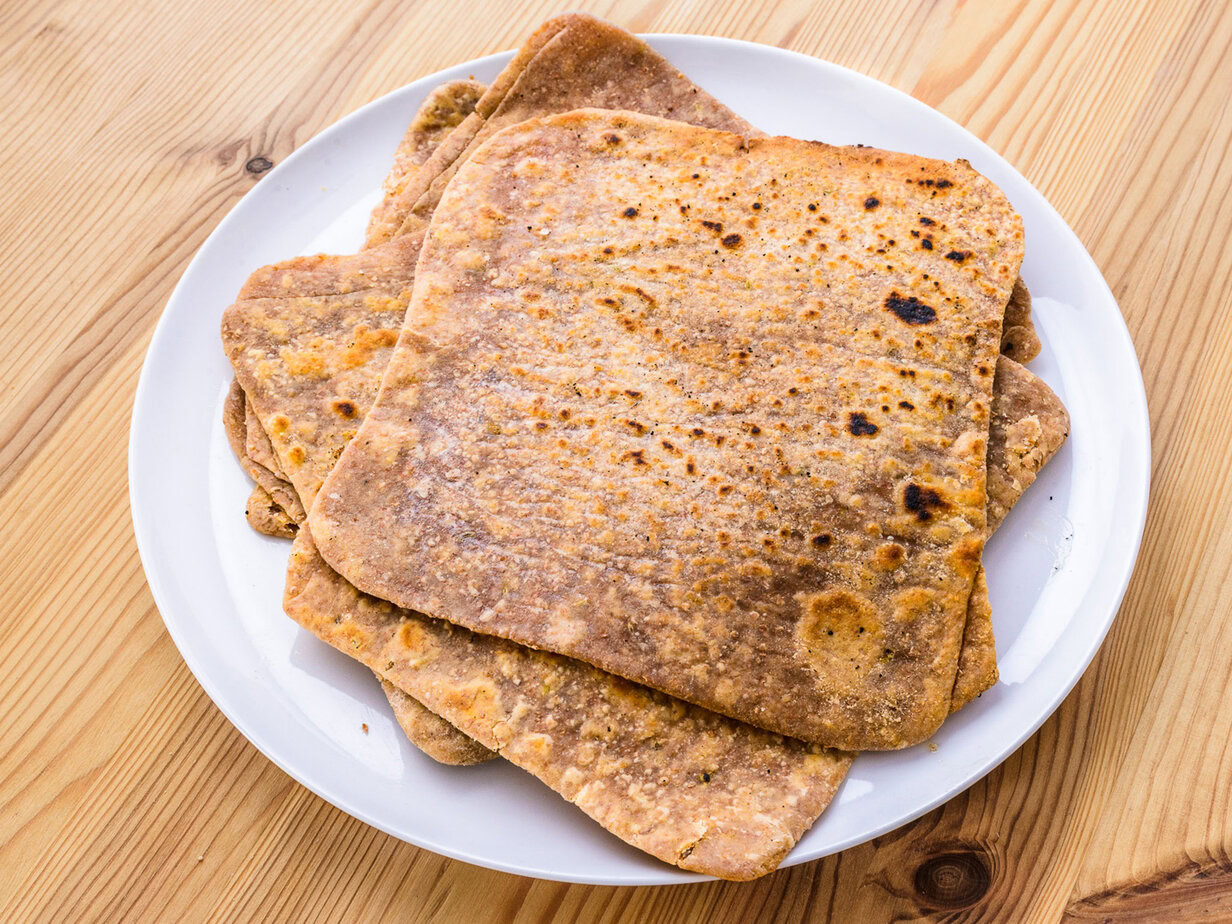
In India, cooks tend to make their own masala to suit the meat, region and family, from Goan vindaloo to Punjabi chicken curry. In Punjab, tariwala murgh is the family Sunday lunch, served with basmati rice or wheat flatbreads.
Further south, in Kerala, nadan kozhi (“country chicken”) takes a different path: coconut oil, curry leaves, fennel, black pepper and thick coconut milk added right at the end.
For a touch of coconut without switching recipes, replace the hot water with light coconut milk towards the end of cooking. In a similar vein, Thai massaman curry also combines coconut milk with warming spices.
The main ingredients in chicken curry
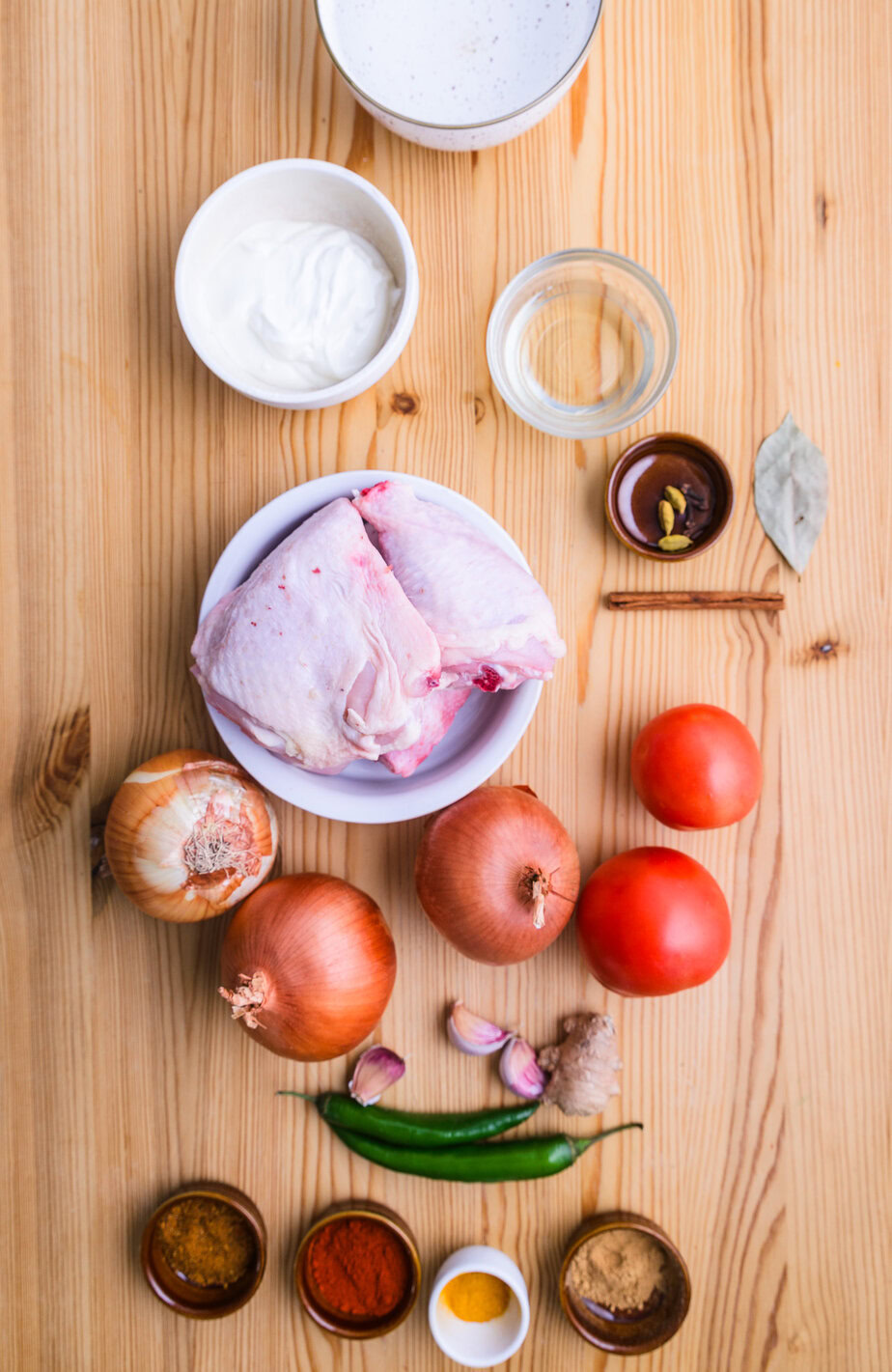
Choose bone-in chicken legs or thighs: the bones give the sauce body and the meat stays tender. Finely chopped onions form the bulk of the sauce once they are nicely browned.
Tomatoes bring acidity and yogurt binds everything together, with cashew purée as a substitute for a dairy-free version. Chicken korma takes this idea further, with a milder nut-based sauce.
Among the ground spices, turmeric adds colour, ground coriander lends body and garam masala brings warmth to the whole dish. Kashmiri chilli gives the sauce its red hue without making it fiery, and smoked paprika can be used instead. If you do not have the individual spices, curry powder can replace them all, though the flavour will be less distinctive.
The whole spices give the dish its signature flavour: bay leaf, a cinnamon stick, cloves and green cardamom infuse the oil from the start. Ginger-garlic paste, a slit green chilli and fresh coriander round out the aroma. Chana masala, aloo gobi and palak paneer start with the same base of onions, ginger and garlic.
Key techniques for a good chicken curry
The flavour develops during bhunao, the patient cooking process in which the onions, tomatoes and spices reduce until the oil separates from the mixture.
Barely softened onions make a bland sauce; well-browned onions make one with depth. Add hot water a little at a time, and the curry is ready when the meat falls off the bone. Serve it with rice or naan, and a cucumber raita for a cooling touch.
Ingredients
- 500 g chicken preferably bone-in legs or thighs (boneless chicken also works)
- 3 tablespoons oil neutral
- 3 onions finely chopped
- 2 green chilies slit
- 1 tablespoon ginger-garlic paste or 2 cm of ginger and 3 garlic cloves, chopped
- 2 tomatoes medium, puréed or finely chopped
- 60 g yogurt or 1.5 tablespoons of cashew butter, or 12 cashews blended with 60 ml of water
- 1 teaspoon salt
- 120-240 ml water hot (or light coconut milk)
- 2 tablespoons fresh cilantro or mint finely chopped
Épices en poudre
- 0.25 teaspoon turmeric
- 1 teaspoon Kashmiri chili powder or smoked paprika
- 1 teaspoon garam masala
- 1 teaspoon ground coriander
Épices entières (à omettre si vous n’en avez pas)
- 1 leaf bay or 1 sprig of curry leaves
- 4 whole cloves
- 1 stick cinnamon 5 cm long
- 3 pods green cardamom
Instructions
- Heat the oil in a sauté pan over medium heat.3 tablespoons oil
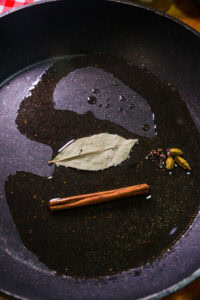
- Add the whole spices: bay leaf, cinnamon, cloves and cardamom.1 leaf bay, 1 stick cinnamon, 4 whole cloves, 3 pods green cardamom
- Add the onions and chilies.3 onions, 2 green chilies
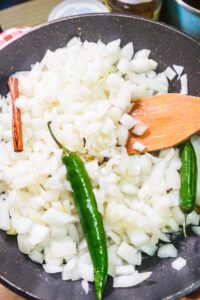
- Sauté until the onions are golden brown, 7 to 8 minutes.
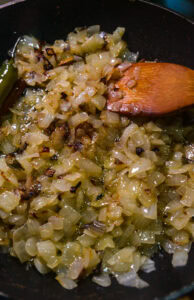
- Add the ginger-garlic paste and sauté for about 1 minute, until fragrant.1 tablespoon ginger-garlic paste
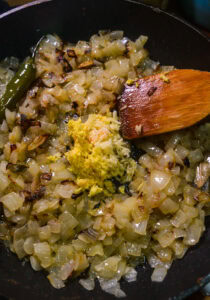
- Add the tomatoes, turmeric and salt.2 tomatoes, 0.25 teaspoon turmeric, 1 teaspoon salt
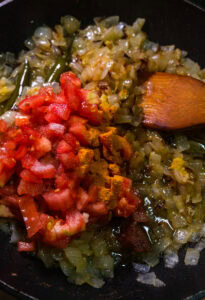
- Cook until the tomatoes have broken down.
- Lower the heat, then stir in the yogurt, Kashmiri chili powder, garam masala and ground coriander.60 g yogurt, 1 teaspoon Kashmiri chili powder, 1 teaspoon garam masala, 1 teaspoon ground coriander
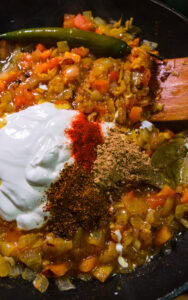
- Cook over low heat until the mixture is fragrant.
- Add the chicken and fresh cilantro.500 g chicken, 2 tablespoons fresh cilantro or mint
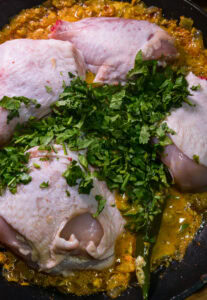
- Sauté over medium heat until the chicken turns white, about 3 minutes.
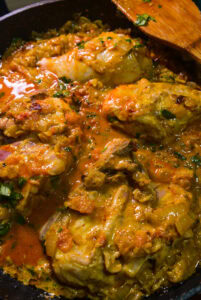
- Cover and cook over low heat for 3 to 4 minutes so the chicken absorbs the spices.
- Meanwhile, heat water in a separate saucepan (hot water prevents the chicken from becoming tough).120-240 ml water
- Pour in the hot water to make a thick sauce, then add more gradually as the chicken releases its juices.
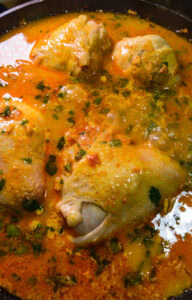
- Cover and cook over medium heat until the chicken is tender and the sauce has thickened; it is ready when the meat comes away from the bone.
- Taste and adjust the salt, adding a little garam masala if the sauce needs more flavor.
- Garnish with fresh cilantro.
- Cover, turn off the heat and serve with naan or rice.