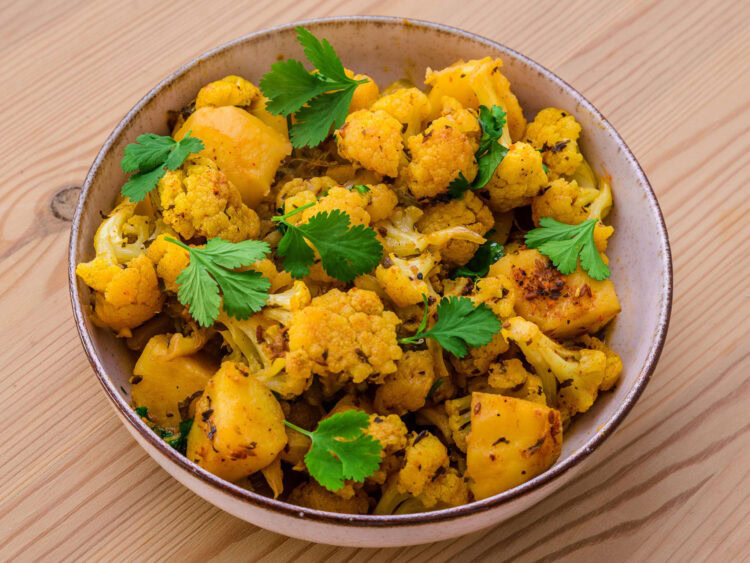
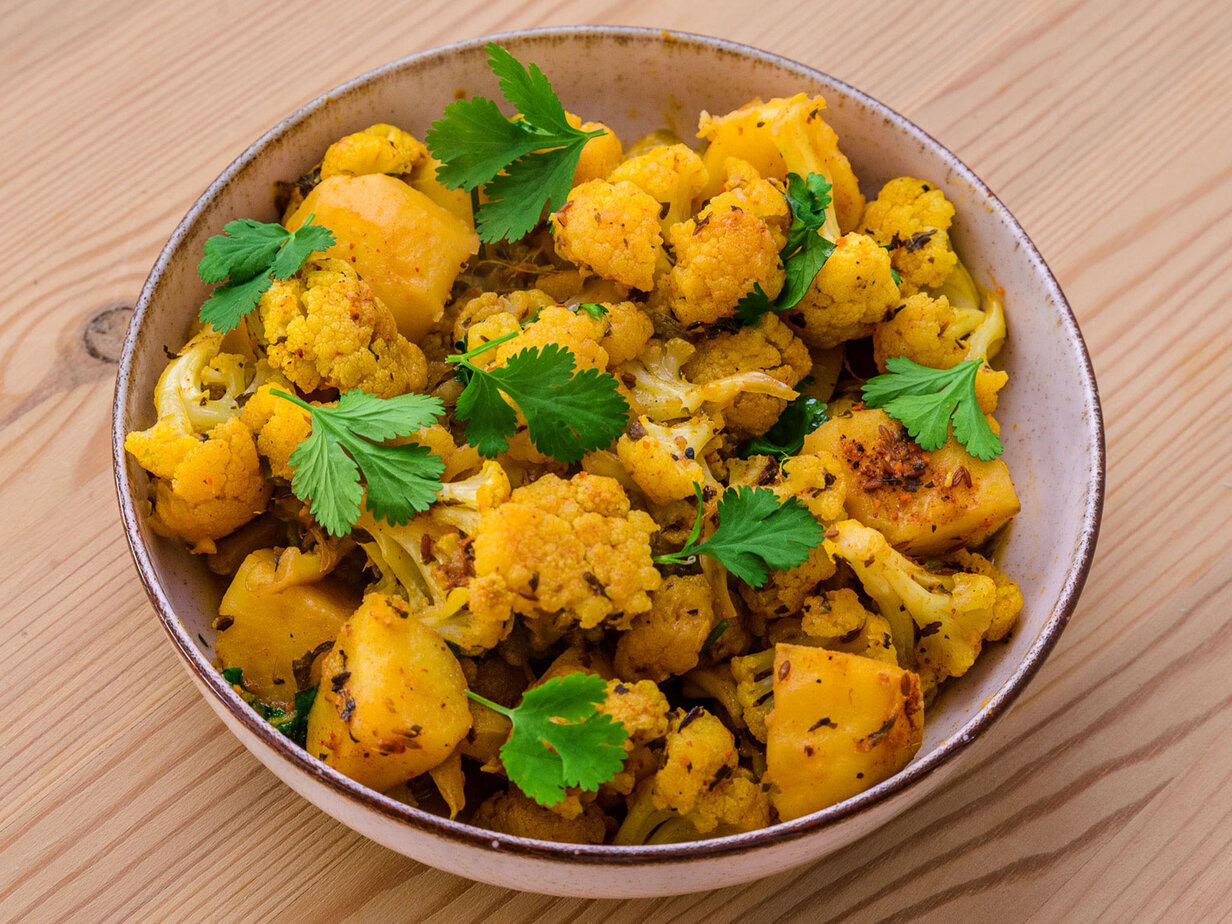
A fragrant, comforting aloo gobi in which cauliflower and potatoes simmer with Indian spices, then are finished with garam masala and fresh cilantro.
Turmeric-golden potatoes meet cauliflower that is just lightly seared. In hot ghee, or in mustard oil heated to its smoke point before use, cumin seeds crackle; at the end of cooking, a little crushed kasuri methi perfumes the whole dish.
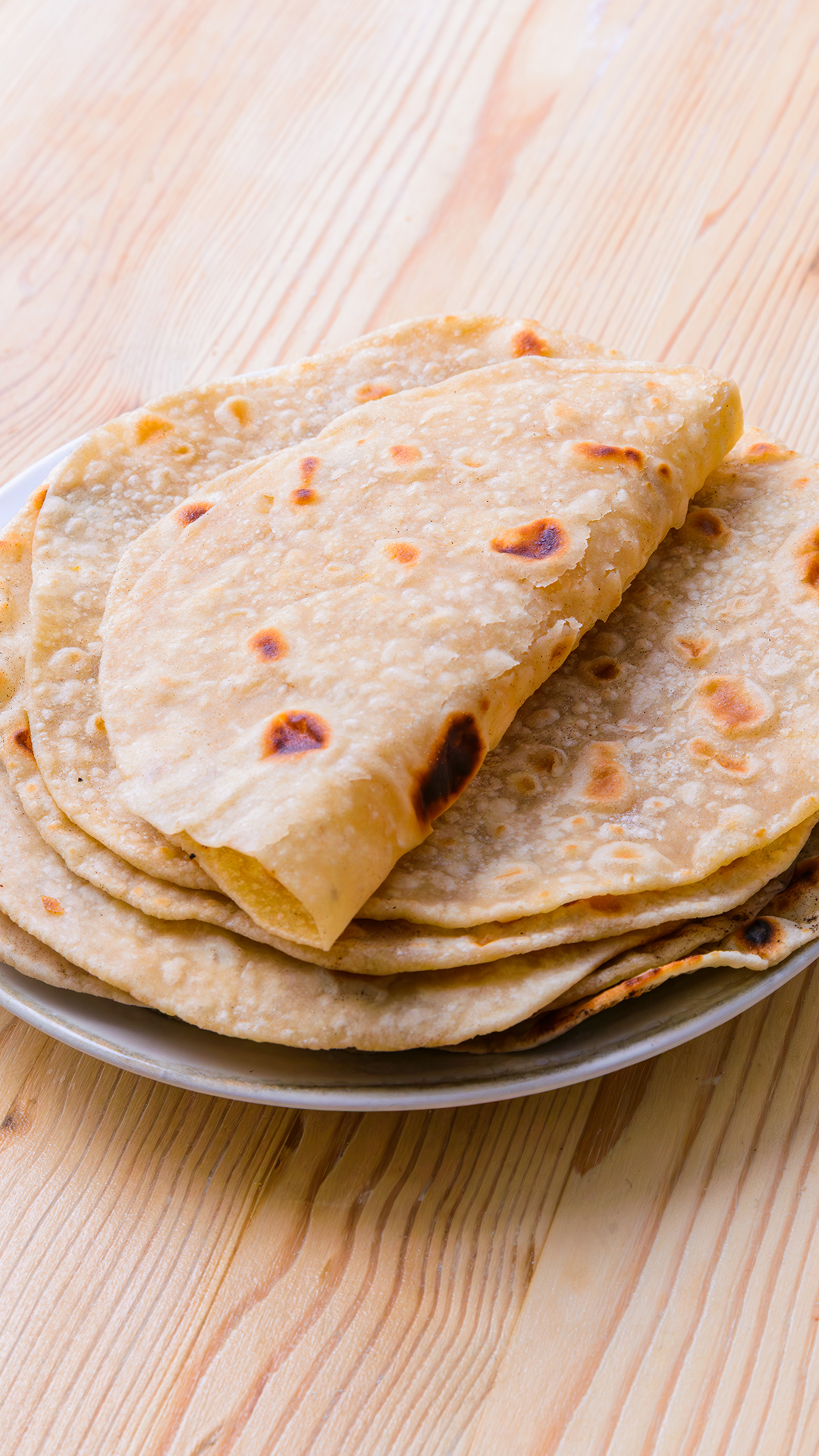
Aloo Gobi is a comforting winter dish, often served with Indian flatbreads such as chapati. Nourishing, well coated in spices, and served without a sauce, it stands apart from a saucy curry. Its balance relies on just a few spices, gentle, well-managed heat, and a touch of acidity added at the right moment.
What Is Aloo Gobi?
In North Indian usage, particularly in Hindi and Punjabi, aloo means “potato” and gobi, or gobhi, refers to cauliflower. Aloo Gobi is therefore a dry Punjabi-style sabzi, cooked largely in its own steam. It is not a saucy dish.
After the bhunao, followed by covered steaming and a final evaporation, the spices cling tightly to the vegetables, in a state known as lipatma. The base is simple: firm-fleshed potatoes and fresh cauliflower; ghee or mustard oil; cumin seeds, fresh ginger, and slit green chilies.
In the langarwali version, associated with langar cooking, onion and garlic are left out; in some family versions, and more clearly in dhaba versions, they may be added. Acidity most often comes from dry ingredients such as amchur or anardana; tomato is a more modern adaptation, especially common in urban kitchens, dhabas, and restaurants, and this use is now widely accepted.
The finishing touches stay simple: a light sprinkle of garam masala, crushed kasuri methi, and fresh cilantro.
The Origins of Aloo Gobi
The potato was introduced to India’s west coast in the early 17th century by Portuguese merchants. Later, the British East India Company strongly encouraged its cultivation in the northern plains as an abundant, reliable source of carbohydrates.
The arrival of cauliflower is better documented. In 1822, Dr. Jemson introduced it to the Company Gardens in Saharanpur; in 1889, horticultural manuals noted that the robust “large Asiatic” varieties thrived in the North. In December, a fine head of Asian cauliflower could cost barely half an anna, making it very affordable, even if colonial purists considered it a little less delicate than European varieties.
In some orthodox Hindu kitchens, as well as in conservative Bengali culinary traditions, these newly introduced vegetables initially aroused suspicion, sometimes even becoming caste taboos, particularly because they did not appear in ancient scriptures. In agricultural Punjab, pragmatism and local growing conditions encouraged their adoption.
Alluvial soils and pronounced winters suited brassicas, and cauliflower’s dense texture made it a prized seasonal ingredient. Court cooks even adapted murgh musallam into gobi musallam, notably for vegetarian Hindu guests.
Cauliflower then became a visual and culinary substitute for roast poultry. In village homes, potatoes and cauliflower were paired with ghee or mustard oil, cumin, ginger, and gentle heat. Gradually, they found their place in local cooking.
In 1947, Partition displaced more than 14 million people. Punjabi refugees contributed greatly to the rise of North India’s urban restaurant scene by opening dhabas and spreading the use of the tandoor. They also helped popularize nourishing, economical dishes, including Aloo Gobi, first in northern India and then far beyond. The dish is also part of the winter table.
Main Ingredients in Aloo Gobi
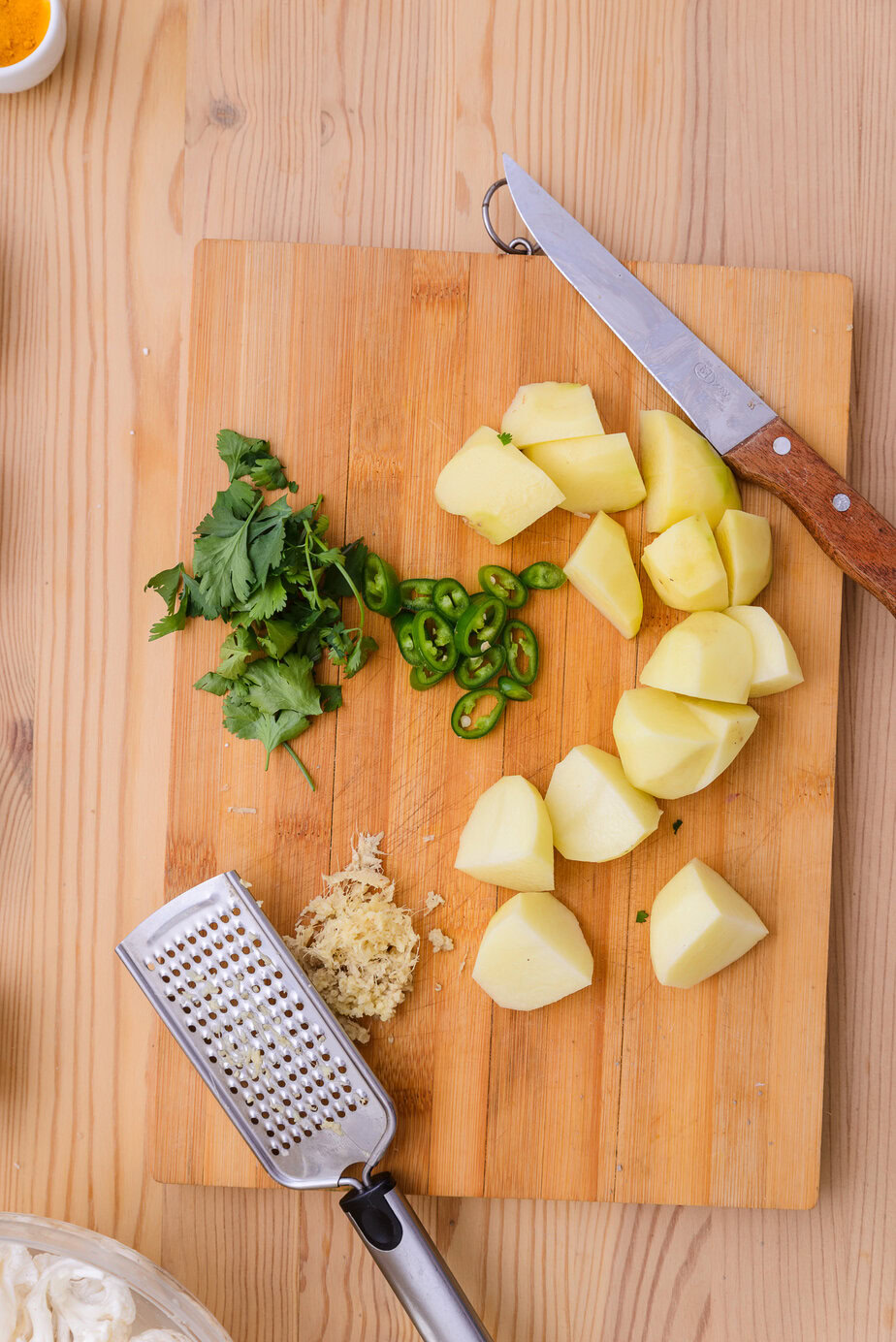
Firm, waxy potatoes (such as red potatoes, or any fairly firm-fleshed variety) : they hold their shape during the bhunao and gentle steaming. See also the Japanese potato salad.
Fresh cauliflower florets, slightly larger than the potato cubes : they release a moderate amount of moisture and bring a gently nutty bite.
Ghee : a nutty-flavored cooking fat that encourages browning and helps the spices thoroughly season the vegetables.
Mustard oil, first heated to its smoke point: a lively, peppery cooking fat, especially common in rural Punjabi versions.
Ajwain (carom) or hing (asafoetida) : traditional digestive aids, often used to make brassicas easier to digest while adding aromatic depth.
Amchur or anardana : a dry, tangy acidity that brightens the starch without diluting the dish.
Garam masala, used only as a finishing touch : fragrant, fleeting warmth, added off the heat.
Kasuri methi : a smoky, slightly bitter signature flavor, crushed between your fingers before being stirred in.
Fresh cilantro leaves: a bright, herbaceous note and a touch of color.
Ingredients
- 400 g cauliflower (cut into florets) cut into florets
- 250 g potatoes (peeled and cut into chunks) peeled and cut into chunks
- 2 tablespoons oil (plus more if needed) plus more if needed
- 1 pinch asafoetida (optional) optional
- 1/2 teaspoon cumin seeds
- 1/2 teaspoon ground turmeric ground
- 1 teaspoon ground coriander ground
- 1/4 teaspoon red chili powder (or less, to taste) ground (or less, to taste)
- 1/4 teaspoon dried mango powder (amchur)
- 1 teaspoon salt (or to taste) or to taste
- 1 teaspoon garam masala
- 1 tablespoon dried fenugreek leaves (kasuri methi)
- ginger (grated, to taste) grated (a little, to taste)
- green chili (minced, to taste) thinly sliced (a little, to taste)
- 1 tablespoon fresh cilantro (chopped, plus more for serving) chopped (plus a little more for serving)
- 3 tablespoons water (plus 1 to 2 tablespoons more if needed) plus 1 to 2 tablespoons if needed
Instructions
Preparation
- Trim the cauliflower, cut it into small florets, and soak the florets in warm salted water for 5 minutes.400 g cauliflower (cut into florets)
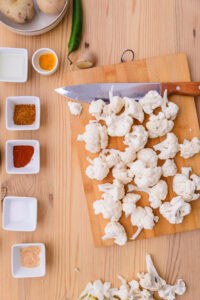
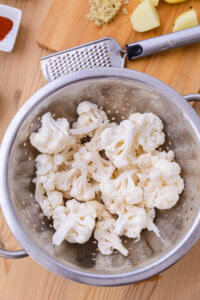
- Rinse the cauliflower thoroughly and drain well.
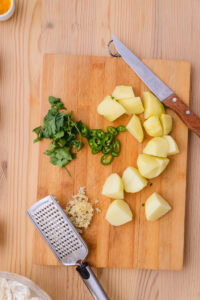
- Peel the potatoes and cut them into chunks.250 g potatoes (peeled and cut into chunks)
Cooking
- Heat the oil in a pan or kadai.2 tablespoons oil (plus more if needed)
- Add the asafoetida and cumin seeds to the hot oil.1 pinch asafoetida (optional), 1/2 teaspoon cumin seeds
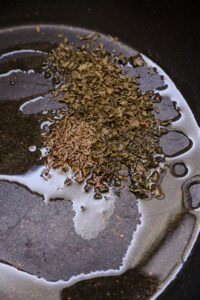
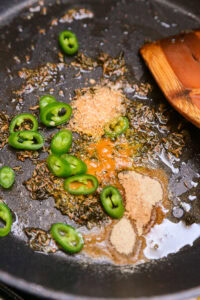
- Once the cumin is toasted, add the turmeric, ground coriander, ginger, green chili, and kasuri methi, then sauté briefly.1/2 teaspoon ground turmeric, 1 teaspoon ground coriander, ginger (grated, to taste), green chili (minced, to taste), 1 tablespoon dried fenugreek leaves (kasuri methi)
- Add the cauliflower, potatoes, red chili powder, and salt.1/4 teaspoon red chili powder (or less, to taste), 1 teaspoon salt (or to taste)
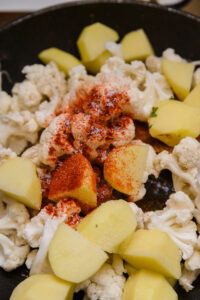
- Stir and sauté with the spices for 2 to 3 minutes.
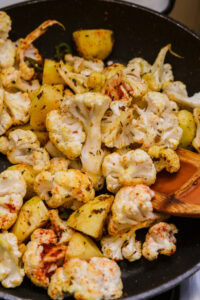
- Add the water, cover, and simmer over low heat for 5 to 6 minutes.3 tablespoons water (plus 1 to 2 tablespoons more if needed)
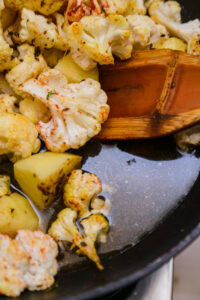
- Uncover, stir, and check doneness by crushing a piece of potato with a spoon. If the potato is still firm and the mixture looks dry, add a little water, then cover again and cook for another 5 minutes.
- Uncover and check the potatoes again for doneness.
- Add the amchur, garam masala, and fresh cilantro, then mix.1/4 teaspoon dried mango powder (amchur), 1 teaspoon garam masala, 1 tablespoon fresh cilantro (chopped, plus more for serving)
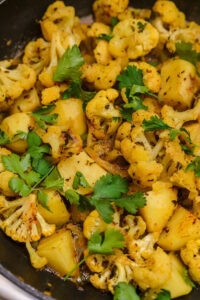
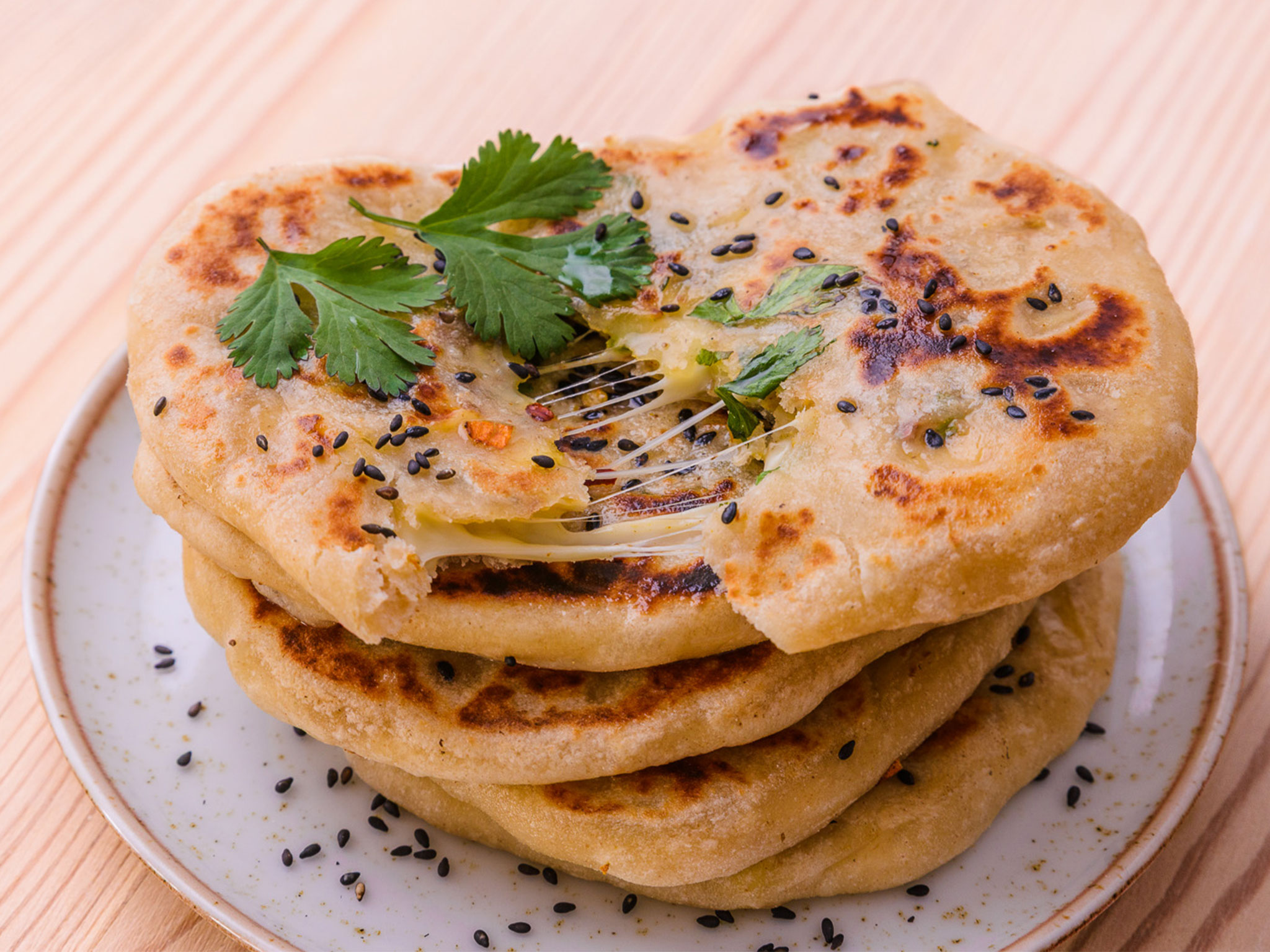
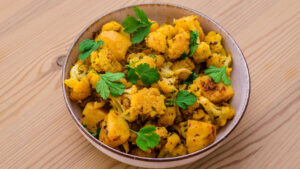
- Transfer to a serving dish, garnish with a little fresh cilantro, and serve hot with parathas, naan, or chapatis.
Notes
- Soaking the cauliflower in salted water helps clean it thoroughly.
- Adjust the chili and water as it cooks, depending on how tender the potatoes are and how moist you like the finished dish.