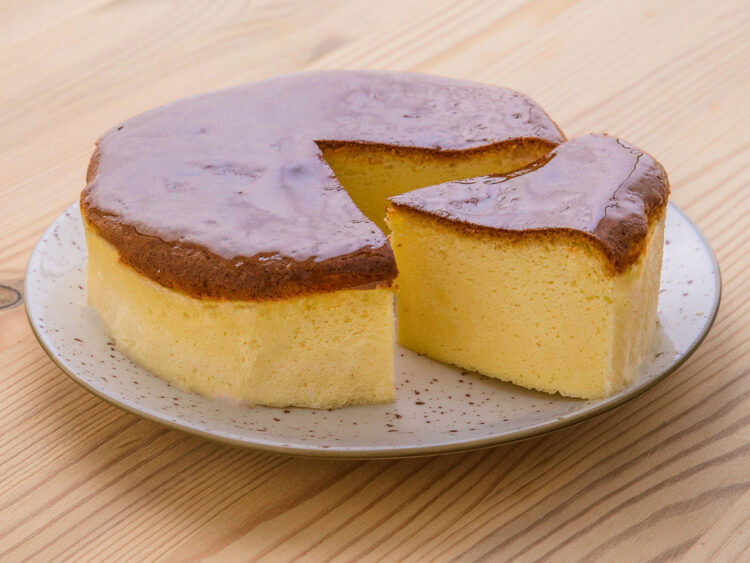
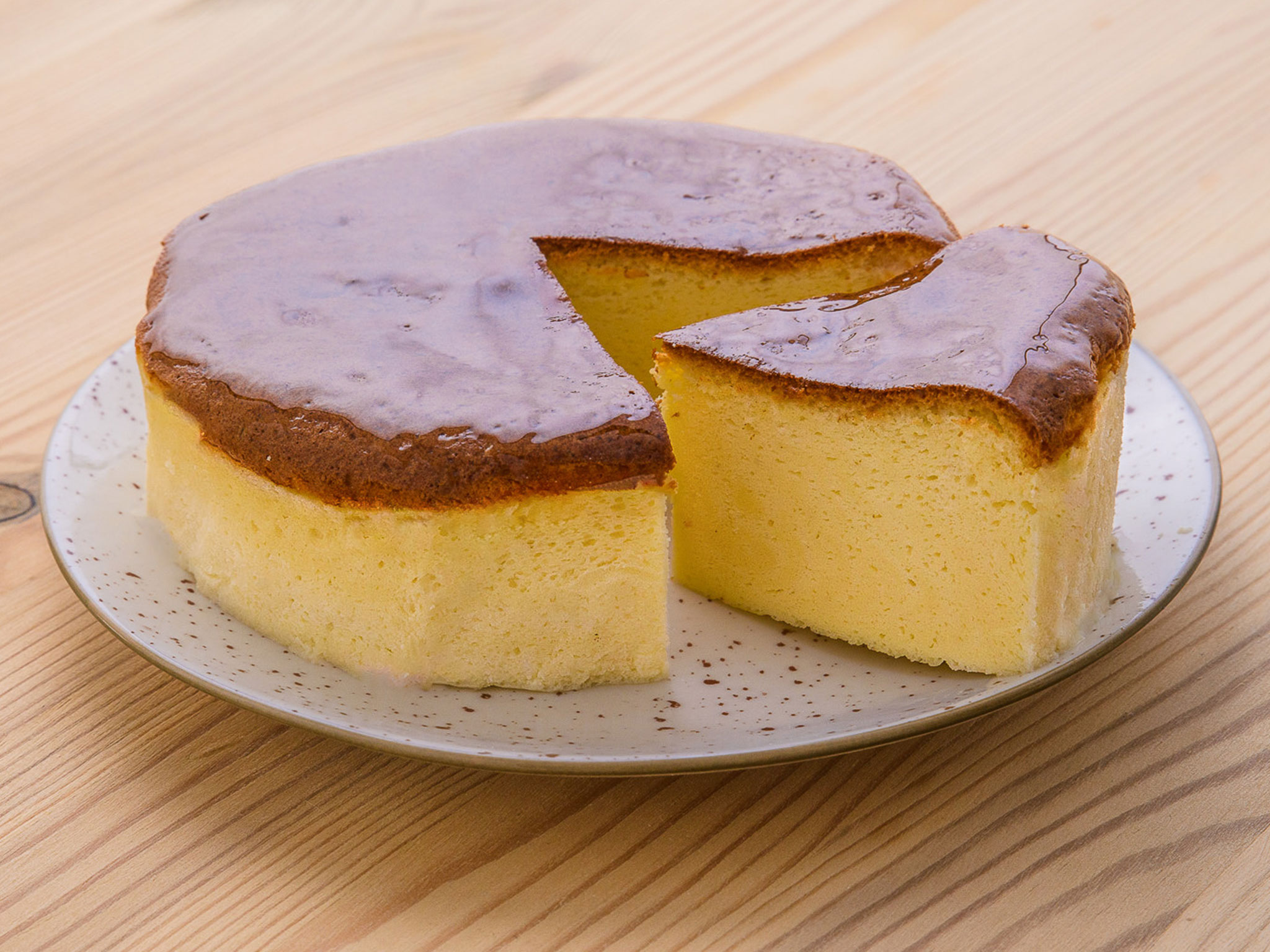
An airy, melt-in-the-mouth Japanese cheesecake, baked in a water bath for a soufflé-like crumb and a beautifully golden top.
Beneath its golden dome, which quivers at the slightest touch, the fuwa-fuwa crumb is wonderfully light. When sliced, the cake releases delicate notes of egg and milk; on the palate, the sweetness is restrained and the cheese remains subtle.
Generally lighter and less sweet than an American dessert like New York cheesecake, it also stands out for having no biscuit base and a less rich texture. In short, it’s a delight, and I’m so happy to share the recipe with you!
What is Japanese cheesecake?
In Japan, it is called sufure chizukeki: a soufflé-style cheesecake classed among yōgashi, Western-inspired sweets reworked to be lighter, less sweet, and especially focused on texture.
Outside Japan, it is often called “cotton cheesecake” or “jiggly cheesecake,” a nod to its airy crumb and signature wobble. This is not a dense, multi-layered cake, but an eggy soufflé gently flavored with cheese, much like other Asian desserts where texture takes center stage.
Its balance depends on three elements: the base emulsion, the meringue, and the baking. First, you prepare a warmed base of cream cheese, butter, and whole milk, then add the egg yolks and starches. The whites, beaten to soft or medium peaks, are then gently folded in to preserve the aeration. In the authentic soufflé version, there is no biscuit base.
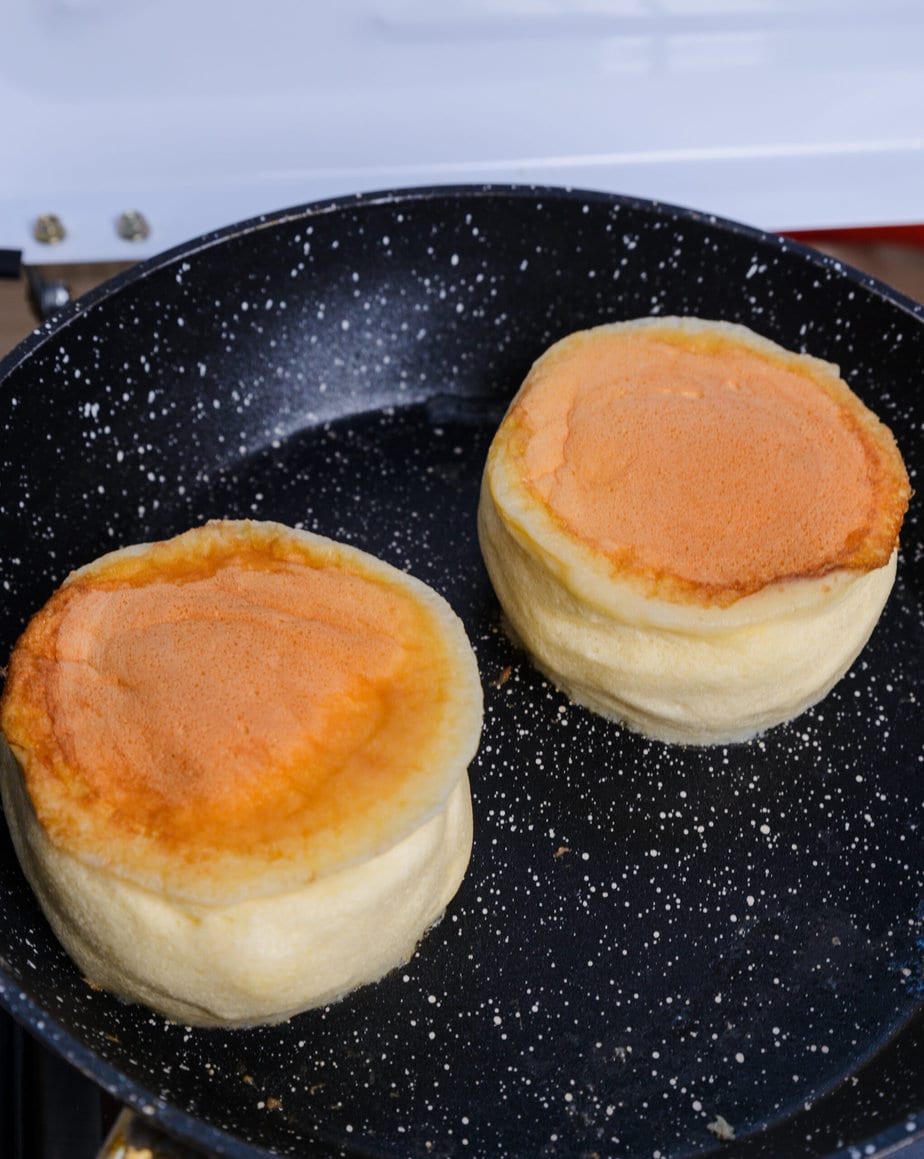
It is most often baked in a water bath and in two stages. A higher temperature first sets the surface and encourages the cake to rise, then a lower temperature cooks the center without causing cracks. Cooling is done gradually, in the turned-off oven with the door ajar, to help prevent the cake from collapsing.
On the palate, you get a soft, springy crumb, pronounced egg notes, a subtle cheese flavor, and moderate sweetness. Above all, this dessert is defined by its texture and its balanced, milky flavor.
Origins of Japanese cheesecake
The story begins in the Meiji era, when Japan opened up to Western sweets. After the war, cream cheese and other fresh cheeses gradually found their way into certain Japanese pastry traditions. The spread of household refrigerators in the 1950s made dairy products easier to store and went hand in hand with the gradual adoption of milk and cheese at home. Despite these changes, a truly “Japanese-style” cheesecake did not clearly emerge until the late 1960s.
In May 1969, Tomotaro Kuzuno, president of Morozoff in Kobe, discovered Käsekuchen during a business trip to Berlin, Germany. The city was still divided at the time. This quark-based cake, enriched with whipped egg whites and known for its light crumb, stood in sharp contrast to the density of New York cheesecake.
Back in Japan, he set out to create a local adaptation that was less rich in cheese, less sweet, and held together by a stable meringue. He also chose a Danish cream cheese for a milder, less tangy flavor. In 1969, Morozoff developed the cake that would become its “Denmark Cream Cheese Cake” before officially launching it: a cheese soufflé in which the meringue became the main structural element.
Its popularity grew with the cultural momentum of the early 1970s, in the wake of Osaka Expo ’70, and also benefited from exposure in magazines such as AnAn and Non-no. In the 1980s, it went from department-store specialty to everyday treat, sold in bakeries, pastry shops, and eventually konbini. Today, two chains often serve as points of comparison. Founded in Osaka in 1984, Uncle Rikuro bakes and serves its cheesecake warm, brands each dome with an iron, and adds raisins to the bottom; the crumb has very pronounced egg notes. In Hakata, in the city of Fukuoka, Uncle Tetsu, founded in 1990 before expanding abroad, offers a raisin-free version often considered slightly denser and sweeter, firm enough for transport while still remaining jiggly. These variations show how carefully each ingredient is chosen for aeration and structure, just as in other classics of Japanese cuisine.
Main ingredients in Japanese cheesecake
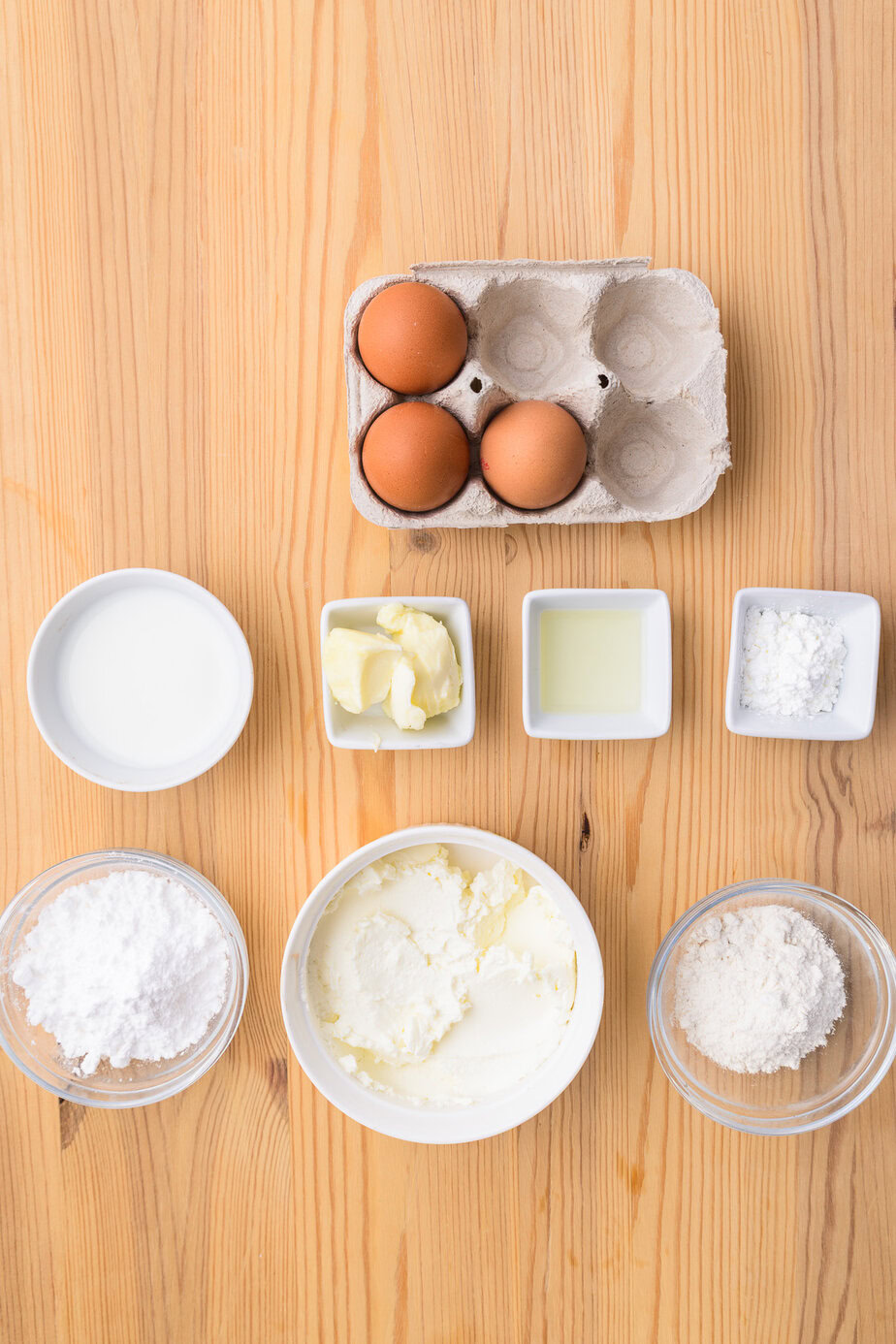
Cream cheese. It forms the base of the emulsion and provides the milky flavor. Compact blocks are preferable to whipped tubs, which often contain more water and stabilizers. Traditional recipes generally use between 140 and 250 g for an 18 to 20 cm pan to keep the texture light.
Unsalted butter. About 40 to 60 g is enough: it enriches the mixture and helps soften the crumb by partially limiting gluten development.
Whole milk. About 60 to 100 g helps loosen the emulsion. Replacing the milk with heavy cream can weigh down the batter, make it harder to incorporate the meringue, and increase the risk of separation during baking.
Separated eggs. The yolks, as natural emulsifiers, bind the fat to the water. The whites, beaten to soft or medium peaks, trap air and help the cake rise. About 5 to 6 large eggs for an 18 cm cake give the desired soufflé-like character.
Fine caster sugar. Use about 100 to 140 g, added in several stages. Sugar retains moisture and stabilizes the meringue by increasing viscosity. Its fine texture dissolves quickly without requiring excessive beating.
Acid. A pinch of cream of tartar or a few drops of lemon juice are often used to stabilize the meringue by slightly lowering the pH of the whites, making the protein network more elastic and more heat-resistant.
Cake flour (7 to 9 % protein) and cornstarch. Use about 50 to 60 g of flour, plus 15 to 20 g of cornstarch. Together, they create a light structure, limit gluten development, and absorb excess moisture for a fine crumb without excess water.
Regional variation (optional). Raisins placed at the bottom, Rikuro’s signature touch in Osaka, add a soft, slightly fruity, sweet-tart contrast without weighing down the cake. This regional freedom also appears in other Japanese sweets, from dorayaki to mochi.
Ingredients
- 200 g cream cheese
- 30 g butter (unsalted) unsalted
- 50 ml milk
- 3 egg yolks
- 30 g flour (low-gluten) low-gluten
- 10 g cornstarch (or rice flour) or rice flour
- 1 teaspoon lemon juice
- 3 egg whites (well-chilled) well-chilled
- 60 g sugar (granulated) granulated
Instructions
Before you start
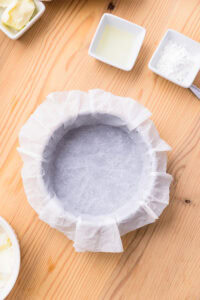
- Butter a 15 cm round springform pan with a little extra butter. Line the bottom with parchment paper, leaving it overhanging by about 3 cm, then wrap the outside of the pan with a double layer of aluminum foil to keep water out.
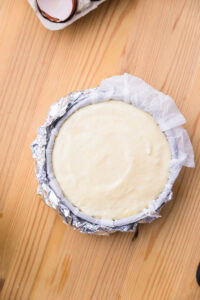
- Sift the flour and cornstarch together, preheat the oven to 160°C (air fryer 140°C), and bring water to a boil for the water bath.30 g flour (low-gluten), 10 g cornstarch (or rice flour)
Preparation
- Put the cream cheese, butter, and milk in a heatproof bowl, then heat over a double boiler (or microwave at 600 W for 1 min to 1 min 30) and stir until completely smooth.200 g cream cheese, 30 g butter (unsalted), 50 ml milk
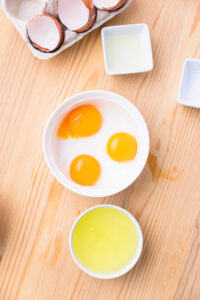
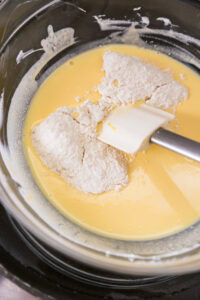
- Add the egg yolks one at a time, mixing after each addition, then add the lemon juice. Whisk in the sifted dry ingredients until no lumps remain (optional: strain the batter through a sieve for an even smoother texture).3 egg yolks, 1 teaspoon lemon juice
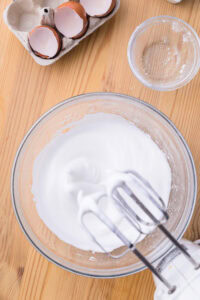
- Beat the egg whites with an electric mixer, adding the sugar in 3 additions, until soft peaks form (the tip folds over like a bird’s beak).3 egg whites (well-chilled), 60 g sugar (granulated)
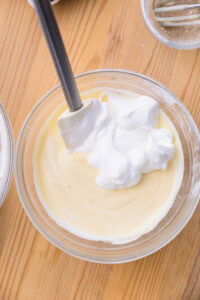
- Whisk in 1/3 of the meringue to the cream cheese base to loosen, then fold in the rest in 2 additions with a spatula, gently lifting from the bottom without deflating the bubbles.
- Bake in a water bath: 20 min at 160°C (air fryer 140°C), then reduce to 140°C (air fryer 120°C) and bake another 40 to 50 min. Tent with aluminum foil if it browns too quickly. It’s done when the top is golden and a skewer comes out without wet batter.
- Turn off the oven and leave the cake inside, door ajar, about 15 min. Remove, let cool, then refrigerate in the pan for at least half a day (ideally longer) before unmolding.
Notes
- Do not whip the meringue until too stiff, as this can cause cracks during baking.
- Letting the cheesecake cool gradually in the oven (with the door slightly ajar) helps prevent it from sinking.
- Recommended pan: a 15 cm round springform pan, well wrapped in aluminum foil for baking in a water bath.