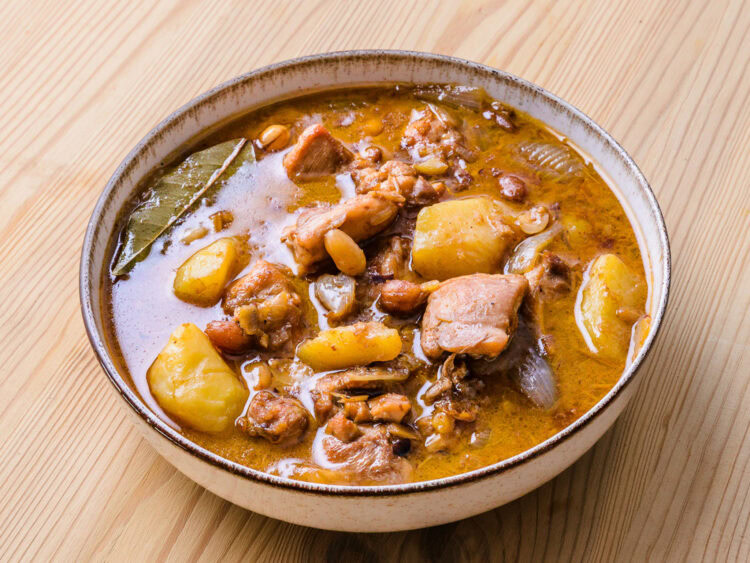
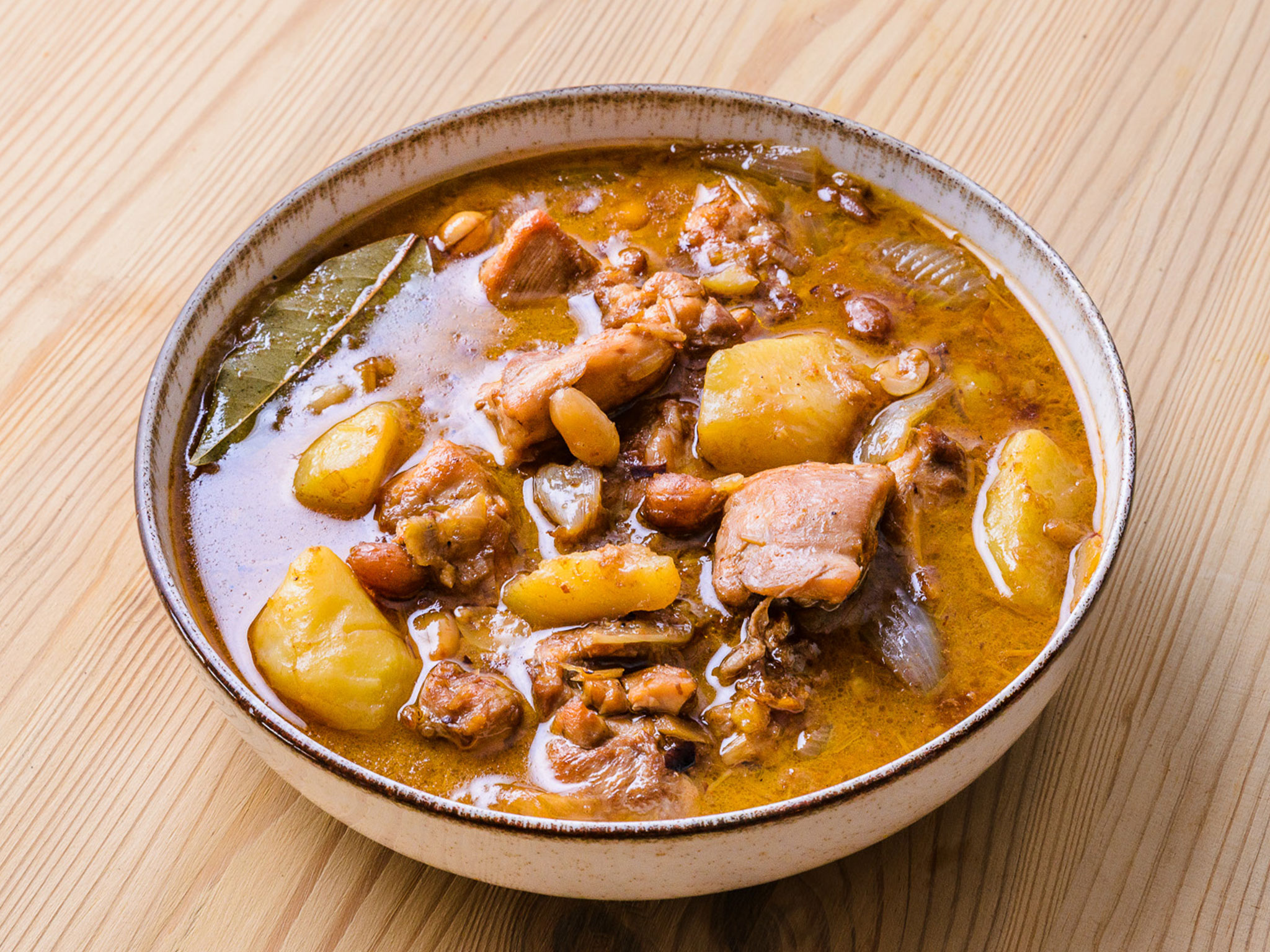
A rich, fragrant Thai Massaman curry simmered in coconut milk with homemade toasted-spice paste, tender chicken, and meltingly soft potatoes.
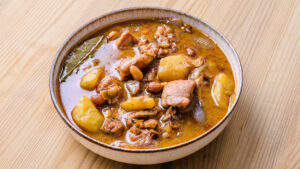
Brick-red chili-infused coconut oil gleams over meltingly tender beef shank or bone-in chicken. It also coats waxy potatoes, gently slow-cooked onion, and roasted peanuts with a subtle crunch. Beneath the richness of the coconut milk, notes of cinnamon, cardamom, cumin, and clove come through, lifted by tamarind or bitter orange.
Massaman is a rich yet beautifully balanced Thai-Muslim curry: a dish of courtly refinement that brings together warm dried spices, Siamese aromatics, sweetness, tartness, and salinity. It shares a family resemblance with other Thai curries, from Thai red curry to Thai green curry, but has a gentler flavor carried by warm spices. In short, it’s a delight I can’t wait for you to discover.
What Is Massaman Curry?
The name “Massaman” is generally linked to the Persian Mosalmân, meaning “Muslim.” Nineteenth-century English-language sources sometimes referred to it as “Mussulman curry.”
This origin is still reflected in its culinary tradition: traditional Massaman is based on halal proteins such as chicken, beef, duck, mutton, goat, or venison. Pork is not part of the tradition.
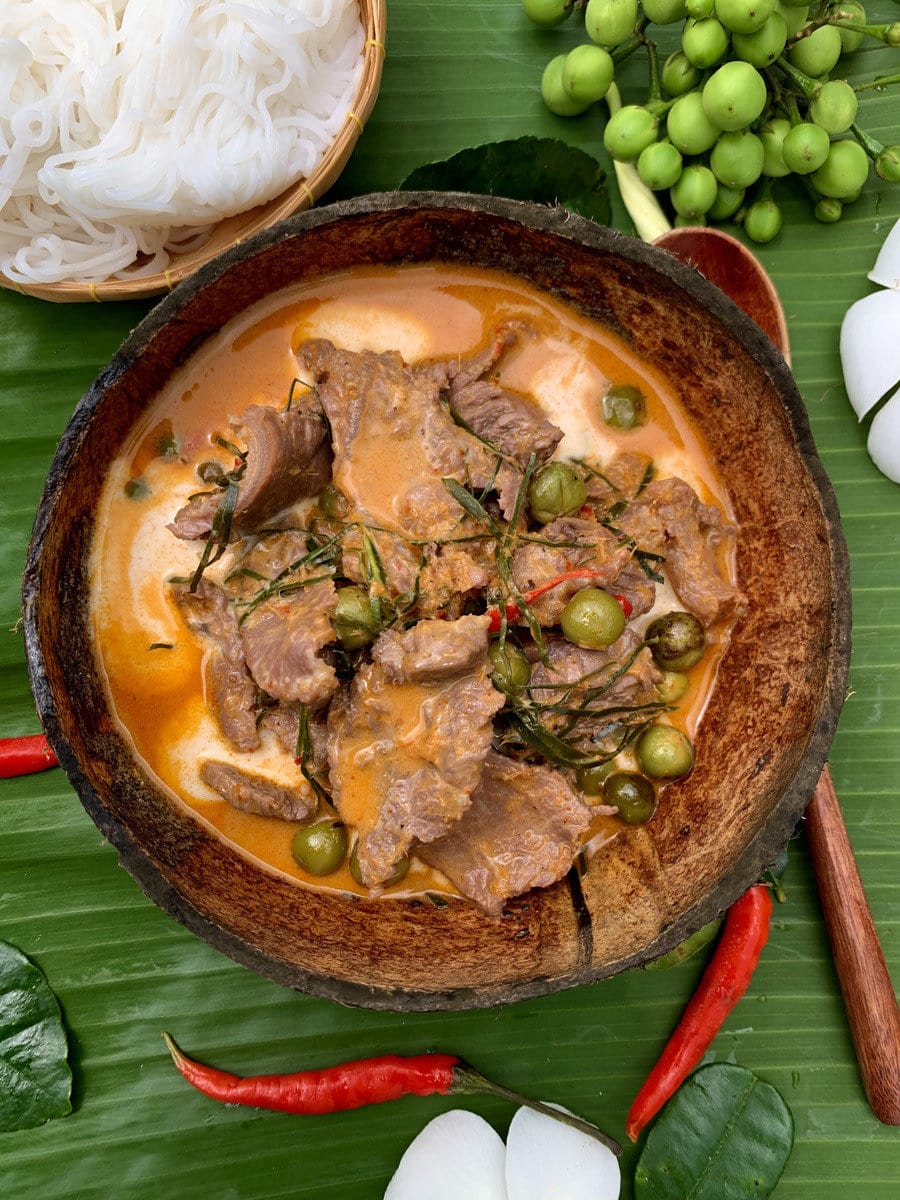
Massaman is a thick coconut-based curry with a glossy layer of oil on the surface, garnished with large pieces of onion, waxy potatoes, and whole roasted peanuts. It can be compared to Panang beef curry or gaeng hang lay, though each has its own distinct spice balance.
Its paste combines two families of ingredients. The first brings together warm dried spices that arrived via Indo-Persian and Asian maritime trade routes: coriander, cumin, cardamom, cinnamon or cassia, cloves, nutmeg, mace, star anise, and white pepper.
The second belongs to the Thai repertoire: long dried red chilies, lemongrass, galangal, shallots and garlic that are flame-roasted and peeled, and fermented shrimp paste.
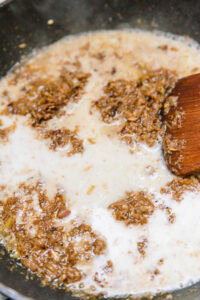
The classic technique is called taek man, meaning “to split” the coconut cream until its oil separates. Frying the curry paste in this fat releases fat-soluble aromas and gives the dish its characteristic glossy red sheen.
This approach to toasting and building aroma recalls Thai yellow curry paste, but with a profile more strongly shaped by warm spices. The final seasoning combines palm or coconut sugar, fish sauce or salt, and tamarind or, in historical versions, som sa, a bitter orange that is both floral and bright.
The History of Massaman: Court Cuisine and Muslim Roots
Before chilies were introduced to Siam, heat came from peppercorns and galangal. Chilies of the Capsicum genus reached the region after Portuguese merchants arrived in 1511.
By the seventeenth century, Ayutthaya had become a cosmopolitan royal capital where merchants, diplomats, missionaries, and cooks crossed paths. Shia Persian communities, including the circle linked to Sheikh Ahmad Qomi, helped shape a palette of flavors aligned with Muslim tradition. That palette later influenced the taste of Massaman.
Its place in court cuisine was confirmed in literature. In a famous verse attributed to Prince Itsarasunthon, the future King Rama II, Massaman is praised for its aroma of yi-ra, or cumin, and its “ powerful spices ”. This suggests that its blend of dried spices was already highly prized at court in the early nineteenth century. Later, Lady Plean Passakornrawong recorded what is presented as the oldest known written Massaman recipe: a recipe published in 1889 in a monthly magazine for “ chicken Massaman curry with bitter orange juice ”. Her 1908 cookbook then helped codify classic Siamese cuisine.
Massaman also endured thanks to the prestige associated with it. As Siam modernized under pressure from European colonial powers, certain rustic or highly local techniques were often left out of official cookbooks, according to later analyses of culinary and cultural history. Massaman, associated with costly imported spices, courtly refinement, and Muslim diplomatic influence, remained a benchmark of classic cuisine.
Regional styles remain distinct. Central royal versions are generally milder, sweeter, beautifully balanced, and visually refined, with perfectly split coconut cream. Southern Muslim versions are often saltier, deeper, and more assertively spiced, sometimes with ground spices and a treatment of onions reminiscent of Indian cooking, while still preserving Thai ingredients and balances.
Main Ingredients in Massaman Curry
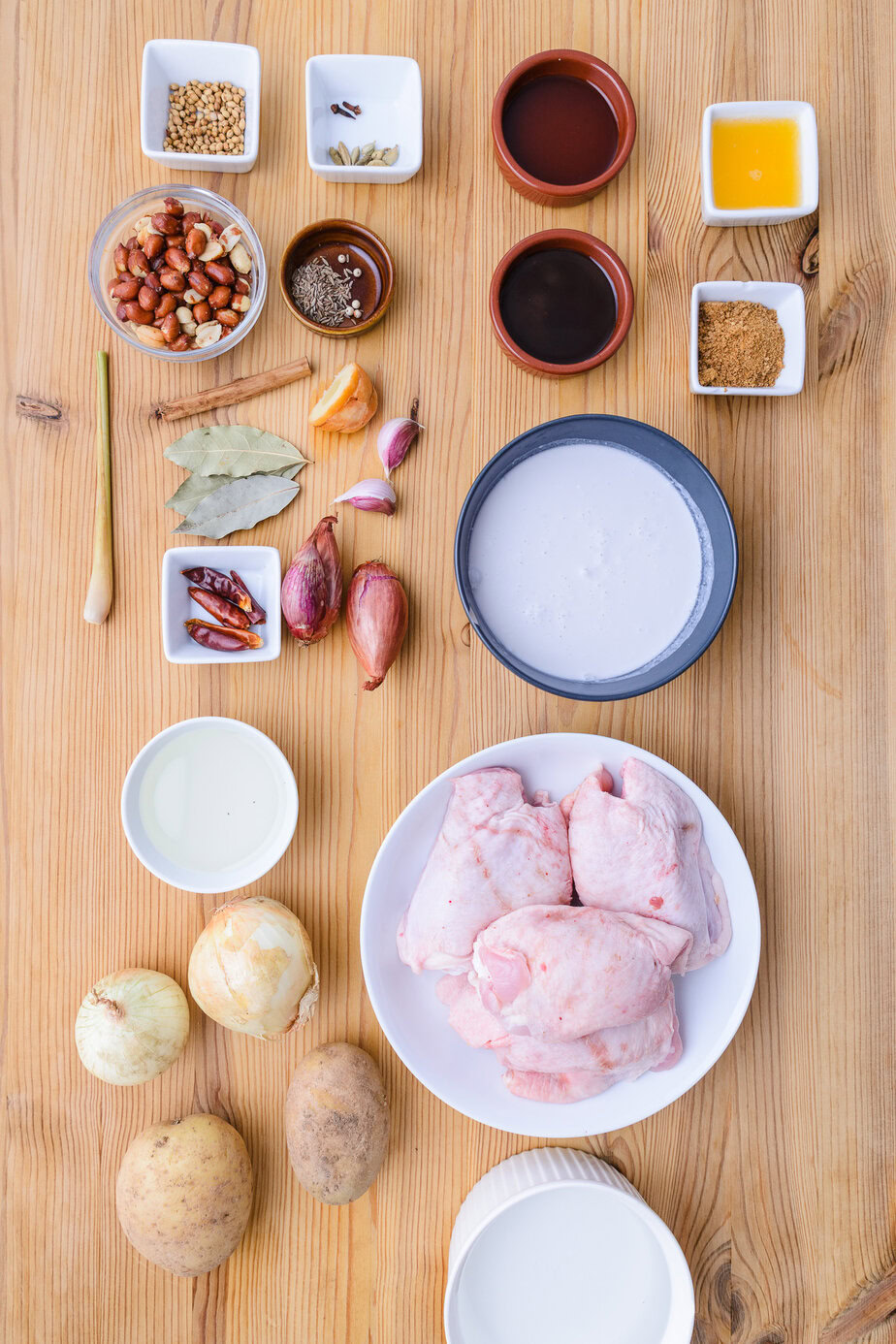
- Halal proteins: Bone-in, skin-on chicken thighs or drumsticks provide collagen. Beef shank, chuck, nong lai, or short ribs can become spoon-tender during a long braise and give the sauce more depth. In some ways, that richness can recall bò kho or beef rendang. Duck, mutton, and goat also have genuine historical roots. Pork, however, is not used.
- Coconut cream and coconut milk: Coconut cream provides the fat needed for the classic “split” cream method; coconut milk gives the stew body and carries the aromas of the spices, chili, and galangal, much like in tom kha gai soup.
- Whole roasted peanuts: They add nutty notes and a light crunch, and also bring to mind Thai chicken satay skewers. In Thai Massaman, they are traditionally kept whole, unlike in Cambodian saraman, where peanuts are often ground into the paste to thicken it.
- Fresh aromatics: Long dried red chilies, rehydrated before use, give the curry its brick-red color and gentle heat. Lemongrass cuts through the richness, galangal brings a bright, resinous note, flame-roasted shallots and garlic add smoky sweetness, and fermented shrimp paste provides an umami base essential to traditional Thai preparations such as khao kluk kapi, even if some commercial pastes omit it.
- Sweetness: Palm or coconut sugar brings caramelized depth rather than the straightforward sweetness of refined white sugar.
- Saltiness: Fish sauce adds salt and umami; some beef versions are seasoned first with sea salt, then finished with fish sauce.
- Acidity: Tamarind is now firmly established in traditional versions, while bitter orange som sa, Citrus aurantium, remains the historical reference, as in Lady Plean’s 1889 recipe.
- Starchy accompaniment: Jasmine rice and roti both belong alongside the curry, ready to soak up the glossy sauce.
Technical Tips for a Good Massaman Curry
- Halal base: Chicken, beef, duck, mutton, goat, and venison all belong to the tradition; pork does not.
- Balance of acidity: Som sa is historically prized, and tamarind has a firm place in traditional versions. By contrast, pieces of pineapple or orange in the finished curry steer the dish toward a modern restaurant adaptation, closer to the tangy balance of tom yum kung than to a classic Massaman.
- Restraint with makrut: Makrut leaves are debated and may appear as a supporting note in some regional or contemporary expert versions, but a dominant makrut flavor points more clearly to other Thai curries, such as phat phet or pad pong karee.
Ingredients
For the Massaman curry paste
- 5 small dried chilies
- 3 tablespoons shallots minced
- 2 tablespoons Thai garlic minced
- 1 teaspoon galangal minced
- 1 tablespoon lemongrass minced
- 2 whole cloves toasted
- 1 tablespoon coriander seeds toasted
- 1 teaspoon cumin toasted
- 5 white peppercorns
- 1 teaspoon shrimp paste
For the curry
- 600 g chicken thighs
- 460 ml coconut milk divided into 2 portions (one for the thin coconut milk, one to add later)
- 230 ml water
- 4 tablespoons rice bran oil divided
- 150 g small potatoes
- 120 g onions small, or cut into chunks
- 4 tablespoons peanuts toasted
- 3 bay leaves
- 8 cardamom pods toasted
- 1 cinnamon stick
For the seasoning
- 2,5 tablespoons palm sugar
- 3 tablespoons fish sauce
- 3 tablespoons tamarind juice
- 3 tablespoons orange juice unsweetened
Instructions
Make the curry paste
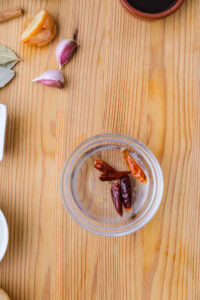
- Soak the dried chilies in water, then split them open, remove the seeds, and toast them. Set aside.5 small dried chilies
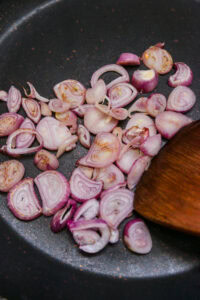
- Toast the shallots, garlic, galangal, and lemongrass separately.3 tablespoons shallots, 2 tablespoons Thai garlic, 1 teaspoon galangal, 1 tablespoon lemongrass
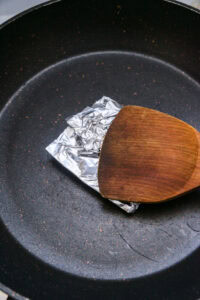
- Wrap the shrimp paste in a banana leaf or aluminum foil, then grill or sear it in a pan until fragrant.1 teaspoon shrimp paste
- Pound the cloves, coriander seeds, cumin, and white peppercorns to a fine powder.2 whole cloves, 1 tablespoon coriander seeds, 1 teaspoon cumin, 5 white peppercorns
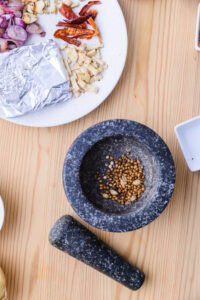
- Pound the chilies until coarsely crushed.
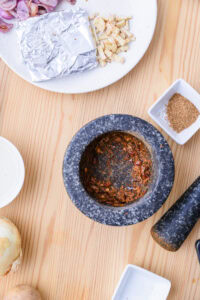
- Add the shallots, garlic, galangal, and lemongrass, then continue pounding.
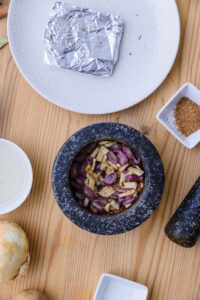
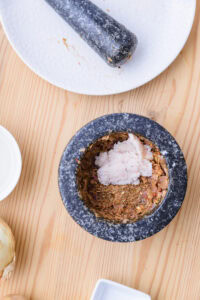
- Add the ground spices and shrimp paste, then pound until the mixture forms a smooth paste.
Prepare the curry base
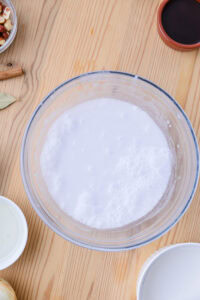
- Mix one portion of the coconut milk with the water to make a thin coconut milk, then bring to a gentle boil. Lower the heat to maintain a gentle simmer.460 ml coconut milk, 230 ml water
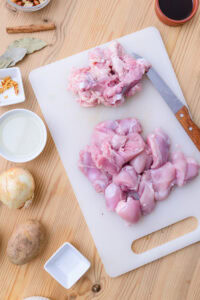
- Cut the chicken thighs into pieces about 5 cm in size.600 g chicken thighs
Sear the chicken and cook the paste
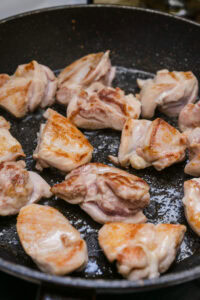
- Heat half of the rice bran oil in a pan. Sauté the chicken until well seared on the outside, then transfer it to the pot and let it simmer gently.4 tablespoons rice bran oil
- Add the remaining oil to the pan and sauté the curry paste until very fragrant. Gradually add the remaining coconut milk and continue cooking until the oil begins to separate slightly.
Simmer the curry
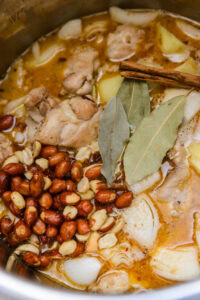
- Add the cooked curry paste to the pot with the chicken, then add the potatoes, onions, peanuts, bay leaves, cardamom pods, and cinnamon stick. Simmer over low heat for about 45 minutes.150 g small potatoes, 120 g onions, 4 tablespoons peanuts, 3 bay leaves, 8 cardamom pods, 1 cinnamon stick
Season and serve
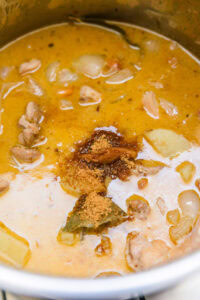
- Add the palm sugar, fish sauce, tamarind juice, and orange juice. Taste and adjust the seasoning if needed.2,5 tablespoons palm sugar, 3 tablespoons fish sauce, 3 tablespoons tamarind juice, 3 tablespoons orange juice
- Serve piping hot.
Notes
- For a smoother paste, use a heavy mortar or a small food processor, adding a splash of coconut milk if needed.
- This curry is often even better reheated the next day, as the flavors deepen while it rests.