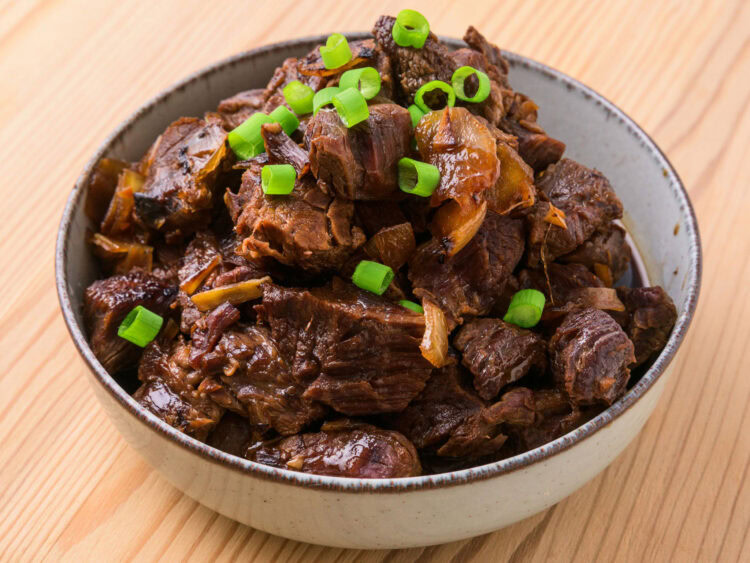
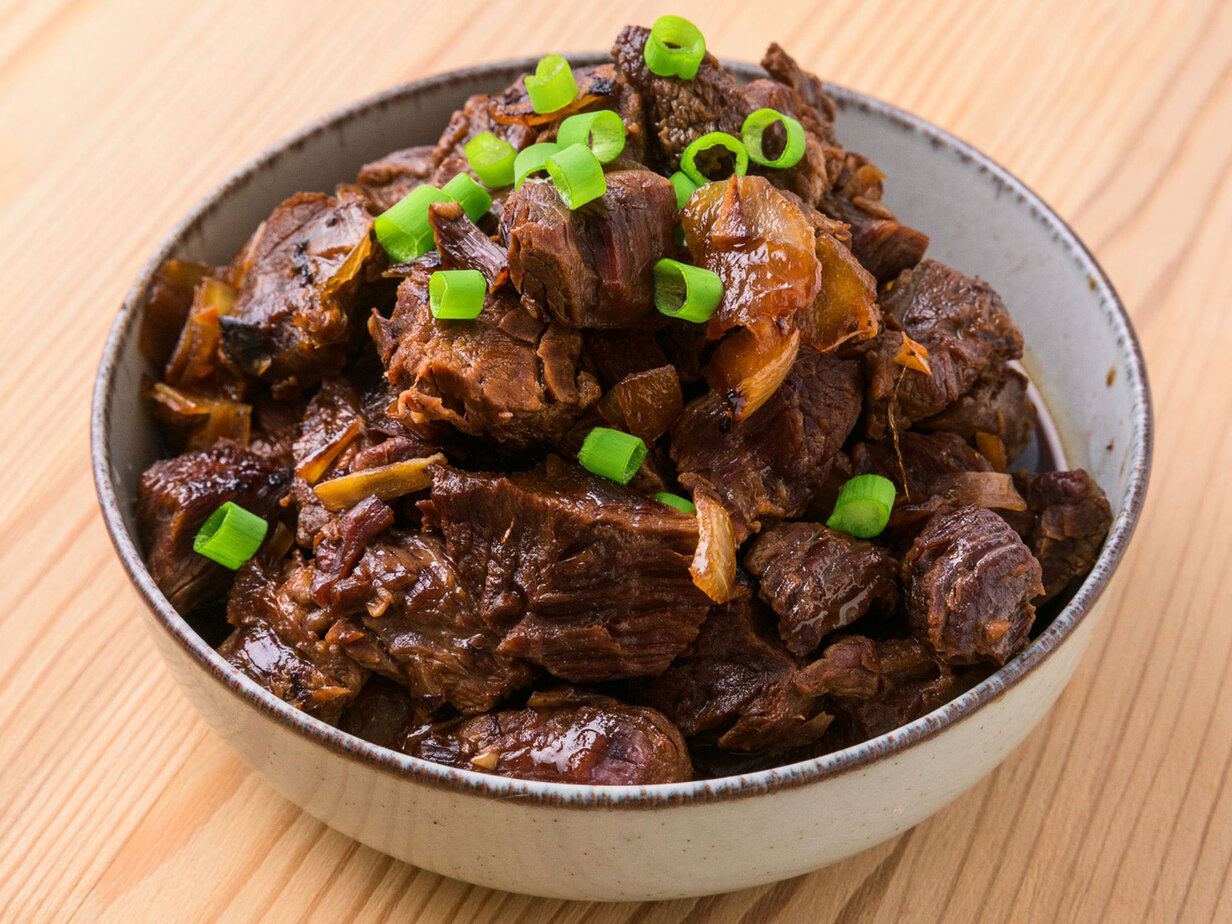
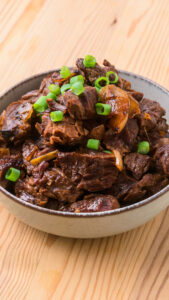
A Filipino classic: ultra-tender beef braised in soy sauce and star anise, served with garlic rice
In Manila, beef pares arrives with sauce that clings lightly to the spoon and rice that is still steaming. The beef is tender, the star anise comes through right away, and the broth brings everything together. And the traditional side of garlic rice? It’s simple, satisfying, and you’re going to love it.
What is beef pares?
Pares means “pair” in Tagalog. The name mainly refers to a complete Filipino meal: braised beef, garlic rice, and a clear beef soup. The three elements are served separately, so you can balance the sauce, rice, and broth with every bite.
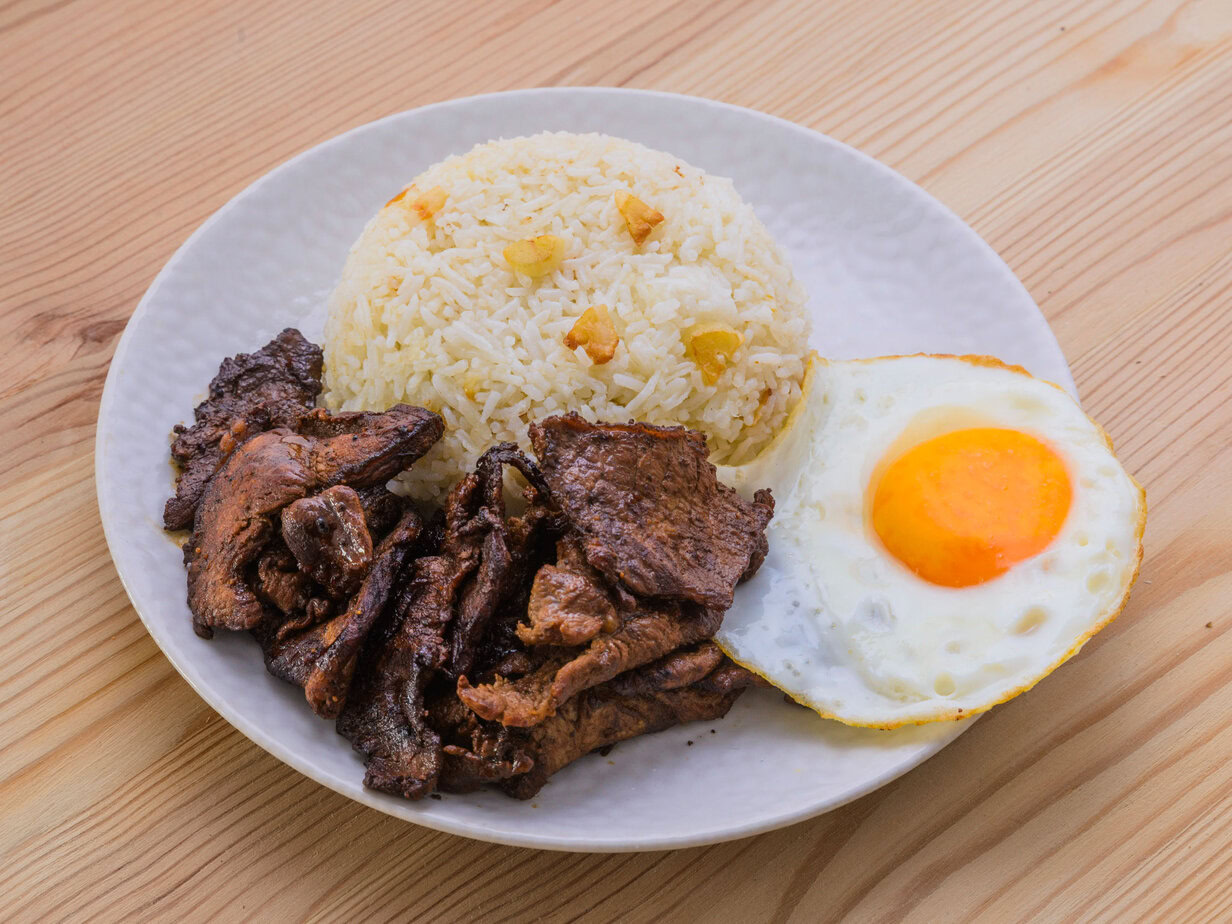
The asado-style beef is built on soy sauce, brown sugar, and star anise. The meltingly tender meat adds richness and collagen, the sinangag brings a dry, fragrant element, and the broth provides warmth. The dish loses its charm if everything is mixed together before serving.
From La Loma to late-night bowls
Beef pares has a well-documented origin. Jonas, a carinderia opened in 1979 by Lolita “Lolly” Tiu and Roger Tiu in La Loma, Quezon City, made it famous. The Tius began with a Chinese-inspired family asado, close to char siu in its sweet-savory flavor, then turned it into a complete, affordable meal designed for workers.
In La Loma, comparisons with Pares sa Retiro come up often. Jonas is still associated with a thinner, saltier sauce, while Retiro suggests a thicker, sweeter sauce with pronounced star anise and plenty of tendon. Pares kanto, the street version, pushes the fatty, sticky, soy-forward side even further.
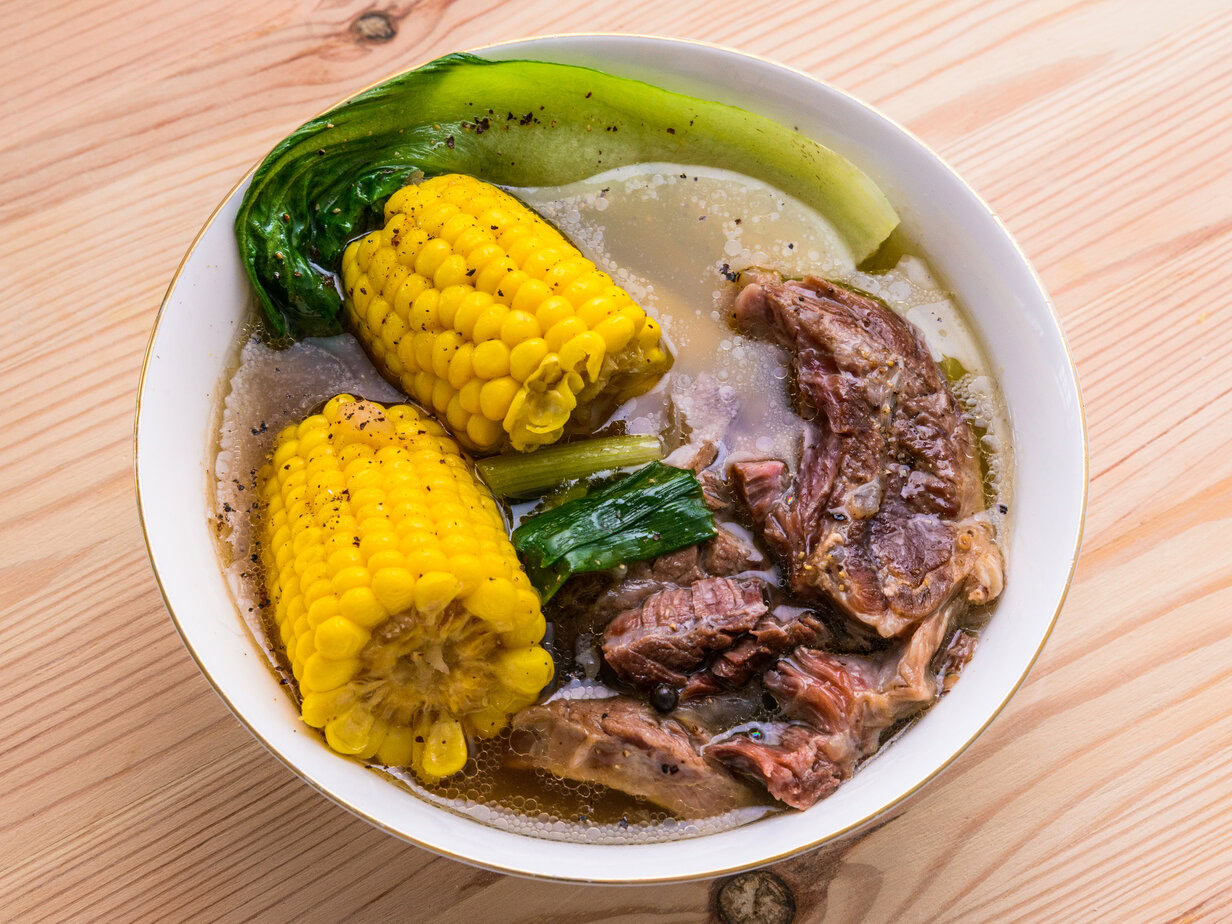
At heart, though, the dish follows a clear formula: braised beef, garlic rice, and broth served on the side. That trio is what sets it apart from a simple stew served over rice, even though Filipino cooking also has classics like chicken adobo, sinigang, and sisig.
The main ingredients in beef pares
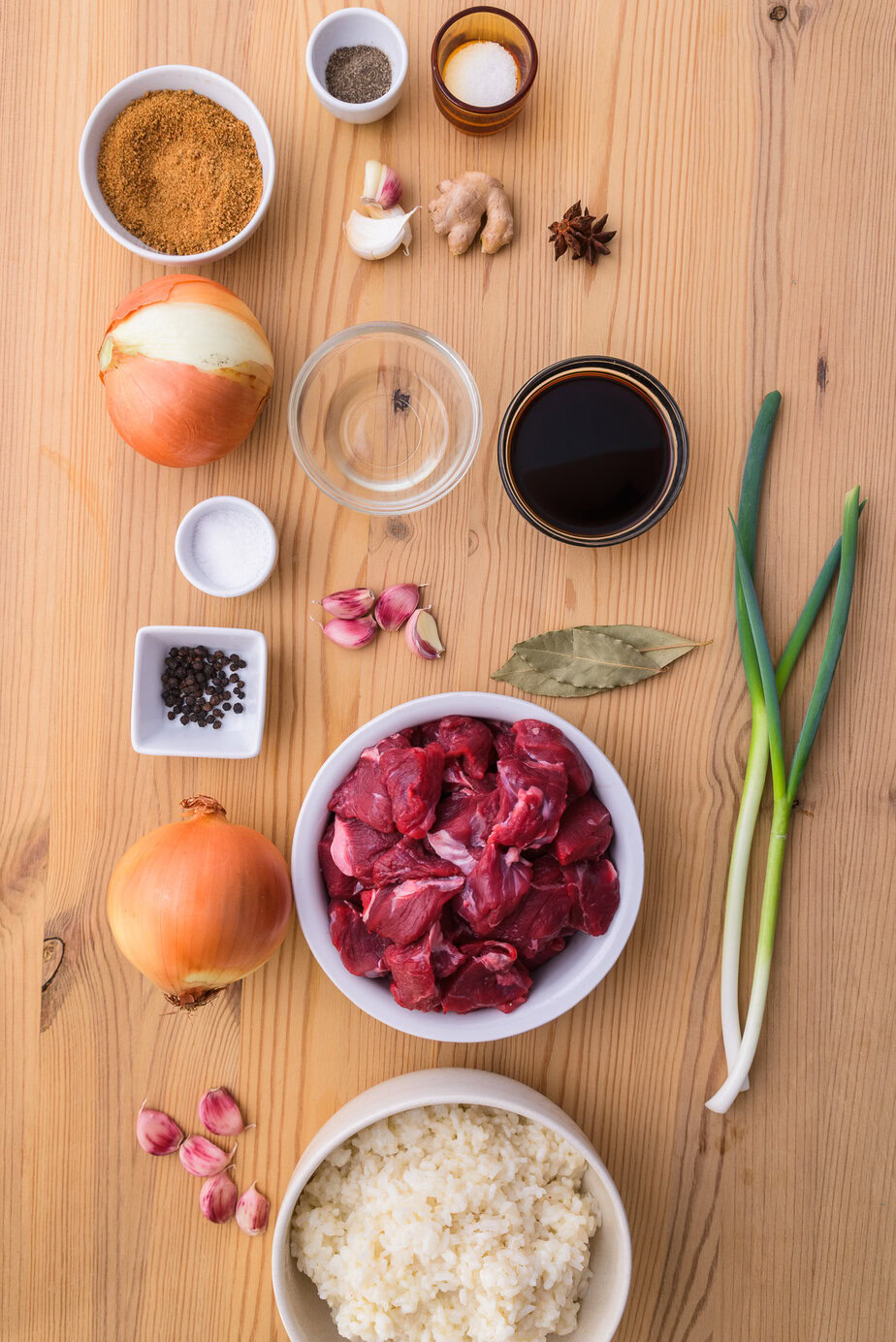
The meat should be rich in collagen: brisket, flank, shank, or litid. As in Bò kho, long cooking turns these cuts into meltingly tender bites and gives the sauce body. Meat that is too lean will quickly make pares dry and flat.
The sauce is built with soy sauce, brown sugar, ginger, garlic, onion, and whole star anise. Star anise is the signature note here, much more than a background aroma. Oyster sauce can boost the savory depth, but it should never overpower the flavor of the beef.
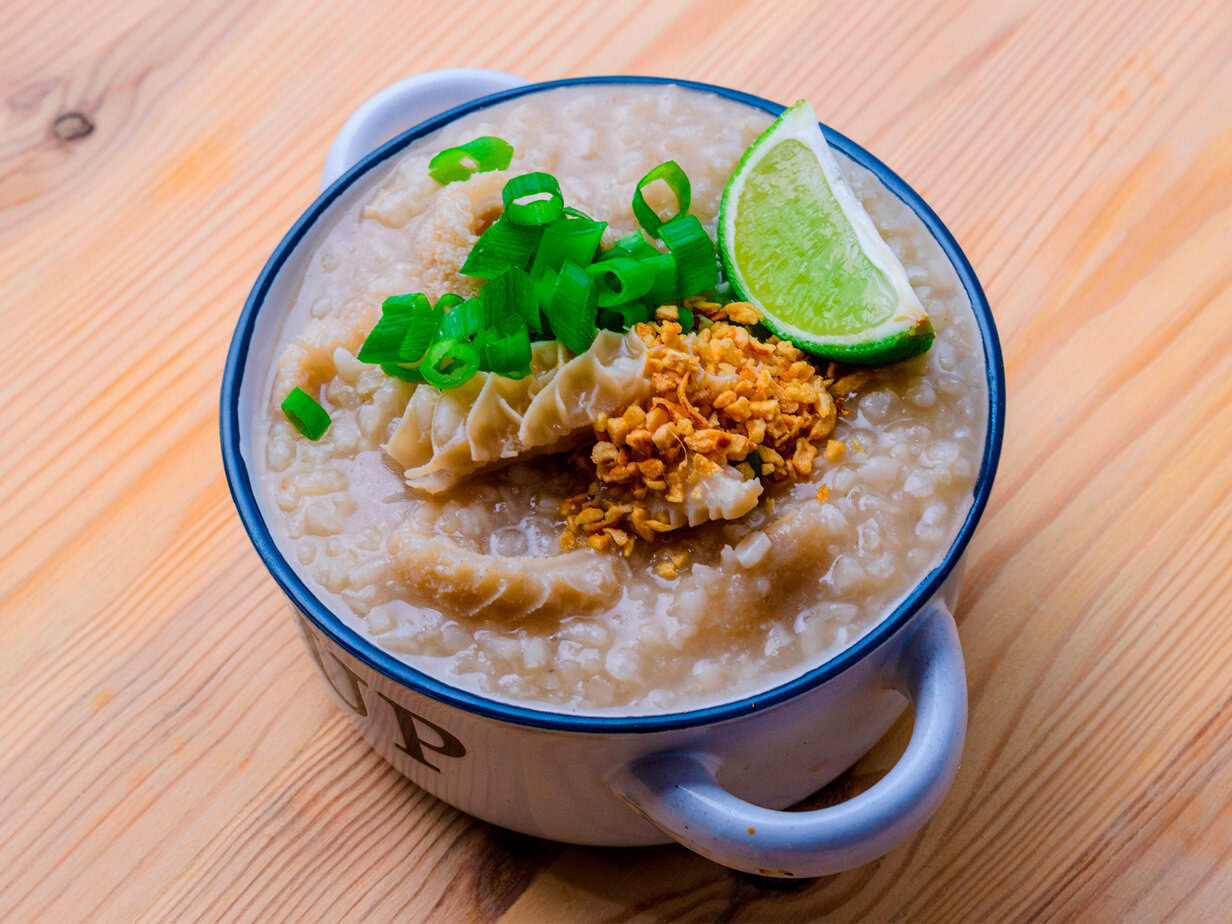
The broth should stay clear, made with bones, pepper, bay leaf, and aromatics. It has the same spirit as a clear broth: plenty of flavor, but no heaviness. The rice is made with cooled grains and fried garlic, giving you a dry, fragrant sinangag that can soak up the sauce.
What makes good beef pares
Good pares comes in three parts: a glossy beef stew, non-greasy garlic rice, and clear broth. The tendon should be translucent and tender, with no starchy sauce or slimy texture.
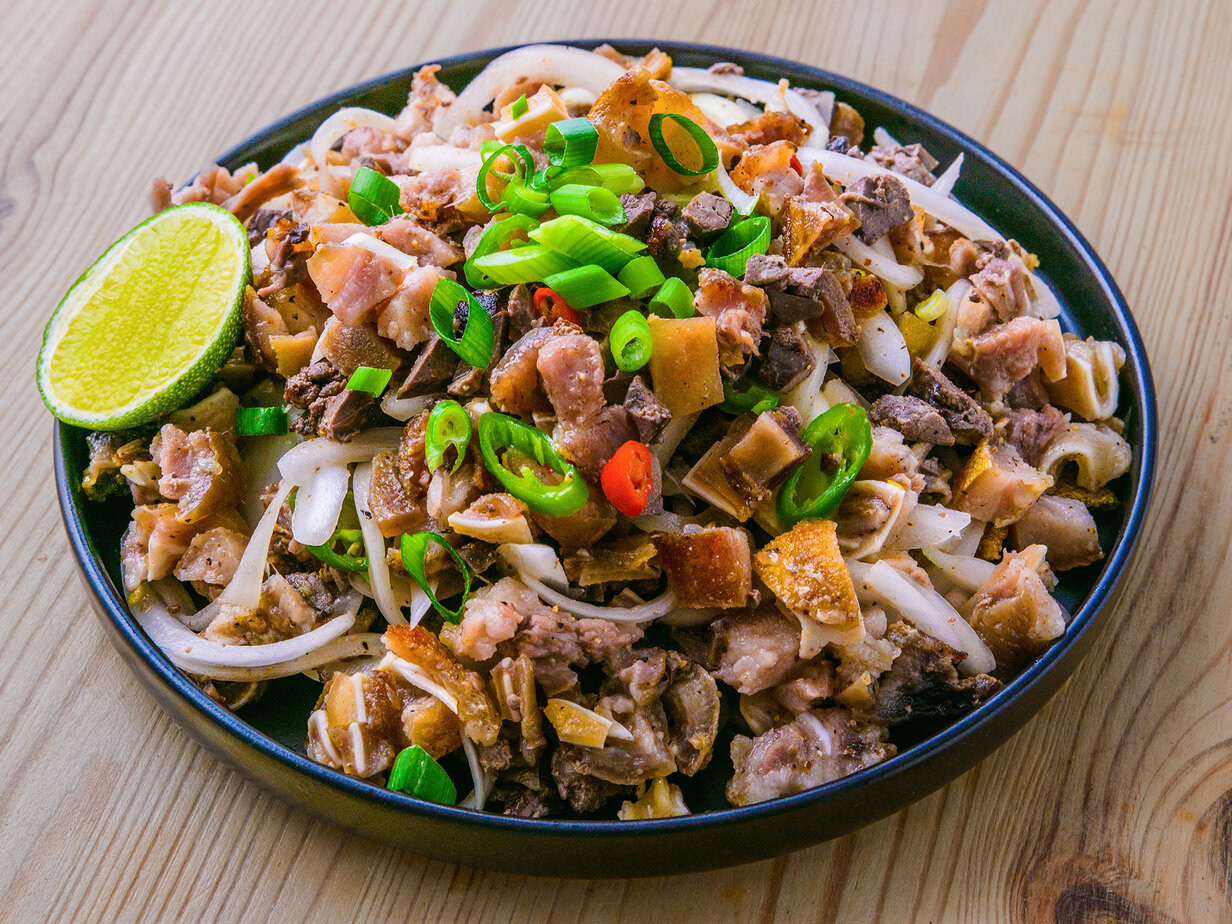
Chinese five-spice can stand in for star anise in a pinch, but only in a very small amount, as clove can quickly take over. Also be wary of Sichuan pepper, meat that has simply been boiled, sticky rice, and versions that are already spicy before they reach the table.
Ingredients
For the broth
- 1.9 L water
- 900 g beef brisket cut into 4-cm cubes
- 1.4 L water
- 1 onion peeled and quartered
- 4 cloves garlic peeled and crushed
- 1 teaspoon peppercorns
- 2 bay leaves
- 1 tablespoon salt plus more as needed
- green onions chopped, for serving
- pepper to taste
For the beef asado
- 1 tablespoon canola oil
- 1 onion peeled and chopped
- 3 cloves garlic peeled and finely chopped
- 1 piece ginger 2.5-cm piece, peeled and julienned
- 240 ml broth reserved from cooking the beef
- 60 ml soy sauce
- 55 g brown sugar
- 2 star anise
- salt to taste
- pepper to taste
For the garlic fried rice
- 740 g rice cooked the day before and chilled
- 60 ml canola oil
- 5 cloves garlic peeled and finely chopped
- salt to taste
- pepper to taste
Instructions
For the broth
- In a saucepan over medium heat, bring 1.9 L water to a boil, then add the beef brisket.1.9 L water, 900 g beef brisket
- Boil for 8 to 10 minutes, skimming off any foam. Drain the beef, discard the liquid, and rinse the meat and saucepan thoroughly.
- Return the meat to the clean saucepan. Add 1.4 L cold water, bring to a boil, and skim until the liquid is clear.1.4 L water
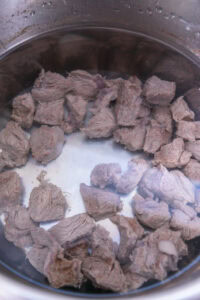
- Add the onion, garlic, peppercorns, bay leaves, and 1 tablespoon of salt.1 onion, 4 cloves garlic, 1 teaspoon peppercorns, 2 bay leaves, 1 tablespoon salt
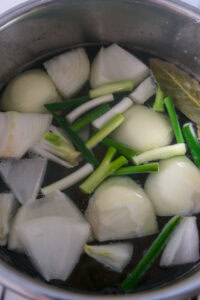
- Reduce the heat, cover, and simmer for 2 hours to 2 hours 30 minutes, until the meat is tender. Remove the meat with a slotted spoon and keep the broth over low heat (reserve 240 ml for the asado).
For the beef asado
- Heat the oil in a skillet over medium heat. Add the onion, garlic, and ginger, and sauté until softened.1 tablespoon canola oil, 1 onion, 3 cloves garlic, 1 piece ginger
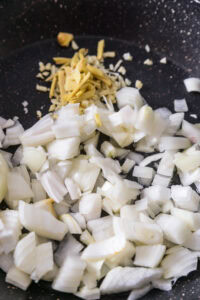
- Add the beef and cook for 2 to 3 minutes, until lightly browned.
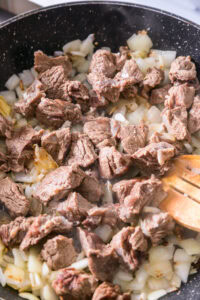
- Stir the reserved broth, soy sauce, and brown sugar together until the sugar dissolves, then pour into the skillet. Add the star anise.240 ml broth, 60 ml soy sauce, 55 g brown sugar, 2 star anise
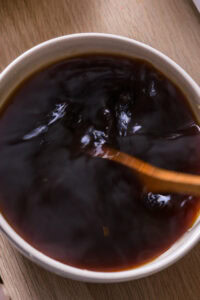
- Bring to a simmer, stirring to coat the beef, then cook for 8 to 10 minutes, until the sauce has reduced. Season with salt and pepper to taste.salt, pepper
For the garlic fried rice
- Break up the cold rice in a bowl to separate the grains.740 g rice
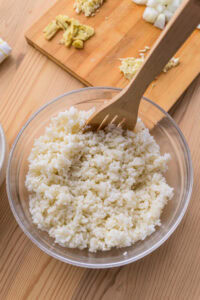
- Heat the oil in a large skillet over low heat. Add the garlic and cook, stirring, until golden. Lift out the garlic with a slotted spoon and drain on paper towels.60 ml canola oil, 5 cloves garlic
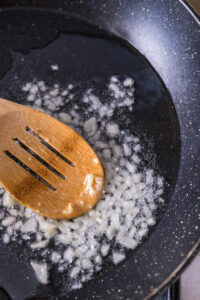
- Pour off the excess oil, leaving about 1 to 2 tablespoons in the skillet. Increase the heat to high, add the rice, and stir-fry in short bursts (let it sit spread out in an even layer for about 45 seconds, then stir) until piping hot. Season with salt and pepper to taste.salt, pepper
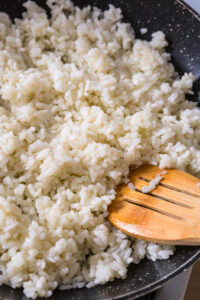
To serve
- Ladle the broth into bowls and garnish with green onions. Serve the garlic fried rice and beef asado piping hot, with the broth on the side.green onions, pepper
Notes
- Do not skip blanching the meat: it keeps the broth clear and sediment-free.
- Keep the broth at a gentle simmer: a vigorous boil emulsifies the fat and clouds the broth.