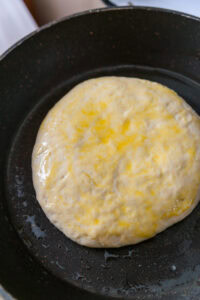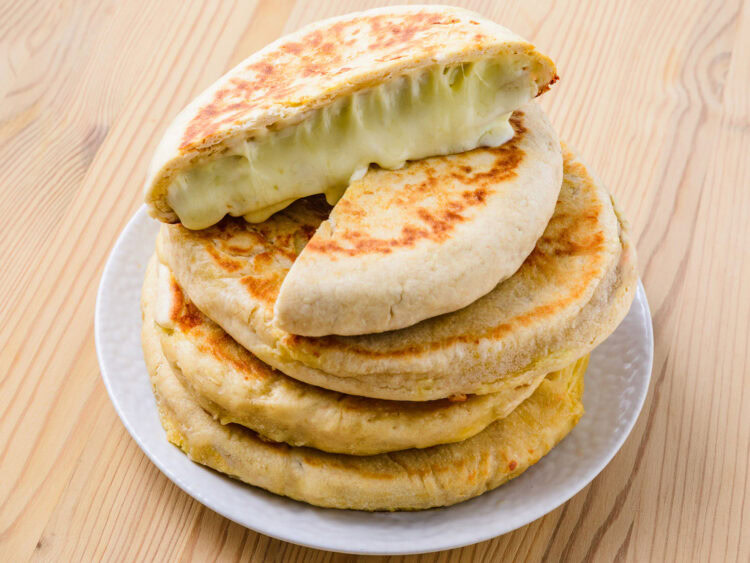
Khachapuri is a Georgian cheese-stuffed bread served piping hot, with a delicate crust, a savory center, and cheese that stretches with every slice.
Khachapuri ticks every comfort-food box: golden dough, melted cheese, butter, and the very serious obligation to eat it the moment it comes out of the oven.
In Georgia, it is far more than a simple stuffed bread. It belongs on the family table, has its own national day on February 27, and its price is even tracked by ISET’s Khachapuri Index, based on flour, cheese, yeast, eggs, and butter.
What Is Khachapuri?
The name comes from khacho, meaning curds, and puri, meaning bread. So “cheese bread” is accurate, but it hardly tells the whole story. A good khachapuri starts with a yeasted wheat dough: supple enough to wrap around the filling, yet thin enough not to steal the spotlight from the cheese.
The traditional cheese filling often combines imeruli, which is fresh and lightly tangy, with sulguni, which is more elastic and briny. Imeruli brings milky richness and texture; sulguni adds that irresistible stretch.
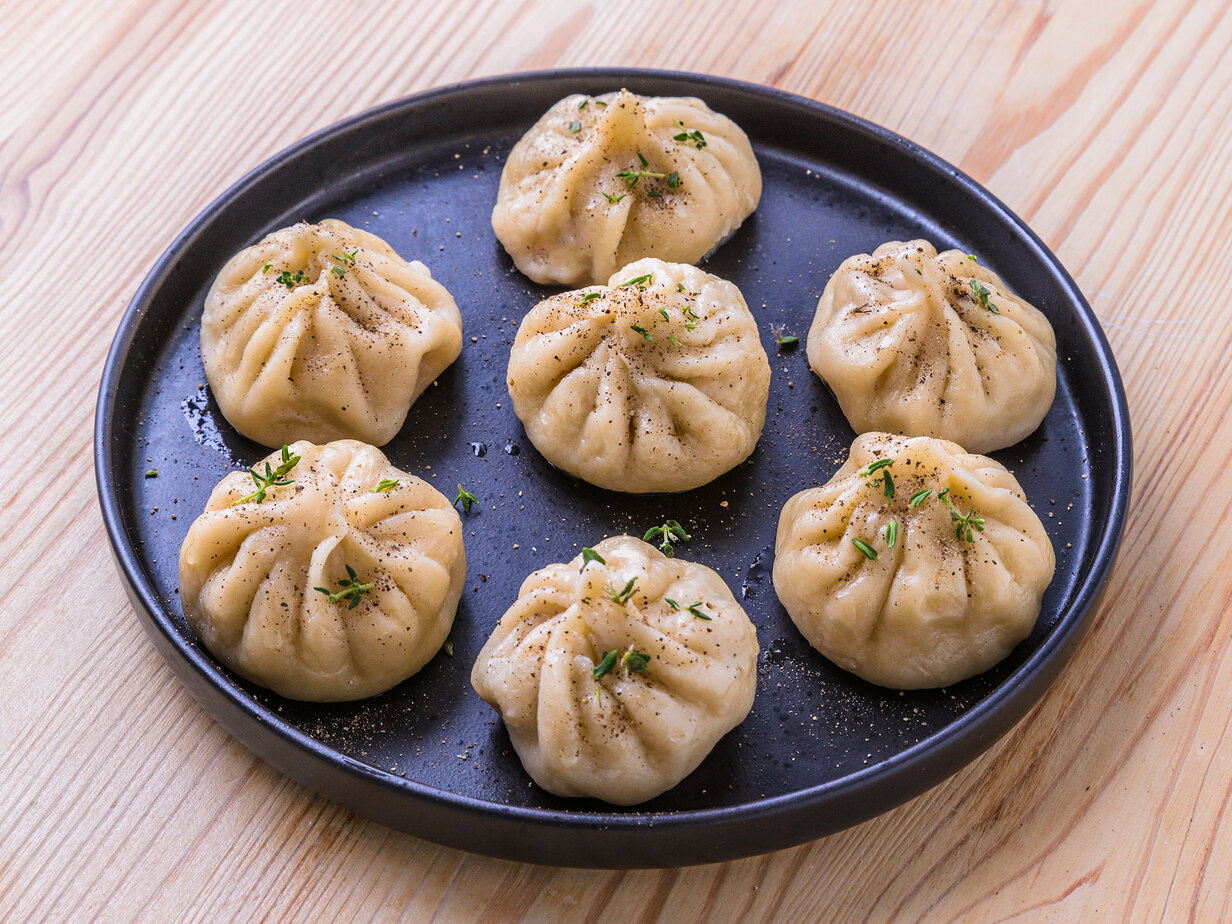
In spirit, it shares the same comforting logic as other stuffed breads, from Georgian khinkali to Indian cheese naan, but khachapuri has an identity all its own: savory dough, a generous filling, and immediate serving.
From Imereti to Georgian Tables
The word khachapuri appears in writing as early as 1725. Older texts mention cheese breads in Colchis, in western Georgia, but these remain clues rather than direct evidence of the recipe as it is known today.
The dish took shape above all through regional traditions, with each style reflecting local cheeses, ovens, and eating habits.
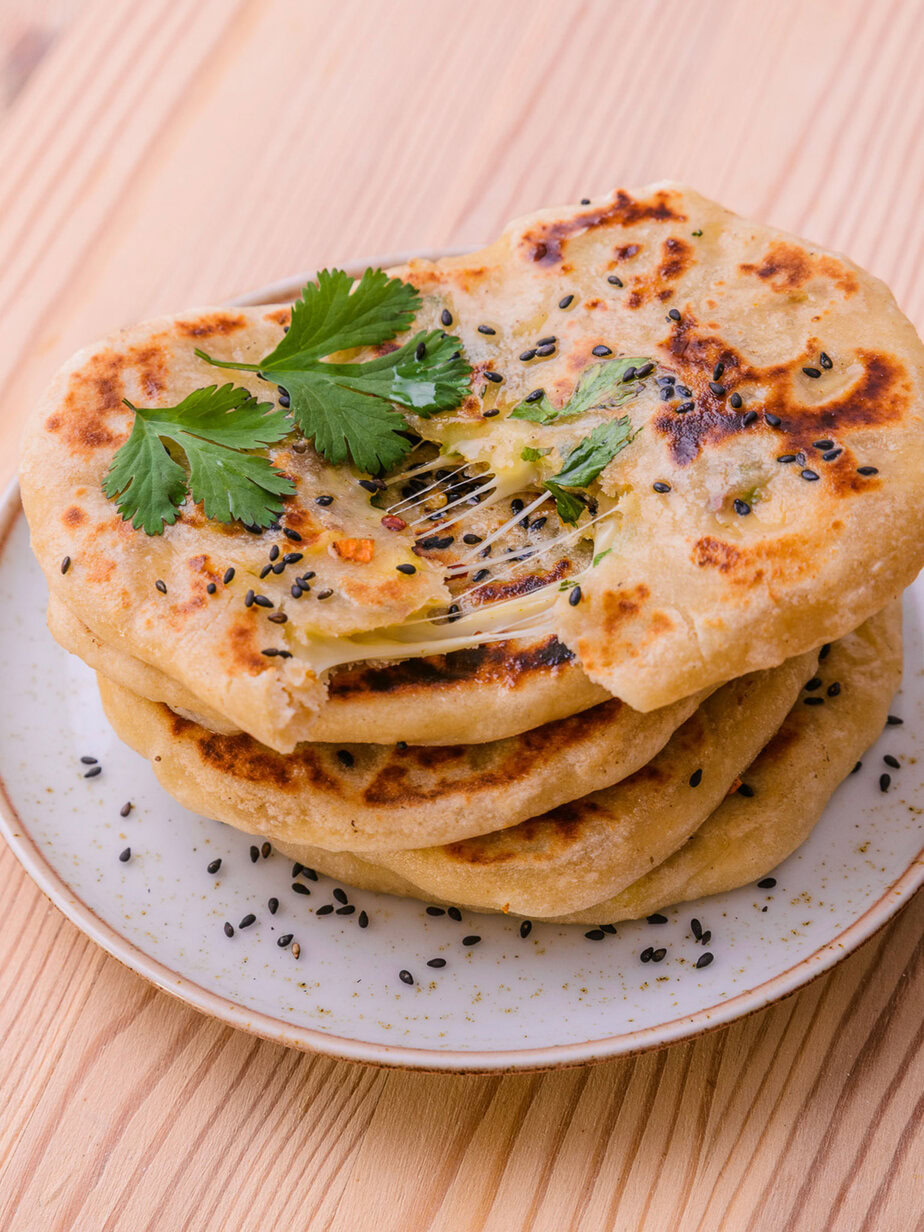
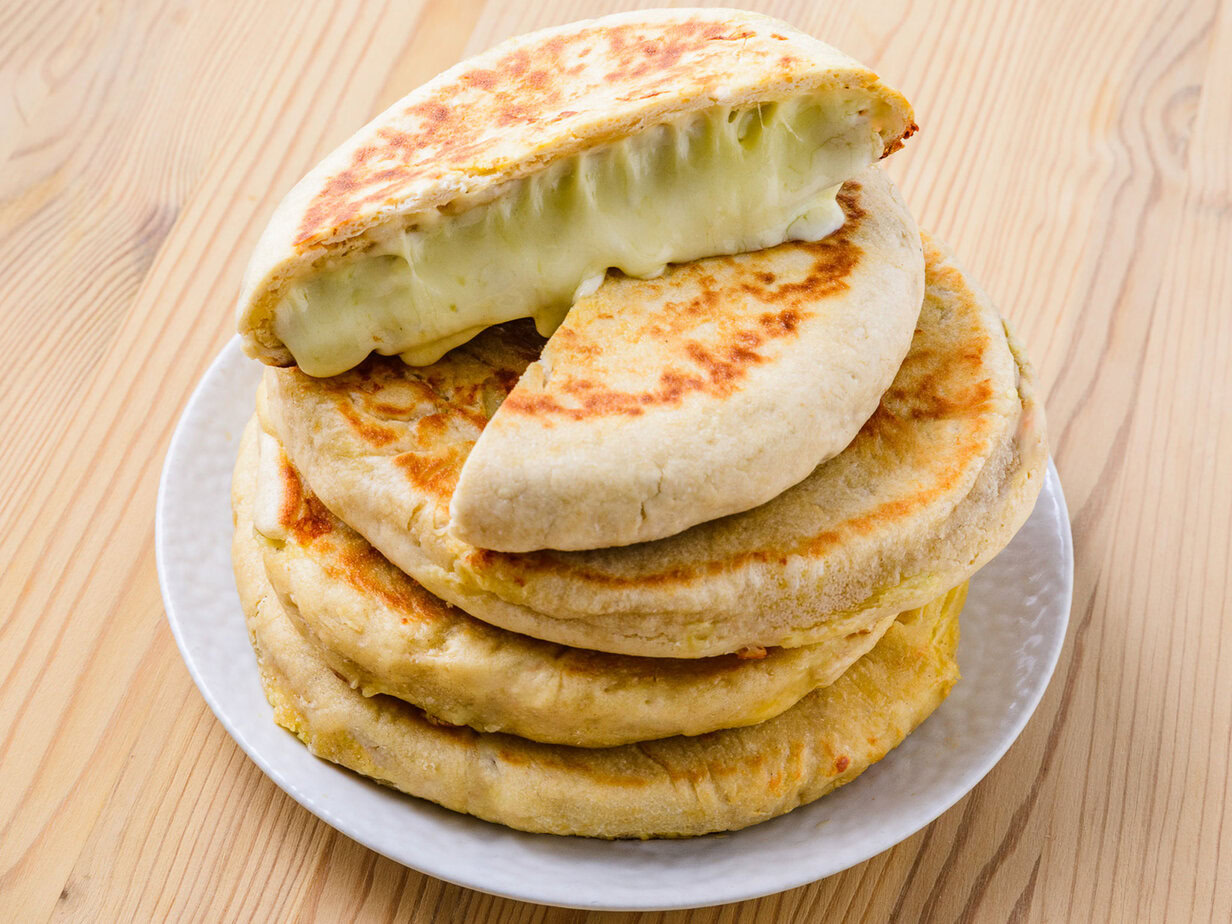
The imeruli version is a sealed round filled with cheese. Megruli adds a layer of sulguni on top. Adjaruli, shaped like a boat, is finished with an egg yolk and butter at the end of baking.
Meskuri, from Meskheti, is often rolled very thin and made with animal fat, while penovani belongs to the flaky, layered family of khachapuri.
The Main Ingredients in Khachapuri
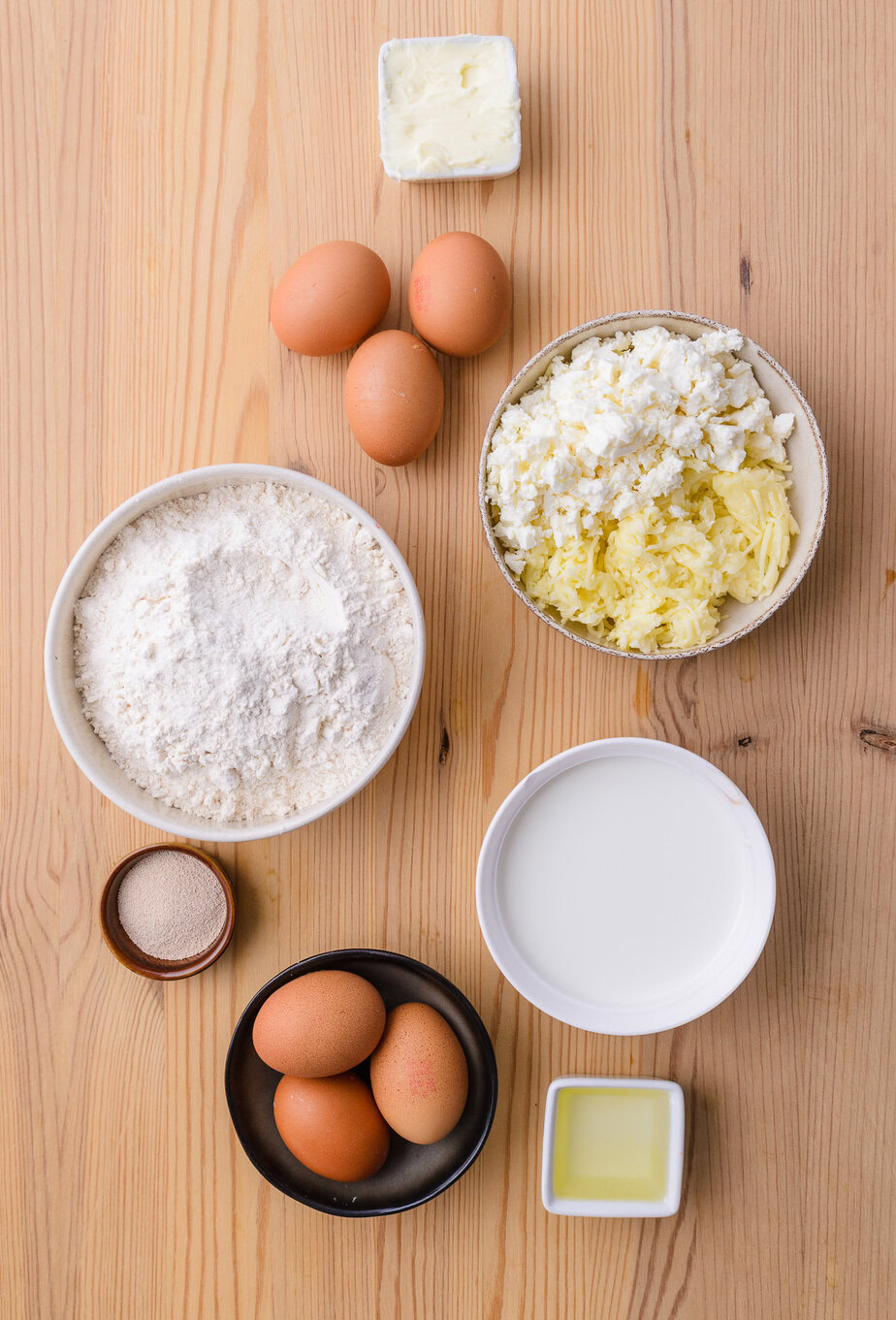
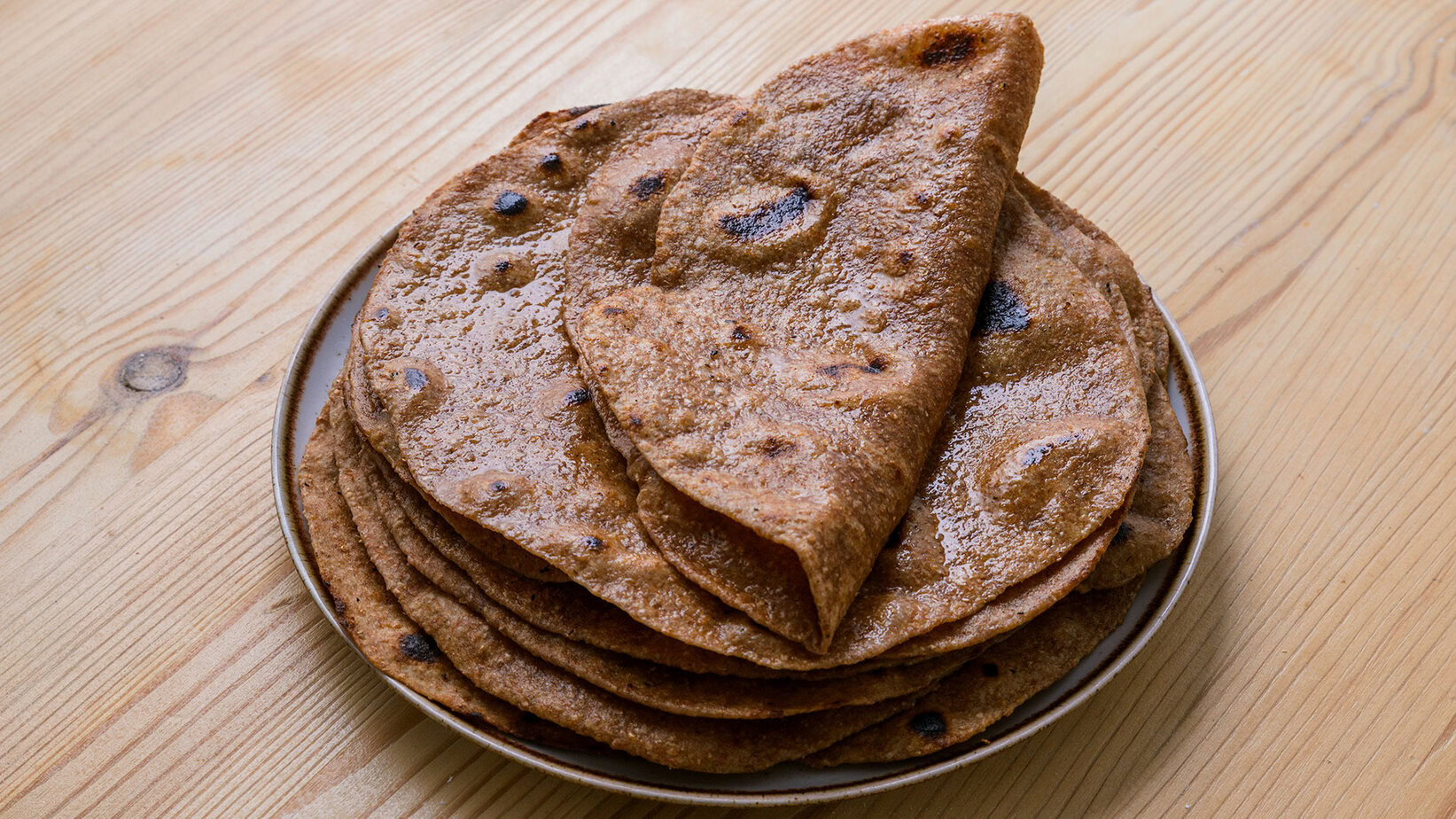
Wheat flour gives the dough its structure. It should develop enough gluten to hold the filling without forming a thick crust. Milk, whey, or water hydrates the dough, with a traditional preference for slightly tangy liquids when a softer crumb is desired.
Leavening agents vary from family to family. Khashi, a natural sourdough starter, provides slow fermentation. Matsoni, a tangy Georgian yogurt, can be paired with baking soda. Dry yeast is a practical option too, as long as the dough stays savory and does not drift into sweet brioche territory.
The cheese gives the dish its unmistakable character. Imeruli provides volume, milky freshness, and a gentle bite. Sulguni melts more readily and pulls into long strands. Outside Georgia, well-drained whole-milk mozzarella with a little havarti, Emmental, or mellow feta can come close to that balance.
Ingredients
For the dough
- 1 kg flour
- 50 g fresh baker’s yeast
- 480 ml milk
- 3 eggs
- 3 tablespoons oil for cooking
For the filling
- 1 kg Imeruli cheese substitute with a 50/50 blend of low-moisture mozzarella and feta
- 3 eggs beaten
- 50 g butter
- 1 egg yolk for brushing
Instructions
Preparation
- Gently warm the milk, then dissolve the yeast in it.480 ml milk, 50 g fresh baker’s yeast
- Add the eggs, then mix in the flour.3 eggs, 1 kg flour
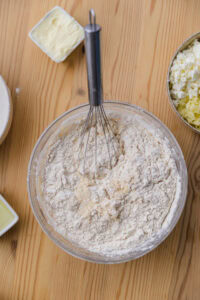
- Knead the dough until soft, smooth, and elastic.
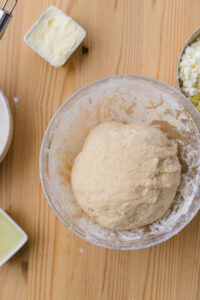
- Place the dough in a warm spot and let it rise for 3 to 4 hours.
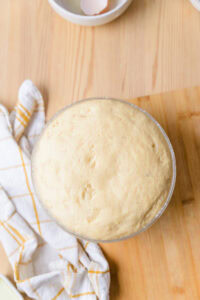
- Grate the cheese, or crumble it by hand.1 kg Imeruli cheese
- Mix the cheese with the beaten eggs and butter.3 eggs, 50 g butter
- Divide the dough into 4 equal portions, then roll each portion into a disc.
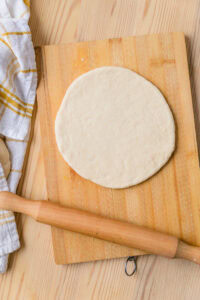
- Divide the filling into 4 portions and place one portion in the center of each disc.
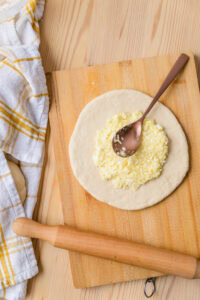
- Seal the dough by bringing the edges up and over the filling toward the center.
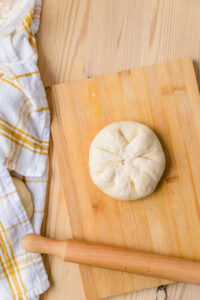
- Gently flatten and roll it out again.
- Brush the top with the egg yolk.1 egg yolk
- Cook in a skillet with a little oil, or bake at 200 °C, until deeply golden and cooked through.3 tablespoons oil